You cannot feel it happening. Chronic inflammation is a slow, low-grade response that stays switched on for years, and it has been linked to some of the diseases that do the most damage: heart disease, diabetes, cancer, and Alzheimer's (Harvard Health, 2026). It wears on joints, blood vessels, and tissue quietly, without a single symptom you would notice day to day. Cleveland Clinic describes it as a prolonged threat response from your immune system, one that can wear on the heart, brain, and other organs when it never fully switches off (Cleveland Clinic, 2025).
Here is the encouraging part, in Harvard's own framing: one of the most powerful tools against inflammation is not in the pharmacy but in the grocery store. No prescription, no supplement aisle. These are the seven everyday foods that fight it, and at the end, the handful quietly feeding it.
1
The anchor
Fatty Fish Twice a Week
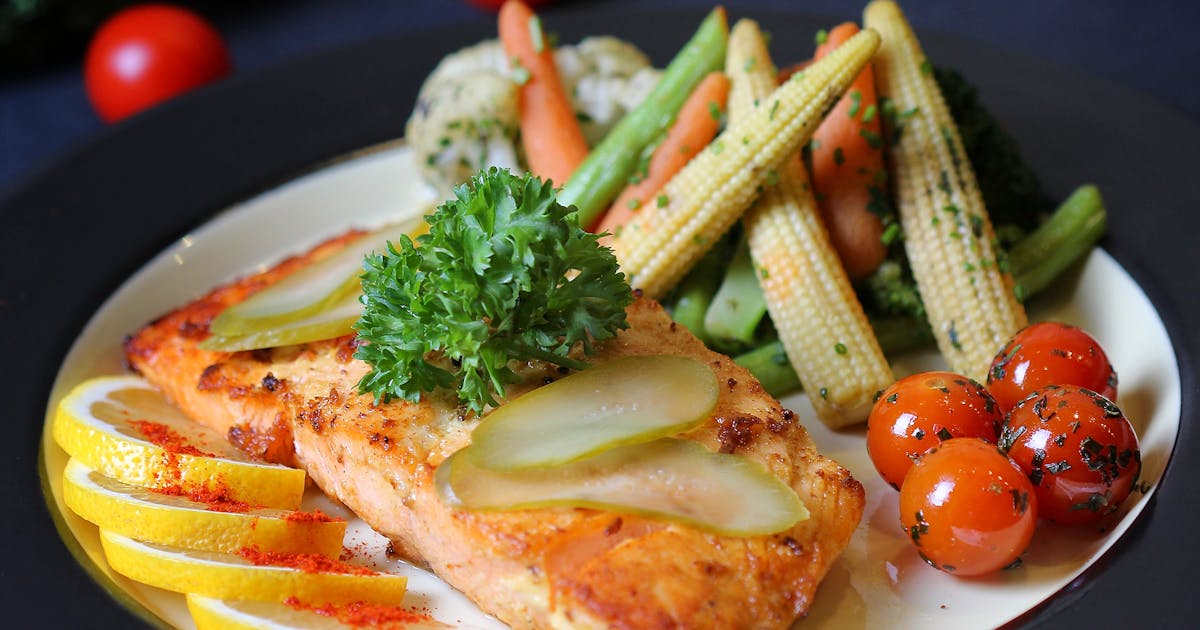
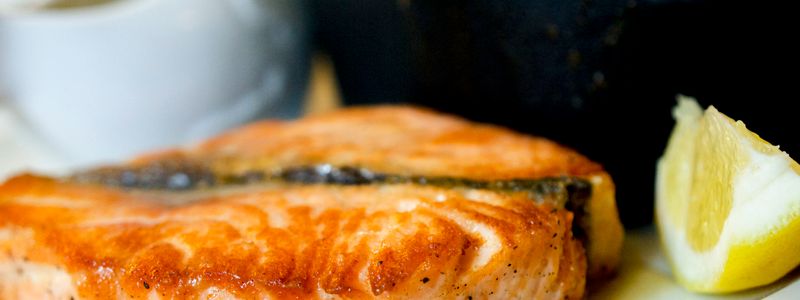
Salmon, sardines, tuna, and mackerel top Harvard's anti-inflammatory list because they are the richest food source of omega-3 fatty acids, which have long been shown to reduce inflammation, especially in the blood vessels (Harvard Health, 2026).
The target is two servings a week, and canned counts every bit as much as the fresh fillet at a fraction of the price. Each fish dinner does double duty: it adds omega-3s and it replaces a night of the red or processed meat that sits on the inflammatory side of the ledger.
Fatty fish like salmon is the richest food source of the omega-3s that lower inflammation.
Two servings of fatty fish a week is the single highest-yield swap on the list.
The omega-3s lower inflammation, and every fish dinner is also a night without processed meat.
Harvard Health, 2026
2
The base
Leafy Greens and Tomatoes Set the Table
Green leafy vegetables such as spinach, kale, arugula, and chard are loaded with vitamins A, B, C, E, and K, plus minerals and phytochemicals, the plant compounds that help quiet inflammation (Harvard Health, 2026). Tomatoes earn their own spot on the same list.
Cleveland Clinic frames it simply: build the plate around vegetables and fruit, chosen as whole foods rather than anything from a box or a bag (Cleveland Clinic, 2025). Make greens the default side and a tomato-and-olive-oil base carry the sauce, and two entries from this list land on the table at once. A washed bag of spinach or kale kept at eye level in the refrigerator is most of the trick, because when the greens are the easy choice, everything else on this list gets easier too.
3
The color
Berries Calm the Response From the Inside
Strawberries, blueberries, and cherries make Harvard's list because their anthocyanins, the pigments behind their red and purple color, have an anti-inflammatory effect on cells and are tied to lower risks of heart disease, cognitive decline, and diabetes (Harvard Health, 2026).
Frozen berries count. They are picked ripe, cost less, and wait in the freezer for oatmeal, yogurt, or a smoothie. Harvard suggests at least five servings of fruits and vegetables a day, and a handful of berries is one of the easiest to reach for.
If you want one pattern that wraps all of this together, both Harvard and Cleveland Clinic point to the Mediterranean diet, which research links to lower inflammation along with lower cholesterol, blood pressure, and blood sugar. Even your morning cup is quietly on the right team: Harvard notes coffee contains polyphenols that may help protect against inflammation, so it is not a habit you need to fix.
4
The swap
Nuts, Seeds, and Olive Oil Replace the Fats That Hurt
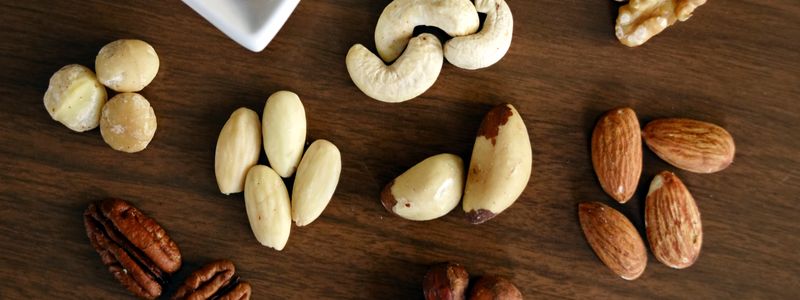
Studies have associated nuts such as almonds and walnuts with reduced markers of inflammation and a lower risk of cardiovascular disease and diabetes (Harvard Health, 2026). Cleveland Clinic adds walnuts, ground flaxseed, and chia as plant sources of the same omega-3s found in fish (Cleveland Clinic, 2025).
Olive oil is the other half of the swap. Used in place of butter or margarine, it trades a fat that feeds inflammation for one that fights it. A daily handful of nuts and olive oil as your default cooking fat is the entire move, no measuring required.
A daily handful of nuts is tied to lower inflammation markers. Walnuts add plant omega-3s.
5
The base and the brakes
Whole Grains In, the Fire-Starters Out
Cleveland Clinic rounds out the plate with fiber-rich whole grains and legumes, and points to anti-inflammatory spices like turmeric and ginger as easy additions (Cleveland Clinic, 2025). Whole grains are the seventh food and the steady base under the other six.
The other half of the job is subtraction. Harvard's avoid list is short and specific: refined carbohydrates like white bread and pastries, fried foods, soda and sugary drinks, red and processed meat, and margarine, shortening, and lard (Harvard Health, 2026). Watch the snacks that market themselves as healthy, too: Cleveland Clinic flags granola bars, trail mix, and baked chips as processed foods with little real benefit, easy to cut without missing anything. The payoff can come fast: Cleveland Clinic reports many people notice a difference within two to three weeks of cutting the trigger foods (Cleveland Clinic, 2025).
Take the anti-inflammation grocery list with you
Your free 2-page plan: the seven foods that fight inflammation, the five that feed it, and a 30-day swap checklist.
One email. No spam. Unsubscribe anytime.
Free Lifestyle Assessment
How Healthy Is Your Current Lifestyle?
Answer honestly for five minutes and walk away with your personal scorecard: all six areas of your health rated, the one that needs your attention first, and a 30-day plan built from your answers. It shows up the second you finish.
Free. About 5 minutes. Your results appear instantly.
📋 Your Coach's Recommendations
1
Eat Fatty Fish Twice This Week
Salmon, sardines, mackerel, or tuna, and canned counts. Put both servings on the calendar now, because the omega-3s only work if the fish actually gets eaten.
2
Build the Mediterranean Plate
Greens or tomatoes at two meals, olive oil instead of butter, a daily handful of nuts, and berries within reach. One pattern covers six of the seven foods without counting anything.
3
Cut the Five Fire-Starters for 30 Days
White bread and pastries, fried food, soda, processed meat, and margarine or lard. Cleveland Clinic reports many people feel the difference within two to three weeks.
?
How it works. Just a quiet check-in, not an alert and not a recurring nag. The event lands as a 30-minute slot at 9am two weeks from today, with your plan in the notes and a link back to this article. Works with Apple Calendar, Google Calendar, and Outlook. Yours to move, snooze, or delete whenever.
Keep this plan
Get the one-page anti-inflammation plan: the seven foods to add, the five to cut, and the 30-day checklist.
One email. No spam. Unsubscribe anytime.
Where should we send it?
Your 1-page anti-inflammation plan, straight to your inbox.
We send the plan plus one short evidence brief each week. Unsubscribe anytime.
✓
It's on the way
Check your inbox in the next minute. Want it right now?
Your first Ageless Brief arrives this week: one study, translated, no hype.
To your health,
Frequently Asked Questions
Which foods fight inflammation best?
Harvard's core list is fatty fish like salmon and sardines, green leafy vegetables, tomatoes, berries, nuts and seeds, and olive oil. Cleveland Clinic adds fiber-rich whole grains and spices such as turmeric and ginger. As a single pattern, the Mediterranean diet covers nearly all of them.
Which foods cause inflammation?
The main offenders are refined carbohydrates like white bread and pastries, fried foods, soda and sugary drinks, red and processed meats, and margarine, shortening, and lard. They are also tied to higher risk of heart disease and type 2 diabetes.
How fast can changing my diet lower inflammation?
Faster than most people expect. Cleveland Clinic reports that after cutting an inflammatory trigger food, many people notice a difference in as little as two to three weeks. A 30-day trial is enough to feel whether it is working.
Is an anti-inflammatory diet the same as the Mediterranean diet?
It is the closest ready-made version. There is no single official anti-inflammatory diet, but both Harvard and Cleveland Clinic point to Mediterranean-style eating, high in vegetables, fruit, nuts, whole grains, fish, and olive oil, as the proven pattern.
Can these foods replace my anti-inflammatory medication?
No. Anti-inflammatory eating supports your health alongside medical care, it does not replace it. This article is educational, not medical advice, so do not stop or change a prescription without talking to your doctor first.
Do I need supplements like fish oil or turmeric pills?
Not to start. Harvard's framing is that the most powerful tool comes from the grocery store, not the pharmacy. Build the food swaps first, since whole foods bring fiber and nutrients a pill does not, and add supplements only on a clinician's advice.
Curious where you stand? Take the free 5-minute lifestyle assessment and your personal scorecard appears the second you finish.
By the Ageless Coach Editorial Team · Published May 21, 2026 · Last updated July 14, 2026
<style>
:root{--dark-base:#0D1B2A;--dark-mid:#1B3A4B;--teal:#0EA5A0;--teal-dark:#0C8C88;--teal-bright:#14D4CD;--fog:#D8E8E8;--deep-fog:#C8DCDC;--fog-border:#A8C4C4;--ink:#313743;--ink-soft:#49505f;--muted:#6b7280;--warm:#9A6841;--warm-light:#be7b4c;--serif:"Source Serif 4",Georgia,serif;--sans:Inter,-apple-system,BlinkMacSystemFont,"Segoe UI",sans-serif}
.w-richtext p,.w-richtext li,.w-richtext td{font-size:20.5px;line-height:1.7;color:var(--ink-soft)}
.w-richtext ul{list-style-type:disc;padding-left:24px;margin:12px 0}
.w-richtext ul li{margin-bottom:8px}
.ac-answer{background:#fff;border:1px solid #D4E4E4;border-top:5px solid var(--teal);border-radius:16px;padding:22px 24px 18px;margin:16px 0 28px;box-shadow:0 6px 22px rgba(13,27,42,.07)}
.ac-answer .aa-eyebrow{font:800 12px/1 var(--sans);letter-spacing:2.5px;text-transform:uppercase;color:var(--teal-dark);margin-bottom:8px}
.ac-answer .aa-head{font-family:var(--serif);font-size:24px;line-height:1.2;font-weight:800;color:var(--dark-base);margin:0 0 16px}
.ac-answer .aa-list{list-style:none;margin:0;padding:0}
.ac-answer .aa-list li{display:flex;gap:12px;align-items:baseline;padding:11px 0;border-bottom:1px solid #EDF3F3;font:700 16.5px/1.4 var(--sans);color:var(--ink)}
.ac-answer .aa-list li:last-child{border-bottom:none}
.ac-answer .aa-n{flex-shrink:0;width:24px;height:24px;border-radius:50%;background:var(--teal-dark);color:#fff;font:800 12px/24px var(--sans);text-align:center}
.ac-answer .aa-food{color:var(--teal-dark);font-weight:800}
.ac-answer .aa-cue{margin-top:18px;text-align:center}
.ac-answer .aa-cta{display:inline-flex;align-items:center;gap:10px;background:var(--teal-dark);color:#fff;font:800 14px/1 var(--sans);letter-spacing:.2px;padding:14px 26px;border-radius:50px;text-decoration:none;box-shadow:0 6px 16px rgba(12,140,136,.30)}
.ac-answer .aa-cta:hover{background:#0A7A76}
.ac-answer .aa-arw{display:inline-block;animation:aa-nudge 1.4s ease-in-out infinite}
@keyframes aa-nudge{0%,100%{transform:translateY(0)}50%{transform:translateY(4px)}}
@media(max-width:560px){.ac-answer{padding:20px 18px 16px}.ac-answer .aa-head{font-size:21px}.ac-answer .aa-list li{font-size:15px}}
.ac-band{margin:56px 0 24px;padding:26px 24px 12px;background:linear-gradient(180deg,#F0F7F7,#fff);border-radius:16px}
.ac-band.hype{background:linear-gradient(180deg,#FAF3EB,#fff)}
.ac-band .inner{display:flex;gap:20px;align-items:center}
.ac-band .big{font:900 72px/1 var(--sans);color:var(--deep-fog);flex-shrink:0}
.ac-band.hype .big{color:#EAD9C6}
.ac-band .q{font:700 13px/1.4 var(--sans);letter-spacing:2px;text-transform:uppercase;color:var(--teal-dark)}
.ac-band.hype .q{color:var(--warm)}
.ac-band h3{font-family:var(--serif);font-size:30px;line-height:1.2;font-weight:800;color:var(--ink);margin:0}
.ac-callout{border-left:4px solid var(--teal);background:#F4FAFA;border-radius:0 12px 12px 0;padding:18px 22px;margin:28px 0}
.ac-callout .n{font:800 20px/1.35 var(--sans);color:var(--dark-mid);margin-bottom:6px}
.ac-callout .d{font:500 15px/1.55 var(--sans);color:var(--ink-soft)}
.ac-callout .c{font:600 11.5px/1 var(--sans);letter-spacing:1.5px;text-transform:uppercase;color:var(--muted);margin-top:10px}
.ac-plan{background:linear-gradient(135deg,#F4FAFA 0%,#fff 100%);border-left:5px solid var(--teal-dark);border-radius:14px;padding:30px 26px;margin:40px 0 0;box-shadow:0 2px 12px rgba(0,0,0,.06);scroll-margin-top:100px}
.ac-plan .ptitle{font-family:var(--serif);font-size:24px;font-weight:800;color:var(--ink);margin-bottom:22px}
.ac-plan .step{display:flex;gap:16px;margin-bottom:18px;align-items:flex-start}
.ac-plan .step .n{min-width:38px;width:38px;height:38px;background:var(--teal-dark);border-radius:50%;color:#fff;font:800 17px/38px var(--sans);text-align:center;flex-shrink:0}
.ac-plan .sh{font:800 16.5px/1.4 var(--sans);color:var(--ink);margin-bottom:3px}
.ac-plan .sd{font:400 15px/1.6 var(--sans);color:var(--muted)}
.ac-plan .actions{border-top:1px solid #D8E8E8;margin-top:16px;padding-top:20px}
.ac-primary-row{display:flex;align-items:center;gap:10px;padding:0 4px}
.ac-btn-primary-wide{flex:1;background:var(--teal);color:#fff;border:1.5px solid var(--teal);border-radius:14px;padding:12px 22px;box-shadow:0 4px 14px rgba(14,165,160,.22);font-family:var(--sans);cursor:pointer;display:grid;grid-template-columns:auto 1fr;gap:14px;align-items:center;transition:all .18s ease}
.ac-btn-primary-wide:hover{background:var(--teal-dark);border-color:var(--teal-dark)}
.ac-btn-primary-wide .icon svg{width:22px;height:22px;color:#fff;display:block}
.ac-btn-primary-wide .label{text-align:left;line-height:1.25}
.ac-btn-primary-wide .label .top{display:block;font-weight:700;font-size:15.5px;color:#fff}
.ac-btn-primary-wide .label .top em{font-style:italic;font-weight:700}
.ac-cal-help{position:relative;flex-shrink:0}
.ac-cal-help summary{list-style:none;width:24px;height:24px;border-radius:50%;background:#E4F1F1;border:1px solid var(--fog-border);color:var(--dark-mid);font:700 13px/22px var(--sans);text-align:center;cursor:pointer;display:block}
.ac-cal-help summary::-webkit-details-marker{display:none}
.ac-cal-help .tip{position:absolute;right:0;top:32px;z-index:50;width:290px;background:var(--dark-base);color:var(--fog);border-radius:12px;padding:14px 16px;font:500 12.5px/1.55 var(--sans);box-shadow:0 10px 30px rgba(13,27,42,.35)}
.ac-cal-help .tip strong{color:#fff}
.ac-btn-share-wide{display:flex;width:100%;align-items:center;justify-content:center;gap:10px;background:#fff;color:var(--teal-dark);border:1.5px solid var(--teal-dark);border-radius:14px;padding:12px 22px;margin-top:10px;font:800 15px/1 var(--sans);cursor:pointer}
.ac-btn-share-wide svg{width:18px;height:18px}
.ac-midcap{background:linear-gradient(180deg,#F0F7F7,#fff);border:1.5px solid var(--fog-border);border-radius:16px;padding:24px 22px;margin:34px 0;text-align:center}
.ac-midcap h4{font-family:var(--serif);font-size:22px;font-weight:800;color:var(--ink);margin:0 0 6px}
.ac-midcap .sub{font:500 14px/1.55 var(--sans);color:var(--ink-soft);margin:0 auto 14px;max-width:400px}
.ac-midcap .mcform{display:flex;gap:8px;max-width:400px;margin:0 auto}
.ac-midcap .mcform input{flex:1;border:1.5px solid var(--fog-border);border-radius:50px;padding:12px 18px;font:500 14px/1 var(--sans);min-width:0}
.ac-midcap .mcform button{background:var(--teal-dark);color:#fff;border:none;border-radius:50px;padding:12px 20px;font:800 13.5px/1 var(--sans);cursor:pointer;white-space:nowrap}
.ac-midcap .fine{font:500 11.5px/1.5 var(--sans);color:var(--muted);margin-top:10px}
@media (max-width:520px){.ac-midcap .mcform{flex-direction:column}}
.ac-assess-promo{background:linear-gradient(135deg,#D8E8E8,#C8DCDC);border:1px solid var(--fog-border);border-radius:16px;padding:34px 30px;margin:44px 0;text-align:center}
.ac-assess-promo .eyebrow{color:var(--teal-dark);font:800 12px/1 var(--sans);letter-spacing:2.5px;text-transform:uppercase;margin:0 0 10px}
.ac-assess-promo h4{font-family:var(--serif);color:var(--dark-base);font-size:26px;font-weight:800;margin:0 0 12px}
.w-embed .ac-assess-promo p.ap-body,.ac-assess-promo p.ap-body{font-family:Georgia,serif;color:#3A5555;font-size:15.5px;font-weight:500;line-height:1.65;max-width:540px;margin:0 auto 22px}
.ac-assess-promo .ap-cta{display:inline-block;background:var(--teal-bright);color:var(--dark-base);font:800 15px/1 var(--sans);padding:15px 30px;border-radius:50px;text-decoration:none}
.ac-assess-promo .ap-fine{color:#4E6B6B;font:500 13px/1.5 var(--sans);margin:14px 0 0}
.ac-assess-line{border-top:1px solid #E2ECEC;margin-top:30px;padding:22px 10px 0;text-align:center;font:500 15.5px/1.6 var(--sans);color:#3A5555}
.w-embed .ac-assess-line a,.ac-assess-line a{color:var(--teal-dark);font-weight:700;text-decoration:underline;text-underline-offset:3px}
.ac-articlemeta{font:500 12.5px/1.6 var(--sans);color:#98a0a6;text-align:center;margin:24px 0 0}
.ac-capture{background:linear-gradient(180deg,#F0F7F7,#fff);border:1.5px solid var(--fog-border);border-radius:16px;padding:30px 28px;margin:26px 0 44px;text-align:center}
.ac-capture .cap-state{display:none}
.ac-capture[data-state="trigger"] .st-trigger{display:block}
.ac-capture[data-state="form"] .st-form{display:block}
.ac-capture[data-state="sent"] .st-sent{display:block}
.ac-capture h4{font-family:var(--serif);font-size:24px;font-weight:800;color:var(--ink);margin:0 0 8px}
.ac-capture .sub{font:500 15px/1.55 var(--sans);color:var(--ink-soft);margin:0 auto 18px;max-width:430px}
.ac-capture .bigbtn{display:inline-flex;align-items:center;gap:10px;background:var(--teal-dark);color:#fff;border:none;border-radius:50px;padding:16px 30px;font:800 16px/1 var(--sans);cursor:pointer;box-shadow:0 6px 18px rgba(12,140,136,.28)}
.ac-capture .capform{display:flex;gap:10px;max-width:430px;margin:0 auto}
.ac-capture .capform input{flex:1;border:1.5px solid var(--fog-border);border-radius:50px;padding:14px 20px;font:500 15px/1 var(--sans)}
.ac-capture .capform button{background:var(--teal-dark);color:#fff;border:none;border-radius:50px;padding:14px 24px;font:800 14px/1 var(--sans);cursor:pointer}
.ac-capture .sent-check{width:52px;height:52px;border-radius:50%;background:var(--teal);color:#fff;font:800 26px/52px var(--sans);margin:0 auto 12px}
.ac-capture .dl{display:inline-block;margin-top:6px;color:var(--teal-dark);font:700 15px/1 var(--sans);text-decoration:underline;cursor:pointer}
.ac-capture .fine{font:500 12px/1.5 var(--sans);color:var(--muted);margin-top:12px}
.ac-sig{margin-top:36px}
.ac-sig .rule{width:60px;height:2px;background:linear-gradient(90deg,var(--teal-dark),var(--teal-bright));margin-bottom:18px;border-radius:2px}
.ac-sig .toyour{font-family:var(--serif);font-size:16px;font-style:italic;color:#777;margin:0 0 10px;padding-left:2px}
.ac-faq{margin-top:40px;border-top:1px solid #e5e7eb;padding-top:30px;margin-bottom:40px}
.ac-faq h2{font-family:var(--serif);font-size:23px;font-weight:800;color:var(--ink);margin:0 0 18px}
.ac-faq details{border:1px solid #e5e7eb;border-radius:10px;margin-bottom:10px}
.ac-faq summary{padding:15px 18px;font:700 16px/1.4 var(--sans);color:var(--ink);cursor:pointer;display:flex;justify-content:space-between;align-items:center;list-style:none}
.ac-faq summary:after{content:"\25BE";color:var(--warm)}
.ac-faq .a{padding:0 18px 16px;font-size:17px;line-height:1.65;color:#555}
.article-header-section .article-container{max-width:1080px !important;margin:0 auto !important;padding:0 20px !important}
.article-header-section .article-hero-image{display:block;width:100%;max-width:660px;margin:0}
.article-header-section .article-title{display:block !important;font-family:var(--serif);font-size:32px;line-height:1.25;font-weight:700;color:#313743;margin:20px 0 12px 0;text-align:left;max-width:660px}
@media (max-width:767px){.article-header-section .article-title{font-size:26px}.article-header-section .article-hero-image{max-width:100%}}
@media (max-width:640px){.ac-band .big{font-size:52px}}
@media (max-width:520px){.ac-capture .capform{flex-direction:column}}
.ac-figure{margin:30px 0}.ac-figure img{display:block;width:100%;border-radius:14px;height:auto;aspect-ratio:800/300}.ac-figure figcaption{font:500 13px/1.5 var(--sans);color:var(--muted);margin-top:9px}</style>
<div class="ac-answer">
<div class="aa-eyebrow">The fire you cannot feel</div>
<h2 class="aa-head">Chronic inflammation runs in the background for years. These seven everyday foods push back at every meal.</h2>
<ol class="aa-list">
<li><span class="aa-n">1</span><span><span class="aa-food">Fatty fish</span> · salmon and sardines carry the omega-3s Harvard puts at the top of the list</span></li>
<li><span class="aa-n">2</span><span><span class="aa-food">Leafy greens</span> · spinach and kale, dense with the vitamins and phytochemicals that quiet inflammation</span></li>
<li><span class="aa-n">3</span><span><span class="aa-food">Tomatoes</span> · a core anti-inflammatory vegetable that works cooked or raw</span></li>
<li><span class="aa-n">4</span><span><span class="aa-food">Berries</span> · the anthocyanins that give them their color calm the response from the inside</span></li>
<li><span class="aa-n">5</span><span><span class="aa-food">Nuts and seeds</span> · walnuts and flaxseed, tied to lower inflammation markers</span></li>
<li><span class="aa-n">6</span><span><span class="aa-food">Olive oil</span> · the healthy fat that replaces the ones working against you</span></li>
<li><span class="aa-n">7</span><span><span class="aa-food">Whole grains</span> · the fiber-rich base Cleveland Clinic builds the plate around</span></li>
</ol>
<div class="aa-cue"><a class="aa-cta" href="#coach-recommendations">Get Your Coach's 3-Step Plan <span class="aa-arw">↓</span></a></div>
</div>
<p>You cannot feel it happening. Chronic inflammation is a slow, low-grade response that stays switched on for years, and it has been linked to some of the diseases that do the most damage: heart disease, diabetes, cancer, and Alzheimer's (<a href="https://www.health.harvard.edu/healthy-aging-and-longevity/foods-that-fight-inflammation" target="_blank" rel="noopener">Harvard Health, 2026</a>). It wears on joints, blood vessels, and tissue quietly, without a single symptom you would notice day to day. Cleveland Clinic describes it as a prolonged threat response from your immune system, one that can wear on the heart, brain, and other organs when it never fully switches off (<a href="https://health.clevelandclinic.org/anti-inflammatory-diet" target="_blank" rel="noopener">Cleveland Clinic, 2025</a>).</p>
<p>Here is the encouraging part, in Harvard's own framing: one of the most powerful tools against inflammation is not in the pharmacy but in the grocery store. No prescription, no supplement aisle. These are the seven everyday foods that fight it, and at the end, the handful quietly feeding it.</p>
<div class="ac-band"><div class="inner"><div class="big">1</div><div><div class="q">The anchor</div><h3>Fatty Fish Twice a Week</h3></div></div></div>
<p>Salmon, sardines, tuna, and mackerel top Harvard's anti-inflammatory list because they are the richest food source of omega-3 fatty acids, which have long been shown to reduce inflammation, especially in the blood vessels (<a href="https://www.health.harvard.edu/healthy-aging-and-longevity/foods-that-fight-inflammation" target="_blank" rel="noopener">Harvard Health, 2026</a>).</p>
<p>The target is two servings a week, and canned counts every bit as much as the fresh fillet at a fraction of the price. Each fish dinner does double duty: it adds omega-3s and it replaces a night of the red or processed meat that sits on the inflammatory side of the ledger.</p>
<figure class="ac-figure"><img src="https://images.pexels.com/photos/2374946/pexels-photo-2374946.jpeg?auto=compress&cs=tinysrgb&w=800&h=300&fit=crop" alt="Pan-seared salmon fillet with a lemon wedge" width="800" height="300" loading="lazy" decoding="async"><figcaption>Fatty fish like salmon is the richest food source of the omega-3s that lower inflammation.</figcaption></figure>
<div class="ac-callout"><div class="n">Two servings of fatty fish a week is the single highest-yield swap on the list.</div><div class="d">The omega-3s lower inflammation, and every fish dinner is also a night without processed meat.</div><div class="c">Harvard Health, 2026</div></div>
<div class="ac-band"><div class="inner"><div class="big">2</div><div><div class="q">The base</div><h3>Leafy Greens and Tomatoes Set the Table</h3></div></div></div>
<p>Green leafy vegetables such as spinach, kale, arugula, and chard are loaded with vitamins A, B, C, E, and K, plus minerals and phytochemicals, the plant compounds that help quiet inflammation (<a href="https://www.health.harvard.edu/healthy-aging-and-longevity/foods-that-fight-inflammation" target="_blank" rel="noopener">Harvard Health, 2026</a>). Tomatoes earn their own spot on the same list.</p>
<p>Cleveland Clinic frames it simply: build the plate around vegetables and fruit, chosen as whole foods rather than anything from a box or a bag (<a href="https://health.clevelandclinic.org/anti-inflammatory-diet" target="_blank" rel="noopener">Cleveland Clinic, 2025</a>). Make greens the default side and a tomato-and-olive-oil base carry the sauce, and two entries from this list land on the table at once. A washed bag of spinach or kale kept at eye level in the refrigerator is most of the trick, because when the greens are the easy choice, everything else on this list gets easier too.</p>
<div class="ac-band"><div class="inner"><div class="big">3</div><div><div class="q">The color</div><h3>Berries Calm the Response From the Inside</h3></div></div></div>
<p>Strawberries, blueberries, and cherries make Harvard's list because their anthocyanins, the pigments behind their red and purple color, have an anti-inflammatory effect on cells and are tied to lower risks of heart disease, cognitive decline, and diabetes (<a href="https://www.health.harvard.edu/healthy-aging-and-longevity/foods-that-fight-inflammation" target="_blank" rel="noopener">Harvard Health, 2026</a>).</p>
<p>Frozen berries count. They are picked ripe, cost less, and wait in the freezer for oatmeal, yogurt, or a smoothie. Harvard suggests at least five servings of fruits and vegetables a day, and a handful of berries is one of the easiest to reach for.</p>
<p>If you want one pattern that wraps all of this together, both Harvard and Cleveland Clinic point to the Mediterranean diet, which research links to lower inflammation along with lower cholesterol, blood pressure, and blood sugar. Even your morning cup is quietly on the right team: Harvard notes coffee contains polyphenols that may help protect against inflammation, so it is not a habit you need to fix.</p>
<div class="ac-band"><div class="inner"><div class="big">4</div><div><div class="q">The swap</div><h3>Nuts, Seeds, and Olive Oil Replace the Fats That Hurt</h3></div></div></div>
<p>Studies have associated nuts such as almonds and walnuts with reduced markers of inflammation and a lower risk of cardiovascular disease and diabetes (<a href="https://www.health.harvard.edu/healthy-aging-and-longevity/foods-that-fight-inflammation" target="_blank" rel="noopener">Harvard Health, 2026</a>). Cleveland Clinic adds walnuts, ground flaxseed, and chia as plant sources of the same omega-3s found in fish (<a href="https://health.clevelandclinic.org/anti-inflammatory-diet" target="_blank" rel="noopener">Cleveland Clinic, 2025</a>).</p>
<p>Olive oil is the other half of the swap. Used in place of butter or margarine, it trades a fat that feeds inflammation for one that fights it. A daily handful of nuts and olive oil as your default cooking fat is the entire move, no measuring required.</p>
<figure class="ac-figure"><img src="https://images.pexels.com/photos/1295572/pexels-photo-1295572.jpeg?auto=compress&cs=tinysrgb&w=800&h=300&fit=crop" alt="Assorted nuts including almonds, cashews, and walnuts on a wooden surface" width="800" height="300" loading="lazy" decoding="async"><figcaption>A daily handful of nuts is tied to lower inflammation markers. Walnuts add plant omega-3s.</figcaption></figure>
<div class="ac-band"><div class="inner"><div class="big">5</div><div><div class="q">The base and the brakes</div><h3>Whole Grains In, the Fire-Starters Out</h3></div></div></div>
<p>Cleveland Clinic rounds out the plate with fiber-rich whole grains and legumes, and points to anti-inflammatory spices like turmeric and ginger as easy additions (<a href="https://health.clevelandclinic.org/anti-inflammatory-diet" target="_blank" rel="noopener">Cleveland Clinic, 2025</a>). Whole grains are the seventh food and the steady base under the other six.</p>
<p>The other half of the job is subtraction. Harvard's avoid list is short and specific: refined carbohydrates like white bread and pastries, fried foods, soda and sugary drinks, red and processed meat, and margarine, shortening, and lard (<a href="https://www.health.harvard.edu/healthy-aging-and-longevity/foods-that-fight-inflammation" target="_blank" rel="noopener">Harvard Health, 2026</a>). Watch the snacks that market themselves as healthy, too: Cleveland Clinic flags granola bars, trail mix, and baked chips as processed foods with little real benefit, easy to cut without missing anything. The payoff can come fast: Cleveland Clinic reports many people notice a difference within two to three weeks of cutting the trigger foods (<a href="https://health.clevelandclinic.org/anti-inflammatory-diet" target="_blank" rel="noopener">Cleveland Clinic, 2025</a>).</p>
<div class="ac-midcap">
<h4>Take the anti-inflammation grocery list with you</h4>
<p class="sub">Your free 2-page plan: the seven foods that fight inflammation, the five that feed it, and a 30-day swap checklist.</p>
<div class="mcform"><input type="email" placeholder="Your email address" aria-label="Email address"><button type="button">Send My Plan (Free)</button></div>
<div class="fine">One email. No spam. Unsubscribe anytime.</div>
</div>
<div class="ac-assess-promo">
<p class="eyebrow">Free Lifestyle Assessment</p>
<h4>How Healthy Is Your Current Lifestyle?</h4>
<p class="ap-body">Answer honestly for five minutes and walk away with your personal scorecard: all six areas of your health rated, the one that needs your attention first, and a 30-day plan built from your answers. It shows up the second you finish.</p>
<a class="ap-cta" href="/#assessment">See How the Assessment Works →</a>
<p class="ap-fine">Free. About 5 minutes. Your results appear instantly.</p>
</div>
<div class="ac-plan" id="coach-recommendations"><div class="ptitle">📋 Your Coach's Recommendations</div>
<div class="step"><div class="n">1</div><div><div class="sh">Eat Fatty Fish Twice This Week</div><div class="sd">Salmon, sardines, mackerel, or tuna, and canned counts. Put both servings on the calendar now, because the omega-3s only work if the fish actually gets eaten.</div></div></div>
<div class="step"><div class="n">2</div><div><div class="sh">Build the Mediterranean Plate</div><div class="sd">Greens or tomatoes at two meals, olive oil instead of butter, a daily handful of nuts, and berries within reach. One pattern covers six of the seven foods without counting anything.</div></div></div>
<div class="step"><div class="n">3</div><div><div class="sh">Cut the Five Fire-Starters for 30 Days</div><div class="sd">White bread and pastries, fried food, soda, processed meat, and margarine or lard. Cleveland Clinic reports many people feel the difference within two to three weeks.</div></div></div>
<div class="actions">
<div class="ac-primary-row">
<button type="button" class="ac-btn-primary-wide" data-ac-cal>
<span class="icon"><svg viewBox="0 0 24 24" fill="none" stroke="currentColor" stroke-width="2" stroke-linecap="round" stroke-linejoin="round"><rect x="3" y="4" width="18" height="18" rx="2"></rect><path d="M16 2v4M8 2v4M3 10h18"></path></svg></span>
<span class="label"><span class="top">Add <em>Your Coach's Recommendations to Your Calendar</em></span></span>
</button>
<details class="ac-cal-help">
<summary aria-label="What does this do?">?</summary>
<div class="tip"><strong>How it works.</strong> Just a quiet check-in, not an alert and not a recurring nag. The event lands as a 30-minute slot at 9am two weeks from today, with your plan in the notes and a link back to this article. Works with Apple Calendar, Google Calendar, and Outlook. Yours to move, snooze, or delete whenever.</div>
</details>
</div>
<button type="button" class="ac-btn-share-wide" data-ac-share>
<svg viewBox="0 0 24 24" fill="none" stroke="currentColor" stroke-width="2" stroke-linecap="round" stroke-linejoin="round"><path d="M4 12v8a2 2 0 002 2h12a2 2 0 002-2v-8"></path><polyline points="16 6 12 2 8 6"></polyline><line x1="12" y1="2" x2="12" y2="15"></line></svg>
Share this article
</button>
</div>
</div>
<div class="ac-capture" data-state="trigger" data-article-slug="7-foods-that-lower-inflammation-better-than-ibuprofen-backed-by-tier-1-research" data-pdf-url="https://cdn.prod.website-files.com/69be1026a027224999b7936b/6a561e908c429c03b49d1bab_anti-inflammation-7-foods-plan.pdf" data-plan-title="The Anti-Inflammation Plan" data-plan-desc="Your free 2-page plan: the seven foods that fight inflammation, the five that feed it, and a 30-day swap checklist. Checked against Harvard Health and Cleveland Clinic.">
<div class="st-trigger cap-state"><h4>Keep this plan</h4>
<p class="sub">Get the one-page anti-inflammation plan: the seven foods to add, the five to cut, and the 30-day checklist.</p>
<button class="bigbtn" type="button" data-cap="form">📩 Email Me This Plan (Free PDF)</button>
<div class="fine">One email. No spam. Unsubscribe anytime.</div></div>
<div class="st-form cap-state"><h4>Where should we send it?</h4>
<p class="sub">Your 1-page anti-inflammation plan, straight to your inbox.</p>
<form class="capform"><input type="email" name="email" required placeholder="Your email address" aria-label="Email address"><button type="submit">Send My Plan</button></form>
<div class="fine">We send the plan plus one short evidence brief each week. Unsubscribe anytime.</div></div>
<div class="st-sent cap-state"><div class="sent-check">✓</div><h4>It's on the way</h4>
<p class="sub">Check your inbox in the next minute. Want it right now?</p>
<a class="dl" href="https://cdn.prod.website-files.com/69be1026a027224999b7936b/6a561e908c429c03b49d1bab_anti-inflammation-7-foods-plan.pdf" download>⬇ Download your plan (PDF)</a>
<div class="fine">Your first Ageless Brief arrives this week: one study, translated, no hype.</div></div>
</div>
<div class="ac-sig">
<div class="rule"></div>
<p class="toyour">To your health,</p>
<svg width="320" height="72" viewBox="0 0 320 72" role="img" aria-label="Ageless Coach. Age Strong. Live Long." xmlns="http://www.w3.org/2000/svg" xmlns:xlink="http://www.w3.org/1999/xlink">
<defs><clipPath id="acSigIconClip"><rect x="0" y="6" width="60" height="60" rx="12" ry="12"/></clipPath></defs>
<image x="0" y="6" width="60" height="60" clip-path="url(#acSigIconClip)" preserveAspectRatio="xMidYMid slice" href="https://cdn.prod.website-files.com/69be1026a027224999b7936b/6a0b22c6afd5d6fd115b9c1a_ac-closing-brand-icon.webp" xlink:href="https://cdn.prod.website-files.com/69be1026a027224999b7936b/6a0b22c6afd5d6fd115b9c1a_ac-closing-brand-icon.webp"/>
<text x="76" y="42" style="font-family:Inter,system-ui,-apple-system,'Helvetica Neue',Arial,sans-serif;font-size:27px;letter-spacing:-0.3px">
<tspan style="font-weight:800;fill:#0D1B2A">Ageless</tspan><tspan style="font-weight:300;fill:rgba(13,27,42,0.6)">Coach</tspan><tspan dy="-12" style="font-size:16px;font-weight:600;fill:rgba(13,27,42,0.6)">™</tspan>
</text>
<text x="76" y="60" style="font-family:Inter,system-ui,-apple-system,'Helvetica Neue',Arial,sans-serif;font-size:10.5px;letter-spacing:2.5px;font-weight:500;fill:#0C8C88;text-transform:uppercase">AGE STRONG. LIVE LONG.</text>
</svg>
</div>
<div class="ac-faq"><h2>Frequently Asked Questions</h2>
<details><summary>Which foods fight inflammation best?</summary><div class="a">Harvard's core list is fatty fish like salmon and sardines, green leafy vegetables, tomatoes, berries, nuts and seeds, and olive oil. Cleveland Clinic adds fiber-rich whole grains and spices such as turmeric and ginger. As a single pattern, the Mediterranean diet covers nearly all of them.</div></details>
<details><summary>Which foods cause inflammation?</summary><div class="a">The main offenders are refined carbohydrates like white bread and pastries, fried foods, soda and sugary drinks, red and processed meats, and margarine, shortening, and lard. They are also tied to higher risk of heart disease and type 2 diabetes.</div></details>
<details><summary>How fast can changing my diet lower inflammation?</summary><div class="a">Faster than most people expect. Cleveland Clinic reports that after cutting an inflammatory trigger food, many people notice a difference in as little as two to three weeks. A 30-day trial is enough to feel whether it is working.</div></details>
<details><summary>Is an anti-inflammatory diet the same as the Mediterranean diet?</summary><div class="a">It is the closest ready-made version. There is no single official anti-inflammatory diet, but both Harvard and Cleveland Clinic point to Mediterranean-style eating, high in vegetables, fruit, nuts, whole grains, fish, and olive oil, as the proven pattern.</div></details>
<details><summary>Can these foods replace my anti-inflammatory medication?</summary><div class="a">No. Anti-inflammatory eating supports your health alongside medical care, it does not replace it. This article is educational, not medical advice, so do not stop or change a prescription without talking to your doctor first.</div></details>
<details><summary>Do I need supplements like fish oil or turmeric pills?</summary><div class="a">Not to start. Harvard's framing is that the most powerful tool comes from the grocery store, not the pharmacy. Build the food swaps first, since whole foods bring fiber and nutrients a pill does not, and add supplements only on a clinician's advice.</div></details>
</div>
<div class="ac-assess-line">Curious where you stand? Take the free <a href="/#assessment">5-minute lifestyle assessment</a> and your personal scorecard appears the second you finish.</div>
<p class="ac-articlemeta">By the Ageless Coach Editorial Team · Published May 21, 2026 · Last updated July 14, 2026</p>
Subscribe to the Free Newsletter
One article a week. Trusted research made simple. Start making smarter health decisions today.