Collagen is the protein that builds cartilage, tendons, and ligaments, and the supplement aisle has turned that into a promise: stir in a scoop and your aching knees will feel young again. It is an easy pitch to believe, because your body really does lose collagen as you age. Cleveland Clinic notes that you start losing collagen in your 20s and shed about 1 percent a year after 40, which contributes to stiff joints and worn cartilage (Cleveland Clinic, 2021).
So the question is not whether collagen matters for joints. It clearly does. The question is whether swallowing it changes anything you can feel, and whether it beats the free, proven moves that ease joint pain. Here is what the research actually supports, and where the honest cautions are.
1
Start here
First, What Collagen Does in Your Joints
Collagen is the main structural protein in cartilage, the smooth tissue that cushions the ends of your bones, and it also helps hold together the ligaments and tendons that keep a joint stable. Cleveland Clinic explains that as your natural collagen production falls with age, the odds of joint problems like osteoarthritis go up (Cleveland Clinic, 2021).
Collagen supplements, usually sold as hydrolyzed collagen or collagen peptides, are a broken-down, easily digestible form of that same protein. The idea is simple: give your body more raw material and maybe it repairs more cartilage. Whether that is what actually happens is where the evidence gets careful.
2
The upside
What the Studies Actually Found
The news is not all skeptical. Cleveland Clinic says collagen peptides may ease joint pain, and points to studies where they significantly reduced joint pain in athletes, older adults, and people with degenerative joint disease (Cleveland Clinic, 2021). Harvard Health agrees that some evidence suggests collagen supplements can help reduce joint pain and even support bone density (Harvard Health, 2025).
If you have nagging knees and want to try something low risk, that is a fair reason to experiment. Just read the verbs the experts use. May. Suggests. Some evidence. These are modest, hopeful findings, not a settled cure.
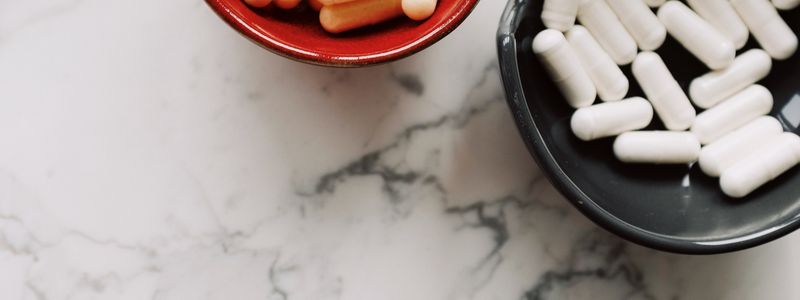
Collagen supplements come as powders and capsules. Your body digests both into amino acids before it uses them.
3
The fine print
Why the Evidence Comes With an Asterisk
Harvard Health is blunt that collagen powders and pills are trendy and offer some potential benefits, but that it is wise to be skeptical, because the research is still early and large-scale studies are needed to confirm the benefits (Harvard Health, 2025).
There is also basic biology to keep in mind. When you swallow collagen, your body digests it into amino acids like any other protein, then uses them wherever it decides they are needed, which may or may not be your sore knee. That does not make collagen useless, but it does explain why the effects are modest and why doctors urge patience over hype.
The research on collagen supplements is still early.
Some studies link collagen peptides to less joint pain, but Harvard Health says large-scale studies are still needed to confirm the benefit. Treat it as a possible small assist, not a cure.
Harvard Health, 2025
4
The real levers
The Moves That Genuinely Ease Joint Pain
Here is what the supplement aisle will not put on the label. When Mayo Clinic lists the treatments that reliably reduce osteoarthritis pain, they are not powders. Low-impact exercise, such as walking, cycling, or water aerobics, strengthens the muscles around a joint and makes it more stable, and losing even a little excess weight relieves pressure on knees and hips (Mayo Clinic, 2025).
Mayo also puts popular joint supplements in perspective: studies on glucosamine and chondroitin are mixed, and most show they work no better than a placebo, while omega-3s from fatty fish may modestly help (Mayo Clinic, 2025). In other words, the strongest joint medicine is usually free and does not come in a tub.
Mayo Clinic ranks low-impact exercise like walking among the most reliable ways to ease joint pain.
5
The verdict
So, Should You Take Collagen?
Collagen is generally safe. Cleveland Clinic notes there are no known side effects for most people apart from allergies, and that a typical dose is 2.5 to 15 grams a day (Cleveland Clinic, 2021). If you enjoy a daily scoop and your budget allows it, the modest trial results mean trying one for a couple of months is not unreasonable.
Just get the order right. Build the proven foundation first: move most days, keep your weight in a healthy range, and ask about physical therapy for a stubborn joint. Do those, and a collagen peptide powder becomes a possible extra on top of what actually works, rather than the thing you are counting on.
Take the honest joint-collagen cheat sheet with you
Your free 2-page guide: what collagen can and cannot do for joint pain, the moves that ease joints more reliably, and how to set honest expectations if you try it.
One email. No spam. Unsubscribe anytime.
Free Lifestyle Assessment
How Healthy Is Your Current Lifestyle?
Answer honestly for five minutes and walk away with your personal scorecard: all six areas of your health rated, the one that needs your attention first, and a 30-day plan built from your answers. It shows up the second you finish.
Free. About 5 minutes. Your results appear instantly.
📋 Your Coach's Recommendations
1
Put Movement and Weight First
Mayo Clinic ranks low-impact exercise and losing extra weight among the most reliable ways to ease joint pain. Try walking, cycling, or water aerobics, and know that even minor weight loss relieves pressure on knees and hips.
2
Ask About Physical Therapy
A physical therapist can teach you exercises that strengthen the muscles around a joint and make it more stable, which Mayo Clinic lists as a core part of osteoarthritis care.
3
If You Try Collagen, Keep Expectations Honest
Collagen is low risk at about 2.5 to 15 grams a day. Treat a hydrolyzed collagen peptide powder as a possible add-on, give it two to three months, and judge it against calm expectations, not the ad.
?
How it works. Just a quiet check-in, not an alert and not a recurring nag. The event lands as a 30-minute slot at 9am two weeks from today, with your plan in the notes and a link back to this article. Works with Apple Calendar, Google Calendar, and Outlook. Yours to move, snooze, or delete whenever.
Keep this plan
Get the one-page guide: what the trials really show, and the proven moves that ease joints more than any scoop.
One email. No spam. Unsubscribe anytime.
Where should we send it?
Your 1-page joint-collagen guide, straight to your inbox.
We send the plan plus one short evidence brief each week. Unsubscribe anytime.
✓
It's on the way
Check your inbox in the next minute. Want it right now?
Your first Ageless Brief arrives this week: one study, translated, no hype.
To your health,
Frequently Asked Questions
Do collagen supplements really work for joint pain?
Some studies link collagen peptides to less joint pain, especially in athletes, older adults, and people with degenerative joint disease, and Cleveland Clinic says they may ease joint pain. But Harvard Health calls the research still early, so treat it as a possible small assist rather than a proven cure.
Does the collagen I swallow go straight to my joints?
Not directly. Your body digests collagen into amino acids like any other protein and uses them wherever it needs them, which may or may not be a sore joint. That is part of why the measured effects are modest.
What works better than collagen for joint pain?
Mayo Clinic points to low-impact exercise, losing excess weight, and physical therapy as the most reliable ways to ease osteoarthritis pain. It also notes that glucosamine and chondroitin mostly work no better than placebo, while omega-3s may help a little.
Is collagen safe to take?
For most healthy adults, yes. Cleveland Clinic says there are no known side effects apart from allergies, and a common dose is 2.5 to 15 grams a day. Check with your doctor if you are pregnant, nursing, or managing a health condition.
Powder, pill, or drink, does the form matter?
Most studies use hydrolyzed collagen peptides, the kind in many powders and capsules. The form matters less than your expectations and consistency, and none of it replaces movement, weight management, and physical therapy.
Is this medical advice?
No. This article is educational and not a substitute for care from a doctor. Talk to a professional before starting any supplement, especially if you take medication or have a health condition.
Curious where you stand? Take the free 5-minute lifestyle assessment and your personal scorecard appears the second you finish.
By the Ageless Coach Editorial Team · Published May 21, 2026 · Last updated July 17, 2026
<style>
:root{--dark-base:#0D1B2A;--dark-mid:#1B3A4B;--teal:#0EA5A0;--teal-dark:#0C8C88;--teal-bright:#14D4CD;--fog:#D8E8E8;--deep-fog:#C8DCDC;--fog-border:#A8C4C4;--ink:#313743;--ink-soft:#49505f;--muted:#6b7280;--warm:#9A6841;--warm-light:#be7b4c;--serif:"Source Serif 4",Georgia,serif;--sans:Inter,-apple-system,BlinkMacSystemFont,"Segoe UI",sans-serif}
.w-richtext p,.w-richtext li,.w-richtext td{font-size:20.5px;line-height:1.7;color:var(--ink-soft)}
.w-richtext ul{list-style-type:disc;padding-left:24px;margin:12px 0}
.w-richtext ul li{margin-bottom:8px}
.ac-answer{background:#fff;border:1px solid #D4E4E4;border-top:5px solid var(--teal);border-radius:16px;padding:22px 24px 18px;margin:16px 0 28px;box-shadow:0 6px 22px rgba(13,27,42,.07)}
.ac-answer .aa-eyebrow{font:800 12px/1 var(--sans);letter-spacing:2.5px;text-transform:uppercase;color:var(--teal-dark);margin-bottom:8px}
.ac-answer .aa-head{font-family:var(--serif);font-size:24px;line-height:1.2;font-weight:800;color:var(--dark-base);margin:0 0 16px}
.ac-answer .aa-list{list-style:none;margin:0;padding:0}
.ac-answer .aa-list li{display:flex;gap:12px;align-items:baseline;padding:11px 0;border-bottom:1px solid #EDF3F3;font:700 16.5px/1.4 var(--sans);color:var(--ink)}
.ac-answer .aa-list li:last-child{border-bottom:none}
.ac-answer .aa-n{flex-shrink:0;width:24px;height:24px;border-radius:50%;background:var(--teal-dark);color:#fff;font:800 12px/24px var(--sans);text-align:center}
.ac-answer .aa-food{color:var(--teal-dark);font-weight:800}
.ac-answer .aa-cue{margin-top:18px;text-align:center}
.ac-answer .aa-cta{display:inline-flex;align-items:center;gap:10px;background:var(--teal-dark);color:#fff;font:800 14px/1 var(--sans);letter-spacing:.2px;padding:14px 26px;border-radius:50px;text-decoration:none;box-shadow:0 6px 16px rgba(12,140,136,.30)}
.ac-answer .aa-cta:hover{background:#0A7A76}
.ac-answer .aa-arw{display:inline-block;animation:aa-nudge 1.4s ease-in-out infinite}
@keyframes aa-nudge{0%,100%{transform:translateY(0)}50%{transform:translateY(4px)}}
@media(max-width:560px){.ac-answer{padding:20px 18px 16px}.ac-answer .aa-head{font-size:21px}.ac-answer .aa-list li{font-size:15px}}
.ac-band{margin:56px 0 24px;padding:26px 24px 12px;background:linear-gradient(180deg,#F0F7F7,#fff);border-radius:16px}
.ac-band.hype{background:linear-gradient(180deg,#FAF3EB,#fff)}
.ac-band .inner{display:flex;gap:20px;align-items:center}
.ac-band .big{font:900 72px/1 var(--sans);color:var(--deep-fog);flex-shrink:0}
.ac-band.hype .big{color:#EAD9C6}
.ac-band .q{font:700 13px/1.4 var(--sans);letter-spacing:2px;text-transform:uppercase;color:var(--teal-dark)}
.ac-band.hype .q{color:var(--warm)}
.ac-band h3{font-family:var(--serif);font-size:30px;line-height:1.2;font-weight:800;color:var(--ink);margin:0}
.ac-callout{border-left:4px solid var(--teal);background:#F4FAFA;border-radius:0 12px 12px 0;padding:18px 22px;margin:28px 0}
.ac-callout .n{font:800 20px/1.35 var(--sans);color:var(--dark-mid);margin-bottom:6px}
.ac-callout .d{font:500 15px/1.55 var(--sans);color:var(--ink-soft)}
.ac-callout .c{font:600 11.5px/1 var(--sans);letter-spacing:1.5px;text-transform:uppercase;color:var(--muted);margin-top:10px}
.ac-plan{background:linear-gradient(135deg,#F4FAFA 0%,#fff 100%);border-left:5px solid var(--teal-dark);border-radius:14px;padding:30px 26px;margin:40px 0 0;box-shadow:0 2px 12px rgba(0,0,0,.06);scroll-margin-top:100px}
.ac-plan .ptitle{font-family:var(--serif);font-size:24px;font-weight:800;color:var(--ink);margin-bottom:22px}
.ac-plan .step{display:flex;gap:16px;margin-bottom:18px;align-items:flex-start}
.ac-plan .step .n{min-width:38px;width:38px;height:38px;background:var(--teal-dark);border-radius:50%;color:#fff;font:800 17px/38px var(--sans);text-align:center;flex-shrink:0}
.ac-plan .sh{font:800 16.5px/1.4 var(--sans);color:var(--ink);margin-bottom:3px}
.ac-plan .sd{font:400 15px/1.6 var(--sans);color:var(--muted)}
.ac-plan .actions{border-top:1px solid #D8E8E8;margin-top:16px;padding-top:20px}
.ac-primary-row{display:flex;align-items:center;gap:10px;padding:0 4px}
.ac-btn-primary-wide{flex:1;background:var(--teal);color:#fff;border:1.5px solid var(--teal);border-radius:14px;padding:12px 22px;box-shadow:0 4px 14px rgba(14,165,160,.22);font-family:var(--sans);cursor:pointer;display:grid;grid-template-columns:auto 1fr;gap:14px;align-items:center;transition:all .18s ease}
.ac-btn-primary-wide:hover{background:var(--teal-dark);border-color:var(--teal-dark)}
.ac-btn-primary-wide .icon svg{width:22px;height:22px;color:#fff;display:block}
.ac-btn-primary-wide .label{text-align:left;line-height:1.25}
.ac-btn-primary-wide .label .top{display:block;font-weight:700;font-size:15.5px;color:#fff}
.ac-btn-primary-wide .label .top em{font-style:italic;font-weight:700}
.ac-cal-help{position:relative;flex-shrink:0}
.ac-cal-help summary{list-style:none;width:24px;height:24px;border-radius:50%;background:#E4F1F1;border:1px solid var(--fog-border);color:var(--dark-mid);font:700 13px/22px var(--sans);text-align:center;cursor:pointer;display:block}
.ac-cal-help summary::-webkit-details-marker{display:none}
.ac-cal-help .tip{position:absolute;right:0;top:32px;z-index:50;width:290px;background:var(--dark-base);color:var(--fog);border-radius:12px;padding:14px 16px;font:500 12.5px/1.55 var(--sans);box-shadow:0 10px 30px rgba(13,27,42,.35)}
.ac-cal-help .tip strong{color:#fff}
.ac-btn-share-wide{display:flex;width:100%;align-items:center;justify-content:center;gap:10px;background:#fff;color:var(--teal-dark);border:1.5px solid var(--teal-dark);border-radius:14px;padding:12px 22px;margin-top:10px;font:800 15px/1 var(--sans);cursor:pointer}
.ac-btn-share-wide svg{width:18px;height:18px}
.ac-midcap{background:linear-gradient(180deg,#F0F7F7,#fff);border:1.5px solid var(--fog-border);border-radius:16px;padding:24px 22px;margin:34px 0;text-align:center}
.ac-midcap h4{font-family:var(--serif);font-size:22px;font-weight:800;color:var(--ink);margin:0 0 6px}
.ac-midcap .sub{font:500 14px/1.55 var(--sans);color:var(--ink-soft);margin:0 auto 14px;max-width:400px}
.ac-midcap .mcform{display:flex;gap:8px;max-width:400px;margin:0 auto}
.ac-midcap .mcform input{flex:1;border:1.5px solid var(--fog-border);border-radius:50px;padding:12px 18px;font:500 14px/1 var(--sans);min-width:0}
.ac-midcap .mcform button{background:var(--teal-dark);color:#fff;border:none;border-radius:50px;padding:12px 20px;font:800 13.5px/1 var(--sans);cursor:pointer;white-space:nowrap}
.ac-midcap .fine{font:500 11.5px/1.5 var(--sans);color:var(--muted);margin-top:10px}
@media (max-width:520px){.ac-midcap .mcform{flex-direction:column}}
.ac-assess-promo{background:linear-gradient(135deg,#D8E8E8,#C8DCDC);border:1px solid var(--fog-border);border-radius:16px;padding:34px 30px;margin:44px 0;text-align:center}
.ac-assess-promo .eyebrow{color:var(--teal-dark);font:800 12px/1 var(--sans);letter-spacing:2.5px;text-transform:uppercase;margin:0 0 10px}
.ac-assess-promo h4{font-family:var(--serif);color:var(--dark-base);font-size:26px;font-weight:800;margin:0 0 12px}
.w-embed .ac-assess-promo p.ap-body,.ac-assess-promo p.ap-body{font-family:Georgia,serif;color:#3A5555;font-size:15.5px;font-weight:500;line-height:1.65;max-width:540px;margin:0 auto 22px}
.ac-assess-promo .ap-cta{display:inline-block;background:var(--teal-bright);color:var(--dark-base);font:800 15px/1 var(--sans);padding:15px 30px;border-radius:50px;text-decoration:none}
.ac-assess-promo .ap-fine{color:#4E6B6B;font:500 13px/1.5 var(--sans);margin:14px 0 0}
.ac-assess-line{border-top:1px solid #E2ECEC;margin-top:30px;padding:22px 10px 0;text-align:center;font:500 15.5px/1.6 var(--sans);color:#3A5555}
.w-embed .ac-assess-line a,.ac-assess-line a{color:var(--teal-dark);font-weight:700;text-decoration:underline;text-underline-offset:3px}
.ac-articlemeta{font:500 12.5px/1.6 var(--sans);color:#98a0a6;text-align:center;margin:24px 0 0}
.ac-capture{background:linear-gradient(180deg,#F0F7F7,#fff);border:1.5px solid var(--fog-border);border-radius:16px;padding:30px 28px;margin:26px 0 44px;text-align:center}
.ac-capture .cap-state{display:none}
.ac-capture[data-state="trigger"] .st-trigger{display:block}
.ac-capture[data-state="form"] .st-form{display:block}
.ac-capture[data-state="sent"] .st-sent{display:block}
.ac-capture h4{font-family:var(--serif);font-size:24px;font-weight:800;color:var(--ink);margin:0 0 8px}
.ac-capture .sub{font:500 15px/1.55 var(--sans);color:var(--ink-soft);margin:0 auto 18px;max-width:430px}
.ac-capture .bigbtn{display:inline-flex;align-items:center;gap:10px;background:var(--teal-dark);color:#fff;border:none;border-radius:50px;padding:16px 30px;font:800 16px/1 var(--sans);cursor:pointer;box-shadow:0 6px 18px rgba(12,140,136,.28)}
.ac-capture .capform{display:flex;gap:10px;max-width:430px;margin:0 auto}
.ac-capture .capform input{flex:1;border:1.5px solid var(--fog-border);border-radius:50px;padding:14px 20px;font:500 15px/1 var(--sans)}
.ac-capture .capform button{background:var(--teal-dark);color:#fff;border:none;border-radius:50px;padding:14px 24px;font:800 14px/1 var(--sans);cursor:pointer}
.ac-capture .sent-check{width:52px;height:52px;border-radius:50%;background:var(--teal);color:#fff;font:800 26px/52px var(--sans);margin:0 auto 12px}
.ac-capture .dl{display:inline-block;margin-top:6px;color:var(--teal-dark);font:700 15px/1 var(--sans);text-decoration:underline;cursor:pointer}
.ac-capture .fine{font:500 12px/1.5 var(--sans);color:var(--muted);margin-top:12px}
.ac-sig{margin-top:36px}
.ac-sig .rule{width:60px;height:2px;background:linear-gradient(90deg,var(--teal-dark),var(--teal-bright));margin-bottom:18px;border-radius:2px}
.ac-sig .toyour{font-family:var(--serif);font-size:16px;font-style:italic;color:#777;margin:0 0 10px;padding-left:2px}
.ac-faq{margin-top:40px;border-top:1px solid #e5e7eb;padding-top:30px;margin-bottom:40px}
.ac-faq h2{font-family:var(--serif);font-size:23px;font-weight:800;color:var(--ink);margin:0 0 18px}
.ac-faq details{border:1px solid #e5e7eb;border-radius:10px;margin-bottom:10px}
.ac-faq summary{padding:15px 18px;font:700 16px/1.4 var(--sans);color:var(--ink);cursor:pointer;display:flex;justify-content:space-between;align-items:center;list-style:none}
.ac-faq summary:after{content:"\25BE";color:var(--warm)}
.ac-faq .a{padding:0 18px 16px;font-size:17px;line-height:1.65;color:#555}
.article-header-section .article-container{max-width:1080px !important;margin:0 auto !important;padding:0 20px !important}
.article-header-section .article-hero-image{display:block;width:100%;max-width:660px;margin:0}
.article-header-section .article-title{display:block !important;font-family:var(--serif);font-size:32px;line-height:1.25;font-weight:700;color:#313743;margin:20px 0 12px 0;text-align:left;max-width:660px}
@media (max-width:767px){.article-header-section .article-title{font-size:26px}.article-header-section .article-hero-image{max-width:100%}}
@media (max-width:640px){.ac-band .big{font-size:52px}}
@media (max-width:520px){.ac-capture .capform{flex-direction:column}}
.ac-figure{margin:30px 0}.ac-figure img{display:block;width:100%;border-radius:14px;height:auto;aspect-ratio:800/300}.ac-figure figcaption{font:500 13px/1.5 var(--sans);color:var(--muted);margin-top:9px}</style><div class="ac-answer"><div class="aa-eyebrow">What the evidence actually says</div><h2 class="aa-head">A scoop of collagen will not rebuild your knees. Here is what the trials really show, and the moves that ease joint pain far more reliably.</h2><ol class="aa-list"><li><span class="aa-n">1</span><span><span class="aa-food">Cartilage</span> · collagen is a real building block of the cushion inside your joints</span></li><li><span class="aa-n">2</span><span><span class="aa-food">Some relief</span> · a few trials link collagen peptides to less joint pain</span></li><li><span class="aa-n">3</span><span><span class="aa-food">Early science</span> · large, high-quality studies have not confirmed the benefit yet</span></li><li><span class="aa-n">4</span><span><span class="aa-food">Low risk</span> · collagen is generally safe, so a short trial is reasonable</span></li><li><span class="aa-n">5</span><span><span class="aa-food">Proven first</span> · movement, weight, and physical therapy help joints the most</span></li></ol><div class="aa-cue"><a class="aa-cta" href="#coach-recommendations">Get Your Coach's 3-Step Plan <span class="aa-arw">↓</span></a></div></div><p>Collagen is the protein that builds cartilage, tendons, and ligaments, and the supplement aisle has turned that into a promise: stir in a scoop and your aching knees will feel young again. It is an easy pitch to believe, because your body really does lose collagen as you age. Cleveland Clinic notes that you start losing collagen in your 20s and shed about 1 percent a year after 40, which contributes to stiff joints and worn cartilage (<a href="https://health.clevelandclinic.org/what-do-collagen-peptides-do" target="_blank" rel="noopener">Cleveland Clinic, 2021</a>).</p><p>So the question is not whether collagen matters for joints. It clearly does. The question is whether swallowing it changes anything you can feel, and whether it beats the free, proven moves that ease joint pain. Here is what the research actually supports, and where the honest cautions are.</p><div class="ac-band"><div class="inner"><div class="big">1</div><div><div class="q">Start here</div><h3>First, What Collagen Does in Your Joints</h3></div></div></div><p>Collagen is the main structural protein in cartilage, the smooth tissue that cushions the ends of your bones, and it also helps hold together the ligaments and tendons that keep a joint stable. Cleveland Clinic explains that as your natural collagen production falls with age, the odds of joint problems like osteoarthritis go up (<a href="https://health.clevelandclinic.org/what-do-collagen-peptides-do" target="_blank" rel="noopener">Cleveland Clinic, 2021</a>).</p><p>Collagen supplements, usually sold as hydrolyzed collagen or collagen peptides, are a broken-down, easily digestible form of that same protein. The idea is simple: give your body more raw material and maybe it repairs more cartilage. Whether that is what actually happens is where the evidence gets careful.</p><div class="ac-band hype"><div class="inner"><div class="big">2</div><div><div class="q">The upside</div><h3>What the Studies Actually Found</h3></div></div></div><p>The news is not all skeptical. Cleveland Clinic says collagen peptides may ease joint pain, and points to studies where they significantly reduced joint pain in athletes, older adults, and people with degenerative joint disease (<a href="https://health.clevelandclinic.org/what-do-collagen-peptides-do" target="_blank" rel="noopener">Cleveland Clinic, 2021</a>). Harvard Health agrees that some evidence suggests collagen supplements can help reduce joint pain and even support bone density (<a href="https://www.health.harvard.edu/healthy-aging-and-longevity/do-collagen-supplements-fulfill-their-promises" target="_blank" rel="noopener">Harvard Health, 2025</a>).</p><p>If you have nagging knees and want to try something low risk, that is a fair reason to experiment. Just read the verbs the experts use. May. Suggests. Some evidence. These are modest, hopeful findings, not a settled cure.</p><figure class="ac-figure"><img src="https://images.pexels.com/photos/3850681/pexels-photo-3850681.jpeg?auto=compress&cs=tinysrgb&w=800&h=300&fit=crop" alt="White supplement capsules in small bowls on a marble surface" width="800" height="300" loading="lazy" decoding="async"><figcaption>Collagen supplements come as powders and capsules. Your body digests both into amino acids before it uses them.</figcaption></figure><div class="ac-band"><div class="inner"><div class="big">3</div><div><div class="q">The fine print</div><h3>Why the Evidence Comes With an Asterisk</h3></div></div></div><p>Harvard Health is blunt that collagen powders and pills are trendy and offer some potential benefits, but that it is wise to be skeptical, because the research is still early and large-scale studies are needed to confirm the benefits (<a href="https://www.health.harvard.edu/healthy-aging-and-longevity/do-collagen-supplements-fulfill-their-promises" target="_blank" rel="noopener">Harvard Health, 2025</a>).</p><p>There is also basic biology to keep in mind. When you swallow collagen, your body digests it into amino acids like any other protein, then uses them wherever it decides they are needed, which may or may not be your sore knee. That does not make collagen useless, but it does explain why the effects are modest and why doctors urge patience over hype.</p><div class="ac-callout"><div class="n">The research on collagen supplements is still early.</div><div class="d">Some studies link collagen peptides to less joint pain, but Harvard Health says large-scale studies are still needed to confirm the benefit. Treat it as a possible small assist, not a cure.</div><div class="c">Harvard Health, 2025</div></div><div class="ac-band hype"><div class="inner"><div class="big">4</div><div><div class="q">The real levers</div><h3>The Moves That Genuinely Ease Joint Pain</h3></div></div></div><p>Here is what the supplement aisle will not put on the label. When Mayo Clinic lists the treatments that reliably reduce osteoarthritis pain, they are not powders. Low-impact exercise, such as walking, cycling, or water aerobics, strengthens the muscles around a joint and makes it more stable, and losing even a little excess weight relieves pressure on knees and hips (<a href="https://www.mayoclinic.org/diseases-conditions/osteoarthritis/diagnosis-treatment/drc-20351930" target="_blank" rel="noopener">Mayo Clinic, 2025</a>).</p><p>Mayo also puts popular joint supplements in perspective: studies on glucosamine and chondroitin are mixed, and most show they work no better than a placebo, while omega-3s from fatty fish may modestly help (<a href="https://www.mayoclinic.org/diseases-conditions/osteoarthritis/diagnosis-treatment/drc-20351930" target="_blank" rel="noopener">Mayo Clinic, 2025</a>). In other words, the strongest joint medicine is usually free and does not come in a tub.</p><figure class="ac-figure"><img src="https://images.pexels.com/photos/20127701/pexels-photo-20127701.jpeg?auto=compress&cs=tinysrgb&w=800&h=300&fit=crop" alt="An older couple walking together outdoors on a park path" width="800" height="300" loading="lazy" decoding="async"><figcaption>Mayo Clinic ranks low-impact exercise like walking among the most reliable ways to ease joint pain.</figcaption></figure><div class="ac-band"><div class="inner"><div class="big">5</div><div><div class="q">The verdict</div><h3>So, Should You Take Collagen?</h3></div></div></div><p>Collagen is generally safe. Cleveland Clinic notes there are no known side effects for most people apart from allergies, and that a typical dose is 2.5 to 15 grams a day (<a href="https://health.clevelandclinic.org/what-do-collagen-peptides-do" target="_blank" rel="noopener">Cleveland Clinic, 2021</a>). If you enjoy a daily scoop and your budget allows it, the modest trial results mean trying one for a couple of months is not unreasonable.</p><p>Just get the order right. Build the proven foundation first: move most days, keep your weight in a healthy range, and ask about physical therapy for a stubborn joint. Do those, and a collagen peptide powder becomes a possible extra on top of what actually works, rather than the thing you are counting on.</p><div class="ac-midcap"><h4>Take the honest joint-collagen cheat sheet with you</h4><p class="sub">Your free 2-page guide: what collagen can and cannot do for joint pain, the moves that ease joints more reliably, and how to set honest expectations if you try it.</p><div class="mcform"><input type="email" placeholder="Your email address" aria-label="Email address"><button type="button">Send My Plan (Free)</button></div><div class="fine">One email. No spam. Unsubscribe anytime.</div></div><div class="ac-assess-promo"><p class="eyebrow">Free Lifestyle Assessment</p><h4>How Healthy Is Your Current Lifestyle?</h4><p class="ap-body">Answer honestly for five minutes and walk away with your personal scorecard: all six areas of your health rated, the one that needs your attention first, and a 30-day plan built from your answers. It shows up the second you finish.</p><a class="ap-cta" href="/#assessment">See How the Assessment Works →</a><p class="ap-fine">Free. About 5 minutes. Your results appear instantly.</p></div><div class="ac-plan" id="coach-recommendations"><div class="ptitle">📋 Your Coach's Recommendations</div><div class="step"><div class="n">1</div><div><div class="sh">Put Movement and Weight First</div><div class="sd">Mayo Clinic ranks low-impact exercise and losing extra weight among the most reliable ways to ease joint pain. Try walking, cycling, or water aerobics, and know that even minor weight loss relieves pressure on knees and hips.</div></div></div><div class="step"><div class="n">2</div><div><div class="sh">Ask About Physical Therapy</div><div class="sd">A physical therapist can teach you exercises that strengthen the muscles around a joint and make it more stable, which Mayo Clinic lists as a core part of osteoarthritis care.</div></div></div><div class="step"><div class="n">3</div><div><div class="sh">If You Try Collagen, Keep Expectations Honest</div><div class="sd">Collagen is low risk at about 2.5 to 15 grams a day. Treat a hydrolyzed collagen peptide powder as a possible add-on, give it two to three months, and judge it against calm expectations, not the ad.</div></div></div><div class="actions">
<div class="ac-primary-row">
<button type="button" class="ac-btn-primary-wide" data-ac-cal>
<span class="icon"><svg viewBox="0 0 24 24" fill="none" stroke="currentColor" stroke-width="2" stroke-linecap="round" stroke-linejoin="round"><rect x="3" y="4" width="18" height="18" rx="2"></rect><path d="M16 2v4M8 2v4M3 10h18"></path></svg></span>
<span class="label"><span class="top">Add <em>Your Coach's Recommendations to Your Calendar</em></span></span>
</button>
<details class="ac-cal-help">
<summary aria-label="What does this do?">?</summary>
<div class="tip"><strong>How it works.</strong> Just a quiet check-in, not an alert and not a recurring nag. The event lands as a 30-minute slot at 9am two weeks from today, with your plan in the notes and a link back to this article. Works with Apple Calendar, Google Calendar, and Outlook. Yours to move, snooze, or delete whenever.</div>
</details>
</div>
<button type="button" class="ac-btn-share-wide" data-ac-share>
<svg viewBox="0 0 24 24" fill="none" stroke="currentColor" stroke-width="2" stroke-linecap="round" stroke-linejoin="round"><path d="M4 12v8a2 2 0 002 2h12a2 2 0 002-2v-8"></path><polyline points="16 6 12 2 8 6"></polyline><line x1="12" y1="2" x2="12" y2="15"></line></svg>
Share this article
</button>
</div></div><div class="ac-capture" data-state="trigger" data-article-slug="collagen-supplements-for-joint-pain-miracle-or-marketing-what-studies-show" data-pdf-url=""" data-plan-title="The Honest Joint-Collagen Guide" data-plan-desc="Your free 2-page guide to what collagen can and cannot do for joint pain, and the proven moves that ease joints more reliably. Checked against Cleveland Clinic, Harvard Health, and Mayo Clinic."><div class="st-trigger cap-state"><h4>Keep this plan</h4><p class="sub">Get the one-page guide: what the trials really show, and the proven moves that ease joints more than any scoop.</p><button class="bigbtn" type="button" data-cap="form">📩 Email Me This Plan (Free PDF)</button><div class="fine">One email. No spam. Unsubscribe anytime.</div></div><div class="st-form cap-state"><h4>Where should we send it?</h4><p class="sub">Your 1-page joint-collagen guide, straight to your inbox.</p><form class="capform"><input type="email" name="email" required placeholder="Your email address" aria-label="Email address"><button type="submit">Send My Plan</button></form><div class="fine">We send the plan plus one short evidence brief each week. Unsubscribe anytime.</div></div><div class="st-sent cap-state"><div class="sent-check">✓</div><h4>It's on the way</h4><p class="sub">Check your inbox in the next minute. Want it right now?</p><a class="dl" href="/newsletter" download>⬇ Download your plan (PDF)</a><div class="fine">Your first Ageless Brief arrives this week: one study, translated, no hype.</div></div></div><div class="ac-sig">
<div class="rule"></div>
<p class="toyour">To your health,</p>
<svg width="320" height="72" viewBox="0 0 320 72" role="img" aria-label="Ageless Coach. Age Strong. Live Long." xmlns="http://www.w3.org/2000/svg" xmlns:xlink="http://www.w3.org/1999/xlink">
<defs><clipPath id="acSigIconClip"><rect x="0" y="6" width="60" height="60" rx="12" ry="12"/></clipPath></defs>
<image x="0" y="6" width="60" height="60" clip-path="url(#acSigIconClip)" preserveAspectRatio="xMidYMid slice" href="https://cdn.prod.website-files.com/69be1026a027224999b7936b/6a0b22c6afd5d6fd115b9c1a_ac-closing-brand-icon.webp" xlink:href="https://cdn.prod.website-files.com/69be1026a027224999b7936b/6a0b22c6afd5d6fd115b9c1a_ac-closing-brand-icon.webp"/>
<text x="76" y="42" style="font-family:Inter,system-ui,-apple-system,'Helvetica Neue',Arial,sans-serif;font-size:27px;letter-spacing:-0.3px">
<tspan style="font-weight:800;fill:#0D1B2A">Ageless</tspan><tspan style="font-weight:300;fill:rgba(13,27,42,0.6)">Coach</tspan><tspan dy="-12" style="font-size:16px;font-weight:600;fill:rgba(13,27,42,0.6)">™</tspan>
</text>
<text x="76" y="60" style="font-family:Inter,system-ui,-apple-system,'Helvetica Neue',Arial,sans-serif;font-size:10.5px;letter-spacing:2.5px;font-weight:500;fill:#0C8C88;text-transform:uppercase">AGE STRONG. LIVE LONG.</text>
</svg>
</div>
<div class="ac-faq"><h2>Frequently Asked Questions</h2><details><summary>Do collagen supplements really work for joint pain?</summary><div class="a">Some studies link collagen peptides to less joint pain, especially in athletes, older adults, and people with degenerative joint disease, and Cleveland Clinic says they may ease joint pain. But Harvard Health calls the research still early, so treat it as a possible small assist rather than a proven cure.</div></details><details><summary>Does the collagen I swallow go straight to my joints?</summary><div class="a">Not directly. Your body digests collagen into amino acids like any other protein and uses them wherever it needs them, which may or may not be a sore joint. That is part of why the measured effects are modest.</div></details><details><summary>What works better than collagen for joint pain?</summary><div class="a">Mayo Clinic points to low-impact exercise, losing excess weight, and physical therapy as the most reliable ways to ease osteoarthritis pain. It also notes that glucosamine and chondroitin mostly work no better than placebo, while omega-3s may help a little.</div></details><details><summary>Is collagen safe to take?</summary><div class="a">For most healthy adults, yes. Cleveland Clinic says there are no known side effects apart from allergies, and a common dose is 2.5 to 15 grams a day. Check with your doctor if you are pregnant, nursing, or managing a health condition.</div></details><details><summary>Powder, pill, or drink, does the form matter?</summary><div class="a">Most studies use hydrolyzed collagen peptides, the kind in many powders and capsules. The form matters less than your expectations and consistency, and none of it replaces movement, weight management, and physical therapy.</div></details><details><summary>Is this medical advice?</summary><div class="a">No. This article is educational and not a substitute for care from a doctor. Talk to a professional before starting any supplement, especially if you take medication or have a health condition.</div></details></div><div class="ac-assess-line">Curious where you stand? Take the free <a href="/#assessment">5-minute lifestyle assessment</a> and your personal scorecard appears the second you finish.</div><p class="ac-articlemeta">By the Ageless Coach Editorial Team · Published May 21, 2026 · Last updated July 17, 2026</p>
Subscribe to the Free Newsletter
One article a week. Trusted research made simple. Start making smarter health decisions today.