Collagen is the protein that keeps young skin firm and springy, and the supplement aisle has noticed. Powders, capsules, coffee creamers, and gummies all promise to pour it back in and smooth away wrinkles. The pitch is easy to believe. The evidence is more careful. Large, high-quality trials of collagen supplements for skin are not really available yet, and the studies that exist tend to be small (Harvard Health, 2023).
That does not mean the powders do nothing. A handful of randomized trials report modest gains, and Cleveland Clinic calls collagen peptides a possible help for skin hydration and flexibility rather than a miracle cure (Cleveland Clinic, 2024). The honest question is not whether collagen matters for skin. It clearly does. The question is whether swallowing it moves the needle, and whether it beats the free habits that dermatologists have recommended for decades. Here is what the research actually supports.
1
Start here
First, What Your Gut Does to Collagen
When you drink a collagen supplement, your digestive system does not ship it intact to your face. It breaks the protein down into amino acids and small peptides, the same way it handles the protein in eggs or fish. Harvard Health notes that the body cannot absorb collagen in its whole form, and that so far no human study has clearly proven the collagen you take by mouth ends up in your skin, hair, or nails (Harvard Health, 2023).
Your body then uses those amino acids wherever it decides they are needed, which may or may not be your face. That single fact reframes every glossy ad: a collagen powder is really a protein supplement with a hopeful label, not a delivery truck aimed at your wrinkles.
Collagen is usually sold as a flavorless powder to stir into a drink. Your gut breaks it into amino acids first.
2
The upside
What the Trials Actually Found
The news is not all skeptical. Some randomized, controlled trials of hydrolyzed collagen peptides have reported real, if modest, improvements in skin hydration, elasticity, and the appearance of wrinkles over about eight to twelve weeks (Harvard Health, 2023). Cleveland Clinic points to the same emerging evidence: collagen peptides may help skin hold moisture and stay flexible, which can soften how wrinkles look over time (Cleveland Clinic, 2024).
Notice the words. Modest. May. Over time. These are small effects measured by instruments in short studies, not the overnight transformation the marketing implies. If you go in expecting a gentle assist rather than a face-lift in a jar, the science is on your side.
3
The fine print
Why the Fine Print Matters
Two cautions keep the modest results honest. First, the large, high-quality studies needed to prove that everyday store-bought products are helpful and safe to use long term simply have not been done yet (Harvard Health, 2023). Second, results vary from person to person, and collagen is not a regulated drug, so what is in the tub is not guaranteed to match the label (Cleveland Clinic, 2024).
Your body breaks collagen down before it can reach your skin.
No human study has clearly shown that the collagen you swallow ends up in your skin. The trials that show a benefit measure small changes, and the large, long-term safety studies have not been done.
Harvard Health, 2023
4
The real levers
The Two Habits That Beat Any Powder
Here is the part the supplement aisle will not print. If your goal is fewer wrinkles, the two most proven moves cost almost nothing. Harvard Health is blunt: the best ways to keep wrinkles at bay are using sunscreen and not smoking, and for texture and elasticity you are better off with sun protection and a topical retinoid than a drink (Harvard Health, 2023).
The National Institute on Aging agrees on the biggest culprit. The sun is a major contributor to skin aging, coarse wrinkles are largely the result of sun damage, and a broad-spectrum sunscreen that blocks both UVA and UVB, plus a hat, helps prevent it (National Institute on Aging, 2024). Protecting the collagen you already have is more reliable than trying to drink more of it.
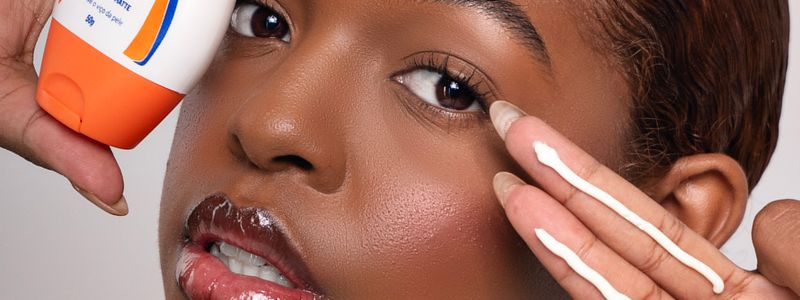
Daily broad-spectrum sunscreen is the single most proven way to prevent wrinkles, according to Harvard Health and the National Institute on Aging.
5
The verdict
So, Should You Take It?
Collagen supplements are generally low risk for healthy adults, and if you enjoy a daily scoop and your budget allows it, the modest trial results mean it is not unreasonable to try one. Just set the expectations the science supports: a small assist, built slowly, not a cure.
What should come first is the boring, proven stuff. Wear sunscreen every day, skip the cigarettes, eat enough protein and colorful produce, and consider a retinoid. Do those, and a collagen powder becomes a possible extra on top of a foundation that actually works, rather than the thing you are counting on.
Take the honest collagen cheat sheet with you
Your free 2-page guide: what collagen supplements can and cannot do, the two habits that beat any powder, and how to set honest expectations if you try one.
One email. No spam. Unsubscribe anytime.
Free Lifestyle Assessment
How Healthy Is Your Current Lifestyle?
Answer honestly for five minutes and walk away with your personal scorecard: all six areas of your health rated, the one that needs your attention first, and a 30-day plan built from your answers. It shows up the second you finish.
Free. About 5 minutes. Your results appear instantly.
📋 Your Coach's Recommendations
1
Protect Your Skin From the Sun Every Day
Use a broad-spectrum sunscreen that blocks UVA and UVB, and add a hat outdoors. The National Institute on Aging calls the sun a major driver of wrinkles, and Harvard Health calls sunscreen the top way to prevent them.
2
Skip the Cigarettes and Feed Your Skin
Not smoking is the other habit Harvard Health ranks above any supplement. Support it with enough protein and plenty of vitamin C rich produce, the raw materials your body uses to make its own collagen.
3
If You Try Collagen, Set Honest Expectations
The trial benefits are modest and slow. Treat a hydrolyzed collagen peptide powder as an extra, give it eight to twelve weeks, and judge it against calm expectations, not the ad.
?
How it works. Just a quiet check-in, not an alert and not a recurring nag. The event lands as a 30-minute slot at 9am two weeks from today, with your plan in the notes and a link back to this article. Works with Apple Calendar, Google Calendar, and Outlook. Yours to move, snooze, or delete whenever.
Keep this plan
Get the one-page guide: what the trials really show, and the two proven habits that do more for wrinkles than any scoop.
One email. No spam. Unsubscribe anytime.
Where should we send it?
Your 1-page collagen guide, straight to your inbox.
We send the plan plus one short evidence brief each week. Unsubscribe anytime.
✓
It's on the way
Check your inbox in the next minute. Want it right now?
Your first Ageless Brief arrives this week: one study, translated, no hype.
To your health,
Frequently Asked Questions
Do collagen supplements actually reduce wrinkles?
Some randomized trials of hydrolyzed collagen peptides report modest improvements in skin hydration, elasticity, and the look of wrinkles. But large, high-quality studies are lacking, and your body breaks collagen down in digestion, so treat the effect as a small assist rather than a cure.
Does the collagen I swallow go straight to my skin?
No. Digestion breaks collagen into amino acids and small peptides, and no human study has clearly shown that the collagen you take by mouth ends up in your skin, according to Harvard Health.
What works better than collagen for wrinkles?
Harvard Health says the best ways to prevent wrinkles are using sunscreen and not smoking, plus a topical retinoid for texture. The National Institute on Aging names sun exposure as a major cause of wrinkles and recommends daily broad-spectrum sunscreen.
Are collagen supplements safe?
They are generally considered low risk for healthy adults, but they are not regulated like drugs, and the large, long-term safety studies on commercial products have not been done. Check with your doctor if you are pregnant, nursing, or managing a health condition.
Does the form, powder, pill, or drink, matter?
Most of the trials showing a benefit used hydrolyzed collagen peptides, the kind found in many powders and drinks. The form matters less than your expectations and consistency, and none of it substitutes for sun protection.
Is this medical advice?
No. This article is educational and not a substitute for care from a doctor or dermatologist. Talk to a professional before starting any supplement, especially if you take medication or have a medical condition.
Curious where you stand? Take the free 5-minute lifestyle assessment and your personal scorecard appears the second you finish.
By the Ageless Coach Editorial Team · Published March 22, 2026 · Last updated July 16, 2026
<style>
:root{--dark-base:#0D1B2A;--dark-mid:#1B3A4B;--teal:#0EA5A0;--teal-dark:#0C8C88;--teal-bright:#14D4CD;--fog:#D8E8E8;--deep-fog:#C8DCDC;--fog-border:#A8C4C4;--ink:#313743;--ink-soft:#49505f;--muted:#6b7280;--warm:#9A6841;--warm-light:#be7b4c;--serif:"Source Serif 4",Georgia,serif;--sans:Inter,-apple-system,BlinkMacSystemFont,"Segoe UI",sans-serif}
.w-richtext p,.w-richtext li,.w-richtext td{font-size:20.5px;line-height:1.7;color:var(--ink-soft)}
.w-richtext ul{list-style-type:disc;padding-left:24px;margin:12px 0}
.w-richtext ul li{margin-bottom:8px}
.ac-answer{background:#fff;border:1px solid #D4E4E4;border-top:5px solid var(--teal);border-radius:16px;padding:22px 24px 18px;margin:16px 0 28px;box-shadow:0 6px 22px rgba(13,27,42,.07)}
.ac-answer .aa-eyebrow{font:800 12px/1 var(--sans);letter-spacing:2.5px;text-transform:uppercase;color:var(--teal-dark);margin-bottom:8px}
.ac-answer .aa-head{font-family:var(--serif);font-size:24px;line-height:1.2;font-weight:800;color:var(--dark-base);margin:0 0 16px}
.ac-answer .aa-list{list-style:none;margin:0;padding:0}
.ac-answer .aa-list li{display:flex;gap:12px;align-items:baseline;padding:11px 0;border-bottom:1px solid #EDF3F3;font:700 16.5px/1.4 var(--sans);color:var(--ink)}
.ac-answer .aa-list li:last-child{border-bottom:none}
.ac-answer .aa-n{flex-shrink:0;width:24px;height:24px;border-radius:50%;background:var(--teal-dark);color:#fff;font:800 12px/24px var(--sans);text-align:center}
.ac-answer .aa-food{color:var(--teal-dark);font-weight:800}
.ac-answer .aa-cue{margin-top:18px;text-align:center}
.ac-answer .aa-cta{display:inline-flex;align-items:center;gap:10px;background:var(--teal-dark);color:#fff;font:800 14px/1 var(--sans);letter-spacing:.2px;padding:14px 26px;border-radius:50px;text-decoration:none;box-shadow:0 6px 16px rgba(12,140,136,.30)}
.ac-answer .aa-cta:hover{background:#0A7A76}
.ac-answer .aa-arw{display:inline-block;animation:aa-nudge 1.4s ease-in-out infinite}
@keyframes aa-nudge{0%,100%{transform:translateY(0)}50%{transform:translateY(4px)}}
@media(max-width:560px){.ac-answer{padding:20px 18px 16px}.ac-answer .aa-head{font-size:21px}.ac-answer .aa-list li{font-size:15px}}
.ac-band{margin:56px 0 24px;padding:26px 24px 12px;background:linear-gradient(180deg,#F0F7F7,#fff);border-radius:16px}
.ac-band.hype{background:linear-gradient(180deg,#FAF3EB,#fff)}
.ac-band .inner{display:flex;gap:20px;align-items:center}
.ac-band .big{font:900 72px/1 var(--sans);color:var(--deep-fog);flex-shrink:0}
.ac-band.hype .big{color:#EAD9C6}
.ac-band .q{font:700 13px/1.4 var(--sans);letter-spacing:2px;text-transform:uppercase;color:var(--teal-dark)}
.ac-band.hype .q{color:var(--warm)}
.ac-band h3{font-family:var(--serif);font-size:30px;line-height:1.2;font-weight:800;color:var(--ink);margin:0}
.ac-callout{border-left:4px solid var(--teal);background:#F4FAFA;border-radius:0 12px 12px 0;padding:18px 22px;margin:28px 0}
.ac-callout .n{font:800 20px/1.35 var(--sans);color:var(--dark-mid);margin-bottom:6px}
.ac-callout .d{font:500 15px/1.55 var(--sans);color:var(--ink-soft)}
.ac-callout .c{font:600 11.5px/1 var(--sans);letter-spacing:1.5px;text-transform:uppercase;color:var(--muted);margin-top:10px}
.ac-plan{background:linear-gradient(135deg,#F4FAFA 0%,#fff 100%);border-left:5px solid var(--teal-dark);border-radius:14px;padding:30px 26px;margin:40px 0 0;box-shadow:0 2px 12px rgba(0,0,0,.06);scroll-margin-top:100px}
.ac-plan .ptitle{font-family:var(--serif);font-size:24px;font-weight:800;color:var(--ink);margin-bottom:22px}
.ac-plan .step{display:flex;gap:16px;margin-bottom:18px;align-items:flex-start}
.ac-plan .step .n{min-width:38px;width:38px;height:38px;background:var(--teal-dark);border-radius:50%;color:#fff;font:800 17px/38px var(--sans);text-align:center;flex-shrink:0}
.ac-plan .sh{font:800 16.5px/1.4 var(--sans);color:var(--ink);margin-bottom:3px}
.ac-plan .sd{font:400 15px/1.6 var(--sans);color:var(--muted)}
.ac-plan .actions{border-top:1px solid #D8E8E8;margin-top:16px;padding-top:20px}
.ac-primary-row{display:flex;align-items:center;gap:10px;padding:0 4px}
.ac-btn-primary-wide{flex:1;background:var(--teal);color:#fff;border:1.5px solid var(--teal);border-radius:14px;padding:12px 22px;box-shadow:0 4px 14px rgba(14,165,160,.22);font-family:var(--sans);cursor:pointer;display:grid;grid-template-columns:auto 1fr;gap:14px;align-items:center;transition:all .18s ease}
.ac-btn-primary-wide:hover{background:var(--teal-dark);border-color:var(--teal-dark)}
.ac-btn-primary-wide .icon svg{width:22px;height:22px;color:#fff;display:block}
.ac-btn-primary-wide .label{text-align:left;line-height:1.25}
.ac-btn-primary-wide .label .top{display:block;font-weight:700;font-size:15.5px;color:#fff}
.ac-btn-primary-wide .label .top em{font-style:italic;font-weight:700}
.ac-cal-help{position:relative;flex-shrink:0}
.ac-cal-help summary{list-style:none;width:24px;height:24px;border-radius:50%;background:#E4F1F1;border:1px solid var(--fog-border);color:var(--dark-mid);font:700 13px/22px var(--sans);text-align:center;cursor:pointer;display:block}
.ac-cal-help summary::-webkit-details-marker{display:none}
.ac-cal-help .tip{position:absolute;right:0;top:32px;z-index:50;width:290px;background:var(--dark-base);color:var(--fog);border-radius:12px;padding:14px 16px;font:500 12.5px/1.55 var(--sans);box-shadow:0 10px 30px rgba(13,27,42,.35)}
.ac-cal-help .tip strong{color:#fff}
.ac-btn-share-wide{display:flex;width:100%;align-items:center;justify-content:center;gap:10px;background:#fff;color:var(--teal-dark);border:1.5px solid var(--teal-dark);border-radius:14px;padding:12px 22px;margin-top:10px;font:800 15px/1 var(--sans);cursor:pointer}
.ac-btn-share-wide svg{width:18px;height:18px}
.ac-midcap{background:linear-gradient(180deg,#F0F7F7,#fff);border:1.5px solid var(--fog-border);border-radius:16px;padding:24px 22px;margin:34px 0;text-align:center}
.ac-midcap h4{font-family:var(--serif);font-size:22px;font-weight:800;color:var(--ink);margin:0 0 6px}
.ac-midcap .sub{font:500 14px/1.55 var(--sans);color:var(--ink-soft);margin:0 auto 14px;max-width:400px}
.ac-midcap .mcform{display:flex;gap:8px;max-width:400px;margin:0 auto}
.ac-midcap .mcform input{flex:1;border:1.5px solid var(--fog-border);border-radius:50px;padding:12px 18px;font:500 14px/1 var(--sans);min-width:0}
.ac-midcap .mcform button{background:var(--teal-dark);color:#fff;border:none;border-radius:50px;padding:12px 20px;font:800 13.5px/1 var(--sans);cursor:pointer;white-space:nowrap}
.ac-midcap .fine{font:500 11.5px/1.5 var(--sans);color:var(--muted);margin-top:10px}
@media (max-width:520px){.ac-midcap .mcform{flex-direction:column}}
.ac-assess-promo{background:linear-gradient(135deg,#D8E8E8,#C8DCDC);border:1px solid var(--fog-border);border-radius:16px;padding:34px 30px;margin:44px 0;text-align:center}
.ac-assess-promo .eyebrow{color:var(--teal-dark);font:800 12px/1 var(--sans);letter-spacing:2.5px;text-transform:uppercase;margin:0 0 10px}
.ac-assess-promo h4{font-family:var(--serif);color:var(--dark-base);font-size:26px;font-weight:800;margin:0 0 12px}
.w-embed .ac-assess-promo p.ap-body,.ac-assess-promo p.ap-body{font-family:Georgia,serif;color:#3A5555;font-size:15.5px;font-weight:500;line-height:1.65;max-width:540px;margin:0 auto 22px}
.ac-assess-promo .ap-cta{display:inline-block;background:var(--teal-bright);color:var(--dark-base);font:800 15px/1 var(--sans);padding:15px 30px;border-radius:50px;text-decoration:none}
.ac-assess-promo .ap-fine{color:#4E6B6B;font:500 13px/1.5 var(--sans);margin:14px 0 0}
.ac-assess-line{border-top:1px solid #E2ECEC;margin-top:30px;padding:22px 10px 0;text-align:center;font:500 15.5px/1.6 var(--sans);color:#3A5555}
.w-embed .ac-assess-line a,.ac-assess-line a{color:var(--teal-dark);font-weight:700;text-decoration:underline;text-underline-offset:3px}
.ac-articlemeta{font:500 12.5px/1.6 var(--sans);color:#98a0a6;text-align:center;margin:24px 0 0}
.ac-capture{background:linear-gradient(180deg,#F0F7F7,#fff);border:1.5px solid var(--fog-border);border-radius:16px;padding:30px 28px;margin:26px 0 44px;text-align:center}
.ac-capture .cap-state{display:none}
.ac-capture[data-state="trigger"] .st-trigger{display:block}
.ac-capture[data-state="form"] .st-form{display:block}
.ac-capture[data-state="sent"] .st-sent{display:block}
.ac-capture h4{font-family:var(--serif);font-size:24px;font-weight:800;color:var(--ink);margin:0 0 8px}
.ac-capture .sub{font:500 15px/1.55 var(--sans);color:var(--ink-soft);margin:0 auto 18px;max-width:430px}
.ac-capture .bigbtn{display:inline-flex;align-items:center;gap:10px;background:var(--teal-dark);color:#fff;border:none;border-radius:50px;padding:16px 30px;font:800 16px/1 var(--sans);cursor:pointer;box-shadow:0 6px 18px rgba(12,140,136,.28)}
.ac-capture .capform{display:flex;gap:10px;max-width:430px;margin:0 auto}
.ac-capture .capform input{flex:1;border:1.5px solid var(--fog-border);border-radius:50px;padding:14px 20px;font:500 15px/1 var(--sans)}
.ac-capture .capform button{background:var(--teal-dark);color:#fff;border:none;border-radius:50px;padding:14px 24px;font:800 14px/1 var(--sans);cursor:pointer}
.ac-capture .sent-check{width:52px;height:52px;border-radius:50%;background:var(--teal);color:#fff;font:800 26px/52px var(--sans);margin:0 auto 12px}
.ac-capture .dl{display:inline-block;margin-top:6px;color:var(--teal-dark);font:700 15px/1 var(--sans);text-decoration:underline;cursor:pointer}
.ac-capture .fine{font:500 12px/1.5 var(--sans);color:var(--muted);margin-top:12px}
.ac-sig{margin-top:36px}
.ac-sig .rule{width:60px;height:2px;background:linear-gradient(90deg,var(--teal-dark),var(--teal-bright));margin-bottom:18px;border-radius:2px}
.ac-sig .toyour{font-family:var(--serif);font-size:16px;font-style:italic;color:#777;margin:0 0 10px;padding-left:2px}
.ac-faq{margin-top:40px;border-top:1px solid #e5e7eb;padding-top:30px;margin-bottom:40px}
.ac-faq h2{font-family:var(--serif);font-size:23px;font-weight:800;color:var(--ink);margin:0 0 18px}
.ac-faq details{border:1px solid #e5e7eb;border-radius:10px;margin-bottom:10px}
.ac-faq summary{padding:15px 18px;font:700 16px/1.4 var(--sans);color:var(--ink);cursor:pointer;display:flex;justify-content:space-between;align-items:center;list-style:none}
.ac-faq summary:after{content:"\25BE";color:var(--warm)}
.ac-faq .a{padding:0 18px 16px;font-size:17px;line-height:1.65;color:#555}
.article-header-section .article-container{max-width:1080px !important;margin:0 auto !important;padding:0 20px !important}
.article-header-section .article-hero-image{display:block;width:100%;max-width:660px;margin:0}
.article-header-section .article-title{display:block !important;font-family:var(--serif);font-size:32px;line-height:1.25;font-weight:700;color:#313743;margin:20px 0 12px 0;text-align:left;max-width:660px}
@media (max-width:767px){.article-header-section .article-title{font-size:26px}.article-header-section .article-hero-image{max-width:100%}}
@media (max-width:640px){.ac-band .big{font-size:52px}}
@media (max-width:520px){.ac-capture .capform{flex-direction:column}}
.ac-figure{margin:30px 0}.ac-figure img{display:block;width:100%;border-radius:14px;height:auto;aspect-ratio:800/300}.ac-figure figcaption{font:500 13px/1.5 var(--sans);color:var(--muted);margin-top:9px}</style>
<div class="ac-answer">
<div class="aa-eyebrow">What the evidence actually says</div>
<h2 class="aa-head">A scoop of collagen does not travel straight to your face. Here is what the trials really show, and the two habits that do far more for wrinkles.</h2>
<ol class="aa-list">
<li><span class="aa-n">1</span><span><span class="aa-food">Digestion</span> · your body breaks collagen into amino acids before it ever reaches your skin</span></li>
<li><span class="aa-n">2</span><span><span class="aa-food">Modest gains</span> · some trials show small improvements in skin hydration and elasticity</span></li>
<li><span class="aa-n">3</span><span><span class="aa-food">Weak proof</span> · no human study clearly shows the collagen you swallow ends up in your skin</span></li>
<li><span class="aa-n">4</span><span><span class="aa-food">Sunscreen</span> · the single most proven way to prevent wrinkles</span></li>
<li><span class="aa-n">5</span><span><span class="aa-food">No smoking</span> · the other habit that protects the collagen you already have</span></li>
</ol>
<div class="aa-cue"><a class="aa-cta" href="#coach-recommendations">Get Your Coach's 3-Step Plan <span class="aa-arw">↓</span></a></div>
</div>
<p>Collagen is the protein that keeps young skin firm and springy, and the supplement aisle has noticed. Powders, capsules, coffee creamers, and gummies all promise to pour it back in and smooth away wrinkles. The pitch is easy to believe. The evidence is more careful. Large, high-quality trials of collagen supplements for skin are not really available yet, and the studies that exist tend to be small (<a href="https://www.health.harvard.edu/blog/considering-collagen-drinks-and-supplements-202304122911" target="_blank" rel="noopener">Harvard Health, 2023</a>).</p>
<p>That does not mean the powders do nothing. A handful of randomized trials report modest gains, and Cleveland Clinic calls collagen peptides a possible help for skin hydration and flexibility rather than a miracle cure (<a href="https://health.clevelandclinic.org/what-do-collagen-peptides-do" target="_blank" rel="noopener">Cleveland Clinic, 2024</a>). The honest question is not whether collagen matters for skin. It clearly does. The question is whether swallowing it moves the needle, and whether it beats the free habits that dermatologists have recommended for decades. Here is what the research actually supports.</p>
<div class="ac-band"><div class="inner"><div class="big">1</div><div><div class="q">Start here</div><h3>First, What Your Gut Does to Collagen</h3></div></div></div>
<p>When you drink a collagen supplement, your digestive system does not ship it intact to your face. It breaks the protein down into amino acids and small peptides, the same way it handles the protein in eggs or fish. Harvard Health notes that the body cannot absorb collagen in its whole form, and that so far no human study has clearly proven the collagen you take by mouth ends up in your skin, hair, or nails (<a href="https://www.health.harvard.edu/blog/considering-collagen-drinks-and-supplements-202304122911" target="_blank" rel="noopener">Harvard Health, 2023</a>).</p><p>Your body then uses those amino acids wherever it decides they are needed, which may or may not be your face. That single fact reframes every glossy ad: a collagen powder is really a protein supplement with a hopeful label, not a delivery truck aimed at your wrinkles.</p>
<figure class="ac-figure"><img src="https://images.pexels.com/photos/4871244/pexels-photo-4871244.jpeg?auto=compress&cs=tinysrgb&w=800&h=300&fit=crop" alt="A metal scoop filled with tan supplement powder" width="800" height="300" loading="lazy" decoding="async"><figcaption>Collagen is usually sold as a flavorless powder to stir into a drink. Your gut breaks it into amino acids first.</figcaption></figure>
<div class="ac-band hype"><div class="inner"><div class="big">2</div><div><div class="q">The upside</div><h3>What the Trials Actually Found</h3></div></div></div>
<p>The news is not all skeptical. Some randomized, controlled trials of hydrolyzed collagen peptides have reported real, if modest, improvements in skin hydration, elasticity, and the appearance of wrinkles over about eight to twelve weeks (<a href="https://www.health.harvard.edu/blog/considering-collagen-drinks-and-supplements-202304122911" target="_blank" rel="noopener">Harvard Health, 2023</a>). Cleveland Clinic points to the same emerging evidence: collagen peptides may help skin hold moisture and stay flexible, which can soften how wrinkles look over time (<a href="https://health.clevelandclinic.org/what-do-collagen-peptides-do" target="_blank" rel="noopener">Cleveland Clinic, 2024</a>).</p><p>Notice the words. Modest. May. Over time. These are small effects measured by instruments in short studies, not the overnight transformation the marketing implies. If you go in expecting a gentle assist rather than a face-lift in a jar, the science is on your side.</p>
<div class="ac-band"><div class="inner"><div class="big">3</div><div><div class="q">The fine print</div><h3>Why the Fine Print Matters</h3></div></div></div>
<p>Two cautions keep the modest results honest. First, the large, high-quality studies needed to prove that everyday store-bought products are helpful and safe to use long term simply have not been done yet (<a href="https://www.health.harvard.edu/blog/considering-collagen-drinks-and-supplements-202304122911" target="_blank" rel="noopener">Harvard Health, 2023</a>). Second, results vary from person to person, and collagen is not a regulated drug, so what is in the tub is not guaranteed to match the label (<a href="https://health.clevelandclinic.org/what-do-collagen-peptides-do" target="_blank" rel="noopener">Cleveland Clinic, 2024</a>).</p>
<div class="ac-callout"><div class="n">Your body breaks collagen down before it can reach your skin.</div><div class="d">No human study has clearly shown that the collagen you swallow ends up in your skin. The trials that show a benefit measure small changes, and the large, long-term safety studies have not been done.</div><div class="c">Harvard Health, 2023</div></div>
<div class="ac-band hype"><div class="inner"><div class="big">4</div><div><div class="q">The real levers</div><h3>The Two Habits That Beat Any Powder</h3></div></div></div>
<p>Here is the part the supplement aisle will not print. If your goal is fewer wrinkles, the two most proven moves cost almost nothing. Harvard Health is blunt: the best ways to keep wrinkles at bay are using sunscreen and not smoking, and for texture and elasticity you are better off with sun protection and a topical retinoid than a drink (<a href="https://www.health.harvard.edu/blog/considering-collagen-drinks-and-supplements-202304122911" target="_blank" rel="noopener">Harvard Health, 2023</a>).</p><p>The National Institute on Aging agrees on the biggest culprit. The sun is a major contributor to skin aging, coarse wrinkles are largely the result of sun damage, and a broad-spectrum sunscreen that blocks both UVA and UVB, plus a hat, helps prevent it (<a href="https://www.nia.nih.gov/health/skin-care/skin-care-and-aging" target="_blank" rel="noopener">National Institute on Aging, 2024</a>). Protecting the collagen you already have is more reliable than trying to drink more of it.</p>
<figure class="ac-figure"><img src="https://images.pexels.com/photos/28112145/pexels-photo-28112145.jpeg?auto=compress&cs=tinysrgb&w=800&h=300&fit=crop" alt="A woman applying sunscreen to her face with her fingertips" width="800" height="300" loading="lazy" decoding="async"><figcaption>Daily broad-spectrum sunscreen is the single most proven way to prevent wrinkles, according to Harvard Health and the National Institute on Aging.</figcaption></figure>
<div class="ac-band"><div class="inner"><div class="big">5</div><div><div class="q">The verdict</div><h3>So, Should You Take It?</h3></div></div></div>
<p>Collagen supplements are generally low risk for healthy adults, and if you enjoy a daily scoop and your budget allows it, the modest trial results mean it is not unreasonable to try one. Just set the expectations the science supports: a small assist, built slowly, not a cure.</p><p>What should come first is the boring, proven stuff. Wear sunscreen every day, skip the cigarettes, eat enough protein and colorful produce, and consider a retinoid. Do those, and a collagen powder becomes a possible extra on top of a foundation that actually works, rather than the thing you are counting on.</p>
<div class="ac-midcap">
<h4>Take the honest collagen cheat sheet with you</h4>
<p class="sub">Your free 2-page guide: what collagen supplements can and cannot do, the two habits that beat any powder, and how to set honest expectations if you try one.</p>
<div class="mcform"><input type="email" placeholder="Your email address" aria-label="Email address"><button type="button">Send My Plan (Free)</button></div>
<div class="fine">One email. No spam. Unsubscribe anytime.</div>
</div>
<div class="ac-assess-promo">
<p class="eyebrow">Free Lifestyle Assessment</p>
<h4>How Healthy Is Your Current Lifestyle?</h4>
<p class="ap-body">Answer honestly for five minutes and walk away with your personal scorecard: all six areas of your health rated, the one that needs your attention first, and a 30-day plan built from your answers. It shows up the second you finish.</p>
<a class="ap-cta" href="/#assessment">See How the Assessment Works →</a>
<p class="ap-fine">Free. About 5 minutes. Your results appear instantly.</p>
</div>
<div class="ac-plan" id="coach-recommendations"><div class="ptitle">📋 Your Coach's Recommendations</div>
<div class="step"><div class="n">1</div><div><div class="sh">Protect Your Skin From the Sun Every Day</div><div class="sd">Use a broad-spectrum sunscreen that blocks UVA and UVB, and add a hat outdoors. The National Institute on Aging calls the sun a major driver of wrinkles, and Harvard Health calls sunscreen the top way to prevent them.</div></div></div>
<div class="step"><div class="n">2</div><div><div class="sh">Skip the Cigarettes and Feed Your Skin</div><div class="sd">Not smoking is the other habit Harvard Health ranks above any supplement. Support it with enough protein and plenty of vitamin C rich produce, the raw materials your body uses to make its own collagen.</div></div></div>
<div class="step"><div class="n">3</div><div><div class="sh">If You Try Collagen, Set Honest Expectations</div><div class="sd">The trial benefits are modest and slow. Treat a hydrolyzed collagen peptide powder as an extra, give it eight to twelve weeks, and judge it against calm expectations, not the ad.</div></div></div>
<div class="actions">
<div class="ac-primary-row">
<button type="button" class="ac-btn-primary-wide" data-ac-cal>
<span class="icon"><svg viewBox="0 0 24 24" fill="none" stroke="currentColor" stroke-width="2" stroke-linecap="round" stroke-linejoin="round"><rect x="3" y="4" width="18" height="18" rx="2"></rect><path d="M16 2v4M8 2v4M3 10h18"></path></svg></span>
<span class="label"><span class="top">Add <em>Your Coach's Recommendations to Your Calendar</em></span></span>
</button>
<details class="ac-cal-help">
<summary aria-label="What does this do?">?</summary>
<div class="tip"><strong>How it works.</strong> Just a quiet check-in, not an alert and not a recurring nag. The event lands as a 30-minute slot at 9am two weeks from today, with your plan in the notes and a link back to this article. Works with Apple Calendar, Google Calendar, and Outlook. Yours to move, snooze, or delete whenever.</div>
</details>
</div>
<button type="button" class="ac-btn-share-wide" data-ac-share>
<svg viewBox="0 0 24 24" fill="none" stroke="currentColor" stroke-width="2" stroke-linecap="round" stroke-linejoin="round"><path d="M4 12v8a2 2 0 002 2h12a2 2 0 002-2v-8"></path><polyline points="16 6 12 2 8 6"></polyline><line x1="12" y1="2" x2="12" y2="15"></line></svg>
Share this article
</button>
</div>
</div>
<div class="ac-capture" data-state="trigger" data-article-slug="do-collagen-supplements-actually-reduce-wrinkles-i-read-every-study" data-pdf-url="https://cdn.prod.website-files.com/69be1026a027224999b7936b/6a58e1a9dcba260a72733a4e_collagen-wrinkles-honest-guide.pdf" data-plan-title="The Honest Collagen Guide" data-plan-desc="Your free 2-page guide to what collagen supplements can and cannot do for your skin, and the two habits that beat any powder. Checked against Cleveland Clinic, Harvard Health, and the National Institute on Aging.">
<div class="st-trigger cap-state"><h4>Keep this plan</h4>
<p class="sub">Get the one-page guide: what the trials really show, and the two proven habits that do more for wrinkles than any scoop.</p>
<button class="bigbtn" type="button" data-cap="form">📩 Email Me This Plan (Free PDF)</button>
<div class="fine">One email. No spam. Unsubscribe anytime.</div></div>
<div class="st-form cap-state"><h4>Where should we send it?</h4>
<p class="sub">Your 1-page collagen guide, straight to your inbox.</p>
<form class="capform"><input type="email" name="email" required placeholder="Your email address" aria-label="Email address"><button type="submit">Send My Plan</button></form>
<div class="fine">We send the plan plus one short evidence brief each week. Unsubscribe anytime.</div></div>
<div class="st-sent cap-state"><div class="sent-check">✓</div><h4>It's on the way</h4>
<p class="sub">Check your inbox in the next minute. Want it right now?</p>
<a class="dl" href="https://cdn.prod.website-files.com/69be1026a027224999b7936b/6a58e1a9dcba260a72733a4e_collagen-wrinkles-honest-guide.pdf" download>⬇ Download your plan (PDF)</a>
<div class="fine">Your first Ageless Brief arrives this week: one study, translated, no hype.</div></div>
</div>
<div class="ac-sig">
<div class="rule"></div>
<p class="toyour">To your health,</p>
<svg width="320" height="72" viewBox="0 0 320 72" role="img" aria-label="Ageless Coach. Age Strong. Live Long." xmlns="http://www.w3.org/2000/svg" xmlns:xlink="http://www.w3.org/1999/xlink">
<defs><clipPath id="acSigIconClip"><rect x="0" y="6" width="60" height="60" rx="12" ry="12"/></clipPath></defs>
<image x="0" y="6" width="60" height="60" clip-path="url(#acSigIconClip)" preserveAspectRatio="xMidYMid slice" href="https://cdn.prod.website-files.com/69be1026a027224999b7936b/6a0b22c6afd5d6fd115b9c1a_ac-closing-brand-icon.webp" xlink:href="https://cdn.prod.website-files.com/69be1026a027224999b7936b/6a0b22c6afd5d6fd115b9c1a_ac-closing-brand-icon.webp"/>
<text x="76" y="42" style="font-family:Inter,system-ui,-apple-system,'Helvetica Neue',Arial,sans-serif;font-size:27px;letter-spacing:-0.3px">
<tspan style="font-weight:800;fill:#0D1B2A">Ageless</tspan><tspan style="font-weight:300;fill:rgba(13,27,42,0.6)">Coach</tspan><tspan dy="-12" style="font-size:16px;font-weight:600;fill:rgba(13,27,42,0.6)">™</tspan>
</text>
<text x="76" y="60" style="font-family:Inter,system-ui,-apple-system,'Helvetica Neue',Arial,sans-serif;font-size:10.5px;letter-spacing:2.5px;font-weight:500;fill:#0C8C88;text-transform:uppercase">AGE STRONG. LIVE LONG.</text>
</svg>
</div>
<div class="ac-faq"><h2>Frequently Asked Questions</h2>
<details><summary>Do collagen supplements actually reduce wrinkles?</summary><div class="a">Some randomized trials of hydrolyzed collagen peptides report modest improvements in skin hydration, elasticity, and the look of wrinkles. But large, high-quality studies are lacking, and your body breaks collagen down in digestion, so treat the effect as a small assist rather than a cure.</div></details>
<details><summary>Does the collagen I swallow go straight to my skin?</summary><div class="a">No. Digestion breaks collagen into amino acids and small peptides, and no human study has clearly shown that the collagen you take by mouth ends up in your skin, according to Harvard Health.</div></details>
<details><summary>What works better than collagen for wrinkles?</summary><div class="a">Harvard Health says the best ways to prevent wrinkles are using sunscreen and not smoking, plus a topical retinoid for texture. The National Institute on Aging names sun exposure as a major cause of wrinkles and recommends daily broad-spectrum sunscreen.</div></details>
<details><summary>Are collagen supplements safe?</summary><div class="a">They are generally considered low risk for healthy adults, but they are not regulated like drugs, and the large, long-term safety studies on commercial products have not been done. Check with your doctor if you are pregnant, nursing, or managing a health condition.</div></details>
<details><summary>Does the form, powder, pill, or drink, matter?</summary><div class="a">Most of the trials showing a benefit used hydrolyzed collagen peptides, the kind found in many powders and drinks. The form matters less than your expectations and consistency, and none of it substitutes for sun protection.</div></details>
<details><summary>Is this medical advice?</summary><div class="a">No. This article is educational and not a substitute for care from a doctor or dermatologist. Talk to a professional before starting any supplement, especially if you take medication or have a medical condition.</div></details>
</div>
<div class="ac-assess-line">Curious where you stand? Take the free <a href="/#assessment">5-minute lifestyle assessment</a> and your personal scorecard appears the second you finish.</div>
<p class="ac-articlemeta">By the Ageless Coach Editorial Team · Published March 22, 2026 · Last updated July 16, 2026</p>
Subscribe to the Free Newsletter
One article a week. Trusted research made simple. Start making smarter health decisions today.