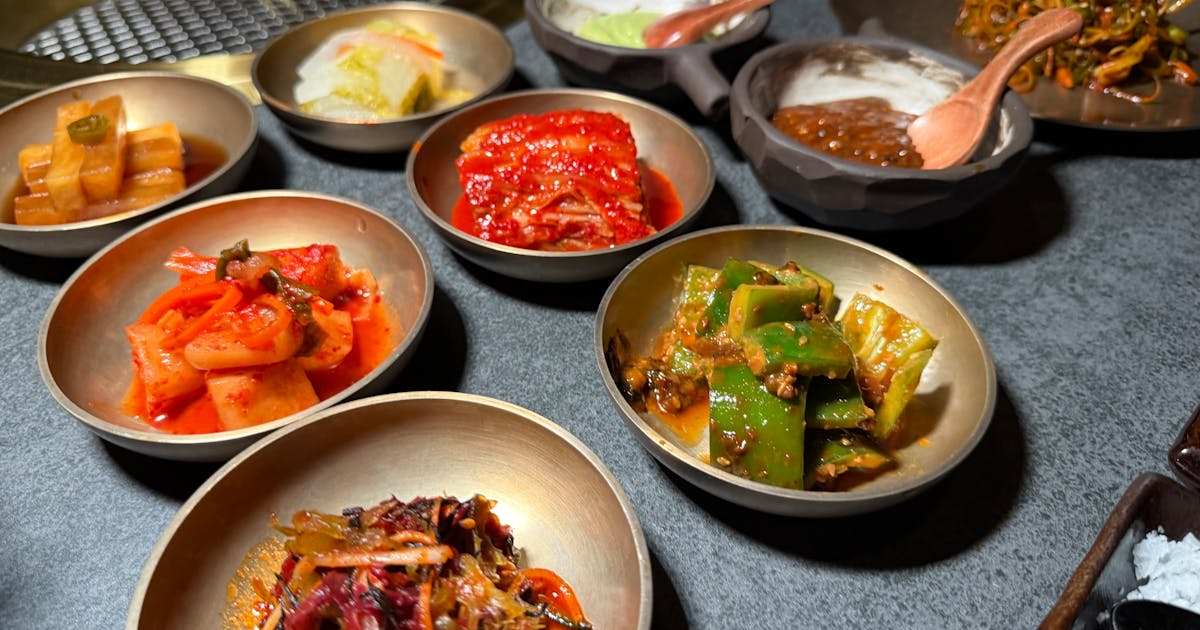
For years the advice for a healthier gut was to buy a probiotic. Then Stanford ran the experiment. Researchers randomly assigned healthy adults to either a high-fiber diet or a high-fermented-foods diet for ten weeks, and the fermented-foods group came out ahead: microbial diversity rose for every participant, and blood levels of nearly twenty inflammatory proteins went down (Stanford Medicine, 2021). The high-fiber group, notably, did not gain the same diversity over that window.
What matters is what raised the diversity: food, not a capsule. The gains came from yogurt, kefir, fermented cottage cheese, kimchi and other fermented vegetables, vegetable-brine drinks, and kombucha, with larger daily servings producing stronger effects (Stanford Medicine, 2021). A single-strain pill cannot match the range of organisms a plate of real fermented food delivers. Here are the five everyday foods that do the work, and the one label rule that decides whether they count.
1
The daily anchor
Yogurt Is the Easiest Place to Start
Yogurt is the most familiar fermented food and the simplest to eat every day. Harvard lists it first among foods with live cultures, alongside kefir, kimchi, sauerkraut, and some pickles (Harvard Health, 2024). It was also a staple of the Stanford diet.
One rule decides whether it helps: the label has to say live and active cultures. Cleveland Clinic warns that heating or cooking a fermented food kills the microorganisms, and that shelf-stable versions often carry none, so choose the refrigerated tub over the pantry one (Cleveland Clinic, 2024).
Yogurt is the easiest daily source, as long as the label reads live and active cultures.
2
The upgrade
Kefir Pours the Same Benefit
Kefir is fermented milk you drink, and it typically carries a wider mix of cultures than yogurt. It sits on Harvard's short list of foods rich in live probiotics and slots into the same daily habit, poured over oats or blended into a smoothie (Harvard Health, 2024).
The theme of the Stanford result was breadth. More kinds of organisms, arriving through food, is what moved the needle, so rotating kefir in beside yogurt is squarely on the point. That breadth is also the honest case for choosing food over a supplement: a capsule delivers one or a few strains, while a glass of kefir and a spoon of yogurt bring a mix no single pill sets out to match.
3
The vegetables
Kimchi and Sauerkraut, Raw and Cold
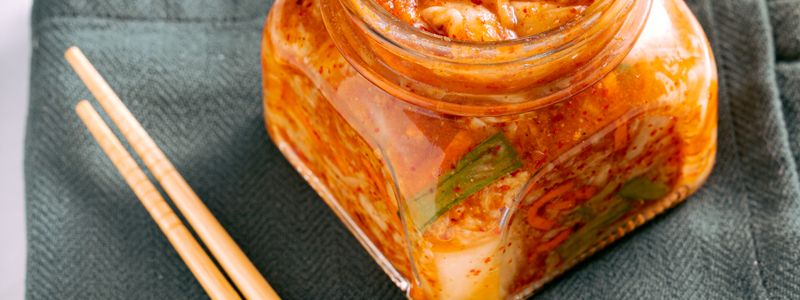
Fermented vegetables were a core part of the Stanford diet, and kimchi and sauerkraut are the two easiest to buy (Stanford Medicine, 2021). Both appear on the probiotic-food lists from Harvard and Cleveland Clinic.
The catch is the same as with yogurt. The vinegar-brined sauerkraut on a warm shelf is a pickle, not a probiotic. Look for it in the refrigerated section, unpasteurized, and add it as a cold topping rather than cooking it in. A forkful alongside a meal is enough to start, and the sharp, sour taste tends to grow on people faster than they expect.
Fermented vegetables were central to the Stanford diet. Buy them refrigerated and unpasteurized, and eat them cold.
Not everything fermented counts as a probiotic.
Cooking, canning, and shelf-stable processing kill the live cultures. The label rule is simple: look for live and active cultures, and keep it refrigerated.
Cleveland Clinic, 2024
4
The drink and the soy
Kombucha, Miso, and Tempeh Round It Out
Kombucha, the fermented tea, was on the Stanford menu and is an easy swap for a sweet drink, though it is worth checking the label for added sugar (Stanford Medicine, 2021). Fermented soy foods like miso and tempeh add more variety, and Harvard counts them among the everyday sources of live cultures (Harvard Health, 2024). Stir miso in at the end of cooking rather than boiling it, so the heat does not undo the point.
5
The dose
Make It Regular, and Build Up Slowly
The benefit is not a one-time event. Harvard's guidance is that probiotics have to be a regular thing, worked into one or more meals a day, to help (Harvard Health, 2024). The Stanford participants built up gradually toward several servings a day, and larger servings brought bigger gains (Stanford Medicine, 2021). Start with one serving a day and add from there, since a sudden jump can bring temporary bloating.
Take the fermented-foods list with you
Your free 2-page plan: the five foods that carry live cultures, the label rule that decides if they count, and a 4-week ramp-up.
One email. No spam. Unsubscribe anytime.
Free Lifestyle Assessment
How Healthy Is Your Current Lifestyle?
Answer honestly for five minutes and walk away with your personal scorecard: all six areas of your health rated, the one that needs your attention first, and a 30-day plan built from your answers. It shows up the second you finish.
Free. About 5 minutes. Your results appear instantly.
📋 Your Coach's Recommendations
1
Add One Live-Culture Food a Day
Start with yogurt or kefir at breakfast. Check the label for live and active cultures, and choose the refrigerated version over anything shelf-stable.
2
Bring in the Vegetables and the Variety
Keep refrigerated, unpasteurized kimchi or sauerkraut on hand as a cold topping, and rotate in kombucha, miso, or tempeh. Breadth of organisms is what moved gut diversity in the Stanford trial.
3
Make It Daily, and Build Up
Probiotic foods only help when they are regular. Work up gradually toward several small servings a day, since a sudden jump can cause temporary bloating.
?
How it works. Just a quiet check-in, not an alert and not a recurring nag. The event lands as a 30-minute slot at 9am two weeks from today, with your plan in the notes and a link back to this article. Works with Apple Calendar, Google Calendar, and Outlook. Yours to move, snooze, or delete whenever.
Keep this plan
Get the one-page fermented-foods plan: the five foods to add, the label rule, and a 4-week ramp-up.
One email. No spam. Unsubscribe anytime.
Where should we send it?
Your 1-page fermented-foods plan, straight to your inbox.
We send the plan plus one short evidence brief each week. Unsubscribe anytime.
✓
It's on the way
Check your inbox in the next minute. Want it right now?
Your first Ageless Brief arrives this week: one study, translated, no hype.
To your health,
Frequently Asked Questions
Do fermented foods really beat probiotic pills?
In the Stanford trial, fermented foods, not supplements, raised gut microbial diversity and lowered inflammatory markers. The study tested foods rather than running foods head-to-head against pills, but the takeaway from Harvard is consistent: whole fermented foods deliver a wider range of organisms than a single-strain capsule.
Which fermented foods have the most live cultures?
The everyday sources on Harvard's list are yogurt, kefir, kimchi, sauerkraut, and some pickles, plus kombucha, miso, and tempeh. The Stanford diet leaned on yogurt, kefir, fermented cottage cheese, fermented vegetables, brine drinks, and kombucha.
Why do the label and the fridge matter?
Cooking, canning, and shelf-stable processing kill the live microorganisms. Cleveland Clinic advises looking for the words live and active cultures and choosing refrigerated, unpasteurized versions, since a shelf-stable jar often has no probiotics left.
How much should I eat, and how often?
Regularly. Harvard says probiotic foods have to be a daily habit to help. Stanford participants built up gradually toward several servings a day, and larger servings brought bigger gains, so start with one serving and increase slowly.
Can fermented foods cause bloating?
Adding a lot at once can cause temporary gas or bloating while your gut adjusts. Starting with a single small serving a day and building up over a few weeks usually prevents it.
Is this medical advice?
No. This article is educational and not a substitute for medical care. If you are immunocompromised, pregnant, or managing a digestive condition, check with your doctor before adding fermented foods or probiotics.
Curious where you stand? Take the free 5-minute lifestyle assessment and your personal scorecard appears the second you finish.
By the Ageless Coach Editorial Team · Published June 4, 2026 · Last updated July 15, 2026
<style>
:root{--dark-base:#0D1B2A;--dark-mid:#1B3A4B;--teal:#0EA5A0;--teal-dark:#0C8C88;--teal-bright:#14D4CD;--fog:#D8E8E8;--deep-fog:#C8DCDC;--fog-border:#A8C4C4;--ink:#313743;--ink-soft:#49505f;--muted:#6b7280;--warm:#9A6841;--warm-light:#be7b4c;--serif:"Source Serif 4",Georgia,serif;--sans:Inter,-apple-system,BlinkMacSystemFont,"Segoe UI",sans-serif}
.w-richtext p,.w-richtext li,.w-richtext td{font-size:20.5px;line-height:1.7;color:var(--ink-soft)}
.w-richtext ul{list-style-type:disc;padding-left:24px;margin:12px 0}
.w-richtext ul li{margin-bottom:8px}
.ac-answer{background:#fff;border:1px solid #D4E4E4;border-top:5px solid var(--teal);border-radius:16px;padding:22px 24px 18px;margin:16px 0 28px;box-shadow:0 6px 22px rgba(13,27,42,.07)}
.ac-answer .aa-eyebrow{font:800 12px/1 var(--sans);letter-spacing:2.5px;text-transform:uppercase;color:var(--teal-dark);margin-bottom:8px}
.ac-answer .aa-head{font-family:var(--serif);font-size:24px;line-height:1.2;font-weight:800;color:var(--dark-base);margin:0 0 16px}
.ac-answer .aa-list{list-style:none;margin:0;padding:0}
.ac-answer .aa-list li{display:flex;gap:12px;align-items:baseline;padding:11px 0;border-bottom:1px solid #EDF3F3;font:700 16.5px/1.4 var(--sans);color:var(--ink)}
.ac-answer .aa-list li:last-child{border-bottom:none}
.ac-answer .aa-n{flex-shrink:0;width:24px;height:24px;border-radius:50%;background:var(--teal-dark);color:#fff;font:800 12px/24px var(--sans);text-align:center}
.ac-answer .aa-food{color:var(--teal-dark);font-weight:800}
.ac-answer .aa-cue{margin-top:18px;text-align:center}
.ac-answer .aa-cta{display:inline-flex;align-items:center;gap:10px;background:var(--teal-dark);color:#fff;font:800 14px/1 var(--sans);letter-spacing:.2px;padding:14px 26px;border-radius:50px;text-decoration:none;box-shadow:0 6px 16px rgba(12,140,136,.30)}
.ac-answer .aa-cta:hover{background:#0A7A76}
.ac-answer .aa-arw{display:inline-block;animation:aa-nudge 1.4s ease-in-out infinite}
@keyframes aa-nudge{0%,100%{transform:translateY(0)}50%{transform:translateY(4px)}}
@media(max-width:560px){.ac-answer{padding:20px 18px 16px}.ac-answer .aa-head{font-size:21px}.ac-answer .aa-list li{font-size:15px}}
.ac-band{margin:56px 0 24px;padding:26px 24px 12px;background:linear-gradient(180deg,#F0F7F7,#fff);border-radius:16px}
.ac-band.hype{background:linear-gradient(180deg,#FAF3EB,#fff)}
.ac-band .inner{display:flex;gap:20px;align-items:center}
.ac-band .big{font:900 72px/1 var(--sans);color:var(--deep-fog);flex-shrink:0}
.ac-band.hype .big{color:#EAD9C6}
.ac-band .q{font:700 13px/1.4 var(--sans);letter-spacing:2px;text-transform:uppercase;color:var(--teal-dark)}
.ac-band.hype .q{color:var(--warm)}
.ac-band h3{font-family:var(--serif);font-size:30px;line-height:1.2;font-weight:800;color:var(--ink);margin:0}
.ac-callout{border-left:4px solid var(--teal);background:#F4FAFA;border-radius:0 12px 12px 0;padding:18px 22px;margin:28px 0}
.ac-callout .n{font:800 20px/1.35 var(--sans);color:var(--dark-mid);margin-bottom:6px}
.ac-callout .d{font:500 15px/1.55 var(--sans);color:var(--ink-soft)}
.ac-callout .c{font:600 11.5px/1 var(--sans);letter-spacing:1.5px;text-transform:uppercase;color:var(--muted);margin-top:10px}
.ac-plan{background:linear-gradient(135deg,#F4FAFA 0%,#fff 100%);border-left:5px solid var(--teal-dark);border-radius:14px;padding:30px 26px;margin:40px 0 0;box-shadow:0 2px 12px rgba(0,0,0,.06);scroll-margin-top:100px}
.ac-plan .ptitle{font-family:var(--serif);font-size:24px;font-weight:800;color:var(--ink);margin-bottom:22px}
.ac-plan .step{display:flex;gap:16px;margin-bottom:18px;align-items:flex-start}
.ac-plan .step .n{min-width:38px;width:38px;height:38px;background:var(--teal-dark);border-radius:50%;color:#fff;font:800 17px/38px var(--sans);text-align:center;flex-shrink:0}
.ac-plan .sh{font:800 16.5px/1.4 var(--sans);color:var(--ink);margin-bottom:3px}
.ac-plan .sd{font:400 15px/1.6 var(--sans);color:var(--muted)}
.ac-plan .actions{border-top:1px solid #D8E8E8;margin-top:16px;padding-top:20px}
.ac-primary-row{display:flex;align-items:center;gap:10px;padding:0 4px}
.ac-btn-primary-wide{flex:1;background:var(--teal);color:#fff;border:1.5px solid var(--teal);border-radius:14px;padding:12px 22px;box-shadow:0 4px 14px rgba(14,165,160,.22);font-family:var(--sans);cursor:pointer;display:grid;grid-template-columns:auto 1fr;gap:14px;align-items:center;transition:all .18s ease}
.ac-btn-primary-wide:hover{background:var(--teal-dark);border-color:var(--teal-dark)}
.ac-btn-primary-wide .icon svg{width:22px;height:22px;color:#fff;display:block}
.ac-btn-primary-wide .label{text-align:left;line-height:1.25}
.ac-btn-primary-wide .label .top{display:block;font-weight:700;font-size:15.5px;color:#fff}
.ac-btn-primary-wide .label .top em{font-style:italic;font-weight:700}
.ac-cal-help{position:relative;flex-shrink:0}
.ac-cal-help summary{list-style:none;width:24px;height:24px;border-radius:50%;background:#E4F1F1;border:1px solid var(--fog-border);color:var(--dark-mid);font:700 13px/22px var(--sans);text-align:center;cursor:pointer;display:block}
.ac-cal-help summary::-webkit-details-marker{display:none}
.ac-cal-help .tip{position:absolute;right:0;top:32px;z-index:50;width:290px;background:var(--dark-base);color:var(--fog);border-radius:12px;padding:14px 16px;font:500 12.5px/1.55 var(--sans);box-shadow:0 10px 30px rgba(13,27,42,.35)}
.ac-cal-help .tip strong{color:#fff}
.ac-btn-share-wide{display:flex;width:100%;align-items:center;justify-content:center;gap:10px;background:#fff;color:var(--teal-dark);border:1.5px solid var(--teal-dark);border-radius:14px;padding:12px 22px;margin-top:10px;font:800 15px/1 var(--sans);cursor:pointer}
.ac-btn-share-wide svg{width:18px;height:18px}
.ac-midcap{background:linear-gradient(180deg,#F0F7F7,#fff);border:1.5px solid var(--fog-border);border-radius:16px;padding:24px 22px;margin:34px 0;text-align:center}
.ac-midcap h4{font-family:var(--serif);font-size:22px;font-weight:800;color:var(--ink);margin:0 0 6px}
.ac-midcap .sub{font:500 14px/1.55 var(--sans);color:var(--ink-soft);margin:0 auto 14px;max-width:400px}
.ac-midcap .mcform{display:flex;gap:8px;max-width:400px;margin:0 auto}
.ac-midcap .mcform input{flex:1;border:1.5px solid var(--fog-border);border-radius:50px;padding:12px 18px;font:500 14px/1 var(--sans);min-width:0}
.ac-midcap .mcform button{background:var(--teal-dark);color:#fff;border:none;border-radius:50px;padding:12px 20px;font:800 13.5px/1 var(--sans);cursor:pointer;white-space:nowrap}
.ac-midcap .fine{font:500 11.5px/1.5 var(--sans);color:var(--muted);margin-top:10px}
@media (max-width:520px){.ac-midcap .mcform{flex-direction:column}}
.ac-assess-promo{background:linear-gradient(135deg,#D8E8E8,#C8DCDC);border:1px solid var(--fog-border);border-radius:16px;padding:34px 30px;margin:44px 0;text-align:center}
.ac-assess-promo .eyebrow{color:var(--teal-dark);font:800 12px/1 var(--sans);letter-spacing:2.5px;text-transform:uppercase;margin:0 0 10px}
.ac-assess-promo h4{font-family:var(--serif);color:var(--dark-base);font-size:26px;font-weight:800;margin:0 0 12px}
.w-embed .ac-assess-promo p.ap-body,.ac-assess-promo p.ap-body{font-family:Georgia,serif;color:#3A5555;font-size:15.5px;font-weight:500;line-height:1.65;max-width:540px;margin:0 auto 22px}
.ac-assess-promo .ap-cta{display:inline-block;background:var(--teal-bright);color:var(--dark-base);font:800 15px/1 var(--sans);padding:15px 30px;border-radius:50px;text-decoration:none}
.ac-assess-promo .ap-fine{color:#4E6B6B;font:500 13px/1.5 var(--sans);margin:14px 0 0}
.ac-assess-line{border-top:1px solid #E2ECEC;margin-top:30px;padding:22px 10px 0;text-align:center;font:500 15.5px/1.6 var(--sans);color:#3A5555}
.w-embed .ac-assess-line a,.ac-assess-line a{color:var(--teal-dark);font-weight:700;text-decoration:underline;text-underline-offset:3px}
.ac-articlemeta{font:500 12.5px/1.6 var(--sans);color:#98a0a6;text-align:center;margin:24px 0 0}
.ac-capture{background:linear-gradient(180deg,#F0F7F7,#fff);border:1.5px solid var(--fog-border);border-radius:16px;padding:30px 28px;margin:26px 0 44px;text-align:center}
.ac-capture .cap-state{display:none}
.ac-capture[data-state="trigger"] .st-trigger{display:block}
.ac-capture[data-state="form"] .st-form{display:block}
.ac-capture[data-state="sent"] .st-sent{display:block}
.ac-capture h4{font-family:var(--serif);font-size:24px;font-weight:800;color:var(--ink);margin:0 0 8px}
.ac-capture .sub{font:500 15px/1.55 var(--sans);color:var(--ink-soft);margin:0 auto 18px;max-width:430px}
.ac-capture .bigbtn{display:inline-flex;align-items:center;gap:10px;background:var(--teal-dark);color:#fff;border:none;border-radius:50px;padding:16px 30px;font:800 16px/1 var(--sans);cursor:pointer;box-shadow:0 6px 18px rgba(12,140,136,.28)}
.ac-capture .capform{display:flex;gap:10px;max-width:430px;margin:0 auto}
.ac-capture .capform input{flex:1;border:1.5px solid var(--fog-border);border-radius:50px;padding:14px 20px;font:500 15px/1 var(--sans)}
.ac-capture .capform button{background:var(--teal-dark);color:#fff;border:none;border-radius:50px;padding:14px 24px;font:800 14px/1 var(--sans);cursor:pointer}
.ac-capture .sent-check{width:52px;height:52px;border-radius:50%;background:var(--teal);color:#fff;font:800 26px/52px var(--sans);margin:0 auto 12px}
.ac-capture .dl{display:inline-block;margin-top:6px;color:var(--teal-dark);font:700 15px/1 var(--sans);text-decoration:underline;cursor:pointer}
.ac-capture .fine{font:500 12px/1.5 var(--sans);color:var(--muted);margin-top:12px}
.ac-sig{margin-top:36px}
.ac-sig .rule{width:60px;height:2px;background:linear-gradient(90deg,var(--teal-dark),var(--teal-bright));margin-bottom:18px;border-radius:2px}
.ac-sig .toyour{font-family:var(--serif);font-size:16px;font-style:italic;color:#777;margin:0 0 10px;padding-left:2px}
.ac-faq{margin-top:40px;border-top:1px solid #e5e7eb;padding-top:30px;margin-bottom:40px}
.ac-faq h2{font-family:var(--serif);font-size:23px;font-weight:800;color:var(--ink);margin:0 0 18px}
.ac-faq details{border:1px solid #e5e7eb;border-radius:10px;margin-bottom:10px}
.ac-faq summary{padding:15px 18px;font:700 16px/1.4 var(--sans);color:var(--ink);cursor:pointer;display:flex;justify-content:space-between;align-items:center;list-style:none}
.ac-faq summary:after{content:"\25BE";color:var(--warm)}
.ac-faq .a{padding:0 18px 16px;font-size:17px;line-height:1.65;color:#555}
.article-header-section .article-container{max-width:1080px !important;margin:0 auto !important;padding:0 20px !important}
.article-header-section .article-hero-image{display:block;width:100%;max-width:660px;margin:0}
.article-header-section .article-title{display:block !important;font-family:var(--serif);font-size:32px;line-height:1.25;font-weight:700;color:#313743;margin:20px 0 12px 0;text-align:left;max-width:660px}
@media (max-width:767px){.article-header-section .article-title{font-size:26px}.article-header-section .article-hero-image{max-width:100%}}
@media (max-width:640px){.ac-band .big{font-size:52px}}
@media (max-width:520px){.ac-capture .capform{flex-direction:column}}
.ac-figure{margin:30px 0}.ac-figure img{display:block;width:100%;border-radius:14px;height:auto;aspect-ratio:800/300}.ac-figure figcaption{font:500 13px/1.5 var(--sans);color:var(--muted);margin-top:9px}</style>
<div class="ac-answer">
<div class="aa-eyebrow">Food beat the supplement</div>
<h2 class="aa-head">A Stanford trial found that everyday fermented foods, not a pill, raised gut diversity and lowered inflammation. These are the ones to reach for.</h2>
<ol class="aa-list">
<li><span class="aa-n">1</span><span><span class="aa-food">Yogurt</span> · the easiest daily source, if the label says live and active cultures</span></li>
<li><span class="aa-n">2</span><span><span class="aa-food">Kefir</span> · a drinkable, more diverse cousin of yogurt</span></li>
<li><span class="aa-n">3</span><span><span class="aa-food">Kimchi and sauerkraut</span> · fermented vegetables, raw and refrigerated</span></li>
<li><span class="aa-n">4</span><span><span class="aa-food">Kombucha</span> · the fermented tea used in the Stanford diet</span></li>
<li><span class="aa-n">5</span><span><span class="aa-food">Miso and tempeh</span> · fermented soy that carries live cultures when uncooked</span></li>
</ol>
<div class="aa-cue"><a class="aa-cta" href="#coach-recommendations">Get Your Coach's 3-Step Plan <span class="aa-arw">↓</span></a></div>
</div>
<p>For years the advice for a healthier gut was to buy a probiotic. Then Stanford ran the experiment. Researchers randomly assigned healthy adults to either a high-fiber diet or a high-fermented-foods diet for ten weeks, and the fermented-foods group came out ahead: microbial diversity rose for every participant, and blood levels of nearly twenty inflammatory proteins went down (<a href="https://med.stanford.edu/news/all-news/2021/07/fermented-food-diet-increases-microbiome-diversity-lowers-inflammation.html" target="_blank" rel="noopener">Stanford Medicine, 2021</a>). The high-fiber group, notably, did not gain the same diversity over that window.</p>
<p>What matters is what raised the diversity: food, not a capsule. The gains came from yogurt, kefir, fermented cottage cheese, kimchi and other fermented vegetables, vegetable-brine drinks, and kombucha, with larger daily servings producing stronger effects (<a href="https://med.stanford.edu/news/all-news/2021/07/fermented-food-diet-increases-microbiome-diversity-lowers-inflammation.html" target="_blank" rel="noopener">Stanford Medicine, 2021</a>). A single-strain pill cannot match the range of organisms a plate of real fermented food delivers. Here are the five everyday foods that do the work, and the one label rule that decides whether they count.</p>
<div class="ac-band"><div class="inner"><div class="big">1</div><div><div class="q">The daily anchor</div><h3>Yogurt Is the Easiest Place to Start</h3></div></div></div>
<p>Yogurt is the most familiar fermented food and the simplest to eat every day. Harvard lists it first among foods with live cultures, alongside kefir, kimchi, sauerkraut, and some pickles (<a href="https://www.health.harvard.edu/blog/fermented-foods-for-better-gut-health-201805161607" target="_blank" rel="noopener">Harvard Health, 2024</a>). It was also a staple of the Stanford diet.</p>
<p>One rule decides whether it helps: the label has to say live and active cultures. Cleveland Clinic warns that heating or cooking a fermented food kills the microorganisms, and that shelf-stable versions often carry none, so choose the refrigerated tub over the pantry one (<a href="https://health.clevelandclinic.org/probiotic-foods" target="_blank" rel="noopener">Cleveland Clinic, 2024</a>).</p>
<figure class="ac-figure"><img src="https://images.pexels.com/photos/13466256/pexels-photo-13466256.jpeg?auto=compress&cs=tinysrgb&w=800&h=300&fit=crop" alt="A spoonful of plain yogurt held above a white bowl" width="800" height="300" loading="lazy" decoding="async"><figcaption>Yogurt is the easiest daily source, as long as the label reads live and active cultures.</figcaption></figure>
<div class="ac-band"><div class="inner"><div class="big">2</div><div><div class="q">The upgrade</div><h3>Kefir Pours the Same Benefit</h3></div></div></div>
<p>Kefir is fermented milk you drink, and it typically carries a wider mix of cultures than yogurt. It sits on Harvard's short list of foods rich in live probiotics and slots into the same daily habit, poured over oats or blended into a smoothie (<a href="https://www.health.harvard.edu/blog/fermented-foods-for-better-gut-health-201805161607" target="_blank" rel="noopener">Harvard Health, 2024</a>).</p>
<p>The theme of the Stanford result was breadth. More kinds of organisms, arriving through food, is what moved the needle, so rotating kefir in beside yogurt is squarely on the point. That breadth is also the honest case for choosing food over a supplement: a capsule delivers one or a few strains, while a glass of kefir and a spoon of yogurt bring a mix no single pill sets out to match.</p>
<div class="ac-band"><div class="inner"><div class="big">3</div><div><div class="q">The vegetables</div><h3>Kimchi and Sauerkraut, Raw and Cold</h3></div></div></div>
<p>Fermented vegetables were a core part of the Stanford diet, and kimchi and sauerkraut are the two easiest to buy (<a href="https://med.stanford.edu/news/all-news/2021/07/fermented-food-diet-increases-microbiome-diversity-lowers-inflammation.html" target="_blank" rel="noopener">Stanford Medicine, 2021</a>). Both appear on the probiotic-food lists from Harvard and Cleveland Clinic.</p>
<p>The catch is the same as with yogurt. The vinegar-brined sauerkraut on a warm shelf is a pickle, not a probiotic. Look for it in the refrigerated section, unpasteurized, and add it as a cold topping rather than cooking it in. A forkful alongside a meal is enough to start, and the sharp, sour taste tends to grow on people faster than they expect.</p>
<figure class="ac-figure"><img src="https://images.pexels.com/photos/6823261/pexels-photo-6823261.jpeg?auto=compress&cs=tinysrgb&w=800&h=300&fit=crop" alt="Kimchi in a clear glass jar beside wooden chopsticks" width="800" height="300" loading="lazy" decoding="async"><figcaption>Fermented vegetables were central to the Stanford diet. Buy them refrigerated and unpasteurized, and eat them cold.</figcaption></figure>
<div class="ac-callout"><div class="n">Not everything fermented counts as a probiotic.</div><div class="d">Cooking, canning, and shelf-stable processing kill the live cultures. The label rule is simple: look for live and active cultures, and keep it refrigerated.</div><div class="c">Cleveland Clinic, 2024</div></div>
<div class="ac-band"><div class="inner"><div class="big">4</div><div><div class="q">The drink and the soy</div><h3>Kombucha, Miso, and Tempeh Round It Out</h3></div></div></div>
<p>Kombucha, the fermented tea, was on the Stanford menu and is an easy swap for a sweet drink, though it is worth checking the label for added sugar (<a href="https://med.stanford.edu/news/all-news/2021/07/fermented-food-diet-increases-microbiome-diversity-lowers-inflammation.html" target="_blank" rel="noopener">Stanford Medicine, 2021</a>). Fermented soy foods like miso and tempeh add more variety, and Harvard counts them among the everyday sources of live cultures (<a href="https://www.health.harvard.edu/blog/fermented-foods-for-better-gut-health-201805161607" target="_blank" rel="noopener">Harvard Health, 2024</a>). Stir miso in at the end of cooking rather than boiling it, so the heat does not undo the point.</p>
<div class="ac-band"><div class="inner"><div class="big">5</div><div><div class="q">The dose</div><h3>Make It Regular, and Build Up Slowly</h3></div></div></div>
<p>The benefit is not a one-time event. Harvard's guidance is that probiotics have to be a regular thing, worked into one or more meals a day, to help (<a href="https://www.health.harvard.edu/blog/fermented-foods-for-better-gut-health-201805161607" target="_blank" rel="noopener">Harvard Health, 2024</a>). The Stanford participants built up gradually toward several servings a day, and larger servings brought bigger gains (<a href="https://med.stanford.edu/news/all-news/2021/07/fermented-food-diet-increases-microbiome-diversity-lowers-inflammation.html" target="_blank" rel="noopener">Stanford Medicine, 2021</a>). Start with one serving a day and add from there, since a sudden jump can bring temporary bloating.</p>
<div class="ac-midcap">
<h4>Take the fermented-foods list with you</h4>
<p class="sub">Your free 2-page plan: the five foods that carry live cultures, the label rule that decides if they count, and a 4-week ramp-up.</p>
<div class="mcform"><input type="email" placeholder="Your email address" aria-label="Email address"><button type="button">Send My Plan (Free)</button></div>
<div class="fine">One email. No spam. Unsubscribe anytime.</div>
</div>
<div class="ac-assess-promo">
<p class="eyebrow">Free Lifestyle Assessment</p>
<h4>How Healthy Is Your Current Lifestyle?</h4>
<p class="ap-body">Answer honestly for five minutes and walk away with your personal scorecard: all six areas of your health rated, the one that needs your attention first, and a 30-day plan built from your answers. It shows up the second you finish.</p>
<a class="ap-cta" href="/#assessment">See How the Assessment Works →</a>
<p class="ap-fine">Free. About 5 minutes. Your results appear instantly.</p>
</div>
<div class="ac-plan" id="coach-recommendations"><div class="ptitle">📋 Your Coach's Recommendations</div>
<div class="step"><div class="n">1</div><div><div class="sh">Add One Live-Culture Food a Day</div><div class="sd">Start with yogurt or kefir at breakfast. Check the label for live and active cultures, and choose the refrigerated version over anything shelf-stable.</div></div></div>
<div class="step"><div class="n">2</div><div><div class="sh">Bring in the Vegetables and the Variety</div><div class="sd">Keep refrigerated, unpasteurized kimchi or sauerkraut on hand as a cold topping, and rotate in kombucha, miso, or tempeh. Breadth of organisms is what moved gut diversity in the Stanford trial.</div></div></div>
<div class="step"><div class="n">3</div><div><div class="sh">Make It Daily, and Build Up</div><div class="sd">Probiotic foods only help when they are regular. Work up gradually toward several small servings a day, since a sudden jump can cause temporary bloating.</div></div></div>
<div class="actions">
<div class="ac-primary-row">
<button type="button" class="ac-btn-primary-wide" data-ac-cal>
<span class="icon"><svg viewBox="0 0 24 24" fill="none" stroke="currentColor" stroke-width="2" stroke-linecap="round" stroke-linejoin="round"><rect x="3" y="4" width="18" height="18" rx="2"></rect><path d="M16 2v4M8 2v4M3 10h18"></path></svg></span>
<span class="label"><span class="top">Add <em>Your Coach's Recommendations to Your Calendar</em></span></span>
</button>
<details class="ac-cal-help">
<summary aria-label="What does this do?">?</summary>
<div class="tip"><strong>How it works.</strong> Just a quiet check-in, not an alert and not a recurring nag. The event lands as a 30-minute slot at 9am two weeks from today, with your plan in the notes and a link back to this article. Works with Apple Calendar, Google Calendar, and Outlook. Yours to move, snooze, or delete whenever.</div>
</details>
</div>
<button type="button" class="ac-btn-share-wide" data-ac-share>
<svg viewBox="0 0 24 24" fill="none" stroke="currentColor" stroke-width="2" stroke-linecap="round" stroke-linejoin="round"><path d="M4 12v8a2 2 0 002 2h12a2 2 0 002-2v-8"></path><polyline points="16 6 12 2 8 6"></polyline><line x1="12" y1="2" x2="12" y2="15"></line></svg>
Share this article
</button>
</div>
</div>
<div class="ac-capture" data-state="trigger" data-article-slug="fermented-foods-beat-probiotic-pills-the-stanford-study" data-pdf-url="https://cdn.prod.website-files.com/69be1026a027224999b7936b/6a577232528c0fe03e7237e9_fermented-foods-gut-plan.pdf" data-plan-title="The Fermented-Foods Gut Plan" data-plan-desc="Your free 2-page plan: the five fermented foods that carry live cultures, the label rule that decides if they count, and a 4-week ramp-up. Checked against Stanford Medicine, Harvard Health, and Cleveland Clinic.">
<div class="st-trigger cap-state"><h4>Keep this plan</h4>
<p class="sub">Get the one-page fermented-foods plan: the five foods to add, the label rule, and a 4-week ramp-up.</p>
<button class="bigbtn" type="button" data-cap="form">📩 Email Me This Plan (Free PDF)</button>
<div class="fine">One email. No spam. Unsubscribe anytime.</div></div>
<div class="st-form cap-state"><h4>Where should we send it?</h4>
<p class="sub">Your 1-page fermented-foods plan, straight to your inbox.</p>
<form class="capform"><input type="email" name="email" required placeholder="Your email address" aria-label="Email address"><button type="submit">Send My Plan</button></form>
<div class="fine">We send the plan plus one short evidence brief each week. Unsubscribe anytime.</div></div>
<div class="st-sent cap-state"><div class="sent-check">✓</div><h4>It's on the way</h4>
<p class="sub">Check your inbox in the next minute. Want it right now?</p>
<a class="dl" href="https://cdn.prod.website-files.com/69be1026a027224999b7936b/6a577232528c0fe03e7237e9_fermented-foods-gut-plan.pdf" download>⬇ Download your plan (PDF)</a>
<div class="fine">Your first Ageless Brief arrives this week: one study, translated, no hype.</div></div>
</div>
<div class="ac-sig">
<div class="rule"></div>
<p class="toyour">To your health,</p>
<svg width="320" height="72" viewBox="0 0 320 72" role="img" aria-label="Ageless Coach. Age Strong. Live Long." xmlns="http://www.w3.org/2000/svg" xmlns:xlink="http://www.w3.org/1999/xlink">
<defs><clipPath id="acSigIconClip"><rect x="0" y="6" width="60" height="60" rx="12" ry="12"/></clipPath></defs>
<image x="0" y="6" width="60" height="60" clip-path="url(#acSigIconClip)" preserveAspectRatio="xMidYMid slice" href="https://cdn.prod.website-files.com/69be1026a027224999b7936b/6a0b22c6afd5d6fd115b9c1a_ac-closing-brand-icon.webp" xlink:href="https://cdn.prod.website-files.com/69be1026a027224999b7936b/6a0b22c6afd5d6fd115b9c1a_ac-closing-brand-icon.webp"/>
<text x="76" y="42" style="font-family:Inter,system-ui,-apple-system,'Helvetica Neue',Arial,sans-serif;font-size:27px;letter-spacing:-0.3px">
<tspan style="font-weight:800;fill:#0D1B2A">Ageless</tspan><tspan style="font-weight:300;fill:rgba(13,27,42,0.6)">Coach</tspan><tspan dy="-12" style="font-size:16px;font-weight:600;fill:rgba(13,27,42,0.6)">™</tspan>
</text>
<text x="76" y="60" style="font-family:Inter,system-ui,-apple-system,'Helvetica Neue',Arial,sans-serif;font-size:10.5px;letter-spacing:2.5px;font-weight:500;fill:#0C8C88;text-transform:uppercase">AGE STRONG. LIVE LONG.</text>
</svg>
</div>
<div class="ac-faq"><h2>Frequently Asked Questions</h2>
<details><summary>Do fermented foods really beat probiotic pills?</summary><div class="a">In the Stanford trial, fermented foods, not supplements, raised gut microbial diversity and lowered inflammatory markers. The study tested foods rather than running foods head-to-head against pills, but the takeaway from Harvard is consistent: whole fermented foods deliver a wider range of organisms than a single-strain capsule.</div></details>
<details><summary>Which fermented foods have the most live cultures?</summary><div class="a">The everyday sources on Harvard's list are yogurt, kefir, kimchi, sauerkraut, and some pickles, plus kombucha, miso, and tempeh. The Stanford diet leaned on yogurt, kefir, fermented cottage cheese, fermented vegetables, brine drinks, and kombucha.</div></details>
<details><summary>Why do the label and the fridge matter?</summary><div class="a">Cooking, canning, and shelf-stable processing kill the live microorganisms. Cleveland Clinic advises looking for the words live and active cultures and choosing refrigerated, unpasteurized versions, since a shelf-stable jar often has no probiotics left.</div></details>
<details><summary>How much should I eat, and how often?</summary><div class="a">Regularly. Harvard says probiotic foods have to be a daily habit to help. Stanford participants built up gradually toward several servings a day, and larger servings brought bigger gains, so start with one serving and increase slowly.</div></details>
<details><summary>Can fermented foods cause bloating?</summary><div class="a">Adding a lot at once can cause temporary gas or bloating while your gut adjusts. Starting with a single small serving a day and building up over a few weeks usually prevents it.</div></details>
<details><summary>Is this medical advice?</summary><div class="a">No. This article is educational and not a substitute for medical care. If you are immunocompromised, pregnant, or managing a digestive condition, check with your doctor before adding fermented foods or probiotics.</div></details>
</div>
<div class="ac-assess-line">Curious where you stand? Take the free <a href="/#assessment">5-minute lifestyle assessment</a> and your personal scorecard appears the second you finish.</div>
<p class="ac-articlemeta">By the Ageless Coach Editorial Team · Published June 4, 2026 · Last updated July 15, 2026</p>
Subscribe to the Free Newsletter
One article a week. Trusted research made simple. Start making smarter health decisions today.