
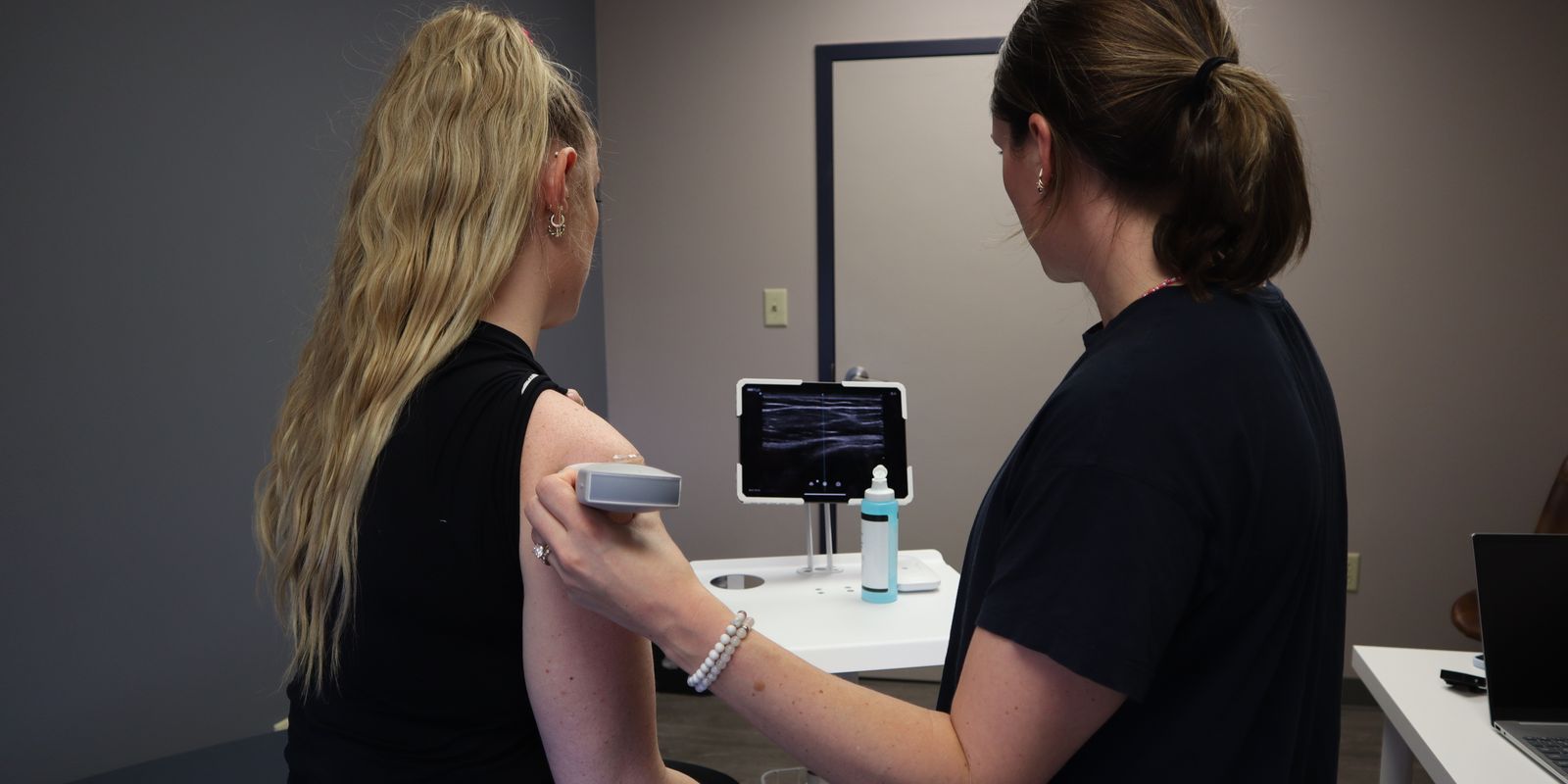
Rotator cuff tears are mostly wear, not one bad fall. Here are the five signs to check and what actually happens at the appointment.
Five signs point at a rotator cuff tear. A dull ache deep in the shoulder. Pain that gets worse at night. Trouble reaching behind your back. Weakness lifting the arm. Popping or clicking when you move it.
The rotator cuff is a group of muscles and tendons. They hold the ball of the upper arm bone in the shoulder socket. Most tears are not one dramatic injury but years of wear on the tendon.
Below are the five signs, what gets checked at the appointment, and why most partial tears never reach an operating room. Recovery takes months either way, which is the part nobody mentions.
Five signs that point at the rotator cuff
Rotator cuff symptoms are specific enough to be worth checking against a list.
Mayo Clinic describes the pain as a dull ache deep in the shoulder (Mayo Clinic, 2025). It disturbs sleep. It makes it hard to comb your hair or reach behind your back. Some rotator cuff injuries cause no pain at all.
- A dull ache deep inside the shoulder. Mayo Clinic describes it exactly that way. Cleveland Clinic adds that it can instead feel sharp, like being stabbed with a knife, when the tear comes from a sudden fall or accident.
- Pain that gets worse at night or at rest. Cleveland Clinic lists shoulder pain that worsens at night or when resting the arm. Harvard Health says rotator cuff pain is usually worse at night, possibly because the body releases inflammatory chemicals during sleep.
- Trouble combing your hair or reaching behind your back. Mayo Clinic names both movements. Harvard Health adds that the pain is felt on the outside of the upper arm, especially when using the arm overhead, while range of motion stays intact.
- Weakness raising or lowering the arm. Cleveland Clinic lists difficulty, pain and weakness raising, lowering or rotating the arm, and struggling to lift items. Mayo Clinic says to see your care team right away if weakness comes on immediately after an injury.
- Popping, clicking or crackling when the arm moves. Cleveland Clinic lists these sounds or sensations in certain arm positions. They are a clue rather than a diagnosis, because plenty of shoulders click without a tear.
Cleveland Clinic makes one more point worth holding onto. The problem is so common that some people have a tear and never know it, because they have no symptoms.
What actually gets checked when you finally go in
The exam is short and the imaging is predictable.
Cleveland Clinic says a provider checks the shoulder for tenderness, range of motion and arm strength (Cleveland Clinic, 2023). An X-ray then looks for arthritis or bone spurs. An MRI or ultrasound looks for tendon tears.

Mayo Clinic says most rotator cuff injuries come from progressive wear of the tendon over time. Repetitive overhead activity or long bouts of heavy lifting do the damage.
Cleveland Clinic names three drivers of a degenerative tear. Bone spurs rub against the tendon. Blood flow to the cuff drops with age. Repeated shoulder movements wear it down.
About 8 out of 10 people with partial tears get better with nonsurgical treatments.
Keep the five signs with you
Your free one page plan turns these five signs into three steps: what to track before the appointment, when sudden weakness means go now, and the lifting rule that protects the cuff.
Enter your email to unlock your plan
Your 1-page rotator cuff plan, unlocked right here.
Your plan is ready
Download or print it below. Save it anywhere.
⬇ Download your plan (PDF)Why most partial tears never reach an operating room
Surgery is one option among several, and it is not the first one.
Harvard Health names three treatments (Harvard Health, 2022). Corticosteroid injections into the shoulder. Anti inflammatory medicines. Physical therapy to stretch and strengthen the muscles and tendons.
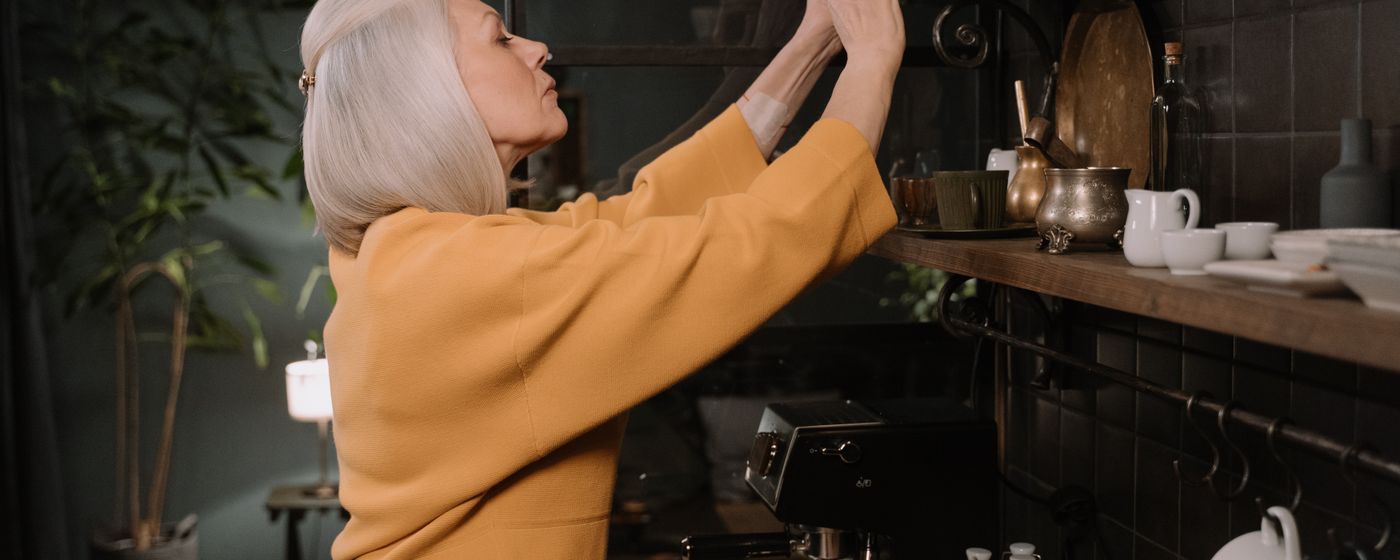
Cleveland Clinic lists the nonsurgical set plainly. A sling and rest. Anti inflammatory medicines. Physical therapy. Steroid injections. Improvement can take up to a year.
Mayo Clinic says that for many people with rotator cuff problems, physical therapy exercises are all that is needed.
Three things people get wrong about rotator cuff tears
Three beliefs about this injury travel further than the evidence behind them.
A tear always hurts. It does not. Mayo Clinic says some rotator cuff injuries do not cause pain. Cleveland Clinic says the problem is common enough that there are people with a tear who do not know they have one, because they have no symptoms.
A torn cuff means surgery. Not usually. Cleveland Clinic says about 8 out of 10 people with partial tears get better with nonsurgical treatment, and that having a tear does not necessarily mean you need an operation.
It is a young athlete's injury. Age is the bigger risk. Mayo Clinic says rotator cuff tears are most common in people older than 50, and Cleveland Clinic puts the degenerative risk from age 40 onward. Carpenters, painters and mechanics are on its risk list alongside athletes.
To your health,
Ageless Coach
Age Strong. Live Long.
This article is education, not medical advice. Mayo Clinic says to see your care team right away if you have immediate weakness in your arm after an injury. Ageless Coach is an affiliate partner and may earn a commission on purchases made through links on this page.