Ozempic and Wegovy have rewritten the weight-loss conversation in three years. The numbers are real. People are losing 15 to 20 percent of their body weight. But almost nobody is talking about what comes off with it.
Up to 40 percent of the weight people lose on these drugs is not fat. It is muscle. And when you lose muscle in your 40s, 50s, or 60s, you do not get it back automatically. There is one cheap, proven counterweight, and your doctor may not have mentioned it.
1
The mechanism
What Ozempic Actually Does to Your Body
GLP-1 drugs work by mimicking a gut hormone that tells your brain you are full. You eat less, often much less, and the weight comes off because you are in a calorie deficit.
That distinction matters. In a calorie deficit, the body breaks down whatever tissue it needs to cover the gap. Without a signal telling it to protect muscle, it pulls from muscle and fat at the same time.
The American Heart Association has flagged muscle loss as a real concern for people focused only on the scale (American Heart Association, 2020). The number on the scale drops, but it does not tell you what kind of weight left.
2
The cost
The Muscle Problem These Drugs Leave Behind
For a 50-year-old losing 40 pounds, a large share of that can be muscle rather than fat. Some is fluid, but a meaningful part is the contractile muscle that keeps your metabolism running and protects you from falls.
Muscle mass already declines by about one percent per year after 40, and the rate speeds up into your 60s and 70s. Stacking drug-driven muscle loss on top of normal age-related loss can push someone toward frailty faster.
Once that muscle is gone in midlife, rebuilding it takes deliberate effort. That is the part the before-and-after photos never show.
Muscle mass declines about 1% per year after 40, and faster after 60.
Rapid weight loss without a muscle-protecting stimulus can accelerate that decline.
Mayo Clinic, 2024
Take the muscle-protection plan with you
Your free 2-page plan: the weekly training template, the protein targets, and a checklist to start this week.
One email. No spam. Unsubscribe anytime.
3
The counterweight
Why Strength Training Keeps the Muscle You Are Losing
Resistance training is the signal that tells your body to hold onto muscle during weight loss. The National Institute on Aging calls it the most important type of exercise for building and preserving muscle as we age (National Institute on Aging, 2024).
Strong muscles keep you independent and make everyday tasks feel easier, from getting out of a chair to carrying groceries. They also protect your balance and lower your risk of falls.
This is the cheap counterweight to the drug's hidden cost. It does not require a gym membership or fancy equipment to start.
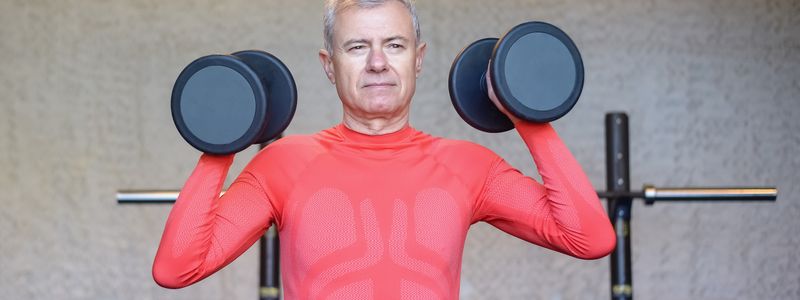
Two or three short strength sessions a week is enough to tell your muscle to stay.
4
The dose
How Little It Takes to Protect Your Strength
You do not need to train every day. Mayo Clinic recommends strength exercises for all major muscle groups at least two times a week, which is enough to build and keep muscle as you age (Mayo Clinic, 2024).
More muscle also raises your resting metabolic rate, so you burn more calories even at rest. That is what makes it easier to keep the weight off after the medication stops.
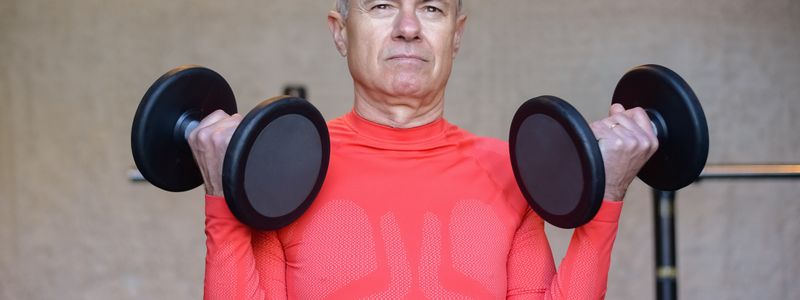
The muscle you keep is what keeps the weight off after the medication stops.
Pair the training with enough protein and the effect compounds. If you are over 60, this matters even more, because protecting muscle now is what protects your independence later.
Free Lifestyle Assessment
How Healthy Is Your Current Lifestyle?
Answer honestly for five minutes and walk away with your personal scorecard: all six areas of your health rated, the one that needs your attention first, and a 30-day plan built from your answers. It shows up the second you finish.
Free. About 5 minutes. Your results appear instantly.
📋 Your Coach's Recommendations
1
Start Two 30-Minute Strength Sessions This Week
Pick two non-consecutive days. Cover legs, back, chest, shoulders, and core in each session. Bodyweight, bands, or dumbbells all count when you are starting out.
2
Train Every Major Muscle Group Twice Per Week
Work up to hitting each muscle group two times weekly. Add a little resistance as movements get easier so the muscle keeps a reason to stay.
3
Eat 25 to 30 Grams of Protein at Every Meal
Protein gives the training something to build with, which matters most when you are eating less on a GLP-1 drug. Spread it across the day rather than loading one meal.
?
How it works. Just a quiet check-in, not an alert and not a recurring nag. The event lands as a 30-minute slot at 9am two weeks from today, with your plan in the notes and a link back to this article. Works with Apple Calendar, Google Calendar, and Outlook. Yours to move, snooze, or delete whenever.
Keep this plan
Get the one-page muscle-protection plan: the weekly training template, the protein targets, and where to begin.
One email. No spam. Unsubscribe anytime.
Where should we send it?
Your 1-page muscle-protection plan, straight to your inbox.
We send the plan plus one short evidence brief each week. Unsubscribe anytime.
✓
It's on the way
Check your inbox in the next minute. Want it right now?
Your first Ageless Brief arrives this week: one study, translated, no hype.
To your health,
Frequently Asked Questions
Will I really lose muscle on Ozempic or Wegovy?
Some muscle loss is expected any time you lose weight quickly, because the body draws on both fat and muscle in a calorie deficit. Strength training and adequate protein are what tip that balance back toward keeping the muscle.
How many days a week do I actually need to strength train?
At least two days a week, covering all major muscle groups, is enough to build and preserve muscle as you age. You do not need daily gym sessions to protect your strength.
Can I start strength training if I have never lifted before?
Yes. Bodyweight moves, resistance bands, and light dumbbells all count when you are starting. The key is covering the major muscle groups and adding a little resistance as the movements get easier.
Why does muscle matter so much for keeping weight off?
Muscle raises your resting metabolic rate, so you burn more calories even at rest. That makes it easier to maintain your weight after the medication stops, when appetite often returns.
How much protein should I eat while losing weight?
Aim for roughly 25 to 30 grams of protein at each meal, spread across the day. Protein gives your training something to build with, which matters most when you are eating less on a GLP-1 drug.
Is this more important after 60?
Yes. Muscle loss accelerates into the 60s and 70s, so protecting muscle during weight loss becomes even more important for staying strong, mobile, and independent.
Curious where you stand? Take the free 5-minute lifestyle assessment and your personal scorecard appears the second you finish.
By the Ageless Coach Editorial Team · Published July 13, 2026 · Last updated July 13, 2026
<style>
:root{--dark-base:#0D1B2A;--dark-mid:#1B3A4B;--teal:#0EA5A0;--teal-dark:#0C8C88;--teal-bright:#14D4CD;--fog:#D8E8E8;--deep-fog:#C8DCDC;--fog-border:#A8C4C4;--ink:#313743;--ink-soft:#49505f;--muted:#6b7280;--warm:#9A6841;--warm-light:#be7b4c;--serif:"Source Serif 4",Georgia,serif;--sans:Inter,-apple-system,BlinkMacSystemFont,"Segoe UI",sans-serif}
.w-richtext p,.w-richtext li,.w-richtext td{font-size:20.5px;line-height:1.7;color:var(--ink-soft)}
.w-richtext ul{list-style-type:disc;padding-left:24px;margin:12px 0}
.w-richtext ul li{margin-bottom:8px}
.ac-answer{background:#fff;border:1px solid #D4E4E4;border-top:5px solid var(--teal);border-radius:16px;padding:22px 24px 18px;margin:16px 0 28px;box-shadow:0 6px 22px rgba(13,27,42,.07)}
.ac-answer .aa-eyebrow{font:800 12px/1 var(--sans);letter-spacing:2.5px;text-transform:uppercase;color:var(--teal-dark);margin-bottom:8px}
.ac-answer .aa-head{font-family:var(--serif);font-size:24px;line-height:1.2;font-weight:800;color:var(--dark-base);margin:0 0 16px}
.ac-answer .aa-list{list-style:none;margin:0;padding:0}
.ac-answer .aa-list li{display:flex;gap:12px;align-items:baseline;padding:11px 0;border-bottom:1px solid #EDF3F3;font:700 16.5px/1.4 var(--sans);color:var(--ink)}
.ac-answer .aa-list li:last-child{border-bottom:none}
.ac-answer .aa-n{flex-shrink:0;width:24px;height:24px;border-radius:50%;background:var(--teal-dark);color:#fff;font:800 12px/24px var(--sans);text-align:center}
.ac-answer .aa-food{color:var(--teal-dark);font-weight:800}
.ac-answer .aa-cue{margin-top:18px;text-align:center}
.ac-answer .aa-cta{display:inline-flex;align-items:center;gap:10px;background:var(--teal-dark);color:#fff;font:800 14px/1 var(--sans);letter-spacing:.2px;padding:14px 26px;border-radius:50px;text-decoration:none;box-shadow:0 6px 16px rgba(12,140,136,.30)}
.ac-answer .aa-cta:hover{background:#0A7A76}
.ac-answer .aa-arw{display:inline-block;animation:aa-nudge 1.4s ease-in-out infinite}
@keyframes aa-nudge{0%,100%{transform:translateY(0)}50%{transform:translateY(4px)}}
@media(max-width:560px){.ac-answer{padding:20px 18px 16px}.ac-answer .aa-head{font-size:21px}.ac-answer .aa-list li{font-size:15px}}
.ac-band{margin:56px 0 24px;padding:26px 24px 12px;background:linear-gradient(180deg,#F0F7F7,#fff);border-radius:16px}
.ac-band.hype{background:linear-gradient(180deg,#FAF3EB,#fff)}
.ac-band .inner{display:flex;gap:20px;align-items:center}
.ac-band .big{font:900 72px/1 var(--sans);color:var(--deep-fog);flex-shrink:0}
.ac-band.hype .big{color:#EAD9C6}
.ac-band .q{font:700 13px/1.4 var(--sans);letter-spacing:2px;text-transform:uppercase;color:var(--teal-dark)}
.ac-band.hype .q{color:var(--warm)}
.ac-band h3{font-family:var(--serif);font-size:30px;line-height:1.2;font-weight:800;color:var(--ink);margin:0}
.ac-callout{border-left:4px solid var(--teal);background:#F4FAFA;border-radius:0 12px 12px 0;padding:18px 22px;margin:28px 0}
.ac-callout .n{font:800 20px/1.35 var(--sans);color:var(--dark-mid);margin-bottom:6px}
.ac-callout .d{font:500 15px/1.55 var(--sans);color:var(--ink-soft)}
.ac-callout .c{font:600 11.5px/1 var(--sans);letter-spacing:1.5px;text-transform:uppercase;color:var(--muted);margin-top:10px}
.ac-plan{background:linear-gradient(135deg,#F4FAFA 0%,#fff 100%);border-left:5px solid var(--teal-dark);border-radius:14px;padding:30px 26px;margin:40px 0 0;box-shadow:0 2px 12px rgba(0,0,0,.06);scroll-margin-top:100px}
.ac-plan .ptitle{font-family:var(--serif);font-size:24px;font-weight:800;color:var(--ink);margin-bottom:22px}
.ac-plan .step{display:flex;gap:16px;margin-bottom:18px;align-items:flex-start}
.ac-plan .step .n{min-width:38px;width:38px;height:38px;background:var(--teal-dark);border-radius:50%;color:#fff;font:800 17px/38px var(--sans);text-align:center;flex-shrink:0}
.ac-plan .sh{font:800 16.5px/1.4 var(--sans);color:var(--ink);margin-bottom:3px}
.ac-plan .sd{font:400 15px/1.6 var(--sans);color:var(--muted)}
.ac-plan .actions{border-top:1px solid #D8E8E8;margin-top:16px;padding-top:20px}
.ac-primary-row{display:flex;align-items:center;gap:10px;padding:0 4px}
.ac-btn-primary-wide{flex:1;background:var(--teal);color:#fff;border:1.5px solid var(--teal);border-radius:14px;padding:12px 22px;box-shadow:0 4px 14px rgba(14,165,160,.22);font-family:var(--sans);cursor:pointer;display:grid;grid-template-columns:auto 1fr;gap:14px;align-items:center;transition:all .18s ease}
.ac-btn-primary-wide:hover{background:var(--teal-dark);border-color:var(--teal-dark)}
.ac-btn-primary-wide .icon svg{width:22px;height:22px;color:#fff;display:block}
.ac-btn-primary-wide .label{text-align:left;line-height:1.25}
.ac-btn-primary-wide .label .top{display:block;font-weight:700;font-size:15.5px;color:#fff}
.ac-btn-primary-wide .label .top em{font-style:italic;font-weight:700}
.ac-cal-help{position:relative;flex-shrink:0}
.ac-cal-help summary{list-style:none;width:24px;height:24px;border-radius:50%;background:#E4F1F1;border:1px solid var(--fog-border);color:var(--dark-mid);font:700 13px/22px var(--sans);text-align:center;cursor:pointer;display:block}
.ac-cal-help summary::-webkit-details-marker{display:none}
.ac-cal-help .tip{position:absolute;right:0;top:32px;z-index:50;width:290px;background:var(--dark-base);color:var(--fog);border-radius:12px;padding:14px 16px;font:500 12.5px/1.55 var(--sans);box-shadow:0 10px 30px rgba(13,27,42,.35)}
.ac-cal-help .tip strong{color:#fff}
.ac-btn-share-wide{display:flex;width:100%;align-items:center;justify-content:center;gap:10px;background:#fff;color:var(--teal-dark);border:1.5px solid var(--teal-dark);border-radius:14px;padding:12px 22px;margin-top:10px;font:800 15px/1 var(--sans);cursor:pointer}
.ac-btn-share-wide svg{width:18px;height:18px}
.ac-midcap{background:linear-gradient(180deg,#F0F7F7,#fff);border:1.5px solid var(--fog-border);border-radius:16px;padding:24px 22px;margin:34px 0;text-align:center}
.ac-midcap h4{font-family:var(--serif);font-size:22px;font-weight:800;color:var(--ink);margin:0 0 6px}
.ac-midcap .sub{font:500 14px/1.55 var(--sans);color:var(--ink-soft);margin:0 auto 14px;max-width:400px}
.ac-midcap .mcform{display:flex;gap:8px;max-width:400px;margin:0 auto}
.ac-midcap .mcform input{flex:1;border:1.5px solid var(--fog-border);border-radius:50px;padding:12px 18px;font:500 14px/1 var(--sans);min-width:0}
.ac-midcap .mcform button{background:var(--teal-dark);color:#fff;border:none;border-radius:50px;padding:12px 20px;font:800 13.5px/1 var(--sans);cursor:pointer;white-space:nowrap}
.ac-midcap .fine{font:500 11.5px/1.5 var(--sans);color:var(--muted);margin-top:10px}
@media (max-width:520px){.ac-midcap .mcform{flex-direction:column}}
.ac-assess-promo{background:linear-gradient(135deg,#D8E8E8,#C8DCDC);border:1px solid var(--fog-border);border-radius:16px;padding:34px 30px;margin:44px 0;text-align:center}
.ac-assess-promo .eyebrow{color:var(--teal-dark);font:800 12px/1 var(--sans);letter-spacing:2.5px;text-transform:uppercase;margin:0 0 10px}
.ac-assess-promo h4{font-family:var(--serif);color:var(--dark-base);font-size:26px;font-weight:800;margin:0 0 12px}
.w-embed .ac-assess-promo p.ap-body,.ac-assess-promo p.ap-body{font-family:Georgia,serif;color:#3A5555;font-size:15.5px;font-weight:500;line-height:1.65;max-width:540px;margin:0 auto 22px}
.ac-assess-promo .ap-cta{display:inline-block;background:var(--teal-bright);color:var(--dark-base);font:800 15px/1 var(--sans);padding:15px 30px;border-radius:50px;text-decoration:none}
.ac-assess-promo .ap-fine{color:#4E6B6B;font:500 13px/1.5 var(--sans);margin:14px 0 0}
.ac-assess-line{border-top:1px solid #E2ECEC;margin-top:30px;padding:22px 10px 0;text-align:center;font:500 15.5px/1.6 var(--sans);color:#3A5555}
.w-embed .ac-assess-line a,.ac-assess-line a{color:var(--teal-dark);font-weight:700;text-decoration:underline;text-underline-offset:3px}
.ac-articlemeta{font:500 12.5px/1.6 var(--sans);color:#98a0a6;text-align:center;margin:24px 0 0}
.ac-capture{background:linear-gradient(180deg,#F0F7F7,#fff);border:1.5px solid var(--fog-border);border-radius:16px;padding:30px 28px;margin:26px 0 44px;text-align:center}
.ac-capture .cap-state{display:none}
.ac-capture[data-state="trigger"] .st-trigger{display:block}
.ac-capture[data-state="form"] .st-form{display:block}
.ac-capture[data-state="sent"] .st-sent{display:block}
.ac-capture h4{font-family:var(--serif);font-size:24px;font-weight:800;color:var(--ink);margin:0 0 8px}
.ac-capture .sub{font:500 15px/1.55 var(--sans);color:var(--ink-soft);margin:0 auto 18px;max-width:430px}
.ac-capture .bigbtn{display:inline-flex;align-items:center;gap:10px;background:var(--teal-dark);color:#fff;border:none;border-radius:50px;padding:16px 30px;font:800 16px/1 var(--sans);cursor:pointer;box-shadow:0 6px 18px rgba(12,140,136,.28)}
.ac-capture .capform{display:flex;gap:10px;max-width:430px;margin:0 auto}
.ac-capture .capform input{flex:1;border:1.5px solid var(--fog-border);border-radius:50px;padding:14px 20px;font:500 15px/1 var(--sans)}
.ac-capture .capform button{background:var(--teal-dark);color:#fff;border:none;border-radius:50px;padding:14px 24px;font:800 14px/1 var(--sans);cursor:pointer}
.ac-capture .sent-check{width:52px;height:52px;border-radius:50%;background:var(--teal);color:#fff;font:800 26px/52px var(--sans);margin:0 auto 12px}
.ac-capture .dl{display:inline-block;margin-top:6px;color:var(--teal-dark);font:700 15px/1 var(--sans);text-decoration:underline;cursor:pointer}
.ac-capture .fine{font:500 12px/1.5 var(--sans);color:var(--muted);margin-top:12px}
.ac-sig{margin-top:36px}
.ac-sig .rule{width:60px;height:2px;background:linear-gradient(90deg,var(--teal-dark),var(--teal-bright));margin-bottom:18px;border-radius:2px}
.ac-sig .toyour{font-family:var(--serif);font-size:16px;font-style:italic;color:#777;margin:0 0 10px;padding-left:2px}
.ac-faq{margin-top:40px;border-top:1px solid #e5e7eb;padding-top:30px;margin-bottom:40px}
.ac-faq h2{font-family:var(--serif);font-size:23px;font-weight:800;color:var(--ink);margin:0 0 18px}
.ac-faq details{border:1px solid #e5e7eb;border-radius:10px;margin-bottom:10px}
.ac-faq summary{padding:15px 18px;font:700 16px/1.4 var(--sans);color:var(--ink);cursor:pointer;display:flex;justify-content:space-between;align-items:center;list-style:none}
.ac-faq summary:after{content:"\25BE";color:var(--warm)}
.ac-faq .a{padding:0 18px 16px;font-size:17px;line-height:1.65;color:#555}
.article-header-section .article-container{max-width:1080px !important;margin:0 auto !important;padding:0 20px !important}
.article-header-section .article-hero-image{display:block;width:100%;max-width:660px;margin:0}
.article-header-section .article-title{display:block !important;font-family:var(--serif);font-size:32px;line-height:1.25;font-weight:700;color:#313743;margin:20px 0 12px 0;text-align:left;max-width:660px}
@media (max-width:767px){.article-header-section .article-title{font-size:26px}.article-header-section .article-hero-image{max-width:100%}}
@media (max-width:640px){.ac-band .big{font-size:52px}}
@media (max-width:520px){.ac-capture .capform{flex-direction:column}}
.ac-figure{margin:30px 0}.ac-figure img{display:block;width:100%;border-radius:14px;height:auto;aspect-ratio:800/300}.ac-figure figcaption{font:500 13px/1.5 var(--sans);color:var(--muted);margin-top:9px}</style><div class="ac-answer"><div class="aa-eyebrow">What nobody tells you</div><h2 class="aa-head">The weight comes off. So does the muscle. Here is the cheap fix that protects it.</h2><ol class="aa-list"><li><span class="aa-n">1</span><span><span class="aa-food">The muscle problem</span> · up to 40% of GLP-1 weight loss is lean tissue, not fat</span></li><li><span class="aa-n">2</span><span><span class="aa-food">Strength training</span> · the one counterweight that keeps the muscle you are losing</span></li><li><span class="aa-n">3</span><span><span class="aa-food">Two sessions a week</span> · enough to slow the muscle decline that starts in your 40s</span></li><li><span class="aa-n">4</span><span><span class="aa-food">Protein at every meal</span> · the fuel that makes the training actually build</span></li></ol><div class="aa-cue"><a class="aa-cta" href="#coach-recommendations">Get Your Coach's 3-Step Plan <span class="aa-arw">↓</span></a></div></div><p>Ozempic and Wegovy have rewritten the weight-loss conversation in three years. The numbers are real. People are losing 15 to 20 percent of their body weight. But almost nobody is talking about what comes off with it.</p><p>Up to 40 percent of the weight people lose on these drugs is not fat. It is muscle. And when you lose muscle in your 40s, 50s, or 60s, you do not get it back automatically. There is one cheap, proven counterweight, and your doctor may not have mentioned it.</p><div class="ac-band"><div class="inner"><div class="big">1</div><div><div class="q">The mechanism</div><h3>What Ozempic Actually Does to Your Body</h3></div></div></div><p>GLP-1 drugs work by mimicking a gut hormone that tells your brain you are full. You eat less, often much less, and the weight comes off because you are in a calorie deficit.</p><p>That distinction matters. In a calorie deficit, the body breaks down whatever tissue it needs to cover the gap. Without a signal telling it to protect muscle, it pulls from muscle and fat at the same time.</p><p>The American Heart Association has flagged muscle loss as a real concern for people focused only on the scale (<a href="https://www.heart.org/en/news/2020/09/01/how-to-avoid-frailty-and-stay-strong-as-you-age" target="_blank" rel="noopener">American Heart Association, 2020</a>). The number on the scale drops, but it does not tell you what kind of weight left.</p><div class="ac-band"><div class="inner"><div class="big">2</div><div><div class="q">The cost</div><h3>The Muscle Problem These Drugs Leave Behind</h3></div></div></div><p>For a 50-year-old losing 40 pounds, a large share of that can be muscle rather than fat. Some is fluid, but a meaningful part is the contractile muscle that keeps your metabolism running and protects you from falls.</p><p>Muscle mass already declines by about one percent per year after 40, and the rate speeds up into your 60s and 70s. Stacking drug-driven muscle loss on top of normal age-related loss can push someone toward frailty faster.</p><p>Once that muscle is gone in midlife, rebuilding it takes deliberate effort. That is the part the before-and-after photos never show.</p><div class="ac-callout"><div class="n">Muscle mass declines about 1% per year after 40, and faster after 60.</div><div class="d">Rapid weight loss without a muscle-protecting stimulus can accelerate that decline.</div><div class="c">Mayo Clinic, 2024</div></div><div class="ac-midcap"><h4>Take the muscle-protection plan with you</h4><p class="sub">Your free 2-page plan: the weekly training template, the protein targets, and a checklist to start this week.</p><div class="mcform"><input type="email" placeholder="Your email address" aria-label="Email address"><button type="button">Send My Plan (Free)</button></div><div class="fine">One email. No spam. Unsubscribe anytime.</div></div><div class="ac-band"><div class="inner"><div class="big">3</div><div><div class="q">The counterweight</div><h3>Why Strength Training Keeps the Muscle You Are Losing</h3></div></div></div><p>Resistance training is the signal that tells your body to hold onto muscle during weight loss. The National Institute on Aging calls it the most important type of exercise for building and preserving muscle as we age (<a href="https://www.nia.nih.gov/news/how-can-strength-training-build-healthier-bodies-we-age" target="_blank" rel="noopener">National Institute on Aging, 2024</a>).</p><p>Strong muscles keep you independent and make everyday tasks feel easier, from getting out of a chair to carrying groceries. They also protect your balance and lower your risk of falls.</p><p>This is the cheap counterweight to the drug's hidden cost. It does not require a gym membership or fancy equipment to start.</p>
<figure class="ac-figure"><img src="https://images.pexels.com/photos/6922175/pexels-photo-6922175.jpeg?auto=compress&cs=tinysrgb&w=800&h=300&fit=crop" alt="Man in his 60s pressing two dumbbells at shoulder height" width="800" height="300" loading="lazy" decoding="async"><figcaption>Two or three short strength sessions a week is enough to tell your muscle to stay.</figcaption></figure><div class="ac-band"><div class="inner"><div class="big">4</div><div><div class="q">The dose</div><h3>How Little It Takes to Protect Your Strength</h3></div></div></div><p>You do not need to train every day. Mayo Clinic recommends strength exercises for all major muscle groups at least two times a week, which is enough to build and keep muscle as you age (<a href="https://www.mayoclinic.org/healthy-lifestyle/fitness/in-depth/strength-training/art-20046670" target="_blank" rel="noopener">Mayo Clinic, 2024</a>).</p><p>More muscle also raises your resting metabolic rate, so you burn more calories even at rest. That is what makes it easier to keep the weight off after the medication stops.</p>
<figure class="ac-figure"><img src="https://images.pexels.com/photos/6922185/pexels-photo-6922185.jpeg?auto=compress&cs=tinysrgb&w=800&h=300&fit=crop" alt="Older man curling a pair of dumbbells" width="800" height="300" loading="lazy" decoding="async"><figcaption>The muscle you keep is what keeps the weight off after the medication stops.</figcaption></figure><p>Pair the training with enough protein and the effect compounds. If you are over 60, this matters even more, because protecting muscle now is what protects your independence later.</p><div class="ac-assess-promo"><p class="eyebrow">Free Lifestyle Assessment</p><h4>How Healthy Is Your Current Lifestyle?</h4><p class="ap-body">Answer honestly for five minutes and walk away with your personal scorecard: all six areas of your health rated, the one that needs your attention first, and a 30-day plan built from your answers. It shows up the second you finish.</p><a class="ap-cta" href="/#assessment">See How the Assessment Works →</a><p class="ap-fine">Free. About 5 minutes. Your results appear instantly.</p></div><div class="ac-plan" id="coach-recommendations"><div class="ptitle">📋 Your Coach's Recommendations</div><div class="step"><div class="n">1</div><div><div class="sh">Start Two 30-Minute Strength Sessions This Week</div><div class="sd">Pick two non-consecutive days. Cover legs, back, chest, shoulders, and core in each session. Bodyweight, bands, or dumbbells all count when you are starting out.</div></div></div><div class="step"><div class="n">2</div><div><div class="sh">Train Every Major Muscle Group Twice Per Week</div><div class="sd">Work up to hitting each muscle group two times weekly. Add a little resistance as movements get easier so the muscle keeps a reason to stay.</div></div></div><div class="step"><div class="n">3</div><div><div class="sh">Eat 25 to 30 Grams of Protein at Every Meal</div><div class="sd">Protein gives the training something to build with, which matters most when you are eating less on a GLP-1 drug. Spread it across the day rather than loading one meal.</div></div></div><div class="actions"><div class="ac-primary-row"><button type="button" class="ac-btn-primary-wide" data-ac-cal><span class="icon"><svg viewBox="0 0 24 24" fill="none" stroke="currentColor" stroke-width="2" stroke-linecap="round" stroke-linejoin="round"><rect x="3" y="4" width="18" height="18" rx="2"></rect><path d="M16 2v4M8 2v4M3 10h18"></path></svg></span><span class="label"><span class="top">Add <em>Your Coach's Recommendations to Your Calendar</em></span></span></button><details class="ac-cal-help"><summary aria-label="What does this do?">?</summary><div class="tip"><strong>How it works.</strong> Just a quiet check-in, not an alert and not a recurring nag. The event lands as a 30-minute slot at 9am two weeks from today, with your plan in the notes and a link back to this article. Works with Apple Calendar, Google Calendar, and Outlook. Yours to move, snooze, or delete whenever.</div></details></div><button type="button" class="ac-btn-share-wide" data-ac-share><svg viewBox="0 0 24 24" fill="none" stroke="currentColor" stroke-width="2" stroke-linecap="round" stroke-linejoin="round"><path d="M4 12v8a2 2 0 002 2h12a2 2 0 002-2v-8"></path><polyline points="16 6 12 2 8 6"></polyline><line x1="12" y1="2" x2="12" y2="15"></line></svg> Share this article </button></div></div><div class="ac-capture" data-state="trigger" data-article-slug="strength-training-beats-ozempic-for-keeping-weight-off-long-term" data-pdf-url="https://cdn.prod.website-files.com/69be1026a027224999b7936b/6a54d13f6c18265b014feab8_strength-training-beats-ozempic-for-keeping-weight-off-long-term-plan.pdf" data-plan-title="The Muscle-Protection Plan" data-plan-desc="Your free 2-page plan: the weekly training template, the protein targets, and a checklist to start this week. Checked against Mayo Clinic, NIA, and the American Heart Association."><div class="st-trigger cap-state"><h4>Keep this plan</h4><p class="sub">Get the one-page muscle-protection plan: the weekly training template, the protein targets, and where to begin.</p><button class="bigbtn" type="button" data-cap="form">📩 Email Me This Plan (Free PDF)</button><div class="fine">One email. No spam. Unsubscribe anytime.</div></div><div class="st-form cap-state"><h4>Where should we send it?</h4><p class="sub">Your 1-page muscle-protection plan, straight to your inbox.</p><form class="capform"><input type="email" name="email" required placeholder="Your email address" aria-label="Email address"><button type="submit">Send My Plan</button></form><div class="fine">We send the plan plus one short evidence brief each week. Unsubscribe anytime.</div></div><div class="st-sent cap-state"><div class="sent-check">✓</div><h4>It's on the way</h4><p class="sub">Check your inbox in the next minute. Want it right now?</p><a class="dl" href="https://cdn.prod.website-files.com/69be1026a027224999b7936b/6a54d13f6c18265b014feab8_strength-training-beats-ozempic-for-keeping-weight-off-long-term-plan.pdf" download>⬇ Download your plan (PDF)</a><div class="fine">Your first Ageless Brief arrives this week: one study, translated, no hype.</div></div></div><div class="ac-sig"><div class="rule"></div><p class="toyour">To your health,</p><svg width="320" height="72" viewBox="0 0 320 72" role="img" aria-label="Ageless Coach. Age Strong. Live Long." xmlns="http://www.w3.org/2000/svg" xmlns:xlink="http://www.w3.org/1999/xlink"><defs><clipPath id="acSigIconClip"><rect x="0" y="6" width="60" height="60" rx="12" ry="12"/></clipPath></defs><image x="0" y="6" width="60" height="60" clip-path="url(#acSigIconClip)" preserveAspectRatio="xMidYMid slice" href="https://cdn.prod.website-files.com/69be1026a027224999b7936b/6a0b22c6afd5d6fd115b9c1a_ac-closing-brand-icon.webp" xlink:href="https://cdn.prod.website-files.com/69be1026a027224999b7936b/6a0b22c6afd5d6fd115b9c1a_ac-closing-brand-icon.webp"/><text x="76" y="42" style="font-family:Inter,system-ui,-apple-system,'Helvetica Neue',Arial,sans-serif;font-size:27px;letter-spacing:-0.3px"><tspan style="font-weight:800;fill:#0D1B2A">Ageless</tspan><tspan style="font-weight:300;fill:rgba(13,27,42,0.6)">Coach</tspan><tspan dy="-12" style="font-size:16px;font-weight:600;fill:rgba(13,27,42,0.6)">™</tspan></text><text x="76" y="60" style="font-family:Inter,system-ui,-apple-system,'Helvetica Neue',Arial,sans-serif;font-size:10.5px;letter-spacing:2.5px;font-weight:500;fill:#0C8C88;text-transform:uppercase">AGE STRONG. LIVE LONG.</text></svg></div><div class="ac-faq"><h2>Frequently Asked Questions</h2><details><summary>Will I really lose muscle on Ozempic or Wegovy?</summary><div class="a">Some muscle loss is expected any time you lose weight quickly, because the body draws on both fat and muscle in a calorie deficit. Strength training and adequate protein are what tip that balance back toward keeping the muscle.</div></details><details><summary>How many days a week do I actually need to strength train?</summary><div class="a">At least two days a week, covering all major muscle groups, is enough to build and preserve muscle as you age. You do not need daily gym sessions to protect your strength.</div></details><details><summary>Can I start strength training if I have never lifted before?</summary><div class="a">Yes. Bodyweight moves, resistance bands, and light dumbbells all count when you are starting. The key is covering the major muscle groups and adding a little resistance as the movements get easier.</div></details><details><summary>Why does muscle matter so much for keeping weight off?</summary><div class="a">Muscle raises your resting metabolic rate, so you burn more calories even at rest. That makes it easier to maintain your weight after the medication stops, when appetite often returns.</div></details><details><summary>How much protein should I eat while losing weight?</summary><div class="a">Aim for roughly 25 to 30 grams of protein at each meal, spread across the day. Protein gives your training something to build with, which matters most when you are eating less on a GLP-1 drug.</div></details><details><summary>Is this more important after 60?</summary><div class="a">Yes. Muscle loss accelerates into the 60s and 70s, so protecting muscle during weight loss becomes even more important for staying strong, mobile, and independent.</div></details></div><div class="ac-assess-line">Curious where you stand? Take the free <a href="/#assessment">5-minute lifestyle assessment</a> and your personal scorecard appears the second you finish.</div><p class="ac-articlemeta">By the Ageless Coach Editorial Team · Published July 13, 2026 · Last updated July 13, 2026</p>
Subscribe to the Free Newsletter
One article a week. Trusted research made simple. Start making smarter health decisions today.