Taurine Made Mice Live Longer. You Are Not a Mouse.
What the evidence actually says
The case for taurine as an anti-aging pill rested on one 2023 mouse study. In 2025, a National Institutes of Health team looked for the same effect in people and could not find it. Taurine did not fall with age. It rose or held steady, and there is no solid human proof that a pill extends anything.
1Mouse evidence · the longevity buzz traces to a 2023 study where extra taurine made mice live longer
2Humans are different · the 2025 NIH study found taurine rose or held steady with age, not declined
3No human proof · NIH says there is no solid clinical data that supplementing benefits people
4You already make it · taurine is a conditionally essential amino acid your body produces on its own
5It is in your food · meat, seafood and dairy supply it, so most people who eat them get plenty
Taurine had a very good year in 2023. A study in the journal Science reported that levels of the amino acid fall as animals age, and that giving middle-aged mice extra taurine helped them live longer and healthier. Supplement sales followed the headlines within months.
Then the story turned. In June 2025, researchers at the National Institutes of Health published their own analysis in the same journal and reached a very different conclusion. In people, monkeys and mice tracked over time, taurine mostly did not decline with age at all.
1
Where the hype started
A 2023 Study Made Old Mice Live Longer
The excitement came from a 2023 paper led by a Columbia University team. It reported that taurine drops with age across several species, and that topping it back up in mice extended their remaining lifespan while improving strength and other markers of health. It was a striking result. It was also done mostly in mice.
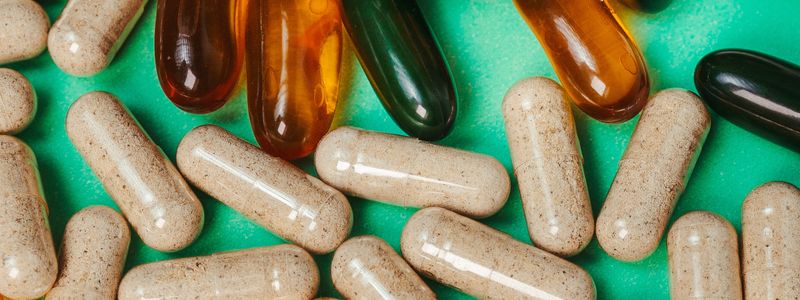
A single animal study turned taurine from an energy-drink ingredient into a longevity supplement almost overnight.
2
The reversal
In 2025 the NIH Could Not Repeat It in People
To test whether the pattern held in humans, the NIH's National Institute on Aging measured taurine in blood collected over years from participants in the Baltimore Longitudinal Study of Aging, alongside monkeys and mice. If falling taurine drove aging, it should have dropped as people got older. It did not.
3
What the data showed
Taurine Went Up With Age, Not Down
Across nearly every group, circulating taurine increased or stayed constant as age rose. The gap between two people of the same age was often larger than the change across a whole lifespan, and taurine's link to muscle strength and body weight was inconsistent. The results were published in Science in June 2025.
Circulating taurine is unlikely to serve as a good biomarker for the aging process.
The NIH team added the blunt part the labels leave off: there is no solid clinical data showing taurine supplementation benefits humans.
National Institute on Aging, NIH, 2025
4
What it actually does
Taurine Is a Real Amino Acid With Real Jobs
None of this makes taurine useless. It is a conditionally essential amino acid, which means your body makes it, and Cleveland Clinic notes it supports the heart, brain and nerves, helps with hydration, and produces the bile salts that break down fat. It is concentrated in your eyes and muscles, and your body keeps its own supply topped up.
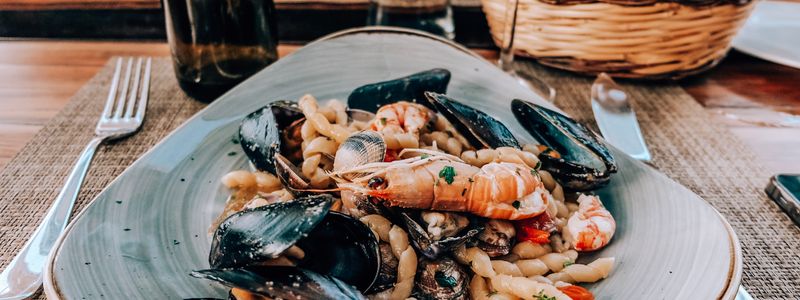
Shellfish, dark-meat poultry and beef are naturally rich in taurine, which is why most people who eat them are not short of it.
5
The safety part
A Supplement Is Not Free of Trade-offs
Cleveland Clinic is direct that healthy people do not need a taurine supplement, because the body produces what it requires. Taurine can also interact with real medications, including antidepressants, anti-seizure drugs, blood thinners and statins, because it affects the enzymes that clear those drugs. That is a conversation for your provider.
Take the honest taurine cheat sheet with you
Your free 2-page guide: what the mouse study really showed, what the NIH found in people, and where taurine actually comes from.
One email. No spam. Unsubscribe anytime.
Free Lifestyle Assessment
How Healthy Is Your Current Lifestyle?
Answer honestly for five minutes and walk away with your personal scorecard: all six areas of your health rated, the one that needs your attention first, and a 30-day plan built from your answers. It shows up the second you finish.
Free. About 5 minutes. Your results appear instantly.
📋 Your Coach's Recommendations
1
Read Animal Results as a Starting Line, Not a Verdict
The taurine longevity story began, and for now mostly ends, in mice. A single positive animal study is a reason to run human trials, not a reason to start supplementing. When the NIH looked in people, the aging signal did not hold up.
2
You Almost Certainly Already Have Enough
Taurine is a conditionally essential amino acid your body makes, and it is abundant in meat, seafood and dairy. Cleveland Clinic says healthy people who eat protein do not need a supplement, and a taurine blood test is rarely even performed.
3
If You Still Want to Try It, Clear the Interactions First
Taurine can interfere with how the body clears antidepressants, anti-seizure medication, blood thinners and statins. If you take any of those, talk to your provider first, and choose only a third-party tested product, since supplements are not regulated like drugs.
?
How it works. Just a quiet check-in, not an alert and not a recurring nag. The event lands as a 30-minute slot at 9am two weeks from today, with your plan in the notes and a link back to this article. Works with Apple Calendar, Google Calendar, and Outlook. Yours to move, snooze, or delete whenever.
Keep this plan
Get the 2-page guide: what the mouse study showed, what the NIH found in people, and where taurine really comes from.
One email. No spam. Unsubscribe anytime.
Where should we send it?
Your honest taurine cheat sheet, straight to your inbox.
We send the plan plus one short evidence brief each week. Unsubscribe anytime.
✓
It is on the way
Check your inbox in the next minute. Your first Ageless Brief arrives this week: one study, translated, no hype.
In mice, one 2023 study suggested it could. In humans, there is no solid clinical evidence that taurine supplements extend lifespan, and a 2025 NIH analysis found taurine does not reliably fall with age in people.
What did the 2025 NIH study find?
Measuring taurine in blood from people, monkeys and mice over time, NIH researchers found taurine mostly rose or stayed steady with age rather than declining, so it is unlikely to be a good biomarker of aging.
What is taurine?
Taurine is a conditionally essential amino acid, meaning your body produces it. It is concentrated in the heart, brain, eyes and muscles and plays roles in hydration, bile production and nerve function.
Where do you get taurine from food?
Meat, seafood and dairy are rich in taurine, with shellfish among the highest sources. Vegans and vegetarians take in less, though the body adjusts by making more of its own.
Is taurine safe to supplement?
Cleveland Clinic considers it relatively safe for most people but says healthy people do not need it. It can interact with several medications, so check with your provider first.
Is this medical advice?
No. This article is educational and is not a substitute for your clinician. Talk to your provider before starting taurine or any supplement, especially if you take medication.
Curious where you stand? Take the free 5-minute lifestyle assessment and your personal scorecard appears the second you finish.
By the Ageless Coach Editorial Team · Published August 3, 2026 · Last updated August 3, 2026
<style>
:root{--dark-base:#0D1B2A;--dark-mid:#1B3A4B;--teal:#0EA5A0;--teal-dark:#0C8C88;--teal-bright:#14D4CD;--fog:#D8E8E8;--deep-fog:#C8DCDC;--fog-border:#A8C4C4;--ink:#313743;--ink-soft:#49505f;--muted:#6b7280;--warm:#9A6841;--warm-light:#be7b4c;--serif:"Source Serif 4",Georgia,serif;--sans:Inter,-apple-system,BlinkMacSystemFont,"Segoe UI",sans-serif}
.w-richtext p,.w-richtext li,.w-richtext td{font-size:20.5px;line-height:1.7;color:var(--ink-soft)}
.w-richtext ul{list-style-type:disc;padding-left:24px;margin:12px 0}
.w-richtext ul li{margin-bottom:8px}
.ac-answer{background:#fff;border:1px solid #D4E4E4;border-top:5px solid var(--teal);border-radius:16px;padding:22px 24px 18px;margin:16px 0 28px;box-shadow:0 6px 22px rgba(13,27,42,.07)}
.ac-answer .aa-eyebrow{font:800 12px/1 var(--sans);letter-spacing:2.5px;text-transform:uppercase;color:var(--teal-dark);margin-bottom:8px}
.ac-answer .aa-head{font-family:var(--serif);font-size:24px;line-height:1.2;font-weight:800;color:var(--dark-base);margin:0 0 16px}
.ac-answer .aa-list{list-style:none;margin:0;padding:0}
.ac-answer .aa-list li{display:flex;gap:12px;align-items:baseline;padding:11px 0;border-bottom:1px solid #EDF3F3;font:700 16.5px/1.4 var(--sans);color:var(--ink)}
.ac-answer .aa-list li:last-child{border-bottom:none}
.ac-answer .aa-n{flex-shrink:0;width:24px;height:24px;border-radius:50%;background:var(--teal-dark);color:#fff;font:800 12px/24px var(--sans);text-align:center}
.ac-answer .aa-food{color:var(--teal-dark);font-weight:800}
.ac-answer .aa-cue{margin-top:18px;text-align:center}
.ac-answer .aa-cta{display:inline-flex;align-items:center;gap:10px;background:var(--teal-dark);color:#fff;font:800 14px/1 var(--sans);letter-spacing:.2px;padding:14px 26px;border-radius:50px;text-decoration:none;box-shadow:0 6px 16px rgba(12,140,136,.30)}
.ac-answer .aa-cta:hover{background:#0A7A76}
.ac-answer .aa-arw{display:inline-block;animation:aa-nudge 1.4s ease-in-out infinite}
@keyframes aa-nudge{0%,100%{transform:translateY(0)}50%{transform:translateY(4px)}}
@media(max-width:560px){.ac-answer{padding:20px 18px 16px}.ac-answer .aa-head{font-size:21px}.ac-answer .aa-list li{font-size:15px}}
.ac-band{margin:56px 0 24px;padding:26px 24px 12px;background:linear-gradient(180deg,#F0F7F7,#fff);border-radius:16px}
.ac-band.hype{background:linear-gradient(180deg,#FAF3EB,#fff)}
.ac-band .inner{display:flex;gap:20px;align-items:center}
.ac-band .big{font:900 72px/1 var(--sans);color:var(--deep-fog);flex-shrink:0}
.ac-band.hype .big{color:#EAD9C6}
.ac-band .q{font:700 13px/1.4 var(--sans);letter-spacing:2px;text-transform:uppercase;color:var(--teal-dark)}
.ac-band.hype .q{color:var(--warm)}
.ac-band h3{font-family:var(--serif);font-size:30px;line-height:1.2;font-weight:800;color:var(--ink);margin:0}
.ac-callout{border-left:4px solid var(--teal);background:#F4FAFA;border-radius:0 12px 12px 0;padding:18px 22px;margin:28px 0}
.ac-callout .n{font:800 20px/1.35 var(--sans);color:var(--dark-mid);margin-bottom:6px}
.ac-callout .d{font:500 15px/1.55 var(--sans);color:var(--ink-soft)}
.ac-callout .c{font:600 11.5px/1 var(--sans);letter-spacing:1.5px;text-transform:uppercase;color:var(--muted);margin-top:10px}
.ac-plan{background:linear-gradient(135deg,#F4FAFA 0%,#fff 100%);border-left:5px solid var(--teal-dark);border-radius:14px;padding:30px 26px;margin:40px 0 0;box-shadow:0 2px 12px rgba(0,0,0,.06);scroll-margin-top:100px}
.ac-plan .ptitle{font-family:var(--serif);font-size:24px;font-weight:800;color:var(--ink);margin-bottom:22px}
.ac-plan .step{display:flex;gap:16px;margin-bottom:18px;align-items:flex-start}
.ac-plan .step .n{min-width:38px;width:38px;height:38px;background:var(--teal-dark);border-radius:50%;color:#fff;font:800 17px/38px var(--sans);text-align:center;flex-shrink:0}
.ac-plan .sh{font:800 16.5px/1.4 var(--sans);color:var(--ink);margin-bottom:3px}
.ac-plan .sd{font:400 15px/1.6 var(--sans);color:var(--muted)}
.ac-plan .actions{border-top:1px solid #D8E8E8;margin-top:16px;padding-top:20px}
.ac-primary-row{display:flex;align-items:center;gap:10px;padding:0 4px}
.ac-btn-primary-wide{flex:1;background:var(--teal);color:#fff;border:1.5px solid var(--teal);border-radius:14px;padding:12px 22px;box-shadow:0 4px 14px rgba(14,165,160,.22);font-family:var(--sans);cursor:pointer;display:grid;grid-template-columns:auto 1fr;gap:14px;align-items:center;transition:all .18s ease}
.ac-btn-primary-wide:hover{background:var(--teal-dark);border-color:var(--teal-dark)}
.ac-btn-primary-wide .icon svg{width:22px;height:22px;color:#fff;display:block}
.ac-btn-primary-wide .label{text-align:left;line-height:1.25}
.ac-btn-primary-wide .label .top{display:block;font-weight:700;font-size:15.5px;color:#fff}
.ac-btn-primary-wide .label .top em{font-style:italic;font-weight:700}
.ac-cal-help{position:relative;flex-shrink:0}
.ac-cal-help summary{list-style:none;width:24px;height:24px;border-radius:50%;background:#E4F1F1;border:1px solid var(--fog-border);color:var(--dark-mid);font:700 13px/22px var(--sans);text-align:center;cursor:pointer;display:block}
.ac-cal-help summary::-webkit-details-marker{display:none}
.ac-cal-help .tip{position:absolute;right:0;top:32px;z-index:50;width:290px;background:var(--dark-base);color:var(--fog);border-radius:12px;padding:14px 16px;font:500 12.5px/1.55 var(--sans);box-shadow:0 10px 30px rgba(13,27,42,.35)}
.ac-cal-help .tip strong{color:#fff}
.ac-btn-share-wide{display:flex;width:100%;align-items:center;justify-content:center;gap:10px;background:#fff;color:var(--teal-dark);border:1.5px solid var(--teal-dark);border-radius:14px;padding:12px 22px;margin-top:10px;font:800 15px/1 var(--sans);cursor:pointer}
.ac-btn-share-wide svg{width:18px;height:18px}
.ac-midcap{background:linear-gradient(180deg,#F0F7F7,#fff);border:1.5px solid var(--fog-border);border-radius:16px;padding:24px 22px;margin:34px 0;text-align:center}
.ac-midcap h4{font-family:var(--serif);font-size:22px;font-weight:800;color:var(--ink);margin:0 0 6px}
.ac-midcap .sub{font:500 14px/1.55 var(--sans);color:var(--ink-soft);margin:0 auto 14px;max-width:400px}
.ac-midcap .mcform{display:flex;gap:8px;max-width:400px;margin:0 auto}
.ac-midcap .mcform input{flex:1;border:1.5px solid var(--fog-border);border-radius:50px;padding:12px 18px;font:500 14px/1 var(--sans);min-width:0}
.ac-midcap .mcform button{background:var(--teal-dark);color:#fff;border:none;border-radius:50px;padding:12px 20px;font:800 13.5px/1 var(--sans);cursor:pointer;white-space:nowrap}
.ac-midcap .fine{font:500 11.5px/1.5 var(--sans);color:var(--muted);margin-top:10px}
@media (max-width:520px){.ac-midcap .mcform{flex-direction:column}}
.ac-assess-promo{background:linear-gradient(135deg,#D8E8E8,#C8DCDC);border:1px solid var(--fog-border);border-radius:16px;padding:34px 30px;margin:44px 0;text-align:center}
.ac-assess-promo .eyebrow{color:var(--teal-dark);font:800 12px/1 var(--sans);letter-spacing:2.5px;text-transform:uppercase;margin:0 0 10px}
.ac-assess-promo h4{font-family:var(--serif);color:var(--dark-base);font-size:26px;font-weight:800;margin:0 0 12px}
.w-embed .ac-assess-promo p.ap-body,.ac-assess-promo p.ap-body{font-family:Georgia,serif;color:#3A5555;font-size:15.5px;font-weight:500;line-height:1.65;max-width:540px;margin:0 auto 22px}
.ac-assess-promo .ap-cta{display:inline-block;background:var(--teal-bright);color:var(--dark-base);font:800 15px/1 var(--sans);padding:15px 30px;border-radius:50px;text-decoration:none}
.ac-assess-promo .ap-fine{color:#4E6B6B;font:500 13px/1.5 var(--sans);margin:14px 0 0}
.ac-assess-line{border-top:1px solid #E2ECEC;margin-top:30px;padding:22px 10px 0;text-align:center;font:500 15.5px/1.6 var(--sans);color:#3A5555}
.w-embed .ac-assess-line a,.ac-assess-line a{color:var(--teal-dark);font-weight:700;text-decoration:underline;text-underline-offset:3px}
.ac-articlemeta{font:500 12.5px/1.6 var(--sans);color:#98a0a6;text-align:center;margin:24px 0 0}
.ac-capture{background:linear-gradient(180deg,#F0F7F7,#fff);border:1.5px solid var(--fog-border);border-radius:16px;padding:30px 28px;margin:26px 0 44px;text-align:center}
.ac-capture .cap-state{display:none}
.ac-capture[data-state="trigger"] .st-trigger{display:block}
.ac-capture[data-state="form"] .st-form{display:block}
.ac-capture[data-state="sent"] .st-sent{display:block}
.ac-capture h4{font-family:var(--serif);font-size:24px;font-weight:800;color:var(--ink);margin:0 0 8px}
.ac-capture .sub{font:500 15px/1.55 var(--sans);color:var(--ink-soft);margin:0 auto 18px;max-width:430px}
.ac-capture .bigbtn{display:inline-flex;align-items:center;gap:10px;background:var(--teal-dark);color:#fff;border:none;border-radius:50px;padding:16px 30px;font:800 16px/1 var(--sans);cursor:pointer;box-shadow:0 6px 18px rgba(12,140,136,.28)}
.ac-capture .capform{display:flex;gap:10px;max-width:430px;margin:0 auto}
.ac-capture .capform input{flex:1;border:1.5px solid var(--fog-border);border-radius:50px;padding:14px 20px;font:500 15px/1 var(--sans)}
.ac-capture .capform button{background:var(--teal-dark);color:#fff;border:none;border-radius:50px;padding:14px 24px;font:800 14px/1 var(--sans);cursor:pointer}
.ac-capture .sent-check{width:52px;height:52px;border-radius:50%;background:var(--teal);color:#fff;font:800 26px/52px var(--sans);margin:0 auto 12px}
.ac-capture .dl{display:inline-block;margin-top:6px;color:var(--teal-dark);font:700 15px/1 var(--sans);text-decoration:underline;cursor:pointer}
.ac-capture .fine{font:500 12px/1.5 var(--sans);color:var(--muted);margin-top:12px}
.ac-sig{margin-top:36px}
.ac-sig .rule{width:60px;height:2px;background:linear-gradient(90deg,var(--teal-dark),var(--teal-bright));margin-bottom:18px;border-radius:2px}
.ac-sig .toyour{font-family:var(--serif);font-size:16px;font-style:italic;color:#777;margin:0 0 10px;padding-left:2px}
.ac-faq{margin-top:40px;border-top:1px solid #e5e7eb;padding-top:30px;margin-bottom:40px}
.ac-faq h2{font-family:var(--serif);font-size:23px;font-weight:800;color:var(--ink);margin:0 0 18px}
.ac-faq details{border:1px solid #e5e7eb;border-radius:10px;margin-bottom:10px}
.ac-faq summary{padding:15px 18px;font:700 16px/1.4 var(--sans);color:var(--ink);cursor:pointer;display:flex;justify-content:space-between;align-items:center;list-style:none}
.ac-faq summary:after{content:"\25BE";color:var(--warm)}
.ac-faq .a{padding:0 18px 16px;font-size:17px;line-height:1.65;color:#555}
.article-header-section .article-container{max-width:1080px !important;margin:0 auto !important;padding:0 20px !important}
.article-header-section .article-hero-image{display:block;width:100%;max-width:660px;margin:0}
.article-header-section .article-title{display:block !important;font-family:var(--serif);font-size:32px;line-height:1.25;font-weight:700;color:#313743;margin:20px 0 12px 0;text-align:left;max-width:660px}
@media (max-width:767px){.article-header-section .article-title{font-size:26px}.article-header-section .article-hero-image{max-width:100%}}
@media (max-width:640px){.ac-band .big{font-size:52px}}
@media (max-width:520px){.ac-capture .capform{flex-direction:column}}
.ac-figure{margin:30px 0}.ac-figure img{display:block;width:100%;border-radius:14px;height:auto;aspect-ratio:800/300}.ac-figure figcaption{font:500 13px/1.5 var(--sans);color:var(--muted);margin-top:9px}</style>
<div class="ac-answer"><div class="aa-eyebrow">What the evidence actually says</div><h2 class="aa-head">The case for taurine as an anti-aging pill rested on one 2023 mouse study. In 2025, a National Institutes of Health team looked for the same effect in people and could not find it. Taurine did not fall with age. It rose or held steady, and there is no solid human proof that a pill extends anything.</h2><ol class="aa-list"><li><span class="aa-n">1</span><span><span class="aa-food">Mouse evidence</span> · the longevity buzz traces to a 2023 study where extra taurine made mice live longer</span></li><li><span class="aa-n">2</span><span><span class="aa-food">Humans are different</span> · the 2025 NIH study found taurine rose or held steady with age, not declined</span></li><li><span class="aa-n">3</span><span><span class="aa-food">No human proof</span> · NIH says there is no solid clinical data that supplementing benefits people</span></li><li><span class="aa-n">4</span><span><span class="aa-food">You already make it</span> · taurine is a conditionally essential amino acid your body produces on its own</span></li><li><span class="aa-n">5</span><span><span class="aa-food">It is in your food</span> · meat, seafood and dairy supply it, so most people who eat them get plenty</span></li></ol><div class="aa-cue"><a class="aa-cta" href="#coach-recommendations">Get Your Coach's 3-Step Plan <span class="aa-arw">↓</span></a></div></div>
<p>Taurine had a very good year in 2023. A study in the journal <em>Science</em> reported that levels of the amino acid fall as animals age, and that giving middle-aged mice extra taurine helped them live longer and healthier. Supplement sales followed the headlines within months.</p>
<p>Then the story turned. In June 2025, researchers at the <a href="https://www.nih.gov/news-events/news-releases/nih-researchers-conclude-taurine-unlikely-be-good-aging-biomarker" target="_blank" rel="noopener">National Institutes of Health</a> published their own analysis in the same journal and reached a very different conclusion. In people, monkeys and mice tracked over time, taurine mostly did not decline with age at all.</p>
<div class="ac-band"><div class="inner"><div class="big">1</div><div><div class="q">Where the hype started</div><h3>A 2023 Study Made Old Mice Live Longer</h3></div></div></div>
<p>The excitement came from a 2023 paper led by a Columbia University team. It reported that taurine drops with age across several species, and that topping it back up in mice extended their remaining lifespan while improving strength and other markers of health. It was a striking result. It was also done mostly in mice.</p>
<figure class="ac-figure"><img src="https://images.pexels.com/photos/17820718/pexels-photo-17820718.jpeg?auto=compress&cs=tinysrgb&w=800&h=300&fit=crop" alt="A close-up of assorted supplement capsules on a green surface" width="800" height="300" loading="lazy" decoding="async"><figcaption>A single animal study turned taurine from an energy-drink ingredient into a longevity supplement almost overnight.</figcaption></figure>
<div class="ac-band"><div class="inner"><div class="big">2</div><div><div class="q">The reversal</div><h3>In 2025 the NIH Could Not Repeat It in People</h3></div></div></div>
<p>To test whether the pattern held in humans, the NIH's <a href="https://www.nia.nih.gov/research/labs/blsa" target="_blank" rel="noopener">National Institute on Aging</a> measured taurine in blood collected over years from participants in the Baltimore Longitudinal Study of Aging, alongside monkeys and mice. If falling taurine drove aging, it should have dropped as people got older. It did not.</p>
<div class="ac-band"><div class="inner"><div class="big">3</div><div><div class="q">What the data showed</div><h3>Taurine Went Up With Age, Not Down</h3></div></div></div>
<p>Across nearly every group, circulating taurine <a href="https://www.nih.gov/news-events/news-releases/nih-researchers-conclude-taurine-unlikely-be-good-aging-biomarker" target="_blank" rel="noopener">increased or stayed constant</a> as age rose. The gap between two people of the same age was often larger than the change across a whole lifespan, and taurine's link to muscle strength and body weight was inconsistent. The results were <a href="https://www.science.org/doi/10.1126/science.adl2116" target="_blank" rel="noopener">published in Science</a> in June 2025.</p>
<div class="ac-callout"><div class="n">Circulating taurine is unlikely to serve as a good biomarker for the aging process.</div><div class="d">The NIH team added the blunt part the labels leave off: there is no solid clinical data showing taurine supplementation benefits humans.</div><div class="c">National Institute on Aging, NIH, 2025</div></div>
<div class="ac-band"><div class="inner"><div class="big">4</div><div><div class="q">What it actually does</div><h3>Taurine Is a Real Amino Acid With Real Jobs</h3></div></div></div>
<p>None of this makes taurine useless. It is a conditionally essential amino acid, which means your body makes it, and <a href="https://health.clevelandclinic.org/taurine" target="_blank" rel="noopener">Cleveland Clinic</a> notes it supports the heart, brain and nerves, helps with hydration, and produces the bile salts that break down fat. It is concentrated in your eyes and muscles, and your body keeps its own supply topped up.</p>
<figure class="ac-figure"><img src="https://images.pexels.com/photos/3649208/pexels-photo-3649208.jpeg?auto=compress&cs=tinysrgb&w=800&h=300&fit=crop" alt="A plate of shellfish including mussels and shrimp with pasta" width="800" height="300" loading="lazy" decoding="async"><figcaption>Shellfish, dark-meat poultry and beef are naturally rich in taurine, which is why most people who eat them are not short of it.</figcaption></figure>
<div class="ac-band"><div class="inner"><div class="big">5</div><div><div class="q">The safety part</div><h3>A Supplement Is Not Free of Trade-offs</h3></div></div></div>
<p>Cleveland Clinic is direct that <a href="https://health.clevelandclinic.org/taurine" target="_blank" rel="noopener">healthy people do not need a taurine supplement</a>, because the body produces what it requires. Taurine can also <a href="https://health.clevelandclinic.org/taurine" target="_blank" rel="noopener">interact with real medications</a>, including antidepressants, anti-seizure drugs, blood thinners and statins, because it affects the enzymes that clear those drugs. That is a conversation for your provider.</p>
<div class="ac-midcap"><h4>Take the honest taurine cheat sheet with you</h4><p class="sub">Your free 2-page guide: what the mouse study really showed, what the NIH found in people, and where taurine actually comes from.</p><div class="mcform"><input type="email" placeholder="Your email address" aria-label="Email address"><button type="button">Send My Plan (Free)</button></div><div class="fine">One email. No spam. Unsubscribe anytime.</div></div>
<div class="ac-assess-promo"><p class="eyebrow">Free Lifestyle Assessment</p><h4>How Healthy Is Your Current Lifestyle?</h4><p class="ap-body">Answer honestly for five minutes and walk away with your personal scorecard: all six areas of your health rated, the one that needs your attention first, and a 30-day plan built from your answers. It shows up the second you finish.</p><a class="ap-cta" href="/#assessment">See How the Assessment Works →</a><p class="ap-fine">Free. About 5 minutes. Your results appear instantly.</p></div>
<div class="ac-plan" id="coach-recommendations"><div class="ptitle">📋 Your Coach's Recommendations</div><div class="step"><div class="n">1</div><div><div class="sh">Read Animal Results as a Starting Line, Not a Verdict</div><div class="sd">The taurine longevity story began, and for now mostly ends, in mice. A single positive animal study is a reason to run human trials, not a reason to start supplementing. When the NIH looked in people, the aging signal did not hold up.</div></div></div><div class="step"><div class="n">2</div><div><div class="sh">You Almost Certainly Already Have Enough</div><div class="sd">Taurine is a conditionally essential amino acid your body makes, and it is abundant in meat, seafood and dairy. Cleveland Clinic says healthy people who eat protein do not need a supplement, and a taurine blood test is rarely even performed.</div></div></div><div class="step"><div class="n">3</div><div><div class="sh">If You Still Want to Try It, Clear the Interactions First</div><div class="sd">Taurine can interfere with how the body clears antidepressants, anti-seizure medication, blood thinners and statins. If you take any of those, talk to your provider first, and choose only a third-party tested product, since supplements are not regulated like drugs.</div></div></div><div class="actions">
<div class="ac-primary-row">
<button type="button" class="ac-btn-primary-wide" data-ac-cal>
<span class="icon"><svg viewBox="0 0 24 24" fill="none" stroke="currentColor" stroke-width="2" stroke-linecap="round" stroke-linejoin="round"><rect x="3" y="4" width="18" height="18" rx="2"></rect><path d="M16 2v4M8 2v4M3 10h18"></path></svg></span>
<span class="label"><span class="top">Add <em>Your Coach's Recommendations to Your Calendar</em></span></span>
</button>
<details class="ac-cal-help"><summary aria-label="What does this do?">?</summary><div class="tip"><strong>How it works.</strong> Just a quiet check-in, not an alert and not a recurring nag. The event lands as a 30-minute slot at 9am two weeks from today, with your plan in the notes and a link back to this article. Works with Apple Calendar, Google Calendar, and Outlook. Yours to move, snooze, or delete whenever.</div></details>
</div>
<button type="button" class="ac-btn-share-wide" data-ac-share><svg viewBox="0 0 24 24" fill="none" stroke="currentColor" stroke-width="2" stroke-linecap="round" stroke-linejoin="round"><path d="M4 12v8a2 2 0 002 2h12a2 2 0 002-2v-8"></path><polyline points="16 6 12 2 8 6"></polyline><line x1="12" y1="2" x2="12" y2="15"></line></svg> Share this article</button>
</div>
</div>
<div class="ac-capture" data-state="trigger" data-article-slug="taurine-made-mice-live-longer-you-are-not-a-mouse" data-pdf-url="https://cdn.prod.website-files.com/69be1026a027224999b7936b/6a7040e091ec180d054158ae_ac-honest-taurine-plan.pdf" data-plan-title="The Honest Taurine Cheat Sheet" data-plan-desc="Your free 2-page guide: what the mouse study really showed, what the NIH found in people, and where taurine actually comes from."><div class="st-trigger cap-state"><h4>Keep this plan</h4><p class="sub">Get the 2-page guide: what the mouse study showed, what the NIH found in people, and where taurine really comes from.</p><button class="bigbtn" type="button" data-cap="form">📩 Email Me This Plan (Free PDF)</button><div class="fine">One email. No spam. Unsubscribe anytime.</div></div><div class="st-form cap-state"><h4>Where should we send it?</h4><p class="sub">Your honest taurine cheat sheet, straight to your inbox.</p><form class="capform"><input type="email" name="email" required placeholder="Your email address" aria-label="Email address"><button type="submit">Send My Plan</button></form><div class="fine">We send the plan plus one short evidence brief each week. Unsubscribe anytime.</div></div><div class="st-sent cap-state"><div class="sent-check">✓</div><h4>It is on the way</h4><p class="sub">Check your inbox in the next minute. Your first Ageless Brief arrives this week: one study, translated, no hype.</p><a class="dl" href="https://cdn.prod.website-files.com/69be1026a027224999b7936b/6a7040e091ec180d054158ae_ac-honest-taurine-plan.pdf" download>⬇ Download your plan (PDF)</a></div></div>
<style>
.ac-exlib{--ac-ex-fog:#F0F7F7;--ac-ex-border:#A8C4C4;--ac-ex-teal:#0C8C88;--ac-ex-ink-teal:#0A6F6C;--ac-ex-dark:#0D1B2A;--ac-ex-body:#49505f;--ac-ex-muted:#5F6773;--ac-ex-serif:"Source Serif 4",Georgia,serif;--ac-ex-sans:Inter,-apple-system,"Segoe UI",sans-serif;background:linear-gradient(180deg,var(--ac-ex-fog),#fff);border:1.5px solid var(--ac-ex-border);border-radius:16px;padding:24px 26px;margin:36px 0 0;box-sizing:border-box}
.ac-exlib *{box-sizing:border-box}
.ac-exlib .ac-ex-eb{font:800 11.5px/1 var(--ac-ex-sans);letter-spacing:2.4px;text-transform:uppercase;color:var(--ac-ex-ink-teal);margin:0 0 10px}
.ac-exlib .ac-ex-h{font-family:var(--ac-ex-serif);font-size:22px;line-height:1.25;font-weight:800;color:var(--ac-ex-dark);margin:0 0 10px}
.ac-exlib .ac-ex-p{font:500 16px/1.6 var(--ac-ex-sans);color:var(--ac-ex-body);margin:0 0 16px}
.ac-exlib .ac-ex-go{display:inline-flex;align-items:center;gap:8px;border:1.5px solid var(--ac-ex-teal);color:var(--ac-ex-ink-teal);background:#fff;font:800 14px/1 var(--ac-ex-sans);padding:15px 24px;border-radius:50px;text-decoration:none;min-height:44px}
.ac-exlib .ac-ex-go:hover,.ac-exlib .ac-ex-go:focus{background:var(--ac-ex-fog);color:var(--ac-ex-ink-teal)}
.ac-exlib .ac-ex-go:focus-visible{outline:2px solid var(--ac-ex-ink-teal);outline-offset:3px}
.ac-exlib .ac-ex-go svg{width:14px;height:14px;stroke:currentColor;fill:none;stroke-width:2.4;flex:none}
.ac-exlib .ac-ex-note{font:500 12px/1.6 var(--ac-ex-sans);color:var(--ac-ex-muted);margin:14px 0 0}
@media(max-width:560px){.ac-exlib{padding:20px 18px}.ac-exlib .ac-ex-h{font-size:20px}.ac-exlib .ac-ex-go{width:100%;justify-content:center}}
</style>
<aside class="ac-exlib" data-template="L-examine" aria-label="Further reading">
<p class="ac-ex-eb">Read the research yourself</p>
<h3 class="ac-ex-h">We read the studies. You can too.</h3>
<p class="ac-ex-p">Everything above is sourced and linked. If you want to go deeper than one article can go, Examine maintains independent, continuously updated research summaries on taurine and around a thousand other supplements. They sell no supplements of their own. That is the reason we send people there rather than somewhere else.</p>
<a class="ac-ex-go" href="https://examine.com/refer/qed0mm2?loc=/supplements/taurine&utm_source=agelesscoach&utm_medium=article&utm_content=tmpl-L-examine" rel="noopener sponsored" target="_blank">
See Examine's taurine research
<svg viewBox="0 0 24 24" aria-hidden="true"><path d="M5 12h14M13 6l6 6-6 6" stroke-linecap="round" stroke-linejoin="round"/></svg>
</a>
<p class="ac-ex-note">Ageless Coach may earn a commission if you subscribe, at no additional cost to you. We were not paid to write this and it does not affect what we recommend.</p>
</aside>
<div class="ac-sig"><div class="rule"></div><p class="toyour">To your health,</p><svg width="320" height="72" viewBox="0 0 320 72" role="img" aria-label="Ageless Coach. Age Strong. Live Long." xmlns="http://www.w3.org/2000/svg" xmlns:xlink="http://www.w3.org/1999/xlink"><defs><clipPath id="acSigIconClip"><rect x="0" y="6" width="60" height="60" rx="12" ry="12"/></clipPath></defs><image x="0" y="6" width="60" height="60" clip-path="url(#acSigIconClip)" preserveAspectRatio="xMidYMid slice" href="https://cdn.prod.website-files.com/69be1026a027224999b7936b/6a0b22c6afd5d6fd115b9c1a_ac-closing-brand-icon.webp" xlink:href="https://cdn.prod.website-files.com/69be1026a027224999b7936b/6a0b22c6afd5d6fd115b9c1a_ac-closing-brand-icon.webp"/><text x="76" y="42" style="font-family:Inter,system-ui,-apple-system,'Helvetica Neue',Arial,sans-serif;font-size:27px;letter-spacing:-0.3px"><tspan style="font-weight:800;fill:#0D1B2A">Ageless</tspan><tspan style="font-weight:300;fill:rgba(13,27,42,0.6)">Coach</tspan><tspan dy="-12" style="font-size:16px;font-weight:600;fill:rgba(13,27,42,0.6)">™</tspan></text><text x="76" y="60" style="font-family:Inter,system-ui,-apple-system,'Helvetica Neue',Arial,sans-serif;font-size:10.5px;letter-spacing:2.5px;font-weight:500;fill:#0C8C88;text-transform:uppercase">AGE STRONG. LIVE LONG.</text></svg></div>
<div class="ac-faq"><h2>Frequently Asked Questions</h2><details><summary>Does taurine really make you live longer?</summary><div class="a">In mice, one 2023 study suggested it could. In humans, there is no solid clinical evidence that taurine supplements extend lifespan, and a 2025 NIH analysis found taurine does not reliably fall with age in people.</div></details><details><summary>What did the 2025 NIH study find?</summary><div class="a">Measuring taurine in blood from people, monkeys and mice over time, NIH researchers found taurine mostly rose or stayed steady with age rather than declining, so it is unlikely to be a good biomarker of aging.</div></details><details><summary>What is taurine?</summary><div class="a">Taurine is a conditionally essential amino acid, meaning your body produces it. It is concentrated in the heart, brain, eyes and muscles and plays roles in hydration, bile production and nerve function.</div></details><details><summary>Where do you get taurine from food?</summary><div class="a">Meat, seafood and dairy are rich in taurine, with shellfish among the highest sources. Vegans and vegetarians take in less, though the body adjusts by making more of its own.</div></details><details><summary>Is taurine safe to supplement?</summary><div class="a"><a href="https://health.clevelandclinic.org/taurine" target="_blank" rel="noopener">Cleveland Clinic</a> considers it relatively safe for most people but says healthy people do not need it. It can interact with several medications, so check with your provider first.</div></details><details><summary>Is this medical advice?</summary><div class="a">No. This article is educational and is not a substitute for your clinician. Talk to your provider before starting taurine or any supplement, especially if you take medication.</div></details></div>
<div class="ac-assess-line">Curious where you stand? Take the free <a href="/#assessment">5-minute lifestyle assessment</a> and your personal scorecard appears the second you finish.</div>
<p class="ac-articlemeta">By the Ageless Coach Editorial Team · Published August 3, 2026 · Last updated August 3, 2026</p>
Subscribe to the Free Newsletter
One article a week. Trusted research made simple. Start making smarter health decisions today.