Every night, a waste-clearance network called the glymphatic system flushes proteins out of your brain, and it runs best during deep, slow-wave sleep. Deep sleep shrinks as you age and after poor nights, so the cleanup gets less time to work and more waste can linger. The tie to memory is real but associative, not proof that better sleep prevents disease.
1Deep sleep · the brain's cleanup system is most active during stage 3 NREM, the deepest sleep (Cleveland Clinic)
2Amyloid and tau · among the proteins cleared at night, the same ones tied to Alzheimer's (Cleveland Clinic)
3Nearly 60 percent · of older adults report some kind of chronic sleep disturbance (National Institute on Aging)
4Both directions · poor sleep and early brain changes appear to feed each other, not run one way (National Institute on Aging)
5Not a cure · better sleep is healthy, but is not proven to prevent Alzheimer's (National Institute on Aging)
Your brain does some of its most important housekeeping while the rest of you is offline. All day, thinking cells burn fuel and leave waste behind, and that waste has to go somewhere before it piles up. When your everyday sleep starts to slip, less of it gets cleared overnight, and the leftovers are exactly the proteins researchers would rather see moved out than left to linger.
The system doing the work has a name. Cleveland Clinic describes the glymphatic system as a pathway that washes waste out of the brain while you sleep, and it works best when you are getting real rest. The catch is that its busiest shift, deep sleep, is the very stage that thins out as the years add up.
1
The overnight shift
What Your Brain Does After Lights Out
Think of it as a nightly rinse cycle for tissue that never truly rests. Cerebrospinal fluid moves through the brain, mixes with the fluid around your cells, and carries the debris out toward your bloodstream and eventually the lymph nodes in your neck. Cleveland Clinic notes the same current also delivers useful cargo like glucose and lipids where they are needed, so the system both cleans and restocks in one quiet pass.
Among the waste it removes are amyloid-beta and tau. Those two names carry weight, because they are the proteins that clump into the plaques and tangles found in the Alzheimer's brain. Clearing them is normal, healthy maintenance, and the pathway that handles it leans heavily on sleep to get the job done.
2
The cleanup shift
Why Deep Sleep Does the Heavy Work
Not all sleep pulls the same weight here, and that distinction is the whole point. Cleveland Clinic points to research showing the system is most active during stage 3 NREM sleep, the slow-wave phase most people simply call deep sleep. During it, the spaces between brain cells physically widen, which lets fluid flow through more freely and flush accumulated waste more efficiently than lighter sleep ever manages.
A quieting brain chemical helps too. As deep sleep sets in, levels of norepinephrine fall, the vessels involved relax, and fluid exchange picks up. It is a specific, physical process, which is why simply spending hours in bed is not the same as getting the deep sleep that actually runs the cycle.
Deep, slow-wave sleep is the stage when the brain's waste-clearance system does most of its work.
3
What slips
The Part That Fades With Age
Here is where it turns personal. Cleveland Clinic explains that as you get older you tend to spend less time in slow-wave sleep, so the glymphatic system gets fewer minutes in its most active phase night after night. The cleanup does not stop, it just has a shorter window to work in, which may be one reason waste has more chance to accumulate over the years.
Broken nights are common, too. The National Institute on Aging reports that nearly 60 percent of older adults live with some form of chronic sleep disturbance, from waking often to rising too early. Each interruption chips away at the deep sleep the system depends on most.
The brain's cleanup system works best during deep sleep, the very stage that shrinks as you get older.
That overlap is why protecting your deep sleep is worth the small, boring habits that make it happen.
Cleveland Clinic
None of this means a rough week of sleep is quietly handing you a disease. The science is younger and messier than the tidy headlines suggest, and the most careful researchers are the first to say so. That caution is worth carrying into the next part, because it changes what you can honestly expect a good night to do for you.
4
The honest part
A Real Link, Not a Guarantee
This is where care matters. The National Institute on Aging is candid that the relationship runs in both directions: early Alzheimer's changes can disturb sleep, and poor sleep may in turn nudge those changes along. Studies in healthy older adults link short, poor sleep to more amyloid buildup, but which one leads is still being untangled.
So the honest framing is a link, not a lever you pull to prevent disease on demand. Their experts state plainly that there is no evidence a sleep aid or any sleep treatment lowers a person's Alzheimer's risk. Better sleep is worth chasing for how you feel, think and function tomorrow morning, and the possible brain benefits are a bonus on top of that, never a guarantee anyone can make.
5
What to do
How to Protect Your Deep Sleep
The good news is that the levers you do control are refreshingly simple. Cleveland Clinic recommends a steady sleep schedule, an appropriate amount of sleep for your age, and a calming wind-down routine, all of which help you reach and hold the slow-wave sleep the cleanup depends on instead of skating along its lighter surface all night.
A few evening habits protect it further. Turn screens off an hour or more before bed, keep daytime movement in your routine, and avoid alcohol or a heavy meal in the last couple of hours before sleep, since both fragment the deep stages. None of it is dramatic, and that is the point.
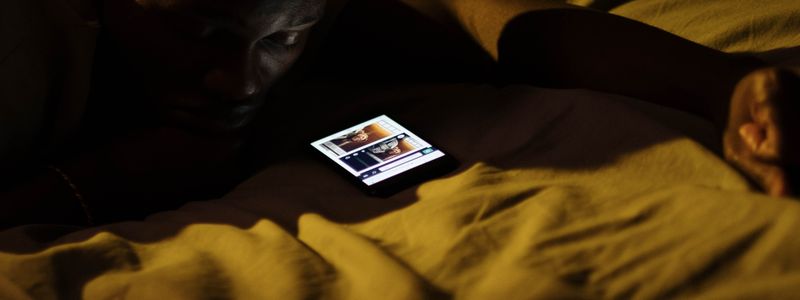
Late screen light is one of the easiest things to cut, and it protects the deep sleep the cleanup relies on.
Take the deep-sleep brain plan with you
Your free 2-page guide: what your brain clears at night, why deep sleep does the work, and the simple habits that protect it.
One email. No spam. Unsubscribe anytime.
Free Lifestyle Assessment
How Healthy Is Your Current Lifestyle?
Answer honestly for five minutes and walk away with your personal scorecard: all six areas of your health rated, the one that needs your attention first, and a 30-day plan built from your answers. It shows up the second you finish.
Free. About 5 minutes. Your results appear instantly.
📋 Your Coach's Recommendations
1
Guard a Consistent Sleep Window
Go to bed and wake at about the same time every day, weekends included. Cleveland Clinic notes a steady schedule helps you reach and hold the deep sleep the cleanup system depends on.
2
Put Screens Down Before Bed
Turn phones and TVs off at least an hour before bed, ideally two to three. Cutting late screen light protects the slow-wave sleep that does the brain's overnight housekeeping.
3
Move by Day, Skip the Late Nightcap
Get daytime activity and avoid alcohol or a heavy meal within two hours of bed. Cleveland Clinic lists both among the simplest ways to support the glymphatic system.
?
How it works. Just a quiet check-in, not an alert and not a recurring nag. The event lands as a 30-minute slot at 9am two weeks from today, with your plan in the notes and a link back to this article. Works with Apple Calendar, Google Calendar, and Outlook. Yours to move, snooze, or delete whenever.
Keep this plan
Get the 2-page guide: what your brain clears at night, why deep sleep does the work, and the habits that protect it.
One email. No spam. Unsubscribe anytime.
Where should we send it?
Your deep-sleep brain plan, straight to your inbox.
We send the plan plus one short evidence brief each week. Unsubscribe anytime.
✓
It is on the way
Check your inbox in the next minute. Your first Ageless Brief arrives this week: one study, translated, no hype.
Yes. Cleveland Clinic describes the glymphatic system as a pathway that uses fluid to wash waste out of the brain, and it works best while you are asleep, especially during deep sleep.
What does it clear out?
Waste like lactic acid and potassium, plus proteins including amyloid-beta and tau. Those last two are the same proteins that build into the plaques and tangles seen in the Alzheimer's brain.
Does poor sleep cause Alzheimer's?
Not that we can say. The National Institute on Aging describes a two-way link, where poor sleep and early brain changes may feed each other, and states there is no evidence that sleep treatments reduce Alzheimer's risk.
Why does deep sleep matter more than total hours?
Cleveland Clinic notes the system is most active during stage 3 NREM, or deep sleep, when the space between brain cells widens and fluid flows more freely. Time in bed without that deep stage does less for the cleanup.
How can I get more deep sleep?
Keep a consistent schedule, cut screens before bed, stay active during the day, and avoid alcohol or heavy meals close to bedtime. Cleveland Clinic lists these habits as ways to support the system.
Is this medical advice?
No. This is educational and not a substitute for your own clinician. Loud snoring, frequent waking, or daytime exhaustion can signal a treatable sleep disorder worth checking.
Curious where you stand? Take the free 5-minute lifestyle assessment and your personal scorecard appears the second you finish.
By the Ageless Coach Editorial Team · Published August 3, 2026 · Last updated August 3, 2026
<style>
:root{--dark-base:#0D1B2A;--dark-mid:#1B3A4B;--teal:#0EA5A0;--teal-dark:#0C8C88;--teal-bright:#14D4CD;--fog:#D8E8E8;--deep-fog:#C8DCDC;--fog-border:#A8C4C4;--ink:#313743;--ink-soft:#49505f;--muted:#6b7280;--warm:#9A6841;--warm-light:#be7b4c;--serif:"Source Serif 4",Georgia,serif;--sans:Inter,-apple-system,BlinkMacSystemFont,"Segoe UI",sans-serif}
.w-richtext p,.w-richtext li,.w-richtext td{font-size:20.5px;line-height:1.7;color:var(--ink-soft)}
.w-richtext ul{list-style-type:disc;padding-left:24px;margin:12px 0}
.w-richtext ul li{margin-bottom:8px}
.ac-answer{background:#fff;border:1px solid #D4E4E4;border-top:5px solid var(--teal);border-radius:16px;padding:22px 24px 18px;margin:16px 0 28px;box-shadow:0 6px 22px rgba(13,27,42,.07)}
.ac-answer .aa-eyebrow{font:800 12px/1 var(--sans);letter-spacing:2.5px;text-transform:uppercase;color:var(--teal-dark);margin-bottom:8px}
.ac-answer .aa-head{font-family:var(--serif);font-size:24px;line-height:1.2;font-weight:800;color:var(--dark-base);margin:0 0 16px}
.ac-answer .aa-list{list-style:none;margin:0;padding:0}
.ac-answer .aa-list li{display:flex;gap:12px;align-items:baseline;padding:11px 0;border-bottom:1px solid #EDF3F3;font:700 16.5px/1.4 var(--sans);color:var(--ink)}
.ac-answer .aa-list li:last-child{border-bottom:none}
.ac-answer .aa-n{flex-shrink:0;width:24px;height:24px;border-radius:50%;background:var(--teal-dark);color:#fff;font:800 12px/24px var(--sans);text-align:center}
.ac-answer .aa-food{color:var(--teal-dark);font-weight:800}
.ac-answer .aa-cue{margin-top:18px;text-align:center}
.ac-answer .aa-cta{display:inline-flex;align-items:center;gap:10px;background:var(--teal-dark);color:#fff;font:800 14px/1 var(--sans);letter-spacing:.2px;padding:14px 26px;border-radius:50px;text-decoration:none;box-shadow:0 6px 16px rgba(12,140,136,.30)}
.ac-answer .aa-cta:hover{background:#0A7A76}
.ac-answer .aa-arw{display:inline-block;animation:aa-nudge 1.4s ease-in-out infinite}
@keyframes aa-nudge{0%,100%{transform:translateY(0)}50%{transform:translateY(4px)}}
@media(max-width:560px){.ac-answer{padding:20px 18px 16px}.ac-answer .aa-head{font-size:21px}.ac-answer .aa-list li{font-size:15px}}
.ac-band{margin:56px 0 24px;padding:26px 24px 12px;background:linear-gradient(180deg,#F0F7F7,#fff);border-radius:16px}
.ac-band.hype{background:linear-gradient(180deg,#FAF3EB,#fff)}
.ac-band .inner{display:flex;gap:20px;align-items:center}
.ac-band .big{font:900 72px/1 var(--sans);color:var(--deep-fog);flex-shrink:0}
.ac-band.hype .big{color:#EAD9C6}
.ac-band .q{font:700 13px/1.4 var(--sans);letter-spacing:2px;text-transform:uppercase;color:var(--teal-dark)}
.ac-band.hype .q{color:var(--warm)}
.ac-band h3{font-family:var(--serif);font-size:30px;line-height:1.2;font-weight:800;color:var(--ink);margin:0}
.ac-callout{border-left:4px solid var(--teal);background:#F4FAFA;border-radius:0 12px 12px 0;padding:18px 22px;margin:28px 0}
.ac-callout .n{font:800 20px/1.35 var(--sans);color:var(--dark-mid);margin-bottom:6px}
.ac-callout .d{font:500 15px/1.55 var(--sans);color:var(--ink-soft)}
.ac-callout .c{font:600 11.5px/1 var(--sans);letter-spacing:1.5px;text-transform:uppercase;color:var(--muted);margin-top:10px}
.ac-plan{background:linear-gradient(135deg,#F4FAFA 0%,#fff 100%);border-left:5px solid var(--teal-dark);border-radius:14px;padding:30px 26px;margin:40px 0 0;box-shadow:0 2px 12px rgba(0,0,0,.06);scroll-margin-top:100px}
.ac-plan .ptitle{font-family:var(--serif);font-size:24px;font-weight:800;color:var(--ink);margin-bottom:22px}
.ac-plan .step{display:flex;gap:16px;margin-bottom:18px;align-items:flex-start}
.ac-plan .step .n{min-width:38px;width:38px;height:38px;background:var(--teal-dark);border-radius:50%;color:#fff;font:800 17px/38px var(--sans);text-align:center;flex-shrink:0}
.ac-plan .sh{font:800 16.5px/1.4 var(--sans);color:var(--ink);margin-bottom:3px}
.ac-plan .sd{font:400 15px/1.6 var(--sans);color:var(--muted)}
.ac-plan .actions{border-top:1px solid #D8E8E8;margin-top:16px;padding-top:20px}
.ac-primary-row{display:flex;align-items:center;gap:10px;padding:0 4px}
.ac-btn-primary-wide{flex:1;background:var(--teal);color:#fff;border:1.5px solid var(--teal);border-radius:14px;padding:12px 22px;box-shadow:0 4px 14px rgba(14,165,160,.22);font-family:var(--sans);cursor:pointer;display:grid;grid-template-columns:auto 1fr;gap:14px;align-items:center;transition:all .18s ease}
.ac-btn-primary-wide:hover{background:var(--teal-dark);border-color:var(--teal-dark)}
.ac-btn-primary-wide .icon svg{width:22px;height:22px;color:#fff;display:block}
.ac-btn-primary-wide .label{text-align:left;line-height:1.25}
.ac-btn-primary-wide .label .top{display:block;font-weight:700;font-size:15.5px;color:#fff}
.ac-btn-primary-wide .label .top em{font-style:italic;font-weight:700}
.ac-cal-help{position:relative;flex-shrink:0}
.ac-cal-help summary{list-style:none;width:24px;height:24px;border-radius:50%;background:#E4F1F1;border:1px solid var(--fog-border);color:var(--dark-mid);font:700 13px/22px var(--sans);text-align:center;cursor:pointer;display:block}
.ac-cal-help summary::-webkit-details-marker{display:none}
.ac-cal-help .tip{position:absolute;right:0;top:32px;z-index:50;width:290px;background:var(--dark-base);color:var(--fog);border-radius:12px;padding:14px 16px;font:500 12.5px/1.55 var(--sans);box-shadow:0 10px 30px rgba(13,27,42,.35)}
.ac-cal-help .tip strong{color:#fff}
.ac-btn-share-wide{display:flex;width:100%;align-items:center;justify-content:center;gap:10px;background:#fff;color:var(--teal-dark);border:1.5px solid var(--teal-dark);border-radius:14px;padding:12px 22px;margin-top:10px;font:800 15px/1 var(--sans);cursor:pointer}
.ac-btn-share-wide svg{width:18px;height:18px}
.ac-midcap{background:linear-gradient(180deg,#F0F7F7,#fff);border:1.5px solid var(--fog-border);border-radius:16px;padding:24px 22px;margin:34px 0;text-align:center}
.ac-midcap h4{font-family:var(--serif);font-size:22px;font-weight:800;color:var(--ink);margin:0 0 6px}
.ac-midcap .sub{font:500 14px/1.55 var(--sans);color:var(--ink-soft);margin:0 auto 14px;max-width:400px}
.ac-midcap .mcform{display:flex;gap:8px;max-width:400px;margin:0 auto}
.ac-midcap .mcform input{flex:1;border:1.5px solid var(--fog-border);border-radius:50px;padding:12px 18px;font:500 14px/1 var(--sans);min-width:0}
.ac-midcap .mcform button{background:var(--teal-dark);color:#fff;border:none;border-radius:50px;padding:12px 20px;font:800 13.5px/1 var(--sans);cursor:pointer;white-space:nowrap}
.ac-midcap .fine{font:500 11.5px/1.5 var(--sans);color:var(--muted);margin-top:10px}
@media (max-width:520px){.ac-midcap .mcform{flex-direction:column}}
.ac-assess-promo{background:linear-gradient(135deg,#D8E8E8,#C8DCDC);border:1px solid var(--fog-border);border-radius:16px;padding:34px 30px;margin:44px 0;text-align:center}
.ac-assess-promo .eyebrow{color:var(--teal-dark);font:800 12px/1 var(--sans);letter-spacing:2.5px;text-transform:uppercase;margin:0 0 10px}
.ac-assess-promo h4{font-family:var(--serif);color:var(--dark-base);font-size:26px;font-weight:800;margin:0 0 12px}
.w-embed .ac-assess-promo p.ap-body,.ac-assess-promo p.ap-body{font-family:Georgia,serif;color:#3A5555;font-size:15.5px;font-weight:500;line-height:1.65;max-width:540px;margin:0 auto 22px}
.ac-assess-promo .ap-cta{display:inline-block;background:var(--teal-bright);color:var(--dark-base);font:800 15px/1 var(--sans);padding:15px 30px;border-radius:50px;text-decoration:none}
.ac-assess-promo .ap-fine{color:#4E6B6B;font:500 13px/1.5 var(--sans);margin:14px 0 0}
.ac-assess-line{border-top:1px solid #E2ECEC;margin-top:30px;padding:22px 10px 0;text-align:center;font:500 15.5px/1.6 var(--sans);color:#3A5555}
.w-embed .ac-assess-line a,.ac-assess-line a{color:var(--teal-dark);font-weight:700;text-decoration:underline;text-underline-offset:3px}
.ac-articlemeta{font:500 12.5px/1.6 var(--sans);color:#98a0a6;text-align:center;margin:24px 0 0}
.ac-capture{background:linear-gradient(180deg,#F0F7F7,#fff);border:1.5px solid var(--fog-border);border-radius:16px;padding:30px 28px;margin:26px 0 44px;text-align:center}
.ac-capture .cap-state{display:none}
.ac-capture[data-state="trigger"] .st-trigger{display:block}
.ac-capture[data-state="form"] .st-form{display:block}
.ac-capture[data-state="sent"] .st-sent{display:block}
.ac-capture h4{font-family:var(--serif);font-size:24px;font-weight:800;color:var(--ink);margin:0 0 8px}
.ac-capture .sub{font:500 15px/1.55 var(--sans);color:var(--ink-soft);margin:0 auto 18px;max-width:430px}
.ac-capture .bigbtn{display:inline-flex;align-items:center;gap:10px;background:var(--teal-dark);color:#fff;border:none;border-radius:50px;padding:16px 30px;font:800 16px/1 var(--sans);cursor:pointer;box-shadow:0 6px 18px rgba(12,140,136,.28)}
.ac-capture .capform{display:flex;gap:10px;max-width:430px;margin:0 auto}
.ac-capture .capform input{flex:1;border:1.5px solid var(--fog-border);border-radius:50px;padding:14px 20px;font:500 15px/1 var(--sans)}
.ac-capture .capform button{background:var(--teal-dark);color:#fff;border:none;border-radius:50px;padding:14px 24px;font:800 14px/1 var(--sans);cursor:pointer}
.ac-capture .sent-check{width:52px;height:52px;border-radius:50%;background:var(--teal);color:#fff;font:800 26px/52px var(--sans);margin:0 auto 12px}
.ac-capture .dl{display:inline-block;margin-top:6px;color:var(--teal-dark);font:700 15px/1 var(--sans);text-decoration:underline;cursor:pointer}
.ac-capture .fine{font:500 12px/1.5 var(--sans);color:var(--muted);margin-top:12px}
.ac-sig{margin-top:36px}
.ac-sig .rule{width:60px;height:2px;background:linear-gradient(90deg,var(--teal-dark),var(--teal-bright));margin-bottom:18px;border-radius:2px}
.ac-sig .toyour{font-family:var(--serif);font-size:16px;font-style:italic;color:#777;margin:0 0 10px;padding-left:2px}
.ac-faq{margin-top:40px;border-top:1px solid #e5e7eb;padding-top:30px;margin-bottom:40px}
.ac-faq h2{font-family:var(--serif);font-size:23px;font-weight:800;color:var(--ink);margin:0 0 18px}
.ac-faq details{border:1px solid #e5e7eb;border-radius:10px;margin-bottom:10px}
.ac-faq summary{padding:15px 18px;font:700 16px/1.4 var(--sans);color:var(--ink);cursor:pointer;display:flex;justify-content:space-between;align-items:center;list-style:none}
.ac-faq summary:after{content:"\25BE";color:var(--warm)}
.ac-faq .a{padding:0 18px 16px;font-size:17px;line-height:1.65;color:#555}
.article-header-section .article-container{max-width:1080px !important;margin:0 auto !important;padding:0 20px !important}
.article-header-section .article-hero-image{display:block;width:100%;max-width:660px;margin:0}
.article-header-section .article-title{display:block !important;font-family:var(--serif);font-size:32px;line-height:1.25;font-weight:700;color:#313743;margin:20px 0 12px 0;text-align:left;max-width:660px}
@media (max-width:767px){.article-header-section .article-title{font-size:26px}.article-header-section .article-hero-image{max-width:100%}}
@media (max-width:640px){.ac-band .big{font-size:52px}}
@media (max-width:520px){.ac-capture .capform{flex-direction:column}}
.ac-figure{margin:30px 0}.ac-figure img{display:block;width:100%;border-radius:14px;height:auto;aspect-ratio:800/300}.ac-figure figcaption{font:500 13px/1.5 var(--sans);color:var(--muted);margin-top:9px}</style>
<div class="ac-answer">
<div class="aa-eyebrow">What the evidence actually says</div>
<h2 class="aa-head">Every night, a waste-clearance network called the glymphatic system flushes proteins out of your brain, and it runs best during deep, slow-wave sleep. Deep sleep shrinks as you age and after poor nights, so the cleanup gets less time to work and more waste can linger. The tie to memory is real but associative, not proof that better sleep prevents disease.</h2>
<ol class="aa-list">
<li><span class="aa-n">1</span><span><span class="aa-food">Deep sleep</span> · the brain's cleanup system is most active during stage 3 NREM, the deepest sleep (Cleveland Clinic)</span></li>
<li><span class="aa-n">2</span><span><span class="aa-food">Amyloid and tau</span> · among the proteins cleared at night, the same ones tied to Alzheimer's (Cleveland Clinic)</span></li>
<li><span class="aa-n">3</span><span><span class="aa-food">Nearly 60 percent</span> · of older adults report some kind of chronic sleep disturbance (National Institute on Aging)</span></li>
<li><span class="aa-n">4</span><span><span class="aa-food">Both directions</span> · poor sleep and early brain changes appear to feed each other, not run one way (National Institute on Aging)</span></li>
<li><span class="aa-n">5</span><span><span class="aa-food">Not a cure</span> · better sleep is healthy, but is not proven to prevent Alzheimer's (National Institute on Aging)</span></li>
</ol>
<div class="aa-cue"><a class="aa-cta" href="#coach-recommendations">Get Your Coach's 3-Step Plan <span class="aa-arw">↓</span></a></div>
</div>
<p>Your brain does some of its most important housekeeping while the rest of you is offline. All day, thinking cells burn fuel and leave waste behind, and that waste has to go somewhere before it piles up. When your everyday sleep starts to slip, less of it gets cleared overnight, and the leftovers are exactly the proteins researchers would rather see moved out than left to linger.</p>
<p>The system doing the work has a name. Cleveland Clinic describes the <a href="https://my.clevelandclinic.org/health/body/glymphatic-system" target="_blank" rel="noopener">glymphatic system</a> as a pathway that washes waste out of the brain while you sleep, and it works best when you are getting real rest. The catch is that its busiest shift, deep sleep, is the very stage that thins out as the years add up.</p>
<div class="ac-band"><div class="inner"><div class="big">1</div><div><div class="q">The overnight shift</div><h3>What Your Brain Does After Lights Out</h3></div></div></div>
<p>Think of it as a nightly rinse cycle for tissue that never truly rests. Cerebrospinal fluid moves through the brain, mixes with the fluid around your cells, and carries the debris out toward your bloodstream and eventually the lymph nodes in your neck. Cleveland Clinic notes the same current also delivers useful cargo like glucose and lipids where they are needed, so the system both cleans and restocks in one quiet pass.</p>
<p>Among the waste it removes are amyloid-beta and tau. Those two names carry weight, because they are the proteins that clump into the plaques and tangles found in the Alzheimer's brain. Clearing them is normal, healthy maintenance, and the pathway that handles it leans heavily on sleep to get the job done.</p>
<div class="ac-band"><div class="inner"><div class="big">2</div><div><div class="q">The cleanup shift</div><h3>Why Deep Sleep Does the Heavy Work</h3></div></div></div>
<p>Not all sleep pulls the same weight here, and that distinction is the whole point. Cleveland Clinic points to research showing the system is most active during stage 3 NREM sleep, the slow-wave phase most people simply call deep sleep. During it, the spaces between brain cells physically widen, which lets fluid flow through more freely and flush accumulated waste more efficiently than lighter sleep ever manages.</p>
<p>A quieting brain chemical helps too. As deep sleep sets in, levels of norepinephrine fall, the vessels involved relax, and fluid exchange picks up. It is a specific, physical process, which is why simply spending hours in bed is not the same as getting the deep sleep that actually runs the cycle.</p>
<figure class="ac-figure"><img src="https://images.pexels.com/photos/34243695/pexels-photo-34243695.jpeg?auto=compress&cs=tinysrgb&w=800&h=300&fit=crop" alt="A man asleep on his side in a dimly lit bedroom" width="800" height="300" loading="lazy" decoding="async"><figcaption>Deep, slow-wave sleep is the stage when the brain's waste-clearance system does most of its work.</figcaption></figure>
<div class="ac-band"><div class="inner"><div class="big">3</div><div><div class="q">What slips</div><h3>The Part That Fades With Age</h3></div></div></div>
<p>Here is where it turns personal. Cleveland Clinic explains that as you get older you tend to spend less time in slow-wave sleep, so the glymphatic system gets fewer minutes in its most active phase night after night. The cleanup does not stop, it just has a shorter window to work in, which may be one reason waste has more chance to accumulate over the years.</p>
<p>Broken nights are common, too. The National Institute on Aging reports that <a href="https://www.nia.nih.gov/news/does-poor-sleep-raise-risk-alzheimers-disease" target="_blank" rel="noopener">nearly 60 percent of older adults</a> live with some form of chronic sleep disturbance, from waking often to rising too early. Each interruption chips away at the deep sleep the system depends on most.</p>
<div class="ac-callout"><div class="n">The brain's cleanup system works best during deep sleep, the very stage that shrinks as you get older.</div><div class="d">That overlap is why protecting your deep sleep is worth the small, boring habits that make it happen.</div><div class="c">Cleveland Clinic</div></div>
<p>None of this means a rough week of sleep is quietly handing you a disease. The science is younger and messier than the tidy headlines suggest, and the most careful researchers are the first to say so. That caution is worth carrying into the next part, because it changes what you can honestly expect a good night to do for you.</p>
<div class="ac-band"><div class="inner"><div class="big">4</div><div><div class="q">The honest part</div><h3>A Real Link, Not a Guarantee</h3></div></div></div>
<p>This is where care matters. The National Institute on Aging is candid that the relationship runs in both directions: early Alzheimer's changes can disturb sleep, and poor sleep may in turn nudge those changes along. Studies in healthy older adults link short, poor sleep to more amyloid buildup, but which one leads is still being untangled.</p>
<p>So the honest framing is a link, not a lever you pull to prevent disease on demand. Their experts state plainly that there is no evidence a sleep aid or any sleep treatment lowers a person's Alzheimer's risk. Better sleep is worth chasing for how you feel, think and function tomorrow morning, and the possible brain benefits are a bonus on top of that, never a guarantee anyone can make.</p>
<div class="ac-band"><div class="inner"><div class="big">5</div><div><div class="q">What to do</div><h3>How to Protect Your Deep Sleep</h3></div></div></div>
<p>The good news is that the levers you do control are refreshingly simple. Cleveland Clinic recommends a steady sleep schedule, an appropriate amount of sleep for your age, and a calming wind-down routine, all of which help you reach and hold the slow-wave sleep the cleanup depends on instead of skating along its lighter surface all night.</p>
<p>A few evening habits protect it further. Turn screens off an hour or more before bed, keep daytime movement in your routine, and avoid alcohol or a heavy meal in the last couple of hours before sleep, since both fragment the deep stages. None of it is dramatic, and that is the point.</p>
<figure class="ac-figure"><img src="https://images.pexels.com/photos/6943448/pexels-photo-6943448.jpeg?auto=compress&cs=tinysrgb&w=800&h=300&fit=crop" alt="A person lying in bed at night looking at a glowing phone screen" width="800" height="300" loading="lazy" decoding="async"><figcaption>Late screen light is one of the easiest things to cut, and it protects the deep sleep the cleanup relies on.</figcaption></figure>
<div class="ac-midcap"><h4>Take the deep-sleep brain plan with you</h4><p class="sub">Your free 2-page guide: what your brain clears at night, why deep sleep does the work, and the simple habits that protect it.</p><div class="mcform"><input type="email" placeholder="Your email address" aria-label="Email address"><button type="button">Send My Plan (Free)</button></div><div class="fine">One email. No spam. Unsubscribe anytime.</div></div>
<div class="ac-assess-promo"><p class="eyebrow">Free Lifestyle Assessment</p><h4>How Healthy Is Your Current Lifestyle?</h4><p class="ap-body">Answer honestly for five minutes and walk away with your personal scorecard: all six areas of your health rated, the one that needs your attention first, and a 30-day plan built from your answers. It shows up the second you finish.</p><a class="ap-cta" href="/#assessment">See How the Assessment Works →</a><p class="ap-fine">Free. About 5 minutes. Your results appear instantly.</p></div>
<div class="ac-plan" id="coach-recommendations">
<div class="ptitle">📋 Your Coach's Recommendations</div>
<div class="step"><div class="n">1</div><div><div class="sh">Guard a Consistent Sleep Window</div><div class="sd">Go to bed and wake at about the same time every day, weekends included. Cleveland Clinic notes a steady schedule helps you reach and hold the deep sleep the cleanup system depends on.</div></div></div>
<div class="step"><div class="n">2</div><div><div class="sh">Put Screens Down Before Bed</div><div class="sd">Turn phones and TVs off at least an hour before bed, ideally two to three. Cutting late screen light protects the slow-wave sleep that does the brain's overnight housekeeping.</div></div></div>
<div class="step"><div class="n">3</div><div><div class="sh">Move by Day, Skip the Late Nightcap</div><div class="sd">Get daytime activity and avoid alcohol or a heavy meal within two hours of bed. Cleveland Clinic lists both among the simplest ways to support the glymphatic system.</div></div></div>
<div class="actions">
<div class="ac-primary-row">
<button type="button" class="ac-btn-primary-wide" data-ac-cal>
<span class="icon"><svg viewBox="0 0 24 24" fill="none" stroke="currentColor" stroke-width="2" stroke-linecap="round" stroke-linejoin="round"><rect x="3" y="4" width="18" height="18" rx="2"></rect><path d="M16 2v4M8 2v4M3 10h18"></path></svg></span>
<span class="label"><span class="top">Add <em>Your Coach's Recommendations to Your Calendar</em></span></span>
</button>
<details class="ac-cal-help"><summary aria-label="What does this do?">?</summary><div class="tip"><strong>How it works.</strong> Just a quiet check-in, not an alert and not a recurring nag. The event lands as a 30-minute slot at 9am two weeks from today, with your plan in the notes and a link back to this article. Works with Apple Calendar, Google Calendar, and Outlook. Yours to move, snooze, or delete whenever.</div></details>
</div>
<button type="button" class="ac-btn-share-wide" data-ac-share><svg viewBox="0 0 24 24" fill="none" stroke="currentColor" stroke-width="2" stroke-linecap="round" stroke-linejoin="round"><path d="M4 12v8a2 2 0 002 2h12a2 2 0 002-2v-8"></path><polyline points="16 6 12 2 8 6"></polyline><line x1="12" y1="2" x2="12" y2="15"></line></svg> Share this article</button>
</div>
</div>
<div class="ac-capture" data-state="trigger" data-article-slug="the-brain-waste-that-builds-up-when-sleep-slips" data-pdf-url="https://cdn.prod.website-files.com/69be1026a027224999b7936b/6a705c65b609227acb6614b7_ac-deepsleep-brain-cleanup-plan.pdf" data-plan-title="The Deep Sleep Brain-Cleanup Plan" data-plan-desc="Your free 2-page guide to what your brain clears at night and the simple habits that protect your deep sleep.">
<div class="st-trigger cap-state"><h4>Keep this plan</h4><p class="sub">Get the 2-page guide: what your brain clears at night, why deep sleep does the work, and the habits that protect it.</p><button class="bigbtn" type="button" data-cap="form">📩 Email Me This Plan (Free PDF)</button><div class="fine">One email. No spam. Unsubscribe anytime.</div></div>
<div class="st-form cap-state"><h4>Where should we send it?</h4><p class="sub">Your deep-sleep brain plan, straight to your inbox.</p><form class="capform"><input type="email" name="email" required placeholder="Your email address" aria-label="Email address"><button type="submit">Send My Plan</button></form><div class="fine">We send the plan plus one short evidence brief each week. Unsubscribe anytime.</div></div>
<div class="st-sent cap-state"><div class="sent-check">✓</div><h4>It is on the way</h4><p class="sub">Check your inbox in the next minute. Your first Ageless Brief arrives this week: one study, translated, no hype.</p><a class="dl" href="https://cdn.prod.website-files.com/69be1026a027224999b7936b/6a705c65b609227acb6614b7_ac-deepsleep-brain-cleanup-plan.pdf" download>⬇ Download your plan (PDF)</a></div>
</div>
<style>
.ac-exlib{--ac-ex-fog:#F0F7F7;--ac-ex-border:#A8C4C4;--ac-ex-teal:#0C8C88;--ac-ex-ink-teal:#0A6F6C;--ac-ex-dark:#0D1B2A;--ac-ex-body:#49505f;--ac-ex-muted:#5F6773;--ac-ex-serif:"Source Serif 4",Georgia,serif;--ac-ex-sans:Inter,-apple-system,"Segoe UI",sans-serif;background:linear-gradient(180deg,var(--ac-ex-fog),#fff);border:1.5px solid var(--ac-ex-border);border-radius:16px;padding:24px 26px;margin:36px 0 0;box-sizing:border-box}
.ac-exlib *{box-sizing:border-box}
.ac-exlib .ac-ex-eb{font:800 11.5px/1 var(--ac-ex-sans);letter-spacing:2.4px;text-transform:uppercase;color:var(--ac-ex-ink-teal);margin:0 0 10px}
.ac-exlib .ac-ex-h{font-family:var(--ac-ex-serif);font-size:22px;line-height:1.25;font-weight:800;color:var(--ac-ex-dark);margin:0 0 10px}
.ac-exlib .ac-ex-p{font:500 16px/1.6 var(--ac-ex-sans);color:var(--ac-ex-body);margin:0 0 16px}
.ac-exlib .ac-ex-go{display:inline-flex;align-items:center;gap:8px;border:1.5px solid var(--ac-ex-teal);color:var(--ac-ex-ink-teal);background:#fff;font:800 14px/1 var(--ac-ex-sans);padding:15px 24px;border-radius:50px;text-decoration:none;min-height:44px}
.ac-exlib .ac-ex-go:hover,.ac-exlib .ac-ex-go:focus{background:var(--ac-ex-fog);color:var(--ac-ex-ink-teal)}
.ac-exlib .ac-ex-go:focus-visible{outline:2px solid var(--ac-ex-ink-teal);outline-offset:3px}
.ac-exlib .ac-ex-go svg{width:14px;height:14px;stroke:currentColor;fill:none;stroke-width:2.4;flex:none}
.ac-exlib .ac-ex-note{font:500 12px/1.6 var(--ac-ex-sans);color:var(--ac-ex-muted);margin:14px 0 0}
@media(max-width:560px){.ac-exlib{padding:20px 18px}.ac-exlib .ac-ex-h{font-size:20px}.ac-exlib .ac-ex-go{width:100%;justify-content:center}}
</style>
<aside class="ac-exlib" data-template="L-examine" aria-label="Further reading">
<p class="ac-ex-eb">Read the research yourself</p>
<h3 class="ac-ex-h">We read the studies. You can too.</h3>
<p class="ac-ex-p">Everything above is sourced and linked. If you want to go deeper than one article can go, Examine maintains independent, continuously updated research summaries on around a thousand supplements. They sell no supplements of their own. That is the reason we send people there rather than somewhere else.</p>
<a class="ac-ex-go" href="https://examine.com/refer/qed0mm2?utm_source=agelesscoach&utm_medium=article&utm_content=tmpl-L-examine" rel="noopener sponsored" target="_blank">
Read the research on Examine
<svg viewBox="0 0 24 24" aria-hidden="true"><path d="M5 12h14M13 6l6 6-6 6" stroke-linecap="round" stroke-linejoin="round"/></svg>
</a>
<p class="ac-ex-note">Ageless Coach may earn a commission if you subscribe, at no additional cost to you. We were not paid to write this and it does not affect what we recommend.</p>
</aside>
<div class="ac-sig"><div class="rule"></div><p class="toyour">To your health,</p><svg width="320" height="72" viewBox="0 0 320 72" role="img" aria-label="Ageless Coach. Age Strong. Live Long." xmlns="http://www.w3.org/2000/svg" xmlns:xlink="http://www.w3.org/1999/xlink"><defs><clipPath id="acSigIconClip"><rect x="0" y="6" width="60" height="60" rx="12" ry="12"/></clipPath></defs><image x="0" y="6" width="60" height="60" clip-path="url(#acSigIconClip)" preserveAspectRatio="xMidYMid slice" href="https://cdn.prod.website-files.com/69be1026a027224999b7936b/6a0b22c6afd5d6fd115b9c1a_ac-closing-brand-icon.webp" xlink:href="https://cdn.prod.website-files.com/69be1026a027224999b7936b/6a0b22c6afd5d6fd115b9c1a_ac-closing-brand-icon.webp"/><text x="76" y="42" style="font-family:Inter,system-ui,-apple-system,'Helvetica Neue',Arial,sans-serif;font-size:27px;letter-spacing:-0.3px"><tspan style="font-weight:800;fill:#0D1B2A">Ageless</tspan><tspan style="font-weight:300;fill:rgba(13,27,42,0.6)">Coach</tspan><tspan dy="-12" style="font-size:16px;font-weight:600;fill:rgba(13,27,42,0.6)">™</tspan></text><text x="76" y="60" style="font-family:Inter,system-ui,-apple-system,'Helvetica Neue',Arial,sans-serif;font-size:10.5px;letter-spacing:2.5px;font-weight:500;fill:#0C8C88;text-transform:uppercase">AGE STRONG. LIVE LONG.</text></svg></div>
<div class="ac-faq">
<h2>Frequently Asked Questions</h2>
<details><summary>Does the brain really clean itself while I sleep?</summary><div class="a">Yes. Cleveland Clinic describes the glymphatic system as a pathway that uses fluid to wash waste out of the brain, and it works best while you are asleep, especially during deep sleep.</div></details>
<details><summary>What does it clear out?</summary><div class="a">Waste like lactic acid and potassium, plus proteins including amyloid-beta and tau. Those last two are the same proteins that build into the plaques and tangles seen in the Alzheimer's brain.</div></details>
<details><summary>Does poor sleep cause Alzheimer's?</summary><div class="a">Not that we can say. The National Institute on Aging describes a two-way link, where poor sleep and early brain changes may feed each other, and states there is no evidence that sleep treatments reduce Alzheimer's risk.</div></details>
<details><summary>Why does deep sleep matter more than total hours?</summary><div class="a">Cleveland Clinic notes the system is most active during stage 3 NREM, or deep sleep, when the space between brain cells widens and fluid flows more freely. Time in bed without that deep stage does less for the cleanup.</div></details>
<details><summary>How can I get more deep sleep?</summary><div class="a">Keep a consistent schedule, cut screens before bed, stay active during the day, and avoid alcohol or heavy meals close to bedtime. Cleveland Clinic lists these habits as ways to support the system.</div></details>
<details><summary>Is this medical advice?</summary><div class="a">No. This is educational and not a substitute for your own clinician. Loud snoring, frequent waking, or daytime exhaustion can signal a treatable sleep disorder worth checking.</div></details>
</div>
<div class="ac-assess-line">Curious where you stand? Take the free <a href="/#assessment">5-minute lifestyle assessment</a> and your personal scorecard appears the second you finish.</div>
<p class="ac-articlemeta">By the Ageless Coach Editorial Team · Published August 3, 2026 · Last updated August 3, 2026</p>
Subscribe to the Free Newsletter
One article a week. Trusted research made simple. Start making smarter health decisions today.