<style>
.w-richtext p,.w-richtext li,.w-richtext td{font-size:18px;line-height:1.65}
.w-richtext h2{font-size:26px;line-height:1.35}
.w-richtext h3{font-size:22px;line-height:1.35}
.w-richtext ul{list-style-type:disc;padding-left:24px;margin:12px 0}
.w-richtext ul li{margin-bottom:8px;line-height:1.65}
.w-richtext .ac-action-plan{background:linear-gradient(135deg,#fffcf4 0%,#fff8ed 100%);border-left:5px solid #9a6841;border-radius:12px;padding:28px 24px;margin:32px 0;box-shadow:0 2px 12px rgba(0,0,0,0.06)}
.article-header-section .article-container{max-width:1080px !important;margin:0 auto !important;padding:0 20px !important}
.article-header-section .article-hero-image{display:block;width:100%;max-width:660px;margin:0}
.article-header-section .article-title{display:block !important;font-family:Georgia,serif;font-size:32px;line-height:1.25;font-weight:700;color:#313743;margin:20px 0 12px 0;text-align:left;max-width:660px}
@media (max-width:767px){.article-header-section .article-title{font-size:26px}.article-header-section .article-hero-image{max-width:100%}}
.ac-article-cta{margin-top:40px;text-align:center}
.ac-article-cta .ac-cta-lead{font-family:Georgia,serif;font-size:17px;color:#555;margin:0 0 16px 0;line-height:1.5}
.ac-article-cta a.ac-nav-cta{display:inline-flex;align-items:center;gap:10px;padding:10px 14px 10px 20px;background:#313743;color:#fff;border:1.5px solid #14D4CD;border-radius:82px;font-family:Inter,sans-serif;font-size:14px;font-weight:600;letter-spacing:0.3px;text-decoration:none;transition:transform 0.15s ease,box-shadow 0.15s ease}
.ac-article-cta a.ac-nav-cta:hover{transform:translateY(-1px);box-shadow:0 6px 18px rgba(20,212,205,0.25)}
.ac-article-cta .ac-nav-cta-arrow{width:28px;height:28px;background:#14D4CD;border-radius:50%;display:inline-flex;align-items:center;justify-content:center;flex-shrink:0}
.ac-article-cta .ac-nav-cta-arrow svg{width:14px;height:14px}
</style>
<p class="publish-date" style="font-size:13px; color:#999; margin-bottom:16px;">Published: May 14, 2026 · Last updated: May 14, 2026</p>
<div class="ac-glance" style="background-color: #ffffff; padding: 20px; border: 2px solid #b0bec5; border-radius: 8px; margin: 20px 0;"><strong>This week's brief at a glance:</strong><ul style="margin: 12px 0; padding-left: 24px;"><li style="margin-bottom:6px;">About 1 in 5 adults carry elevated lipoprotein(a), and high levels can double or triple heart attack and stroke risk compared to average (Harvard Health, 2024)</li><li style="margin-bottom:6px;">Lp(a) is not part of a standard cholesterol panel, and lifestyle factors do not change it because it is set genetically at birth (Cleveland Clinic, 2024)</li><li style="margin-bottom:6px;">Updated cardiology guidance now recommends a one-time Lp(a) blood test for every adult to identify hidden cardiovascular risk decades before symptoms appear (Mayo Clinic, 2024)</li></ul></div>
<p>When your doctor runs a cholesterol panel, three numbers usually come back: total cholesterol, HDL, and LDL. Maybe triglycerides. Those numbers shape almost every cardiovascular conversation you have for the rest of your life. What almost never gets ordered is the one cholesterol number that is set at birth, cannot be lowered with diet or exercise, and may predict heart attacks decades before your other numbers raise alarm.</p>
<p>That number is lipoprotein(a), pronounced "L-P-little-A" and abbreviated Lp(a). It is a genetic variant of LDL cholesterol that an estimated 64 million Americans carry at dangerous levels and that almost none of them have ever been told about. New cardiology guidelines now treat the Lp(a) blood test as one of the highest-value labs an adult can order once in their lifetime.</p>
<h3>What Lp(a) Actually Is</h3>
<p><strong>The Genetic Cholesterol Particle:</strong> Lp(a) is a particle of LDL cholesterol wrapped with an extra protein called apolipoprotein(a). That extra protein gives Lp(a) a stickiness that ordinary LDL does not have. It makes the particle more likely to lodge in artery walls, where it accelerates plaque buildup and inflammation (<a href="https://my.clevelandclinic.org/health/articles/25226-lipoprotein-a" target="_blank" rel="noopener">Cleveland Clinic, 2024</a>).</p>
<p>Unlike LDL, your Lp(a) level is fixed by genetics. It does not change with diet, exercise, weight loss, or even most cholesterol medications. You are born with your number, and you keep it your whole life.</p>
<h3>Why Your Standard Panel Misses It</h3>
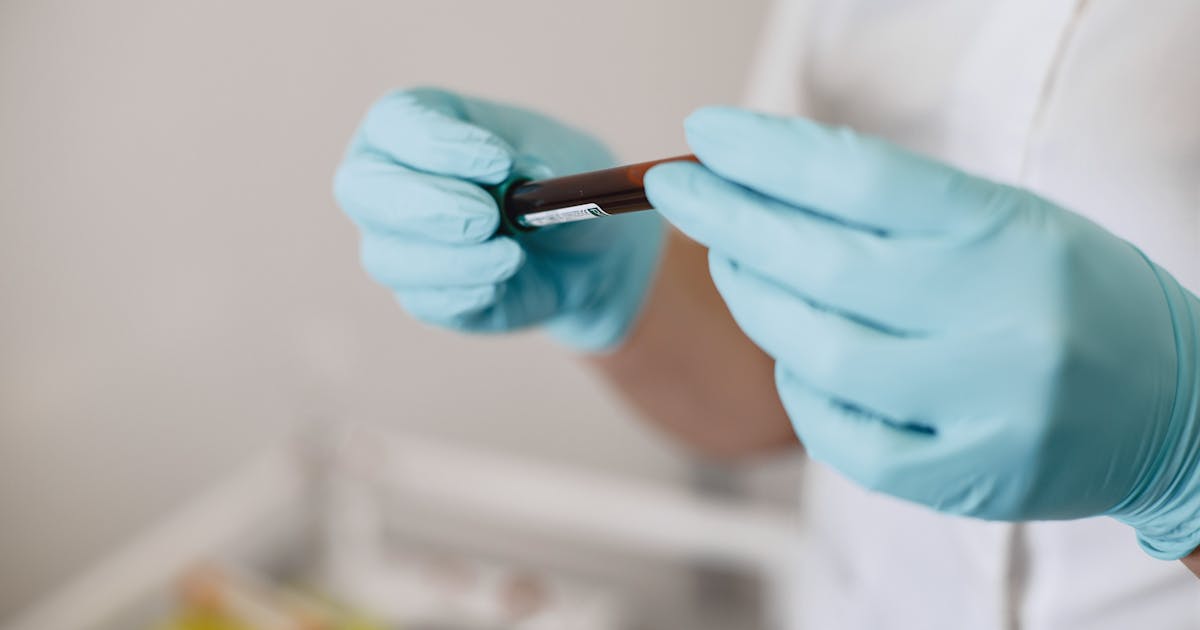
<p><strong>The Lab Test Is Optional:</strong> The routine lipid panel measures total cholesterol, HDL, LDL, and triglycerides. Lp(a) is a separate, optional lab that has to be specifically ordered by your doctor. For most adults under 50 with no family history of early heart disease, it has historically not been ordered as a default.</p>
<p>The result is that people walk around with elevated Lp(a) for decades, blood panels coming back "normal," while the underlying risk quietly compounds. That gap is what newer screening recommendations are trying to close.</p>
<h3>The Risk Math: How Much Worse Is It?</h3>
<p><strong>Double to Triple the Heart Risk:</strong> A high Lp(a) level may double or even triple a person's risk of a heart attack, and it also raises the risk of stroke and narrowing of the aortic valve (<a href="https://www.health.harvard.edu/heart-health/lipoproteina-an-update-on-testing-and-treatment" target="_blank" rel="noopener">Harvard Health, 2024</a>). About one in five people carries blood levels in the elevated range, which makes Lp(a) one of the most prevalent under-diagnosed cardiovascular risk factors in the population.</p>
<p>The risk shows up earlier in life than risk from ordinary LDL elevation. A high-Lp(a) heart attack at 45 is not uncommon in families with the genetic variant, even when LDL looks fine on every prior panel.</p>
<h3>Who Should Get Tested (And When)</h3>
<p><strong>Once in a Lifetime Is Usually Enough:</strong> Updated cardiology guidance recommends a one-time Lp(a) test for every adult, with priority for anyone who has a family history of early-onset heart disease, sudden cardiac death, or unexplained stroke (<a href="https://www.mayoclinic.org/diseases-conditions/heart-disease/in-depth/heart-disease/art-20049357" target="_blank" rel="noopener">Mayo Clinic, 2024</a>). Because the level is stable from childhood through old age, repeat testing is not needed unless a clinical trial is involved.</p>
<p>If you are over 40 and have never had this test, it is reasonable to ask for it at your next physical. If you are under 30 but have a parent or sibling who had a heart attack before age 60, the case for testing now is stronger still.</p>
<h3>What to Do If Your Lp(a) Is High</h3>
<p><strong>Manage the Other Levers Hard:</strong> Lifestyle changes will not lower Lp(a) itself, but they dramatically reduce the cumulative cardiovascular risk it imposes. That means LDL gets driven lower than the population target, blood pressure gets tightly controlled, and smoking and uncontrolled diabetes become non-negotiable items to address.</p>
<p>Several new injectable therapies designed specifically to lower Lp(a) are in late-stage clinical trials and may reach approval in the next two to three years. For now, knowing your number is the foundation everything else gets built on.</p>
<div class="ac-action-plan" style="background: linear-gradient(135deg, #fffcf4 0%, #fff8ed 100%); border-left: 5px solid #9A6841; border-radius: 12px; padding: 28px 24px; margin: 32px 0; box-shadow: 0 2px 12px rgba(0,0,0,0.06);"><div style="display: flex; align-items: center; gap: 10px; margin-bottom: 20px;"><svg width="24" height="24" viewBox="0 0 24 24" fill="none" stroke="#9A6841" stroke-width="2" stroke-linecap="round" stroke-linejoin="round"><path d="M9 5H7a2 2 0 00-2 2v12a2 2 0 002 2h10a2 2 0 002-2V7a2 2 0 00-2-2h-2"/><rect x="9" y="3" width="6" height="4" rx="1"/><path d="M9 14l2 2 4-4"/></svg><span style="font-family: Georgia, serif; font-size: 22px; font-weight: 700; color: #313743;">Your Coach's Recommendations</span></div><div style="display: flex; gap: 14px; margin-bottom: 16px; align-items: flex-start;"><div style="min-width: 36px; width: 36px; height: 36px; background: #9A6841; border-radius: 50%; display: flex; align-items: center; justify-content: center; color: #fff; font-weight: 700; font-size: 16px; flex-shrink: 0;">1</div><div><div style="font-weight: 700; color: #313743; font-size: 15px; margin-bottom: 2px;">Ask Your Primary Care Doctor to Add Lp(a) to Your Next Lab Order.</div><div style="color: #6b7280; font-size: 13.5px; line-height: 1.5;">The test is a single blood draw that runs roughly 25 to 100 dollars and is increasingly covered by insurance for first-time cardiovascular screening.</div></div></div><div style="display: flex; gap: 14px; margin-bottom: 16px; align-items: flex-start;"><div style="min-width: 36px; width: 36px; height: 36px; background: #9A6841; border-radius: 50%; display: flex; align-items: center; justify-content: center; color: #fff; font-weight: 700; font-size: 16px; flex-shrink: 0;">2</div><div><div style="font-weight: 700; color: #313743; font-size: 15px; margin-bottom: 2px;">Lower Your Other Risk Factors Aggressively If Lp(a) Is Elevated.</div><div style="color: #6b7280; font-size: 13.5px; line-height: 1.5;">Diet, exercise, and statins will not lower Lp(a) itself, but they can dramatically reduce the cumulative cardiovascular risk it imposes.</div></div></div><div style="display: flex; gap: 14px; margin-bottom: 20px; align-items: flex-start;"><div style="min-width: 36px; width: 36px; height: 36px; background: #9A6841; border-radius: 50%; display: flex; align-items: center; justify-content: center; color: #fff; font-weight: 700; font-size: 16px; flex-shrink: 0;">3</div><div><div style="font-weight: 700; color: #313743; font-size: 15px; margin-bottom: 2px;">Share Your Result With First-Degree Relatives.</div><div style="color: #6b7280; font-size: 13.5px; line-height: 1.5;">Lp(a) is inherited in roughly half of family members, so a high reading is a flag for your siblings, parents, and children to test too.</div></div></div><div style="border-top: 1px solid #e5ddd4; margin: 16px 0;"></div><div style="display: flex; justify-content: center; align-items: center; gap: 10px; flex-wrap: wrap;"><button onclick="acPrintPlan()" style="background: none; border: 1px solid #d3cabe; border-radius: 8px; padding: 10px 16px; font-size: 13px; color: #6b7280; cursor: pointer; display: flex; align-items: center; gap: 6px;"><svg width="14" height="14" viewBox="0 0 24 24" fill="none" stroke="currentColor" stroke-width="2" stroke-linecap="round" stroke-linejoin="round"><polyline points="6 9 6 2 18 2 18 9"/><path d="M6 18H4a2 2 0 01-2-2v-5a2 2 0 012-2h16a2 2 0 012 2v5a2 2 0 01-2 2h-2"/><rect x="6" y="14" width="12" height="8"/></svg>Print</button></div></div>
<div style="margin-top: 32px; padding-top: 0;">
<div style="width: 60px; height: 2px; background: linear-gradient(90deg, #9A6841, #be7b4c); border-radius: 2px; margin-bottom: 20px;"></div>
<p style="font-family: Georgia, serif; font-size: 16px; font-style: italic; color: #777; margin: 0 0 6px 0; letter-spacing: 0.3px; padding-left: 38px;">To your health,</p>
<div style="display: flex; align-items: center; gap: 4px; margin-bottom: 4px;">
<img src="https://cdn.prod.website-files.com/69be130d412f9c2c202307ef/69c539b9526b266e2cba5521_ageless-coach-logo-black.png" alt="AC" style="width: 34px; height: 34px; object-fit: contain;">
<p style="font-family: Georgia, serif; font-size: 22px; font-weight: 700; color: #313743; margin: 0; letter-spacing: 0.5px;">Ageless Coach</p>
</div>
<p style="font-family: -apple-system, BlinkMacSystemFont, Segoe UI, sans-serif; font-size: 11px; font-weight: 600; color: #be7b4c; letter-spacing: 2px; text-transform: uppercase; margin: 0 0 0 28px;">Age Strong. Live Long.</p>
</div>
<div style="margin-top: 28px; padding-top: 20px; border-top: 1px solid #e5e7eb; text-align: center;">
<p style="font-family: -apple-system, BlinkMacSystemFont, Segoe UI, sans-serif; font-size: 13px; font-weight: 700; color: #6b7280; letter-spacing: 2px; text-transform: uppercase; margin: 0 0 16px 0;">Trusted Sources Behind This Article</p>
<div style="display: flex; justify-content: center; gap: 10px; flex-wrap: wrap;">
<a href="https://my.clevelandclinic.org/health/articles/25226-lipoprotein-a" target="_blank" rel="noopener" style="display: inline-block; background: #fff; border: 1.5px solid #9A6841; color: #9A6841; padding: 8px 20px; border-radius: 20px; font-size: 14px; font-weight: 600; letter-spacing: 0.3px; text-decoration: none; transition: background 0.2s ease, color 0.2s ease;">Cleveland Clinic</a>
<a href="https://www.mayoclinic.org/diseases-conditions/heart-disease/in-depth/heart-disease/art-20049357" target="_blank" rel="noopener" style="display: inline-block; background: #fff; border: 1.5px solid #9A6841; color: #9A6841; padding: 8px 20px; border-radius: 20px; font-size: 14px; font-weight: 600; letter-spacing: 0.3px; text-decoration: none; transition: background 0.2s ease, color 0.2s ease;">Mayo Clinic</a>
<a href="https://www.health.harvard.edu/heart-health/lipoproteina-an-update-on-testing-and-treatment" target="_blank" rel="noopener" style="display: inline-block; background: #fff; border: 1.5px solid #9A6841; color: #9A6841; padding: 8px 20px; border-radius: 20px; font-size: 14px; font-weight: 600; letter-spacing: 0.3px; text-decoration: none; transition: background 0.2s ease, color 0.2s ease;">Harvard Health</a>
</div>
</div>
<p style="font-size: 12px; color: #999; margin-top: 40px; line-height: 1.5;"><em>This content is for educational purposes only and is not a substitute for professional medical advice, diagnosis, or treatment. Reading this article does not create a provider-patient relationship. Always consult your physician or qualified healthcare provider before making changes to your diet, exercise, or health routine. Ageless Coach is not liable for any actions taken based on this information.</em></p>
<div class="ac-faq" style="margin-top:40px; border-top:1px solid #e5e7eb; padding-top:32px;">
<h2 style="font-family:Georgia,serif; font-size:20px; font-weight:700; color:#313743; margin:0 0 20px 0;">Frequently Asked Questions</h2>
<details style="border:1px solid #e5e7eb; border-radius:8px; margin-bottom:10px; overflow:hidden;"><summary style="padding:14px 18px; font-weight:600; font-size:15px; color:#313743; cursor:pointer; list-style:none; display:flex; justify-content:space-between; align-items:center;">Does my standard cholesterol panel already include Lp(a)?<svg width="16" height="16" viewBox="0 0 24 24" fill="none" stroke="#9A6841" stroke-width="2" stroke-linecap="round" stroke-linejoin="round" aria-hidden="true"><polyline points="6 9 12 15 18 9"/></svg></summary><div style="padding:0 18px 16px; font-size:18px; color:#555; line-height:1.65;">No, a standard lipid panel measures total cholesterol, HDL, LDL, and triglycerides only. Lp(a) requires a separate order from your doctor and is almost never run automatically. You have to ask for it by name.</div></details>
<details style="border:1px solid #e5e7eb; border-radius:8px; margin-bottom:10px; overflow:hidden;"><summary style="padding:14px 18px; font-weight:600; font-size:15px; color:#313743; cursor:pointer; list-style:none; display:flex; justify-content:space-between; align-items:center;">Can I lower my Lp(a) with diet, exercise, or statins?<svg width="16" height="16" viewBox="0 0 24 24" fill="none" stroke="#9A6841" stroke-width="2" stroke-linecap="round" stroke-linejoin="round" aria-hidden="true"><polyline points="6 9 12 15 18 9"/></svg></summary><div style="padding:0 18px 16px; font-size:18px; color:#555; line-height:1.65;">Lp(a) is set genetically at birth and does not move meaningfully with diet, exercise, or weight loss. Statins also do not lower it. Several injectable therapies designed specifically to lower Lp(a) are in late-stage clinical trials.</div></details>
<details style="border:1px solid #e5e7eb; border-radius:8px; margin-bottom:10px; overflow:hidden;"><summary style="padding:14px 18px; font-weight:600; font-size:15px; color:#313743; cursor:pointer; list-style:none; display:flex; justify-content:space-between; align-items:center;">How often should I get tested for Lp(a)?<svg width="16" height="16" viewBox="0 0 24 24" fill="none" stroke="#9A6841" stroke-width="2" stroke-linecap="round" stroke-linejoin="round" aria-hidden="true"><polyline points="6 9 12 15 18 9"/></svg></summary><div style="padding:0 18px 16px; font-size:18px; color:#555; line-height:1.65;">Most professional guidelines recommend a single Lp(a) test once in your lifetime because the level stays stable from childhood through old age. Repeat testing is rarely necessary outside of a clinical trial.</div></details>
<details style="border:1px solid #e5e7eb; border-radius:8px; margin-bottom:10px; overflow:hidden;"><summary style="padding:14px 18px; font-weight:600; font-size:15px; color:#313743; cursor:pointer; list-style:none; display:flex; justify-content:space-between; align-items:center;">What Lp(a) level is considered high?<svg width="16" height="16" viewBox="0 0 24 24" fill="none" stroke="#9A6841" stroke-width="2" stroke-linecap="round" stroke-linejoin="round" aria-hidden="true"><polyline points="6 9 12 15 18 9"/></svg></summary><div style="padding:0 18px 16px; font-size:18px; color:#555; line-height:1.65;">Generally, an Lp(a) above 50 mg/dL (or 125 nmol/L) is considered elevated. Above 100 mg/dL substantially raises cardiovascular risk and warrants aggressive risk-factor reduction.</div></details>
<details style="border:1px solid #e5e7eb; border-radius:8px; margin-bottom:10px; overflow:hidden;"><summary style="padding:14px 18px; font-weight:600; font-size:15px; color:#313743; cursor:pointer; list-style:none; display:flex; justify-content:space-between; align-items:center;">Should I get tested if I am under 30?<svg width="16" height="16" viewBox="0 0 24 24" fill="none" stroke="#9A6841" stroke-width="2" stroke-linecap="round" stroke-linejoin="round" aria-hidden="true"><polyline points="6 9 12 15 18 9"/></svg></summary><div style="padding:0 18px 16px; font-size:18px; color:#555; line-height:1.65;">Yes, especially if you have a family history of early heart disease, stroke, or sudden cardiac death. The earlier you know your number, the more time you have to manage other modifiable risks and stay ahead of the cumulative damage.</div></details>
<details style="border:1px solid #e5e7eb; border-radius:8px; margin-bottom:10px; overflow:hidden;"><summary style="padding:14px 18px; font-weight:600; font-size:15px; color:#313743; cursor:pointer; list-style:none; display:flex; justify-content:space-between; align-items:center;">Does insurance typically cover the Lp(a) test?<svg width="16" height="16" viewBox="0 0 24 24" fill="none" stroke="#9A6841" stroke-width="2" stroke-linecap="round" stroke-linejoin="round" aria-hidden="true"><polyline points="6 9 12 15 18 9"/></svg></summary><div style="padding:0 18px 16px; font-size:18px; color:#555; line-height:1.65;">Coverage is improving with newer professional guidelines, but you may need to pay out of pocket if your plan has not updated. Out-of-pocket costs typically range from 25 to 100 dollars at most major labs.</div></details>
</div>
<div class="ac-article-cta">
<p class="ac-cta-lead">Want one verified-science article like this every week?</p>
<a href="/newsletter" class="ac-nav-cta">
Get Better Health, Weekly
<span class="ac-nav-cta-arrow">
<svg viewBox="0 0 18 18" fill="none" xmlns="http://www.w3.org/2000/svg" aria-hidden="true"><path d="M4.24 13.59L12.73 5.11" stroke="#0D1B2A" stroke-width="1.8"/><path d="M4.95 4.4H13.44V12.89" stroke="#0D1B2A" stroke-width="1.8"/></svg>
</span>
</a>
</div>