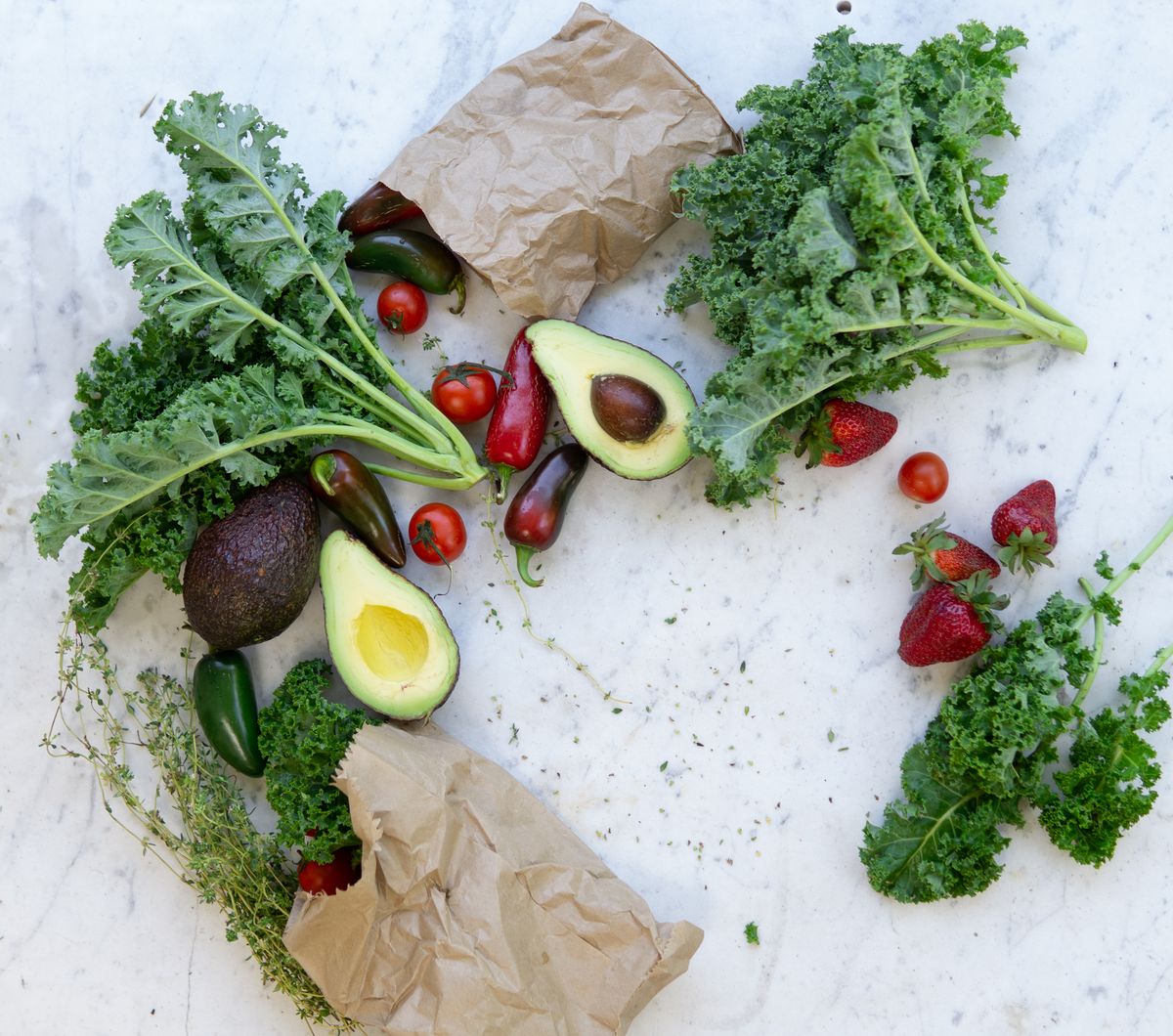
Soluble fiber is the one thing the good bacteria in your colon feed on, yet most adults eat barely half of what they need. When fiber runs short, those bacteria go hungry. Closing the gap is mostly a matter of what lands on your plate.
125 to 38 grams · the daily target most adults fall short of, and it is largely a food problem, not a willpower one
2Feeds your microbes · soluble fiber turns to gel and feeds the good bacteria waiting in your colon
3Two different kinds · soluble forms a gel and feeds bacteria, while insoluble adds bulk and keeps you regular
4Whole foods first · fruits, vegetables, beans and whole grains beat any fiber supplement in a tub
5Add it slowly · raise fiber gradually and drink water, or you trade one problem for gas and bloating
You eat what you think of as a healthy diet, and still feel bloated, sluggish or irregular more often than you would like. The missing piece is rarely some mystery ingredient or a fashionable supplement. For most people it is plain dietary fiber, and the honest truth is that there is simply not enough of it landing on the plate each day.
That shortfall matters more than it sounds. Cleveland Clinic explains that soluble fiber travels down to your colon and feeds your good gut bacteria. Eat too little of it, and the very microbes that keep your gut steady and calm are left without their main food source, day after day.
1
The basics
Soluble, Insoluble, and Why It Matters
Fiber comes in two forms, and the striking thing is that your body cannot digest either one, which turns out to be exactly the point. Cleveland Clinic describes soluble fiber as the kind that dissolves into a soft gel as it moves through you, while insoluble fiber stays intact and adds bulk to everything it passes.
Each does a different job. The gel from soluble fiber slows digestion and, further down, feeds the bacteria waiting in your colon. Insoluble fiber sticks to waste and builds softer, bulkier, more regular stools. Cleveland Clinic points to oats, apples, beans and psyllium for soluble fiber, and wheat bran, nuts and vegetables for insoluble. You need both, and most whole plant foods quietly hand you a mix of the two without any effort on your part.
2
The engine room
How Fiber Feeds Your Gut
Once soluble fiber reaches your colon, it stops being food for you and becomes food for the trillions of microbes living there. Cleveland Clinic links a healthy population of those bacteria to some protection against obesity and its related conditions, including type 2 diabetes.
Variety feeds variety down there. A gastroenterologist at Cleveland Clinic notes that a diverse diet grows more kinds of good bacteria, which leaves your gut better equipped to handle whatever comes along. A plate built around one or two beige, refined foods slowly starves that diversity out, one predictable meal at a time.
Whole grains like oats are an easy source of the soluble fiber your gut bacteria feed on, and one of the simplest places to close the gap.
3
The gap
Why Most Plates Fall Short
The targets themselves are not extreme. Cleveland Clinic puts them at 38 grams a day for men under 50 and 25 for women, easing down to 30 and 21 grams after 50. Yet it plainly notes that many Americans simply do not get enough, and most of us are running at roughly half of what we need.
The reason is the shape of the modern plate: refined grains, too few vegetables, and very little in the way of beans or lentils. The fix, reassuringly, is not a prescription. Cleveland Clinic is clear that whole food, not a supplement in a tub, is the best source, which means the gap closes quietly at the grocery store.
4
The payoff
What Enough Fiber Actually Does
Close the gap and the returns spread well past digestion. Cleveland Clinic ties fiber to lower cholesterol and steadier blood pressure, better blood sugar control, and a lower risk of colorectal cancer, all of it sitting alongside the plain regularity most people first came looking for in the first place. Some research even ties higher fiber intake to a lower risk of breast cancer.
There is even a longevity thread running through it. The same overview links a high-fiber diet to a longer life and to easier weight management, since fiber helps you feel full for longer and eat a little less without trying. Few single changes to a plate manage to pay off in so many directions at once, and none of them require a pharmacy.
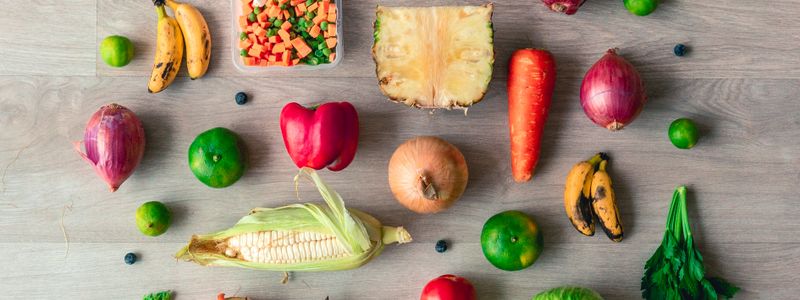
A varied plate of plants feeds a varied gut. Cleveland Clinic notes that dietary diversity grows more kinds of the good bacteria fiber supports.
The daily target runs from 25 to 38 grams, yet many adults eat only about half that, leaving their gut bacteria short on food.
The gap is a plate problem before it is a supplement problem, which is why the fix starts with fruits, beans and whole grains.
Cleveland Clinic
Knowing the target is one thing; reaching it without a miserable week of bloating is another, and this is where most good intentions quietly fall apart. The trick is less about willpower than about a few reliable swaps and a slower pace, both of which Cleveland Clinic spells out in plain terms.
5
What to do
Closing the Gap Without the Bloat
Build each plate around plants. Cleveland Clinic suggests five to seven servings of fruit and vegetables a day, and choosing whole grains that carry at least 3 grams of fiber per serving. Beans and lentils are among the richest sources you can add, and they slot easily into soups, salads and bowls you already make.
One caution genuinely matters here. Raise your fiber gradually and drink more water as you do, because too much too soon simply trades one problem for gas and bloating. Fermented foods such as yogurt, kimchi and sauerkraut help as well, bringing in good bacteria to sit alongside the fiber that feeds them.
Take the fiber and gut cheat sheet with you
Your free 2-page guide: the daily fiber target by age, the foods that close the gap fastest, and how to raise your intake without the bloating.
One email. No spam. Unsubscribe anytime.
Free Lifestyle Assessment
How Healthy Is Your Current Lifestyle?
Answer honestly for five minutes and walk away with your personal scorecard: all six areas of your health rated, the one that needs your attention first, and a 30-day plan built from your answers. It shows up the second you finish.
Free. About 5 minutes. Your results appear instantly.
📋 Your Coach's Recommendations
1
Build Every Plate Around Plants
Aim for five to seven servings of fruit and vegetables a day and choose whole grains with at least 3 grams of fiber per serving, as Cleveland Clinic advises. Plants are where the gap closes.
2
Add Beans and Fermented Foods
Beans are among the richest fiber sources you can reach for, and fermented foods like yogurt and kimchi bring good bacteria alongside the fiber that feeds them. Both crowd out refined, low-fiber choices.
3
Raise It Slowly, With Water
Increase fiber gradually and drink more water, Cleveland Clinic recommends, so you get the benefit without the gas and bloating that come from adding too much too soon.
?
How it works. Just a quiet check-in, not an alert and not a recurring nag. The event lands as a 30-minute slot at 9am two weeks from today, with your plan in the notes and a link back to this article. Works with Apple Calendar, Google Calendar, and Outlook. Yours to move, snooze, or delete whenever.
Keep this plan
Get the 2-page guide: your daily fiber target by age, the foods that close the gap fastest, and how to raise intake without the bloat.
One email. No spam. Unsubscribe anytime.
Where should we send it?
Your fiber and gut cheat sheet, straight to your inbox.
We send the plan plus one short evidence brief each week. Unsubscribe anytime.
✓
It is on the way
Check your inbox in the next minute. Your first Ageless Brief arrives this week: one study, translated, no hype.
Cleveland Clinic puts the target at 38 grams for men under 50 and 25 grams for women under 50, dropping to 30 and 21 grams after age 50. Many adults fall well short of these amounts.
What is the difference between soluble and insoluble fiber?
Soluble fiber dissolves into a gel and feeds the good bacteria in your colon, while insoluble fiber stays intact, adds bulk and keeps you regular. Cleveland Clinic says most plant foods supply a mix of both.
How does fiber help my gut bacteria?
Soluble fiber reaches the colon and becomes food for your gut microbes. Cleveland Clinic links a healthy balance of these bacteria to protection against obesity and related conditions such as diabetes.
Can I just take a fiber supplement instead?
You can occasionally benefit from one, but Cleveland Clinic is clear that whole food is the best source. Fruits, vegetables, beans and whole grains deliver fiber alongside other nutrients a tub cannot.
Why does adding fiber make me bloated?
Usually because it went up too fast. Cleveland Clinic recommends raising fiber gradually and drinking more water, which lets your system adjust and avoids the gas and bloating of a sudden jump.
Is this medical advice?
No. This article is educational and is not a substitute for advice from your own clinician, who can account for any digestive condition or medication you take.
Curious where you stand? Take the free 5-minute lifestyle assessment and your personal scorecard appears the second you finish.
By the Ageless Coach Editorial Team · Published August 1, 2026 · Last updated August 1, 2026
<style>
:root{--dark-base:#0D1B2A;--dark-mid:#1B3A4B;--teal:#0EA5A0;--teal-dark:#0C8C88;--teal-bright:#14D4CD;--fog:#D8E8E8;--deep-fog:#C8DCDC;--fog-border:#A8C4C4;--ink:#313743;--ink-soft:#49505f;--muted:#6b7280;--warm:#9A6841;--warm-light:#be7b4c;--serif:"Source Serif 4",Georgia,serif;--sans:Inter,-apple-system,BlinkMacSystemFont,"Segoe UI",sans-serif}
.w-richtext p,.w-richtext li,.w-richtext td{font-size:20.5px;line-height:1.7;color:var(--ink-soft)}
.w-richtext ul{list-style-type:disc;padding-left:24px;margin:12px 0}
.w-richtext ul li{margin-bottom:8px}
.ac-answer{background:#fff;border:1px solid #D4E4E4;border-top:5px solid var(--teal);border-radius:16px;padding:22px 24px 18px;margin:16px 0 28px;box-shadow:0 6px 22px rgba(13,27,42,.07)}
.ac-answer .aa-eyebrow{font:800 12px/1 var(--sans);letter-spacing:2.5px;text-transform:uppercase;color:var(--teal-dark);margin-bottom:8px}
.ac-answer .aa-head{font-family:var(--serif);font-size:24px;line-height:1.2;font-weight:800;color:var(--dark-base);margin:0 0 16px}
.ac-answer .aa-list{list-style:none;margin:0;padding:0}
.ac-answer .aa-list li{display:flex;gap:12px;align-items:baseline;padding:11px 0;border-bottom:1px solid #EDF3F3;font:700 16.5px/1.4 var(--sans);color:var(--ink)}
.ac-answer .aa-list li:last-child{border-bottom:none}
.ac-answer .aa-n{flex-shrink:0;width:24px;height:24px;border-radius:50%;background:var(--teal-dark);color:#fff;font:800 12px/24px var(--sans);text-align:center}
.ac-answer .aa-food{color:var(--teal-dark);font-weight:800}
.ac-answer .aa-cue{margin-top:18px;text-align:center}
.ac-answer .aa-cta{display:inline-flex;align-items:center;gap:10px;background:var(--teal-dark);color:#fff;font:800 14px/1 var(--sans);letter-spacing:.2px;padding:14px 26px;border-radius:50px;text-decoration:none;box-shadow:0 6px 16px rgba(12,140,136,.30)}
.ac-answer .aa-cta:hover{background:#0A7A76}
.ac-answer .aa-arw{display:inline-block;animation:aa-nudge 1.4s ease-in-out infinite}
@keyframes aa-nudge{0%,100%{transform:translateY(0)}50%{transform:translateY(4px)}}
@media(max-width:560px){.ac-answer{padding:20px 18px 16px}.ac-answer .aa-head{font-size:21px}.ac-answer .aa-list li{font-size:15px}}
.ac-band{margin:56px 0 24px;padding:26px 24px 12px;background:linear-gradient(180deg,#F0F7F7,#fff);border-radius:16px}
.ac-band.hype{background:linear-gradient(180deg,#FAF3EB,#fff)}
.ac-band .inner{display:flex;gap:20px;align-items:center}
.ac-band .big{font:900 72px/1 var(--sans);color:var(--deep-fog);flex-shrink:0}
.ac-band.hype .big{color:#EAD9C6}
.ac-band .q{font:700 13px/1.4 var(--sans);letter-spacing:2px;text-transform:uppercase;color:var(--teal-dark)}
.ac-band.hype .q{color:var(--warm)}
.ac-band h3{font-family:var(--serif);font-size:30px;line-height:1.2;font-weight:800;color:var(--ink);margin:0}
.ac-callout{border-left:4px solid var(--teal);background:#F4FAFA;border-radius:0 12px 12px 0;padding:18px 22px;margin:28px 0}
.ac-callout .n{font:800 20px/1.35 var(--sans);color:var(--dark-mid);margin-bottom:6px}
.ac-callout .d{font:500 15px/1.55 var(--sans);color:var(--ink-soft)}
.ac-callout .c{font:600 11.5px/1 var(--sans);letter-spacing:1.5px;text-transform:uppercase;color:var(--muted);margin-top:10px}
.ac-plan{background:linear-gradient(135deg,#F4FAFA 0%,#fff 100%);border-left:5px solid var(--teal-dark);border-radius:14px;padding:30px 26px;margin:40px 0 0;box-shadow:0 2px 12px rgba(0,0,0,.06);scroll-margin-top:100px}
.ac-plan .ptitle{font-family:var(--serif);font-size:24px;font-weight:800;color:var(--ink);margin-bottom:22px}
.ac-plan .step{display:flex;gap:16px;margin-bottom:18px;align-items:flex-start}
.ac-plan .step .n{min-width:38px;width:38px;height:38px;background:var(--teal-dark);border-radius:50%;color:#fff;font:800 17px/38px var(--sans);text-align:center;flex-shrink:0}
.ac-plan .sh{font:800 16.5px/1.4 var(--sans);color:var(--ink);margin-bottom:3px}
.ac-plan .sd{font:400 15px/1.6 var(--sans);color:var(--muted)}
.ac-plan .actions{border-top:1px solid #D8E8E8;margin-top:16px;padding-top:20px}
.ac-primary-row{display:flex;align-items:center;gap:10px;padding:0 4px}
.ac-btn-primary-wide{flex:1;background:var(--teal);color:#fff;border:1.5px solid var(--teal);border-radius:14px;padding:12px 22px;box-shadow:0 4px 14px rgba(14,165,160,.22);font-family:var(--sans);cursor:pointer;display:grid;grid-template-columns:auto 1fr;gap:14px;align-items:center;transition:all .18s ease}
.ac-btn-primary-wide:hover{background:var(--teal-dark);border-color:var(--teal-dark)}
.ac-btn-primary-wide .icon svg{width:22px;height:22px;color:#fff;display:block}
.ac-btn-primary-wide .label{text-align:left;line-height:1.25}
.ac-btn-primary-wide .label .top{display:block;font-weight:700;font-size:15.5px;color:#fff}
.ac-btn-primary-wide .label .top em{font-style:italic;font-weight:700}
.ac-cal-help{position:relative;flex-shrink:0}
.ac-cal-help summary{list-style:none;width:24px;height:24px;border-radius:50%;background:#E4F1F1;border:1px solid var(--fog-border);color:var(--dark-mid);font:700 13px/22px var(--sans);text-align:center;cursor:pointer;display:block}
.ac-cal-help summary::-webkit-details-marker{display:none}
.ac-cal-help .tip{position:absolute;right:0;top:32px;z-index:50;width:290px;background:var(--dark-base);color:var(--fog);border-radius:12px;padding:14px 16px;font:500 12.5px/1.55 var(--sans);box-shadow:0 10px 30px rgba(13,27,42,.35)}
.ac-cal-help .tip strong{color:#fff}
.ac-btn-share-wide{display:flex;width:100%;align-items:center;justify-content:center;gap:10px;background:#fff;color:var(--teal-dark);border:1.5px solid var(--teal-dark);border-radius:14px;padding:12px 22px;margin-top:10px;font:800 15px/1 var(--sans);cursor:pointer}
.ac-btn-share-wide svg{width:18px;height:18px}
.ac-midcap{background:linear-gradient(180deg,#F0F7F7,#fff);border:1.5px solid var(--fog-border);border-radius:16px;padding:24px 22px;margin:34px 0;text-align:center}
.ac-midcap h4{font-family:var(--serif);font-size:22px;font-weight:800;color:var(--ink);margin:0 0 6px}
.ac-midcap .sub{font:500 14px/1.55 var(--sans);color:var(--ink-soft);margin:0 auto 14px;max-width:400px}
.ac-midcap .mcform{display:flex;gap:8px;max-width:400px;margin:0 auto}
.ac-midcap .mcform input{flex:1;border:1.5px solid var(--fog-border);border-radius:50px;padding:12px 18px;font:500 14px/1 var(--sans);min-width:0}
.ac-midcap .mcform button{background:var(--teal-dark);color:#fff;border:none;border-radius:50px;padding:12px 20px;font:800 13.5px/1 var(--sans);cursor:pointer;white-space:nowrap}
.ac-midcap .fine{font:500 11.5px/1.5 var(--sans);color:var(--muted);margin-top:10px}
@media (max-width:520px){.ac-midcap .mcform{flex-direction:column}}
.ac-assess-promo{background:linear-gradient(135deg,#D8E8E8,#C8DCDC);border:1px solid var(--fog-border);border-radius:16px;padding:34px 30px;margin:44px 0;text-align:center}
.ac-assess-promo .eyebrow{color:var(--teal-dark);font:800 12px/1 var(--sans);letter-spacing:2.5px;text-transform:uppercase;margin:0 0 10px}
.ac-assess-promo h4{font-family:var(--serif);color:var(--dark-base);font-size:26px;font-weight:800;margin:0 0 12px}
.w-embed .ac-assess-promo p.ap-body,.ac-assess-promo p.ap-body{font-family:Georgia,serif;color:#3A5555;font-size:15.5px;font-weight:500;line-height:1.65;max-width:540px;margin:0 auto 22px}
.ac-assess-promo .ap-cta{display:inline-block;background:var(--teal-bright);color:var(--dark-base);font:800 15px/1 var(--sans);padding:15px 30px;border-radius:50px;text-decoration:none}
.ac-assess-promo .ap-fine{color:#4E6B6B;font:500 13px/1.5 var(--sans);margin:14px 0 0}
.ac-assess-line{border-top:1px solid #E2ECEC;margin-top:30px;padding:22px 10px 0;text-align:center;font:500 15.5px/1.6 var(--sans);color:#3A5555}
.w-embed .ac-assess-line a,.ac-assess-line a{color:var(--teal-dark);font-weight:700;text-decoration:underline;text-underline-offset:3px}
.ac-articlemeta{font:500 12.5px/1.6 var(--sans);color:#98a0a6;text-align:center;margin:24px 0 0}
.ac-capture{background:linear-gradient(180deg,#F0F7F7,#fff);border:1.5px solid var(--fog-border);border-radius:16px;padding:30px 28px;margin:26px 0 44px;text-align:center}
.ac-capture .cap-state{display:none}
.ac-capture[data-state="trigger"] .st-trigger{display:block}
.ac-capture[data-state="form"] .st-form{display:block}
.ac-capture[data-state="sent"] .st-sent{display:block}
.ac-capture h4{font-family:var(--serif);font-size:24px;font-weight:800;color:var(--ink);margin:0 0 8px}
.ac-capture .sub{font:500 15px/1.55 var(--sans);color:var(--ink-soft);margin:0 auto 18px;max-width:430px}
.ac-capture .bigbtn{display:inline-flex;align-items:center;gap:10px;background:var(--teal-dark);color:#fff;border:none;border-radius:50px;padding:16px 30px;font:800 16px/1 var(--sans);cursor:pointer;box-shadow:0 6px 18px rgba(12,140,136,.28)}
.ac-capture .capform{display:flex;gap:10px;max-width:430px;margin:0 auto}
.ac-capture .capform input{flex:1;border:1.5px solid var(--fog-border);border-radius:50px;padding:14px 20px;font:500 15px/1 var(--sans)}
.ac-capture .capform button{background:var(--teal-dark);color:#fff;border:none;border-radius:50px;padding:14px 24px;font:800 14px/1 var(--sans);cursor:pointer}
.ac-capture .sent-check{width:52px;height:52px;border-radius:50%;background:var(--teal);color:#fff;font:800 26px/52px var(--sans);margin:0 auto 12px}
.ac-capture .dl{display:inline-block;margin-top:6px;color:var(--teal-dark);font:700 15px/1 var(--sans);text-decoration:underline;cursor:pointer}
.ac-capture .fine{font:500 12px/1.5 var(--sans);color:var(--muted);margin-top:12px}
.ac-sig{margin-top:36px}
.ac-sig .rule{width:60px;height:2px;background:linear-gradient(90deg,var(--teal-dark),var(--teal-bright));margin-bottom:18px;border-radius:2px}
.ac-sig .toyour{font-family:var(--serif);font-size:16px;font-style:italic;color:#777;margin:0 0 10px;padding-left:2px}
.ac-faq{margin-top:40px;border-top:1px solid #e5e7eb;padding-top:30px;margin-bottom:40px}
.ac-faq h2{font-family:var(--serif);font-size:23px;font-weight:800;color:var(--ink);margin:0 0 18px}
.ac-faq details{border:1px solid #e5e7eb;border-radius:10px;margin-bottom:10px}
.ac-faq summary{padding:15px 18px;font:700 16px/1.4 var(--sans);color:var(--ink);cursor:pointer;display:flex;justify-content:space-between;align-items:center;list-style:none}
.ac-faq summary:after{content:"\25BE";color:var(--warm)}
.ac-faq .a{padding:0 18px 16px;font-size:17px;line-height:1.65;color:#555}
.article-header-section .article-container{max-width:1080px !important;margin:0 auto !important;padding:0 20px !important}
.article-header-section .article-hero-image{display:block;width:100%;max-width:660px;margin:0}
.article-header-section .article-title{display:block !important;font-family:var(--serif);font-size:32px;line-height:1.25;font-weight:700;color:#313743;margin:20px 0 12px 0;text-align:left;max-width:660px}
@media (max-width:767px){.article-header-section .article-title{font-size:26px}.article-header-section .article-hero-image{max-width:100%}}
@media (max-width:640px){.ac-band .big{font-size:52px}}
@media (max-width:520px){.ac-capture .capform{flex-direction:column}}
.ac-figure{margin:30px 0}.ac-figure img{display:block;width:100%;border-radius:14px;height:auto;aspect-ratio:800/300}.ac-figure figcaption{font:500 13px/1.5 var(--sans);color:var(--muted);margin-top:9px}</style>
<div class="ac-answer">
<div class="aa-eyebrow">What the evidence actually says</div>
<h2 class="aa-head">Soluble fiber is the one thing the good bacteria in your colon feed on, yet most adults eat barely half of what they need. When fiber runs short, those bacteria go hungry. Closing the gap is mostly a matter of what lands on your plate.</h2>
<ol class="aa-list">
<li><span class="aa-n">1</span><span><span class="aa-food">25 to 38 grams</span> · the daily target most adults fall short of, and it is largely a food problem, not a willpower one</span></li><li><span class="aa-n">2</span><span><span class="aa-food">Feeds your microbes</span> · soluble fiber turns to gel and feeds the good bacteria waiting in your colon</span></li><li><span class="aa-n">3</span><span><span class="aa-food">Two different kinds</span> · soluble forms a gel and feeds bacteria, while insoluble adds bulk and keeps you regular</span></li><li><span class="aa-n">4</span><span><span class="aa-food">Whole foods first</span> · fruits, vegetables, beans and whole grains beat any fiber supplement in a tub</span></li><li><span class="aa-n">5</span><span><span class="aa-food">Add it slowly</span> · raise fiber gradually and drink water, or you trade one problem for gas and bloating</span></li>
</ol>
<div class="aa-cue"><a class="aa-cta" href="#coach-recommendations">Get Your Coach's 3-Step Plan <span class="aa-arw">↓</span></a></div>
</div>
<p>You eat what you think of as a healthy diet, and still feel bloated, sluggish or irregular more often than you would like. The missing piece is rarely some mystery ingredient or a fashionable supplement. For most people it is plain dietary fiber, and the honest truth is that there is simply not enough of it landing on the plate each day.</p>
<p>That shortfall matters more than it sounds. Cleveland Clinic explains that soluble fiber travels down to your colon and <a href="https://health.clevelandclinic.org/whats-the-difference-between-soluble-and-insoluble-fiber" target="_blank" rel="noopener">feeds your good gut bacteria</a>. Eat too little of it, and the very microbes that keep your gut steady and calm are left without their main food source, day after day.</p>
<div class="ac-band"><div class="inner"><div class="big">1</div><div><div class="q">The basics</div><h3>Soluble, Insoluble, and Why It Matters</h3></div></div></div>
<p>Fiber comes in two forms, and the striking thing is that your body cannot digest either one, which turns out to be exactly the point. Cleveland Clinic describes soluble fiber as the kind that dissolves into a soft gel as it moves through you, while insoluble fiber stays intact and adds bulk to everything it passes.</p>
<p>Each does a different job. The gel from soluble fiber slows digestion and, further down, feeds the bacteria waiting in your colon. Insoluble fiber sticks to waste and builds softer, bulkier, more regular stools. Cleveland Clinic points to oats, apples, beans and psyllium for soluble fiber, and wheat bran, nuts and vegetables for insoluble. You need both, and most whole plant foods quietly hand you a mix of the two without any effort on your part.</p>
<div class="ac-band"><div class="inner"><div class="big">2</div><div><div class="q">The engine room</div><h3>How Fiber Feeds Your Gut</h3></div></div></div>
<p>Once soluble fiber reaches your colon, it stops being food for you and becomes food for the trillions of microbes living there. Cleveland Clinic links a healthy population of those bacteria to <a href="https://health.clevelandclinic.org/whats-the-difference-between-soluble-and-insoluble-fiber" target="_blank" rel="noopener">some protection against obesity</a> and its related conditions, including type 2 diabetes.</p>
<p>Variety feeds variety down there. A gastroenterologist at Cleveland Clinic notes that a <a href="https://health.clevelandclinic.org/how-to-improve-your-digestive-tract-naturally" target="_blank" rel="noopener">diverse diet grows more kinds of good bacteria</a>, which leaves your gut better equipped to handle whatever comes along. A plate built around one or two beige, refined foods slowly starves that diversity out, one predictable meal at a time.</p>
<figure class="ac-figure"><img src="https://cdn.prod.website-files.com/69be1026a027224999b7936b/6a6db9224286560977ab49c9_lib-fiber-4220141-fig.jpg" alt="A bowl of oatmeal topped with berries, banana and nuts with loose oats scattered around" width="800" height="300" loading="lazy" decoding="async"><figcaption>Whole grains like oats are an easy source of the soluble fiber your gut bacteria feed on, and one of the simplest places to close the gap.</figcaption></figure>
<div class="ac-band"><div class="inner"><div class="big">3</div><div><div class="q">The gap</div><h3>Why Most Plates Fall Short</h3></div></div></div>
<p>The targets themselves are not extreme. Cleveland Clinic puts them at <a href="https://health.clevelandclinic.org/whats-the-difference-between-soluble-and-insoluble-fiber" target="_blank" rel="noopener">38 grams a day for men under 50 and 25 for women</a>, easing down to 30 and 21 grams after 50. Yet it plainly notes that many Americans simply do not get enough, and most of us are running at roughly half of what we need.</p>
<p>The reason is the shape of the modern plate: refined grains, too few vegetables, and very little in the way of beans or lentils. The fix, reassuringly, is not a prescription. Cleveland Clinic is clear that whole food, not a supplement in a tub, is the best source, which means the gap closes quietly at the grocery store.</p>
<div class="ac-band"><div class="inner"><div class="big">4</div><div><div class="q">The payoff</div><h3>What Enough Fiber Actually Does</h3></div></div></div>
<p>Close the gap and the returns spread well past digestion. Cleveland Clinic ties fiber to lower cholesterol and steadier blood pressure, better blood sugar control, and a lower risk of colorectal cancer, all of it sitting alongside the plain regularity most people first came looking for in the first place. Some research even ties higher fiber intake to a lower risk of breast cancer.</p>
<p>There is even a longevity thread running through it. The same overview links a high-fiber diet to a longer life and to easier weight management, since fiber helps you feel full for longer and eat a little less without trying. Few single changes to a plate manage to pay off in so many directions at once, and none of them require a pharmacy.</p>
<figure class="ac-figure"><img src="https://cdn.prod.website-files.com/69be1026a027224999b7936b/6a6db92222501d12c82ae2a0_lib-fiber-3978392-fig.jpg" alt="A spread of colorful fresh fruits and vegetables arranged on a wooden table" width="800" height="300" loading="lazy" decoding="async"><figcaption>A varied plate of plants feeds a varied gut. Cleveland Clinic notes that dietary diversity grows more kinds of the good bacteria fiber supports.</figcaption></figure>
<div class="ac-callout"><div class="n">The daily target runs from 25 to 38 grams, yet many adults eat only about half that, leaving their gut bacteria short on food.</div><div class="d">The gap is a plate problem before it is a supplement problem, which is why the fix starts with fruits, beans and whole grains.</div><div class="c">Cleveland Clinic</div></div>
<p>Knowing the target is one thing; reaching it without a miserable week of bloating is another, and this is where most good intentions quietly fall apart. The trick is less about willpower than about a few reliable swaps and a slower pace, both of which Cleveland Clinic spells out in plain terms.</p>
<div class="ac-band"><div class="inner"><div class="big">5</div><div><div class="q">What to do</div><h3>Closing the Gap Without the Bloat</h3></div></div></div>
<p>Build each plate around plants. Cleveland Clinic suggests five to seven servings of fruit and vegetables a day, and choosing whole grains that carry at least 3 grams of fiber per serving. Beans and lentils are among the richest sources you can add, and they slot easily into soups, salads and bowls you already make.</p>
<p>One caution genuinely matters here. Raise your fiber gradually and drink more water as you do, because too much too soon simply trades one problem for gas and bloating. Fermented foods such as yogurt, kimchi and sauerkraut help as well, bringing in good bacteria to sit alongside the fiber that feeds them.</p>
<div class="ac-midcap"><h4>Take the fiber and gut cheat sheet with you</h4><p class="sub">Your free 2-page guide: the daily fiber target by age, the foods that close the gap fastest, and how to raise your intake without the bloating.</p><div class="mcform"><input type="email" placeholder="Your email address" aria-label="Email address"><button type="button">Send My Plan (Free)</button></div><div class="fine">One email. No spam. Unsubscribe anytime.</div></div>
<div class="ac-assess-promo"><p class="eyebrow">Free Lifestyle Assessment</p><h4>How Healthy Is Your Current Lifestyle?</h4><p class="ap-body">Answer honestly for five minutes and walk away with your personal scorecard: all six areas of your health rated, the one that needs your attention first, and a 30-day plan built from your answers. It shows up the second you finish.</p><a class="ap-cta" href="/#assessment">See How the Assessment Works →</a><p class="ap-fine">Free. About 5 minutes. Your results appear instantly.</p></div>
<div class="ac-plan" id="coach-recommendations">
<div class="ptitle">📋 Your Coach's Recommendations</div>
<div class="step"><div class="n">1</div><div><div class="sh">Build Every Plate Around Plants</div><div class="sd">Aim for five to seven servings of fruit and vegetables a day and choose whole grains with at least 3 grams of fiber per serving, as Cleveland Clinic advises. Plants are where the gap closes.</div></div></div><div class="step"><div class="n">2</div><div><div class="sh">Add Beans and Fermented Foods</div><div class="sd">Beans are among the richest fiber sources you can reach for, and fermented foods like yogurt and kimchi bring good bacteria alongside the fiber that feeds them. Both crowd out refined, low-fiber choices.</div></div></div><div class="step"><div class="n">3</div><div><div class="sh">Raise It Slowly, With Water</div><div class="sd">Increase fiber gradually and drink more water, Cleveland Clinic recommends, so you get the benefit without the gas and bloating that come from adding too much too soon.</div></div></div>
<div class="actions">
<div class="ac-primary-row">
<button type="button" class="ac-btn-primary-wide" data-ac-cal>
<span class="icon"><svg viewBox="0 0 24 24" fill="none" stroke="currentColor" stroke-width="2" stroke-linecap="round" stroke-linejoin="round"><rect x="3" y="4" width="18" height="18" rx="2"></rect><path d="M16 2v4M8 2v4M3 10h18"></path></svg></span>
<span class="label"><span class="top">Add <em>Your Coach's Recommendations to Your Calendar</em></span></span>
</button>
<details class="ac-cal-help"><summary aria-label="What does this do?">?</summary><div class="tip"><strong>How it works.</strong> Just a quiet check-in, not an alert and not a recurring nag. The event lands as a 30-minute slot at 9am two weeks from today, with your plan in the notes and a link back to this article. Works with Apple Calendar, Google Calendar, and Outlook. Yours to move, snooze, or delete whenever.</div></details>
</div>
<button type="button" class="ac-btn-share-wide" data-ac-share><svg viewBox="0 0 24 24" fill="none" stroke="currentColor" stroke-width="2" stroke-linecap="round" stroke-linejoin="round"><path d="M4 12v8a2 2 0 002 2h12a2 2 0 002-2v-8"></path><polyline points="16 6 12 2 8 6"></polyline><line x1="12" y1="2" x2="12" y2="15"></line></svg> Share this article</button>
</div>
</div>
<div class="ac-capture" data-state="trigger" data-article-slug="the-fiber-gap-starving-your-gut-bacteria" data-pdf-url="https://cdn.prod.website-files.com/69be1026a027224999b7936b/6a6dbb8d7be4790556e0b87b_ac-fiber-gut-cheat-sheet.pdf" data-plan-title="The Fiber and Gut Cheat Sheet" data-plan-desc="Your free 2-page guide to the daily fiber target and the foods that close the gap.">
<div class="st-trigger cap-state"><h4>Keep this plan</h4><p class="sub">Get the 2-page guide: your daily fiber target by age, the foods that close the gap fastest, and how to raise intake without the bloat.</p><button class="bigbtn" type="button" data-cap="form">📩 Email Me This Plan (Free PDF)</button><div class="fine">One email. No spam. Unsubscribe anytime.</div></div>
<div class="st-form cap-state"><h4>Where should we send it?</h4><p class="sub">Your fiber and gut cheat sheet, straight to your inbox.</p><form class="capform"><input type="email" name="email" required placeholder="Your email address" aria-label="Email address"><button type="submit">Send My Plan</button></form><div class="fine">We send the plan plus one short evidence brief each week. Unsubscribe anytime.</div></div>
<div class="st-sent cap-state"><div class="sent-check">✓</div><h4>It is on the way</h4><p class="sub">Check your inbox in the next minute. Your first Ageless Brief arrives this week: one study, translated, no hype.</p><a class="dl" href="https://cdn.prod.website-files.com/69be1026a027224999b7936b/6a6dbb8d7be4790556e0b87b_ac-fiber-gut-cheat-sheet.pdf" download>⬇ Download your plan (PDF)</a></div>
</div>
<style>
.ac-exlib{--ac-ex-fog:#F0F7F7;--ac-ex-border:#A8C4C4;--ac-ex-teal:#0C8C88;--ac-ex-ink-teal:#0A6F6C;--ac-ex-dark:#0D1B2A;--ac-ex-body:#49505f;--ac-ex-muted:#5F6773;--ac-ex-serif:"Source Serif 4",Georgia,serif;--ac-ex-sans:Inter,-apple-system,"Segoe UI",sans-serif;background:linear-gradient(180deg,var(--ac-ex-fog),#fff);border:1.5px solid var(--ac-ex-border);border-radius:16px;padding:24px 26px;margin:36px 0 0;box-sizing:border-box}
.ac-exlib *{box-sizing:border-box}
.ac-exlib .ac-ex-eb{font:800 11.5px/1 var(--ac-ex-sans);letter-spacing:2.4px;text-transform:uppercase;color:var(--ac-ex-ink-teal);margin:0 0 10px}
.ac-exlib .ac-ex-h{font-family:var(--ac-ex-serif);font-size:22px;line-height:1.25;font-weight:800;color:var(--ac-ex-dark);margin:0 0 10px}
.ac-exlib .ac-ex-p{font:500 16px/1.6 var(--ac-ex-sans);color:var(--ac-ex-body);margin:0 0 16px}
.ac-exlib .ac-ex-go{display:inline-flex;align-items:center;gap:8px;border:1.5px solid var(--ac-ex-teal);color:var(--ac-ex-ink-teal);background:#fff;font:800 14px/1 var(--ac-ex-sans);padding:15px 24px;border-radius:50px;text-decoration:none;min-height:44px}
.ac-exlib .ac-ex-go:hover,.ac-exlib .ac-ex-go:focus{background:var(--ac-ex-fog);color:var(--ac-ex-ink-teal)}
.ac-exlib .ac-ex-go:focus-visible{outline:2px solid var(--ac-ex-ink-teal);outline-offset:3px}
.ac-exlib .ac-ex-go svg{width:14px;height:14px;stroke:currentColor;fill:none;stroke-width:2.4;flex:none}
.ac-exlib .ac-ex-note{font:500 12px/1.6 var(--ac-ex-sans);color:var(--ac-ex-muted);margin:14px 0 0}
@media(max-width:560px){.ac-exlib{padding:20px 18px}.ac-exlib .ac-ex-h{font-size:20px}.ac-exlib .ac-ex-go{width:100%;justify-content:center}}
</style>
<aside class="ac-exlib" data-template="L-examine" aria-label="Further reading">
<p class="ac-ex-eb">Read the research yourself</p>
<h3 class="ac-ex-h">We read the studies. You can too.</h3>
<p class="ac-ex-p">Everything above is sourced and linked. If you want to go deeper than one article can go, Examine maintains independent, continuously updated research summaries on around a thousand supplements. They sell no supplements of their own. That is the reason we send people there rather than somewhere else.</p>
<a class="ac-ex-go" href="https://examine.com/refer/qed0mm2?utm_source=agelesscoach&utm_medium=article&utm_content=tmpl-L-examine" rel="noopener sponsored" target="_blank">
Read the research on Examine
<svg viewBox="0 0 24 24" aria-hidden="true"><path d="M5 12h14M13 6l6 6-6 6" stroke-linecap="round" stroke-linejoin="round"/></svg>
</a>
<p class="ac-ex-note">Ageless Coach may earn a commission if you subscribe, at no additional cost to you. We were not paid to write this and it does not affect what we recommend.</p>
</aside>
<div class="ac-sig"><div class="rule"></div><p class="toyour">To your health,</p><svg width="320" height="72" viewBox="0 0 320 72" role="img" aria-label="Ageless Coach. Age Strong. Live Long." xmlns="http://www.w3.org/2000/svg" xmlns:xlink="http://www.w3.org/1999/xlink"><defs><clipPath id="acSigIconClip"><rect x="0" y="6" width="60" height="60" rx="12" ry="12"/></clipPath></defs><image x="0" y="6" width="60" height="60" clip-path="url(#acSigIconClip)" preserveAspectRatio="xMidYMid slice" href="https://cdn.prod.website-files.com/69be1026a027224999b7936b/6a0b22c6afd5d6fd115b9c1a_ac-closing-brand-icon.webp" xlink:href="https://cdn.prod.website-files.com/69be1026a027224999b7936b/6a0b22c6afd5d6fd115b9c1a_ac-closing-brand-icon.webp"/><text x="76" y="42" style="font-family:Inter,system-ui,-apple-system,'Helvetica Neue',Arial,sans-serif;font-size:27px;letter-spacing:-0.3px"><tspan style="font-weight:800;fill:#0D1B2A">Ageless</tspan><tspan style="font-weight:300;fill:rgba(13,27,42,0.6)">Coach</tspan><tspan dy="-12" style="font-size:16px;font-weight:600;fill:rgba(13,27,42,0.6)">™</tspan></text><text x="76" y="60" style="font-family:Inter,system-ui,-apple-system,'Helvetica Neue',Arial,sans-serif;font-size:10.5px;letter-spacing:2.5px;font-weight:500;fill:#0C8C88;text-transform:uppercase">AGE STRONG. LIVE LONG.</text></svg></div>
<div class="ac-faq">
<h2>Frequently Asked Questions</h2>
<details><summary>How much fiber do I actually need a day?</summary><div class="a">Cleveland Clinic puts the target at 38 grams for men under 50 and 25 grams for women under 50, dropping to 30 and 21 grams after age 50. Many adults fall well short of these amounts.</div></details>
<details><summary>What is the difference between soluble and insoluble fiber?</summary><div class="a">Soluble fiber dissolves into a gel and feeds the good bacteria in your colon, while insoluble fiber stays intact, adds bulk and keeps you regular. Cleveland Clinic says most plant foods supply a mix of both.</div></details>
<details><summary>How does fiber help my gut bacteria?</summary><div class="a">Soluble fiber reaches the colon and becomes food for your gut microbes. Cleveland Clinic links a healthy balance of these bacteria to protection against obesity and related conditions such as diabetes.</div></details>
<details><summary>Can I just take a fiber supplement instead?</summary><div class="a">You can occasionally benefit from one, but Cleveland Clinic is clear that whole food is the best source. Fruits, vegetables, beans and whole grains deliver fiber alongside other nutrients a tub cannot.</div></details>
<details><summary>Why does adding fiber make me bloated?</summary><div class="a">Usually because it went up too fast. Cleveland Clinic recommends raising fiber gradually and drinking more water, which lets your system adjust and avoids the gas and bloating of a sudden jump.</div></details>
<details><summary>Is this medical advice?</summary><div class="a">No. This article is educational and is not a substitute for advice from your own clinician, who can account for any digestive condition or medication you take.</div></details>
</div>
<div class="ac-assess-line">Curious where you stand? Take the free <a href="/#assessment">5-minute lifestyle assessment</a> and your personal scorecard appears the second you finish.</div>
<p class="ac-articlemeta">By the Ageless Coach Editorial Team · Published August 1, 2026 · Last updated August 1, 2026</p>
Subscribe to the Free Newsletter
One article a week. Trusted research made simple. Start making smarter health decisions today.