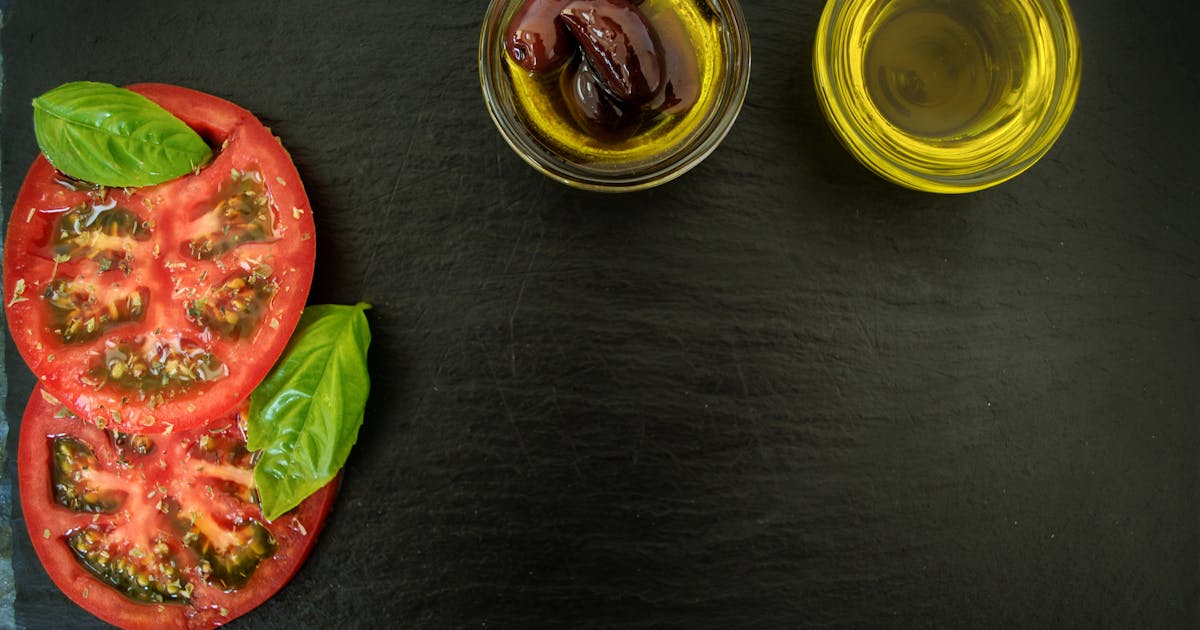
The Mediterranean Diet Mistake 80% of Americans Make (And the 5 Swaps That Fix It)
The pattern, not the label
The Mediterranean diet is not a food you add. It is five everyday swaps that trade the fats and grains working against you for the ones that protect you.
1Olive oil · used in place of butter, sour cream, and mayo
2Whole grains · swapped in for white bread, white rice, and pastries
3Fish twice a week · salmon or sardines in place of a red-meat night
4Vegetables and fruit · something from the produce aisle at every meal
5Red meat rarely · once a week or less, used as a condiment not the center
The Mediterranean diet is the pattern doctors point to more than any other, tied to a lower risk of heart disease, stroke, and type 2 diabetes (Mayo Clinic, 2025). So most people try. And most people make the same quiet mistake: they treat it as a food to add rather than a set of swaps to make. They pour olive oil over the same burger, sprinkle feta on the same white pasta, and change nothing underneath.
Mayo Clinic names the exact trap: a common mistake is replacing foods that carry healthy fats with low-fat processed and packaged products high in refined carbohydrates and sodium (Mayo Clinic, 2025). The diet was never about buying a "Mediterranean" label. It is a lifestyle, not a quick fix, and the benefit shows up when you keep it for good (Harvard Health, 2024). Here are the five swaps that actually make the change, in the order that makes them stick.
1
The fat
Olive Oil Instead of Butter
The first swap is the signature of the whole pattern. Use extra-virgin olive oil in place of butter, sour cream, and mayonnaise, and drizzle it on salads, cooked vegetables, and whole-grain pasta (Cleveland Clinic, 2025). Mayo Clinic puts a number on it: aim for at least one tablespoon a day, and no more than four (Mayo Clinic, 2025).
The word that matters is "instead." Olive oil poured on top of the butter you already use is not the swap. Replacing the butter with it is.
Olive oil in place of butter and mayo is the signature swap. Aim for one to four tablespoons a day.
2
The base
Whole Grains Instead of Refined
The second swap fixes what most "Mediterranean" plates get wrong underneath the toppings. Trade white bread, white rice, crackers, and pastries for whole-grain versions, and branch into bulgur, barley, farro, and couscous (Mayo Clinic, 2025).
Those refined grains are the same processed carbohydrates Mayo warns people fall back on when they chase a low-fat label. Swap the base to whole grains and the sodium-heavy packaged shortcut loses its foothold.
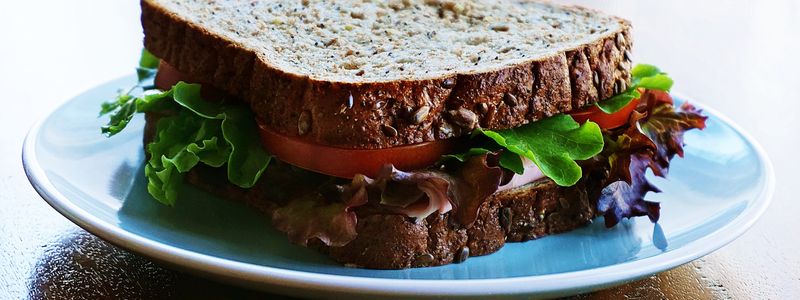
Whole-grain bread, bulgur, barley, and farro replace the white bread and pastries most plates keep by default.
Both Harvard and Mayo are clear: this is a way of eating for life, not a two-week reset.
Following the pattern long-term is where the lower risk of heart disease and diabetes actually comes from.
Harvard Health, 2024
3
The protein
Fish Twice a Week Instead of Red Meat
Fish and seafood, especially fatty fish like salmon and sardines, sit at the center of the plan and are typically eaten two to three times a week (Mayo Clinic, 2025). Each fish dinner does double work: it adds the omega-3s, and it takes the place of a red-meat night.
Canned salmon, sardines, and tuna count in full and cost a fraction of the fresh fillet, so the swap does not depend on a good fish counter or a big budget. The point of the exchange is what it removes as much as what it adds: two fish dinners a week are two fewer nights of the red or processed meat the pattern deliberately pushes to the edges of the plate.
4
The volume
Produce at Every Meal
The fourth swap is the one that quietly crowds out everything else. Put at least one vegetable or fruit on the plate at every meal, working toward four or more servings of vegetables and two to three of fruit a day (Mayo Clinic, 2025). Cleveland Clinic frames the same move as building the plate around vegetables and fruit chosen as whole foods (Cleveland Clinic, 2025). A washed bag of greens at eye level in the fridge does most of the work. When produce fills the plate first, there is simply less room for the refined and processed foods the pattern is trying to displace, which is why this swap quietly makes the other four easier.
5
The brakes
Red Meat Rarely, and Small
The last swap is subtraction. Red meat moves to sparingly, perhaps once a week or less, and when it appears it works as a condiment rather than the center of the plate, folded into a stew, stir-fry, or soup built around vegetables (Mayo Clinic, 2025).
Make the changes gradually. Mayo's own advice is that it is rarely realistic to switch everything overnight, so start with one swap and let the next follow (Mayo Clinic, 2025). Five swaps, kept for life, are the whole diet.
Take the five swaps with you
Your free 2-page plan: the five Mediterranean swaps, the packaged-food trap to avoid, and a 4-week starter checklist.
One email. No spam. Unsubscribe anytime.
Free Lifestyle Assessment
How Healthy Is Your Current Lifestyle?
Answer honestly for five minutes and walk away with your personal scorecard: all six areas of your health rated, the one that needs your attention first, and a 30-day plan built from your answers. It shows up the second you finish.
Free. About 5 minutes. Your results appear instantly.
📋 Your Coach's Recommendations
1
Make One Swap This Week, Not Five
Start with olive oil in place of butter and mayo. Mayo Clinic says overnight change is rarely realistic, so let the first swap settle before adding the next.
2
Fix the Base and the Protein
Switch white bread and rice to whole grains, and put fish on the calendar twice this week in place of red meat. These two swaps remove the refined-carb trap Mayo warns about.
3
Crowd the Plate, Shrink the Meat
A vegetable or fruit at every meal, and red meat down to once a week as a condiment. Keep it for good, because the benefit comes from the pattern, not a two-week run.
?
How it works. Just a quiet check-in, not an alert and not a recurring nag. The event lands as a 30-minute slot at 9am two weeks from today, with your plan in the notes and a link back to this article. Works with Apple Calendar, Google Calendar, and Outlook. Yours to move, snooze, or delete whenever.
Keep this plan
Get the one-page Mediterranean plan: the five swaps to make, the trap to avoid, and a 4-week checklist.
One email. No spam. Unsubscribe anytime.
Where should we send it?
Your 1-page Mediterranean swap plan, straight to your inbox.
We send the plan plus one short evidence brief each week. Unsubscribe anytime.
✓
It's on the way
Check your inbox in the next minute. Want it right now?
Your first Ageless Brief arrives this week: one study, translated, no hype.
To your health,
Frequently Asked Questions
What is the biggest mistake people make on the Mediterranean diet?
Treating it as a food to add rather than swaps to make. Mayo Clinic specifically flags replacing healthy-fat foods with low-fat processed and packaged products that are high in refined carbohydrates and sodium. Olive oil and feta poured on top of an unchanged base is not the diet.
How much olive oil should I use a day?
Mayo Clinic suggests at least one tablespoon a day and no more than four, used in place of butter, sour cream, and mayonnaise rather than in addition to them.
How often should I eat fish?
Fish and seafood, especially fatty fish like salmon and sardines, are typically eaten two to three times a week on the Mediterranean pattern. Canned salmon, sardines, and tuna count and cost far less than fresh fillets.
Do I have to give up red meat completely?
No. Red meat moves to sparingly, roughly once a week or less, and works best as a condiment folded into a vegetable-forward stew or stir-fry rather than the center of the plate.
How fast will I see results?
The Mediterranean diet is a way of eating for life, not a quick fix. Both Harvard and Mayo emphasize that the lower risk of heart disease, stroke, and diabetes comes from following the pattern long-term, not from a short reset.
Is this medical advice?
No. This article is educational and not a substitute for medical care. If you have heart disease, diabetes, or kidney concerns, or take medication, talk with your doctor or a dietitian before making major dietary changes.
Curious where you stand? Take the free 5-minute lifestyle assessment and your personal scorecard appears the second you finish.
By the Ageless Coach Editorial Team · Published May 30, 2026 · Last updated July 15, 2026
<style>
:root{--dark-base:#0D1B2A;--dark-mid:#1B3A4B;--teal:#0EA5A0;--teal-dark:#0C8C88;--teal-bright:#14D4CD;--fog:#D8E8E8;--deep-fog:#C8DCDC;--fog-border:#A8C4C4;--ink:#313743;--ink-soft:#49505f;--muted:#6b7280;--warm:#9A6841;--warm-light:#be7b4c;--serif:"Source Serif 4",Georgia,serif;--sans:Inter,-apple-system,BlinkMacSystemFont,"Segoe UI",sans-serif}
.w-richtext p,.w-richtext li,.w-richtext td{font-size:20.5px;line-height:1.7;color:var(--ink-soft)}
.w-richtext ul{list-style-type:disc;padding-left:24px;margin:12px 0}
.w-richtext ul li{margin-bottom:8px}
.ac-answer{background:#fff;border:1px solid #D4E4E4;border-top:5px solid var(--teal);border-radius:16px;padding:22px 24px 18px;margin:16px 0 28px;box-shadow:0 6px 22px rgba(13,27,42,.07)}
.ac-answer .aa-eyebrow{font:800 12px/1 var(--sans);letter-spacing:2.5px;text-transform:uppercase;color:var(--teal-dark);margin-bottom:8px}
.ac-answer .aa-head{font-family:var(--serif);font-size:24px;line-height:1.2;font-weight:800;color:var(--dark-base);margin:0 0 16px}
.ac-answer .aa-list{list-style:none;margin:0;padding:0}
.ac-answer .aa-list li{display:flex;gap:12px;align-items:baseline;padding:11px 0;border-bottom:1px solid #EDF3F3;font:700 16.5px/1.4 var(--sans);color:var(--ink)}
.ac-answer .aa-list li:last-child{border-bottom:none}
.ac-answer .aa-n{flex-shrink:0;width:24px;height:24px;border-radius:50%;background:var(--teal-dark);color:#fff;font:800 12px/24px var(--sans);text-align:center}
.ac-answer .aa-food{color:var(--teal-dark);font-weight:800}
.ac-answer .aa-cue{margin-top:18px;text-align:center}
.ac-answer .aa-cta{display:inline-flex;align-items:center;gap:10px;background:var(--teal-dark);color:#fff;font:800 14px/1 var(--sans);letter-spacing:.2px;padding:14px 26px;border-radius:50px;text-decoration:none;box-shadow:0 6px 16px rgba(12,140,136,.30)}
.ac-answer .aa-cta:hover{background:#0A7A76}
.ac-answer .aa-arw{display:inline-block;animation:aa-nudge 1.4s ease-in-out infinite}
@keyframes aa-nudge{0%,100%{transform:translateY(0)}50%{transform:translateY(4px)}}
@media(max-width:560px){.ac-answer{padding:20px 18px 16px}.ac-answer .aa-head{font-size:21px}.ac-answer .aa-list li{font-size:15px}}
.ac-band{margin:56px 0 24px;padding:26px 24px 12px;background:linear-gradient(180deg,#F0F7F7,#fff);border-radius:16px}
.ac-band.hype{background:linear-gradient(180deg,#FAF3EB,#fff)}
.ac-band .inner{display:flex;gap:20px;align-items:center}
.ac-band .big{font:900 72px/1 var(--sans);color:var(--deep-fog);flex-shrink:0}
.ac-band.hype .big{color:#EAD9C6}
.ac-band .q{font:700 13px/1.4 var(--sans);letter-spacing:2px;text-transform:uppercase;color:var(--teal-dark)}
.ac-band.hype .q{color:var(--warm)}
.ac-band h3{font-family:var(--serif);font-size:30px;line-height:1.2;font-weight:800;color:var(--ink);margin:0}
.ac-callout{border-left:4px solid var(--teal);background:#F4FAFA;border-radius:0 12px 12px 0;padding:18px 22px;margin:28px 0}
.ac-callout .n{font:800 20px/1.35 var(--sans);color:var(--dark-mid);margin-bottom:6px}
.ac-callout .d{font:500 15px/1.55 var(--sans);color:var(--ink-soft)}
.ac-callout .c{font:600 11.5px/1 var(--sans);letter-spacing:1.5px;text-transform:uppercase;color:var(--muted);margin-top:10px}
.ac-plan{background:linear-gradient(135deg,#F4FAFA 0%,#fff 100%);border-left:5px solid var(--teal-dark);border-radius:14px;padding:30px 26px;margin:40px 0 0;box-shadow:0 2px 12px rgba(0,0,0,.06);scroll-margin-top:100px}
.ac-plan .ptitle{font-family:var(--serif);font-size:24px;font-weight:800;color:var(--ink);margin-bottom:22px}
.ac-plan .step{display:flex;gap:16px;margin-bottom:18px;align-items:flex-start}
.ac-plan .step .n{min-width:38px;width:38px;height:38px;background:var(--teal-dark);border-radius:50%;color:#fff;font:800 17px/38px var(--sans);text-align:center;flex-shrink:0}
.ac-plan .sh{font:800 16.5px/1.4 var(--sans);color:var(--ink);margin-bottom:3px}
.ac-plan .sd{font:400 15px/1.6 var(--sans);color:var(--muted)}
.ac-plan .actions{border-top:1px solid #D8E8E8;margin-top:16px;padding-top:20px}
.ac-primary-row{display:flex;align-items:center;gap:10px;padding:0 4px}
.ac-btn-primary-wide{flex:1;background:var(--teal);color:#fff;border:1.5px solid var(--teal);border-radius:14px;padding:12px 22px;box-shadow:0 4px 14px rgba(14,165,160,.22);font-family:var(--sans);cursor:pointer;display:grid;grid-template-columns:auto 1fr;gap:14px;align-items:center;transition:all .18s ease}
.ac-btn-primary-wide:hover{background:var(--teal-dark);border-color:var(--teal-dark)}
.ac-btn-primary-wide .icon svg{width:22px;height:22px;color:#fff;display:block}
.ac-btn-primary-wide .label{text-align:left;line-height:1.25}
.ac-btn-primary-wide .label .top{display:block;font-weight:700;font-size:15.5px;color:#fff}
.ac-btn-primary-wide .label .top em{font-style:italic;font-weight:700}
.ac-cal-help{position:relative;flex-shrink:0}
.ac-cal-help summary{list-style:none;width:24px;height:24px;border-radius:50%;background:#E4F1F1;border:1px solid var(--fog-border);color:var(--dark-mid);font:700 13px/22px var(--sans);text-align:center;cursor:pointer;display:block}
.ac-cal-help summary::-webkit-details-marker{display:none}
.ac-cal-help .tip{position:absolute;right:0;top:32px;z-index:50;width:290px;background:var(--dark-base);color:var(--fog);border-radius:12px;padding:14px 16px;font:500 12.5px/1.55 var(--sans);box-shadow:0 10px 30px rgba(13,27,42,.35)}
.ac-cal-help .tip strong{color:#fff}
.ac-btn-share-wide{display:flex;width:100%;align-items:center;justify-content:center;gap:10px;background:#fff;color:var(--teal-dark);border:1.5px solid var(--teal-dark);border-radius:14px;padding:12px 22px;margin-top:10px;font:800 15px/1 var(--sans);cursor:pointer}
.ac-btn-share-wide svg{width:18px;height:18px}
.ac-midcap{background:linear-gradient(180deg,#F0F7F7,#fff);border:1.5px solid var(--fog-border);border-radius:16px;padding:24px 22px;margin:34px 0;text-align:center}
.ac-midcap h4{font-family:var(--serif);font-size:22px;font-weight:800;color:var(--ink);margin:0 0 6px}
.ac-midcap .sub{font:500 14px/1.55 var(--sans);color:var(--ink-soft);margin:0 auto 14px;max-width:400px}
.ac-midcap .mcform{display:flex;gap:8px;max-width:400px;margin:0 auto}
.ac-midcap .mcform input{flex:1;border:1.5px solid var(--fog-border);border-radius:50px;padding:12px 18px;font:500 14px/1 var(--sans);min-width:0}
.ac-midcap .mcform button{background:var(--teal-dark);color:#fff;border:none;border-radius:50px;padding:12px 20px;font:800 13.5px/1 var(--sans);cursor:pointer;white-space:nowrap}
.ac-midcap .fine{font:500 11.5px/1.5 var(--sans);color:var(--muted);margin-top:10px}
@media (max-width:520px){.ac-midcap .mcform{flex-direction:column}}
.ac-assess-promo{background:linear-gradient(135deg,#D8E8E8,#C8DCDC);border:1px solid var(--fog-border);border-radius:16px;padding:34px 30px;margin:44px 0;text-align:center}
.ac-assess-promo .eyebrow{color:var(--teal-dark);font:800 12px/1 var(--sans);letter-spacing:2.5px;text-transform:uppercase;margin:0 0 10px}
.ac-assess-promo h4{font-family:var(--serif);color:var(--dark-base);font-size:26px;font-weight:800;margin:0 0 12px}
.w-embed .ac-assess-promo p.ap-body,.ac-assess-promo p.ap-body{font-family:Georgia,serif;color:#3A5555;font-size:15.5px;font-weight:500;line-height:1.65;max-width:540px;margin:0 auto 22px}
.ac-assess-promo .ap-cta{display:inline-block;background:var(--teal-bright);color:var(--dark-base);font:800 15px/1 var(--sans);padding:15px 30px;border-radius:50px;text-decoration:none}
.ac-assess-promo .ap-fine{color:#4E6B6B;font:500 13px/1.5 var(--sans);margin:14px 0 0}
.ac-assess-line{border-top:1px solid #E2ECEC;margin-top:30px;padding:22px 10px 0;text-align:center;font:500 15.5px/1.6 var(--sans);color:#3A5555}
.w-embed .ac-assess-line a,.ac-assess-line a{color:var(--teal-dark);font-weight:700;text-decoration:underline;text-underline-offset:3px}
.ac-articlemeta{font:500 12.5px/1.6 var(--sans);color:#98a0a6;text-align:center;margin:24px 0 0}
.ac-capture{background:linear-gradient(180deg,#F0F7F7,#fff);border:1.5px solid var(--fog-border);border-radius:16px;padding:30px 28px;margin:26px 0 44px;text-align:center}
.ac-capture .cap-state{display:none}
.ac-capture[data-state="trigger"] .st-trigger{display:block}
.ac-capture[data-state="form"] .st-form{display:block}
.ac-capture[data-state="sent"] .st-sent{display:block}
.ac-capture h4{font-family:var(--serif);font-size:24px;font-weight:800;color:var(--ink);margin:0 0 8px}
.ac-capture .sub{font:500 15px/1.55 var(--sans);color:var(--ink-soft);margin:0 auto 18px;max-width:430px}
.ac-capture .bigbtn{display:inline-flex;align-items:center;gap:10px;background:var(--teal-dark);color:#fff;border:none;border-radius:50px;padding:16px 30px;font:800 16px/1 var(--sans);cursor:pointer;box-shadow:0 6px 18px rgba(12,140,136,.28)}
.ac-capture .capform{display:flex;gap:10px;max-width:430px;margin:0 auto}
.ac-capture .capform input{flex:1;border:1.5px solid var(--fog-border);border-radius:50px;padding:14px 20px;font:500 15px/1 var(--sans)}
.ac-capture .capform button{background:var(--teal-dark);color:#fff;border:none;border-radius:50px;padding:14px 24px;font:800 14px/1 var(--sans);cursor:pointer}
.ac-capture .sent-check{width:52px;height:52px;border-radius:50%;background:var(--teal);color:#fff;font:800 26px/52px var(--sans);margin:0 auto 12px}
.ac-capture .dl{display:inline-block;margin-top:6px;color:var(--teal-dark);font:700 15px/1 var(--sans);text-decoration:underline;cursor:pointer}
.ac-capture .fine{font:500 12px/1.5 var(--sans);color:var(--muted);margin-top:12px}
.ac-sig{margin-top:36px}
.ac-sig .rule{width:60px;height:2px;background:linear-gradient(90deg,var(--teal-dark),var(--teal-bright));margin-bottom:18px;border-radius:2px}
.ac-sig .toyour{font-family:var(--serif);font-size:16px;font-style:italic;color:#777;margin:0 0 10px;padding-left:2px}
.ac-faq{margin-top:40px;border-top:1px solid #e5e7eb;padding-top:30px;margin-bottom:40px}
.ac-faq h2{font-family:var(--serif);font-size:23px;font-weight:800;color:var(--ink);margin:0 0 18px}
.ac-faq details{border:1px solid #e5e7eb;border-radius:10px;margin-bottom:10px}
.ac-faq summary{padding:15px 18px;font:700 16px/1.4 var(--sans);color:var(--ink);cursor:pointer;display:flex;justify-content:space-between;align-items:center;list-style:none}
.ac-faq summary:after{content:"\25BE";color:var(--warm)}
.ac-faq .a{padding:0 18px 16px;font-size:17px;line-height:1.65;color:#555}
.article-header-section .article-container{max-width:1080px !important;margin:0 auto !important;padding:0 20px !important}
.article-header-section .article-hero-image{display:block;width:100%;max-width:660px;margin:0}
.article-header-section .article-title{display:block !important;font-family:var(--serif);font-size:32px;line-height:1.25;font-weight:700;color:#313743;margin:20px 0 12px 0;text-align:left;max-width:660px}
@media (max-width:767px){.article-header-section .article-title{font-size:26px}.article-header-section .article-hero-image{max-width:100%}}
@media (max-width:640px){.ac-band .big{font-size:52px}}
@media (max-width:520px){.ac-capture .capform{flex-direction:column}}
.ac-figure{margin:30px 0}.ac-figure img{display:block;width:100%;border-radius:14px;height:auto;aspect-ratio:800/300}.ac-figure figcaption{font:500 13px/1.5 var(--sans);color:var(--muted);margin-top:9px}</style>
<div class="ac-answer">
<div class="aa-eyebrow">The pattern, not the label</div>
<h2 class="aa-head">The Mediterranean diet is not a food you add. It is five everyday swaps that trade the fats and grains working against you for the ones that protect you.</h2>
<ol class="aa-list">
<li><span class="aa-n">1</span><span><span class="aa-food">Olive oil</span> · used in place of butter, sour cream, and mayo</span></li>
<li><span class="aa-n">2</span><span><span class="aa-food">Whole grains</span> · swapped in for white bread, white rice, and pastries</span></li>
<li><span class="aa-n">3</span><span><span class="aa-food">Fish twice a week</span> · salmon or sardines in place of a red-meat night</span></li>
<li><span class="aa-n">4</span><span><span class="aa-food">Vegetables and fruit</span> · something from the produce aisle at every meal</span></li>
<li><span class="aa-n">5</span><span><span class="aa-food">Red meat rarely</span> · once a week or less, used as a condiment not the center</span></li>
</ol>
<div class="aa-cue"><a class="aa-cta" href="#coach-recommendations">Get Your Coach's 3-Step Plan <span class="aa-arw">↓</span></a></div>
</div>
<p>The Mediterranean diet is the pattern doctors point to more than any other, tied to a lower risk of heart disease, stroke, and type 2 diabetes (<a href="https://www.mayoclinic.org/healthy-lifestyle/nutrition-and-healthy-eating/in-depth/mediterranean-diet/art-20047801" target="_blank" rel="noopener">Mayo Clinic, 2025</a>). So most people try. And most people make the same quiet mistake: they treat it as a food to add rather than a set of swaps to make. They pour olive oil over the same burger, sprinkle feta on the same white pasta, and change nothing underneath.</p>
<p>Mayo Clinic names the exact trap: a common mistake is replacing foods that carry healthy fats with low-fat processed and packaged products high in refined carbohydrates and sodium (<a href="https://www.mayoclinic.org/healthy-lifestyle/nutrition-and-healthy-eating/in-depth/mediterranean-diet/art-20047801" target="_blank" rel="noopener">Mayo Clinic, 2025</a>). The diet was never about buying a "Mediterranean" label. It is a lifestyle, not a quick fix, and the benefit shows up when you keep it for good (<a href="https://www.health.harvard.edu/blog/a-practical-guide-to-the-mediterranean-diet-2019032116194" target="_blank" rel="noopener">Harvard Health, 2024</a>). Here are the five swaps that actually make the change, in the order that makes them stick.</p>
<div class="ac-band"><div class="inner"><div class="big">1</div><div><div class="q">The fat</div><h3>Olive Oil Instead of Butter</h3></div></div></div>
<p>The first swap is the signature of the whole pattern. Use extra-virgin olive oil in place of butter, sour cream, and mayonnaise, and drizzle it on salads, cooked vegetables, and whole-grain pasta (<a href="https://health.clevelandclinic.org/how-to-get-started-on-the-mediterranean-diet-aka-the-healthiest-diet-for-your-heart" target="_blank" rel="noopener">Cleveland Clinic, 2025</a>). Mayo Clinic puts a number on it: aim for at least one tablespoon a day, and no more than four (<a href="https://www.mayoclinic.org/healthy-lifestyle/nutrition-and-healthy-eating/in-depth/mediterranean-diet/art-20047801" target="_blank" rel="noopener">Mayo Clinic, 2025</a>).</p>
<p>The word that matters is "instead." Olive oil poured on top of the butter you already use is not the swap. Replacing the butter with it is.</p>
<figure class="ac-figure"><img src="https://images.pexels.com/photos/6094524/pexels-photo-6094524.jpeg?auto=compress&cs=tinysrgb&w=800&h=300&fit=crop" alt="Extra-virgin olive oil being poured over a fresh green salad" width="800" height="300" loading="lazy" decoding="async"><figcaption>Olive oil in place of butter and mayo is the signature swap. Aim for one to four tablespoons a day.</figcaption></figure>
<div class="ac-band"><div class="inner"><div class="big">2</div><div><div class="q">The base</div><h3>Whole Grains Instead of Refined</h3></div></div></div>
<p>The second swap fixes what most "Mediterranean" plates get wrong underneath the toppings. Trade white bread, white rice, crackers, and pastries for whole-grain versions, and branch into bulgur, barley, farro, and couscous (<a href="https://www.mayoclinic.org/healthy-lifestyle/nutrition-and-healthy-eating/in-depth/mediterranean-diet/art-20047801" target="_blank" rel="noopener">Mayo Clinic, 2025</a>).</p>
<p>Those refined grains are the same processed carbohydrates Mayo warns people fall back on when they chase a low-fat label. Swap the base to whole grains and the sodium-heavy packaged shortcut loses its foothold.</p>
<figure class="ac-figure"><img src="https://images.pexels.com/photos/1209029/pexels-photo-1209029.jpeg?auto=compress&cs=tinysrgb&w=800&h=300&fit=crop" alt="A sandwich made with whole-grain seeded bread, lettuce, and tomato on a plate" width="800" height="300" loading="lazy" decoding="async"><figcaption>Whole-grain bread, bulgur, barley, and farro replace the white bread and pastries most plates keep by default.</figcaption></figure>
<div class="ac-callout"><div class="n">Both Harvard and Mayo are clear: this is a way of eating for life, not a two-week reset.</div><div class="d">Following the pattern long-term is where the lower risk of heart disease and diabetes actually comes from.</div><div class="c">Harvard Health, 2024</div></div>
<div class="ac-band"><div class="inner"><div class="big">3</div><div><div class="q">The protein</div><h3>Fish Twice a Week Instead of Red Meat</h3></div></div></div>
<p>Fish and seafood, especially fatty fish like salmon and sardines, sit at the center of the plan and are typically eaten two to three times a week (<a href="https://www.mayoclinic.org/healthy-lifestyle/nutrition-and-healthy-eating/in-depth/mediterranean-diet/art-20047801" target="_blank" rel="noopener">Mayo Clinic, 2025</a>). Each fish dinner does double work: it adds the omega-3s, and it takes the place of a red-meat night.</p>
<p>Canned salmon, sardines, and tuna count in full and cost a fraction of the fresh fillet, so the swap does not depend on a good fish counter or a big budget. The point of the exchange is what it removes as much as what it adds: two fish dinners a week are two fewer nights of the red or processed meat the pattern deliberately pushes to the edges of the plate.</p>
<div class="ac-band"><div class="inner"><div class="big">4</div><div><div class="q">The volume</div><h3>Produce at Every Meal</h3></div></div></div>
<p>The fourth swap is the one that quietly crowds out everything else. Put at least one vegetable or fruit on the plate at every meal, working toward four or more servings of vegetables and two to three of fruit a day (<a href="https://www.mayoclinic.org/healthy-lifestyle/nutrition-and-healthy-eating/in-depth/mediterranean-diet/art-20047801" target="_blank" rel="noopener">Mayo Clinic, 2025</a>). Cleveland Clinic frames the same move as building the plate around vegetables and fruit chosen as whole foods (<a href="https://health.clevelandclinic.org/how-to-get-started-on-the-mediterranean-diet-aka-the-healthiest-diet-for-your-heart" target="_blank" rel="noopener">Cleveland Clinic, 2025</a>). A washed bag of greens at eye level in the fridge does most of the work. When produce fills the plate first, there is simply less room for the refined and processed foods the pattern is trying to displace, which is why this swap quietly makes the other four easier.</p>
<div class="ac-band"><div class="inner"><div class="big">5</div><div><div class="q">The brakes</div><h3>Red Meat Rarely, and Small</h3></div></div></div>
<p>The last swap is subtraction. Red meat moves to sparingly, perhaps once a week or less, and when it appears it works as a condiment rather than the center of the plate, folded into a stew, stir-fry, or soup built around vegetables (<a href="https://www.mayoclinic.org/healthy-lifestyle/nutrition-and-healthy-eating/in-depth/mediterranean-diet/art-20047801" target="_blank" rel="noopener">Mayo Clinic, 2025</a>).</p>
<p>Make the changes gradually. Mayo's own advice is that it is rarely realistic to switch everything overnight, so start with one swap and let the next follow (<a href="https://www.mayoclinic.org/healthy-lifestyle/nutrition-and-healthy-eating/in-depth/mediterranean-diet/art-20047801" target="_blank" rel="noopener">Mayo Clinic, 2025</a>). Five swaps, kept for life, are the whole diet.</p>
<div class="ac-midcap">
<h4>Take the five swaps with you</h4>
<p class="sub">Your free 2-page plan: the five Mediterranean swaps, the packaged-food trap to avoid, and a 4-week starter checklist.</p>
<div class="mcform"><input type="email" placeholder="Your email address" aria-label="Email address"><button type="button">Send My Plan (Free)</button></div>
<div class="fine">One email. No spam. Unsubscribe anytime.</div>
</div>
<div class="ac-assess-promo">
<p class="eyebrow">Free Lifestyle Assessment</p>
<h4>How Healthy Is Your Current Lifestyle?</h4>
<p class="ap-body">Answer honestly for five minutes and walk away with your personal scorecard: all six areas of your health rated, the one that needs your attention first, and a 30-day plan built from your answers. It shows up the second you finish.</p>
<a class="ap-cta" href="/#assessment">See How the Assessment Works →</a>
<p class="ap-fine">Free. About 5 minutes. Your results appear instantly.</p>
</div>
<div class="ac-plan" id="coach-recommendations"><div class="ptitle">📋 Your Coach's Recommendations</div>
<div class="step"><div class="n">1</div><div><div class="sh">Make One Swap This Week, Not Five</div><div class="sd">Start with olive oil in place of butter and mayo. Mayo Clinic says overnight change is rarely realistic, so let the first swap settle before adding the next.</div></div></div>
<div class="step"><div class="n">2</div><div><div class="sh">Fix the Base and the Protein</div><div class="sd">Switch white bread and rice to whole grains, and put fish on the calendar twice this week in place of red meat. These two swaps remove the refined-carb trap Mayo warns about.</div></div></div>
<div class="step"><div class="n">3</div><div><div class="sh">Crowd the Plate, Shrink the Meat</div><div class="sd">A vegetable or fruit at every meal, and red meat down to once a week as a condiment. Keep it for good, because the benefit comes from the pattern, not a two-week run.</div></div></div>
<div class="actions">
<div class="ac-primary-row">
<button type="button" class="ac-btn-primary-wide" data-ac-cal>
<span class="icon"><svg viewBox="0 0 24 24" fill="none" stroke="currentColor" stroke-width="2" stroke-linecap="round" stroke-linejoin="round"><rect x="3" y="4" width="18" height="18" rx="2"></rect><path d="M16 2v4M8 2v4M3 10h18"></path></svg></span>
<span class="label"><span class="top">Add <em>Your Coach's Recommendations to Your Calendar</em></span></span>
</button>
<details class="ac-cal-help">
<summary aria-label="What does this do?">?</summary>
<div class="tip"><strong>How it works.</strong> Just a quiet check-in, not an alert and not a recurring nag. The event lands as a 30-minute slot at 9am two weeks from today, with your plan in the notes and a link back to this article. Works with Apple Calendar, Google Calendar, and Outlook. Yours to move, snooze, or delete whenever.</div>
</details>
</div>
<button type="button" class="ac-btn-share-wide" data-ac-share>
<svg viewBox="0 0 24 24" fill="none" stroke="currentColor" stroke-width="2" stroke-linecap="round" stroke-linejoin="round"><path d="M4 12v8a2 2 0 002 2h12a2 2 0 002-2v-8"></path><polyline points="16 6 12 2 8 6"></polyline><line x1="12" y1="2" x2="12" y2="15"></line></svg>
Share this article
</button>
</div>
</div>
<div class="ac-capture" data-state="trigger" data-article-slug="the-mediterranean-diet-mistake-80-percent-of-americans-make-and-the-5-swaps-that-fix-it" data-pdf-url="https://cdn.prod.website-files.com/69be1026a027224999b7936b/6a5772320405dc17776cfa24_mediterranean-5-swap-plan.pdf" data-plan-title="The 5-Swap Mediterranean Plan" data-plan-desc="Your free 2-page plan: the five Mediterranean swaps, the packaged-food trap to avoid, and a 4-week starter checklist. Checked against Mayo Clinic, Harvard Health, and Cleveland Clinic.">
<div class="st-trigger cap-state"><h4>Keep this plan</h4>
<p class="sub">Get the one-page Mediterranean plan: the five swaps to make, the trap to avoid, and a 4-week checklist.</p>
<button class="bigbtn" type="button" data-cap="form">📩 Email Me This Plan (Free PDF)</button>
<div class="fine">One email. No spam. Unsubscribe anytime.</div></div>
<div class="st-form cap-state"><h4>Where should we send it?</h4>
<p class="sub">Your 1-page Mediterranean swap plan, straight to your inbox.</p>
<form class="capform"><input type="email" name="email" required placeholder="Your email address" aria-label="Email address"><button type="submit">Send My Plan</button></form>
<div class="fine">We send the plan plus one short evidence brief each week. Unsubscribe anytime.</div></div>
<div class="st-sent cap-state"><div class="sent-check">✓</div><h4>It's on the way</h4>
<p class="sub">Check your inbox in the next minute. Want it right now?</p>
<a class="dl" href="https://cdn.prod.website-files.com/69be1026a027224999b7936b/6a5772320405dc17776cfa24_mediterranean-5-swap-plan.pdf" download>⬇ Download your plan (PDF)</a>
<div class="fine">Your first Ageless Brief arrives this week: one study, translated, no hype.</div></div>
</div>
<div class="ac-sig">
<div class="rule"></div>
<p class="toyour">To your health,</p>
<svg width="320" height="72" viewBox="0 0 320 72" role="img" aria-label="Ageless Coach. Age Strong. Live Long." xmlns="http://www.w3.org/2000/svg" xmlns:xlink="http://www.w3.org/1999/xlink">
<defs><clipPath id="acSigIconClip"><rect x="0" y="6" width="60" height="60" rx="12" ry="12"/></clipPath></defs>
<image x="0" y="6" width="60" height="60" clip-path="url(#acSigIconClip)" preserveAspectRatio="xMidYMid slice" href="https://cdn.prod.website-files.com/69be1026a027224999b7936b/6a0b22c6afd5d6fd115b9c1a_ac-closing-brand-icon.webp" xlink:href="https://cdn.prod.website-files.com/69be1026a027224999b7936b/6a0b22c6afd5d6fd115b9c1a_ac-closing-brand-icon.webp"/>
<text x="76" y="42" style="font-family:Inter,system-ui,-apple-system,'Helvetica Neue',Arial,sans-serif;font-size:27px;letter-spacing:-0.3px">
<tspan style="font-weight:800;fill:#0D1B2A">Ageless</tspan><tspan style="font-weight:300;fill:rgba(13,27,42,0.6)">Coach</tspan><tspan dy="-12" style="font-size:16px;font-weight:600;fill:rgba(13,27,42,0.6)">™</tspan>
</text>
<text x="76" y="60" style="font-family:Inter,system-ui,-apple-system,'Helvetica Neue',Arial,sans-serif;font-size:10.5px;letter-spacing:2.5px;font-weight:500;fill:#0C8C88;text-transform:uppercase">AGE STRONG. LIVE LONG.</text>
</svg>
</div>
<div class="ac-faq"><h2>Frequently Asked Questions</h2>
<details><summary>What is the biggest mistake people make on the Mediterranean diet?</summary><div class="a">Treating it as a food to add rather than swaps to make. Mayo Clinic specifically flags replacing healthy-fat foods with low-fat processed and packaged products that are high in refined carbohydrates and sodium. Olive oil and feta poured on top of an unchanged base is not the diet.</div></details>
<details><summary>How much olive oil should I use a day?</summary><div class="a">Mayo Clinic suggests at least one tablespoon a day and no more than four, used in place of butter, sour cream, and mayonnaise rather than in addition to them.</div></details>
<details><summary>How often should I eat fish?</summary><div class="a">Fish and seafood, especially fatty fish like salmon and sardines, are typically eaten two to three times a week on the Mediterranean pattern. Canned salmon, sardines, and tuna count and cost far less than fresh fillets.</div></details>
<details><summary>Do I have to give up red meat completely?</summary><div class="a">No. Red meat moves to sparingly, roughly once a week or less, and works best as a condiment folded into a vegetable-forward stew or stir-fry rather than the center of the plate.</div></details>
<details><summary>How fast will I see results?</summary><div class="a">The Mediterranean diet is a way of eating for life, not a quick fix. Both Harvard and Mayo emphasize that the lower risk of heart disease, stroke, and diabetes comes from following the pattern long-term, not from a short reset.</div></details>
<details><summary>Is this medical advice?</summary><div class="a">No. This article is educational and not a substitute for medical care. If you have heart disease, diabetes, or kidney concerns, or take medication, talk with your doctor or a dietitian before making major dietary changes.</div></details>
</div>
<div class="ac-assess-line">Curious where you stand? Take the free <a href="/#assessment">5-minute lifestyle assessment</a> and your personal scorecard appears the second you finish.</div>
<p class="ac-articlemeta">By the Ageless Coach Editorial Team · Published May 30, 2026 · Last updated July 15, 2026</p>
Subscribe to the Free Newsletter
One article a week. Trusted research made simple. Start making smarter health decisions today.