
Muscle peaks around age 30 to 35 and starts slipping straight after, but the first symptom most people notice is weakness decades later. Here is what happens in between, and the two levers that actually change it.
- 130 to 35 · the age muscle mass and strength peak, then begin to decline
- 23% to 5% · muscle lost per decade from age 30 on the usual trajectory
- 3Up to 8% · muscle mass that can go each decade once the loss speeds up
- 420 to 35 grams · protein per meal Cleveland Clinic recommends to slow it
- 51 to 2 times · strength sessions per week the NIA suggests for older adults
When someone loses the ability to live independently, the event that gets blamed is usually sudden: a fall, a fracture, a hospital stay. The process underneath it is not sudden at all. It has a name, sarcopenia, and Cleveland Clinic defines it as the gradual loss of muscle mass, strength and physical performance that comes with age. Its listed complications read like a summary of what people fear about getting older: falls, fractures, and loss of independence.
The part that catches people out is the timing. According to the National Institute on Aging, muscle mass and strength climb steadily from birth and peak at around 30 to 35, after which power and performance decline slowly at first and then faster, past about 65 for women and 70 for men. The gap between when the loss begins and when you notice it is the whole problem.
Muscle Peaks Earlier Than Almost Anyone Expects
Harvard Health puts the ordinary rate at about 3% to 5% each decade starting at age 30. Cleveland Clinic describes the same curve clinically: the loss begins in your 30s or 40s, picks up between 65 and 80, and can reach 8% of your muscle mass each decade.
None of that is dramatic in any single year, which is exactly why it gets missed. Stacked across three or four decades, it is the difference between rising out of a chair without thinking and needing your arms to do it.
The mechanism is not mysterious. Harvard Health explains that the number and size of your muscle fibers shrink with age while your body produces fewer of the proteins muscles need to grow. It is a slow squeeze from two directions at once.
Why the First Symptom Arrives So Late
Cleveland Clinic lists muscle weakness as the most common symptom, alongside loss of stamina, walking slowly, trouble climbing stairs, poor balance and falls, and a visible decrease in muscle size. Every one is a late signal. They describe muscle that has already gone, not muscle that is going.
The scale is easy to underestimate. Harvard Health reports sarcopenia affects about 5% to 13% of people ages 60 to 70, and up to 50% of those 80 or older. The National Institute on Aging adds that roughly 30% of adults over 70 have trouble walking, rising from a chair, or climbing stairs, and that mobility limits track with higher rates of falls, chronic disease, nursing home admission, and mortality.
Cleveland Clinic puts it bluntly in its closing note: do not ignore muscle weakness as just aging. That instinct to explain away the first slow staircase is why most people arrive at this late.
There Are Simple Tests You Can Ask For
There is no single test that diagnoses sarcopenia, but the screening tools are unusually low tech. Cleveland Clinic describes a questionnaire called the SARC-F, which scores five things from 0 to 2: Strength, Assistance with walking, Rising from a chair, Climbing stairs, and Falls. A total of 4 or more out of 10 means more testing is warranted.
From there the tests stay physical. A handgrip test measures your squeeze, which Cleveland Clinic notes can show how strong your other muscles are. A chair stand test counts how many times you can stand and sit in 30 seconds without using your arms. A walking speed test times how long you take to cover 4 meters.
These are cheap, quick, and easy to ask for at an ordinary appointment. You do not need a scan to get a first read on where you stand.
Resistance Training Is the Part That Actually Works
Cleveland Clinic is direct about treatment: changes to diet and exercise, specifically resistance training and increased protein, and it states these steps can help treat and reverse sarcopenia. It is equally direct about what is not available. There are currently no FDA-approved medications for sarcopenia.
That absence is the whole story. When a condition has no drug, the behavioural lever is not a supplement to treatment, it is the treatment. National Institute on Aging-supported researcher Roger Fielding puts the recipe simply: the best combination for physical function and avoiding disability is walking plus resistance training.
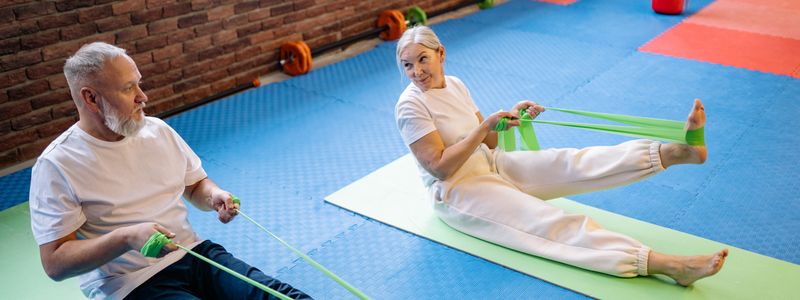
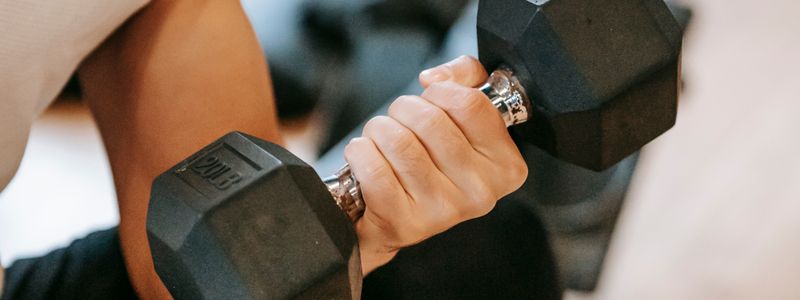
Resistance training is broader than a barbell. Harvard Health counts body weight, free weights, elastic bands, and machines, and notes you are never too old to benefit. The same guide cites one study in which middle-aged adults doing just one to three strength workouts a week were 40% to 70% less likely to have a heart attack or stroke.

Two Sessions a Week and Protein at Every Meal
The dose is smaller than most people assume. Fielding's guidance through the National Institute on Aging is about 150 minutes a week of moderate exercise, with benefits visible even below that, and strength training in the mix one to two times per week. His closing line is worth keeping: any physical activity is better than none.
The nutrition half is just as concrete. Cleveland Clinic advises aiming for 20 to 35 grams of protein per meal. Harvard Health notes the RDA is 0.8 grams per kilogram of body weight, while research suggests 1 to 1.2 grams per kilogram per day helps repair the muscle fibers that strength training breaks down. Training without the protein leaves results on the table, and protein without the training has nothing to build on.
Neither lever is glamorous or expensive. Two sessions, a band or a pair of dumbbells, and protein at breakfast rather than only at dinner. The reason to start before you notice anything is that the decline began before you noticed anything.
Take the muscle-loss checklist with you
Your free 2-page guide: the two-lever plan, the protein target per meal, and the three simple strength tests you can ask for at your next appointment.
Free Lifestyle Assessment
How Healthy Is Your Current Lifestyle?
Answer honestly for five minutes and walk away with your personal scorecard: all six areas of your health rated, the one that needs your attention first, and a 30-day plan built from your answers. It shows up the second you finish.
See How the Assessment Works →Free. About 5 minutes. Your results appear instantly.
?
Keep this plan
Get the 2-page guide: the two levers, the protein target, and the tests to ask for.
Where should we send it?
Your muscle preservation plan, straight to your inbox.
It's on the way
Check your inbox in the next minute. Want it right now?
⬇ Download your plan (PDF)To your health,