Turmeric's active compound, curcumin, has real anti-inflammatory effects in studies. The catch is that swallowed on its own it is barely absorbed, which is why a spoonful in your curry does little and even many supplements underdeliver. How you take it decides whether it works.
1Poorly absorbed · curcumin on its own is broken down and cleared before it can do much
2Black pepper · the piperine in it meaningfully raises how much curcumin you absorb
3With fat · taking it alongside oil or a fatty meal also improves uptake
4500 to 1,000 mg · the curcumin range studied for inflammation, far more than a pinch of spice
5Not risk-free · concentrated formulas have been linked to rare liver injury
Turmeric has a reputation as a miracle anti-inflammatory, and about half of that reputation is deserved. Its golden pigment, curcumin, genuinely calms inflammation in the lab and in careful trials. The other half is the catch nobody prints on the label: your body throws most of it away before it can do anything at all.
According to the National Center for Complementary and Integrative Health, curcumin is poorly absorbed on its own, broken down and cleared so quickly that little of it reaches your bloodstream. That single fact explains why a sprinkle of turmeric in your rice is a pleasant flavor rather than a medicine, and why how you take it matters more than whether you take it.
1
The compound
What Curcumin Actually Does
Curcumin is the compound that gives turmeric its yellow color, and Cleveland Clinic calls it the spice's main active ingredient, delivering antioxidants along with real anti-inflammatory effects. In controlled studies it lowers measurable markers of inflammation in the body, not just the aches a person happens to feel. That distinction matters, because inflammation is a driver of many age-related complaints, and a compound that moves the underlying markers is more interesting than one that only masks a symptom.
The most concrete findings sit in two places. Cleveland Clinic points to a trial in which people with ulcerative colitis who added 2 grams of curcumin a day to their medication were more likely to stay in remission, and notes that turmeric may also reduce the joint inflammation and pain of osteoarthritis. Those are two different systems, the gut and the joints, responding to the same anti-inflammatory compound, which is part of why interest in it has stayed so high.
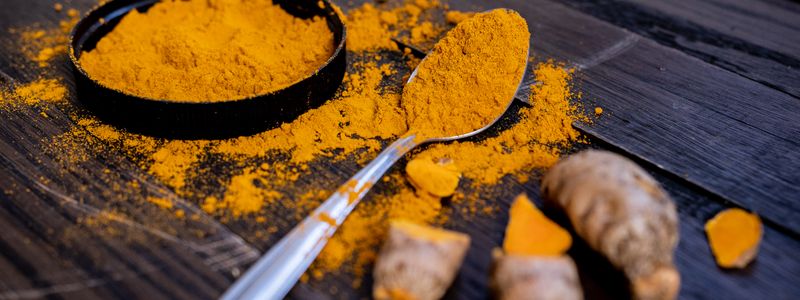
Curcumin is the pigment that makes turmeric yellow, and it is the compound the research is really about.
2
The reason
The Absorption Problem Nobody Mentions
So why does the spice-rack version disappoint? The NCCIH explains that curcumin is poorly absorbed and that oral products vary widely in how much they even contain. Its one clear fix is combining curcumin with piperine, the compound in black pepper, which meaningfully improves how much of it your body takes up.
Fat is the second lever. Cleveland Clinic advises taking turmeric alongside heart-healthy fats such as oil, avocado, nuts or seeds, because curcumin dissolves in fat rather than water. Pepper and fat together are why a curry, or a well-made golden milk, delivers more than a bare teaspoon stirred into a glass of water. Traditional recipes stumbled onto that combination long before anyone measured it, which is a nice reminder that how a food is prepared can matter as much as the ingredient itself.
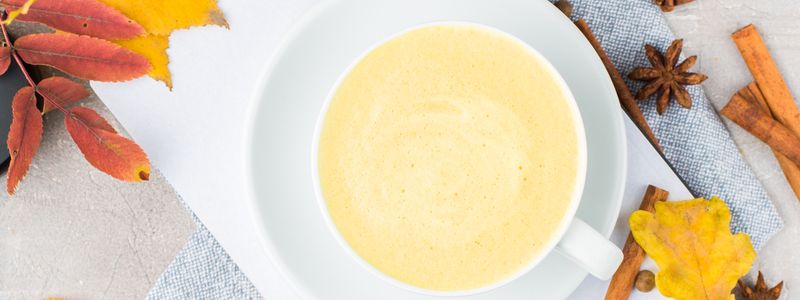
A golden milk made with black pepper and a little fat delivers far more usable curcumin than turmeric stirred into water.
3
The dose
How Much It Actually Takes
Then there is the dose. Cleveland Clinic says supplement users are often advised to take around 500 milligrams of curcumin once or twice a day with food, and that while up to 8 grams a day is considered safe, a lighter 500 to 1,000 milligrams is plenty for most people.
Cooking with turmeric will not reach the amounts used in the research. Trials use hundreds to thousands of milligrams of curcumin, while a teaspoon of the spice contains only a small fraction of that.
That gap is why a shake of turmeric on your food and a studied supplement dose are simply not the same thing.
NCCIH and Cleveland Clinic
That gap is the quiet reason so many people feel nothing. They stir a shake of turmeric into a smoothie, expect the effects described in the headlines, and never come anywhere close to the amount those headlines were actually built on. The disappointment is real, but it is a dosing problem, not proof that the compound does nothing.
None of this makes the spice pointless in the kitchen. It adds color, flavor and a small dose of curcumin to an otherwise healthy plate. It simply is not a stand-in for a measured, absorbable dose when what you are after is real relief.
4
The evidence
Where It Is Strong, and Where It Is Not
Where is the evidence genuinely strong? The NCCIH reports that the best signal is for osteoarthritis, where several analyses found curcumin helped with knee pain and stiffness, though it is careful to add that higher-quality studies are still needed to be certain.
For other headline claims, from fatty liver disease to cholesterol, the picture is mixed and far less settled, and the NCCIH is clear that the evidence is not strong enough to call it beneficial for most conditions. Turmeric is best understood as promising for joint comfort and a reasonable anti-inflammatory helper, not the sweeping cure-all its marketing so often implies.
5
The safety catch
The Liver Warning Worth Knowing
There is also a catch worth taking seriously. The NCCIH notes that ordinary turmeric is likely safe for two to three months, but that some highly absorbable formulas have been linked to liver injury, with warning signs that include fatigue, nausea, dark urine and jaundice.
The irony is sharp. The formulations designed to solve the absorption problem are the very ones tied to those liver reports. Turmeric can also interact with medications and is best avoided in supplement-sized amounts during pregnancy, so talk with your provider before adding a concentrated dose.
Take the turmeric that works cheat sheet with you
Your free 2-page guide: how to pair it for absorption, the dose the studies actually used, and the liver warning worth knowing.
One email. No spam. Unsubscribe anytime.
Free Lifestyle Assessment
How Healthy Is Your Current Lifestyle?
Answer honestly for five minutes and walk away with your personal scorecard: all six areas of your health rated, the one that needs your attention first, and a 30-day plan built from your answers. It shows up the second you finish.
Free. About 5 minutes. Your results appear instantly.
📋 Your Coach's Recommendations
1
Pair It, Do Not Just Sprinkle It
Curcumin is poorly absorbed alone. Take it with black pepper and a source of fat, or cook it into a dish that has both, so more of it actually reaches your bloodstream instead of passing straight through.
2
Match the Dose to the Goal
Cooking flavors your food; it does not reach study doses. If relief is the aim, Cleveland Clinic notes supplements are usually taken with food at around 500 to 1,000 milligrams of curcumin a day, not a pinch of spice.
3
Respect the Liver Warning
Highly absorbable formulas have been tied to rare liver injury. Watch for fatigue, nausea, dark urine or jaundice, avoid supplement doses in pregnancy, and check with your provider first, especially if you take other medication.
?
How it works. Just a quiet check-in, not an alert and not a recurring nag. The event lands as a 30-minute slot at 9am two weeks from today, with your plan in the notes and a link back to this article. Works with Apple Calendar, Google Calendar, and Outlook. Yours to move, snooze, or delete whenever.
Keep this plan
Get the 2-page guide: how to pair turmeric for absorption, the dose the studies used, and the safety catch to watch for.
One email. No spam. Unsubscribe anytime.
Where should we send it?
Your turmeric cheat sheet, straight to your inbox.
We send the plan plus one short evidence brief each week. Unsubscribe anytime.
✓
It is on the way
Check your inbox in the next minute. Your first Ageless Brief arrives this week: one study, translated, no hype.
What is the difference between turmeric and curcumin?
Turmeric is the whole spice; curcumin is its main active compound and the pigment that makes it yellow. NCCIH notes the health effects studied are usually attributed to curcumin, which makes up only a small part of the spice itself.
Why does turmeric need black pepper?
Curcumin is poorly absorbed on its own. The NCCIH explains that combining it with piperine, the compound in black pepper, improves its bioavailability, which is why many supplements and traditional recipes pair the two.
How much turmeric should I take?
Cleveland Clinic says supplement users are often advised to take about 500 milligrams of curcumin once or twice daily with food. Up to 8 grams a day is considered safe, but a lighter 500 to 1,000 milligrams is plenty for most people.
Does cooking with turmeric do anything?
It adds flavor, color and a small amount of curcumin to a healthy plate, but cooking alone will not reach the doses used in studies. For meaningful anti-inflammatory effects, the research uses far more curcumin than a teaspoon of spice provides.
Is turmeric safe?
Conventional turmeric is likely safe for two to three months, per NCCIH, but some highly absorbable formulas have been linked to liver injury. Watch for fatigue, nausea, dark urine or jaundice, and avoid supplement doses during pregnancy.
Is this medical advice?
No. This article is educational and is not a substitute for advice from your own clinician. Turmeric can interact with medications, so talk with your provider before adding a concentrated supplement, especially if you take other medicine.
Curious where you stand? Take the free 5-minute lifestyle assessment and your personal scorecard appears the second you finish.
By the Ageless Coach Editorial Team · Published July 31, 2026 · Last updated July 31, 2026
<style>
:root{--dark-base:#0D1B2A;--dark-mid:#1B3A4B;--teal:#0EA5A0;--teal-dark:#0C8C88;--teal-bright:#14D4CD;--fog:#D8E8E8;--deep-fog:#C8DCDC;--fog-border:#A8C4C4;--ink:#313743;--ink-soft:#49505f;--muted:#6b7280;--warm:#9A6841;--warm-light:#be7b4c;--serif:"Source Serif 4",Georgia,serif;--sans:Inter,-apple-system,BlinkMacSystemFont,"Segoe UI",sans-serif}
.w-richtext p,.w-richtext li,.w-richtext td{font-size:20.5px;line-height:1.7;color:var(--ink-soft)}
.w-richtext ul{list-style-type:disc;padding-left:24px;margin:12px 0}
.w-richtext ul li{margin-bottom:8px}
.ac-answer{background:#fff;border:1px solid #D4E4E4;border-top:5px solid var(--teal);border-radius:16px;padding:22px 24px 18px;margin:16px 0 28px;box-shadow:0 6px 22px rgba(13,27,42,.07)}
.ac-answer .aa-eyebrow{font:800 12px/1 var(--sans);letter-spacing:2.5px;text-transform:uppercase;color:var(--teal-dark);margin-bottom:8px}
.ac-answer .aa-head{font-family:var(--serif);font-size:24px;line-height:1.2;font-weight:800;color:var(--dark-base);margin:0 0 16px}
.ac-answer .aa-list{list-style:none;margin:0;padding:0}
.ac-answer .aa-list li{display:flex;gap:12px;align-items:baseline;padding:11px 0;border-bottom:1px solid #EDF3F3;font:700 16.5px/1.4 var(--sans);color:var(--ink)}
.ac-answer .aa-list li:last-child{border-bottom:none}
.ac-answer .aa-n{flex-shrink:0;width:24px;height:24px;border-radius:50%;background:var(--teal-dark);color:#fff;font:800 12px/24px var(--sans);text-align:center}
.ac-answer .aa-food{color:var(--teal-dark);font-weight:800}
.ac-answer .aa-cue{margin-top:18px;text-align:center}
.ac-answer .aa-cta{display:inline-flex;align-items:center;gap:10px;background:var(--teal-dark);color:#fff;font:800 14px/1 var(--sans);letter-spacing:.2px;padding:14px 26px;border-radius:50px;text-decoration:none;box-shadow:0 6px 16px rgba(12,140,136,.30)}
.ac-answer .aa-cta:hover{background:#0A7A76}
.ac-answer .aa-arw{display:inline-block;animation:aa-nudge 1.4s ease-in-out infinite}
@keyframes aa-nudge{0%,100%{transform:translateY(0)}50%{transform:translateY(4px)}}
@media(max-width:560px){.ac-answer{padding:20px 18px 16px}.ac-answer .aa-head{font-size:21px}.ac-answer .aa-list li{font-size:15px}}
.ac-band{margin:56px 0 24px;padding:26px 24px 12px;background:linear-gradient(180deg,#F0F7F7,#fff);border-radius:16px}
.ac-band.hype{background:linear-gradient(180deg,#FAF3EB,#fff)}
.ac-band .inner{display:flex;gap:20px;align-items:center}
.ac-band .big{font:900 72px/1 var(--sans);color:var(--deep-fog);flex-shrink:0}
.ac-band.hype .big{color:#EAD9C6}
.ac-band .q{font:700 13px/1.4 var(--sans);letter-spacing:2px;text-transform:uppercase;color:var(--teal-dark)}
.ac-band.hype .q{color:var(--warm)}
.ac-band h3{font-family:var(--serif);font-size:30px;line-height:1.2;font-weight:800;color:var(--ink);margin:0}
.ac-callout{border-left:4px solid var(--teal);background:#F4FAFA;border-radius:0 12px 12px 0;padding:18px 22px;margin:28px 0}
.ac-callout .n{font:800 20px/1.35 var(--sans);color:var(--dark-mid);margin-bottom:6px}
.ac-callout .d{font:500 15px/1.55 var(--sans);color:var(--ink-soft)}
.ac-callout .c{font:600 11.5px/1 var(--sans);letter-spacing:1.5px;text-transform:uppercase;color:var(--muted);margin-top:10px}
.ac-plan{background:linear-gradient(135deg,#F4FAFA 0%,#fff 100%);border-left:5px solid var(--teal-dark);border-radius:14px;padding:30px 26px;margin:40px 0 0;box-shadow:0 2px 12px rgba(0,0,0,.06);scroll-margin-top:100px}
.ac-plan .ptitle{font-family:var(--serif);font-size:24px;font-weight:800;color:var(--ink);margin-bottom:22px}
.ac-plan .step{display:flex;gap:16px;margin-bottom:18px;align-items:flex-start}
.ac-plan .step .n{min-width:38px;width:38px;height:38px;background:var(--teal-dark);border-radius:50%;color:#fff;font:800 17px/38px var(--sans);text-align:center;flex-shrink:0}
.ac-plan .sh{font:800 16.5px/1.4 var(--sans);color:var(--ink);margin-bottom:3px}
.ac-plan .sd{font:400 15px/1.6 var(--sans);color:var(--muted)}
.ac-plan .actions{border-top:1px solid #D8E8E8;margin-top:16px;padding-top:20px}
.ac-primary-row{display:flex;align-items:center;gap:10px;padding:0 4px}
.ac-btn-primary-wide{flex:1;background:var(--teal);color:#fff;border:1.5px solid var(--teal);border-radius:14px;padding:12px 22px;box-shadow:0 4px 14px rgba(14,165,160,.22);font-family:var(--sans);cursor:pointer;display:grid;grid-template-columns:auto 1fr;gap:14px;align-items:center;transition:all .18s ease}
.ac-btn-primary-wide:hover{background:var(--teal-dark);border-color:var(--teal-dark)}
.ac-btn-primary-wide .icon svg{width:22px;height:22px;color:#fff;display:block}
.ac-btn-primary-wide .label{text-align:left;line-height:1.25}
.ac-btn-primary-wide .label .top{display:block;font-weight:700;font-size:15.5px;color:#fff}
.ac-btn-primary-wide .label .top em{font-style:italic;font-weight:700}
.ac-cal-help{position:relative;flex-shrink:0}
.ac-cal-help summary{list-style:none;width:24px;height:24px;border-radius:50%;background:#E4F1F1;border:1px solid var(--fog-border);color:var(--dark-mid);font:700 13px/22px var(--sans);text-align:center;cursor:pointer;display:block}
.ac-cal-help summary::-webkit-details-marker{display:none}
.ac-cal-help .tip{position:absolute;right:0;top:32px;z-index:50;width:290px;background:var(--dark-base);color:var(--fog);border-radius:12px;padding:14px 16px;font:500 12.5px/1.55 var(--sans);box-shadow:0 10px 30px rgba(13,27,42,.35)}
.ac-cal-help .tip strong{color:#fff}
.ac-btn-share-wide{display:flex;width:100%;align-items:center;justify-content:center;gap:10px;background:#fff;color:var(--teal-dark);border:1.5px solid var(--teal-dark);border-radius:14px;padding:12px 22px;margin-top:10px;font:800 15px/1 var(--sans);cursor:pointer}
.ac-btn-share-wide svg{width:18px;height:18px}
.ac-midcap{background:linear-gradient(180deg,#F0F7F7,#fff);border:1.5px solid var(--fog-border);border-radius:16px;padding:24px 22px;margin:34px 0;text-align:center}
.ac-midcap h4{font-family:var(--serif);font-size:22px;font-weight:800;color:var(--ink);margin:0 0 6px}
.ac-midcap .sub{font:500 14px/1.55 var(--sans);color:var(--ink-soft);margin:0 auto 14px;max-width:400px}
.ac-midcap .mcform{display:flex;gap:8px;max-width:400px;margin:0 auto}
.ac-midcap .mcform input{flex:1;border:1.5px solid var(--fog-border);border-radius:50px;padding:12px 18px;font:500 14px/1 var(--sans);min-width:0}
.ac-midcap .mcform button{background:var(--teal-dark);color:#fff;border:none;border-radius:50px;padding:12px 20px;font:800 13.5px/1 var(--sans);cursor:pointer;white-space:nowrap}
.ac-midcap .fine{font:500 11.5px/1.5 var(--sans);color:var(--muted);margin-top:10px}
@media (max-width:520px){.ac-midcap .mcform{flex-direction:column}}
.ac-assess-promo{background:linear-gradient(135deg,#D8E8E8,#C8DCDC);border:1px solid var(--fog-border);border-radius:16px;padding:34px 30px;margin:44px 0;text-align:center}
.ac-assess-promo .eyebrow{color:var(--teal-dark);font:800 12px/1 var(--sans);letter-spacing:2.5px;text-transform:uppercase;margin:0 0 10px}
.ac-assess-promo h4{font-family:var(--serif);color:var(--dark-base);font-size:26px;font-weight:800;margin:0 0 12px}
.w-embed .ac-assess-promo p.ap-body,.ac-assess-promo p.ap-body{font-family:Georgia,serif;color:#3A5555;font-size:15.5px;font-weight:500;line-height:1.65;max-width:540px;margin:0 auto 22px}
.ac-assess-promo .ap-cta{display:inline-block;background:var(--teal-bright);color:var(--dark-base);font:800 15px/1 var(--sans);padding:15px 30px;border-radius:50px;text-decoration:none}
.ac-assess-promo .ap-fine{color:#4E6B6B;font:500 13px/1.5 var(--sans);margin:14px 0 0}
.ac-assess-line{border-top:1px solid #E2ECEC;margin-top:30px;padding:22px 10px 0;text-align:center;font:500 15.5px/1.6 var(--sans);color:#3A5555}
.w-embed .ac-assess-line a,.ac-assess-line a{color:var(--teal-dark);font-weight:700;text-decoration:underline;text-underline-offset:3px}
.ac-articlemeta{font:500 12.5px/1.6 var(--sans);color:#98a0a6;text-align:center;margin:24px 0 0}
.ac-capture{background:linear-gradient(180deg,#F0F7F7,#fff);border:1.5px solid var(--fog-border);border-radius:16px;padding:30px 28px;margin:26px 0 44px;text-align:center}
.ac-capture .cap-state{display:none}
.ac-capture[data-state="trigger"] .st-trigger{display:block}
.ac-capture[data-state="form"] .st-form{display:block}
.ac-capture[data-state="sent"] .st-sent{display:block}
.ac-capture h4{font-family:var(--serif);font-size:24px;font-weight:800;color:var(--ink);margin:0 0 8px}
.ac-capture .sub{font:500 15px/1.55 var(--sans);color:var(--ink-soft);margin:0 auto 18px;max-width:430px}
.ac-capture .bigbtn{display:inline-flex;align-items:center;gap:10px;background:var(--teal-dark);color:#fff;border:none;border-radius:50px;padding:16px 30px;font:800 16px/1 var(--sans);cursor:pointer;box-shadow:0 6px 18px rgba(12,140,136,.28)}
.ac-capture .capform{display:flex;gap:10px;max-width:430px;margin:0 auto}
.ac-capture .capform input{flex:1;border:1.5px solid var(--fog-border);border-radius:50px;padding:14px 20px;font:500 15px/1 var(--sans)}
.ac-capture .capform button{background:var(--teal-dark);color:#fff;border:none;border-radius:50px;padding:14px 24px;font:800 14px/1 var(--sans);cursor:pointer}
.ac-capture .sent-check{width:52px;height:52px;border-radius:50%;background:var(--teal);color:#fff;font:800 26px/52px var(--sans);margin:0 auto 12px}
.ac-capture .dl{display:inline-block;margin-top:6px;color:var(--teal-dark);font:700 15px/1 var(--sans);text-decoration:underline;cursor:pointer}
.ac-capture .fine{font:500 12px/1.5 var(--sans);color:var(--muted);margin-top:12px}
.ac-sig{margin-top:36px}
.ac-sig .rule{width:60px;height:2px;background:linear-gradient(90deg,var(--teal-dark),var(--teal-bright));margin-bottom:18px;border-radius:2px}
.ac-sig .toyour{font-family:var(--serif);font-size:16px;font-style:italic;color:#777;margin:0 0 10px;padding-left:2px}
.ac-faq{margin-top:40px;border-top:1px solid #e5e7eb;padding-top:30px;margin-bottom:40px}
.ac-faq h2{font-family:var(--serif);font-size:23px;font-weight:800;color:var(--ink);margin:0 0 18px}
.ac-faq details{border:1px solid #e5e7eb;border-radius:10px;margin-bottom:10px}
.ac-faq summary{padding:15px 18px;font:700 16px/1.4 var(--sans);color:var(--ink);cursor:pointer;display:flex;justify-content:space-between;align-items:center;list-style:none}
.ac-faq summary:after{content:"\25BE";color:var(--warm)}
.ac-faq .a{padding:0 18px 16px;font-size:17px;line-height:1.65;color:#555}
.article-header-section .article-container{max-width:1080px !important;margin:0 auto !important;padding:0 20px !important}
.article-header-section .article-hero-image{display:block;width:100%;max-width:660px;margin:0}
.article-header-section .article-title{display:block !important;font-family:var(--serif);font-size:32px;line-height:1.25;font-weight:700;color:#313743;margin:20px 0 12px 0;text-align:left;max-width:660px}
@media (max-width:767px){.article-header-section .article-title{font-size:26px}.article-header-section .article-hero-image{max-width:100%}}
@media (max-width:640px){.ac-band .big{font-size:52px}}
@media (max-width:520px){.ac-capture .capform{flex-direction:column}}
.ac-figure{margin:30px 0}.ac-figure img{display:block;width:100%;border-radius:14px;height:auto;aspect-ratio:800/300}.ac-figure figcaption{font:500 13px/1.5 var(--sans);color:var(--muted);margin-top:9px}</style>
<div class="ac-answer">
<div class="aa-eyebrow">What the evidence actually says</div>
<h2 class="aa-head">Turmeric's active compound, curcumin, has real anti-inflammatory effects in studies. The catch is that swallowed on its own it is barely absorbed, which is why a spoonful in your curry does little and even many supplements underdeliver. How you take it decides whether it works.</h2>
<ol class="aa-list">
<li><span class="aa-n">1</span><span><span class="aa-food">Poorly absorbed</span> · curcumin on its own is broken down and cleared before it can do much</span></li>
<li><span class="aa-n">2</span><span><span class="aa-food">Black pepper</span> · the piperine in it meaningfully raises how much curcumin you absorb</span></li>
<li><span class="aa-n">3</span><span><span class="aa-food">With fat</span> · taking it alongside oil or a fatty meal also improves uptake</span></li>
<li><span class="aa-n">4</span><span><span class="aa-food">500 to 1,000 mg</span> · the curcumin range studied for inflammation, far more than a pinch of spice</span></li>
<li><span class="aa-n">5</span><span><span class="aa-food">Not risk-free</span> · concentrated formulas have been linked to rare liver injury</span></li>
</ol>
<div class="aa-cue"><a class="aa-cta" href="#coach-recommendations">Get Your Coach's 3-Step Plan <span class="aa-arw">↓</span></a></div>
</div>
<p>Turmeric has a reputation as a miracle anti-inflammatory, and about half of that reputation is deserved. Its golden pigment, curcumin, genuinely calms inflammation in the lab and in careful trials. The other half is the catch nobody prints on the label: your body throws most of it away before it can do anything at all.</p>
<p>According to the <a href="https://www.nccih.nih.gov/health/turmeric" target="_blank" rel="noopener">National Center for Complementary and Integrative Health</a>, curcumin is poorly absorbed on its own, broken down and cleared so quickly that little of it reaches your bloodstream. That single fact explains why a sprinkle of turmeric in your rice is a pleasant flavor rather than a medicine, and why how you take it matters more than whether you take it.</p>
<div class="ac-band"><div class="inner"><div class="big">1</div><div><div class="q">The compound</div><h3>What Curcumin Actually Does</h3></div></div></div>
<p>Curcumin is the compound that gives turmeric its yellow color, and <a href="https://health.clevelandclinic.org/turmeric-health-benefits" target="_blank" rel="noopener">Cleveland Clinic</a> calls it the spice's main active ingredient, delivering antioxidants along with real anti-inflammatory effects. In controlled studies it lowers measurable markers of inflammation in the body, not just the aches a person happens to feel. That distinction matters, because inflammation is a driver of many age-related complaints, and a compound that moves the underlying markers is more interesting than one that only masks a symptom.</p>
<p>The most concrete findings sit in two places. Cleveland Clinic points to a trial in which people with ulcerative colitis who added 2 grams of curcumin a day to their medication were more likely to stay in remission, and notes that turmeric may also reduce the joint inflammation and pain of osteoarthritis. Those are two different systems, the gut and the joints, responding to the same anti-inflammatory compound, which is part of why interest in it has stayed so high.</p>
<figure class="ac-figure"><img src="https://images.pexels.com/photos/6220710/pexels-photo-6220710.jpeg?auto=compress&cs=tinysrgb&w=800&h=300&fit=crop" alt="Turmeric powder in a bowl and on a spoon beside fresh turmeric root on a dark surface" width="800" height="300" loading="lazy" decoding="async"><figcaption>Curcumin is the pigment that makes turmeric yellow, and it is the compound the research is really about.</figcaption></figure>
<div class="ac-band"><div class="inner"><div class="big">2</div><div><div class="q">The reason</div><h3>The Absorption Problem Nobody Mentions</h3></div></div></div>
<p>So why does the spice-rack version disappoint? The <a href="https://www.nccih.nih.gov/health/turmeric" target="_blank" rel="noopener">NCCIH</a> explains that curcumin is poorly absorbed and that oral products vary widely in how much they even contain. Its one clear fix is combining curcumin with piperine, the compound in black pepper, which meaningfully improves how much of it your body takes up.</p>
<p>Fat is the second lever. Cleveland Clinic advises taking turmeric alongside heart-healthy fats such as oil, avocado, nuts or seeds, because curcumin dissolves in fat rather than water. Pepper and fat together are why a curry, or a well-made golden milk, delivers more than a bare teaspoon stirred into a glass of water. Traditional recipes stumbled onto that combination long before anyone measured it, which is a nice reminder that how a food is prepared can matter as much as the ingredient itself.</p>
<figure class="ac-figure"><img src="https://images.pexels.com/photos/2633403/pexels-photo-2633403.jpeg?auto=compress&cs=tinysrgb&w=800&h=300&fit=crop" alt="A cup of golden turmeric latte with cinnamon and spices" width="800" height="300" loading="lazy" decoding="async"><figcaption>A golden milk made with black pepper and a little fat delivers far more usable curcumin than turmeric stirred into water.</figcaption></figure>
<div class="ac-band"><div class="inner"><div class="big">3</div><div><div class="q">The dose</div><h3>How Much It Actually Takes</h3></div></div></div>
<p>Then there is the dose. Cleveland Clinic says supplement users are often advised to take around 500 milligrams of curcumin once or twice a day with food, and that while up to 8 grams a day is considered safe, a lighter 500 to 1,000 milligrams is plenty for most people.</p>
<div class="ac-callout"><div class="n">Cooking with turmeric will not reach the amounts used in the research. Trials use hundreds to thousands of milligrams of curcumin, while a teaspoon of the spice contains only a small fraction of that.</div><div class="d">That gap is why a shake of turmeric on your food and a studied supplement dose are simply not the same thing.</div><div class="c">NCCIH and Cleveland Clinic</div></div>
<p>That gap is the quiet reason so many people feel nothing. They stir a shake of turmeric into a smoothie, expect the effects described in the headlines, and never come anywhere close to the amount those headlines were actually built on. The disappointment is real, but it is a dosing problem, not proof that the compound does nothing.</p>
<p>None of this makes the spice pointless in the kitchen. It adds color, flavor and a small dose of curcumin to an otherwise healthy plate. It simply is not a stand-in for a measured, absorbable dose when what you are after is real relief.</p>
<div class="ac-band"><div class="inner"><div class="big">4</div><div><div class="q">The evidence</div><h3>Where It Is Strong, and Where It Is Not</h3></div></div></div>
<p>Where is the evidence genuinely strong? The <a href="https://www.nccih.nih.gov/health/turmeric" target="_blank" rel="noopener">NCCIH</a> reports that the best signal is for osteoarthritis, where several analyses found curcumin helped with knee pain and stiffness, though it is careful to add that higher-quality studies are still needed to be certain.</p>
<p>For other headline claims, from fatty liver disease to cholesterol, the picture is mixed and far less settled, and the NCCIH is clear that the evidence is not strong enough to call it beneficial for most conditions. Turmeric is best understood as promising for joint comfort and a reasonable anti-inflammatory helper, not the sweeping cure-all its marketing so often implies.</p>
<div class="ac-band"><div class="inner"><div class="big">5</div><div><div class="q">The safety catch</div><h3>The Liver Warning Worth Knowing</h3></div></div></div>
<p>There is also a catch worth taking seriously. The <a href="https://www.nccih.nih.gov/health/turmeric" target="_blank" rel="noopener">NCCIH</a> notes that ordinary turmeric is likely safe for two to three months, but that some highly absorbable formulas have been linked to liver injury, with warning signs that include fatigue, nausea, dark urine and jaundice.</p>
<p>The irony is sharp. The formulations designed to solve the absorption problem are the very ones tied to those liver reports. Turmeric can also interact with medications and is best avoided in supplement-sized amounts during pregnancy, so talk with your provider before adding a concentrated dose.</p>
<div class="ac-midcap"><h4>Take the turmeric that works cheat sheet with you</h4><p class="sub">Your free 2-page guide: how to pair it for absorption, the dose the studies actually used, and the liver warning worth knowing.</p><div class="mcform"><input type="email" placeholder="Your email address" aria-label="Email address"><button type="button">Send My Plan (Free)</button></div><div class="fine">One email. No spam. Unsubscribe anytime.</div></div>
<div class="ac-assess-promo"><p class="eyebrow">Free Lifestyle Assessment</p><h4>How Healthy Is Your Current Lifestyle?</h4><p class="ap-body">Answer honestly for five minutes and walk away with your personal scorecard: all six areas of your health rated, the one that needs your attention first, and a 30-day plan built from your answers. It shows up the second you finish.</p><a class="ap-cta" href="/#assessment">See How the Assessment Works →</a><p class="ap-fine">Free. About 5 minutes. Your results appear instantly.</p></div>
<div class="ac-plan" id="coach-recommendations">
<div class="ptitle">📋 Your Coach's Recommendations</div>
<div class="step"><div class="n">1</div><div><div class="sh">Pair It, Do Not Just Sprinkle It</div><div class="sd">Curcumin is poorly absorbed alone. Take it with black pepper and a source of fat, or cook it into a dish that has both, so more of it actually reaches your bloodstream instead of passing straight through.</div></div></div>
<div class="step"><div class="n">2</div><div><div class="sh">Match the Dose to the Goal</div><div class="sd">Cooking flavors your food; it does not reach study doses. If relief is the aim, Cleveland Clinic notes supplements are usually taken with food at around 500 to 1,000 milligrams of curcumin a day, not a pinch of spice.</div></div></div>
<div class="step"><div class="n">3</div><div><div class="sh">Respect the Liver Warning</div><div class="sd">Highly absorbable formulas have been tied to rare liver injury. Watch for fatigue, nausea, dark urine or jaundice, avoid supplement doses in pregnancy, and check with your provider first, especially if you take other medication.</div></div></div>
<div class="actions">
<div class="ac-primary-row">
<button type="button" class="ac-btn-primary-wide" data-ac-cal>
<span class="icon"><svg viewBox="0 0 24 24" fill="none" stroke="currentColor" stroke-width="2" stroke-linecap="round" stroke-linejoin="round"><rect x="3" y="4" width="18" height="18" rx="2"></rect><path d="M16 2v4M8 2v4M3 10h18"></path></svg></span>
<span class="label"><span class="top">Add <em>Your Coach's Recommendations to Your Calendar</em></span></span>
</button>
<details class="ac-cal-help"><summary aria-label="What does this do?">?</summary><div class="tip"><strong>How it works.</strong> Just a quiet check-in, not an alert and not a recurring nag. The event lands as a 30-minute slot at 9am two weeks from today, with your plan in the notes and a link back to this article. Works with Apple Calendar, Google Calendar, and Outlook. Yours to move, snooze, or delete whenever.</div></details>
</div>
<button type="button" class="ac-btn-share-wide" data-ac-share><svg viewBox="0 0 24 24" fill="none" stroke="currentColor" stroke-width="2" stroke-linecap="round" stroke-linejoin="round"><path d="M4 12v8a2 2 0 002 2h12a2 2 0 002-2v-8"></path><polyline points="16 6 12 2 8 6"></polyline><line x1="12" y1="2" x2="12" y2="15"></line></svg> Share this article</button>
</div>
</div>
<div class="ac-capture" data-state="trigger" data-article-slug="the-reason-turmeric-barely-works-on-its-own" data-pdf-url="https://cdn.prod.website-files.com/69be1026a027224999b7936b/6a6cc303e2ac0445a54f5c3b_ac-turmeric-works-cheat-sheet.pdf" data-plan-title="The Turmeric That Works Cheat Sheet" data-plan-desc="Your free 2-page guide: how to pair it for absorption, the dose the studies used, and the liver warning worth knowing.">
<div class="st-trigger cap-state"><h4>Keep this plan</h4><p class="sub">Get the 2-page guide: how to pair turmeric for absorption, the dose the studies used, and the safety catch to watch for.</p><button class="bigbtn" type="button" data-cap="form">📩 Email Me This Plan (Free PDF)</button><div class="fine">One email. No spam. Unsubscribe anytime.</div></div>
<div class="st-form cap-state"><h4>Where should we send it?</h4><p class="sub">Your turmeric cheat sheet, straight to your inbox.</p><form class="capform"><input type="email" name="email" required placeholder="Your email address" aria-label="Email address"><button type="submit">Send My Plan</button></form><div class="fine">We send the plan plus one short evidence brief each week. Unsubscribe anytime.</div></div>
<div class="st-sent cap-state"><div class="sent-check">✓</div><h4>It is on the way</h4><p class="sub">Check your inbox in the next minute. Your first Ageless Brief arrives this week: one study, translated, no hype.</p><a class="dl" href="https://cdn.prod.website-files.com/69be1026a027224999b7936b/6a6cc303e2ac0445a54f5c3b_ac-turmeric-works-cheat-sheet.pdf" download>⬇ Download your plan (PDF)</a></div>
</div>
<style>
.ac-exlib{--ac-ex-fog:#F0F7F7;--ac-ex-border:#A8C4C4;--ac-ex-teal:#0C8C88;--ac-ex-ink-teal:#0A6F6C;--ac-ex-dark:#0D1B2A;--ac-ex-body:#49505f;--ac-ex-muted:#5F6773;--ac-ex-serif:"Source Serif 4",Georgia,serif;--ac-ex-sans:Inter,-apple-system,"Segoe UI",sans-serif;background:linear-gradient(180deg,var(--ac-ex-fog),#fff);border:1.5px solid var(--ac-ex-border);border-radius:16px;padding:24px 26px;margin:36px 0 0;box-sizing:border-box}
.ac-exlib *{box-sizing:border-box}
.ac-exlib .ac-ex-eb{font:800 11.5px/1 var(--ac-ex-sans);letter-spacing:2.4px;text-transform:uppercase;color:var(--ac-ex-ink-teal);margin:0 0 10px}
.ac-exlib .ac-ex-h{font-family:var(--ac-ex-serif);font-size:22px;line-height:1.25;font-weight:800;color:var(--ac-ex-dark);margin:0 0 10px}
.ac-exlib .ac-ex-p{font:500 16px/1.6 var(--ac-ex-sans);color:var(--ac-ex-body);margin:0 0 16px}
.ac-exlib .ac-ex-go{display:inline-flex;align-items:center;gap:8px;border:1.5px solid var(--ac-ex-teal);color:var(--ac-ex-ink-teal);background:#fff;font:800 14px/1 var(--ac-ex-sans);padding:15px 24px;border-radius:50px;text-decoration:none;min-height:44px}
.ac-exlib .ac-ex-go:hover,.ac-exlib .ac-ex-go:focus{background:var(--ac-ex-fog);color:var(--ac-ex-ink-teal)}
.ac-exlib .ac-ex-go:focus-visible{outline:2px solid var(--ac-ex-ink-teal);outline-offset:3px}
.ac-exlib .ac-ex-go svg{width:14px;height:14px;stroke:currentColor;fill:none;stroke-width:2.4;flex:none}
.ac-exlib .ac-ex-note{font:500 12px/1.6 var(--ac-ex-sans);color:var(--ac-ex-muted);margin:14px 0 0}
@media(max-width:560px){.ac-exlib{padding:20px 18px}.ac-exlib .ac-ex-h{font-size:20px}.ac-exlib .ac-ex-go{width:100%;justify-content:center}}
</style>
<aside class="ac-exlib" data-template="L-examine" aria-label="Further reading">
<p class="ac-ex-eb">Read the research yourself</p>
<h3 class="ac-ex-h">We read the studies. You can too.</h3>
<p class="ac-ex-p">Everything above is sourced and linked. If you want to go deeper than one article can go, Examine maintains independent, continuously updated research summaries on curcumin and around a thousand other supplements. They sell no supplements of their own. That is the reason we send people there rather than somewhere else.</p>
<a class="ac-ex-go" href="https://examine.com/refer/qed0mm2?loc=/supplements/curcumin&utm_source=agelesscoach&utm_medium=article&utm_content=tmpl-L-examine" rel="noopener sponsored" target="_blank">
See Examine's curcumin research
<svg viewBox="0 0 24 24" aria-hidden="true"><path d="M5 12h14M13 6l6 6-6 6" stroke-linecap="round" stroke-linejoin="round"/></svg>
</a>
<p class="ac-ex-note">Ageless Coach may earn a commission if you subscribe, at no additional cost to you. We were not paid to write this and it does not affect what we recommend.</p>
</aside>
<div class="ac-sig"><div class="rule"></div><p class="toyour">To your health,</p><svg width="320" height="72" viewBox="0 0 320 72" role="img" aria-label="Ageless Coach. Age Strong. Live Long." xmlns="http://www.w3.org/2000/svg" xmlns:xlink="http://www.w3.org/1999/xlink"><defs><clipPath id="acSigIconClip"><rect x="0" y="6" width="60" height="60" rx="12" ry="12"/></clipPath></defs><image x="0" y="6" width="60" height="60" clip-path="url(#acSigIconClip)" preserveAspectRatio="xMidYMid slice" href="https://cdn.prod.website-files.com/69be1026a027224999b7936b/6a0b22c6afd5d6fd115b9c1a_ac-closing-brand-icon.webp" xlink:href="https://cdn.prod.website-files.com/69be1026a027224999b7936b/6a0b22c6afd5d6fd115b9c1a_ac-closing-brand-icon.webp"/><text x="76" y="42" style="font-family:Inter,system-ui,-apple-system,'Helvetica Neue',Arial,sans-serif;font-size:27px;letter-spacing:-0.3px"><tspan style="font-weight:800;fill:#0D1B2A">Ageless</tspan><tspan style="font-weight:300;fill:rgba(13,27,42,0.6)">Coach</tspan><tspan dy="-12" style="font-size:16px;font-weight:600;fill:rgba(13,27,42,0.6)">™</tspan></text><text x="76" y="60" style="font-family:Inter,system-ui,-apple-system,'Helvetica Neue',Arial,sans-serif;font-size:10.5px;letter-spacing:2.5px;font-weight:500;fill:#0C8C88;text-transform:uppercase">AGE STRONG. LIVE LONG.</text></svg></div>
<div class="ac-faq">
<h2>Frequently Asked Questions</h2>
<details><summary>What is the difference between turmeric and curcumin?</summary><div class="a">Turmeric is the whole spice; curcumin is its main active compound and the pigment that makes it yellow. NCCIH notes the health effects studied are usually attributed to curcumin, which makes up only a small part of the spice itself.</div></details>
<details><summary>Why does turmeric need black pepper?</summary><div class="a">Curcumin is poorly absorbed on its own. The NCCIH explains that combining it with piperine, the compound in black pepper, improves its bioavailability, which is why many supplements and traditional recipes pair the two.</div></details>
<details><summary>How much turmeric should I take?</summary><div class="a">Cleveland Clinic says supplement users are often advised to take about 500 milligrams of curcumin once or twice daily with food. Up to 8 grams a day is considered safe, but a lighter 500 to 1,000 milligrams is plenty for most people.</div></details>
<details><summary>Does cooking with turmeric do anything?</summary><div class="a">It adds flavor, color and a small amount of curcumin to a healthy plate, but cooking alone will not reach the doses used in studies. For meaningful anti-inflammatory effects, the research uses far more curcumin than a teaspoon of spice provides.</div></details>
<details><summary>Is turmeric safe?</summary><div class="a">Conventional turmeric is likely safe for two to three months, per NCCIH, but some highly absorbable formulas have been linked to liver injury. Watch for fatigue, nausea, dark urine or jaundice, and avoid supplement doses during pregnancy.</div></details>
<details><summary>Is this medical advice?</summary><div class="a">No. This article is educational and is not a substitute for advice from your own clinician. Turmeric can interact with medications, so talk with your provider before adding a concentrated supplement, especially if you take other medicine.</div></details>
</div>
<div class="ac-assess-line">Curious where you stand? Take the free <a href="/#assessment">5-minute lifestyle assessment</a> and your personal scorecard appears the second you finish.</div>
<p class="ac-articlemeta">By the Ageless Coach Editorial Team · Published July 31, 2026 · Last updated July 31, 2026</p>
Subscribe to the Free Newsletter
One article a week. Trusted research made simple. Start making smarter health decisions today.