The Packaged Foods Quietly Adding 500 Calories a Day
What the evidence actually says
The problem with ultra-processed food is not just what is in it. In a controlled NIH trial, people offered the same calories on both menus ate 500 more per day on the processed one. Here is what changes, and where to start.
1500 calories · people ate that much more per day on the ultra-processed menu
22 pounds · gained in two weeks, then lost on the unprocessed menu
3Same numbers · both menus matched for calories, sugar, fat, and fiber
4Faster eating · people ate quicker when the food was ultra-processed
5Start here · sugary drinks and processed meats are the first to cut
For years the advice about packaged food was about the label: too much salt, too much sugar, too much fat. Then researchers at the National Institutes of Health ran the experiment that reframed the question. They brought 20 healthy adults into a metabolic unit for four weeks and fed them two menus, two weeks each, matched for calories, sugar, fat, fiber, and macronutrients. The only real difference was how processed the food was (NIH, 2019).
People could eat as much or as little as they wanted. On the ultra-processed menu they ate about 500 calories more per day and gained roughly two pounds in two weeks. On the minimally processed menu they lost about the same amount (NIH, 2019). Same nutrition on paper. Very different results on the scale.
1
The trial
The Study That Changed the Question
This was the first randomized controlled trial to test ultra-processed food itself rather than any single nutrient, and its design is what makes it persuasive. Because both menus were matched and every meal was supervised, the extra 500 calories a day cannot be blamed on people simply choosing worse food or eating on the run (NIH, 2019).
Researchers also noticed people ate faster on the processed menu. Soft, energy-dense food goes down quickly, and the signals that tell you to stop arrive late. That is a plausible mechanism, and it points at something useful: the issue is partly the food itself, not just your willpower.
It is worth being clear about the study's limits, because honesty is the point of reading research carefully. Twenty people is a small group, and four weeks is a short window (NIH, 2019). What makes the finding hold up is not its size but its control: when every meal is supervised and both menus match on paper, a 500 calorie gap is hard to explain away.
In the NIH trial people ate about 500 more calories a day on the ultra-processed menu, and ate faster, even though both menus matched on paper.
2
The definition
What Actually Counts as Ultra-Processed
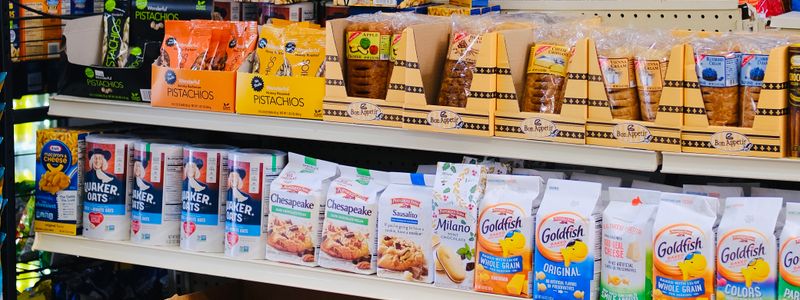
Ultra-processed does not mean any food that came in a package. Harvard Health describes these as items changed so much that the original ingredients are no longer recognizable, typically carrying long ingredient lists with preservatives, added oils, sugar, salt, coloring, and flavoring (Harvard Health).
Think packaged baked goods, deli meat, microwaveable dinners, chips, and soft drinks. Frozen vegetables, canned beans, and plain yogurt are processed in the ordinary sense but are not the problem. Harvard frames the goal plainly: choose less-processed food whenever possible, rather than chasing a perfect diet (Harvard Health).
The distinction matters because the label alone will not tell you. A long ingredient list of things you recognize is different from a long list of additives, stabilizers, and flavorings. Harvard's practical test is whether the original food is still recognizable in what you are holding (Harvard Health). Bread, yogurt, and cheese all come in both versions.
Ultra-processed foods are those changed so much that the original ingredients are no longer recognizable, usually with long additive lists.
3
The heart data
The Two Worst Offenders on the Shelf
The long-term evidence is about more than weight. Harvard Health reports that for every 10 percent increase in the share of ultra-processed food people ate, the risk of a heart attack, stroke, or other serious cardiovascular event was 12 percent higher (Harvard Health).
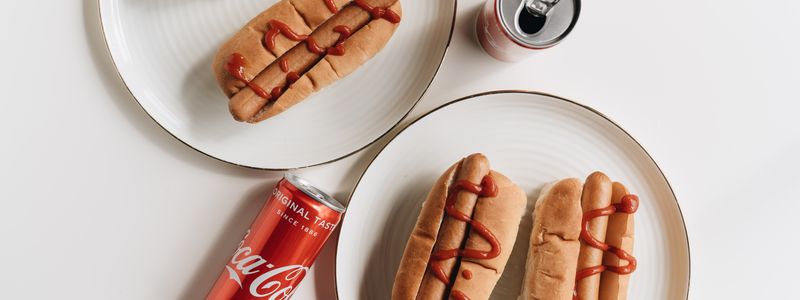
But not every ultra-processed food carries the same risk, and this is the part most headlines skip. In a Harvard analysis, sugar-sweetened drinks and processed meats were tied to greater heart risk, while cold cereals, yogurt, and even savory snacks were not (Harvard T.H. Chan School of Public Health). If you only change two things, change those two.
That split is genuinely useful, because it turns an overwhelming category into a short list. It also explains why blanket advice to avoid all packaged food tends to backfire: it asks for enormous effort across dozens of foods, most of which were never the main problem, and it leaves the two categories that matter most sitting in the same cart (Harvard T.H. Chan School of Public Health).
In Harvard analyses, sugary drinks and processed meats stood out as the ultra-processed foods most tied to heart risk.
For every 10 percent more ultra-processed food in the diet, serious cardiovascular events were 12 percent more likely.
And a large 2024 review tied ultra-processed diets to higher risks of premature death, cardiovascular disease, diabetes, obesity, and sleep problems. The share of your plate is what moves the number.
Harvard Health
4
The nuance
You Do Not Have to Cook Everything From Scratch
A large 2024 review of the evidence linked ultra-processed diets to higher risks of premature death, cardiovascular disease, mental health conditions, diabetes, obesity, and sleep problems (Harvard Health). That sounds like a reason to overhaul everything, which is exactly the reaction that fails by week two.
The realistic target is the share of your plate, not perfection. Harvard suggests small structural swaps: buy bread from a bakery with fewer additives, choose plain unsweetened yogurt and add your own fruit, pick whole roasted meat over deli slices, and buy block cheese instead of pre-shredded with anti-caking agents (Harvard Health).
5
Where to start
Start With Drinks, Then Breakfast
If the two worst categories are sugary drinks and processed meats, that is your first week. Swapping soda for water or unsweetened tea removes the single food group most consistently tied to heart risk in the Harvard data, and it is the easiest change to keep (Harvard T.H. Chan School of Public Health).
Breakfast is the next easy win, because it is the meal most often ultra-processed by default. Plain yogurt with fruit, eggs, or oats you cook yourself takes minutes. None of this requires cooking everything from scratch. It requires moving the ratio, one meal at a time, in the direction the evidence points.
Take the ultra-processed food cheat sheet with you
Your free 2-page guide: what counts as ultra-processed, the two categories to cut first, and the simple swaps that shrink the share of your plate.
One email. No spam. Unsubscribe anytime.
Free Lifestyle Assessment
How Healthy Is Your Current Lifestyle?
Answer honestly for five minutes and walk away with your personal scorecard: all six areas of your health rated, the one that needs your attention first, and a 30-day plan built from your answers. It shows up the second you finish.
Free. About 5 minutes. Your results appear instantly.
📋 Your Coach's Recommendations
1
Cut the Drinks First
Sugar-sweetened beverages were the category most tied to heart risk in Harvard analyses. Swap soda and sweetened coffee drinks for water, sparkling water, or unsweetened tea. It is the single highest-return change on this list.
2
Move Processed Meat Off the Weekly List
Deli slices, hot dogs, and bacon were the other category tied to greater heart risk. Choose whole roasted chicken, turkey, or fish for sandwiches, and treat processed meat as occasional rather than routine.
3
Rebuild One Meal a Day Around Real Ingredients
Pick the meal that is most packaged right now, usually breakfast or lunch, and rebuild it: plain yogurt with fruit, eggs, oats, beans, or last night's leftovers. Harvard's advice is to choose less-processed whenever possible, not to be perfect.
?
How it works. Just a quiet check-in, not an alert and not a recurring nag. The event lands as a 30-minute slot at 9am two weeks from today, with your plan in the notes and a link back to this article. Works with Apple Calendar, Google Calendar, and Outlook. Yours to move, snooze, or delete whenever.
Keep this plan
Get the one-page guide: what counts as ultra-processed, the two to cut first, and the swaps that work.
One email. No spam. Unsubscribe anytime.
Where should we send it?
Your 1-page ultra-processed food guide, straight to your inbox.
We send the plan plus one short evidence brief each week. Unsubscribe anytime.
✓
It's on the way
Check your inbox in the next minute. Want it right now?
Your first Ageless Brief arrives this week: one study, translated, no hype.
To your health,
Frequently Asked Questions
What are ultra-processed foods?
Harvard Health describes them as foods changed so much that the original ingredients are no longer recognizable, usually with long ingredient lists containing preservatives, added oils, sugar, salt, coloring, and flavoring. Examples include packaged baked goods, deli meat, microwaveable dinners, chips, and soft drinks.
Do ultra-processed foods really make you eat more?
In the NIH randomized controlled trial, yes. Twenty adults ate about 500 calories more per day on an ultra-processed menu than on a minimally processed one, even though both menus were matched for calories, sugar, fat, and fiber, and they gained about two pounds in two weeks.
Which ultra-processed foods are the worst for your heart?
A Harvard analysis found sugar-sweetened drinks and processed meats were associated with greater heart risk, while cold cereals, yogurt, and savory snacks were not. If you change only two categories, start with those two.
Is all processed food bad for you?
No. Frozen vegetables, canned beans, and plain yogurt are processed in the ordinary sense and are perfectly good choices. The concern is with ultra-processed products, and Harvard frames the goal as choosing less-processed food whenever possible rather than eliminating everything.
How much do I need to cut to see a benefit?
The data is about proportion, not perfection. Harvard Health reports that every 10 percent increase in the share of ultra-processed food was linked to a 12 percent higher risk of a serious cardiovascular event, which means shifting the ratio in either direction matters.
Is this medical advice?
No. This article is educational and not a substitute for care from your doctor. Talk to a professional about your own diet and health, especially if you manage a condition such as diabetes or heart disease.
Curious where you stand? Take the free 5-minute lifestyle assessment and your personal scorecard appears the second you finish.
By the Ageless Coach Editorial Team · Published May 21, 2026 · Last updated July 18, 2026
<style>
:root{--dark-base:#0D1B2A;--dark-mid:#1B3A4B;--teal:#0EA5A0;--teal-dark:#0C8C88;--teal-bright:#14D4CD;--fog:#D8E8E8;--deep-fog:#C8DCDC;--fog-border:#A8C4C4;--ink:#313743;--ink-soft:#49505f;--muted:#6b7280;--warm:#9A6841;--warm-light:#be7b4c;--serif:"Source Serif 4",Georgia,serif;--sans:Inter,-apple-system,BlinkMacSystemFont,"Segoe UI",sans-serif}
.w-richtext p,.w-richtext li,.w-richtext td{font-size:20.5px;line-height:1.7;color:var(--ink-soft)}
.w-richtext ul{list-style-type:disc;padding-left:24px;margin:12px 0}
.w-richtext ul li{margin-bottom:8px}
.ac-answer{background:#fff;border:1px solid #D4E4E4;border-top:5px solid var(--teal);border-radius:16px;padding:22px 24px 18px;margin:16px 0 28px;box-shadow:0 6px 22px rgba(13,27,42,.07)}
.ac-answer .aa-eyebrow{font:800 12px/1 var(--sans);letter-spacing:2.5px;text-transform:uppercase;color:var(--teal-dark);margin-bottom:8px}
.ac-answer .aa-head{font-family:var(--serif);font-size:24px;line-height:1.2;font-weight:800;color:var(--dark-base);margin:0 0 16px}
.ac-answer .aa-list{list-style:none;margin:0;padding:0}
.ac-answer .aa-list li{display:flex;gap:12px;align-items:baseline;padding:11px 0;border-bottom:1px solid #EDF3F3;font:700 16.5px/1.4 var(--sans);color:var(--ink)}
.ac-answer .aa-list li:last-child{border-bottom:none}
.ac-answer .aa-n{flex-shrink:0;width:24px;height:24px;border-radius:50%;background:var(--teal-dark);color:#fff;font:800 12px/24px var(--sans);text-align:center}
.ac-answer .aa-food{color:var(--teal-dark);font-weight:800}
.ac-answer .aa-cue{margin-top:18px;text-align:center}
.ac-answer .aa-cta{display:inline-flex;align-items:center;gap:10px;background:var(--teal-dark);color:#fff;font:800 14px/1 var(--sans);letter-spacing:.2px;padding:14px 26px;border-radius:50px;text-decoration:none;box-shadow:0 6px 16px rgba(12,140,136,.30)}
.ac-answer .aa-cta:hover{background:#0A7A76}
.ac-answer .aa-arw{display:inline-block;animation:aa-nudge 1.4s ease-in-out infinite}
@keyframes aa-nudge{0%,100%{transform:translateY(0)}50%{transform:translateY(4px)}}
@media(max-width:560px){.ac-answer{padding:20px 18px 16px}.ac-answer .aa-head{font-size:21px}.ac-answer .aa-list li{font-size:15px}}
.ac-band{margin:56px 0 24px;padding:26px 24px 12px;background:linear-gradient(180deg,#F0F7F7,#fff);border-radius:16px}
.ac-band.hype{background:linear-gradient(180deg,#FAF3EB,#fff)}
.ac-band .inner{display:flex;gap:20px;align-items:center}
.ac-band .big{font:900 72px/1 var(--sans);color:var(--deep-fog);flex-shrink:0}
.ac-band.hype .big{color:#EAD9C6}
.ac-band .q{font:700 13px/1.4 var(--sans);letter-spacing:2px;text-transform:uppercase;color:var(--teal-dark)}
.ac-band.hype .q{color:var(--warm)}
.ac-band h3{font-family:var(--serif);font-size:30px;line-height:1.2;font-weight:800;color:var(--ink);margin:0}
.ac-callout{border-left:4px solid var(--teal);background:#F4FAFA;border-radius:0 12px 12px 0;padding:18px 22px;margin:28px 0}
.ac-callout .n{font:800 20px/1.35 var(--sans);color:var(--dark-mid);margin-bottom:6px}
.ac-callout .d{font:500 15px/1.55 var(--sans);color:var(--ink-soft)}
.ac-callout .c{font:600 11.5px/1 var(--sans);letter-spacing:1.5px;text-transform:uppercase;color:var(--muted);margin-top:10px}
.ac-plan{background:linear-gradient(135deg,#F4FAFA 0%,#fff 100%);border-left:5px solid var(--teal-dark);border-radius:14px;padding:30px 26px;margin:40px 0 0;box-shadow:0 2px 12px rgba(0,0,0,.06);scroll-margin-top:100px}
.ac-plan .ptitle{font-family:var(--serif);font-size:24px;font-weight:800;color:var(--ink);margin-bottom:22px}
.ac-plan .step{display:flex;gap:16px;margin-bottom:18px;align-items:flex-start}
.ac-plan .step .n{min-width:38px;width:38px;height:38px;background:var(--teal-dark);border-radius:50%;color:#fff;font:800 17px/38px var(--sans);text-align:center;flex-shrink:0}
.ac-plan .sh{font:800 16.5px/1.4 var(--sans);color:var(--ink);margin-bottom:3px}
.ac-plan .sd{font:400 15px/1.6 var(--sans);color:var(--muted)}
.ac-plan .actions{border-top:1px solid #D8E8E8;margin-top:16px;padding-top:20px}
.ac-primary-row{display:flex;align-items:center;gap:10px;padding:0 4px}
.ac-btn-primary-wide{flex:1;background:var(--teal);color:#fff;border:1.5px solid var(--teal);border-radius:14px;padding:12px 22px;box-shadow:0 4px 14px rgba(14,165,160,.22);font-family:var(--sans);cursor:pointer;display:grid;grid-template-columns:auto 1fr;gap:14px;align-items:center;transition:all .18s ease}
.ac-btn-primary-wide:hover{background:var(--teal-dark);border-color:var(--teal-dark)}
.ac-btn-primary-wide .icon svg{width:22px;height:22px;color:#fff;display:block}
.ac-btn-primary-wide .label{text-align:left;line-height:1.25}
.ac-btn-primary-wide .label .top{display:block;font-weight:700;font-size:15.5px;color:#fff}
.ac-btn-primary-wide .label .top em{font-style:italic;font-weight:700}
.ac-cal-help{position:relative;flex-shrink:0}
.ac-cal-help summary{list-style:none;width:24px;height:24px;border-radius:50%;background:#E4F1F1;border:1px solid var(--fog-border);color:var(--dark-mid);font:700 13px/22px var(--sans);text-align:center;cursor:pointer;display:block}
.ac-cal-help summary::-webkit-details-marker{display:none}
.ac-cal-help .tip{position:absolute;right:0;top:32px;z-index:50;width:290px;background:var(--dark-base);color:var(--fog);border-radius:12px;padding:14px 16px;font:500 12.5px/1.55 var(--sans);box-shadow:0 10px 30px rgba(13,27,42,.35)}
.ac-cal-help .tip strong{color:#fff}
.ac-btn-share-wide{display:flex;width:100%;align-items:center;justify-content:center;gap:10px;background:#fff;color:var(--teal-dark);border:1.5px solid var(--teal-dark);border-radius:14px;padding:12px 22px;margin-top:10px;font:800 15px/1 var(--sans);cursor:pointer}
.ac-btn-share-wide svg{width:18px;height:18px}
.ac-midcap{background:linear-gradient(180deg,#F0F7F7,#fff);border:1.5px solid var(--fog-border);border-radius:16px;padding:24px 22px;margin:34px 0;text-align:center}
.ac-midcap h4{font-family:var(--serif);font-size:22px;font-weight:800;color:var(--ink);margin:0 0 6px}
.ac-midcap .sub{font:500 14px/1.55 var(--sans);color:var(--ink-soft);margin:0 auto 14px;max-width:400px}
.ac-midcap .mcform{display:flex;gap:8px;max-width:400px;margin:0 auto}
.ac-midcap .mcform input{flex:1;border:1.5px solid var(--fog-border);border-radius:50px;padding:12px 18px;font:500 14px/1 var(--sans);min-width:0}
.ac-midcap .mcform button{background:var(--teal-dark);color:#fff;border:none;border-radius:50px;padding:12px 20px;font:800 13.5px/1 var(--sans);cursor:pointer;white-space:nowrap}
.ac-midcap .fine{font:500 11.5px/1.5 var(--sans);color:var(--muted);margin-top:10px}
@media (max-width:520px){.ac-midcap .mcform{flex-direction:column}}
.ac-assess-promo{background:linear-gradient(135deg,#D8E8E8,#C8DCDC);border:1px solid var(--fog-border);border-radius:16px;padding:34px 30px;margin:44px 0;text-align:center}
.ac-assess-promo .eyebrow{color:var(--teal-dark);font:800 12px/1 var(--sans);letter-spacing:2.5px;text-transform:uppercase;margin:0 0 10px}
.ac-assess-promo h4{font-family:var(--serif);color:var(--dark-base);font-size:26px;font-weight:800;margin:0 0 12px}
.w-embed .ac-assess-promo p.ap-body,.ac-assess-promo p.ap-body{font-family:Georgia,serif;color:#3A5555;font-size:15.5px;font-weight:500;line-height:1.65;max-width:540px;margin:0 auto 22px}
.ac-assess-promo .ap-cta{display:inline-block;background:var(--teal-bright);color:var(--dark-base);font:800 15px/1 var(--sans);padding:15px 30px;border-radius:50px;text-decoration:none}
.ac-assess-promo .ap-fine{color:#4E6B6B;font:500 13px/1.5 var(--sans);margin:14px 0 0}
.ac-assess-line{border-top:1px solid #E2ECEC;margin-top:30px;padding:22px 10px 0;text-align:center;font:500 15.5px/1.6 var(--sans);color:#3A5555}
.w-embed .ac-assess-line a,.ac-assess-line a{color:var(--teal-dark);font-weight:700;text-decoration:underline;text-underline-offset:3px}
.ac-articlemeta{font:500 12.5px/1.6 var(--sans);color:#98a0a6;text-align:center;margin:24px 0 0}
.ac-capture{background:linear-gradient(180deg,#F0F7F7,#fff);border:1.5px solid var(--fog-border);border-radius:16px;padding:30px 28px;margin:26px 0 44px;text-align:center}
.ac-capture .cap-state{display:none}
.ac-capture[data-state="trigger"] .st-trigger{display:block}
.ac-capture[data-state="form"] .st-form{display:block}
.ac-capture[data-state="sent"] .st-sent{display:block}
.ac-capture h4{font-family:var(--serif);font-size:24px;font-weight:800;color:var(--ink);margin:0 0 8px}
.ac-capture .sub{font:500 15px/1.55 var(--sans);color:var(--ink-soft);margin:0 auto 18px;max-width:430px}
.ac-capture .bigbtn{display:inline-flex;align-items:center;gap:10px;background:var(--teal-dark);color:#fff;border:none;border-radius:50px;padding:16px 30px;font:800 16px/1 var(--sans);cursor:pointer;box-shadow:0 6px 18px rgba(12,140,136,.28)}
.ac-capture .capform{display:flex;gap:10px;max-width:430px;margin:0 auto}
.ac-capture .capform input{flex:1;border:1.5px solid var(--fog-border);border-radius:50px;padding:14px 20px;font:500 15px/1 var(--sans)}
.ac-capture .capform button{background:var(--teal-dark);color:#fff;border:none;border-radius:50px;padding:14px 24px;font:800 14px/1 var(--sans);cursor:pointer}
.ac-capture .sent-check{width:52px;height:52px;border-radius:50%;background:var(--teal);color:#fff;font:800 26px/52px var(--sans);margin:0 auto 12px}
.ac-capture .dl{display:inline-block;margin-top:6px;color:var(--teal-dark);font:700 15px/1 var(--sans);text-decoration:underline;cursor:pointer}
.ac-capture .fine{font:500 12px/1.5 var(--sans);color:var(--muted);margin-top:12px}
.ac-sig{margin-top:36px}
.ac-sig .rule{width:60px;height:2px;background:linear-gradient(90deg,var(--teal-dark),var(--teal-bright));margin-bottom:18px;border-radius:2px}
.ac-sig .toyour{font-family:var(--serif);font-size:16px;font-style:italic;color:#777;margin:0 0 10px;padding-left:2px}
.ac-faq{margin-top:40px;border-top:1px solid #e5e7eb;padding-top:30px;margin-bottom:40px}
.ac-faq h2{font-family:var(--serif);font-size:23px;font-weight:800;color:var(--ink);margin:0 0 18px}
.ac-faq details{border:1px solid #e5e7eb;border-radius:10px;margin-bottom:10px}
.ac-faq summary{padding:15px 18px;font:700 16px/1.4 var(--sans);color:var(--ink);cursor:pointer;display:flex;justify-content:space-between;align-items:center;list-style:none}
.ac-faq summary:after{content:"\25BE";color:var(--warm)}
.ac-faq .a{padding:0 18px 16px;font-size:17px;line-height:1.65;color:#555}
.article-header-section .article-container{max-width:1080px !important;margin:0 auto !important;padding:0 20px !important}
.article-header-section .article-hero-image{display:block;width:100%;max-width:660px;margin:0}
.article-header-section .article-title{display:block !important;font-family:var(--serif);font-size:32px;line-height:1.25;font-weight:700;color:#313743;margin:20px 0 12px 0;text-align:left;max-width:660px}
@media (max-width:767px){.article-header-section .article-title{font-size:26px}.article-header-section .article-hero-image{max-width:100%}}
@media (max-width:640px){.ac-band .big{font-size:52px}}
@media (max-width:520px){.ac-capture .capform{flex-direction:column}}
.ac-figure{margin:30px 0}.ac-figure img{display:block;width:100%;border-radius:14px;height:auto;aspect-ratio:800/300}.ac-figure figcaption{font:500 13px/1.5 var(--sans);color:var(--muted);margin-top:9px}</style><div class="ac-answer"><div class="aa-eyebrow">What the evidence actually says</div><h2 class="aa-head">The problem with ultra-processed food is not just what is in it. In a controlled NIH trial, people offered the same calories on both menus ate 500 more per day on the processed one. Here is what changes, and where to start.</h2><ol class="aa-list"><li><span class="aa-n">1</span><span><span class="aa-food">500 calories</span> · people ate that much more per day on the ultra-processed menu</span></li><li><span class="aa-n">2</span><span><span class="aa-food">2 pounds</span> · gained in two weeks, then lost on the unprocessed menu</span></li><li><span class="aa-n">3</span><span><span class="aa-food">Same numbers</span> · both menus matched for calories, sugar, fat, and fiber</span></li><li><span class="aa-n">4</span><span><span class="aa-food">Faster eating</span> · people ate quicker when the food was ultra-processed</span></li><li><span class="aa-n">5</span><span><span class="aa-food">Start here</span> · sugary drinks and processed meats are the first to cut</span></li></ol><div class="aa-cue"><a class="aa-cta" href="#coach-recommendations">Get Your Coach's 3-Step Plan <span class="aa-arw">↓</span></a></div></div><p>For years the advice about packaged food was about the label: too much salt, too much sugar, too much fat. Then researchers at the National Institutes of Health ran the experiment that reframed the question. They brought 20 healthy adults into a metabolic unit for four weeks and fed them two menus, two weeks each, matched for calories, sugar, fat, fiber, and macronutrients. The only real difference was how processed the food was (<a href="https://www.nih.gov/news-events/news-releases/nih-study-finds-heavily-processed-foods-cause-overeating-weight-gain" target="_blank" rel="noopener">NIH, 2019</a>).</p><p>People could eat as much or as little as they wanted. On the ultra-processed menu they ate about 500 calories more per day and gained roughly two pounds in two weeks. On the minimally processed menu they lost about the same amount (<a href="https://www.nih.gov/news-events/news-releases/nih-study-finds-heavily-processed-foods-cause-overeating-weight-gain" target="_blank" rel="noopener">NIH, 2019</a>). Same nutrition on paper. Very different results on the scale.</p><div class="ac-band"><div class="inner"><div class="big">1</div><div><div class="q">The trial</div><h3>The Study That Changed the Question</h3></div></div></div><p>This was the first randomized controlled trial to test ultra-processed food itself rather than any single nutrient, and its design is what makes it persuasive. Because both menus were matched and every meal was supervised, the extra 500 calories a day cannot be blamed on people simply choosing worse food or eating on the run (<a href="https://www.nih.gov/news-events/news-releases/nih-study-finds-heavily-processed-foods-cause-overeating-weight-gain" target="_blank" rel="noopener">NIH, 2019</a>).</p><p>Researchers also noticed people ate faster on the processed menu. Soft, energy-dense food goes down quickly, and the signals that tell you to stop arrive late. That is a plausible mechanism, and it points at something useful: the issue is partly the food itself, not just your willpower.</p><p>It is worth being clear about the study's limits, because honesty is the point of reading research carefully. Twenty people is a small group, and four weeks is a short window (<a href="https://www.nih.gov/news-events/news-releases/nih-study-finds-heavily-processed-foods-cause-overeating-weight-gain" target="_blank" rel="noopener">NIH, 2019</a>). What makes the finding hold up is not its size but its control: when every meal is supervised and both menus match on paper, a 500 calorie gap is hard to explain away.</p><figure class="ac-figure"><img src="https://images.pexels.com/photos/6697285/pexels-photo-6697285.jpeg?auto=compress&cs=tinysrgb&w=800&h=300&fit=crop" alt="A person sitting and eating packaged snack food from their hand" width="800" height="300" loading="lazy" decoding="async"><figcaption>In the NIH trial people ate about 500 more calories a day on the ultra-processed menu, and ate faster, even though both menus matched on paper.</figcaption></figure><div class="ac-band hype"><div class="inner"><div class="big">2</div><div><div class="q">The definition</div><h3>What Actually Counts as Ultra-Processed</h3></div></div></div><p>Ultra-processed does not mean any food that came in a package. Harvard Health describes these as items changed so much that the original ingredients are no longer recognizable, typically carrying long ingredient lists with preservatives, added oils, sugar, salt, coloring, and flavoring (<a href="https://www.health.harvard.edu/blog/what-are-ultra-processed-foods-and-are-they-bad-for-our-health-2020010918605" target="_blank" rel="noopener">Harvard Health</a>).</p><p>Think packaged baked goods, deli meat, microwaveable dinners, chips, and soft drinks. Frozen vegetables, canned beans, and plain yogurt are processed in the ordinary sense but are not the problem. Harvard frames the goal plainly: choose less-processed food whenever possible, rather than chasing a perfect diet (<a href="https://www.health.harvard.edu/diet-and-nutrition/8-simple-ways-to-reduce-ultra-processed-foods-in-your-diet" target="_blank" rel="noopener">Harvard Health</a>).</p><p>The distinction matters because the label alone will not tell you. A long ingredient list of things you recognize is different from a long list of additives, stabilizers, and flavorings. Harvard's practical test is whether the original food is still recognizable in what you are holding (<a href="https://www.health.harvard.edu/blog/what-are-ultra-processed-foods-and-are-they-bad-for-our-health-2020010918605" target="_blank" rel="noopener">Harvard Health</a>). Bread, yogurt, and cheese all come in both versions.</p><figure class="ac-figure"><img src="https://images.pexels.com/photos/18925018/pexels-photo-18925018.jpeg?auto=compress&cs=tinysrgb&w=800&h=300&fit=crop" alt="Supermarket shelves stocked with brightly colored packaged snack foods and crackers" width="800" height="300" loading="lazy" decoding="async"><figcaption>Ultra-processed foods are those changed so much that the original ingredients are no longer recognizable, usually with long additive lists.</figcaption></figure><div class="ac-band"><div class="inner"><div class="big">3</div><div><div class="q">The heart data</div><h3>The Two Worst Offenders on the Shelf</h3></div></div></div><p>The long-term evidence is about more than weight. Harvard Health reports that for every 10 percent increase in the share of ultra-processed food people ate, the risk of a heart attack, stroke, or other serious cardiovascular event was 12 percent higher (<a href="https://www.health.harvard.edu/heart-health/ultra-processed-foods-linked-to-poor-heart-health" target="_blank" rel="noopener">Harvard Health</a>).</p><p>But not every ultra-processed food carries the same risk, and this is the part most headlines skip. In a Harvard analysis, sugar-sweetened drinks and processed meats were tied to greater heart risk, while cold cereals, yogurt, and even savory snacks were not (<a href="https://hsph.harvard.edu/news/ultra-processed-foods-heart-health/" target="_blank" rel="noopener">Harvard T.H. Chan School of Public Health</a>). If you only change two things, change those two.</p><p>That split is genuinely useful, because it turns an overwhelming category into a short list. It also explains why blanket advice to avoid all packaged food tends to backfire: it asks for enormous effort across dozens of foods, most of which were never the main problem, and it leaves the two categories that matter most sitting in the same cart (<a href="https://hsph.harvard.edu/news/ultra-processed-foods-heart-health/" target="_blank" rel="noopener">Harvard T.H. Chan School of Public Health</a>).</p><figure class="ac-figure"><img src="https://images.pexels.com/photos/4113460/pexels-photo-4113460.jpeg?auto=compress&cs=tinysrgb&w=800&h=300&fit=crop" alt="Hot dogs on a plate beside cans of cola" width="800" height="300" loading="lazy" decoding="async"><figcaption>In Harvard analyses, sugary drinks and processed meats stood out as the ultra-processed foods most tied to heart risk.</figcaption></figure><div class="ac-callout"><div class="n">For every 10 percent more ultra-processed food in the diet, serious cardiovascular events were 12 percent more likely.</div><div class="d">And a large 2024 review tied ultra-processed diets to higher risks of premature death, cardiovascular disease, diabetes, obesity, and sleep problems. The share of your plate is what moves the number.</div><div class="c">Harvard Health</div></div><div class="ac-band"><div class="inner"><div class="big">4</div><div><div class="q">The nuance</div><h3>You Do Not Have to Cook Everything From Scratch</h3></div></div></div><p>A large 2024 review of the evidence linked ultra-processed diets to higher risks of premature death, cardiovascular disease, mental health conditions, diabetes, obesity, and sleep problems (<a href="https://www.health.harvard.edu/blog/what-are-ultra-processed-foods-and-are-they-bad-for-our-health-2020010918605" target="_blank" rel="noopener">Harvard Health</a>). That sounds like a reason to overhaul everything, which is exactly the reaction that fails by week two.</p><p>The realistic target is the share of your plate, not perfection. Harvard suggests small structural swaps: buy bread from a bakery with fewer additives, choose plain unsweetened yogurt and add your own fruit, pick whole roasted meat over deli slices, and buy block cheese instead of pre-shredded with anti-caking agents (<a href="https://www.health.harvard.edu/diet-and-nutrition/8-simple-ways-to-reduce-ultra-processed-foods-in-your-diet" target="_blank" rel="noopener">Harvard Health</a>).</p><div class="ac-band"><div class="inner"><div class="big">5</div><div><div class="q">Where to start</div><h3>Start With Drinks, Then Breakfast</h3></div></div></div><p>If the two worst categories are sugary drinks and processed meats, that is your first week. Swapping soda for water or unsweetened tea removes the single food group most consistently tied to heart risk in the Harvard data, and it is the easiest change to keep (<a href="https://hsph.harvard.edu/news/ultra-processed-foods-heart-health/" target="_blank" rel="noopener">Harvard T.H. Chan School of Public Health</a>).</p><p>Breakfast is the next easy win, because it is the meal most often ultra-processed by default. Plain yogurt with fruit, eggs, or oats you cook yourself takes minutes. None of this requires cooking everything from scratch. It requires moving the ratio, one meal at a time, in the direction the evidence points.</p><div class="ac-midcap"><h4>Take the ultra-processed food cheat sheet with you</h4><p class="sub">Your free 2-page guide: what counts as ultra-processed, the two categories to cut first, and the simple swaps that shrink the share of your plate.</p><div class="mcform"><input type="email" placeholder="Your email address" aria-label="Email address"><button type="button">Send My Plan (Free)</button></div><div class="fine">One email. No spam. Unsubscribe anytime.</div></div><div class="ac-assess-promo"><p class="eyebrow">Free Lifestyle Assessment</p><h4>How Healthy Is Your Current Lifestyle?</h4><p class="ap-body">Answer honestly for five minutes and walk away with your personal scorecard: all six areas of your health rated, the one that needs your attention first, and a 30-day plan built from your answers. It shows up the second you finish.</p><a class="ap-cta" href="/#assessment">See How the Assessment Works →</a><p class="ap-fine">Free. About 5 minutes. Your results appear instantly.</p></div><div class="ac-plan" id="coach-recommendations"><div class="ptitle">📋 Your Coach's Recommendations</div><div class="step"><div class="n">1</div><div><div class="sh">Cut the Drinks First</div><div class="sd">Sugar-sweetened beverages were the category most tied to heart risk in Harvard analyses. Swap soda and sweetened coffee drinks for water, sparkling water, or unsweetened tea. It is the single highest-return change on this list.</div></div></div><div class="step"><div class="n">2</div><div><div class="sh">Move Processed Meat Off the Weekly List</div><div class="sd">Deli slices, hot dogs, and bacon were the other category tied to greater heart risk. Choose whole roasted chicken, turkey, or fish for sandwiches, and treat processed meat as occasional rather than routine.</div></div></div><div class="step"><div class="n">3</div><div><div class="sh">Rebuild One Meal a Day Around Real Ingredients</div><div class="sd">Pick the meal that is most packaged right now, usually breakfast or lunch, and rebuild it: plain yogurt with fruit, eggs, oats, beans, or last night's leftovers. Harvard's advice is to choose less-processed whenever possible, not to be perfect.</div></div></div><div class="actions">
<div class="ac-primary-row">
<button type="button" class="ac-btn-primary-wide" data-ac-cal>
<span class="icon"><svg viewBox="0 0 24 24" fill="none" stroke="currentColor" stroke-width="2" stroke-linecap="round" stroke-linejoin="round"><rect x="3" y="4" width="18" height="18" rx="2"></rect><path d="M16 2v4M8 2v4M3 10h18"></path></svg></span>
<span class="label"><span class="top">Add <em>Your Coach's Recommendations to Your Calendar</em></span></span>
</button>
<details class="ac-cal-help">
<summary aria-label="What does this do?">?</summary>
<div class="tip"><strong>How it works.</strong> Just a quiet check-in, not an alert and not a recurring nag. The event lands as a 30-minute slot at 9am two weeks from today, with your plan in the notes and a link back to this article. Works with Apple Calendar, Google Calendar, and Outlook. Yours to move, snooze, or delete whenever.</div>
</details>
</div>
<button type="button" class="ac-btn-share-wide" data-ac-share>
<svg viewBox="0 0 24 24" fill="none" stroke="currentColor" stroke-width="2" stroke-linecap="round" stroke-linejoin="round"><path d="M4 12v8a2 2 0 002 2h12a2 2 0 002-2v-8"></path><polyline points="16 6 12 2 8 6"></polyline><line x1="12" y1="2" x2="12" y2="15"></line></svg>
Share this article
</button>
</div></div><div class="ac-capture" data-state="trigger" data-article-slug="ultra-processed-foods-what-they-do-to-your-body" data-pdf-url="" data-plan-title="The Ultra-Processed Food Starter Plan" data-plan-desc="Your free 2-page guide: what ultra-processed actually means, the two categories to cut first, and simple swaps for every meal. Checked against the NIH and Harvard Health."><div class="st-trigger cap-state"><h4>Keep this plan</h4><p class="sub">Get the one-page guide: what counts as ultra-processed, the two to cut first, and the swaps that work.</p><button class="bigbtn" type="button" data-cap="form">📩 Email Me This Plan (Free PDF)</button><div class="fine">One email. No spam. Unsubscribe anytime.</div></div><div class="st-form cap-state"><h4>Where should we send it?</h4><p class="sub">Your 1-page ultra-processed food guide, straight to your inbox.</p><form class="capform"><input type="email" name="email" required placeholder="Your email address" aria-label="Email address"><button type="submit">Send My Plan</button></form><div class="fine">We send the plan plus one short evidence brief each week. Unsubscribe anytime.</div></div><div class="st-sent cap-state"><div class="sent-check">✓</div><h4>It's on the way</h4><p class="sub">Check your inbox in the next minute. Want it right now?</p><a class="dl" href="/newsletter" download>⬇ Download your plan (PDF)</a><div class="fine">Your first Ageless Brief arrives this week: one study, translated, no hype.</div></div></div><div class="ac-sig">
<div class="rule"></div>
<p class="toyour">To your health,</p>
<svg width="320" height="72" viewBox="0 0 320 72" role="img" aria-label="Ageless Coach. Age Strong. Live Long." xmlns="http://www.w3.org/2000/svg" xmlns:xlink="http://www.w3.org/1999/xlink">
<defs><clipPath id="acSigIconClip"><rect x="0" y="6" width="60" height="60" rx="12" ry="12"/></clipPath></defs>
<image x="0" y="6" width="60" height="60" clip-path="url(#acSigIconClip)" preserveAspectRatio="xMidYMid slice" href="https://cdn.prod.website-files.com/69be1026a027224999b7936b/6a0b22c6afd5d6fd115b9c1a_ac-closing-brand-icon.webp" xlink:href="https://cdn.prod.website-files.com/69be1026a027224999b7936b/6a0b22c6afd5d6fd115b9c1a_ac-closing-brand-icon.webp"/>
<text x="76" y="42" style="font-family:Inter,system-ui,-apple-system,'Helvetica Neue',Arial,sans-serif;font-size:27px;letter-spacing:-0.3px">
<tspan style="font-weight:800;fill:#0D1B2A">Ageless</tspan><tspan style="font-weight:300;fill:rgba(13,27,42,0.6)">Coach</tspan><tspan dy="-12" style="font-size:16px;font-weight:600;fill:rgba(13,27,42,0.6)">™</tspan>
</text>
<text x="76" y="60" style="font-family:Inter,system-ui,-apple-system,'Helvetica Neue',Arial,sans-serif;font-size:10.5px;letter-spacing:2.5px;font-weight:500;fill:#0C8C88;text-transform:uppercase">AGE STRONG. LIVE LONG.</text>
</svg>
</div><div class="ac-faq"><h2>Frequently Asked Questions</h2><details><summary>What are ultra-processed foods?</summary><div class="a">Harvard Health describes them as foods changed so much that the original ingredients are no longer recognizable, usually with long ingredient lists containing preservatives, added oils, sugar, salt, coloring, and flavoring. Examples include packaged baked goods, deli meat, microwaveable dinners, chips, and soft drinks.</div></details><details><summary>Do ultra-processed foods really make you eat more?</summary><div class="a">In the NIH randomized controlled trial, yes. Twenty adults ate about 500 calories more per day on an ultra-processed menu than on a minimally processed one, even though both menus were matched for calories, sugar, fat, and fiber, and they gained about two pounds in two weeks.</div></details><details><summary>Which ultra-processed foods are the worst for your heart?</summary><div class="a">A Harvard analysis found sugar-sweetened drinks and processed meats were associated with greater heart risk, while cold cereals, yogurt, and savory snacks were not. If you change only two categories, start with those two.</div></details><details><summary>Is all processed food bad for you?</summary><div class="a">No. Frozen vegetables, canned beans, and plain yogurt are processed in the ordinary sense and are perfectly good choices. The concern is with ultra-processed products, and Harvard frames the goal as choosing less-processed food whenever possible rather than eliminating everything.</div></details><details><summary>How much do I need to cut to see a benefit?</summary><div class="a">The data is about proportion, not perfection. Harvard Health reports that every 10 percent increase in the share of ultra-processed food was linked to a 12 percent higher risk of a serious cardiovascular event, which means shifting the ratio in either direction matters.</div></details><details><summary>Is this medical advice?</summary><div class="a">No. This article is educational and not a substitute for care from your doctor. Talk to a professional about your own diet and health, especially if you manage a condition such as diabetes or heart disease.</div></details></div><div class="ac-assess-line">Curious where you stand? Take the free <a href="/#assessment">5-minute lifestyle assessment</a> and your personal scorecard appears the second you finish.</div><p class="ac-articlemeta">By the Ageless Coach Editorial Team · Published May 21, 2026 · Last updated July 18, 2026</p>
Subscribe to the Free Newsletter
One article a week. Trusted research made simple. Start making smarter health decisions today.