<style>
.ac-int-b{--dark-base:#0D1B2A;--dark-mid:#1B3A4B;--teal:#0EA5A0;--teal-dark:#0C8C88;--teal-bright:#14D4CD;--fog:#D8E8E8;--deep-fog:#C8DCDC;--fog-border:#A8C4C4;--ink:#313743;--ink-soft:#49505f;--muted:#6b7280;--warm:#9A6841;--serif:"Source Serif 4",Georgia,serif;--sans:Inter,-apple-system,"Segoe UI",sans-serif}
.ac-int-b *{box-sizing:border-box}.ac-int-b html{scroll-behavior:smooth}
.ac-int-b body{margin:0;background:#fff;color:var(--ink);font-family:var(--sans);-webkit-font-smoothing:antialiased}
.ac-int-b .nv{position:sticky;top:0;z-index:900;background:var(--dark-base);padding:13px 0}
.ac-int-b .wrap{max-width:820px;margin:0 auto;padding:26px 20px 60px}
.ac-int-b .trust{display:flex;flex-wrap:wrap;gap:8px 18px;align-items:center;background:linear-gradient(180deg,#F0F7F7,#fff);border:1px solid var(--fog-border);border-radius:12px;padding:11px 16px;margin:0 0 22px}
.ac-int-b .trust .it{display:flex;align-items:center;gap:7px;font:700 12.5px/1.3 var(--sans);color:var(--dark-mid)}
.ac-int-b .trust .it svg{width:15px;height:15px;color:var(--teal-dark);flex-shrink:0}
.ac-int-b .trust .dis{font:500 12px/1.4 var(--sans);color:var(--muted);margin-left:auto}
.ac-int-b .trust .dis a{color:var(--teal-dark);font-weight:700}
.ac-int-b .kicker{display:inline-block;background:#fff;border:1.5px solid var(--fog-border);color:var(--dark-mid);font:700 11px/1 var(--sans);letter-spacing:1.5px;padding:7px 13px;border-radius:20px;text-transform:uppercase;margin-bottom:14px}
.ac-int-b h1{font-family:var(--serif);font-size:40px;line-height:1.15;font-weight:800;color:var(--ink);margin:0 0 14px}
.ac-int-b .lead{font-size:18px;color:var(--muted);margin:0 0 26px;line-height:1.6}
.ac-int-b p{font-size:18.5px;line-height:1.7;color:var(--ink-soft);margin:0 0 20px}
.ac-int-b p strong{color:var(--ink)}
.ac-int-b p a{color:var(--teal-dark);font-weight:700;text-decoration:underline;text-decoration-color:rgba(14,165,160,.4);text-underline-offset:3px}
.ac-int-b .pick{position:relative;border:2px solid var(--teal);border-radius:16px;box-shadow:0 10px 30px rgba(13,27,42,.10);padding:22px 24px 18px;margin:8px 0 12px;background:linear-gradient(180deg,#F0F7F7,#fff)}
.ac-int-b .pick .rib{position:absolute;top:-13px;left:22px;background:var(--teal-dark);color:#fff;font:800 11.5px/1 var(--sans);letter-spacing:2px;text-transform:uppercase;padding:8px 15px;border-radius:20px}
.ac-int-b .pick .row{display:flex;gap:20px;align-items:center}
.ac-int-b .pick .pimg{width:130px;height:100px;flex-shrink:0;border-radius:10px;background:linear-gradient(135deg,var(--fog),var(--deep-fog));display:flex;align-items:center;justify-content:center;text-align:center;color:#3A5555;font:600 9.5px/1.35 var(--sans);padding:7px}
.ac-int-b .pick h2{font-family:var(--serif);font-size:24px;line-height:1.15;font-weight:800;color:var(--dark-base);margin:0 0 6px}
.ac-int-b .pick .why{font:600 14.5px/1.5 var(--sans);color:var(--ink);margin:0 0 12px}
.ac-int-b .pick .cta{display:inline-flex;align-items:center;gap:8px;background:var(--teal-dark);color:#fff;font:800 15px/1 var(--sans);padding:14px 26px;border-radius:50px;text-decoration:none;box-shadow:0 8px 20px rgba(12,140,136,.28)}
.ac-int-b .pending{display:block;color:#4E6B6B;font:500 11.5px/1.5 var(--sans);margin:8px 0 0;letter-spacing:.01em}
.ac-int-b .pick .ftc{font:500 12px/1.6 var(--sans);color:var(--muted);margin:12px 0 0}
.ac-int-b .pick .ftc a{color:var(--teal-dark);font-weight:600}
.ac-int-b .cmp{border:1.5px solid var(--fog-border);border-radius:16px;overflow:hidden;margin:30px 0 8px;box-shadow:0 8px 26px rgba(13,27,42,.08)}
.ac-int-b .cmp .chead{background:var(--dark-base);color:#fff;padding:16px 22px;font:800 14px/1.3 var(--sans);letter-spacing:1.5px;text-transform:uppercase}
.ac-int-b .cmp table{width:100%;border-collapse:collapse}
.ac-int-b .cmp th,.ac-int-b .cmp td{padding:13px 13px;font:500 14px/1.5 var(--sans);color:var(--ink-soft);border-bottom:1px solid #E9F1F1;text-align:left;vertical-align:top}
.ac-int-b .cmp th{font-weight:800;color:var(--dark-mid);background:#F4FAFA;font-size:12.5px;letter-spacing:.3px}
.ac-int-b .cmp td.name{font-weight:800;color:var(--dark-mid);white-space:nowrap}
.ac-int-b .cmp td.name.pick{color:var(--dark-mid);background:#E9F7F6;border:none;border-radius:0;box-shadow:none;padding:13px 13px;margin:0;position:static}
.ac-int-b .cmp td.name.pick:before{content:"OUR PICK";display:block;width:max-content;background:var(--teal-bright);color:var(--dark-base);font:800 10px/1 var(--sans);letter-spacing:1.2px;padding:4px 9px;border-radius:20px;margin-bottom:7px}
.ac-int-b .cmp tr.rec td{background:#E9F7F6}
.ac-int-b .cmp td.win{font-weight:700;color:var(--dark-mid)}
.ac-int-b .cmp tr:last-child td{border-bottom:none}
.ac-int-b .legend{font:500 12.5px/1.5 var(--sans);color:var(--muted);margin:8px 2px 0}
.ac-int-b h3.sec{font-family:var(--serif);font-size:25px;font-weight:800;color:var(--ink);margin:40px 0 12px}
.ac-int-b .crit{display:grid;grid-template-columns:1fr 1fr;gap:12px;margin:16px 0}
.ac-int-b .crit .c{background:linear-gradient(180deg,#F0F7F7,#fff);border:1px solid var(--fog-border);border-radius:12px;padding:15px 17px}
.ac-int-b .crit .c .t{font:800 13.5px/1.3 var(--sans);color:var(--dark-mid);margin-bottom:5px}
.ac-int-b .crit .c .d{font:500 13.5px/1.5 var(--sans);color:var(--ink-soft)}
.ac-int-b .callout{border-left:4px solid var(--teal);background:#F4FAFA;border-radius:0 12px 12px 0;padding:18px 22px;margin:24px 0}
.ac-int-b .callout .n{font:800 17px/1.35 var(--sans);color:var(--dark-mid);margin-bottom:6px}
.ac-int-b .callout .d{font:500 15px/1.55 var(--sans);color:var(--ink-soft)}
.ac-int-b .objs{margin:14px 0 0}
.ac-int-b .objs details{border:1px solid #e5e7eb;border-radius:10px;margin-bottom:10px}
.ac-int-b .objs summary{padding:15px 18px;font:700 15.5px/1.4 var(--sans);color:var(--ink);cursor:pointer;display:flex;justify-content:space-between;gap:12px;list-style:none}
.ac-int-b .objs summary::-webkit-details-marker{display:none}
.ac-int-b .objs summary:after{content:"\25BE";color:var(--teal-dark)}
.ac-int-b .objs .a{padding:0 18px 16px;font-size:15.5px;line-height:1.6;color:#555}
.ac-int-b .plan{background:linear-gradient(135deg,#F4FAFA,#fff);border-left:5px solid var(--teal-dark);border-radius:14px;padding:26px;margin:38px 0 0;box-shadow:0 2px 12px rgba(0,0,0,.06)}
.ac-int-b .plan .pt{font-family:var(--serif);font-size:22px;font-weight:800;color:var(--ink);margin-bottom:18px}
.ac-int-b .plan .step{display:flex;gap:14px;margin-bottom:15px;align-items:flex-start}
.ac-int-b .plan .step .n{min-width:34px;width:34px;height:34px;background:var(--teal-dark);border-radius:50%;color:#fff;font:800 15px/34px var(--sans);text-align:center;flex-shrink:0}
.ac-int-b .plan .sh{font:800 15.5px/1.4 var(--sans);color:var(--ink);margin-bottom:3px}
.ac-int-b .plan .sd{font:400 14.5px/1.55 var(--sans);color:var(--muted)}
.ac-int-b .plan .midcta{border-top:1px solid #D8E8E8;margin-top:14px;padding-top:16px;text-align:center}
.ac-int-b .buy{display:inline-flex;align-items:center;gap:8px;background:var(--teal-dark);color:#fff;font:800 15px/1 var(--sans);padding:14px 26px;border-radius:50px;text-decoration:none}
.ac-int-b .capline{border-top:1px solid #E2ECEC;margin-top:34px;padding:22px 10px 0;text-align:center;font:500 15px/1.6 var(--sans);color:#3A5555}
.ac-int-b .capline a{color:var(--teal-dark);font-weight:700}
.ac-int-b .meta{font:500 12.5px/1.6 var(--sans);color:#98a0a6;text-align:center;margin:26px 0 0}
@media(max-width:600px){.ac-int-b .pick .row{flex-direction:column;align-items:flex-start}.ac-int-b .crit{grid-template-columns:1fr}.ac-int-b h1{font-size:31px}.ac-int-b .cmp th,.ac-int-b .cmp td{padding:10px 9px;font-size:12.5px}}
.ac-int-b .disc{max-width:820px;margin:0 auto;padding:20px 20px 30px;text-align:center;font:500 12.5px/1.6 var(--sans);color:#8a9298}
@media(max-width:600px){
.ac-int-b .cmp table,.ac-int-b .cmp tbody,.ac-int-b .cmp tr,.ac-int-b .cmp td{display:block;width:100%;box-sizing:border-box}
.ac-int-b .cmp tr:first-child{display:none}
.ac-int-b .cmp tr{padding:0 0 13px;border-bottom:6px solid #F4FAFA}
.ac-int-b .cmp tr:last-child{border-bottom:none}
.ac-int-b .cmp td{border-bottom:none;padding:5px 18px;font-size:14.5px;line-height:1.5}
.ac-int-b .cmp td.name{white-space:normal;padding-top:13px;padding-bottom:6px;font-size:15.5px}
.ac-int-b .cmp td[data-l]:before{content:attr(data-l);display:block;font:800 10.5px/1.4 var(--sans);letter-spacing:.8px;text-transform:uppercase;color:var(--muted);margin-bottom:1px}
.ac-int-b .cmp tr.rec{border-left:4px solid var(--teal-dark)}
.ac-int-b .cmp td.name.pick{padding:13px 18px 6px}
}
.ac-int-b .ac-midcap{background:linear-gradient(180deg,#F0F7F7,#fff);border:1.5px solid var(--fog-border);border-radius:16px;padding:22px;margin:30px 0;text-align:center}
.ac-int-b .ac-midcap h4{font-family:var(--serif);font-size:20px;font-weight:800;color:var(--ink);margin:0 0 5px}
.ac-int-b .ac-midcap .sub{font:500 14px/1.55 var(--sans);color:var(--ink-soft);max-width:420px;margin:0 auto 14px}
.ac-int-b .ac-midcap .mcform{display:flex;gap:8px;max-width:400px;margin:0 auto}
.ac-int-b .ac-midcap .mcform input{flex:1;border:1.5px solid var(--fog-border);border-radius:50px;padding:12px 16px;font:500 14px/1 var(--sans);min-width:0}
.ac-int-b .ac-midcap .mcform button{background:var(--teal-dark);color:#fff;border:none;border-radius:50px;padding:12px 18px;font:800 13px/1 var(--sans);cursor:pointer;white-space:nowrap}
.ac-int-b .ac-midcap .fine{font:500 11.5px/1.5 var(--sans);color:var(--muted);margin-top:10px}
@media(max-width:520px){.ac-int-b .ac-midcap .mcform{flex-direction:column}}
.ac-int-b .ac-capture{background:linear-gradient(180deg,#F0F7F7,#fff);border:1.5px solid var(--fog-border);border-radius:16px;padding:30px 28px;margin:26px 0 44px;text-align:center}
.ac-int-b .ac-capture .cap-state{display:none}
.ac-int-b .ac-capture[data-state="trigger"] .st-trigger{display:block}
.ac-int-b .ac-capture[data-state="form"] .st-form{display:block}
.ac-int-b .ac-capture[data-state="sent"] .st-sent{display:block}
.ac-int-b .ac-capture h4{font-family:var(--serif);font-size:24px;font-weight:800;color:var(--ink);margin:0 0 8px}
.ac-int-b .ac-capture .sub{font:500 15px/1.55 var(--sans);color:var(--ink-soft);margin:0 auto 18px;max-width:430px}
.ac-int-b .ac-capture .bigbtn{display:inline-flex;align-items:center;gap:10px;background:var(--teal-dark);color:#fff;border:none;border-radius:50px;padding:16px 30px;font:800 16px/1 var(--sans);cursor:pointer;box-shadow:0 6px 18px rgba(12,140,136,.28)}
.ac-int-b .ac-capture .capform{display:flex;gap:10px;max-width:430px;margin:0 auto}
.ac-int-b .ac-capture .capform input{flex:1;border:1.5px solid var(--fog-border);border-radius:50px;padding:14px 20px;font:500 15px/1 var(--sans)}
.ac-int-b .ac-capture .capform button{background:var(--teal-dark);color:#fff;border:none;border-radius:50px;padding:14px 24px;font:800 14px/1 var(--sans);cursor:pointer}
.ac-int-b .ac-capture .sent-check{width:52px;height:52px;border-radius:50%;background:var(--teal);color:#fff;font:800 26px/52px var(--sans);margin:0 auto 12px}
.ac-int-b .ac-capture .dl{display:inline-block;margin-top:6px;color:var(--teal-dark);font:700 15px/1 var(--sans);text-decoration:underline;cursor:pointer}
.ac-int-b .ac-capture .fine{font:500 12px/1.5 var(--sans);color:var(--muted);margin-top:12px}
@media(max-width:520px){.ac-int-b .ac-capture .capform{flex-direction:column}}
</style>
<div class="ac-int-b">
<div class="wrap">
<p class="lead">If you have quit dairy and gone looking for a protein powder, you have probably met the gritty tub, the chalky one, and the one that says "complete protein" on the front without explaining what that means. There is a real nutritional issue underneath the marketing, and it is not texture. Most single-source plant proteins are genuinely short on one essential amino acid or another. We screened the plant options against what actually closes that gap.</p>
<div class="pick">
<div class="rib">★ Our Pick</div>
<h2>Momentous 100% Plant Protein</h2>
<div class="why">A pea and rice blend in a 70:30 ratio, which is the combination that gives you a complete amino acid profile rather than half of one. 20g per serving, NSF Certified for Sport on every batch, no gums, fillers, or stabilizers.</div>
<a class="cta" href="https://www.livemomentous.com/products/100-plant-protein-powder?dc=AgelessCoach&mct=pwqwZOO1&utm_source=agelesscoach&utm_medium=intent-article&utm_content=tmpl-B" data-affiliate="momentous" data-template="B" data-code="AgelessCoach" rel="noopener sponsored">Check Current Price at Momentous →</a><span class="pending">Partner link · discount applied automatically at checkout</span>
<p class="ftc">Ageless Coach may earn a commission if you buy through this link, at no extra cost to you. Our pick was set before any partnership. <a href="/partners">How we choose partners</a>.</p>
</div>
<div class="cmp">
<div class="chead">The Plant Proteins, Honestly Compared</div>
<table>
<tr><th>Source</th><th>Amino acid profile</th><th>Typical shortfall</th><th>Digestibility</th><th>Usually chosen for</th></tr>
<tr class="rec"><td class="name pick">Pea and rice blend</td><td data-l="Amino acid profile" class="win">Complementary, covers all nine essentials</td><td data-l="Typical shortfall" class="win">None once the two are combined</td><td data-l="Digestibility" class="win">Good, pea is highly digestible</td><td data-l="Usually chosen for" class="win">A daily dairy-free protein that is not missing a piece</td></tr>
<tr><td class="name">Pea alone</td><td data-l="Amino acid profile">Contains all nine essentials</td><td data-l="Typical shortfall">Low in methionine and cysteine</td><td data-l="Digestibility">Highly digestible, hypoallergenic</td><td data-l="Usually chosen for">Budget-friendly single-source option</td></tr>
<tr><td class="name">Brown rice alone</td><td data-l="Amino acid profile">Does not contain all nine on its own</td><td data-l="Typical shortfall">Low in lysine</td><td data-l="Digestibility">Good, gluten-free</td><td data-l="Usually chosen for">Legume-free and allergy-friendly routines</td></tr>
<tr><td class="name">Hemp</td><td data-l="Amino acid profile">Broad but lower in total protein density</td><td data-l="Typical shortfall">Less protein per scoop</td><td data-l="Digestibility">Good, with added fiber</td><td data-l="Usually chosen for">Omega-3 content alongside protein</td></tr>
<tr><td class="name">Soy</td><td data-l="Amino acid profile">Complete on its own</td><td data-l="Typical shortfall">None, but it is a common allergen</td><td data-l="Digestibility">Good</td><td data-l="Usually chosen for">People without a soy sensitivity</td></tr>
</table>
</div>
<p class="legend">Criteria locked at build and verified against <a href="https://health.clevelandclinic.org/do-i-need-to-worry-about-eating-complete-proteins" target="_blank" rel="noopener">Cleveland Clinic</a>, <a href="https://www.health.harvard.edu/healthy-aging-and-longevity/muscle-loss-and-protein-needs-in-older-adults" target="_blank" rel="noopener">Harvard Health</a>, and manufacturer specification pages fetched live. <a href="https://health.clevelandclinic.org/do-i-need-to-worry-about-eating-complete-proteins" target="_blank" rel="noopener">Cleveland Clinic</a> notes that pea protein contains all nine essential amino acids while brown rice protein does not on its own, and that protein powders typically combine sources like hemp, pea, and rice precisely because the combination carries higher percentages of every amino acid we need.</p>
<h3 class="sec">Why these five criteria</h3>
<p>Once you strip out flavor marketing, a plant protein is really being judged on one thing: does it hand your body the full set of building blocks, and can your body actually get at them.</p>
<div class="crit">
<div class="c"><div class="t">Complete versus incomplete</div><div class="d"><a href="https://health.clevelandclinic.org/do-i-need-to-worry-about-eating-complete-proteins" target="_blank" rel="noopener">Cleveland Clinic</a> defines a complete protein as one carrying adequate amounts of all nine essential amino acids. Incomplete proteins may contain them, just in amounts too small to count on.</div></div>
<div class="c"><div class="t">The pea and rice pairing</div><div class="d">Peas run low in methionine. Rice runs low in lysine. Each covers the other's shortfall, which is why the blend is the standard answer rather than a marketing gimmick.</div></div>
<div class="c"><div class="t">Third-party tested</div><div class="d">Supplement labels are loosely policed. NSF Certified for Sport means an independent lab verified purity, potency, and label accuracy on the batch in your tub.</div></div>
<div class="c"><div class="t">What is not in it</div><div class="d">Gums, fillers, stabilizers, and artificial sweeteners are the usual reason a plant powder tastes like sand. Fewer added ingredients is both a texture and a quality signal.</div></div>
</div>
<h3 class="sec">The honest limitation, stated up front</h3>
<p>Plant protein is not a straight one-for-one swap for whey, and we are not going to pretend otherwise. <a href="https://www.health.harvard.edu/healthy-aging-and-longevity/muscle-loss-and-protein-needs-in-older-adults" target="_blank" rel="noopener">Harvard Health</a> reports that plant-based powders generally have a lower amino acid profile and reduced bioavailability compared with animal-based proteins, and that whey appears particularly effective for building muscle in older adults, more so than either plant protein or casein. A good pea and rice blend closes the amino acid gap. It does not erase the absorption difference. If you eat dairy and your only goal is muscle, whey isolate is the stronger pick. This page is for everyone who cannot or will not do dairy, and who deserves a plant option that is not quietly missing an amino acid.</p>
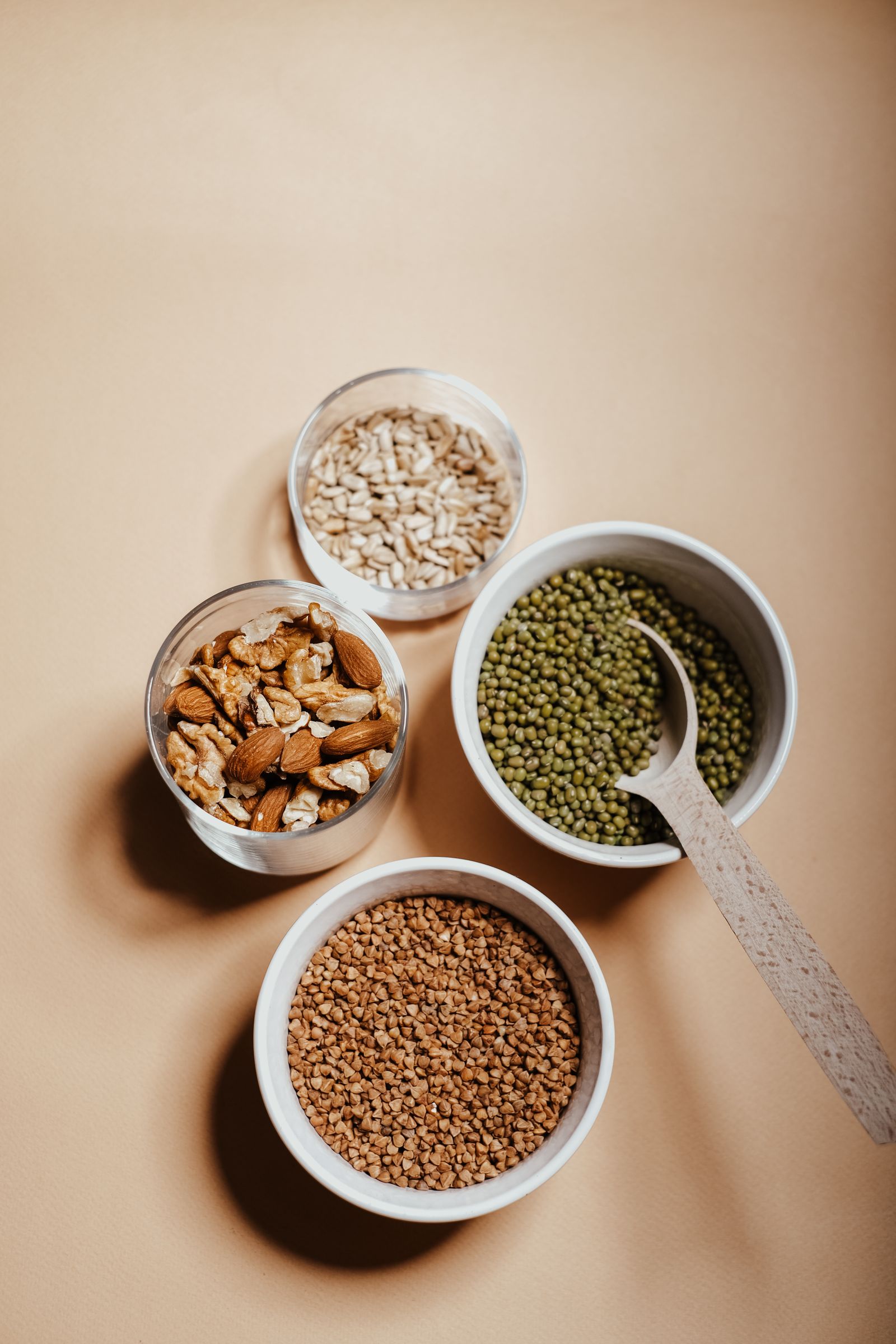
<div class="callout"><div class="n">Food first, powder second.</div><div class="d"><a href="https://health.clevelandclinic.org/do-i-need-to-worry-about-eating-complete-proteins" target="_blank" rel="noopener">Cleveland Clinic</a> notes shakes generally contain fewer nutrients than the whole foods they replace, and that a varied plant diet of legumes, lentils, nuts, seeds, and whole grains gets you the complete protein you need across a day. Lentils bring 17 grams per cooked cup, chickpeas 16, edamame 17. Powder is for the days that does not happen, not a substitute for it.</div></div>
<div class="ac-midcap">
<h4>Take the Plant Protein Plan with you</h4>
<p class="sub">Your free 2-page plan: the label checks, the pea and rice pairing, the whole-food sources, and every claim traced to its source. Checked against Cleveland Clinic and Harvard Health Publishing.</p>
<div class="mcform"><input type="email" placeholder="Your email address" aria-label="Email address"><button type="button">Send My Plan (Free)</button></div>
<div class="fine">One email. No spam. Unsubscribe anytime.</div>
</div>
<h3 class="sec">Why not just buy the cheapest tub?</h3>
<p>You can, and if it is a certified pea and rice blend at a lower price, that is a fair choice. The problem with the bargain shelf is what you cannot see on the label. Protein powders are dietary supplements, so they are not held to the same standard as food or medicine, and added sugar varies enormously between brands. Independent certification is the only practical way to know the tub contains what the panel claims and little else. A cheap powder with NSF certification is reasonable. A cheap powder with no certification is a guess, and the savings are not worth the unknown.</p>
<div class="objs">
<details><summary>Do I really need to worry about complete proteins?</summary><div class="a">Across a whole day of varied eating, mostly no. <a href="https://health.clevelandclinic.org/do-i-need-to-worry-about-eating-complete-proteins" target="_blank" rel="noopener">Cleveland Clinic</a>'s position is that a wide variety of plant foods gets you all the amino acids you need. It matters more in a single concentrated dose like a shake, where you are relying on that one scoop to do a specific job.</div></details>
<details><summary>How much can my body use at once?</summary><div class="a"><a href="https://health.clevelandclinic.org/do-i-need-to-worry-about-eating-complete-proteins" target="_blank" rel="noopener">Cleveland Clinic</a> notes roughly 25 to 40 grams of protein per sitting, which is why spacing protein across meals beats loading it all into one. A 20 gram scoop sits comfortably inside that window.</div></details>
<details><summary>Is plant protein easier on the stomach?</summary><div class="a">For a lot of people, yes, since there is no lactose involved. Pea protein in particular is <a href="https://health.clevelandclinic.org/7-tips-choosing-best-protein-powder" target="_blank" rel="noopener">highly digestible and considered hypoallergenic</a>. Gums and fillers are the more common cause of bloating in this category, which is a formulation problem rather than a plant problem.</div></details>
<details><summary>Will I lose muscle switching from whey?</summary><div class="a">Not if your total daily protein and your training stay the same. The absorption difference is real but modest, and both <a href="https://www.health.harvard.edu/healthy-aging-and-longevity/muscle-loss-and-protein-needs-in-older-adults" target="_blank" rel="noopener">Harvard Health</a> and <a href="https://health.clevelandclinic.org/7-tips-choosing-best-protein-powder" target="_blank" rel="noopener">Cleveland Clinic</a> are clear that resistance training is the larger lever. Keep lifting and hit your daily target, and the source matters less than the habit.</div></details>
</div>
<div class="plan"><div class="pt">📋 Your Coach's Recommendations</div>
<div class="step"><div class="n">1</div><div><div class="sh">Read the source line, not the front of the tub.</div><div class="sd">If it says pea only or rice only, you are getting a protein with a known shortfall. A pea and rice blend, or soy, is the complete option.</div></div></div>
<div class="step"><div class="n">2</div><div><div class="sh">Insist on third-party certification.</div><div class="sd">NSF Certified for Sport on every batch is the standard worth paying for in a category this loosely regulated. No certification, no purchase.</div></div></div>
<div class="step"><div class="n">3</div><div><div class="sh">Use it to close a gap, not to replace meals.</div><div class="sd">Aim for 20 to 30 grams of protein per meal from food first. One scoop covers the day food does not get there, usually breakfast or after training.</div></div></div>
<div class="midcta"><a class="buy" href="https://www.livemomentous.com/products/100-plant-protein-powder?dc=AgelessCoach&mct=pwqwZOO1&utm_source=agelesscoach&utm_medium=intent-article&utm_content=tmpl-B" data-affiliate="momentous" data-template="B" data-code="AgelessCoach" rel="noopener sponsored">Check Current Price at Momentous →</a><span class="pending">Partner link · discount applied automatically at checkout</span></div>
</div>
<div class="capline">Not buying yet? Get the free Plant Protein Plan, the label checks and the whole-food sources, sent to your inbox using the box below.</div>
<div class="ac-capture" data-state="trigger" data-article-slug="why-most-plant-proteins-are-missing-something" data-pdf-url="https://cdn.prod.website-files.com/69be1026a027224999b7936b/6a5c38c2f2da6edb3b904070_ageless-coach-plant-protein-plan.pdf" data-plan-title="The Plant Protein Plan" data-plan-desc="Your free 2-page plan: the label checks, the pea and rice pairing, the whole-food sources, and every claim traced to its source. Checked against Cleveland Clinic and Harvard Health Publishing.">
<div class="st-trigger cap-state"><h4>Take the Plant Protein Plan with you</h4>
<p class="sub">Your free 2-page plan: the label checks, the pea and rice pairing, the whole-food sources, and every claim traced to its source. Checked against Cleveland Clinic and Harvard Health Publishing.</p>
<button class="bigbtn" type="button" data-cap="form">📩 Send Me the Plan (Free)</button>
<div class="fine">One email. No spam. Unsubscribe anytime.</div></div>
<div class="st-form cap-state"><h4>Where should we send it?</h4>
<p class="sub">The Plant Protein Plan, straight to your inbox.</p>
<form class="capform"><input type="email" name="email" required placeholder="Your email address" aria-label="Email address"><button type="submit">Send My Plan</button></form>
<div class="fine">We send the plan plus one short evidence brief each week. Unsubscribe anytime.</div></div>
<div class="st-sent cap-state"><div class="sent-check">✓</div><h4>It's on the way</h4>
<p class="sub">Check your inbox in the next minute. Want it right now?</p>
<a class="dl" href="https://cdn.prod.website-files.com/69be1026a027224999b7936b/6a5c38c2f2da6edb3b904070_ageless-coach-plant-protein-plan.pdf" download>⬇ Download your plan (PDF)</a>
<div class="fine">Your first Ageless Brief arrives this week: one study, translated, no hype.</div></div>
</div>
<h3 class="sec">Sources</h3>
<p style="font-size:16px;line-height:1.8">Every claim on this page was verified against these Tier-1 sources, fetched live at build:<br>
<a href="https://health.clevelandclinic.org/do-i-need-to-worry-about-eating-complete-proteins" target="_blank" rel="noopener">Cleveland Clinic · What Are Complete Proteins?</a><br>
<a href="https://health.clevelandclinic.org/7-tips-choosing-best-protein-powder" target="_blank" rel="noopener">Cleveland Clinic · How to Choose the Best Protein Powder for You</a><br>
<a href="https://www.health.harvard.edu/healthy-aging-and-longevity/muscle-loss-and-protein-needs-in-older-adults" target="_blank" rel="noopener">Harvard Health Publishing · Muscle loss and protein needs in older adults</a><br>
Momentous product specification and Certificate of Analysis pages: <a href="https://www.livemomentous.com/products/100-plant-protein-powder" target="_blank" rel="noopener">100% Plant Protein</a> and <a href="https://www.livemomentous.com/pages/coa-page" target="_blank" rel="noopener">Certificates of Analysis</a></p>
<p class="meta">By the Ageless Coach Editorial Team · July 18, 2026 · Sources: Cleveland Clinic, Harvard Health Publishing, and Momentous manufacturer disclosures</p>
<p class="meta" style="margin-top:12px"><strong style="color:#6b7280">Affiliate disclosure:</strong> This article contains affiliate links. If you buy through one, Ageless Coach may earn a commission at no additional cost to you. Our pick was made independently and set before any partnership. <a href="/partners" style="color:#0C8C88;font-weight:700">How we choose partners</a>.</p>
</div>
<div class="disc">This content is educational and is not a substitute for professional medical advice, diagnosis, or treatment. These statements have not been evaluated by the Food and Drug Administration. This product is not intended to diagnose, treat, cure, or prevent any disease. Always consult your physician before making changes to your health routine.</div>
</div>