<style>
.w-richtext p,.w-richtext li,.w-richtext td{font-size:18px;line-height:1.65}
.w-richtext h2{font-size:26px;line-height:1.35}
.w-richtext h3{font-size:22px;line-height:1.35}
.w-richtext ul{list-style-type:disc;padding-left:24px;margin:12px 0}
.w-richtext ul li{margin-bottom:8px;line-height:1.65}
.w-richtext .ac-action-plan{background:linear-gradient(135deg,#fffcf4 0%,#fff8ed 100%);border-left:5px solid #9a6841;border-radius:12px;padding:28px 24px;margin:32px 0;box-shadow:0 2px 12px rgba(0,0,0,0.06)}
.article-header-section .article-container{max-width:1080px !important;margin:0 auto !important;padding:0 20px !important}
.article-header-section .article-hero-image{display:block;width:100%;max-width:660px;margin:0}
.article-header-section .article-title{display:block !important;font-family:Georgia,serif;font-size:32px;line-height:1.25;font-weight:700;color:#313743;margin:20px 0 12px 0;text-align:left;max-width:660px}
@media (max-width:767px){.article-header-section .article-title{font-size:26px}.article-header-section .article-hero-image{max-width:100%}}
.ac-article-cta{margin-top:40px;text-align:center}
.ac-article-cta .ac-cta-lead{font-family:Georgia,serif;font-size:17px;color:#555;margin:0 0 16px 0;line-height:1.5}
.ac-article-cta a.ac-nav-cta{display:inline-flex;align-items:center;gap:10px;padding:10px 14px 10px 20px;background:#313743;color:#fff;border:1.5px solid #14D4CD;border-radius:82px;font-family:Inter,sans-serif;font-size:14px;font-weight:600;letter-spacing:0.3px;text-decoration:none;transition:transform 0.15s ease,box-shadow 0.15s ease}
.ac-article-cta a.ac-nav-cta:hover{transform:translateY(-1px);box-shadow:0 6px 18px rgba(20,212,205,0.25)}
.ac-article-cta .ac-nav-cta-arrow{width:28px;height:28px;background:#14D4CD;border-radius:50%;display:inline-flex;align-items:center;justify-content:center;flex-shrink:0}
.ac-article-cta .ac-nav-cta-arrow svg{width:14px;height:14px}
</style>
<p class="publish-date" style="font-size:13px; color:#999; margin-bottom:16px;">Published: May 14, 2026 · Last updated: May 14, 2026</p>
<div class="ac-glance" style="background-color: #ffffff; padding: 20px; border: 2px solid #b0bec5; border-radius: 8px; margin: 20px 0;"><strong>This week's brief at a glance:</strong><ul style="margin: 12px 0; padding-left: 24px;"><li style="margin-bottom:6px;">Eating within 3 hours of bedtime reliably reduces deep sleep, even in people who fall asleep without difficulty (Harvard Health, 2024)</li><li style="margin-bottom:6px;">Late-night meals shift the circadian clock that controls metabolic and recovery hormones, and the effect is more pronounced after age 50 because insulin sensitivity declines at night (Cleveland Clinic, 2024)</li><li style="margin-bottom:6px;">Adults who finish eating by 7 or 8 p.m. show better next-day blood sugar control, less belly fat over months, and longer time in restorative sleep stages (Mayo Clinic, 2024)</li></ul></div>
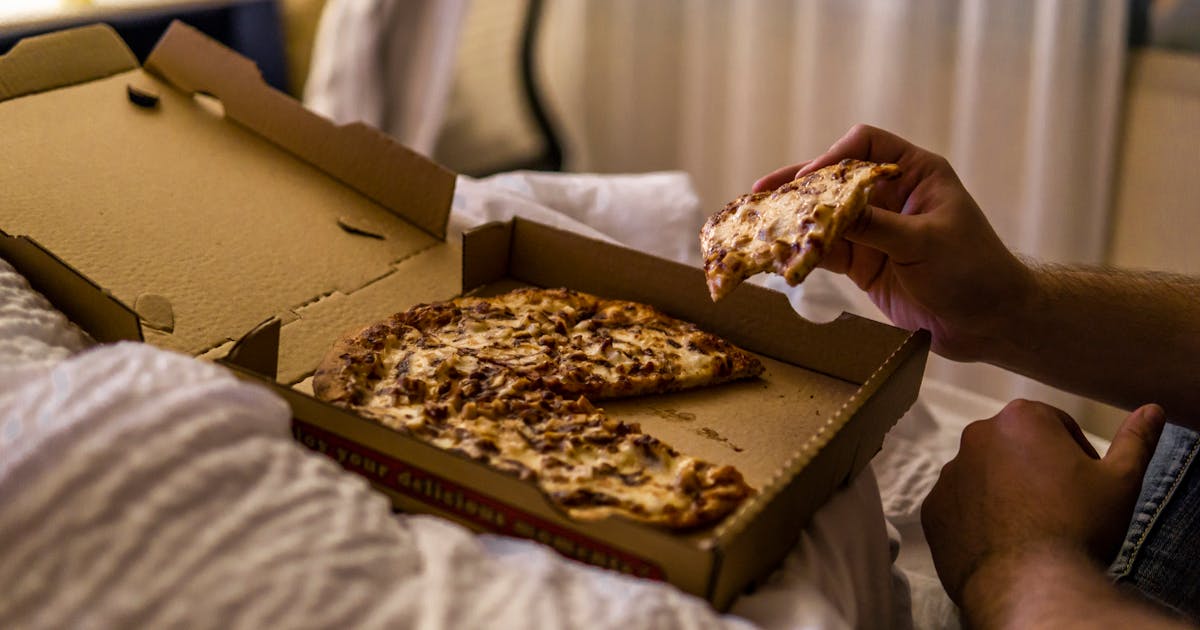
<p>You eat a late dinner. Maybe a snack while watching TV at 9 or 10 p.m. You fall asleep fine. So what is the problem? The problem is that "falling asleep fine" is not the same as "sleeping well." Your body has two clocks: a master clock in the brain that follows the rising and setting of the sun, and peripheral clocks in every organ that take their cues from when you eat.</p>
<p>Eat late, and the peripheral clocks fall out of sync with the master clock. The result is shallower sleep, blunted recovery hormones, higher next-morning blood sugar, and over time, accelerated weight gain and metabolic dysfunction. Adults over 50 feel this most because insulin sensitivity already drops at night with age.</p>
<h3>What Late Eating Actually Does to Sleep</h3>
<p><strong>It Forces Digestion Into Recovery Time:</strong> Sleep is when the body does its most expensive metabolic work: clearing brain waste, repairing tissue, consolidating memory. Digestion competes with that work. When you eat within 3 hours of bedtime, your body is digesting when it should be repairing (<a href="https://www.health.harvard.edu/blog/nighttime-overeating-can-throw-weight-and-health-out-of-sync-201309136658" target="_blank" rel="noopener">Harvard Health, 2024</a>).</p>
<p>That trade-off shows up in objective sleep data. Late eaters spend less time in deep slow-wave sleep, the stage where physical recovery happens. They wake more often during the second half of the night when blood sugar drops. They also report feeling less rested the next morning, even when total sleep time is unchanged.</p>
<h3>Why It Hits Harder After 50</h3>
<p><strong>Insulin Resistance Climbs at Night:</strong> Insulin sensitivity is highest in the morning and lowest in the evening, and this pattern strengthens with age. A meal eaten at 9 p.m. produces a higher and longer glucose spike than the same meal eaten at noon. Adults over 50 see roughly double the post-meal glucose response at night compared to morning (<a href="https://my.clevelandclinic.org/health/diseases/22206-insulin-resistance" target="_blank" rel="noopener">Cleveland Clinic, 2024</a>).</p>
<p>That nighttime spike does two things. It drives fat storage instead of energy use, which contributes to the gradual midsection weight gain many people see in their 50s. And it raises blood sugar during the early sleep window, which disrupts the deep-sleep architecture and the hormones that depend on it.</p>
<h3>The Hormones Late Eating Disrupts</h3>
<p><strong>Growth Hormone, Cortisol, and Melatonin:</strong> Growth hormone, which drives tissue repair, surges in the first 90 minutes of deep sleep. Late eating blunts that surge by 30 to 50 percent in some studies. Cortisol, the stress hormone, runs higher overnight in late eaters, raising blood pressure and disrupting glucose control. Melatonin secretion shifts later, which makes it harder to fall asleep on subsequent nights.</p>
<p>The downstream effect is that a habit of late-night eating compounds. The first night's poor sleep makes you crave more carbohydrate the next day, which feeds the cycle. Breaking the cycle generally takes one to two weeks of consistent earlier dinners before sleep architecture normalizes.</p>
<h3>The 3-Hour Rule (And the Exceptions)</h3>
<p><strong>Finish Eating 3 Hours Before Bed:</strong> The widely cited guideline is to finish your last meal 3 hours before sleep. Most sleep researchers consider this the minimum. Finishing 4 hours before is better. If your typical bedtime is 11 p.m., aim to be done eating by 8 p.m. (<a href="https://www.mayoclinic.org/healthy-lifestyle/adult-health/in-depth/sleep/art-20048379" target="_blank" rel="noopener">Mayo Clinic, 2024</a>).</p>
<p>There are exceptions. A small protein snack (Greek yogurt, cottage cheese, a hard-boiled egg) within 90 minutes of bedtime does not noticeably disrupt sleep for most adults, and it can help people who wake hungry overnight. The problem foods are large mixed meals, refined carbs, alcohol, and high-fat dishes that prolong digestion.</p>
<h3>What Actually Works to Break the Habit</h3>
<p><strong>Move Dinner Earlier, Not Smaller:</strong> Most people who try to fix late eating start by reducing dinner portion size, then end up snacking at 10 p.m. anyway because they did not eat enough. The better move is to keep the dinner you already eat but shift it 60 to 90 minutes earlier. After two weeks, the new schedule feels natural and the 9 p.m. craving fades.</p>
<p>If late dinners are unavoidable (shift work, family schedules), front-load your calories: a substantial breakfast and lunch with a smaller, lighter dinner that contains more protein and fewer refined carbs. The total food matters less than when most of it lands.</p>
<div class="ac-action-plan" style="background: linear-gradient(135deg, #fffcf4 0%, #fff8ed 100%); border-left: 5px solid #9A6841; border-radius: 12px; padding: 28px 24px; margin: 32px 0; box-shadow: 0 2px 12px rgba(0,0,0,0.06);"><div style="display: flex; align-items: center; gap: 10px; margin-bottom: 20px;"><svg width="24" height="24" viewBox="0 0 24 24" fill="none" stroke="#9A6841" stroke-width="2" stroke-linecap="round" stroke-linejoin="round"><path d="M9 5H7a2 2 0 00-2 2v12a2 2 0 002 2h10a2 2 0 002-2V7a2 2 0 00-2-2h-2"/><rect x="9" y="3" width="6" height="4" rx="1"/><path d="M9 14l2 2 4-4"/></svg><span style="font-family: Georgia, serif; font-size: 22px; font-weight: 700; color: #313743;">Your Coach's Recommendations</span></div><div style="display: flex; gap: 14px; margin-bottom: 16px; align-items: flex-start;"><div style="min-width: 36px; width: 36px; height: 36px; background: #9A6841; border-radius: 50%; display: flex; align-items: center; justify-content: center; color: #fff; font-weight: 700; font-size: 16px; flex-shrink: 0;">1</div><div><div style="font-weight: 700; color: #313743; font-size: 15px; margin-bottom: 2px;">Pick a Cutoff Time and Make It Visible.</div><div style="color: #6b7280; font-size: 13.5px; line-height: 1.5;">Use the 3-hour rule: subtract 3 from your typical bedtime and that is your eating-stops time. Put it on the fridge or set a phone reminder for the first week.</div></div></div><div style="display: flex; gap: 14px; margin-bottom: 16px; align-items: flex-start;"><div style="min-width: 36px; width: 36px; height: 36px; background: #9A6841; border-radius: 50%; display: flex; align-items: center; justify-content: center; color: #fff; font-weight: 700; font-size: 16px; flex-shrink: 0;">2</div><div><div style="font-weight: 700; color: #313743; font-size: 15px; margin-bottom: 2px;">Shift Dinner 60 to 90 Minutes Earlier, Not Smaller.</div><div style="color: #6b7280; font-size: 13.5px; line-height: 1.5;">Keep portion size the same. Cutting calories late just leads to 10 p.m. snacking. After two weeks, the earlier dinner feels natural and the late craving fades.</div></div></div><div style="display: flex; gap: 14px; margin-bottom: 20px; align-items: flex-start;"><div style="min-width: 36px; width: 36px; height: 36px; background: #9A6841; border-radius: 50%; display: flex; align-items: center; justify-content: center; color: #fff; font-weight: 700; font-size: 16px; flex-shrink: 0;">3</div><div><div style="font-weight: 700; color: #313743; font-size: 15px; margin-bottom: 2px;">If You Must Snack After 9 p.m., Make It Protein.</div><div style="color: #6b7280; font-size: 13.5px; line-height: 1.5;">A small portion of Greek yogurt, cottage cheese, or a hard-boiled egg satisfies hunger without spiking blood sugar or prolonging digestion.</div></div></div><div style="border-top: 1px solid #e5ddd4; margin: 16px 0;"></div><div style="display: flex; justify-content: center; align-items: center; gap: 10px; flex-wrap: wrap;"><button onclick="acPrintPlan()" style="background: none; border: 1px solid #d3cabe; border-radius: 8px; padding: 10px 16px; font-size: 13px; color: #6b7280; cursor: pointer; display: flex; align-items: center; gap: 6px;"><svg width="14" height="14" viewBox="0 0 24 24" fill="none" stroke="currentColor" stroke-width="2" stroke-linecap="round" stroke-linejoin="round"><polyline points="6 9 6 2 18 2 18 9"/><path d="M6 18H4a2 2 0 01-2-2v-5a2 2 0 012-2h16a2 2 0 012 2v5a2 2 0 01-2 2h-2"/><rect x="6" y="14" width="12" height="8"/></svg>Print</button></div></div>
<div style="margin-top: 32px; padding-top: 0;">
<div style="width: 60px; height: 2px; background: linear-gradient(90deg, #9A6841, #be7b4c); border-radius: 2px; margin-bottom: 20px;"></div>
<p style="font-family: Georgia, serif; font-size: 16px; font-style: italic; color: #777; margin: 0 0 6px 0; letter-spacing: 0.3px; padding-left: 38px;">To your health,</p>
<div style="display: flex; align-items: center; gap: 4px; margin-bottom: 4px;">
<img src="https://cdn.prod.website-files.com/69be130d412f9c2c202307ef/69c539b9526b266e2cba5521_ageless-coach-logo-black.png" alt="AC" style="width: 34px; height: 34px; object-fit: contain;">
<p style="font-family: Georgia, serif; font-size: 22px; font-weight: 700; color: #313743; margin: 0; letter-spacing: 0.5px;">Ageless Coach</p>
</div>
<p style="font-family: -apple-system, BlinkMacSystemFont, Segoe UI, sans-serif; font-size: 11px; font-weight: 600; color: #be7b4c; letter-spacing: 2px; text-transform: uppercase; margin: 0 0 0 28px;">Age Strong. Live Long.</p>
</div>
<div style="margin-top: 28px; padding-top: 20px; border-top: 1px solid #e5e7eb; text-align: center;">
<p style="font-family: -apple-system, BlinkMacSystemFont, Segoe UI, sans-serif; font-size: 13px; font-weight: 700; color: #6b7280; letter-spacing: 2px; text-transform: uppercase; margin: 0 0 16px 0;">Trusted Sources Behind This Article</p>
<div style="display: flex; justify-content: center; gap: 10px; flex-wrap: wrap;">
<a href="https://www.health.harvard.edu/blog/nighttime-overeating-can-throw-weight-and-health-out-of-sync-201309136658" target="_blank" rel="noopener" style="display: inline-block; background: #fff; border: 1.5px solid #9A6841; color: #9A6841; padding: 8px 20px; border-radius: 20px; font-size: 14px; font-weight: 600; letter-spacing: 0.3px; text-decoration: none; transition: background 0.2s ease, color 0.2s ease;">Harvard Health</a>
<a href="https://www.mayoclinic.org/healthy-lifestyle/adult-health/in-depth/sleep/art-20048379" target="_blank" rel="noopener" style="display: inline-block; background: #fff; border: 1.5px solid #9A6841; color: #9A6841; padding: 8px 20px; border-radius: 20px; font-size: 14px; font-weight: 600; letter-spacing: 0.3px; text-decoration: none; transition: background 0.2s ease, color 0.2s ease;">Mayo Clinic</a>
<a href="https://health.clevelandclinic.org/is-eating-before-bed-bad-for-you" target="_blank" rel="noopener" style="display: inline-block; background: #fff; border: 1.5px solid #9A6841; color: #9A6841; padding: 8px 20px; border-radius: 20px; font-size: 14px; font-weight: 600; letter-spacing: 0.3px; text-decoration: none; transition: background 0.2s ease, color 0.2s ease;">Cleveland Clinic</a>
</div>
</div>
<p style="font-size: 12px; color: #999; margin-top: 40px; line-height: 1.5;"><em>This content is for educational purposes only and is not a substitute for professional medical advice, diagnosis, or treatment. Reading this article does not create a provider-patient relationship. Always consult your physician or qualified healthcare provider before making changes to your diet, exercise, or health routine. Ageless Coach is not liable for any actions taken based on this information.</em></p>
<div class="ac-faq" style="margin-top:40px; border-top:1px solid #e5e7eb; padding-top:32px;">
<h2 style="font-family:Georgia,serif; font-size:20px; font-weight:700; color:#313743; margin:0 0 20px 0;">Frequently Asked Questions</h2>
<details style="border:1px solid #e5e7eb; border-radius:8px; margin-bottom:10px; overflow:hidden;"><summary style="padding:14px 18px; font-weight:600; font-size:15px; color:#313743; cursor:pointer; list-style:none; display:flex; justify-content:space-between; align-items:center;">How late is too late for the last meal of the day?<svg width="16" height="16" viewBox="0 0 24 24" fill="none" stroke="#9A6841" stroke-width="2" stroke-linecap="round" stroke-linejoin="round" aria-hidden="true"><polyline points="6 9 12 15 18 9"/></svg></summary><div style="padding:0 18px 16px; font-size:18px; color:#555; line-height:1.65;">The widely cited rule is to finish eating at least 3 hours before bedtime. For an 11 p.m. bedtime, that means done by 8 p.m. Closer than 3 hours before bed measurably reduces deep sleep, especially after age 50.</div></details>
<details style="border:1px solid #e5e7eb; border-radius:8px; margin-bottom:10px; overflow:hidden;"><summary style="padding:14px 18px; font-weight:600; font-size:15px; color:#313743; cursor:pointer; list-style:none; display:flex; justify-content:space-between; align-items:center;">Is it okay to have a small snack if I am hungry at bedtime?<svg width="16" height="16" viewBox="0 0 24 24" fill="none" stroke="#9A6841" stroke-width="2" stroke-linecap="round" stroke-linejoin="round" aria-hidden="true"><polyline points="6 9 12 15 18 9"/></svg></summary><div style="padding:0 18px 16px; font-size:18px; color:#555; line-height:1.65;">Yes, especially if you are truly hungry rather than out of habit. A small protein-based snack like Greek yogurt, cottage cheese, or a hard-boiled egg satisfies hunger without spiking blood sugar or prolonging digestion noticeably.</div></details>
<details style="border:1px solid #e5e7eb; border-radius:8px; margin-bottom:10px; overflow:hidden;"><summary style="padding:14px 18px; font-weight:600; font-size:15px; color:#313743; cursor:pointer; list-style:none; display:flex; justify-content:space-between; align-items:center;">Does alcohol with dinner affect this?<svg width="16" height="16" viewBox="0 0 24 24" fill="none" stroke="#9A6841" stroke-width="2" stroke-linecap="round" stroke-linejoin="round" aria-hidden="true"><polyline points="6 9 12 15 18 9"/></svg></summary><div style="padding:0 18px 16px; font-size:18px; color:#555; line-height:1.65;">Significantly. Alcohol helps you fall asleep faster but dramatically reduces deep sleep and REM sleep in the second half of the night. Even one or two drinks with dinner reduces sleep quality more than a heavy late meal alone.</div></details>
<details style="border:1px solid #e5e7eb; border-radius:8px; margin-bottom:10px; overflow:hidden;"><summary style="padding:14px 18px; font-weight:600; font-size:15px; color:#313743; cursor:pointer; list-style:none; display:flex; justify-content:space-between; align-items:center;">Why does eating late hit harder after 50?<svg width="16" height="16" viewBox="0 0 24 24" fill="none" stroke="#9A6841" stroke-width="2" stroke-linecap="round" stroke-linejoin="round" aria-hidden="true"><polyline points="6 9 12 15 18 9"/></svg></summary><div style="padding:0 18px 16px; font-size:18px; color:#555; line-height:1.65;">Insulin sensitivity declines at night with age, so the same meal produces a longer and higher blood sugar spike in your 50s than it did in your 30s. That nighttime glucose disruption is what damages sleep architecture and drives belly fat storage.</div></details>
<details style="border:1px solid #e5e7eb; border-radius:8px; margin-bottom:10px; overflow:hidden;"><summary style="padding:14px 18px; font-weight:600; font-size:15px; color:#313743; cursor:pointer; list-style:none; display:flex; justify-content:space-between; align-items:center;">Will earlier eating help me lose weight?<svg width="16" height="16" viewBox="0 0 24 24" fill="none" stroke="#9A6841" stroke-width="2" stroke-linecap="round" stroke-linejoin="round" aria-hidden="true"><polyline points="6 9 12 15 18 9"/></svg></summary><div style="padding:0 18px 16px; font-size:18px; color:#555; line-height:1.65;">Studies suggest yes, modestly. Adults who eat their largest meal earlier and finish eating by 7 or 8 p.m. tend to lose more weight at the same calorie intake than late eaters, and they keep it off longer. The effect is small but real.</div></details>
<details style="border:1px solid #e5e7eb; border-radius:8px; margin-bottom:10px; overflow:hidden;"><summary style="padding:14px 18px; font-weight:600; font-size:15px; color:#313743; cursor:pointer; list-style:none; display:flex; justify-content:space-between; align-items:center;">How long until I notice a difference?<svg width="16" height="16" viewBox="0 0 24 24" fill="none" stroke="#9A6841" stroke-width="2" stroke-linecap="round" stroke-linejoin="round" aria-hidden="true"><polyline points="6 9 12 15 18 9"/></svg></summary><div style="padding:0 18px 16px; font-size:18px; color:#555; line-height:1.65;">Most people report better morning energy within a week of shifting dinner earlier. Objective sleep tracking (Oura, Apple Watch, Whoop) shows measurable increases in deep sleep within 10 to 14 days. Weight and waist changes take 4 to 8 weeks to become visible.</div></details>
</div>
<div class="ac-article-cta">
<p class="ac-cta-lead">Want one verified-science article like this every week?</p>
<a href="/newsletter" class="ac-nav-cta">
Get Better Health, Weekly
<span class="ac-nav-cta-arrow">
<svg viewBox="0 0 18 18" fill="none" xmlns="http://www.w3.org/2000/svg" aria-hidden="true"><path d="M4.24 13.59L12.73 5.11" stroke="#0D1B2A" stroke-width="1.8"/><path d="M4.95 4.4H13.44V12.89" stroke="#0D1B2A" stroke-width="1.8"/></svg>
</span>
</a>
</div>