You can eat protein every day and still shortchange the meal that needs it most. Muscle is maintained by spreading enough protein across the day, with a good source at every meal, and breakfast is usually the lightest. A toast-or-cereal morning fills you up but does little for the muscle you are trying to keep, and it is the easiest meal to fix.
11.2 grams · per kilogram of body weight a day, what research suggests older adults need (Harvard Health)
246 percent · of adults 51 and older fall short of daily protein targets (Harvard Health)
3Every meal · experts recommend a good protein source at each, not one big dinner (Harvard Health)
44 to 6 pounds · of muscle lost per decade without strength training (Harvard Health)
5Breakfast · usually the lightest protein meal, and the simplest one to upgrade
You can eat protein every day and still shortchange the one meal that needs it most. Muscle does not bank a giant dinner and coast on it for you; it responds to what you actually give it across the whole day, meal by meal. And for most people, the morning is exactly where the protein quietly goes missing, day after day, without anyone really noticing.
That gap matters more as you get older. Harvard Health notes that many older adults fall short on protein even as their bodies need more of it to hold onto muscle. A breakfast built on toast, cereal or fruit alone barely moves the needle, so the meal ends up feeding your appetite but not the muscle you are trying to protect.
1
The mechanism
Why a Trickle of Protein Does Not Count
Here is the idea in plain terms. Your muscles rebuild in response to the protein you actually eat, and a small token amount does far less good than a proper, solid serving does. That is why nutrition experts, Harvard Health among them, stress spreading protein evenly across the day rather than saving nearly all of it for one large evening meal that your body can only use so much of at once.
Breakfast is usually the odd one out. Lunch and dinner tend to carry real protein, while the morning leans hard on carbohydrates, so the first meal of the day often contributes the least to the muscle you are working to keep. That also makes it the easiest meal to upgrade, and the one most worth the effort.
2
The target
How Much You Actually Need
The daily target is higher than many people assume. Harvard Health reports that to counter age-related muscle loss, healthy older adults need about 1.2 grams of protein per kilogram of body weight each day, noticeably more than the baseline allowance most general guidelines cite.
Plenty of people miss it. In a study of nearly 12,000 adults 51 and older, Harvard Health reports that about 46 percent did not meet daily protein recommendations, which makes building or even holding muscle harder than it should be. Every meal is a fresh chance to close that gap.
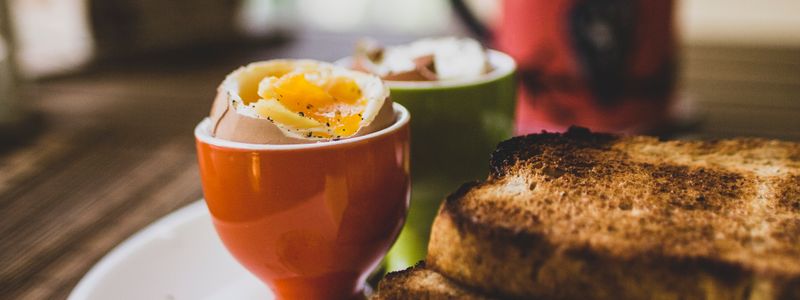
Two eggs turn a carb-only breakfast into one that actually carries protein.
3
The gap
Why Breakfast Is the Weak Meal
This is where breakfast earns its reputation. Because the morning meal is so often the lightest on protein, it is also the biggest missed opportunity in the whole day. Harvard Health specifically recommends a good protein source at each meal, and breakfast is the one most people quietly skip on that front.
The fix is not exotic and does not mean choking down a chicken breast at dawn. Adding a real protein at breakfast, rather than leaning on bread, cereal or fruit alone, pulls that meal up to carry its fair share of the daily total. It also tends to keep you fuller and steadier through the morning, which is a genuinely useful side effect for anyone watching their appetite or snacking.
4
The stakes
The Muscle You Are Trying to Keep
The reason to bother is muscle, and the clock is real. Harvard Health notes that adults who skip strength training can lose 4 to 6 pounds of muscle per decade, and that age-related muscle loss, called sarcopenia, affects nearly half of adults over the age of 80.
That loss is not just about looking a little softer in the mirror. It raises the real risk of frailty, falls and eventually losing your independence, which is exactly what protein and daily movement together help push back against. Protecting the muscle you have now is really about protecting your mobility and freedom years down the road.
About 46 percent of adults 51 and older do not hit their daily protein target, and breakfast is usually where the shortfall starts.
That makes the morning meal the single easiest place to win back the protein you are missing.
Harvard Health
None of this requires a rigid meal plan or a kitchen scale on the counter. It is really one habit, moved to the front of the day: make sure the first meal carries real protein, then keep a good source on the plate at lunch and dinner too. Small, repeatable, and quietly powerful over the years.
5
What to do
How to Fix Your Breakfast
Fixing breakfast is refreshingly concrete. Reach for eggs, Greek yogurt, cottage cheese, or a scoop of protein stirred into oats, and treat that protein as the anchor of the plate rather than a garnish on the side. A serving in the range of three eggs or a cup of Greek yogurt is a sensible morning target.
Then do not stop at the food on the plate. Harvard Health is clear that protein works best when it is paired with regular resistance exercise, and that the two together build more muscle and strength in older adults than either one ever does on its own. Eat the protein, then give your muscles a real reason to put it to work.
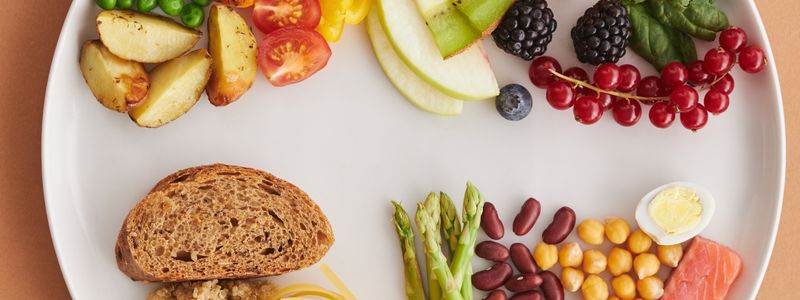
Eggs, fish, beans, chickpeas and nuts are all easy ways to put a good protein source on every plate.
Take the breakfast protein plan with you
Your free 2-page guide: how much protein you need, why breakfast is the weak meal, and the simple swaps that fix it.
One email. No spam. Unsubscribe anytime.
Free Lifestyle Assessment
How Healthy Is Your Current Lifestyle?
Answer honestly for five minutes and walk away with your personal scorecard: all six areas of your health rated, the one that needs your attention first, and a 30-day plan built from your answers. It shows up the second you finish.
Free. About 5 minutes. Your results appear instantly.
📋 Your Coach's Recommendations
1
Build Breakfast Around a Protein, Not a Carb
Start the plate with eggs, Greek yogurt, or cottage cheese instead of toast or cereal alone. A real serving of protein at breakfast helps the meal count toward maintaining muscle.
2
Aim for a Good Source at Every Meal
Spread protein evenly across the day rather than loading it all at dinner. Harvard Health recommends a good protein source at each meal to help you reach your daily total.
3
Pair Protein With Strength Training
Food alone is only half the equation. Harvard Health notes that protein combined with regular resistance exercise builds the most muscle and strength in older adults.
?
How it works. Just a quiet check-in, not an alert and not a recurring nag. The event lands as a 30-minute slot at 9am two weeks from today, with your plan in the notes and a link back to this article. Works with Apple Calendar, Google Calendar, and Outlook. Yours to move, snooze, or delete whenever.
Keep this plan
Get the 2-page guide: how much protein you need, why breakfast is the weak meal, and the swaps that fix it.
One email. No spam. Unsubscribe anytime.
Where should we send it?
Your breakfast protein plan, straight to your inbox.
We send the plan plus one short evidence brief each week. Unsubscribe anytime.
✓
It is on the way
Check your inbox in the next minute. Your first Ageless Brief arrives this week: one study, translated, no hype.
Harvard Health reports that to counter age-related muscle loss, healthy older adults need about 1.2 grams of protein per kilogram of body weight per day, more than the baseline allowance most general guidelines cite.
Why does breakfast protein matter so much?
Because breakfast is usually the lightest protein meal. Harvard Health recommends a good protein source at each meal, so a carb-only morning leaves your daily total, and your muscle, short.
What are good high-protein breakfasts?
Eggs, Greek yogurt, cottage cheese, or a scoop of protein stirred into oats. Aim for a real serving, roughly the amount of protein in about three eggs or a cup of Greek yogurt.
Can I just eat all my protein at dinner?
It is better to spread it out. Harvard Health recommends a good protein source at each meal rather than one large dose, which helps you reach your daily total and support muscle.
Can you eat too much protein?
Yes. Harvard Health notes that very high intakes, above roughly 0.9 grams per pound a day, can strain the kidneys of people with kidney disease. If you have a kidney condition, check with your doctor first.
Is this medical advice?
No. This is educational and not a substitute for your own clinician, who can factor in your kidneys, medications and health history before you change your diet.
Curious where you stand? Take the free 5-minute lifestyle assessment and your personal scorecard appears the second you finish.
By the Ageless Coach Editorial Team · Published August 3, 2026 · Last updated August 3, 2026
<style>
:root{--dark-base:#0D1B2A;--dark-mid:#1B3A4B;--teal:#0EA5A0;--teal-dark:#0C8C88;--teal-bright:#14D4CD;--fog:#D8E8E8;--deep-fog:#C8DCDC;--fog-border:#A8C4C4;--ink:#313743;--ink-soft:#49505f;--muted:#6b7280;--warm:#9A6841;--warm-light:#be7b4c;--serif:"Source Serif 4",Georgia,serif;--sans:Inter,-apple-system,BlinkMacSystemFont,"Segoe UI",sans-serif}
.w-richtext p,.w-richtext li,.w-richtext td{font-size:20.5px;line-height:1.7;color:var(--ink-soft)}
.w-richtext ul{list-style-type:disc;padding-left:24px;margin:12px 0}
.w-richtext ul li{margin-bottom:8px}
.ac-answer{background:#fff;border:1px solid #D4E4E4;border-top:5px solid var(--teal);border-radius:16px;padding:22px 24px 18px;margin:16px 0 28px;box-shadow:0 6px 22px rgba(13,27,42,.07)}
.ac-answer .aa-eyebrow{font:800 12px/1 var(--sans);letter-spacing:2.5px;text-transform:uppercase;color:var(--teal-dark);margin-bottom:8px}
.ac-answer .aa-head{font-family:var(--serif);font-size:24px;line-height:1.2;font-weight:800;color:var(--dark-base);margin:0 0 16px}
.ac-answer .aa-list{list-style:none;margin:0;padding:0}
.ac-answer .aa-list li{display:flex;gap:12px;align-items:baseline;padding:11px 0;border-bottom:1px solid #EDF3F3;font:700 16.5px/1.4 var(--sans);color:var(--ink)}
.ac-answer .aa-list li:last-child{border-bottom:none}
.ac-answer .aa-n{flex-shrink:0;width:24px;height:24px;border-radius:50%;background:var(--teal-dark);color:#fff;font:800 12px/24px var(--sans);text-align:center}
.ac-answer .aa-food{color:var(--teal-dark);font-weight:800}
.ac-answer .aa-cue{margin-top:18px;text-align:center}
.ac-answer .aa-cta{display:inline-flex;align-items:center;gap:10px;background:var(--teal-dark);color:#fff;font:800 14px/1 var(--sans);letter-spacing:.2px;padding:14px 26px;border-radius:50px;text-decoration:none;box-shadow:0 6px 16px rgba(12,140,136,.30)}
.ac-answer .aa-cta:hover{background:#0A7A76}
.ac-answer .aa-arw{display:inline-block;animation:aa-nudge 1.4s ease-in-out infinite}
@keyframes aa-nudge{0%,100%{transform:translateY(0)}50%{transform:translateY(4px)}}
@media(max-width:560px){.ac-answer{padding:20px 18px 16px}.ac-answer .aa-head{font-size:21px}.ac-answer .aa-list li{font-size:15px}}
.ac-band{margin:56px 0 24px;padding:26px 24px 12px;background:linear-gradient(180deg,#F0F7F7,#fff);border-radius:16px}
.ac-band.hype{background:linear-gradient(180deg,#FAF3EB,#fff)}
.ac-band .inner{display:flex;gap:20px;align-items:center}
.ac-band .big{font:900 72px/1 var(--sans);color:var(--deep-fog);flex-shrink:0}
.ac-band.hype .big{color:#EAD9C6}
.ac-band .q{font:700 13px/1.4 var(--sans);letter-spacing:2px;text-transform:uppercase;color:var(--teal-dark)}
.ac-band.hype .q{color:var(--warm)}
.ac-band h3{font-family:var(--serif);font-size:30px;line-height:1.2;font-weight:800;color:var(--ink);margin:0}
.ac-callout{border-left:4px solid var(--teal);background:#F4FAFA;border-radius:0 12px 12px 0;padding:18px 22px;margin:28px 0}
.ac-callout .n{font:800 20px/1.35 var(--sans);color:var(--dark-mid);margin-bottom:6px}
.ac-callout .d{font:500 15px/1.55 var(--sans);color:var(--ink-soft)}
.ac-callout .c{font:600 11.5px/1 var(--sans);letter-spacing:1.5px;text-transform:uppercase;color:var(--muted);margin-top:10px}
.ac-plan{background:linear-gradient(135deg,#F4FAFA 0%,#fff 100%);border-left:5px solid var(--teal-dark);border-radius:14px;padding:30px 26px;margin:40px 0 0;box-shadow:0 2px 12px rgba(0,0,0,.06);scroll-margin-top:100px}
.ac-plan .ptitle{font-family:var(--serif);font-size:24px;font-weight:800;color:var(--ink);margin-bottom:22px}
.ac-plan .step{display:flex;gap:16px;margin-bottom:18px;align-items:flex-start}
.ac-plan .step .n{min-width:38px;width:38px;height:38px;background:var(--teal-dark);border-radius:50%;color:#fff;font:800 17px/38px var(--sans);text-align:center;flex-shrink:0}
.ac-plan .sh{font:800 16.5px/1.4 var(--sans);color:var(--ink);margin-bottom:3px}
.ac-plan .sd{font:400 15px/1.6 var(--sans);color:var(--muted)}
.ac-plan .actions{border-top:1px solid #D8E8E8;margin-top:16px;padding-top:20px}
.ac-primary-row{display:flex;align-items:center;gap:10px;padding:0 4px}
.ac-btn-primary-wide{flex:1;background:var(--teal);color:#fff;border:1.5px solid var(--teal);border-radius:14px;padding:12px 22px;box-shadow:0 4px 14px rgba(14,165,160,.22);font-family:var(--sans);cursor:pointer;display:grid;grid-template-columns:auto 1fr;gap:14px;align-items:center;transition:all .18s ease}
.ac-btn-primary-wide:hover{background:var(--teal-dark);border-color:var(--teal-dark)}
.ac-btn-primary-wide .icon svg{width:22px;height:22px;color:#fff;display:block}
.ac-btn-primary-wide .label{text-align:left;line-height:1.25}
.ac-btn-primary-wide .label .top{display:block;font-weight:700;font-size:15.5px;color:#fff}
.ac-btn-primary-wide .label .top em{font-style:italic;font-weight:700}
.ac-cal-help{position:relative;flex-shrink:0}
.ac-cal-help summary{list-style:none;width:24px;height:24px;border-radius:50%;background:#E4F1F1;border:1px solid var(--fog-border);color:var(--dark-mid);font:700 13px/22px var(--sans);text-align:center;cursor:pointer;display:block}
.ac-cal-help summary::-webkit-details-marker{display:none}
.ac-cal-help .tip{position:absolute;right:0;top:32px;z-index:50;width:290px;background:var(--dark-base);color:var(--fog);border-radius:12px;padding:14px 16px;font:500 12.5px/1.55 var(--sans);box-shadow:0 10px 30px rgba(13,27,42,.35)}
.ac-cal-help .tip strong{color:#fff}
.ac-btn-share-wide{display:flex;width:100%;align-items:center;justify-content:center;gap:10px;background:#fff;color:var(--teal-dark);border:1.5px solid var(--teal-dark);border-radius:14px;padding:12px 22px;margin-top:10px;font:800 15px/1 var(--sans);cursor:pointer}
.ac-btn-share-wide svg{width:18px;height:18px}
.ac-midcap{background:linear-gradient(180deg,#F0F7F7,#fff);border:1.5px solid var(--fog-border);border-radius:16px;padding:24px 22px;margin:34px 0;text-align:center}
.ac-midcap h4{font-family:var(--serif);font-size:22px;font-weight:800;color:var(--ink);margin:0 0 6px}
.ac-midcap .sub{font:500 14px/1.55 var(--sans);color:var(--ink-soft);margin:0 auto 14px;max-width:400px}
.ac-midcap .mcform{display:flex;gap:8px;max-width:400px;margin:0 auto}
.ac-midcap .mcform input{flex:1;border:1.5px solid var(--fog-border);border-radius:50px;padding:12px 18px;font:500 14px/1 var(--sans);min-width:0}
.ac-midcap .mcform button{background:var(--teal-dark);color:#fff;border:none;border-radius:50px;padding:12px 20px;font:800 13.5px/1 var(--sans);cursor:pointer;white-space:nowrap}
.ac-midcap .fine{font:500 11.5px/1.5 var(--sans);color:var(--muted);margin-top:10px}
@media (max-width:520px){.ac-midcap .mcform{flex-direction:column}}
.ac-assess-promo{background:linear-gradient(135deg,#D8E8E8,#C8DCDC);border:1px solid var(--fog-border);border-radius:16px;padding:34px 30px;margin:44px 0;text-align:center}
.ac-assess-promo .eyebrow{color:var(--teal-dark);font:800 12px/1 var(--sans);letter-spacing:2.5px;text-transform:uppercase;margin:0 0 10px}
.ac-assess-promo h4{font-family:var(--serif);color:var(--dark-base);font-size:26px;font-weight:800;margin:0 0 12px}
.w-embed .ac-assess-promo p.ap-body,.ac-assess-promo p.ap-body{font-family:Georgia,serif;color:#3A5555;font-size:15.5px;font-weight:500;line-height:1.65;max-width:540px;margin:0 auto 22px}
.ac-assess-promo .ap-cta{display:inline-block;background:var(--teal-bright);color:var(--dark-base);font:800 15px/1 var(--sans);padding:15px 30px;border-radius:50px;text-decoration:none}
.ac-assess-promo .ap-fine{color:#4E6B6B;font:500 13px/1.5 var(--sans);margin:14px 0 0}
.ac-assess-line{border-top:1px solid #E2ECEC;margin-top:30px;padding:22px 10px 0;text-align:center;font:500 15.5px/1.6 var(--sans);color:#3A5555}
.w-embed .ac-assess-line a,.ac-assess-line a{color:var(--teal-dark);font-weight:700;text-decoration:underline;text-underline-offset:3px}
.ac-articlemeta{font:500 12.5px/1.6 var(--sans);color:#98a0a6;text-align:center;margin:24px 0 0}
.ac-capture{background:linear-gradient(180deg,#F0F7F7,#fff);border:1.5px solid var(--fog-border);border-radius:16px;padding:30px 28px;margin:26px 0 44px;text-align:center}
.ac-capture .cap-state{display:none}
.ac-capture[data-state="trigger"] .st-trigger{display:block}
.ac-capture[data-state="form"] .st-form{display:block}
.ac-capture[data-state="sent"] .st-sent{display:block}
.ac-capture h4{font-family:var(--serif);font-size:24px;font-weight:800;color:var(--ink);margin:0 0 8px}
.ac-capture .sub{font:500 15px/1.55 var(--sans);color:var(--ink-soft);margin:0 auto 18px;max-width:430px}
.ac-capture .bigbtn{display:inline-flex;align-items:center;gap:10px;background:var(--teal-dark);color:#fff;border:none;border-radius:50px;padding:16px 30px;font:800 16px/1 var(--sans);cursor:pointer;box-shadow:0 6px 18px rgba(12,140,136,.28)}
.ac-capture .capform{display:flex;gap:10px;max-width:430px;margin:0 auto}
.ac-capture .capform input{flex:1;border:1.5px solid var(--fog-border);border-radius:50px;padding:14px 20px;font:500 15px/1 var(--sans)}
.ac-capture .capform button{background:var(--teal-dark);color:#fff;border:none;border-radius:50px;padding:14px 24px;font:800 14px/1 var(--sans);cursor:pointer}
.ac-capture .sent-check{width:52px;height:52px;border-radius:50%;background:var(--teal);color:#fff;font:800 26px/52px var(--sans);margin:0 auto 12px}
.ac-capture .dl{display:inline-block;margin-top:6px;color:var(--teal-dark);font:700 15px/1 var(--sans);text-decoration:underline;cursor:pointer}
.ac-capture .fine{font:500 12px/1.5 var(--sans);color:var(--muted);margin-top:12px}
.ac-sig{margin-top:36px}
.ac-sig .rule{width:60px;height:2px;background:linear-gradient(90deg,var(--teal-dark),var(--teal-bright));margin-bottom:18px;border-radius:2px}
.ac-sig .toyour{font-family:var(--serif);font-size:16px;font-style:italic;color:#777;margin:0 0 10px;padding-left:2px}
.ac-faq{margin-top:40px;border-top:1px solid #e5e7eb;padding-top:30px;margin-bottom:40px}
.ac-faq h2{font-family:var(--serif);font-size:23px;font-weight:800;color:var(--ink);margin:0 0 18px}
.ac-faq details{border:1px solid #e5e7eb;border-radius:10px;margin-bottom:10px}
.ac-faq summary{padding:15px 18px;font:700 16px/1.4 var(--sans);color:var(--ink);cursor:pointer;display:flex;justify-content:space-between;align-items:center;list-style:none}
.ac-faq summary:after{content:"\25BE";color:var(--warm)}
.ac-faq .a{padding:0 18px 16px;font-size:17px;line-height:1.65;color:#555}
.article-header-section .article-container{max-width:1080px !important;margin:0 auto !important;padding:0 20px !important}
.article-header-section .article-hero-image{display:block;width:100%;max-width:660px;margin:0}
.article-header-section .article-title{display:block !important;font-family:var(--serif);font-size:32px;line-height:1.25;font-weight:700;color:#313743;margin:20px 0 12px 0;text-align:left;max-width:660px}
@media (max-width:767px){.article-header-section .article-title{font-size:26px}.article-header-section .article-hero-image{max-width:100%}}
@media (max-width:640px){.ac-band .big{font-size:52px}}
@media (max-width:520px){.ac-capture .capform{flex-direction:column}}
.ac-figure{margin:30px 0}.ac-figure img{display:block;width:100%;border-radius:14px;height:auto;aspect-ratio:800/300}.ac-figure figcaption{font:500 13px/1.5 var(--sans);color:var(--muted);margin-top:9px}</style>
<div class="ac-answer">
<div class="aa-eyebrow">What the evidence actually says</div>
<h2 class="aa-head">You can eat protein every day and still shortchange the meal that needs it most. Muscle is maintained by spreading enough protein across the day, with a good source at every meal, and breakfast is usually the lightest. A toast-or-cereal morning fills you up but does little for the muscle you are trying to keep, and it is the easiest meal to fix.</h2>
<ol class="aa-list">
<li><span class="aa-n">1</span><span><span class="aa-food">1.2 grams</span> · per kilogram of body weight a day, what research suggests older adults need (Harvard Health)</span></li>
<li><span class="aa-n">2</span><span><span class="aa-food">46 percent</span> · of adults 51 and older fall short of daily protein targets (Harvard Health)</span></li>
<li><span class="aa-n">3</span><span><span class="aa-food">Every meal</span> · experts recommend a good protein source at each, not one big dinner (Harvard Health)</span></li>
<li><span class="aa-n">4</span><span><span class="aa-food">4 to 6 pounds</span> · of muscle lost per decade without strength training (Harvard Health)</span></li>
<li><span class="aa-n">5</span><span><span class="aa-food">Breakfast</span> · usually the lightest protein meal, and the simplest one to upgrade</span></li>
</ol>
<div class="aa-cue"><a class="aa-cta" href="#coach-recommendations">Get Your Coach's 3-Step Plan <span class="aa-arw">↓</span></a></div>
</div>
<p>You can eat protein every day and still shortchange the one meal that needs it most. Muscle does not bank a giant dinner and coast on it for you; it responds to what you actually give it across the whole day, meal by meal. And for most people, the morning is exactly where the protein quietly goes missing, day after day, without anyone really noticing.</p>
<p>That gap matters more as you get older. Harvard Health notes that many older adults fall short on protein even as their bodies need more of it to hold onto muscle. A breakfast built on toast, cereal or fruit alone barely moves the needle, so the meal ends up feeding your appetite but not the muscle you are trying to protect.</p>
<div class="ac-band"><div class="inner"><div class="big">1</div><div><div class="q">The mechanism</div><h3>Why a Trickle of Protein Does Not Count</h3></div></div></div>
<p>Here is the idea in plain terms. Your muscles rebuild in response to the protein you actually eat, and a small token amount does far less good than a proper, solid serving does. That is why nutrition experts, Harvard Health among them, stress spreading protein evenly across the day rather than saving nearly all of it for one large evening meal that your body can only use so much of at once.</p>
<p>Breakfast is usually the odd one out. Lunch and dinner tend to carry real protein, while the morning leans hard on carbohydrates, so the first meal of the day often contributes the least to the muscle you are working to keep. That also makes it the easiest meal to upgrade, and the one most worth the effort.</p>
<div class="ac-band"><div class="inner"><div class="big">2</div><div><div class="q">The target</div><h3>How Much You Actually Need</h3></div></div></div>
<p>The daily target is higher than many people assume. Harvard Health reports that to counter age-related muscle loss, healthy older adults need about <a href="https://www.health.harvard.edu/healthy-aging-and-longevity/the-power-of-protein" target="_blank" rel="noopener">1.2 grams of protein per kilogram of body weight</a> each day, noticeably more than the baseline allowance most general guidelines cite.</p>
<p>Plenty of people miss it. In a study of nearly 12,000 adults 51 and older, Harvard Health reports that about <a href="https://www.health.harvard.edu/healthy-aging-and-longevity/muscle-loss-and-protein-needs-in-older-adults" target="_blank" rel="noopener">46 percent did not meet daily protein recommendations</a>, which makes building or even holding muscle harder than it should be. Every meal is a fresh chance to close that gap.</p>
<figure class="ac-figure"><img src="https://images.pexels.com/photos/2402506/pexels-photo-2402506.jpeg?auto=compress&cs=tinysrgb&w=800&h=300&fit=crop" alt="A soft-boiled egg in an egg cup beside slices of toast on a plate" width="800" height="300" loading="lazy" decoding="async"><figcaption>Two eggs turn a carb-only breakfast into one that actually carries protein.</figcaption></figure>
<div class="ac-band"><div class="inner"><div class="big">3</div><div><div class="q">The gap</div><h3>Why Breakfast Is the Weak Meal</h3></div></div></div>
<p>This is where breakfast earns its reputation. Because the morning meal is so often the lightest on protein, it is also the biggest missed opportunity in the whole day. Harvard Health specifically recommends a good protein source at each meal, and breakfast is the one most people quietly skip on that front.</p>
<p>The fix is not exotic and does not mean choking down a chicken breast at dawn. Adding a real protein at breakfast, rather than leaning on bread, cereal or fruit alone, pulls that meal up to carry its fair share of the daily total. It also tends to keep you fuller and steadier through the morning, which is a genuinely useful side effect for anyone watching their appetite or snacking.</p>
<div class="ac-band"><div class="inner"><div class="big">4</div><div><div class="q">The stakes</div><h3>The Muscle You Are Trying to Keep</h3></div></div></div>
<p>The reason to bother is muscle, and the clock is real. Harvard Health notes that adults who skip strength training can lose 4 to 6 pounds of muscle per decade, and that age-related muscle loss, called sarcopenia, affects nearly half of adults over the age of 80.</p>
<p>That loss is not just about looking a little softer in the mirror. It raises the real risk of frailty, falls and eventually losing your independence, which is exactly what protein and daily movement together help push back against. Protecting the muscle you have now is really about protecting your mobility and freedom years down the road.</p>
<div class="ac-callout"><div class="n">About 46 percent of adults 51 and older do not hit their daily protein target, and breakfast is usually where the shortfall starts.</div><div class="d">That makes the morning meal the single easiest place to win back the protein you are missing.</div><div class="c">Harvard Health</div></div>
<p>None of this requires a rigid meal plan or a kitchen scale on the counter. It is really one habit, moved to the front of the day: make sure the first meal carries real protein, then keep a good source on the plate at lunch and dinner too. Small, repeatable, and quietly powerful over the years.</p>
<div class="ac-band"><div class="inner"><div class="big">5</div><div><div class="q">What to do</div><h3>How to Fix Your Breakfast</h3></div></div></div>
<p>Fixing breakfast is refreshingly concrete. Reach for eggs, Greek yogurt, cottage cheese, or a scoop of protein stirred into oats, and treat that protein as the anchor of the plate rather than a garnish on the side. A serving in the range of three eggs or a cup of Greek yogurt is a sensible morning target.</p>
<p>Then do not stop at the food on the plate. Harvard Health is clear that protein works best when it is paired with regular resistance exercise, and that the two together build more muscle and strength in older adults than either one ever does on its own. Eat the protein, then give your muscles a real reason to put it to work.</p>
<figure class="ac-figure"><img src="https://images.pexels.com/photos/5966434/pexels-photo-5966434.jpeg?auto=compress&cs=tinysrgb&w=800&h=300&fit=crop" alt="A plate of protein-rich foods including salmon, egg, chickpeas, beans and nuts" width="800" height="300" loading="lazy" decoding="async"><figcaption>Eggs, fish, beans, chickpeas and nuts are all easy ways to put a good protein source on every plate.</figcaption></figure>
<div class="ac-midcap"><h4>Take the breakfast protein plan with you</h4><p class="sub">Your free 2-page guide: how much protein you need, why breakfast is the weak meal, and the simple swaps that fix it.</p><div class="mcform"><input type="email" placeholder="Your email address" aria-label="Email address"><button type="button">Send My Plan (Free)</button></div><div class="fine">One email. No spam. Unsubscribe anytime.</div></div>
<div class="ac-assess-promo"><p class="eyebrow">Free Lifestyle Assessment</p><h4>How Healthy Is Your Current Lifestyle?</h4><p class="ap-body">Answer honestly for five minutes and walk away with your personal scorecard: all six areas of your health rated, the one that needs your attention first, and a 30-day plan built from your answers. It shows up the second you finish.</p><a class="ap-cta" href="/#assessment">See How the Assessment Works →</a><p class="ap-fine">Free. About 5 minutes. Your results appear instantly.</p></div>
<div class="ac-plan" id="coach-recommendations">
<div class="ptitle">📋 Your Coach's Recommendations</div>
<div class="step"><div class="n">1</div><div><div class="sh">Build Breakfast Around a Protein, Not a Carb</div><div class="sd">Start the plate with eggs, Greek yogurt, or cottage cheese instead of toast or cereal alone. A real serving of protein at breakfast helps the meal count toward maintaining muscle.</div></div></div>
<div class="step"><div class="n">2</div><div><div class="sh">Aim for a Good Source at Every Meal</div><div class="sd">Spread protein evenly across the day rather than loading it all at dinner. Harvard Health recommends a good protein source at each meal to help you reach your daily total.</div></div></div>
<div class="step"><div class="n">3</div><div><div class="sh">Pair Protein With Strength Training</div><div class="sd">Food alone is only half the equation. Harvard Health notes that protein combined with regular resistance exercise builds the most muscle and strength in older adults.</div></div></div>
<div class="actions">
<div class="ac-primary-row">
<button type="button" class="ac-btn-primary-wide" data-ac-cal>
<span class="icon"><svg viewBox="0 0 24 24" fill="none" stroke="currentColor" stroke-width="2" stroke-linecap="round" stroke-linejoin="round"><rect x="3" y="4" width="18" height="18" rx="2"></rect><path d="M16 2v4M8 2v4M3 10h18"></path></svg></span>
<span class="label"><span class="top">Add <em>Your Coach's Recommendations to Your Calendar</em></span></span>
</button>
<details class="ac-cal-help"><summary aria-label="What does this do?">?</summary><div class="tip"><strong>How it works.</strong> Just a quiet check-in, not an alert and not a recurring nag. The event lands as a 30-minute slot at 9am two weeks from today, with your plan in the notes and a link back to this article. Works with Apple Calendar, Google Calendar, and Outlook. Yours to move, snooze, or delete whenever.</div></details>
</div>
<button type="button" class="ac-btn-share-wide" data-ac-share><svg viewBox="0 0 24 24" fill="none" stroke="currentColor" stroke-width="2" stroke-linecap="round" stroke-linejoin="round"><path d="M4 12v8a2 2 0 002 2h12a2 2 0 002-2v-8"></path><polyline points="16 6 12 2 8 6"></polyline><line x1="12" y1="2" x2="12" y2="15"></line></svg> Share this article</button>
</div>
</div>
<div class="ac-capture" data-state="trigger" data-article-slug="why-your-breakfast-protein-is-too-low-to-count" data-pdf-url="https://cdn.prod.website-files.com/69be1026a027224999b7936b/6a705e425a0a01b8e487bea9_ac-breakfast-protein-plan.pdf" data-plan-title="The Breakfast Protein Plan" data-plan-desc="Your free 2-page guide to how much protein you need and the simple swaps that fix a weak breakfast.">
<div class="st-trigger cap-state"><h4>Keep this plan</h4><p class="sub">Get the 2-page guide: how much protein you need, why breakfast is the weak meal, and the swaps that fix it.</p><button class="bigbtn" type="button" data-cap="form">📩 Email Me This Plan (Free PDF)</button><div class="fine">One email. No spam. Unsubscribe anytime.</div></div>
<div class="st-form cap-state"><h4>Where should we send it?</h4><p class="sub">Your breakfast protein plan, straight to your inbox.</p><form class="capform"><input type="email" name="email" required placeholder="Your email address" aria-label="Email address"><button type="submit">Send My Plan</button></form><div class="fine">We send the plan plus one short evidence brief each week. Unsubscribe anytime.</div></div>
<div class="st-sent cap-state"><div class="sent-check">✓</div><h4>It is on the way</h4><p class="sub">Check your inbox in the next minute. Your first Ageless Brief arrives this week: one study, translated, no hype.</p><a class="dl" href="https://cdn.prod.website-files.com/69be1026a027224999b7936b/6a705e425a0a01b8e487bea9_ac-breakfast-protein-plan.pdf" download>⬇ Download your plan (PDF)</a></div>
</div>
<style>
.ac-exlib{--ac-ex-fog:#F0F7F7;--ac-ex-border:#A8C4C4;--ac-ex-teal:#0C8C88;--ac-ex-ink-teal:#0A6F6C;--ac-ex-dark:#0D1B2A;--ac-ex-body:#49505f;--ac-ex-muted:#5F6773;--ac-ex-serif:"Source Serif 4",Georgia,serif;--ac-ex-sans:Inter,-apple-system,"Segoe UI",sans-serif;background:linear-gradient(180deg,var(--ac-ex-fog),#fff);border:1.5px solid var(--ac-ex-border);border-radius:16px;padding:24px 26px;margin:36px 0 0;box-sizing:border-box}
.ac-exlib *{box-sizing:border-box}
.ac-exlib .ac-ex-eb{font:800 11.5px/1 var(--ac-ex-sans);letter-spacing:2.4px;text-transform:uppercase;color:var(--ac-ex-ink-teal);margin:0 0 10px}
.ac-exlib .ac-ex-h{font-family:var(--ac-ex-serif);font-size:22px;line-height:1.25;font-weight:800;color:var(--ac-ex-dark);margin:0 0 10px}
.ac-exlib .ac-ex-p{font:500 16px/1.6 var(--ac-ex-sans);color:var(--ac-ex-body);margin:0 0 16px}
.ac-exlib .ac-ex-go{display:inline-flex;align-items:center;gap:8px;border:1.5px solid var(--ac-ex-teal);color:var(--ac-ex-ink-teal);background:#fff;font:800 14px/1 var(--ac-ex-sans);padding:15px 24px;border-radius:50px;text-decoration:none;min-height:44px}
.ac-exlib .ac-ex-go:hover,.ac-exlib .ac-ex-go:focus{background:var(--ac-ex-fog);color:var(--ac-ex-ink-teal)}
.ac-exlib .ac-ex-go:focus-visible{outline:2px solid var(--ac-ex-ink-teal);outline-offset:3px}
.ac-exlib .ac-ex-go svg{width:14px;height:14px;stroke:currentColor;fill:none;stroke-width:2.4;flex:none}
.ac-exlib .ac-ex-note{font:500 12px/1.6 var(--ac-ex-sans);color:var(--ac-ex-muted);margin:14px 0 0}
@media(max-width:560px){.ac-exlib{padding:20px 18px}.ac-exlib .ac-ex-h{font-size:20px}.ac-exlib .ac-ex-go{width:100%;justify-content:center}}
</style>
<aside class="ac-exlib" data-template="L-examine" aria-label="Further reading">
<p class="ac-ex-eb">Read the research yourself</p>
<h3 class="ac-ex-h">We read the studies. You can too.</h3>
<p class="ac-ex-p">Everything above is sourced and linked. If you want to go deeper than one article can go, Examine maintains independent, continuously updated research summaries on protein and around a thousand supplements. They sell no supplements of their own. That is the reason we send people there rather than somewhere else.</p>
<a class="ac-ex-go" href="https://examine.com/refer/qed0mm2?loc=/foods/dietary-protein&utm_source=agelesscoach&utm_medium=article&utm_content=tmpl-L-examine" rel="noopener sponsored" target="_blank">
See Examine's protein research
<svg viewBox="0 0 24 24" aria-hidden="true"><path d="M5 12h14M13 6l6 6-6 6" stroke-linecap="round" stroke-linejoin="round"/></svg>
</a>
<p class="ac-ex-note">Ageless Coach may earn a commission if you subscribe, at no additional cost to you. We were not paid to write this and it does not affect what we recommend.</p>
</aside>
<div class="ac-sig"><div class="rule"></div><p class="toyour">To your health,</p><svg width="320" height="72" viewBox="0 0 320 72" role="img" aria-label="Ageless Coach. Age Strong. Live Long." xmlns="http://www.w3.org/2000/svg" xmlns:xlink="http://www.w3.org/1999/xlink"><defs><clipPath id="acSigIconClip"><rect x="0" y="6" width="60" height="60" rx="12" ry="12"/></clipPath></defs><image x="0" y="6" width="60" height="60" clip-path="url(#acSigIconClip)" preserveAspectRatio="xMidYMid slice" href="https://cdn.prod.website-files.com/69be1026a027224999b7936b/6a0b22c6afd5d6fd115b9c1a_ac-closing-brand-icon.webp" xlink:href="https://cdn.prod.website-files.com/69be1026a027224999b7936b/6a0b22c6afd5d6fd115b9c1a_ac-closing-brand-icon.webp"/><text x="76" y="42" style="font-family:Inter,system-ui,-apple-system,'Helvetica Neue',Arial,sans-serif;font-size:27px;letter-spacing:-0.3px"><tspan style="font-weight:800;fill:#0D1B2A">Ageless</tspan><tspan style="font-weight:300;fill:rgba(13,27,42,0.6)">Coach</tspan><tspan dy="-12" style="font-size:16px;font-weight:600;fill:rgba(13,27,42,0.6)">™</tspan></text><text x="76" y="60" style="font-family:Inter,system-ui,-apple-system,'Helvetica Neue',Arial,sans-serif;font-size:10.5px;letter-spacing:2.5px;font-weight:500;fill:#0C8C88;text-transform:uppercase">AGE STRONG. LIVE LONG.</text></svg></div>
<div class="ac-faq">
<h2>Frequently Asked Questions</h2>
<details><summary>How much protein do older adults really need?</summary><div class="a">Harvard Health reports that to counter age-related muscle loss, healthy older adults need about 1.2 grams of protein per kilogram of body weight per day, more than the baseline allowance most general guidelines cite.</div></details>
<details><summary>Why does breakfast protein matter so much?</summary><div class="a">Because breakfast is usually the lightest protein meal. Harvard Health recommends a good protein source at each meal, so a carb-only morning leaves your daily total, and your muscle, short.</div></details>
<details><summary>What are good high-protein breakfasts?</summary><div class="a">Eggs, Greek yogurt, cottage cheese, or a scoop of protein stirred into oats. Aim for a real serving, roughly the amount of protein in about three eggs or a cup of Greek yogurt.</div></details>
<details><summary>Can I just eat all my protein at dinner?</summary><div class="a">It is better to spread it out. Harvard Health recommends a good protein source at each meal rather than one large dose, which helps you reach your daily total and support muscle.</div></details>
<details><summary>Can you eat too much protein?</summary><div class="a">Yes. Harvard Health notes that very high intakes, above roughly 0.9 grams per pound a day, can strain the kidneys of people with kidney disease. If you have a kidney condition, check with your doctor first.</div></details>
<details><summary>Is this medical advice?</summary><div class="a">No. This is educational and not a substitute for your own clinician, who can factor in your kidneys, medications and health history before you change your diet.</div></details>
</div>
<div class="ac-assess-line">Curious where you stand? Take the free <a href="/#assessment">5-minute lifestyle assessment</a> and your personal scorecard appears the second you finish.</div>
<p class="ac-articlemeta">By the Ageless Coach Editorial Team · Published August 3, 2026 · Last updated August 3, 2026</p>
Subscribe to the Free Newsletter
One article a week. Trusted research made simple. Start making smarter health decisions today.