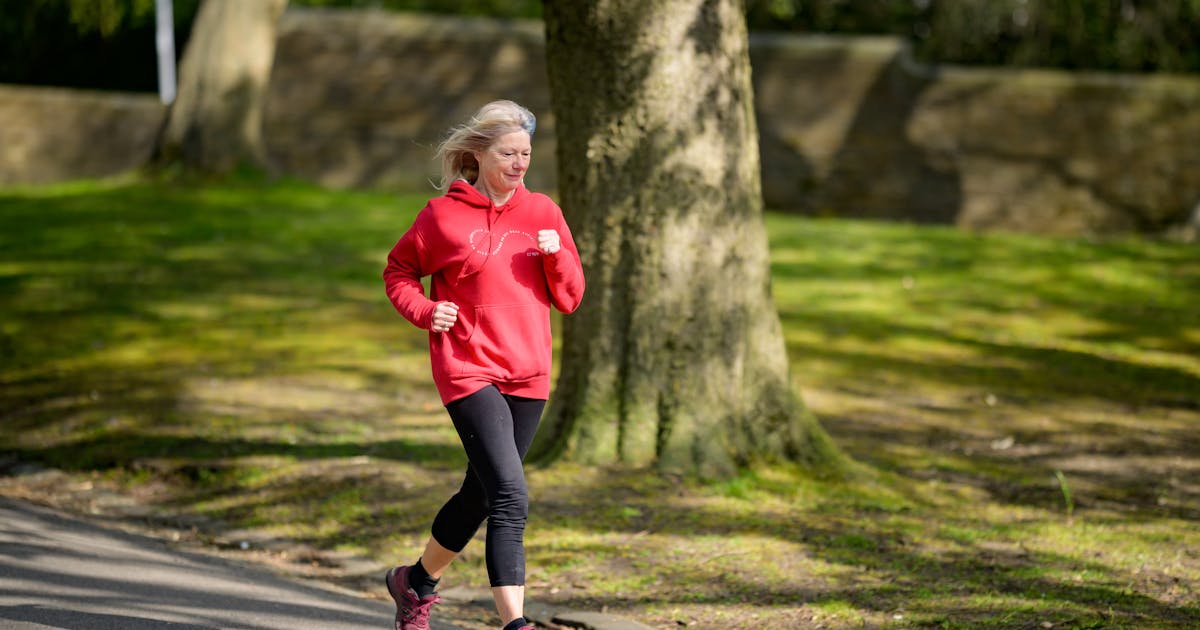
VO2 max is the volume of oxygen your body can actually use at full effort. It is one of the few health numbers that reflects capacity rather than damage, which is exactly why it responds to what you do about it.
1mL/kg/min · milliliters of oxygen used per kilogram of body weight each minute
25 to 10 percent · the share of the number that falls away each decade after 30
340 to 50 percent · how much your genes set, which leaves the rest to training
410 to 15 percent · realistic gain for a beginner within a few months
5150 minutes · the weekly moderate activity floor CDC sets for adults
Most of the numbers on a health report are things that have happened to you. Blood pressure, cholesterol, blood sugar: each one is a readout of accumulated wear. VO2 max is a different kind of measurement. It describes what your body is still capable of, and capacity is the one thing on that list that answers directly to effort.
Cleveland Clinic defines it plainly. VO2 max reflects your body's potential oxygen uptake, how much oxygen it can absorb and use while getting pushed to the limit during a workout. Break the term apart and it explains itself: V for volume, O2 for oxygen, max for maximum.
1
The mechanism
What the Number Actually Measures
The unit is a mouthful and worth learning once. Cleveland Clinic expresses VO2 max as how many milliliters of oxygen your body uses per kilogram of body weight per minute, written mL/kg/min. As you breathe in oxygen it fuels a reaction inside your muscle cells that produces adenosine triphosphate, the energy your muscles actually spend. More oxygen moving through the system means more energy available.
Four things set the ceiling, and only one of them is fixed. How much oxygen your heart can pump. How well your lungs and blood move it. How efficiently your muscles use it. And your genetics, which Cleveland Clinic puts at roughly 40 to 50 percent of the total. Training and lifestyle decide the rest, which is a larger share than most people assume.
2
The stakes
Why Clinicians Keep Coming Back to It
Cleveland Clinic lists a higher VO2 max as bringing strong heart and lung function, better endurance, and a good chance to live longer. Sports medicine physician Matthew Kampert puts it more bluntly: VO2 max really gives you an objective view of your overall health.
The downstream list is specific. Cleveland Clinic says a higher VO2 max can reduce your chance of heart attack, heart disease, stroke, and dementia and cognitive decline. Its companion page on cardiovascular endurance adds the everyday version of the same benefit: better cholesterol and blood pressure, a stronger heart and lungs, improved brain function, and the plain ability to carry a laundry basket or climb stairs without it costing you anything.
Cleveland Clinic's list of activities that raise VO2 max is ordinary: walking, hiking, cycling, swimming, rowing, running.
3
The decline
The Slide That Starts at Thirty
Here is the part that reframes the whole thing. Cleveland Clinic reports that VO2 max tends to decline naturally after age 30, dropping about 5 percent to 10 percent per decade. That is not a warning about old age. It is a description of what is already happening to most adults in their thirties and forties, quietly, while nothing on a standard blood panel changes.
It also means there is no single good score. Cleveland Clinic is explicit that a good VO2 max will not be the same for you in your 20s as in your 50s, and that men average higher scores than women at the same age. The number is only meaningful against your own age, your own sex, and your own previous result.
For scale: Cleveland Clinic's endurance page puts active young people at roughly 35 to 50 mL/kg/min and endurance athletes at 70 to 85. People who have had a stroke may sit at 8 to 23, and even there, modest aerobic exercise can improve the figure by 10 to 15 percent. The range of what is possible is wide at every starting point.
4
The test
How It Gets Measured, and What Your Watch Knows
The reference method is unglamorous. Cleveland Clinic describes a graded exercise test at an exercise medicine lab, which Dr. Kampert calls the gold standard: you wear a mask that captures your breath while you walk, run or cycle, the test gets harder in stages until you reach maximum effort, and the equipment records oxygen consumption and carbon dioxide production.
Most people will never do that, and mostly do not need to. Cleveland Clinic says many fitness trackers estimate VO2 max from heart rate, and that while those numbers are not exact, the results are typically pretty close. The caution that matters more is about reading them: changes smaller than about 3 to 5 percent may just reflect natural test variability, so a number that wobbles week to week is telling you very little.
The graded exercise test is the reference method. A mask captures your breath while the workload steps up to maximum effort.
A high VO2 max across the lifespan is the single most powerful marker of physiological reserve.
Sports medicine physician Matthew Kampert told Cleveland Clinic that developing it early and maintaining it consistently will measurably increase your years lived in good health. Cleveland Clinic also notes the number is not set in stone: it changes with your body and your level of physical activity.
Cleveland Clinic
5
What actually helps
How to Move It
The instruction is less exotic than the metric sounds. Cleveland Clinic says starting or expanding a workout routine, particularly one involving cardio, will boost the number, and lists running, walking and hiking, cycling, swimming, rowing and high intensity interval training. Losing body fat and building muscle raise it as well, because a leaner body delivers oxygen more efficiently.
The floor is set nationally. CDC states that adults need 150 minutes of moderate intensity physical activity a week, or 75 minutes of vigorous intensity, or an equivalent combination, plus muscle strengthening on at least 2 days. It can be 30 minutes a day, 5 days a week, and it does not have to happen all at once. CDC is equally clear that some activity is better than none.
Then there is the payoff line. Cleveland Clinic says that if you are just getting started, a 10 percent to 15 percent improvement in VO2 max is realistic in just a few months, and that a mix of high intensity and moderate intensity continuous training often brings the most gains while reducing injury risk. Dr. Kampert's own framing is to aim for progressive increases rather than absolute targets. Talk with a healthcare provider before beginning, particularly if you are older or have existing health conditions.
CDC puts the weekly floor at 150 minutes of moderate activity, which can be 30 minutes a day across five days.
Take the VO2 max starter plan with you
Your free 2-page guide: the weekly minutes that build capacity, the one harder session that moves the number, and how to retest without fooling yourself.
One email. No spam. Unsubscribe anytime.
Free Lifestyle Assessment
How Healthy Is Your Current Lifestyle?
Answer honestly for five minutes and walk away with your personal scorecard: all six areas of your health rated, the one that needs your attention first, and a 30-day plan built from your answers. It shows up the second you finish.
Free. About 5 minutes. Your results appear instantly.
📋 Your Coach's Recommendations
1
Bank the 150 Minutes Before Anything Else
CDC puts the adult floor at 150 minutes of moderate intensity activity a week, which can be 30 minutes a day across 5 days, plus muscle strengthening on at least 2 days. Cleveland Clinic says you can begin with 10 to 15 minutes a day and add a few minutes at a time. Walking, cycling, swimming and stair climbing all count.
2
Add One Harder Session Each Week
Cleveland Clinic reports that a mix of high intensity work and moderate intensity continuous training tends to bring the most gains while reducing injury risk, and cites a study in which interval training improved cardiovascular endurance by 38 to 79 percent. Sports medicine physician Matthew Kampert advises aiming for progressive increases rather than absolute targets.
3
Retest the Same Way, Not a Different Way
A graded exercise test at an exercise medicine lab is the gold standard. Watch estimates use heart rate and are typically close but not exact. Cleveland Clinic notes that changes smaller than about 3 to 5 percent may simply be test variability, so repeat on the same protocol. Talk with a healthcare provider before starting, especially if you are older or have an existing condition.
?
How it works. Just a quiet check-in, not an alert and not a recurring nag. The event lands as a 30-minute slot at 9am two weeks from today, with your plan in the notes and a link back to this article. Works with Apple Calendar, Google Calendar, and Outlook. Yours to move, snooze, or delete whenever.
Keep this plan
Get the 2-page guide: what to do weekly, and how to read your own number.
One email. No spam. Unsubscribe anytime.
Where should we send it?
Your VO2 max starter plan, straight to your inbox.
We send the plan plus one short evidence brief each week. Unsubscribe anytime.
✓
It is on the way
Check your inbox in the next minute. Want it right now?
Your first Ageless Brief arrives this week: one study, translated, no hype.
To your health,
Frequently Asked Questions
What counts as a good VO2 max?
There is no single number. Cleveland Clinic says a good VO2 max will not be the same in your 20s as in your 50s, that the figure declines about 5 to 10 percent per decade after 30, and that men average higher scores than women at the same age. Read your result against your own age, sex and previous result rather than against someone else's.
Can I trust the VO2 max on my watch?
Reasonably, for tracking. Cleveland Clinic says many fitness trackers estimate VO2 max using heart rate and that while the numbers are not exact, the results are typically pretty close. A graded exercise test at an exercise medicine lab remains the gold standard. Treat changes under about 3 to 5 percent as possible test variability rather than real progress.
How quickly can I improve it?
Cleveland Clinic says that if you are just getting started, a 10 percent to 15 percent improvement is realistic in just a few months. The stated key is consistency plus gradually increasing the intensity and duration of your workouts.
Which exercise raises it most?
Cardio does the work: running, walking and hiking, cycling, swimming, rowing and high intensity interval training all appear on Cleveland Clinic's list. It adds that a mix of high intensity and moderate intensity continuous training often brings the most gains while reducing injury risk, and that losing body fat and building muscle help too.
Is it too late to bother if I am older?
No. Cleveland Clinic states that no matter what age you are, you can improve your cardiovascular endurance. It reports that even people who have had a stroke, whose maximum oxygen consumption may sit at 8 to 23 mL/kg/min, can improve that by 10 to 15 percent with modest aerobic exercise.
Is this medical advice?
No. This article is educational and is not a substitute for care from your doctor. Cleveland Clinic advises talking with a healthcare provider before starting an exercise program, particularly if you are older or have existing health conditions.
Curious where you stand? Take the free 5-minute lifestyle assessment and your personal scorecard appears the second you finish.
By the Ageless Coach Editorial Team · Published May 13, 2026 · Last updated July 21, 2026
<style>
:root{--dark-base:#0D1B2A;--dark-mid:#1B3A4B;--teal:#0EA5A0;--teal-dark:#0C8C88;--teal-bright:#14D4CD;--fog:#D8E8E8;--deep-fog:#C8DCDC;--fog-border:#A8C4C4;--ink:#313743;--ink-soft:#49505f;--muted:#6b7280;--warm:#9A6841;--warm-light:#be7b4c;--serif:"Source Serif 4",Georgia,serif;--sans:Inter,-apple-system,BlinkMacSystemFont,"Segoe UI",sans-serif}
.w-richtext p,.w-richtext li,.w-richtext td{font-size:20.5px;line-height:1.7;color:var(--ink-soft)}
.w-richtext ul{list-style-type:disc;padding-left:24px;margin:12px 0}
.w-richtext ul li{margin-bottom:8px}
.ac-answer{background:#fff;border:1px solid #D4E4E4;border-top:5px solid var(--teal);border-radius:16px;padding:22px 24px 18px;margin:16px 0 28px;box-shadow:0 6px 22px rgba(13,27,42,.07)}
.ac-answer .aa-eyebrow{font:800 12px/1 var(--sans);letter-spacing:2.5px;text-transform:uppercase;color:var(--teal-dark);margin-bottom:8px}
.ac-answer .aa-head{font-family:var(--serif);font-size:24px;line-height:1.2;font-weight:800;color:var(--dark-base);margin:0 0 16px}
.ac-answer .aa-list{list-style:none;margin:0;padding:0}
.ac-answer .aa-list li{display:flex;gap:12px;align-items:baseline;padding:11px 0;border-bottom:1px solid #EDF3F3;font:700 16.5px/1.4 var(--sans);color:var(--ink)}
.ac-answer .aa-list li:last-child{border-bottom:none}
.ac-answer .aa-n{flex-shrink:0;width:24px;height:24px;border-radius:50%;background:var(--teal-dark);color:#fff;font:800 12px/24px var(--sans);text-align:center}
.ac-answer .aa-food{color:var(--teal-dark);font-weight:800}
.ac-answer .aa-cue{margin-top:18px;text-align:center}
.ac-answer .aa-cta{display:inline-flex;align-items:center;gap:10px;background:var(--teal-dark);color:#fff;font:800 14px/1 var(--sans);letter-spacing:.2px;padding:14px 26px;border-radius:50px;text-decoration:none;box-shadow:0 6px 16px rgba(12,140,136,.30)}
.ac-answer .aa-cta:hover{background:#0A7A76}
.ac-answer .aa-arw{display:inline-block;animation:aa-nudge 1.4s ease-in-out infinite}
@keyframes aa-nudge{0%,100%{transform:translateY(0)}50%{transform:translateY(4px)}}
@media(max-width:560px){.ac-answer{padding:20px 18px 16px}.ac-answer .aa-head{font-size:21px}.ac-answer .aa-list li{font-size:15px}}
.ac-band{margin:56px 0 24px;padding:26px 24px 12px;background:linear-gradient(180deg,#F0F7F7,#fff);border-radius:16px}
.ac-band.hype{background:linear-gradient(180deg,#FAF3EB,#fff)}
.ac-band .inner{display:flex;gap:20px;align-items:center}
.ac-band .big{font:900 72px/1 var(--sans);color:var(--deep-fog);flex-shrink:0}
.ac-band.hype .big{color:#EAD9C6}
.ac-band .q{font:700 13px/1.4 var(--sans);letter-spacing:2px;text-transform:uppercase;color:var(--teal-dark)}
.ac-band.hype .q{color:var(--warm)}
.ac-band h3{font-family:var(--serif);font-size:30px;line-height:1.2;font-weight:800;color:var(--ink);margin:0}
.ac-callout{border-left:4px solid var(--teal);background:#F4FAFA;border-radius:0 12px 12px 0;padding:18px 22px;margin:28px 0}
.ac-callout .n{font:800 20px/1.35 var(--sans);color:var(--dark-mid);margin-bottom:6px}
.ac-callout .d{font:500 15px/1.55 var(--sans);color:var(--ink-soft)}
.ac-callout .c{font:600 11.5px/1 var(--sans);letter-spacing:1.5px;text-transform:uppercase;color:var(--muted);margin-top:10px}
.ac-plan{background:linear-gradient(135deg,#F4FAFA 0%,#fff 100%);border-left:5px solid var(--teal-dark);border-radius:14px;padding:30px 26px;margin:40px 0 0;box-shadow:0 2px 12px rgba(0,0,0,.06);scroll-margin-top:100px}
.ac-plan .ptitle{font-family:var(--serif);font-size:24px;font-weight:800;color:var(--ink);margin-bottom:22px}
.ac-plan .step{display:flex;gap:16px;margin-bottom:18px;align-items:flex-start}
.ac-plan .step .n{min-width:38px;width:38px;height:38px;background:var(--teal-dark);border-radius:50%;color:#fff;font:800 17px/38px var(--sans);text-align:center;flex-shrink:0}
.ac-plan .sh{font:800 16.5px/1.4 var(--sans);color:var(--ink);margin-bottom:3px}
.ac-plan .sd{font:400 15px/1.6 var(--sans);color:var(--muted)}
.ac-plan .actions{border-top:1px solid #D8E8E8;margin-top:16px;padding-top:20px}
.ac-primary-row{display:flex;align-items:center;gap:10px;padding:0 4px}
.ac-btn-primary-wide{flex:1;background:var(--teal);color:#fff;border:1.5px solid var(--teal);border-radius:14px;padding:12px 22px;box-shadow:0 4px 14px rgba(14,165,160,.22);font-family:var(--sans);cursor:pointer;display:grid;grid-template-columns:auto 1fr;gap:14px;align-items:center;transition:all .18s ease}
.ac-btn-primary-wide:hover{background:var(--teal-dark);border-color:var(--teal-dark)}
.ac-btn-primary-wide .icon svg{width:22px;height:22px;color:#fff;display:block}
.ac-btn-primary-wide .label{text-align:left;line-height:1.25}
.ac-btn-primary-wide .label .top{display:block;font-weight:700;font-size:15.5px;color:#fff}
.ac-btn-primary-wide .label .top em{font-style:italic;font-weight:700}
.ac-cal-help{position:relative;flex-shrink:0}
.ac-cal-help summary{list-style:none;width:24px;height:24px;border-radius:50%;background:#E4F1F1;border:1px solid var(--fog-border);color:var(--dark-mid);font:700 13px/22px var(--sans);text-align:center;cursor:pointer;display:block}
.ac-cal-help summary::-webkit-details-marker{display:none}
.ac-cal-help .tip{position:absolute;right:0;top:32px;z-index:50;width:290px;background:var(--dark-base);color:var(--fog);border-radius:12px;padding:14px 16px;font:500 12.5px/1.55 var(--sans);box-shadow:0 10px 30px rgba(13,27,42,.35)}
.ac-cal-help .tip strong{color:#fff}
.ac-btn-share-wide{display:flex;width:100%;align-items:center;justify-content:center;gap:10px;background:#fff;color:var(--teal-dark);border:1.5px solid var(--teal-dark);border-radius:14px;padding:12px 22px;margin-top:10px;font:800 15px/1 var(--sans);cursor:pointer}
.ac-btn-share-wide svg{width:18px;height:18px}
.ac-midcap{background:linear-gradient(180deg,#F0F7F7,#fff);border:1.5px solid var(--fog-border);border-radius:16px;padding:24px 22px;margin:34px 0;text-align:center}
.ac-midcap h4{font-family:var(--serif);font-size:22px;font-weight:800;color:var(--ink);margin:0 0 6px}
.ac-midcap .sub{font:500 14px/1.55 var(--sans);color:var(--ink-soft);margin:0 auto 14px;max-width:400px}
.ac-midcap .mcform{display:flex;gap:8px;max-width:400px;margin:0 auto}
.ac-midcap .mcform input{flex:1;border:1.5px solid var(--fog-border);border-radius:50px;padding:12px 18px;font:500 14px/1 var(--sans);min-width:0}
.ac-midcap .mcform button{background:var(--teal-dark);color:#fff;border:none;border-radius:50px;padding:12px 20px;font:800 13.5px/1 var(--sans);cursor:pointer;white-space:nowrap}
.ac-midcap .fine{font:500 11.5px/1.5 var(--sans);color:var(--muted);margin-top:10px}
@media (max-width:520px){.ac-midcap .mcform{flex-direction:column}}
.ac-assess-promo{background:linear-gradient(135deg,#D8E8E8,#C8DCDC);border:1px solid var(--fog-border);border-radius:16px;padding:34px 30px;margin:44px 0;text-align:center}
.ac-assess-promo .eyebrow{color:var(--teal-dark);font:800 12px/1 var(--sans);letter-spacing:2.5px;text-transform:uppercase;margin:0 0 10px}
.ac-assess-promo h4{font-family:var(--serif);color:var(--dark-base);font-size:26px;font-weight:800;margin:0 0 12px}
.w-embed .ac-assess-promo p.ap-body,.ac-assess-promo p.ap-body{font-family:Georgia,serif;color:#3A5555;font-size:15.5px;font-weight:500;line-height:1.65;max-width:540px;margin:0 auto 22px}
.ac-assess-promo .ap-cta{display:inline-block;background:var(--teal-bright);color:var(--dark-base);font:800 15px/1 var(--sans);padding:15px 30px;border-radius:50px;text-decoration:none}
.ac-assess-promo .ap-fine{color:#4E6B6B;font:500 13px/1.5 var(--sans);margin:14px 0 0}
.ac-assess-line{border-top:1px solid #E2ECEC;margin-top:30px;padding:22px 10px 0;text-align:center;font:500 15.5px/1.6 var(--sans);color:#3A5555}
.w-embed .ac-assess-line a,.ac-assess-line a{color:var(--teal-dark);font-weight:700;text-decoration:underline;text-underline-offset:3px}
.ac-articlemeta{font:500 12.5px/1.6 var(--sans);color:#98a0a6;text-align:center;margin:24px 0 0}
.ac-capture{background:linear-gradient(180deg,#F0F7F7,#fff);border:1.5px solid var(--fog-border);border-radius:16px;padding:30px 28px;margin:26px 0 44px;text-align:center}
.ac-capture .cap-state{display:none}
.ac-capture[data-state="trigger"] .st-trigger{display:block}
.ac-capture[data-state="form"] .st-form{display:block}
.ac-capture[data-state="sent"] .st-sent{display:block}
.ac-capture h4{font-family:var(--serif);font-size:24px;font-weight:800;color:var(--ink);margin:0 0 8px}
.ac-capture .sub{font:500 15px/1.55 var(--sans);color:var(--ink-soft);margin:0 auto 18px;max-width:430px}
.ac-capture .bigbtn{display:inline-flex;align-items:center;gap:10px;background:var(--teal-dark);color:#fff;border:none;border-radius:50px;padding:16px 30px;font:800 16px/1 var(--sans);cursor:pointer;box-shadow:0 6px 18px rgba(12,140,136,.28)}
.ac-capture .capform{display:flex;gap:10px;max-width:430px;margin:0 auto}
.ac-capture .capform input{flex:1;border:1.5px solid var(--fog-border);border-radius:50px;padding:14px 20px;font:500 15px/1 var(--sans)}
.ac-capture .capform button{background:var(--teal-dark);color:#fff;border:none;border-radius:50px;padding:14px 24px;font:800 14px/1 var(--sans);cursor:pointer}
.ac-capture .sent-check{width:52px;height:52px;border-radius:50%;background:var(--teal);color:#fff;font:800 26px/52px var(--sans);margin:0 auto 12px}
.ac-capture .dl{display:inline-block;margin-top:6px;color:var(--teal-dark);font:700 15px/1 var(--sans);text-decoration:underline;cursor:pointer}
.ac-capture .fine{font:500 12px/1.5 var(--sans);color:var(--muted);margin-top:12px}
.ac-sig{margin-top:36px}
.ac-sig .rule{width:60px;height:2px;background:linear-gradient(90deg,var(--teal-dark),var(--teal-bright));margin-bottom:18px;border-radius:2px}
.ac-sig .toyour{font-family:var(--serif);font-size:16px;font-style:italic;color:#777;margin:0 0 10px;padding-left:2px}
.ac-faq{margin-top:40px;border-top:1px solid #e5e7eb;padding-top:30px;margin-bottom:40px}
.ac-faq h2{font-family:var(--serif);font-size:23px;font-weight:800;color:var(--ink);margin:0 0 18px}
.ac-faq details{border:1px solid #e5e7eb;border-radius:10px;margin-bottom:10px}
.ac-faq summary{padding:15px 18px;font:700 16px/1.4 var(--sans);color:var(--ink);cursor:pointer;display:flex;justify-content:space-between;align-items:center;list-style:none}
.ac-faq summary:after{content:"\25BE";color:var(--warm)}
.ac-faq .a{padding:0 18px 16px;font-size:17px;line-height:1.65;color:#555}
.article-header-section .article-container{max-width:1080px !important;margin:0 auto !important;padding:0 20px !important}
.article-header-section .article-hero-image{display:block;width:100%;max-width:660px;margin:0}
.article-header-section .article-title{display:block !important;font-family:var(--serif);font-size:32px;line-height:1.25;font-weight:700;color:#313743;margin:20px 0 12px 0;text-align:left;max-width:660px}
@media (max-width:767px){.article-header-section .article-title{font-size:26px}.article-header-section .article-hero-image{max-width:100%}}
@media (max-width:640px){.ac-band .big{font-size:52px}}
@media (max-width:520px){.ac-capture .capform{flex-direction:column}}
.ac-figure{margin:30px 0}.ac-figure img{display:block;width:100%;border-radius:14px;height:auto;aspect-ratio:800/300}.ac-figure figcaption{font:500 13px/1.5 var(--sans);color:var(--muted);margin-top:9px}</style><div class="ac-answer"><div class="aa-eyebrow">What the evidence actually says</div><h2 class="aa-head">VO2 max is the volume of oxygen your body can actually use at full effort. It is one of the few health numbers that reflects capacity rather than damage, which is exactly why it responds to what you do about it.</h2><ol class="aa-list"><li><span class="aa-n">1</span><span><span class="aa-food">mL/kg/min</span> · milliliters of oxygen used per kilogram of body weight each minute</span></li><li><span class="aa-n">2</span><span><span class="aa-food">5 to 10 percent</span> · the share of the number that falls away each decade after 30</span></li><li><span class="aa-n">3</span><span><span class="aa-food">40 to 50 percent</span> · how much your genes set, which leaves the rest to training</span></li><li><span class="aa-n">4</span><span><span class="aa-food">10 to 15 percent</span> · realistic gain for a beginner within a few months</span></li><li><span class="aa-n">5</span><span><span class="aa-food">150 minutes</span> · the weekly moderate activity floor CDC sets for adults</span></li></ol><div class="aa-cue"><a class="aa-cta" href="#coach-recommendations">Get Your Coach's 3-Step Plan <span class="aa-arw">↓</span></a></div></div><p>Most of the numbers on a health report are things that have happened to you. Blood pressure, cholesterol, blood sugar: each one is a readout of accumulated wear. VO2 max is a different kind of measurement. It describes what your body is still capable of, and capacity is the one thing on that list that answers directly to effort.</p><p><a href="https://health.clevelandclinic.org/what-is-vo2-max-and-how-to-calculate-it" target="_blank" rel="noopener">Cleveland Clinic</a> defines it plainly. VO2 max reflects your body's potential oxygen uptake, how much oxygen it can absorb and use while getting pushed to the limit during a workout. Break the term apart and it explains itself: V for volume, O2 for oxygen, max for maximum.</p><div class="ac-band"><div class="inner"><div class="big">1</div><div><div class="q">The mechanism</div><h3>What the Number Actually Measures</h3></div></div></div><p>The unit is a mouthful and worth learning once. <a href="https://health.clevelandclinic.org/what-is-vo2-max-and-how-to-calculate-it" target="_blank" rel="noopener">Cleveland Clinic</a> expresses VO2 max as how many milliliters of oxygen your body uses per kilogram of body weight per minute, written mL/kg/min. As you breathe in oxygen it fuels a reaction inside your muscle cells that produces adenosine triphosphate, the energy your muscles actually spend. More oxygen moving through the system means more energy available.</p><p>Four things set the ceiling, and only one of them is fixed. How much oxygen your heart can pump. How well your lungs and blood move it. How efficiently your muscles use it. And your genetics, which Cleveland Clinic puts at roughly 40 to 50 percent of the total. Training and lifestyle decide the rest, which is a larger share than most people assume.</p><div class="ac-band hype"><div class="inner"><div class="big">2</div><div><div class="q">The stakes</div><h3>Why Clinicians Keep Coming Back to It</h3></div></div></div><p><a href="https://health.clevelandclinic.org/what-is-vo2-max-and-how-to-calculate-it" target="_blank" rel="noopener">Cleveland Clinic</a> lists a higher VO2 max as bringing strong heart and lung function, better endurance, and a good chance to live longer. Sports medicine physician Matthew Kampert puts it more bluntly: VO2 max really gives you an objective view of your overall health.</p><p>The downstream list is specific. Cleveland Clinic says a higher VO2 max can reduce your chance of heart attack, heart disease, stroke, and dementia and cognitive decline. Its companion page on <a href="https://my.clevelandclinic.org/health/articles/24754-cardiovascular-endurance" target="_blank" rel="noopener">cardiovascular endurance</a> adds the everyday version of the same benefit: better cholesterol and blood pressure, a stronger heart and lungs, improved brain function, and the plain ability to carry a laundry basket or climb stairs without it costing you anything.</p><figure class="ac-figure"><img src="https://images.pexels.com/photos/5920998/pexels-photo-5920998.jpeg?auto=compress&cs=tinysrgb&w=800&h=300&fit=crop" alt="Two people riding bicycles along a tree lined city street" width="800" height="300" loading="lazy" decoding="async"><figcaption>Cleveland Clinic's list of activities that raise VO2 max is ordinary: walking, hiking, cycling, swimming, rowing, running.</figcaption></figure><div class="ac-band"><div class="inner"><div class="big">3</div><div><div class="q">The decline</div><h3>The Slide That Starts at Thirty</h3></div></div></div><p>Here is the part that reframes the whole thing. <a href="https://health.clevelandclinic.org/what-is-vo2-max-and-how-to-calculate-it" target="_blank" rel="noopener">Cleveland Clinic</a> reports that VO2 max tends to decline naturally after age 30, dropping about 5 percent to 10 percent per decade. That is not a warning about old age. It is a description of what is already happening to most adults in their thirties and forties, quietly, while nothing on a standard blood panel changes.</p><p>It also means there is no single good score. Cleveland Clinic is explicit that a good VO2 max will not be the same for you in your 20s as in your 50s, and that men average higher scores than women at the same age. The number is only meaningful against your own age, your own sex, and your own previous result.</p><p>For scale: Cleveland Clinic's endurance page puts active young people at roughly 35 to 50 mL/kg/min and endurance athletes at 70 to 85. People who have had a stroke may sit at 8 to 23, and even there, modest aerobic exercise can improve the figure by 10 to 15 percent. The range of what is possible is wide at every starting point.</p><div class="ac-band"><div class="inner"><div class="big">4</div><div><div class="q">The test</div><h3>How It Gets Measured, and What Your Watch Knows</h3></div></div></div><p>The reference method is unglamorous. <a href="https://health.clevelandclinic.org/what-is-vo2-max-and-how-to-calculate-it" target="_blank" rel="noopener">Cleveland Clinic</a> describes a graded exercise test at an exercise medicine lab, which Dr. Kampert calls the gold standard: you wear a mask that captures your breath while you walk, run or cycle, the test gets harder in stages until you reach maximum effort, and the equipment records oxygen consumption and carbon dioxide production.</p><p>Most people will never do that, and mostly do not need to. Cleveland Clinic says many fitness trackers estimate VO2 max from heart rate, and that while those numbers are not exact, the results are typically pretty close. The caution that matters more is about reading them: changes smaller than about 3 to 5 percent may just reflect natural test variability, so a number that wobbles week to week is telling you very little.</p><figure class="ac-figure"><img src="https://images.pexels.com/photos/8460228/pexels-photo-8460228.jpeg?auto=compress&cs=tinysrgb&w=800&h=300&fit=crop" alt="A clinician monitoring a patient walking on a treadmill during a cardiac stress test" width="800" height="300" loading="lazy" decoding="async"><figcaption>The graded exercise test is the reference method. A mask captures your breath while the workload steps up to maximum effort.</figcaption></figure><div class="ac-callout"><div class="n">A high VO2 max across the lifespan is the single most powerful marker of physiological reserve.</div><div class="d">Sports medicine physician Matthew Kampert told Cleveland Clinic that developing it early and maintaining it consistently will measurably increase your years lived in good health. Cleveland Clinic also notes the number is not set in stone: it changes with your body and your level of physical activity.</div><div class="c">Cleveland Clinic</div></div><div class="ac-band"><div class="inner"><div class="big">5</div><div><div class="q">What actually helps</div><h3>How to Move It</h3></div></div></div><p>The instruction is less exotic than the metric sounds. <a href="https://health.clevelandclinic.org/what-is-vo2-max-and-how-to-calculate-it" target="_blank" rel="noopener">Cleveland Clinic</a> says starting or expanding a workout routine, particularly one involving cardio, will boost the number, and lists running, walking and hiking, cycling, swimming, rowing and high intensity interval training. Losing body fat and building muscle raise it as well, because a leaner body delivers oxygen more efficiently.</p><p>The floor is set nationally. <a href="https://www.cdc.gov/physical-activity-basics/guidelines/adults.html" target="_blank" rel="noopener">CDC</a> states that adults need 150 minutes of moderate intensity physical activity a week, or 75 minutes of vigorous intensity, or an equivalent combination, plus muscle strengthening on at least 2 days. It can be 30 minutes a day, 5 days a week, and it does not have to happen all at once. CDC is equally clear that some activity is better than none.</p><p>Then there is the payoff line. Cleveland Clinic says that if you are just getting started, a 10 percent to 15 percent improvement in VO2 max is realistic in just a few months, and that a mix of high intensity and moderate intensity continuous training often brings the most gains while reducing injury risk. Dr. Kampert's own framing is to aim for progressive increases rather than absolute targets. Talk with a healthcare provider before beginning, particularly if you are older or have existing health conditions.</p><figure class="ac-figure"><img src="https://images.pexels.com/photos/31012865/pexels-photo-31012865.jpeg?auto=compress&cs=tinysrgb&w=800&h=300&fit=crop" alt="A person walking at a steady pace on a gym treadmill" width="800" height="300" loading="lazy" decoding="async"><figcaption>CDC puts the weekly floor at 150 minutes of moderate activity, which can be 30 minutes a day across five days.</figcaption></figure><div class="ac-midcap"><h4>Take the VO2 max starter plan with you</h4><p class="sub">Your free 2-page guide: the weekly minutes that build capacity, the one harder session that moves the number, and how to retest without fooling yourself.</p><div class="mcform"><input type="email" placeholder="Your email address" aria-label="Email address"><button type="button">Send My Plan (Free)</button></div><div class="fine">One email. No spam. Unsubscribe anytime.</div></div><div class="ac-assess-promo"><p class="eyebrow">Free Lifestyle Assessment</p><h4>How Healthy Is Your Current Lifestyle?</h4><p class="ap-body">Answer honestly for five minutes and walk away with your personal scorecard: all six areas of your health rated, the one that needs your attention first, and a 30-day plan built from your answers. It shows up the second you finish.</p><a class="ap-cta" href="/#assessment">See How the Assessment Works →</a><p class="ap-fine">Free. About 5 minutes. Your results appear instantly.</p></div><div class="ac-plan" id="coach-recommendations"><div class="ptitle">📋 Your Coach's Recommendations</div><div class="step"><div class="n">1</div><div><div class="sh">Bank the 150 Minutes Before Anything Else</div><div class="sd">CDC puts the adult floor at 150 minutes of moderate intensity activity a week, which can be 30 minutes a day across 5 days, plus muscle strengthening on at least 2 days. Cleveland Clinic says you can begin with 10 to 15 minutes a day and add a few minutes at a time. Walking, cycling, swimming and stair climbing all count.</div></div></div><div class="step"><div class="n">2</div><div><div class="sh">Add One Harder Session Each Week</div><div class="sd">Cleveland Clinic reports that a mix of high intensity work and moderate intensity continuous training tends to bring the most gains while reducing injury risk, and cites a study in which interval training improved cardiovascular endurance by 38 to 79 percent. Sports medicine physician Matthew Kampert advises aiming for progressive increases rather than absolute targets.</div></div></div><div class="step"><div class="n">3</div><div><div class="sh">Retest the Same Way, Not a Different Way</div><div class="sd">A graded exercise test at an exercise medicine lab is the gold standard. Watch estimates use heart rate and are typically close but not exact. Cleveland Clinic notes that changes smaller than about 3 to 5 percent may simply be test variability, so repeat on the same protocol. Talk with a healthcare provider before starting, especially if you are older or have an existing condition.</div></div></div><div class="actions">
<div class="ac-primary-row">
<button type="button" class="ac-btn-primary-wide" data-ac-cal>
<span class="icon"><svg viewBox="0 0 24 24" fill="none" stroke="currentColor" stroke-width="2" stroke-linecap="round" stroke-linejoin="round"><rect x="3" y="4" width="18" height="18" rx="2"></rect><path d="M16 2v4M8 2v4M3 10h18"></path></svg></span>
<span class="label"><span class="top">Add <em>Your Coach's Recommendations to Your Calendar</em></span></span>
</button>
<details class="ac-cal-help">
<summary aria-label="What does this do?">?</summary>
<div class="tip"><strong>How it works.</strong> Just a quiet check-in, not an alert and not a recurring nag. The event lands as a 30-minute slot at 9am two weeks from today, with your plan in the notes and a link back to this article. Works with Apple Calendar, Google Calendar, and Outlook. Yours to move, snooze, or delete whenever.</div>
</details>
</div>
<button type="button" class="ac-btn-share-wide" data-ac-share>
<svg viewBox="0 0 24 24" fill="none" stroke="currentColor" stroke-width="2" stroke-linecap="round" stroke-linejoin="round"><path d="M4 12v8a2 2 0 002 2h12a2 2 0 002-2v-8"></path><polyline points="16 6 12 2 8 6"></polyline><line x1="12" y1="2" x2="12" y2="15"></line></svg>
Share this article
</button>
</div></div><div class="ac-capture" data-state="trigger" data-article-slug="your-vo2max-is-the-strongest-predictor-of-how-long-youll-live" data-pdf-url="https://cdn.prod.website-files.com/69be1026a027224999b7936b/6a5f54a6c1a12f3dc319dec6_the-vo2-max-starter-plan.pdf" data-plan-title="The VO2 Max Starter Plan" data-plan-desc="Your free 2-page guide: the weekly minutes that build aerobic capacity, the one harder session that moves the number, and how to retest without fooling yourself."><div class="st-trigger cap-state"><h4>Keep this plan</h4><p class="sub">Get the 2-page guide: what to do weekly, and how to read your own number.</p><button class="bigbtn" type="button" data-cap="form">📩 Email Me This Plan (Free PDF)</button><div class="fine">One email. No spam. Unsubscribe anytime.</div></div><div class="st-form cap-state"><h4>Where should we send it?</h4><p class="sub">Your VO2 max starter plan, straight to your inbox.</p><form class="capform"><input type="email" name="email" required placeholder="Your email address" aria-label="Email address"><button type="submit">Send My Plan</button></form><div class="fine">We send the plan plus one short evidence brief each week. Unsubscribe anytime.</div></div><div class="st-sent cap-state"><div class="sent-check">✓</div><h4>It is on the way</h4><p class="sub">Check your inbox in the next minute. Want it right now?</p><a class="dl" href="https://cdn.prod.website-files.com/69be1026a027224999b7936b/6a5f54a6c1a12f3dc319dec6_the-vo2-max-starter-plan.pdf" download>⬇ Download your plan (PDF)</a><div class="fine">Your first Ageless Brief arrives this week: one study, translated, no hype.</div></div></div><div class="ac-sig">
<div class="rule"></div>
<p class="toyour">To your health,</p>
<svg width="320" height="72" viewBox="0 0 320 72" role="img" aria-label="Ageless Coach. Age Strong. Live Long." xmlns="http://www.w3.org/2000/svg" xmlns:xlink="http://www.w3.org/1999/xlink">
<defs><clipPath id="acSigIconClip"><rect x="0" y="6" width="60" height="60" rx="12" ry="12"/></clipPath></defs>
<image x="0" y="6" width="60" height="60" clip-path="url(#acSigIconClip)" preserveAspectRatio="xMidYMid slice" href="https://cdn.prod.website-files.com/69be1026a027224999b7936b/6a0b22c6afd5d6fd115b9c1a_ac-closing-brand-icon.webp" xlink:href="https://cdn.prod.website-files.com/69be1026a027224999b7936b/6a0b22c6afd5d6fd115b9c1a_ac-closing-brand-icon.webp"/>
<text x="76" y="42" style="font-family:Inter,system-ui,-apple-system,'Helvetica Neue',Arial,sans-serif;font-size:27px;letter-spacing:-0.3px">
<tspan style="font-weight:800;fill:#0D1B2A">Ageless</tspan><tspan style="font-weight:300;fill:rgba(13,27,42,0.6)">Coach</tspan><tspan dy="-12" style="font-size:16px;font-weight:600;fill:rgba(13,27,42,0.6)">™</tspan>
</text>
<text x="76" y="60" style="font-family:Inter,system-ui,-apple-system,'Helvetica Neue',Arial,sans-serif;font-size:10.5px;letter-spacing:2.5px;font-weight:500;fill:#0C8C88;text-transform:uppercase">AGE STRONG. LIVE LONG.</text>
</svg>
</div><div class="ac-faq"><h2>Frequently Asked Questions</h2><details><summary>What counts as a good VO2 max?</summary><div class="a">There is no single number. Cleveland Clinic says a good VO2 max will not be the same in your 20s as in your 50s, that the figure declines about 5 to 10 percent per decade after 30, and that men average higher scores than women at the same age. Read your result against your own age, sex and previous result rather than against someone else's.</div></details><details><summary>Can I trust the VO2 max on my watch?</summary><div class="a">Reasonably, for tracking. Cleveland Clinic says many fitness trackers estimate VO2 max using heart rate and that while the numbers are not exact, the results are typically pretty close. A graded exercise test at an exercise medicine lab remains the gold standard. Treat changes under about 3 to 5 percent as possible test variability rather than real progress.</div></details><details><summary>How quickly can I improve it?</summary><div class="a">Cleveland Clinic says that if you are just getting started, a 10 percent to 15 percent improvement is realistic in just a few months. The stated key is consistency plus gradually increasing the intensity and duration of your workouts.</div></details><details><summary>Which exercise raises it most?</summary><div class="a">Cardio does the work: running, walking and hiking, cycling, swimming, rowing and high intensity interval training all appear on Cleveland Clinic's list. It adds that a mix of high intensity and moderate intensity continuous training often brings the most gains while reducing injury risk, and that losing body fat and building muscle help too.</div></details><details><summary>Is it too late to bother if I am older?</summary><div class="a">No. Cleveland Clinic states that no matter what age you are, you can improve your cardiovascular endurance. It reports that even people who have had a stroke, whose maximum oxygen consumption may sit at 8 to 23 mL/kg/min, can improve that by 10 to 15 percent with modest aerobic exercise.</div></details><details><summary>Is this medical advice?</summary><div class="a">No. This article is educational and is not a substitute for care from your doctor. Cleveland Clinic advises talking with a healthcare provider before starting an exercise program, particularly if you are older or have existing health conditions.</div></details></div><div class="ac-assess-line">Curious where you stand? Take the free <a href="/#assessment">5-minute lifestyle assessment</a> and your personal scorecard appears the second you finish.</div><p class="ac-articlemeta">By the Ageless Coach Editorial Team · Published May 13, 2026 · Last updated July 21, 2026</p>
Subscribe to the Free Newsletter
One article a week. Trusted research made simple. Start making smarter health decisions today.