<style>
.w-richtext p,.w-richtext li,.w-richtext td{font-size:18px;line-height:1.65}
.w-richtext h2{font-size:26px;line-height:1.35}
.w-richtext h3{font-size:22px;line-height:1.35}
.w-richtext ul{list-style-type:disc;padding-left:24px;margin:12px 0}
.w-richtext ul li{margin-bottom:8px;line-height:1.65}
.w-richtext .ac-action-plan{background:linear-gradient(135deg,#fffcf4 0%,#fff8ed 100%);border-left:5px solid #9a6841;border-radius:12px;padding:28px 24px;margin:32px 0;box-shadow:0 2px 12px rgba(0,0,0,0.06)}
.article-header-section .article-container{max-width:1080px !important;margin:0 auto !important;padding:0 20px !important}
.article-header-section .article-hero-image{display:block;width:100%;max-width:660px;margin:0}
.article-header-section .article-title{display:block !important;font-family:Georgia,serif;font-size:32px;line-height:1.25;font-weight:700;color:#313743;margin:20px 0 12px 0;text-align:left;max-width:660px}
@media (max-width:767px){.article-header-section .article-title{font-size:26px}.article-header-section .article-hero-image{max-width:100%}}
.ac-article-cta{margin-top:40px;text-align:center}
.ac-article-cta .ac-cta-lead{font-family:Georgia,serif;font-size:17px;color:#555;margin:0 0 16px 0;line-height:1.5}
.ac-article-cta a.ac-nav-cta{display:inline-flex;align-items:center;gap:10px;padding:10px 14px 10px 20px;background:#313743;color:#fff;border:1.5px solid #14D4CD;border-radius:82px;font-family:Inter,sans-serif;font-size:14px;font-weight:600;letter-spacing:0.3px;text-decoration:none;transition:transform 0.15s ease,box-shadow 0.15s ease}
.ac-article-cta a.ac-nav-cta:hover{transform:translateY(-1px);box-shadow:0 6px 18px rgba(20,212,205,0.25)}
.ac-article-cta .ac-nav-cta-arrow{width:28px;height:28px;background:#14D4CD;border-radius:50%;display:inline-flex;align-items:center;justify-content:center;flex-shrink:0}
.ac-article-cta .ac-nav-cta-arrow svg{width:14px;height:14px}
</style>
<p class="publish-date" style="font-size:13px; color:#999; margin-bottom:16px;">Published: May 14, 2026 · Last updated: May 14, 2026</p>
<div class="ac-glance" style="background-color: #ffffff; padding: 20px; border: 2px solid #b0bec5; border-radius: 8px; margin: 20px 0;"><strong>This week's brief at a glance:</strong><ul style="margin: 12px 0; padding-left: 24px;"><li style="margin-bottom:6px;">A glazed donut has a glycemic index around 76, but instant oatmeal can hit 79 and rice cakes can reach 82 (Harvard Health, 2024)</li><li style="margin-bottom:6px;">Continuous glucose monitor data shows that "healthy" breakfast foods often produce sharper post-meal glucose spikes than refined sugar in many people (Mayo Clinic, 2024)</li><li style="margin-bottom:6px;">Repeated post-meal glucose spikes over years are a leading driver of insulin resistance, which raises risk of type 2 diabetes, fatty liver, and cardiovascular disease (Cleveland Clinic, 2024)</li></ul></div>
<p>You skip the donut. You make the "smart" choice. Toast with a smoothie, instant oatmeal, a banana on the side. Maybe a low-fat yogurt parfait or a granola bar. Half an hour later your blood sugar is climbing harder than it would have on the donut you passed up.</p>
<p>That is not a measurement error. Continuous glucose monitor data over the past few years has shown that the highest-glycemic foods in the typical American breakfast are not the obviously sweet ones. They are the foods that have built their reputation on health language. Here are the five worst offenders.</p>
<h3>1. Instant Oatmeal (Flavored Packets)</h3>
<p><strong>The Speed Is the Problem:</strong> Instant oats are pre-cooked, dried, and chopped fine, which makes them digest like a refined carbohydrate. Add the sugar dusted into flavored packets and the glycemic index climbs to roughly 79. That is higher than a glazed donut (<a href="https://www.health.harvard.edu/diseases-and-conditions/the-lowdown-on-glycemic-index-and-glycemic-load" target="_blank" rel="noopener">Harvard Health, 2024</a>).</p>
<p>The fix is the same oat, slower. Steel-cut oats or old-fashioned rolled oats have a glycemic index around 55 and produce a much gentler curve. Cook the night before in the slow cooker and breakfast is faster than the packet.</p>
<h3>2. Smoothies and Bowls Made With Fruit Juice</h3>
<p><strong>Blended Fruit Is Liquid Sugar:</strong> The fiber in a piece of fruit slows sugar absorption. Blend the same fruit into a smoothie and you have broken the fiber matrix, especially when juice replaces water as the base. A 16-ounce "wellness" smoothie can carry 50 grams of sugar with no chew time to slow it down.</p>
<p>If you love smoothies, swap juice for unsweetened milk or plain water, add a scoop of protein, and include whole-leaf greens. The protein and fat dramatically blunt the spike.</p>
<h3>3. Whole-Wheat Bread and Bagels</h3>
<p><strong>"Whole Wheat" Often Is Not:</strong> Most commercial whole-wheat bread is made from finely milled flour that behaves more like white flour in the gut. The label rules let manufacturers use the term "whole grain" with as little as 51 percent whole-grain content. Bagels are an even bigger jump because the dense dough delivers 60 to 75 grams of refined carbohydrate per serving.</p>
<p>Look for "100 percent whole grain" with visible kernels in the bread, or switch to sourdough, which has a lower glycemic index because of fermentation.</p>
<h3>4. Rice Cakes</h3>
<p><strong>Pure Starch With Nothing to Slow It:</strong> Rice cakes are puffed rice with no fat, no protein, and almost no fiber. The glycemic index sits around 82 (<a href="https://www.mayoclinic.org/diseases-conditions/diabetes/in-depth/blood-sugar/art-20046628" target="_blank" rel="noopener">Mayo Clinic, 2024</a>). Eaten alone, they are essentially a vehicle for direct glucose delivery.</p>
<p>If you like the crunch, pair a rice cake with two tablespoons of nut butter or a slice of avocado. The fat alone changes the curve from a spike to a hill.</p>
<h3>5. Low-Fat Flavored Yogurt and Granola</h3>
<p><strong>Sugar Replaces the Fat:</strong> When yogurt manufacturers strip out the fat, they replace the taste with sugar. A six-ounce cup of flavored low-fat yogurt can carry 18 to 24 grams of added sugar. Pair it with granola, which is often 30 percent sugar by weight, and you have a dessert at 7 a.m. (<a href="https://my.clevelandclinic.org/health/diseases/22206-insulin-resistance" target="_blank" rel="noopener">Cleveland Clinic, 2024</a>).</p>
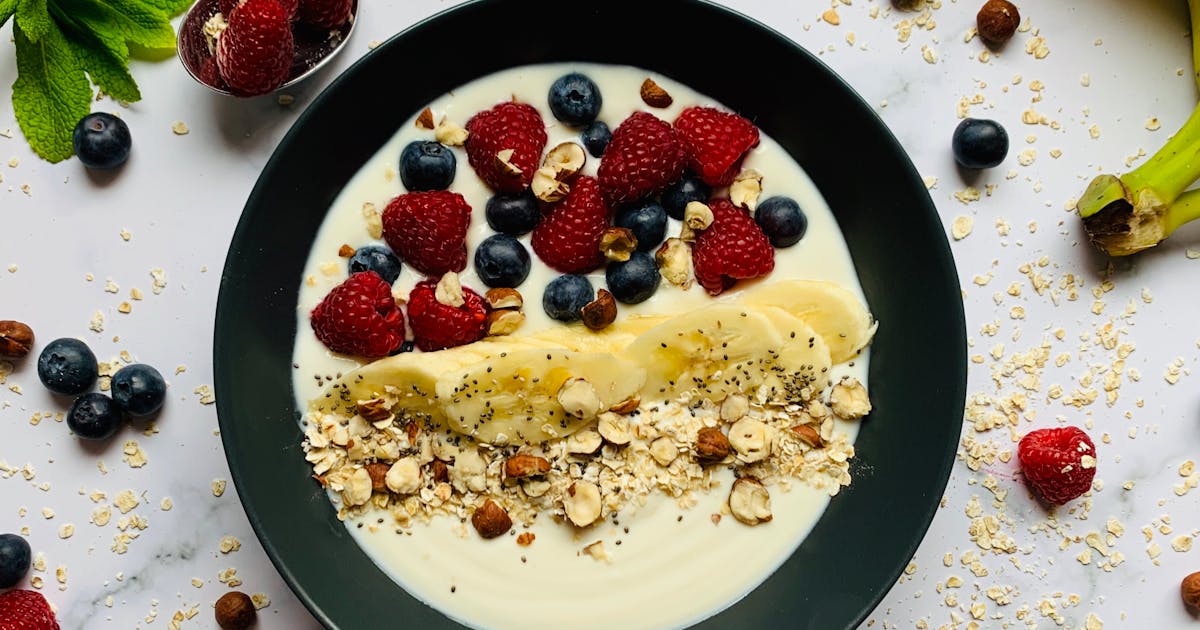
<p>Switch to plain full-fat or low-fat Greek yogurt and add berries plus a small handful of nuts. The fat, protein, and real fiber blunt the curve and keep you full for hours.</p>
<div class="ac-action-plan" style="background: linear-gradient(135deg, #fffcf4 0%, #fff8ed 100%); border-left: 5px solid #9A6841; border-radius: 12px; padding: 28px 24px; margin: 32px 0; box-shadow: 0 2px 12px rgba(0,0,0,0.06);"><div style="display: flex; align-items: center; gap: 10px; margin-bottom: 20px;"><svg width="24" height="24" viewBox="0 0 24 24" fill="none" stroke="#9A6841" stroke-width="2" stroke-linecap="round" stroke-linejoin="round"><path d="M9 5H7a2 2 0 00-2 2v12a2 2 0 002 2h10a2 2 0 002-2V7a2 2 0 00-2-2h-2"/><rect x="9" y="3" width="6" height="4" rx="1"/><path d="M9 14l2 2 4-4"/></svg><span style="font-family: Georgia, serif; font-size: 22px; font-weight: 700; color: #313743;">Your Coach's Recommendations</span></div><div style="display: flex; gap: 14px; margin-bottom: 16px; align-items: flex-start;"><div style="min-width: 36px; width: 36px; height: 36px; background: #9A6841; border-radius: 50%; display: flex; align-items: center; justify-content: center; color: #fff; font-weight: 700; font-size: 16px; flex-shrink: 0;">1</div><div><div style="font-weight: 700; color: #313743; font-size: 15px; margin-bottom: 2px;">Swap Instant Oatmeal for Steel-Cut or Rolled Oats.</div><div style="color: #6b7280; font-size: 13.5px; line-height: 1.5;">Plain steel-cut oats have a glycemic index around 55 versus 79 for flavored instant packets, with a much gentler glucose curve and longer satiety.</div></div></div><div style="display: flex; gap: 14px; margin-bottom: 16px; align-items: flex-start;"><div style="min-width: 36px; width: 36px; height: 36px; background: #9A6841; border-radius: 50%; display: flex; align-items: center; justify-content: center; color: #fff; font-weight: 700; font-size: 16px; flex-shrink: 0;">2</div><div><div style="font-weight: 700; color: #313743; font-size: 15px; margin-bottom: 2px;">Add Protein and Fat to Every Carb-Heavy Breakfast.</div><div style="color: #6b7280; font-size: 13.5px; line-height: 1.5;">Two eggs, a handful of nuts, or a scoop of plain Greek yogurt blunts the glucose spike from any starch you eat alongside it.</div></div></div><div style="display: flex; gap: 14px; margin-bottom: 20px; align-items: flex-start;"><div style="min-width: 36px; width: 36px; height: 36px; background: #9A6841; border-radius: 50%; display: flex; align-items: center; justify-content: center; color: #fff; font-weight: 700; font-size: 16px; flex-shrink: 0;">3</div><div><div style="font-weight: 700; color: #313743; font-size: 15px; margin-bottom: 2px;">Test Your Own Response With a Two-Week Glucose Monitor.</div><div style="color: #6b7280; font-size: 13.5px; line-height: 1.5;">OTC continuous glucose monitors like Dexcom Stelo cost about 100 dollars for 30 days and reveal which "healthy" foods spike your blood sugar personally.</div></div></div><div style="border-top: 1px solid #e5ddd4; margin: 16px 0;"></div><div style="display: flex; justify-content: center; align-items: center; gap: 10px; flex-wrap: wrap;"><button onclick="acPrintPlan()" style="background: none; border: 1px solid #d3cabe; border-radius: 8px; padding: 10px 16px; font-size: 13px; color: #6b7280; cursor: pointer; display: flex; align-items: center; gap: 6px;"><svg width="14" height="14" viewBox="0 0 24 24" fill="none" stroke="currentColor" stroke-width="2" stroke-linecap="round" stroke-linejoin="round"><polyline points="6 9 6 2 18 2 18 9"/><path d="M6 18H4a2 2 0 01-2-2v-5a2 2 0 012-2h16a2 2 0 012 2v5a2 2 0 01-2 2h-2"/><rect x="6" y="14" width="12" height="8"/></svg>Print</button></div></div>
<div style="margin-top: 32px; padding-top: 0;">
<div style="width: 60px; height: 2px; background: linear-gradient(90deg, #9A6841, #be7b4c); border-radius: 2px; margin-bottom: 20px;"></div>
<p style="font-family: Georgia, serif; font-size: 16px; font-style: italic; color: #777; margin: 0 0 6px 0; letter-spacing: 0.3px; padding-left: 38px;">To your health,</p>
<div style="display: flex; align-items: center; gap: 4px; margin-bottom: 4px;">
<img src="https://cdn.prod.website-files.com/69be130d412f9c2c202307ef/69c539b9526b266e2cba5521_ageless-coach-logo-black.png" alt="AC" style="width: 34px; height: 34px; object-fit: contain;">
<p style="font-family: Georgia, serif; font-size: 22px; font-weight: 700; color: #313743; margin: 0; letter-spacing: 0.5px;">Ageless Coach</p>
</div>
<p style="font-family: -apple-system, BlinkMacSystemFont, Segoe UI, sans-serif; font-size: 11px; font-weight: 600; color: #be7b4c; letter-spacing: 2px; text-transform: uppercase; margin: 0 0 0 28px;">Age Strong. Live Long.</p>
</div>
<div style="margin-top: 28px; padding-top: 20px; border-top: 1px solid #e5e7eb; text-align: center;">
<p style="font-family: -apple-system, BlinkMacSystemFont, Segoe UI, sans-serif; font-size: 13px; font-weight: 700; color: #6b7280; letter-spacing: 2px; text-transform: uppercase; margin: 0 0 16px 0;">Trusted Sources Behind This Article</p>
<div style="display: flex; justify-content: center; gap: 10px; flex-wrap: wrap;">
<a href="https://www.health.harvard.edu/diseases-and-conditions/the-lowdown-on-glycemic-index-and-glycemic-load" target="_blank" rel="noopener" style="display: inline-block; background: #fff; border: 1.5px solid #9A6841; color: #9A6841; padding: 8px 20px; border-radius: 20px; font-size: 14px; font-weight: 600; letter-spacing: 0.3px; text-decoration: none; transition: background 0.2s ease, color 0.2s ease;">Harvard Health</a>
<a href="https://www.mayoclinic.org/diseases-conditions/diabetes/in-depth/blood-sugar/art-20046628" target="_blank" rel="noopener" style="display: inline-block; background: #fff; border: 1.5px solid #9A6841; color: #9A6841; padding: 8px 20px; border-radius: 20px; font-size: 14px; font-weight: 600; letter-spacing: 0.3px; text-decoration: none; transition: background 0.2s ease, color 0.2s ease;">Mayo Clinic</a>
<a href="https://my.clevelandclinic.org/health/diseases/22206-insulin-resistance" target="_blank" rel="noopener" style="display: inline-block; background: #fff; border: 1.5px solid #9A6841; color: #9A6841; padding: 8px 20px; border-radius: 20px; font-size: 14px; font-weight: 600; letter-spacing: 0.3px; text-decoration: none; transition: background 0.2s ease, color 0.2s ease;">Cleveland Clinic</a>
</div>
</div>
<p style="font-size: 12px; color: #999; margin-top: 40px; line-height: 1.5;"><em>This content is for educational purposes only and is not a substitute for professional medical advice, diagnosis, or treatment. Reading this article does not create a provider-patient relationship. Always consult your physician or qualified healthcare provider before making changes to your diet, exercise, or health routine. Ageless Coach is not liable for any actions taken based on this information.</em></p>
<div class="ac-faq" style="margin-top:40px; border-top:1px solid #e5e7eb; padding-top:32px;">
<h2 style="font-family:Georgia,serif; font-size:20px; font-weight:700; color:#313743; margin:0 0 20px 0;">Frequently Asked Questions</h2>
<details style="border:1px solid #e5e7eb; border-radius:8px; margin-bottom:10px; overflow:hidden;"><summary style="padding:14px 18px; font-weight:600; font-size:15px; color:#313743; cursor:pointer; list-style:none; display:flex; justify-content:space-between; align-items:center;">How can a "healthy" food spike my blood sugar more than a donut?<svg width="16" height="16" viewBox="0 0 24 24" fill="none" stroke="#9A6841" stroke-width="2" stroke-linecap="round" stroke-linejoin="round" aria-hidden="true"><polyline points="6 9 12 15 18 9"/></svg></summary><div style="padding:0 18px 16px; font-size:18px; color:#555; line-height:1.65;">Glycemic response depends on how quickly carbohydrate hits your bloodstream, not on whether the food is marketed as healthy. Refined or finely milled starches release glucose faster than the sugar in a donut, especially when fat and fiber are stripped out.</div></details>
<details style="border:1px solid #e5e7eb; border-radius:8px; margin-bottom:10px; overflow:hidden;"><summary style="padding:14px 18px; font-weight:600; font-size:15px; color:#313743; cursor:pointer; list-style:none; display:flex; justify-content:space-between; align-items:center;">Does it matter if my blood sugar spikes briefly?<svg width="16" height="16" viewBox="0 0 24 24" fill="none" stroke="#9A6841" stroke-width="2" stroke-linecap="round" stroke-linejoin="round" aria-hidden="true"><polyline points="6 9 12 15 18 9"/></svg></summary><div style="padding:0 18px 16px; font-size:18px; color:#555; line-height:1.65;">A single brief spike is not harmful. The concern is the cumulative effect of repeated spikes over years, which drives insulin resistance and increases risk of type 2 diabetes, fatty liver, and cardiovascular disease.</div></details>
<details style="border:1px solid #e5e7eb; border-radius:8px; margin-bottom:10px; overflow:hidden;"><summary style="padding:14px 18px; font-weight:600; font-size:15px; color:#313743; cursor:pointer; list-style:none; display:flex; justify-content:space-between; align-items:center;">What is a good blood sugar target after a meal?<svg width="16" height="16" viewBox="0 0 24 24" fill="none" stroke="#9A6841" stroke-width="2" stroke-linecap="round" stroke-linejoin="round" aria-hidden="true"><polyline points="6 9 12 15 18 9"/></svg></summary><div style="padding:0 18px 16px; font-size:18px; color:#555; line-height:1.65;">For non-diabetic adults, post-meal blood sugar generally stays below 140 mg/dL. Lower spikes and faster returns to baseline are better. Adults over 60 may see slightly higher peaks even with healthy eating because insulin sensitivity declines with age.</div></details>
<details style="border:1px solid #e5e7eb; border-radius:8px; margin-bottom:10px; overflow:hidden;"><summary style="padding:14px 18px; font-weight:600; font-size:15px; color:#313743; cursor:pointer; list-style:none; display:flex; justify-content:space-between; align-items:center;">Is there anything wrong with eating any of these foods occasionally?<svg width="16" height="16" viewBox="0 0 24 24" fill="none" stroke="#9A6841" stroke-width="2" stroke-linecap="round" stroke-linejoin="round" aria-hidden="true"><polyline points="6 9 12 15 18 9"/></svg></summary><div style="padding:0 18px 16px; font-size:18px; color:#555; line-height:1.65;">Not at all. The problem is when these foods become the everyday default breakfast. Once or twice a week is unlikely to move your metabolic health. Five days a week, year after year, is where the risk accumulates.</div></details>
<details style="border:1px solid #e5e7eb; border-radius:8px; margin-bottom:10px; overflow:hidden;"><summary style="padding:14px 18px; font-weight:600; font-size:15px; color:#313743; cursor:pointer; list-style:none; display:flex; justify-content:space-between; align-items:center;">Can I tell if a food will spike my blood sugar by reading the label?<svg width="16" height="16" viewBox="0 0 24 24" fill="none" stroke="#9A6841" stroke-width="2" stroke-linecap="round" stroke-linejoin="round" aria-hidden="true"><polyline points="6 9 12 15 18 9"/></svg></summary><div style="padding:0 18px 16px; font-size:18px; color:#555; line-height:1.65;">Roughly. Look at grams of fiber relative to total carbohydrate, the order of ingredients, and added sugar content. A food with 3 grams of fiber and 5 grams of added sugar per serving will produce a much gentler curve than one with the inverse ratio.</div></details>
<details style="border:1px solid #e5e7eb; border-radius:8px; margin-bottom:10px; overflow:hidden;"><summary style="padding:14px 18px; font-weight:600; font-size:15px; color:#313743; cursor:pointer; list-style:none; display:flex; justify-content:space-between; align-items:center;">Should I get a continuous glucose monitor if I am not diabetic?<svg width="16" height="16" viewBox="0 0 24 24" fill="none" stroke="#9A6841" stroke-width="2" stroke-linecap="round" stroke-linejoin="round" aria-hidden="true"><polyline points="6 9 12 15 18 9"/></svg></summary><div style="padding:0 18px 16px; font-size:18px; color:#555; line-height:1.65;">It can be useful for a short period of personal experimentation. A two-week CGM session shows which foods cause your specific spikes and which do not. After that initial learning period, you generally do not need continuous monitoring unless your doctor recommends it.</div></details>
</div>
<div class="ac-article-cta">
<p class="ac-cta-lead">Want one verified-science article like this every week?</p>
<a href="/newsletter" class="ac-nav-cta">
Get Better Health, Weekly
<span class="ac-nav-cta-arrow">
<svg viewBox="0 0 18 18" fill="none" xmlns="http://www.w3.org/2000/svg" aria-hidden="true"><path d="M4.24 13.59L12.73 5.11" stroke="#0D1B2A" stroke-width="1.8"/><path d="M4.95 4.4H13.44V12.89" stroke="#0D1B2A" stroke-width="1.8"/></svg>
</span>
</a>
</div>