<style>
.ac-int-r{--dark-base:#0D1B2A;--dark-mid:#1B3A4B;--teal:#0EA5A0;--teal-dark:#0C8C88;--teal-bright:#14D4CD;--fog:#D8E8E8;--deep-fog:#C8DCDC;--fog-border:#A8C4C4;--ink:#313743;--ink-soft:#49505f;--muted:#6b7280;--warm:#9A6841;--serif:"Source Serif 4",Georgia,serif;--sans:Inter,-apple-system,"Segoe UI",sans-serif}
.ac-int-r *{box-sizing:border-box}
.ac-int-r html{scroll-behavior:smooth}
.ac-int-r body{margin:0;background:#fff;color:var(--ink);font-family:var(--sans);-webkit-font-smoothing:antialiased;padding-bottom:74px}
.ac-int-r .mock-banner{background:linear-gradient(90deg,#0D1B2A,#1B3A4B);color:#C8DCDC;font:600 12px/1.5 var(--sans);letter-spacing:.6px;text-align:center;padding:9px 16px}
.ac-int-r .mock-banner b{color:var(--teal-bright)}
.ac-int-r .nv{position:sticky;top:0;z-index:900;background:var(--dark-base);padding:13px 0}
.ac-int-r .nv .in{max-width:1100px;margin:0 auto;padding:0 20px;display:flex;align-items:center;justify-content:space-between}
.ac-int-r .nv .lg{display:flex;align-items:center;gap:10px}
.ac-int-r .nv .ic{width:42px;height:42px;border-radius:10px;background:linear-gradient(135deg,#14D4CD,#0C8C88);display:flex;align-items:center;justify-content:center;color:#fff;font:800 19px/1 var(--sans)}
.ac-int-r .nv .wm{color:#fff;font:800 18px/1.1 var(--sans)}
.ac-int-r .nv .wm span{font-weight:300;color:rgba(255,255,255,.8)}
.ac-int-r .nv .tg{font:500 8px/1 var(--sans);letter-spacing:2.5px;color:var(--teal-bright);text-transform:uppercase;margin-top:3px}
.ac-int-r .nv .cta{display:inline-flex;align-items:center;gap:8px;background:transparent;color:#fff;border:1.5px solid var(--teal-bright);border-radius:82px;padding:9px 17px;font:600 13px/1 var(--sans);text-decoration:none}
@media(max-width:640px){.ac-int-r .nv .cta{display:none}}
.ac-int-r .wrap{max-width:760px;margin:0 auto;padding:26px 20px 60px}
.ac-int-r .trust{display:flex;flex-wrap:wrap;gap:8px 18px;align-items:center;background:linear-gradient(180deg,#F0F7F7,#fff);border:1px solid var(--fog-border);border-radius:12px;padding:11px 16px;margin:0 0 22px}
.ac-int-r .trust .it{display:flex;align-items:center;gap:7px;font:700 12.5px/1.3 var(--sans);color:var(--dark-mid)}
.ac-int-r .trust .it svg{width:15px;height:15px;color:var(--teal-dark);flex-shrink:0}
.ac-int-r .trust .dis{font:500 12px/1.4 var(--sans);color:var(--muted);margin-left:auto}
.ac-int-r .trust .dis a{color:var(--teal-dark);font-weight:700}
.ac-int-r .kicker{display:inline-block;background:#fff;border:1.5px solid var(--fog-border);color:var(--dark-mid);font:700 11px/1 var(--sans);letter-spacing:1.5px;padding:7px 13px;border-radius:20px;text-transform:uppercase;margin-bottom:14px}
.ac-int-r h1{font-family:var(--serif);font-size:41px;line-height:1.14;font-weight:800;color:var(--ink);margin:0 0 16px}
.ac-int-r .heroimg{width:100%;border-radius:14px;aspect-ratio:3/1;background:linear-gradient(135deg,#1B3A4B,#0D1B2A);display:flex;align-items:center;justify-content:center;text-align:center;color:#9FC4C2;font:600 12.5px/1.5 var(--sans);padding:0 24px;margin:0 0 22px}
.ac-int-r p{font-size:19.5px;line-height:1.7;color:var(--ink-soft);margin:0 0 22px}
.ac-int-r p strong{color:var(--ink)}
.ac-int-r p a{color:var(--teal-dark);font-weight:700;text-decoration:underline;text-decoration-color:rgba(14,165,160,.4);text-underline-offset:3px}
.ac-int-r .lead-note{font-size:17px;color:var(--muted);margin:-4px 0 24px}
.ac-int-r .ac-answer{background:#fff;border:1px solid #D4E4E4;border-top:5px solid var(--teal);border-radius:16px;padding:22px 24px 18px;margin:20px 0 30px;box-shadow:0 6px 22px rgba(13,27,42,.07)}
.ac-int-r .ac-answer .eb{font:800 12px/1 var(--sans);letter-spacing:2.5px;text-transform:uppercase;color:var(--teal-dark);margin-bottom:8px}
.ac-int-r .ac-answer h2{font-family:var(--serif);font-size:24px;line-height:1.2;font-weight:800;color:var(--dark-base);margin:0 0 14px}
.ac-int-r .ac-answer ol{list-style:none;margin:0;padding:0}
.ac-int-r .ac-answer li{display:flex;gap:12px;align-items:baseline;padding:11px 0;border-bottom:1px solid #EDF3F3;font:600 16px/1.45 var(--sans);color:var(--ink)}
.ac-int-r .ac-answer li:last-child{border-bottom:none}
.ac-int-r .ac-answer .n{flex-shrink:0;width:24px;height:24px;border-radius:50%;background:var(--teal-dark);color:#fff;font:800 12px/24px var(--sans);text-align:center}
.ac-int-r .ac-answer .k{color:var(--teal-dark);font-weight:800}
.ac-int-r .ac-answer .cue{margin-top:16px;text-align:center}
.ac-int-r .ac-answer .cta{display:inline-flex;align-items:center;gap:9px;background:var(--teal-dark);color:#fff;font:800 14px/1 var(--sans);padding:13px 24px;border-radius:50px;text-decoration:none;box-shadow:0 6px 16px rgba(12,140,136,.28)}
.ac-int-r .ac-answer .arw{animation:nudge 1.4s ease-in-out infinite}
@keyframes nudge{0%,100%{transform:translateY(0)}50%{transform:translateY(3px)}}
.ac-int-r .band{margin:48px 0 20px;padding:22px 24px 10px;background:linear-gradient(180deg,#F0F7F7,#fff);border-radius:16px}
.ac-int-r .band .inner{display:flex;gap:18px;align-items:center}
.ac-int-r .band .big{font:900 60px/1 var(--sans);color:#C8DCDC;flex-shrink:0}
.ac-int-r .band .q{font:700 12.5px/1.4 var(--sans);letter-spacing:2px;text-transform:uppercase;color:var(--teal-dark)}
.ac-int-r .band h3{font-family:var(--serif);font-size:27px;line-height:1.2;font-weight:800;color:var(--ink);margin:0}
.ac-int-r .callout{border-left:4px solid var(--teal);background:#F4FAFA;border-radius:0 12px 12px 0;padding:18px 22px;margin:26px 0}
.ac-int-r .callout .n{font:800 18px/1.35 var(--sans);color:var(--dark-mid);margin-bottom:6px}
.ac-int-r .callout .d{font:500 15px/1.55 var(--sans);color:var(--ink-soft)}
.ac-int-r .callout .c{font:600 11px/1 var(--sans);letter-spacing:1.5px;text-transform:uppercase;color:var(--muted);margin-top:10px}
.ac-int-r .fig{aspect-ratio:800/300;border-radius:14px;background:linear-gradient(135deg,#D8E8E8,#C8DCDC);display:flex;align-items:center;justify-content:center;text-align:center;color:#3A5555;font:600 12.5px/1.5 var(--sans);padding:0 24px;margin:26px 0 8px}
.ac-int-r figcaption{font:500 13px/1.5 var(--sans);color:var(--muted);margin:9px 2px 0}
.ac-int-r .ac-midcap{background:linear-gradient(180deg,#F0F7F7,#fff);border:1.5px solid var(--fog-border);border-radius:16px;padding:22px;margin:30px 0;text-align:center}
.ac-int-r .ac-midcap h4{font-family:var(--serif);font-size:20px;font-weight:800;color:var(--ink);margin:0 0 5px}
.ac-int-r .ac-midcap .sub{font:500 14px/1.55 var(--sans);color:var(--ink-soft);max-width:420px;margin:0 auto 14px}
.ac-int-r .ac-midcap .mcform{display:flex;gap:8px;max-width:400px;margin:0 auto}
.ac-int-r .ac-midcap .mcform input{flex:1;border:1.5px solid var(--fog-border);border-radius:50px;padding:12px 16px;font:500 14px/1 var(--sans);min-width:0}
.ac-int-r .ac-midcap .mcform button{background:var(--teal-dark);color:#fff;border:none;border-radius:50px;padding:12px 18px;font:800 13px/1 var(--sans);cursor:pointer;white-space:nowrap}
.ac-int-r .ac-midcap .fine{font:500 11.5px/1.5 var(--sans);color:var(--muted);margin-top:10px}
@media(max-width:520px){.ac-int-r .ac-midcap .mcform{flex-direction:column}}
.ac-int-r .ac-capture{background:linear-gradient(180deg,#F0F7F7,#fff);border:1.5px solid var(--fog-border);border-radius:16px;padding:30px 28px;margin:26px 0 44px;text-align:center}
.ac-int-r .ac-capture .cap-state{display:none}
.ac-int-r .ac-capture[data-state="trigger"] .st-trigger{display:block}
.ac-int-r .ac-capture[data-state="form"] .st-form{display:block}
.ac-int-r .ac-capture[data-state="sent"] .st-sent{display:block}
.ac-int-r .ac-capture h4{font-family:var(--serif);font-size:24px;font-weight:800;color:var(--ink);margin:0 0 8px}
.ac-int-r .ac-capture .sub{font:500 15px/1.55 var(--sans);color:var(--ink-soft);margin:0 auto 18px;max-width:430px}
.ac-int-r .ac-capture .bigbtn{display:inline-flex;align-items:center;gap:10px;background:var(--teal-dark);color:#fff;border:none;border-radius:50px;padding:16px 30px;font:800 16px/1 var(--sans);cursor:pointer;box-shadow:0 6px 18px rgba(12,140,136,.28)}
.ac-int-r .ac-capture .capform{display:flex;gap:10px;max-width:430px;margin:0 auto}
.ac-int-r .ac-capture .capform input{flex:1;border:1.5px solid var(--fog-border);border-radius:50px;padding:14px 20px;font:500 15px/1 var(--sans)}
.ac-int-r .ac-capture .capform button{background:var(--teal-dark);color:#fff;border:none;border-radius:50px;padding:14px 24px;font:800 14px/1 var(--sans);cursor:pointer}
.ac-int-r .ac-capture .sent-check{width:52px;height:52px;border-radius:50%;background:var(--teal);color:#fff;font:800 26px/52px var(--sans);margin:0 auto 12px}
.ac-int-r .ac-capture .dl{display:inline-block;margin-top:6px;color:var(--teal-dark);font:700 15px/1 var(--sans);text-decoration:underline;cursor:pointer}
.ac-int-r .ac-capture .fine{font:500 12px/1.5 var(--sans);color:var(--muted);margin-top:12px}
@media(max-width:520px){.ac-int-r .ac-capture .capform{flex-direction:column}}
.ac-int-r .forms{border:1.5px solid var(--fog-border);border-radius:16px;overflow:hidden;margin:26px 0 10px}
.ac-int-r .forms .h{background:var(--dark-base);color:#fff;padding:14px 20px;font:800 13px/1.3 var(--sans);letter-spacing:1.4px;text-transform:uppercase}
.ac-int-r .forms table{width:100%;border-collapse:collapse}
.ac-int-r .forms th,.ac-int-r .forms td{padding:12px 13px;font:500 13.5px/1.45 var(--sans);color:var(--ink-soft);border-bottom:1px solid #E9F1F1;text-align:left;vertical-align:top}
.ac-int-r .forms th{font-weight:800;color:var(--dark-mid);background:#F4FAFA;font-size:12.5px}
.ac-int-r .forms td.win{background:#E9F7F6;font-weight:700;color:var(--dark-mid)}
.ac-int-r .forms td.pick{font-weight:800;color:var(--dark-mid);background:#E9F7F6;border:none;border-radius:0;box-shadow:none;padding:12px 13px;margin:0;position:static}
.ac-int-r .forms .pick:before{content:"OUR PICK";display:block;width:max-content;background:var(--teal-bright);color:var(--dark-base);font:800 10px/1 var(--sans);letter-spacing:1.2px;padding:4px 9px;border-radius:20px;margin-bottom:7px}
.ac-int-r .forms tr.rec td{background:#E9F7F6}
.ac-int-r .forms tr:last-child td{border-bottom:none}
.ac-int-r .legend{font:500 12.5px/1.5 var(--sans);color:var(--muted);margin:8px 2px 0}
.ac-int-r .pick{position:relative;background:linear-gradient(170deg,var(--dark-base),var(--dark-mid));border-radius:20px;padding:30px 28px 24px;margin:16px 0 14px;color:#E8F0F0;box-shadow:0 16px 44px rgba(13,27,42,.30);scroll-margin-top:90px}
.ac-int-r .pick .rib{position:absolute;top:-13px;left:26px;background:var(--teal-bright);color:var(--dark-base);font:800 11.5px/1 var(--sans);letter-spacing:2px;text-transform:uppercase;padding:8px 15px;border-radius:20px}
.ac-int-r .pick .se{font:800 12px/1 var(--sans);letter-spacing:2.5px;text-transform:uppercase;color:var(--teal-bright);margin:6px 0 10px}
.ac-int-r .pick h2{font-family:var(--serif);font-size:27px;line-height:1.18;font-weight:800;color:#fff;margin:0 0 6px}
.ac-int-r .pick .why{font:600 15.5px/1.55 var(--sans);color:#CFE4E3;margin:0 0 16px}
.ac-int-r .pick .row{display:flex;gap:22px;align-items:flex-start}
.ac-int-r .pick .pimg{width:132px;height:158px;flex-shrink:0;border-radius:12px;background:linear-gradient(135deg,#22475C,#16374A);border:1px solid rgba(20,212,205,.35);display:flex;align-items:center;justify-content:center;text-align:center;color:#9FC4C2;font:600 10px/1.4 var(--sans);padding:8px}
.ac-int-r .pick ul{margin:0 0 18px;padding:0;list-style:none}
.ac-int-r .pick li{font:600 15px/1.5 var(--sans);color:#DCEBEA;padding:0 0 10px 26px;position:relative}
.ac-int-r .pick li:before{content:"\2713";position:absolute;left:0;color:var(--teal-bright);font-weight:900}
.ac-int-r .buy{display:inline-flex;align-items:center;justify-content:center;gap:9px;background:var(--teal-bright);color:var(--dark-base);font:800 16px/1 var(--sans);padding:15px 30px;border-radius:50px;text-decoration:none;box-shadow:0 8px 22px rgba(20,212,205,.32)}
.ac-int-r .buy.lite{background:var(--teal-dark);color:#fff}
.ac-int-r .pending{display:block;color:rgba(216,232,232,.55);font:500 11.5px/1.5 var(--sans);margin:8px 0 0;letter-spacing:.01em}
.ac-int-r .pending.dk{color:#4E6B6B}
.ac-int-r .pick .ftc{font:500 12px/1.6 var(--sans);color:rgba(216,232,232,.62);margin:14px 0 0}
.ac-int-r .pick .ftc a{color:rgba(216,232,232,.82)}
.ac-int-r .screen{display:grid;grid-template-columns:repeat(2,1fr);gap:12px;margin:20px 0}
.ac-int-r .screen .cell{background:linear-gradient(180deg,#F0F7F7,#fff);border:1px solid var(--fog-border);border-radius:12px;padding:15px 16px}
.ac-int-r .screen .cell .t{font:800 11px/1 var(--sans);letter-spacing:1.2px;text-transform:uppercase;color:var(--teal-dark);margin-bottom:7px;display:flex;align-items:center;gap:7px}
.ac-int-r .screen .cell .t svg{width:14px;height:14px}
.ac-int-r .screen .cell .d{font:500 13.5px/1.5 var(--sans);color:var(--ink-soft)}
.ac-int-r .rate{display:flex;align-items:center;gap:12px;background:#F4FAFA;border:1px solid var(--fog-border);border-radius:12px;padding:13px 18px;margin:14px 0 0}
.ac-int-r .rate .st{font:800 15px/1 var(--sans);color:var(--warm);letter-spacing:1px}
.ac-int-r .rate .tx{font:600 13.5px/1.45 var(--sans);color:var(--ink-soft)}
.ac-int-r .rate .tx b{color:var(--ink)}
.ac-int-r .objs{margin:14px 0 0}
.ac-int-r .objs details{border:1px solid #e5e7eb;border-radius:10px;margin-bottom:10px}
.ac-int-r .objs summary{padding:15px 18px;font:700 16px/1.4 var(--sans);color:var(--ink);cursor:pointer;display:flex;justify-content:space-between;gap:12px;list-style:none}
.ac-int-r .objs summary::-webkit-details-marker{display:none}
.ac-int-r .objs summary:after{content:"\25BE";color:var(--teal-dark)}
.ac-int-r .objs .a{padding:0 18px 16px;font-size:16px;line-height:1.62;color:#555}
.ac-int-r .plan{background:linear-gradient(135deg,#F4FAFA,#fff);border-left:5px solid var(--teal-dark);border-radius:14px;padding:28px 26px;margin:40px 0 0;box-shadow:0 2px 12px rgba(0,0,0,.06);scroll-margin-top:90px}
.ac-int-r .plan .pt{font-family:var(--serif);font-size:23px;font-weight:800;color:var(--ink);margin-bottom:20px}
.ac-int-r .plan .step{display:flex;gap:15px;margin-bottom:16px;align-items:flex-start}
.ac-int-r .plan .step .n{min-width:36px;width:36px;height:36px;background:var(--teal-dark);border-radius:50%;color:#fff;font:800 16px/36px var(--sans);text-align:center;flex-shrink:0}
.ac-int-r .plan .sh{font:800 16px/1.4 var(--sans);color:var(--ink);margin-bottom:3px}
.ac-int-r .plan .sd{font:400 15px/1.6 var(--sans);color:var(--muted)}
.ac-int-r .plan .rr{border-top:1px solid #D8E8E8;margin-top:14px;padding-top:16px;font:500 13.5px/1.6 var(--sans);color:var(--ink-soft);text-align:center}
.ac-int-r .plan .rr b{color:var(--dark-mid)}
.ac-int-r .plan .midcta{margin-top:16px;text-align:center}
.ac-int-r .capline{border-top:1px solid #E2ECEC;margin-top:40px;padding:22px 10px 0;text-align:center;font:500 15px/1.6 var(--sans);color:#3A5555}
.ac-int-r .capline a{color:var(--teal-dark);font-weight:700}
.ac-int-r .faq{margin-top:38px;border-top:1px solid #e5e7eb;padding-top:28px}
.ac-int-r .faq h2{font-family:var(--serif);font-size:23px;font-weight:800;color:var(--ink);margin:0 0 16px}
.ac-int-r .faq details{border:1px solid #e5e7eb;border-radius:10px;margin-bottom:10px}
.ac-int-r .faq summary{padding:15px 18px;font:700 16px/1.4 var(--sans);color:var(--ink);cursor:pointer;display:flex;justify-content:space-between;gap:12px;list-style:none}
.ac-int-r .faq summary::-webkit-details-marker{display:none}
.ac-int-r .faq summary:after{content:"\25BE";color:var(--teal-dark)}
.ac-int-r .faq .a{padding:0 18px 16px;font-size:16px;line-height:1.62;color:#555}
.ac-int-r .sig{margin-top:34px}
.ac-int-r .sig .rule{width:60px;height:2px;background:linear-gradient(90deg,var(--teal-dark),var(--teal-bright));margin-bottom:16px;border-radius:2px}
.ac-int-r .sig .ty{font-family:var(--serif);font-size:16px;font-style:italic;color:#777;margin:0 0 8px}
.ac-int-r .meta{font:500 12.5px/1.6 var(--sans);color:#98a0a6;text-align:center;margin:22px 0 0}
.ac-int-r .sticky{position:fixed;left:0;right:0;bottom:0;z-index:950;background:rgba(13,27,42,.97);padding:11px 16px;display:flex;gap:14px;align-items:center;justify-content:center}
.ac-int-r .sticky .t{font:700 14px/1.3 var(--sans);color:#D8E8E8}
.ac-int-r .sticky .buy{padding:11px 22px;font-size:14px}
@media(max-width:560px){.ac-int-r .sticky .t{display:none}.ac-int-r .pick .row{flex-direction:column}.ac-int-r .pick .pimg{width:100%;height:120px}.ac-int-r .screen{grid-template-columns:1fr}.ac-int-r h1{font-size:31px}.ac-int-r .band .big{font-size:46px}}
.ac-int-r .disc{max-width:760px;margin:0 auto;padding:20px 20px 30px;text-align:center;font:500 12.5px/1.6 var(--sans);color:#8a9298}
@media(max-width:600px){.ac-int-r .forms table,.ac-int-r .forms tbody,.ac-int-r .forms tr,.ac-int-r .forms td{display:block;width:100%;box-sizing:border-box}.ac-int-r .forms tr:first-child{display:none}.ac-int-r .forms tr{padding:10px 0 13px;border-bottom:6px solid #F4FAFA}.ac-int-r .forms tr:last-child{border-bottom:none}.ac-int-r .forms td{border-bottom:none;padding:5px 18px;font-size:14.5px;line-height:1.5}.ac-int-r .forms td:first-child{padding-top:13px;padding-bottom:6px}.ac-int-r .forms td[data-l]:before{content:attr(data-l);display:block;font:800 10.5px/1.4 var(--sans);letter-spacing:.8px;text-transform:uppercase;color:var(--muted);margin-bottom:1px}.ac-int-r .forms tr.rec{background:#E9F7F6;border-left:4px solid var(--teal-dark)}.ac-int-r .forms td.pick{padding:13px 18px 6px}.ac-int-r .forms td.win{background:transparent}}
</style>
<div class="ac-int-r">
<div class="wrap">
<p><strong>Tired in a way sleep does not fix, and you keep reading that magnesium might be the reason.</strong> Maybe you wake around 3am, drag through the afternoon, and notice the odd calf cramp at night. Somewhere along the way a headline told you those are signs you are low on magnesium, and that a supplement will sort it out.</p>
<p>Here is the honest version. Low magnesium is real, and it has a recognized set of signs. It is also, in healthy people eating a normal diet, less common than the internet suggests. This is what the signs actually are, who genuinely tends to run short, and where a screened supplement fits, only after food.</p>
<div class="ac-answer">
<div class="eb">The Short Answer</div>
<h2>The signs are real, but they are a prompt to check, not a diagnosis.</h2>
<ol>
<li><span class="n">1</span><span><span class="k">The classic signs are broad</span> · fatigue, cramps, and low appetite overlap with many everyday things</span></li>
<li><span class="n">2</span><span><span class="k">True shortfall is uncommon in healthy people</span> · the kidneys limit how much you lose, so specific groups are most at risk</span></li>
<li><span class="n">3</span><span><span class="k">Food first, then the right form</span> · if you supplement for sleep, L-Threonate is the form studied to reach the brain</span></li>
</ol>
<div class="cue"><a class="cta" href="#coach-recommendations">Get Your Coach's Magnesium Plan <span class="arw">↓</span></a></div>
</div>
<div class="band"><div class="inner"><div class="big">1</div><div><div class="q">Part 1 · The Signs</div><h3>Five Signs Worth Paying Attention To</h3></div></div></div>
<p>The <a href="https://ods.od.nih.gov/factsheets/Magnesium-Consumer/" target="_blank" rel="noopener">NIH Office of Dietary Supplements</a> lists a clear early set: loss of appetite, nausea, fatigue, and weakness. As a shortfall deepens, <a href="https://ods.od.nih.gov/factsheets/Magnesium-HealthProfessional/" target="_blank" rel="noopener">the NIH notes</a> it can progress to numbness, tingling, muscle cramps, personality changes, and abnormal heart rhythms. <a href="https://health.clevelandclinic.org/feeling-fatigued-could-it-be-magnesium-deficiency-and-if-so-what-to-do-about-it" target="_blank" rel="noopener">Cleveland Clinic</a> groups the day-to-day complaints people notice into roughly these five.</p>
<p><strong>1. A run-down feeling with low appetite or nausea.</strong> The earliest signs are also the vaguest, which is exactly why they are easy to miss and easy to over-attribute.</p>
<p><strong>2. Unusual fatigue or muscle weakness.</strong> Magnesium is used by nearly every energy-producing reaction in the body, so a genuine shortfall can leave muscles feeling weak.</p>
<p><strong>3. Muscle cramps, twitches, or spasms.</strong> This is the sign people most associate with magnesium, and <a href="https://health.clevelandclinic.org/feeling-fatigued-could-it-be-magnesium-deficiency-and-if-so-what-to-do-about-it" target="_blank" rel="noopener">Cleveland Clinic</a> lists it, though cramps have many causes besides a mineral gap.</p>
<p><strong>4. Numbness or tingling.</strong> A later sign of a deeper shortfall, not something a mild dietary gap usually produces.</p>
<p><strong>5. A fluttering or irregular heartbeat.</strong> The <a href="https://ods.od.nih.gov/factsheets/Magnesium-HealthProfessional/" target="_blank" rel="noopener">NIH</a> lists abnormal heart rhythm among the more serious signs. This one is a reason to see a doctor, not to reach for a bottle.</p>
<p>The honest caveat runs through all five: the <a href="https://ods.od.nih.gov/factsheets/Magnesium-Consumer/" target="_blank" rel="noopener">NIH states plainly</a> that symptomatic magnesium deficiency from diet alone is uncommon in healthy people, because the kidneys limit how much you excrete. The signs are a prompt to look at your intake and your risk, not a self-diagnosis.</p>
<div class="band"><div class="inner"><div class="big">2</div><div><div class="q">Part 2 · Who Runs Short, and the Sleep Link</div><h3>Where a Real Gap Comes From</h3></div></div></div>
<p>Some groups genuinely tend to fall short. The <a href="https://ods.od.nih.gov/factsheets/Magnesium-HealthProfessional/" target="_blank" rel="noopener">NIH names them</a>: people with gastrointestinal conditions such as Crohn's or celiac disease, people with type 2 diabetes, people with alcohol dependence, older adults whose absorption declines, and anyone on medications that increase magnesium loss. If none of those apply to you, a dramatic deficiency is unlikely, even if a few of the signs above ring true.</p>
<p>The sleep angle is where this lane gets its interest, and it deserves the same honesty. <a href="https://mcpress.mayoclinic.org/living-well/magnesium-for-sleep-what-you-need-to-know-about-its-benefits/" target="_blank" rel="noopener">Mayo Clinic Press</a> links magnesium to better sleep quality, and <a href="https://health.clevelandclinic.org/does-magnesium-help-you-sleep" target="_blank" rel="noopener">Cleveland Clinic</a> frames it as a relaxation mineral that supports settling into sleep, while noting the sleep studies are small and the evidence is thin. The mechanism is real, magnesium supports the calming GABA system, but it is support, not a sedative, and it helps most when your intake was running short to begin with.</p>
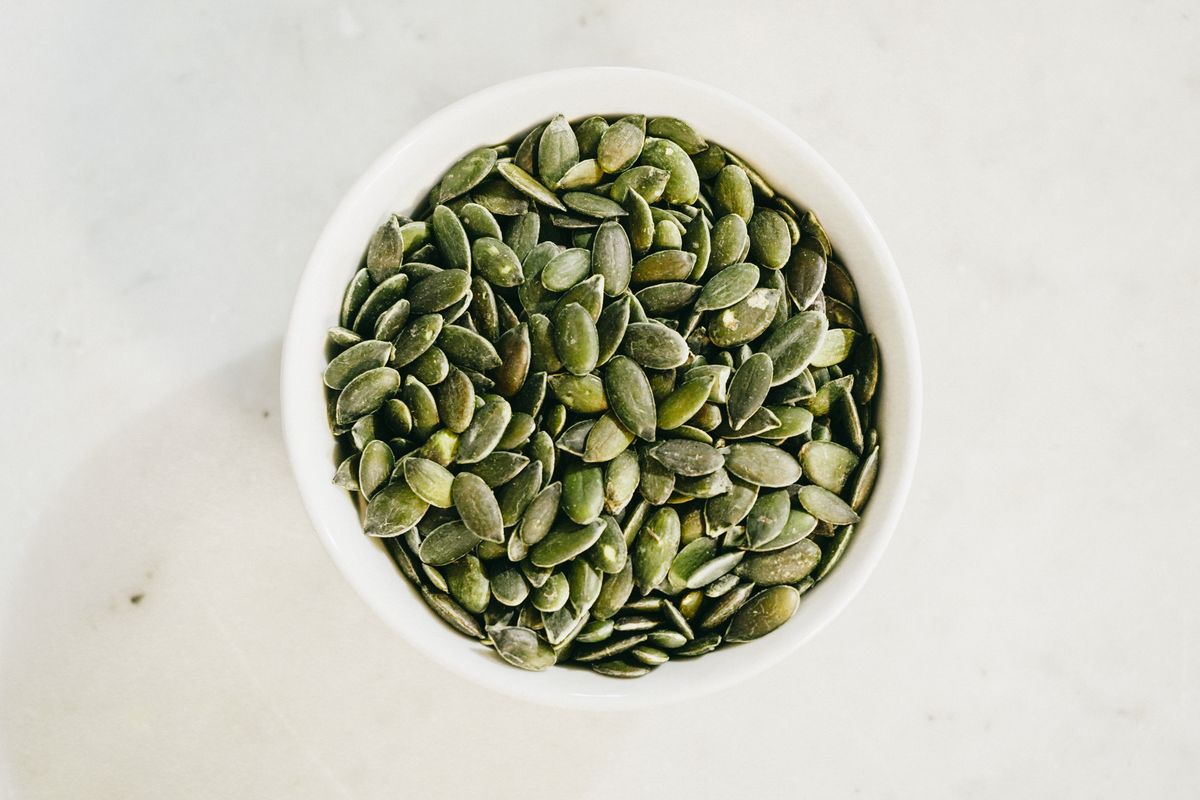
<div class="callout"><div class="n">Fill the gap from food before you buy anything.</div><div class="d"><a href="https://health.clevelandclinic.org/feeling-fatigued-could-it-be-magnesium-deficiency-and-if-so-what-to-do-about-it" target="_blank" rel="noopener">Cleveland Clinic</a> and the <a href="https://ods.od.nih.gov/factsheets/Magnesium-Consumer/" target="_blank" rel="noopener">NIH</a> point to the same everyday sources: pumpkin seeds, spinach and other leafy greens, almonds and cashews, black beans and other legumes, and whole grains. Two weeks of these closes a modest gap for most people, and it is the best-evidenced move on this page.</div><div class="c">NIH Office of Dietary Supplements · Cleveland Clinic</div></div>
<div class="ac-midcap"><h4>Take the magnesium checklist with you</h4><p class="sub">Your free plan (PDF): the signs to watch, the risk factors that actually matter, the food-first fixes, and how to run a fair supplement trial if you get there.</p><div class="mcform"><input type="email" placeholder="Your email address" aria-label="Email address"><button type="button">Send My Plan (Free)</button></div><div class="fine">One email. No spam. Unsubscribe anytime.</div></div>
<div class="band"><div class="inner"><div class="big">3</div><div><div class="q">Part 3 · If You Get to a Supplement</div><h3>Not All Magnesium Is the Same</h3></div></div></div>
<p>If your week still lands short and sleep is your reason, the <strong>form</strong> is the decision that matters, because the forms behave very differently in the body.</p>
<div class="forms">
<div class="h">The Common Forms, Honestly Compared</div>
<table>
<tr><th>Form</th><th>Reaches the brain</th><th>Easy on digestion</th><th>Usually chosen for</th></tr>
<tr class="rec"><td class="pick">L-Threonate (Magtein)</td><td data-l="Reaches the brain" class="win">Yes, studied to cross the blood-brain barrier</td><td data-l="Easy on digestion" class="win">Yes, at label dose</td><td data-l="Usually chosen for" class="win">Sleep quality and cognitive support</td></tr>
<tr><td>Glycinate / Bisglycinate</td><td data-l="Reaches the brain">Not its known strength</td><td data-l="Easy on digestion">Yes, very gentle</td><td data-l="Usually chosen for">Calm and evening relaxation</td></tr>
<tr><td>Citrate</td><td data-l="Reaches the brain">No</td><td data-l="Easy on digestion">Loosens stools at higher doses</td><td data-l="Usually chosen for">Occasional constipation</td></tr>
<tr><td>Oxide</td><td data-l="Reaches the brain">No</td><td data-l="Easy on digestion">Most laxative, poorly absorbed</td><td data-l="Usually chosen for">Cheapest, general use</td></tr>
</table>
</div>
<p class="legend">Comparison verified against manufacturer and Tier-1 sources. Glycinate is a legitimate, gentle evening choice. For the brain-and-sleep angle, L-Threonate is the form we would reach for.</p>
<p>One low-key caution: if you have kidney disease or take medications that interact with magnesium, <a href="https://ods.od.nih.gov/factsheets/Magnesium-Consumer/" target="_blank" rel="noopener">the NIH</a> and <a href="https://health.clevelandclinic.org/does-magnesium-help-you-sleep" target="_blank" rel="noopener">Cleveland Clinic</a> both advise checking with your doctor first, since the kidneys clear the excess.</p>
<div class="pick">
<div class="rib">★ Coach's Pick</div>
<div class="se">The one we would buy</div>
<h2>Momentous Magnesium L-Threonate</h2>
<div class="why">The magnesium form built to reach the brain, for the calm and sleep quality this angle needs. It passed our screen on form, third-party verification, and honest dosing.</div>
<ul>
<li>Uses Magtein, 2g per serving, the clinically studied L-Threonate form</li>
<li>Studied to cross the blood-brain barrier, where sleep and calm are regulated</li>
<li>NSF Certified for Sport, every batch, with third-party Light Labs results published</li>
<li>Take it 30 to 60 minutes before bed, alongside the food-first fixes</li>
</ul>
<a class="buy" href="https://www.livemomentous.com/products/magnesium-threonate?dc=AgelessCoach&mct=pwqwZOO1&utm_source=agelesscoach&utm_medium=intent-article&utm_content=tmpl-R" data-affiliate="momentous" data-template="R" data-code="AgelessCoach" rel="noopener sponsored">Check Current Price at Momentous →</a><span class="pending">Partner link · discount applied automatically at checkout</span>
<p class="ftc">Ageless Coach may earn a commission if you buy through this link, at no extra cost to you. We only recommend products that pass our published screen, and this recommendation was set before any partnership. <a href="/partners">How we choose partners</a>.</p>
</div>
<div class="screen">
<div class="cell"><div class="t"><svg viewBox="0 0 24 24" fill="none" stroke="currentColor" stroke-width="2.4" stroke-linecap="round" stroke-linejoin="round"><path d="M20 6L9 17l-5-5"/></svg>Right form</div><div class="d">L-Threonate is the form studied for the brain, not the cheap oxide most shelf bottles use.</div></div>
<div class="cell"><div class="t"><svg viewBox="0 0 24 24" fill="none" stroke="currentColor" stroke-width="2.4" stroke-linecap="round" stroke-linejoin="round"><path d="M20 6L9 17l-5-5"/></svg>Verified label</div><div class="d">NSF Certified for Sport means an independent lab confirms what is in the capsule. Most brands skip it.</div></div>
<div class="cell"><div class="t"><svg viewBox="0 0 24 24" fill="none" stroke="currentColor" stroke-width="2.4" stroke-linecap="round" stroke-linejoin="round"><path d="M20 6L9 17l-5-5"/></svg>Honest dose</div><div class="d">A full 2g of Magtein per serving, the amount used in the research, published on the label.</div></div>
<div class="cell"><div class="t"><svg viewBox="0 0 24 24" fill="none" stroke="currentColor" stroke-width="2.4" stroke-linecap="round" stroke-linejoin="round"><path d="M20 6L9 17l-5-5"/></svg>Honest evidence</div><div class="d">Structure and function support for sleep quality and calm, not a cure. We would not sell it as one.</div></div>
</div>
<div class="rate"><div class="st">★★★★★</div><div class="tx"><b>4.8 out of 5</b> across 900+ verified Momentous reviews, most citing easier, deeper sleep and no morning grogginess.</div></div>
<div class="band"><div class="inner"><div class="big">4</div><div><div class="q">Before You Buy</div><h3>The Questions Worth Asking</h3></div></div></div>
<div class="objs">
<details><summary>I have some of these signs. Am I deficient?</summary><div class="a">Maybe, but probably not from diet alone if you are otherwise healthy. The signs are nonspecific, and the NIH says a true shortfall from food is uncommon because the kidneys conserve magnesium. Use the signs to check your intake and risk factors, and see a doctor for anything like an irregular heartbeat.</div></details>
<details><summary>Can I just eat more magnesium instead?</summary><div class="a">Yes, and you should try first: pumpkin seeds, spinach, almonds, black beans, whole grains. A supplement earns its place only when your normal week consistently falls short.</div></details>
<details><summary>Will magnesium fix my sleep?</summary><div class="a">It may support it if your intake was running low, but it is not a sedative and the sleep evidence is modest. Expect gradual change over a fair trial, and keep the free sleep basics running.</div></details>
<details><summary>Why L-Threonate and not the drugstore bottle?</summary><div class="a">Form and verification. Most shelf bottles are oxide, which is poorly absorbed. This one is L-Threonate, the form studied to reach the brain, and NSF Certified for Sport with third-party results published.</div></details>
<details><summary>Who should skip it?</summary><div class="a">Anyone with kidney disease or on medications that interact with magnesium should talk with their doctor first, since the kidneys clear the excess.</div></details>
</div>
<div class="plan" id="coach-recommendations"><div class="pt">📋 Your Coach's Recommendations</div>
<div class="step"><div class="n">1</div><div><div class="sh">Read the signs as a prompt, not a verdict.</div><div class="sd">Note any ongoing fatigue, cramps, or numbness, and see a doctor for palpitations. Then look at your risk factors before assuming a deficiency.</div></div></div>
<div class="step"><div class="n">2</div><div><div class="sh">Fill the gap from food for two weeks.</div><div class="sd">Pumpkin seeds, greens, beans, nuts, and whole grains. The cheapest and best-evidenced move on this page.</div></div></div>
<div class="step"><div class="n">3</div><div><div class="sh">If you still fall short, match the form and trial it.</div><div class="sd">L-Threonate for the sleep-and-brain angle, 30 to 60 minutes before bed, judged over a fair 4-week trial. Clear it with your doctor if you have kidney disease.</div></div></div>
<div class="midcta"><a class="buy lite" href="https://www.livemomentous.com/products/magnesium-threonate?dc=AgelessCoach&mct=pwqwZOO1&utm_source=agelesscoach&utm_medium=intent-article&utm_content=tmpl-R" data-affiliate="momentous" data-template="R" data-code="AgelessCoach" rel="noopener sponsored">Check Current Price at Momentous →</a><span class="pending dk">Partner link · discount applied automatically at checkout</span></div>
<div class="rr"><b>Low-risk way to test it:</b> Momentous ships from the maker with subscribe-and-save and cancel-anytime, so a 4-week trial is not a commitment. Rather start with food and the free basics? That is the right call, and the plan below is free.</div>
</div>
<div class="capline">Not ready to buy? Fair. Get the free Magnesium Check Plan, the signs, the risk factors, and the food-first fixes, sent to your inbox using the box below.</div>
<div class="ac-capture" data-state="trigger" data-article-slug="5-signs-you-may-be-low-on-magnesium" data-pdf-url="https://cdn.prod.website-files.com/69be1026a027224999b7936b/6a634b374a6e8dc8268f824b_magnesium-check-plan-2026-07-24.pdf" data-plan-title="The Magnesium Check Plan" data-plan-desc="The signs to watch, the risk factors that matter, the food-first fixes, and a fair supplement trial."><div class="st-trigger cap-state"><h4>The Magnesium Check Plan</h4><p class="sub">Your free plan turns this into action: the signs to watch, the risk factors that matter, the food-first fixes, and a fair trial protocol.</p><button class="bigbtn" type="button" data-cap="form">📩 Send Me the Plan (Free)</button><div class="fine">One email. No spam. Unsubscribe anytime.</div></div><div class="st-form cap-state"><h4>Where should we send it?</h4><p class="sub">Your free plan, straight to your inbox.</p><form class="capform"><input type="email" name="email" required placeholder="Your email address" aria-label="Email address"><button type="submit">Send My Plan</button></form><div class="fine">We send the plan plus one short evidence brief each week. Unsubscribe anytime.</div></div><div class="st-sent cap-state"><div class="sent-check">✓</div><h4>It's on the way</h4><p class="sub">Check your inbox in the next minute. Want it right now?</p><a class="dl" href="https://cdn.prod.website-files.com/69be1026a027224999b7936b/6a634b374a6e8dc8268f824b_magnesium-check-plan-2026-07-24.pdf" download>⬇ Download your plan (PDF)</a><div class="fine">Your first Ageless Brief arrives this week: one study, translated, no hype.</div></div></div>
<div class="faq"><h2>Frequently Asked Questions</h2>
<details><summary>What are the first signs of low magnesium?</summary><div class="a">The NIH lists loss of appetite, nausea, fatigue, and weakness as the earliest signs, with cramps, numbness, and abnormal heart rhythms appearing as a shortfall deepens.</div></details>
<details><summary>Is magnesium deficiency common?</summary><div class="a">Symptomatic deficiency from diet alone is uncommon in healthy people, because the kidneys limit losses. It is more likely with GI conditions, type 2 diabetes, heavy alcohol use, older age, or certain medications.</div></details>
<details><summary>Does magnesium help you sleep?</summary><div class="a">It may support the settling into sleep if your intake runs short, but Cleveland Clinic notes the sleep evidence is thin and it is not a sedative.</div></details>
<details><summary>Which magnesium is best for sleep?</summary><div class="a">For a sleep-and-brain angle, L-Threonate is the form studied to cross into the brain. Glycinate is a gentle, reasonable alternative if you mainly want evening calm.</div></details>
<details><summary>How much magnesium is in food?</summary><div class="a">Pumpkin seeds, spinach, almonds, cashews, black beans, and whole grains are among the richest everyday sources, enough to close a modest gap for most people.</div></details>
</div>
<div class="sources"><h2 style="font-family:var(--serif);font-size:20px;font-weight:800;color:var(--ink);margin:0 0 10px">Sources</h2>
<p class="legend" style="line-height:1.7">
<a href="https://ods.od.nih.gov/factsheets/Magnesium-Consumer/" target="_blank" rel="noopener">NIH Office of Dietary Supplements, Magnesium Fact Sheet for Consumers</a><br>
<a href="https://ods.od.nih.gov/factsheets/Magnesium-HealthProfessional/" target="_blank" rel="noopener">NIH Office of Dietary Supplements, Magnesium Fact Sheet for Health Professionals</a><br>
<a href="https://health.clevelandclinic.org/feeling-fatigued-could-it-be-magnesium-deficiency-and-if-so-what-to-do-about-it" target="_blank" rel="noopener">Cleveland Clinic, Symptoms of a Magnesium Deficiency</a><br>
<a href="https://health.clevelandclinic.org/does-magnesium-help-you-sleep" target="_blank" rel="noopener">Cleveland Clinic, Why Magnesium May Help You Sleep Better</a><br>
<a href="https://mcpress.mayoclinic.org/living-well/magnesium-for-sleep-what-you-need-to-know-about-its-benefits/" target="_blank" rel="noopener">Mayo Clinic Press, Magnesium for Sleep</a>
</p></div>
<div class="sig"><div class="rule"></div><p class="ty">To your health,</p><svg width="300" height="66" viewBox="0 0 300 66" role="img" aria-label="Ageless Coach. Age Strong. Live Long." xmlns="http://www.w3.org/2000/svg"><text x="0" y="38" style="font-family:Inter,system-ui,sans-serif;font-size:25px;letter-spacing:-0.3px"><tspan style="font-weight:800;fill:#0D1B2A">Ageless</tspan><tspan style="font-weight:300;fill:rgba(13,27,42,0.6)">Coach</tspan></text><text x="0" y="56" style="font-family:Inter,system-ui,sans-serif;font-size:10px;letter-spacing:2.5px;font-weight:500;fill:#0C8C88">AGE STRONG. LIVE LONG.</text></svg></div>
<p class="meta">By the Ageless Coach Editorial Team · July 24, 2026 · Sources listed above</p><p class="meta" style="margin-top:8px">Affiliate disclosure: this article contains an affiliate link. Ageless Coach may earn a commission if you buy through it, at no extra cost to you. Our recommendation was set before any partnership and reflects our published screen.</p>
</div>
<div class="sticky"><span class="t">The magnesium we would buy for sleep: Momentous L-Threonate</span><a class="buy" href="https://www.livemomentous.com/products/magnesium-threonate?dc=AgelessCoach&mct=pwqwZOO1&utm_source=agelesscoach&utm_medium=intent-article&utm_content=tmpl-R" data-affiliate="momentous" data-template="R" data-code="AgelessCoach" rel="noopener sponsored">Check Price →</a></div>
<div class="disc">This content is educational and is not a substitute for professional medical advice, diagnosis, or treatment. These statements have not been evaluated by the Food and Drug Administration. This product is not intended to diagnose, treat, cure, or prevent any disease. Always consult your physician before making changes to your health routine.</div>
</div>