<style>
:root{--dark-base:#0D1B2A;--dark-mid:#1B3A4B;--teal:#0EA5A0;--teal-dark:#0C8C88;--teal-bright:#14D4CD;--fog:#D8E8E8;--deep-fog:#C8DCDC;--fog-border:#A8C4C4;--ink:#313743;--ink-soft:#49505f;--muted:#6b7280;--serif:"Source Serif 4",Georgia,serif;--sans:Inter,-apple-system,"Segoe UI",sans-serif}
*{box-sizing:border-box}
body{margin:0;background:#fff;font-family:var(--sans);color:var(--ink)}
/* mockup banner */
.ac-pf-mock{background:var(--dark-base);color:#8FB8B6;font:600 11.5px/1.4 var(--sans);letter-spacing:1.5px;text-transform:uppercase;text-align:center;padding:9px 16px}
.ac-pf-mock b{color:var(--teal-bright)}
/* nav (simplified representation) */
.ac-pf-nav{border-bottom:1px solid #E5EEEE;background:#fff;position:sticky;top:0;z-index:900}
.ac-pf-nav .in{max-width:1100px;margin:0 auto;padding:14px 20px;display:flex;align-items:center;justify-content:space-between;gap:16px}
.ac-pf-nav .lg{font:800 21px/1 var(--sans);color:var(--dark-base);text-decoration:none}
.ac-pf-nav .lg span{font-weight:300;color:rgba(13,27,42,.6)}
.ac-pf-nav .lg .tg{display:block;font:500 8.5px/1 var(--sans);letter-spacing:2.2px;color:var(--teal-dark);margin-top:4px}
.ac-pf-nav .lks{display:flex;gap:22px;align-items:center}
.ac-pf-nav .lks a{font:600 14px/1 var(--sans);color:var(--ink-soft);text-decoration:none}
.ac-pf-nav .lks .cta{background:var(--teal-dark);color:#fff;font-weight:800;padding:12px 20px;border-radius:50px}
@media(max-width:768px){.ac-pf-nav .lks a:not(.cta){display:none}}
/* article head */
.ac-pf-wrap{max-width:760px;margin:0 auto;padding:30px 20px 60px}
.ac-pf-cat{display:inline-block;background:#EAF5F5;color:var(--teal-dark);font:800 11.5px/1 var(--sans);letter-spacing:2px;text-transform:uppercase;padding:8px 15px;border-radius:20px;margin-bottom:16px}
h1.ac-pf-h1{font-family:var(--serif);font-size:42px;line-height:1.12;font-weight:800;color:var(--dark-base);margin:0 0 14px;letter-spacing:-.5px}
.ac-pf-by{font:500 13.5px/1 var(--sans);color:var(--muted);margin-bottom:22px}
.ac-pf-hero{margin:0 0 26px}
.ac-pf-hero img{width:100%;height:auto;aspect-ratio:16/7;object-fit:cover;border-radius:14px;display:block}
@media(max-width:768px){h1.ac-pf-h1{font-size:32px}}
/* THE PAYOFF: answers the pin immediately */
.ac-pf-payoff{font-family:var(--serif);font-size:22.5px;line-height:1.5;color:var(--ink);margin:0 0 26px}
.ac-pf-payoff a{color:var(--teal-dark);text-decoration:underline;text-decoration-color:rgba(14,165,160,.4);text-underline-offset:3px}
@media(max-width:768px){.ac-pf-payoff{font-size:19px}}
/* THE PLAN CARD: the star of the page */
.ac-pf-plan{position:relative;background:linear-gradient(170deg,var(--dark-base),var(--dark-mid));border-radius:20px;padding:34px 30px 28px;margin:0 0 18px;color:#E8F0F0;box-shadow:0 18px 48px rgba(13,27,42,.32)}
.ac-pf-plan .rib{position:absolute;top:-13px;left:26px;background:var(--teal-bright);color:var(--dark-base);font:800 11.5px/1 var(--sans);letter-spacing:2px;text-transform:uppercase;padding:8px 15px;border-radius:20px}
.ac-pf-plan h2{font-family:var(--serif);font-size:29px;line-height:1.15;font-weight:800;color:#fff;margin:6px 0 6px}
.ac-pf-plan .sub{font:600 15px/1.55 var(--sans);color:#9FC5C3;margin:0 0 22px}
.ac-pf-step{display:flex;gap:16px;align-items:flex-start;padding:15px 0;border-bottom:1px solid rgba(216,232,232,.12)}
.ac-pf-step .n{flex-shrink:0;width:34px;height:34px;border-radius:50%;background:var(--teal-dark);color:#fff;font:800 15px/34px var(--sans);text-align:center}
.ac-pf-step .sh{font:800 16.5px/1.35 var(--sans);color:#fff;margin-bottom:4px}
.ac-pf-step .sd{font:500 14.5px/1.55 var(--sans);color:#B9D4D2}
.ac-pf-step.prod .n{background:var(--teal-bright);color:var(--dark-base)}
.ac-pf-step.prod .sd a{color:var(--teal-bright);font-weight:700;text-decoration:underline;text-underline-offset:3px}
.ac-pf-step.prod .sd .pd{color:#8FB8B6;font-size:13px}
/* the sell zone, Design B: show the sheet */
.ac-pf-sellb{margin:18px 0 0;display:flex;gap:20px;align-items:center;background:rgba(13,27,42,.5);border:1px solid rgba(20,212,205,.35);border-radius:14px;padding:20px 22px}
.ac-pf-sellb .sheet{flex-shrink:0;width:130px;background:#fff;border-radius:6px;padding:12px 11px;transform:rotate(-3deg);box-shadow:0 10px 26px rgba(0,0,0,.45)}
.ac-pf-sellb .sheet .st{font-family:var(--serif);font-size:10.5px;font-weight:800;color:var(--dark-base);line-height:1.25;margin-bottom:8px}
.ac-pf-sellb .sheet .row{height:6px;border-radius:3px;background:#CFE0E0;margin-bottom:5px;filter:blur(2.5px)}
.ac-pf-sellb .sheet .row.hot{background:#9ED4D2}
.ac-pf-sellb .sheet .w70{width:70%}.ac-pf-sellb .sheet .w85{width:85%}.ac-pf-sellb .sheet .w55{width:55%}
.ac-pf-sellb .tx .bigline{font-family:var(--serif);font-size:19px;line-height:1.3;font-weight:800;color:#fff;margin:0 0 8px}
.ac-pf-sellb .tx .small{font:500 13.5px/1.55 var(--sans);color:#B9D4D2}
.ac-pf-sellb .tx .small b{color:var(--teal-bright)}
@media(max-width:560px){.ac-pf-sellb{flex-direction:column;text-align:center}}
/* the capture form inside the plan */
.ac-pf-cap{margin-top:20px;text-align:center}
.ac-pf-capform{display:flex;gap:10px;max-width:460px;margin:0 auto}
.ac-pf-capform input{flex:1;border:none;border-radius:50px;padding:16px 22px;font:500 15px/1 var(--sans);min-width:0}
.ac-pf-capform button{background:var(--teal-bright);color:var(--dark-base);border:none;border-radius:50px;padding:16px 26px;font:800 15px/1 var(--sans);cursor:pointer;white-space:nowrap;box-shadow:0 8px 22px rgba(20,212,205,.32)}
.ac-pf-cap .fine{font:500 12px/1.5 var(--sans);color:#8FB8B6;margin-top:12px}
.ac-pf-sent{display:none;padding:8px 0 2px}
.ac-pf-sent .ck{width:52px;height:52px;border-radius:50%;background:var(--teal);color:#fff;font:800 26px/52px var(--sans);margin:0 auto 12px}
.ac-pf-sent h4{font-family:var(--serif);font-size:22px;font-weight:800;color:#fff;margin:0 0 6px}
.ac-pf-sent p{font:500 14.5px/1.55 var(--sans);color:#B9D4D2;margin:0 0 12px}
.ac-pf-sent .dl{color:var(--teal-bright);font:700 15px/1 var(--sans);text-decoration:underline;cursor:pointer}
@media(max-width:560px){.ac-pf-capform{flex-direction:column}.ac-pf-capform button{width:100%}}
/* keep-reading bridge */
.ac-pf-bridge{text-align:center;margin:0 0 8px;padding:34px 10px 6px}
.ac-pf-bridge .kick{font:800 11.5px/1 var(--sans);letter-spacing:2.5px;text-transform:uppercase;color:var(--teal-dark);margin-bottom:12px}
.ac-pf-bridge h2{font-family:var(--serif);font-size:30px;line-height:1.18;font-weight:800;color:var(--dark-base);margin:0 0 12px}
.ac-pf-bridge .sub{font:500 16px/1.65 var(--sans);color:var(--ink-soft);max-width:560px;margin:0 auto}
.ac-pf-bridge .sub b{color:var(--dark-mid)}
.ac-pf-bridge .arrow{color:var(--teal-dark);font-size:20px;margin-top:14px;animation:acnudge 1.4s ease-in-out infinite}
@keyframes acnudge{0%,100%{transform:translateY(0)}50%{transform:translateY(4px)}}
@media(max-width:768px){.ac-pf-bridge h2{font-size:25px}}
/* proof strip */
.ac-pf-proof{display:flex;flex-wrap:wrap;gap:10px;margin:0 0 40px;justify-content:center}
.ac-pf-proof .pf{display:inline-flex;align-items:center;gap:7px;background:#F4FAFA;border:1px solid var(--fog-border);border-radius:30px;padding:9px 16px;font:700 12.5px/1 var(--sans);color:var(--dark-mid)}
.ac-pf-proof .pf:before{content:"✓";color:var(--teal-dark);font-weight:900}
/* magazine body */
.ac-pf-wrap p.b{font-size:19px;line-height:1.7;color:var(--ink-soft);margin:0 0 22px}
.ac-pf-wrap p.b a{color:var(--teal-dark);font-weight:700;text-decoration:underline;text-decoration-color:rgba(14,165,160,.4);text-underline-offset:3px}
.ac-pf-band{margin:46px 0 18px;padding:22px 24px 8px;background:linear-gradient(180deg,#F0F7F7,#fff);border-radius:16px}
.ac-pf-band .inner{display:flex;gap:18px;align-items:center;margin-bottom:14px}
.ac-pf-band .big{font:900 56px/1 var(--sans);color:#C8DCDC;flex-shrink:0}
.ac-pf-band h3{font-family:var(--serif);font-size:26px;line-height:1.2;font-weight:800;color:var(--ink);margin:0}
.ac-pf-callout{border-left:4px solid var(--teal);background:#F4FAFA;border-radius:0 12px 12px 0;padding:18px 22px;margin:26px 0}
.ac-pf-callout .n{font:800 17px/1.35 var(--sans);color:var(--dark-mid);margin-bottom:6px}
.ac-pf-callout .d{font:500 15px/1.55 var(--sans);color:var(--ink-soft)}
.ac-pf-fig{margin:26px 0}
.ac-pf-fig img{width:100%;height:auto;aspect-ratio:8/3;object-fit:cover;border-radius:12px;display:block}
.ac-pf-fig figcaption{font:500 12px/1.5 var(--sans);color:var(--muted);margin-top:8px}
@media(max-width:560px){.ac-pf-band .big{font-size:44px}}
/* mid-article reminder ribbon */
.ac-pf-remind{background:linear-gradient(180deg,#F0F7F7,#fff);border:1.5px solid var(--fog-border);border-radius:16px;padding:22px;margin:36px 0;text-align:center}
.ac-pf-remind h4{font-family:var(--serif);font-size:20px;font-weight:800;color:var(--ink);margin:0 0 6px}
.ac-pf-remind p{font:500 14px/1.55 var(--sans);color:var(--ink-soft);max-width:430px;margin:0 auto 14px}
.ac-pf-remind a{display:inline-block;background:var(--teal-dark);color:#fff;font:800 14px/1 var(--sans);padding:14px 26px;border-radius:50px;text-decoration:none}
/* FAQ */
.ac-pf-faq{margin-top:42px;border-top:1px solid #e5e7eb;padding-top:28px}
.ac-pf-faq h2{font-family:var(--serif);font-size:23px;font-weight:800;color:var(--ink);margin:0 0 16px}
.ac-pf-faq details{border:1px solid #e5e7eb;border-radius:10px;margin-bottom:10px}
.ac-pf-faq summary{padding:15px 18px;font:700 15.5px/1.4 var(--sans);color:var(--ink);cursor:pointer;display:flex;justify-content:space-between;gap:12px;list-style:none}
.ac-pf-faq summary::-webkit-details-marker{display:none}
.ac-pf-faq summary:after{content:"▾";color:var(--teal-dark)}
.ac-pf-faq .a{padding:0 18px 16px;font-size:15.5px;line-height:1.62;color:#555}
.ac-pf-faq .a a{color:var(--teal-dark)}
/* sources + meta */
.ac-pf-src{margin-top:36px}
.ac-pf-src h2{font-family:var(--serif);font-size:20px;font-weight:800;color:var(--ink);margin:24px 0 10px}
.ac-pf-src p{font:500 13px/1.8 var(--sans);color:var(--muted)}
.ac-pf-src a{color:var(--teal-dark)}
.ac-pf-meta{font:500 12.5px/1.6 var(--sans);color:#98a0a6;text-align:center;margin:26px 0 0}
/* sticky bottom: drives to the plan, not the product */
.ac-pf-sticky{position:fixed;left:0;right:0;bottom:0;z-index:950;background:rgba(13,27,42,.97);padding:11px 16px;display:flex;gap:14px;align-items:center;justify-content:center}
.ac-pf-sticky .t{font:700 14px/1.3 var(--sans);color:#D8E8E8}
.ac-pf-sticky a{background:var(--teal-bright);color:var(--dark-base);font:800 14px/1 var(--sans);padding:12px 24px;border-radius:50px;text-decoration:none}
@media(max-width:560px){.ac-pf-sticky .t{display:none}}
/* print popup simulation */
.ac-pf-modal{display:none;position:fixed;inset:0;z-index:1000;background:rgba(13,27,42,.72);align-items:center;justify-content:center;padding:20px}
.ac-pf-modal.open{display:flex}
.ac-pf-sheet{background:#fff;border-radius:14px;max-width:430px;width:100%;padding:28px;text-align:center;box-shadow:0 30px 80px rgba(0,0,0,.4)}
.ac-pf-sheet h3{font-family:var(--serif);font-size:22px;font-weight:800;color:var(--dark-base);margin:0 0 4px}
.ac-pf-sheet .ps{font:500 13px/1.5 var(--sans);color:var(--muted);margin:0 0 18px}
.ac-pf-page{border:1px solid #D8E8E8;border-radius:8px;padding:18px 16px;text-align:left;background:linear-gradient(180deg,#fff,#F7FBFB);margin-bottom:18px}
.ac-pf-page .pt{font-family:var(--serif);font-size:15px;font-weight:800;color:var(--dark-base);margin-bottom:10px}
.ac-pf-page .row{height:9px;border-radius:5px;background:#DCE9E9;margin-bottom:8px}
.ac-pf-page .row.w70{width:70%}.ac-pf-page .row.w85{width:85%}.ac-pf-page .row.w60{width:60%}
.ac-pf-sheet .pr{display:inline-block;background:var(--teal-dark);color:#fff;font:800 14px/1 var(--sans);padding:14px 28px;border-radius:50px;text-decoration:none;cursor:pointer}
.ac-pf-sheet .cl{display:block;margin-top:12px;font:600 13px/1 var(--sans);color:var(--muted);cursor:pointer;background:none;border:none}
/* production overrides: the template shell's global anchor color (clay #9A6841)
outranks the body classes; measured live 2026-08-05. Pin every designed link color. */
.ac-pf-wrap .ac-pf-remind a{color:#fff !important;text-decoration:none !important}
.ac-pf-sticky a{color:var(--dark-base) !important;text-decoration:none !important}
.ac-pf-wrap .ac-pf-step.prod .sd a{color:var(--teal-bright) !important}
.ac-pf-wrap .ac-pf-sent .dl{color:var(--teal-bright) !important}
.ac-pf-wrap p.b a,.ac-pf-wrap .ac-pf-payoff a,.ac-pf-wrap .ac-pf-faq .a a,.ac-pf-wrap .ac-pf-src a{color:var(--teal-dark) !important}
/* production capture states (page script drives data-state) */
.ac-pf-cap .cap-state{display:none}
.ac-pf-cap[data-state="form"] .st-form{display:block}
.ac-pf-cap[data-state="sent"] .st-sent{display:block}
/* CAPTURE PANEL (locked 2026-08-05, Gary's ruling: make it work and look good).
Root cause of the whole saga: the Beehiiv subscribe form is a cross-origin iframe
we cannot restyle, and its interior is white, so it can never sit cleanly on the
navy plan card. Answer: change the surface, not the form. Both live states render
on ONE light Ocean Fog panel, the same surface the 219 live articles already use.
No trigger step: the field is visible on load per the v7.0 lock. Article-side
only, zero Beehiiv dependence. Every state shares one look.
DO NOT re-add border-radius or overflow:hidden to .capform: a rounded clip slices
the embed's own pill outline and leaves a visible break at the left end. On a light
panel the clip buys nothing, because there is no artifact left to hide. */
.ac-pf-cap .st-form,.ac-pf-cap .st-sent{background:linear-gradient(180deg,#F0F7F7,#fff);border:1.5px solid var(--fog-border);border-radius:16px;padding:26px 24px 22px;max-width:520px;margin:0 auto}
.ac-pf-cap .st-form h4,.ac-pf-cap .st-sent h4{font-family:var(--serif);font-size:22px;font-weight:800;color:var(--dark-base) !important;margin:0 0 6px}
.ac-pf-cap .st-form .capsub,.ac-pf-cap .st-sent p{font:500 14.5px/1.55 var(--sans);color:#3A5555 !important;margin:0 auto 16px;max-width:400px}
.ac-pf-cap .st-form .capfine{font:500 12.5px/1.5 var(--sans);color:#4E6B6B !important;margin-top:14px}
.ac-pf-cap .st-sent .ck{width:52px;height:52px;border-radius:50%;background:var(--teal);color:#fff !important;font:800 26px/52px var(--sans);margin:0 auto 12px}
.ac-pf-cap .st-sent .dl{color:var(--teal-dark) !important;font:700 15px/1 var(--sans);text-decoration:underline;text-underline-offset:3px}
.ac-pf-cap .capform{max-width:430px;margin:0 auto;background:transparent}
.ac-pf-cap .capform input{border:none !important;outline:none !important}
.ac-pf-cap .capform *{box-shadow:none}
</style>
<main class="ac-pf-wrap">
<p class="ac-pf-payoff">The B12 in food is locked to protein. Your stomach has to prise it loose. After 50, many people make less of the acid that does that. The B12 in a tablet arrives already free. Here is the four step plan.</p>
<section class="ac-pf-plan" id="coachs-plan" aria-label="The Coach's Plan">
<div class="rib">★ The Coach's Plan</div>
<h2>The Over-50 B12 Plan</h2>
<p class="sub">Four steps. One blood test. No guesswork.</p>
<div class="ac-pf-step">
<div class="n">1</div>
<div>
<div class="sh">Know which B12 your body struggles with</div>
<div class="sd">The plan separates the kind your stomach has to work on from the kind it does not.</div>
</div>
</div>
<div class="ac-pf-step">
<div class="n">2</div>
<div>
<div class="sh">Spot the signs that are easy to blame on age</div>
<div class="sd">The plan lists them, and says plainly which one settles the question.</div>
</div>
</div>
<div class="ac-pf-step">
<div class="n">3</div>
<div>
<div class="sh">Choose the form that does not need acid</div>
<div class="sd">The plan prints the daily target and the two routes that skip the acid step.</div>
</div>
</div>
<div class="ac-pf-step prod">
<div class="n">4</div>
<div>
<div class="sh">Use a 55+ multi with an active B12</div>
<div class="sd">Ours: <a href="https://www.awin1.com/cread.php?awinmid=68074&awinaffid=2985931&ued=https%3A%2F%2Fmegafood.com%2Fproducts%2Fmulti-for-men-55" rel="noopener sponsored">MegaFood Men's 55+ Advanced Multivitamin</a> · <span class="pd">about 90 cents a day</span></div>
</div>
</div>
<div class="ac-pf-sellb">
<div class="sheet" aria-hidden="true">
<div class="st">THE OVER-50 B12 PLAN</div>
<div class="row hot w85"></div><div class="row w70"></div><div class="row"></div>
<div class="row hot w55"></div><div class="row w85"></div><div class="row w70"></div><div class="row w55"></div>
</div>
<div class="tx">
<p class="bigline">This is the page.</p>
<p class="small">The daily target, the signs worth checking, and what to look for on a label, filled in. One page you can take <b>to your next appointment</b>. Free, printing in 60 seconds.</p>
</div>
</div>
<div class="ac-pf-cap ac-capture" id="capzone" data-state="form" data-article-slug="after-50-the-b12-in-a-pill-beats-the-b12-in-your-steak" data-pdf-url="https://cdn.prod.website-files.com/69be1026a027224999b7936b/6a79c003ab7321724533367d_after-50-the-b12-in-a-pill-beats-the-b12-in-your-steak-plan.pdf" data-plan-title="The Over-50 B12 Plan" data-plan-desc="The daily target, the signs worth checking, and what to look for on a label, on one printable page.">
<div class="st-form cap-state">
<h4>Unlock the printable plan</h4>
<p class="capsub">It opens right here on screen, ready to print.</p>
<form class="ac-pf-capform capform">
<input type="email" name="email" required placeholder="Your email address" aria-label="Email address">
<button type="submit">Print My Plan (Free)</button>
</form>
<div class="capfine">One email. No spam. Unsubscribe anytime.</div>
</div>
<div class="st-sent cap-state ac-pf-sent">
<div class="ck">✓</div>
<h4>It's printing</h4>
<p>The full Over-50 B12 Plan just opened as a printable page.</p>
<a class="dl" href="https://cdn.prod.website-files.com/69be1026a027224999b7936b/6a79c003ab7321724533367d_after-50-the-b12-in-a-pill-beats-the-b12-in-your-steak-plan.pdf" download>⬇ Download your plan (PDF)</a>
</div>
</div>
</section>
<div class="ac-pf-proof">
<span class="pf">NIH Office of Dietary Supplements guidance</span>
<span class="pf">National Institute on Aging reviewed</span>
<span class="pf">Every claim linked to its source</span>
</div>
<div class="ac-pf-bridge">
<div class="kick">Before you change anything</div>
<h2>Three things the B12 aisle will not explain</h2>
<p class="sub">Why a steak can hold plenty of B12 and still leave you short. Which signs are worth a test. And why a tablet can beat the food on this one nutrient, <b>all of it below</b>.</p>
<div class="arrow">↓</div>
</div>
<div class="ac-pf-band">
<div class="inner"><div class="big">1</div><h3>Why the steak can let you down</h3></div>
<p class="b">B12 does not float loose in your dinner. The <a href="https://ods.od.nih.gov/factsheets/VitaminB12-HealthProfessional/" target="_blank" rel="noopener">NIH Office of Dietary Supplements</a> puts it plainly. B12 is bound to protein in food. It must be released before you absorb it. That release runs on stomach acid.</p>
<p class="b">Here is the catch. Many people make less stomach acid as they age. <a href="https://medlineplus.gov/ency/article/000574.htm" target="_blank" rel="noopener">MedlinePlus</a> is direct about the result. Older people often cannot absorb enough B12 from food. It names the other half of the kit too. A stomach protein called intrinsic factor. Without it, B12 does not get in well.</p>
<p class="b">So the meat on your plate can be rich in B12 and still leave you short. The nutrient was there. The key was not.</p>
<div class="ac-pf-callout"><div class="n">The tell</div><div class="d">This is not about eating better. A man eating steak four nights a week can still run low. The problem sits past the fork.</div></div>
</div>
<div class="ac-pf-band">
<div class="inner"><div class="big">2</div><h3>The signs get filed under getting older</h3></div>
<p class="b">Low B12 is easy to miss. It dresses up as age. Tiredness. Weakness. Numbness or tingling in the hands and feet. Trouble with balance. Slips in memory or mood. Every one gets shrugged off after 60.</p>
<p class="b">How common is it? ODS reports low B12 in 3% to 43% of older adults living at home. The high end sits with people who have atrophic gastritis, a thinned and sore stomach lining. That is a wide range. The width is the point. No symptom list can tell you which end you sit at.</p>
<p class="b">Only a blood test can. That is the step this plan will not let you skip. It also costs you nothing to ask for.</p>
<div class="ac-pf-callout"><div class="n">Free first</div><div class="d">Ask your clinician for a B12 level before you buy anything. If a real shortfall turns up, MedlinePlus notes treatment may be injections. No shelf product replaces those.</div></div>
</div>
<figure class="ac-pf-fig">
<img src="https://cdn.prod.website-files.com/69be1026a027224999b7936b/6a79c002de9e6ade4d763200_ac-mf2-men55-fig.jpg" alt="Cooked ground beef, rice, corn and salsa portioned on a dark plate beside prepared containers" loading="lazy">
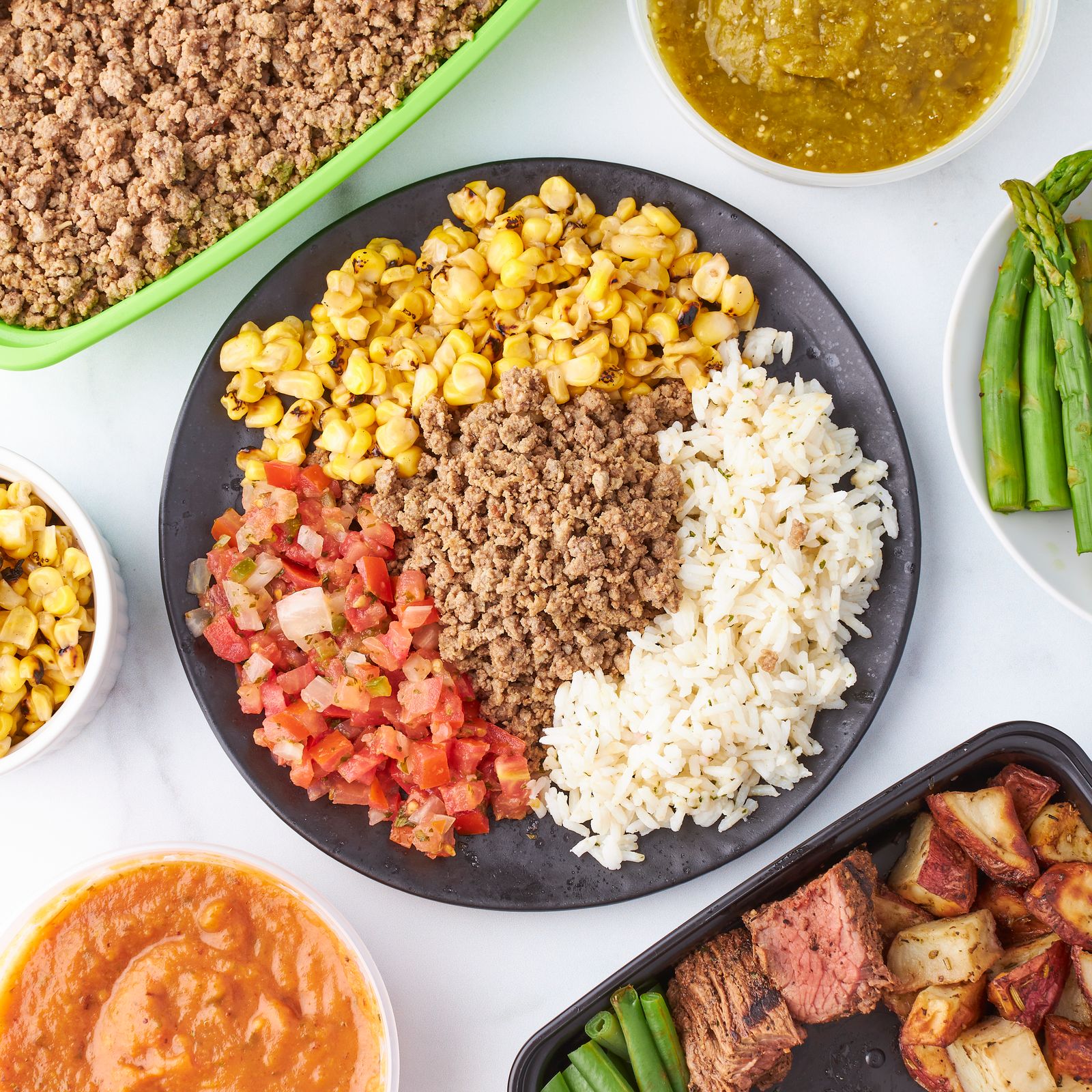
<figcaption>Meat, fish, poultry and dairy carry B12. Whether it gets out of the protein and into you is a separate question after 50.</figcaption>
</figure>
<div class="ac-pf-band">
<div class="inner"><div class="big">3</div><h3>The one time the tablet beats the food</h3></div>
<p class="b">We usually argue the other way on this site. Food beats pills. B12 after 50 is the honest exception. The reason is chemistry, not marketing.</p>
<p class="b">ODS says B12 added to fortified foods and supplements is already in free form. So it does not need the separation step. It skips the acid problem. The <a href="https://www.nia.nih.gov/health/vitamins-and-supplements/vitamins-and-minerals-older-adults" target="_blank" rel="noopener">National Institute on Aging</a> draws the obvious conclusion. Some people over 50 have trouble absorbing the B12 in food. They may need supplements or fortified foods.</p>
<p class="b">Fortified cereal and nutritional yeast do the same job. A multi is just the tidiest version. Check which form of B12 the label names. But keep the wider hope modest. ODS reviewed <a href="https://ods.od.nih.gov/factsheets/MVMS-HealthProfessional/" target="_blank" rel="noopener">multivitamin and mineral pills</a>. It found they might not lower overall chronic disease risk. Fixing one gap is a real job. Buying safety from disease is not on offer.</p>
</div>
<section class="ac-pf-faq">
<h2>Frequently Asked Questions</h2>
<details><summary>Does this mean I should stop eating meat for B12?</summary><div class="a">Not at all. Meat, fish, poultry and dairy are still the natural sources. They carry plenty of other things you want. The point is narrower. After 50 you may not free all the B12 in those foods. So a form that needs no acid is worth having beside them, not instead of them.</div></details>
<details><summary>How do I know if I am actually low?</summary><div class="a">A blood test, ordered by your clinician. The signs of low B12 overlap almost fully with plain ageing. So guessing from how you feel is not safe either way. Ask for the test before you spend on a fix you may not need.</div></details>
<details><summary>Is a multivitamin enough, or do I need a separate B12?</summary><div class="a">For many people a multi with an active B12 covers the daily target. That target is printed on the plan. A blood test showing a true shortfall is a different case. MedlinePlus notes treatment may mean B12 injections, often monthly. That is a call for your doctor.</div></details>
<details><summary>Why do some 55+ formulas leave out iron and iodine?</summary><div class="a">Because need changes with age. Not every nutrient should ride along by default. Leaving one out is a design choice aimed at a life stage. What matters is the rest. The things you absorb less well with age, B12 among them, should still be there and still named on the label.</div></details>
</section>
<section class="ac-pf-src">
<h2>Sources</h2>
<p>
<a href="https://ods.od.nih.gov/factsheets/VitaminB12-HealthProfessional/" target="_blank" rel="noopener">NIH Office of Dietary Supplements · Vitamin B12: protein-bound B12 in food versus free form in supplements, and deficiency rates in older adults</a><br>
<a href="https://medlineplus.gov/ency/article/000574.htm" target="_blank" rel="noopener">MedlinePlus · Vitamin B12 deficiency anemia: absorption from food in older people, intrinsic factor, and treatment</a><br>
<a href="https://www.nia.nih.gov/health/vitamins-and-supplements/vitamins-and-minerals-older-adults" target="_blank" rel="noopener">National Institute on Aging · Vitamins and Minerals for Older Adults: B12 absorption after 50 and the role of fortified foods and supplements</a><br>
<a href="https://ods.od.nih.gov/factsheets/MVMS-HealthProfessional/" target="_blank" rel="noopener">NIH Office of Dietary Supplements · Multivitamin/mineral supplements: what the evidence shows on chronic disease risk</a>
</p>
</section>
<p class="ac-pf-meta">This article is education, not medical advice. Ageless Coach is an affiliate partner and may earn a commission on purchases made through links on this page.</p>
</main>
<div class="ac-pf-sticky">
<span class="t">The Over-50 B12 Plan · free, printable, one page</span>
<a href="#coachs-plan">Print My Plan ↑</a>
</div>