<style>
.w-richtext p,.w-richtext li,.w-richtext td{font-size:18px;line-height:1.65}
.w-richtext h2{font-size:26px;line-height:1.35}
.w-richtext h3{font-size:22px;line-height:1.35}
.w-richtext ul{list-style-type:disc;padding-left:24px;margin:12px 0}
.w-richtext ul li{margin-bottom:8px;line-height:1.65}
.w-richtext .ac-action-plan{background:linear-gradient(135deg,#fffcf4 0%,#fff8ed 100%);border-left:5px solid #9a6841;border-radius:12px;padding:28px 24px;margin:32px 0;box-shadow:0 2px 12px rgba(0,0,0,0.06)}
.article-header-section .article-container{max-width:1080px !important;margin:0 auto !important;padding:0 20px !important}
.article-header-section .article-hero-image{display:block;width:100%;max-width:660px;margin:0}
.article-header-section .article-title{display:block !important;font-family:Georgia,serif;font-size:32px;line-height:1.25;font-weight:700;color:#313743;margin:20px 0 12px 0;text-align:left;max-width:660px}
@media (max-width:767px){.article-header-section .article-title{font-size:26px}.article-header-section .article-hero-image{max-width:100%}}
.ac-article-cta{margin-top:40px;text-align:center}
.ac-article-cta .ac-cta-lead{font-family:Georgia,serif;font-size:17px;color:#555;margin:0 0 16px 0;line-height:1.5}
.ac-article-cta a.ac-nav-cta{display:inline-flex;align-items:center;gap:10px;padding:10px 14px 10px 20px;background:#313743;color:#fff;border:1.5px solid #14D4CD;border-radius:82px;font-family:Inter,sans-serif;font-size:14px;font-weight:600;letter-spacing:0.3px;text-decoration:none;transition:transform 0.15s ease,box-shadow 0.15s ease}
.ac-article-cta a.ac-nav-cta:hover{transform:translateY(-1px);box-shadow:0 6px 18px rgba(20,212,205,0.25)}
.ac-article-cta .ac-nav-cta-arrow{width:28px;height:28px;background:#14D4CD;border-radius:50%;display:inline-flex;align-items:center;justify-content:center;flex-shrink:0}
.ac-article-cta .ac-nav-cta-arrow svg{width:14px;height:14px}
</style>
<p class="publish-date" style="font-size:13px; color:#999; margin-bottom:16px;">Published: May 15, 2026 · Last updated: May 15, 2026</p>
<div class="ac-glance" style="background-color: #ffffff; padding: 20px; border: 2px solid #b0bec5; border-radius: 8px; margin: 20px 0;"><strong>This week's brief at a glance:</strong><ul style="margin: 12px 0; padding-left: 24px;"><li style="margin-bottom:6px;">Long-term exposure to fine particulate air pollution (PM2.5) is associated with faster cognitive decline and higher dementia risk in adults over 50 (National Institute on Aging, 2024)</li><li style="margin-bottom:6px;">Agriculture and open fires showed the strongest dementia associations among pollution sources studied, followed by road traffic and industrial coal combustion (NIA, 2024)</li><li style="margin-bottom:6px;">A 2024 JAMA Neurology study linked wildfire smoke exposure to elevated dementia risk in Western US adults, with effects measurable years after exposure (NIA, 2024)</li></ul></div>
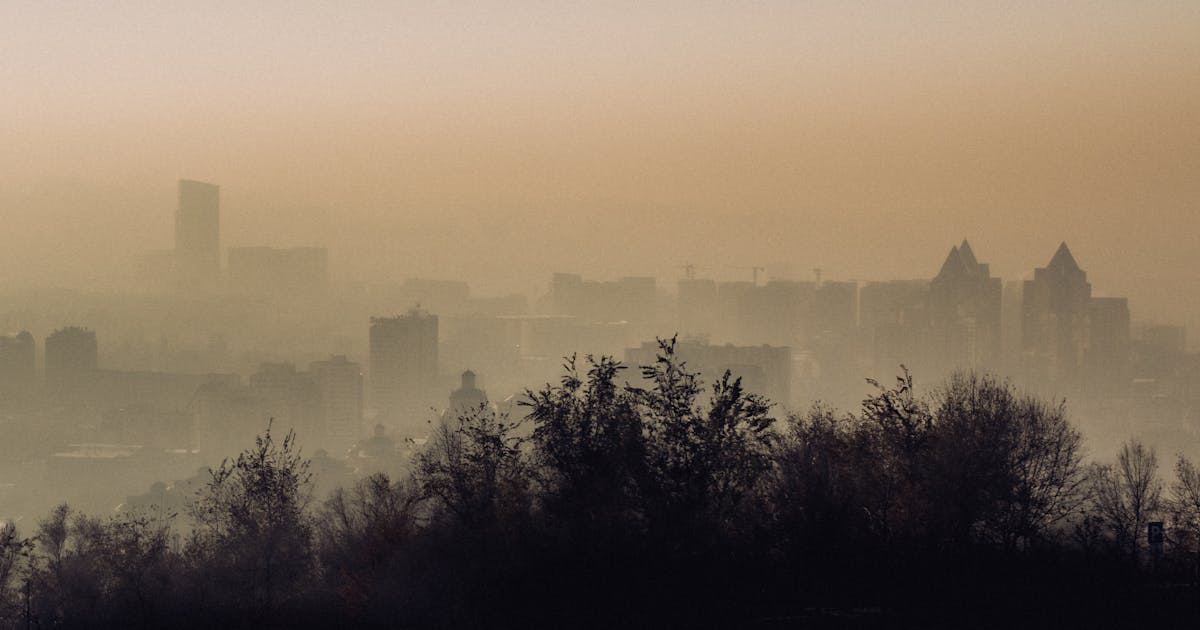
<p>You think of air pollution as a lung problem. It is, but only partly. The same fine particles that inflame your airways slip into your bloodstream within minutes of inhalation, cross the blood-brain barrier, and lodge in brain tissue where they trigger inflammation, oxidative damage, and the cellular changes associated with Alzheimer's. The research on this has gotten harder to ignore in the last two years.</p>
<p>Most people cannot move away from polluted air. But understanding what the research actually says lets you make real-world choices that lower your exposure, and that lowers your long-term brain risk.</p>
<h3>What the 2024 Research Showed</h3>
<p>The clearest data came from a 2024 NIA-funded analysis that separated pollution by source. Agriculture (livestock ammonia and fertilizer dust) and open fires (including wildfires and agricultural burning) showed the strongest associations with new dementia diagnoses. Road traffic, non-road traffic, and coal-fired power plants also raised risk, though to a smaller degree (<a href="https://www.nia.nih.gov/news/air-pollution-different-emission-sources-associated-incident-dementia" target="_blank" rel="noopener">NIA, 2024</a>).</p>
<p>The size of the effect is meaningful. For every additional 1 microgram per cubic meter of PM2.5 exposure averaged over a year, dementia risk rose measurably. For people living in regions with chronic poor air quality, the cumulative exposure over decades is doing work that statins and exercise are trying to undo.</p>
<h3>Why the Brain Is Vulnerable</h3>
<p>PM2.5 particles are roughly 30 times smaller than the diameter of a human hair. They reach the brain through two pathways. The first is the olfactory route through the nose, where particles travel up nerve fibers directly into the brain. The second is the bloodstream, where they cross the blood-brain barrier and accumulate over years.</p>
<p>Once in brain tissue, the particles trigger microglial activation, which is the brain's immune response. Chronic microglial activation is a known driver of Alzheimer's pathology. Animal studies show pollutant exposure increases amyloid plaque deposition and tau tangle formation, the two defining features of Alzheimer's. The mechanism is no longer speculative.</p>
<h3>Wildfire Smoke Adds a New Dimension</h3>
<p>The 2020 to 2023 wildfire seasons in the western United States exposed tens of millions of adults to particulate levels that sometimes exceeded those of the most polluted cities on earth. A JAMA Neurology study published in November 2024 found that wildfire smoke exposure was associated with higher dementia incidence in the years following exposure, even after adjusting for other risk factors (<a href="https://www.nia.nih.gov/news/wildfire-smoke-exposure-and-dementia-risk" target="_blank" rel="noopener">NIA, 2024</a>).</p>
<p>The wildfire smoke composition is different from urban traffic pollution. It carries more organic compounds, more carbon, and on bad days, more toxic byproducts from burned synthetic materials. The brain effect appears proportional to the cumulative dose, not just the peak day.</p>
<h3>The Independence Connection</h3>
<p>A 2024 study published in JAMA Network Open looked at a separate but related outcome: not dementia diagnosis, but loss of independence. Older adults living near high-traffic areas were significantly more likely to need help with daily activities like bathing, dressing, and medication management compared to peers in lower-pollution zones (<a href="https://www.nia.nih.gov/news/older-adult-loss-independence-influenced-air-pollution" target="_blank" rel="noopener">NIA, 2024</a>).</p>
<p>This is the practical impact most families feel before they ever hear the word dementia. Independence is what most people are protecting when they invest in their health, and air quality is one of the levers.</p>
<h3>What You Can Actually Do</h3>
<p>You cannot pick up your house and move it to a cleaner zip code overnight. But the research suggests three categories of intervention that move the needle.</p>
<p>First, indoor air quality. A good HEPA air purifier in the bedroom reduces 24-hour particulate exposure substantially, and since most people sleep 7 to 9 hours a day, that one room covers a third of your life. Second, exercise outdoors during low-pollution windows: typically early morning before traffic peaks and on the windward side of urban centers. Third, masks during wildfire smoke events. N95 or KN95 masks reduce particulate inhalation by over 90% and are cheap insurance during smoke advisories.</p>
<div class="ac-action-plan" style="background: linear-gradient(135deg, #fffcf4 0%, #fff8ed 100%); border-left: 5px solid #9A6841; border-radius: 12px; padding: 28px 24px; margin: 32px 0; box-shadow: 0 2px 12px rgba(0,0,0,0.06);"><div style="display: flex; align-items: center; gap: 10px; margin-bottom: 20px;"><svg width="24" height="24" viewBox="0 0 24 24" fill="none" stroke="#9A6841" stroke-width="2" stroke-linecap="round" stroke-linejoin="round"><path d="M9 5H7a2 2 0 00-2 2v12a2 2 0 002 2h10a2 2 0 002-2V7a2 2 0 00-2-2h-2"/><rect x="9" y="3" width="6" height="4" rx="1"/><path d="M9 14l2 2 4-4"/></svg><span style="font-family: Georgia, serif; font-size: 22px; font-weight: 700; color: #313743;">Your Coach's Recommendations</span></div><div style="display: flex; gap: 14px; margin-bottom: 16px; align-items: flex-start;"><div style="min-width: 36px; width: 36px; height: 36px; background: #9A6841; border-radius: 50%; display: flex; align-items: center; justify-content: center; color: #fff; font-weight: 700; font-size: 16px; flex-shrink: 0;">1</div><div><div style="font-weight: 700; color: #313743; font-size: 15px; margin-bottom: 2px;">Add a HEPA Purifier to Your Bedroom Within 30 Days.</div><div style="color: #6b7280; font-size: 13.5px; line-height: 1.5;">Quality units cost $100 to $250 and last 5 to 10 years. A bedroom-sized purifier covers the third of life spent sleeping. Brands rated by Consumer Reports include Coway, Levoit, and Winix.</div></div></div><div style="display: flex; gap: 14px; margin-bottom: 16px; align-items: flex-start;"><div style="min-width: 36px; width: 36px; height: 36px; background: #9A6841; border-radius: 50%; display: flex; align-items: center; justify-content: center; color: #fff; font-weight: 700; font-size: 16px; flex-shrink: 0;">2</div><div><div style="font-weight: 700; color: #313743; font-size: 15px; margin-bottom: 2px;">Check AirNow.gov Before Outdoor Exercise.</div><div style="color: #6b7280; font-size: 13.5px; line-height: 1.5;">The free EPA tool shows real-time PM2.5 levels by zip code. Avoid outdoor cardio when the Air Quality Index exceeds 100, especially during wildfire season. Move indoor on those days.</div></div></div><div style="display: flex; gap: 14px; margin-bottom: 20px; align-items: flex-start;"><div style="min-width: 36px; width: 36px; height: 36px; background: #9A6841; border-radius: 50%; display: flex; align-items: center; justify-content: center; color: #fff; font-weight: 700; font-size: 16px; flex-shrink: 0;">3</div><div><div style="font-weight: 700; color: #313743; font-size: 15px; margin-bottom: 2px;">Keep N95 Masks on Hand for Smoke Events.</div><div style="color: #6b7280; font-size: 13.5px; line-height: 1.5;">A 20-pack of NIOSH-certified N95 masks costs about $25 and lasts indefinitely. Wear during wildfire smoke days, agricultural burns, or unavoidable outdoor time when AQI exceeds 150.</div></div></div><div style="border-top: 1px solid #e5ddd4; margin: 16px 0;"></div><div style="display: flex; justify-content: center; align-items: center; gap: 10px; flex-wrap: wrap;"><button onclick="acPrintPlan()" style="background: none; border: 1px solid #d3cabe; border-radius: 8px; padding: 10px 16px; font-size: 13px; color: #6b7280; cursor: pointer; display: flex; align-items: center; gap: 6px;"><svg width="14" height="14" viewBox="0 0 24 24" fill="none" stroke="currentColor" stroke-width="2" stroke-linecap="round" stroke-linejoin="round"><polyline points="6 9 6 2 18 2 18 9"/><path d="M6 18H4a2 2 0 01-2-2v-5a2 2 0 012-2h16a2 2 0 012 2v5a2 2 0 01-2 2h-2"/><rect x="6" y="14" width="12" height="8"/></svg>Print</button></div></div>
<div style="margin-top: 32px; padding-top: 0;">
<div style="width: 60px; height: 2px; background: linear-gradient(90deg, #9A6841, #be7b4c); border-radius: 2px; margin-bottom: 20px;"></div>
<p style="font-family: Georgia, serif; font-size: 16px; font-style: italic; color: #777; margin: 0 0 6px 0; letter-spacing: 0.3px; padding-left: 38px;">To your health,</p>
<div style="display: flex; align-items: center; gap: 4px; margin-bottom: 4px;">
<img src="https://cdn.prod.website-files.com/69be130d412f9c2c202307ef/69c539b9526b266e2cba5521_ageless-coach-logo-black.png" alt="AC" style="width: 34px; height: 34px; object-fit: contain;">
<p style="font-family: Georgia, serif; font-size: 22px; font-weight: 700; color: #313743; margin: 0; letter-spacing: 0.5px;">Ageless Coach</p>
</div>
<p style="font-family: -apple-system, BlinkMacSystemFont, Segoe UI, sans-serif; font-size: 11px; font-weight: 600; color: #be7b4c; letter-spacing: 2px; text-transform: uppercase; margin: 0 0 0 28px;">Age Strong. Live Long.</p>
</div>
<div style="margin-top: 28px; padding-top: 20px; border-top: 1px solid #e5e7eb; text-align: center;">
<p style="font-family: -apple-system, BlinkMacSystemFont, Segoe UI, sans-serif; font-size: 13px; font-weight: 700; color: #6b7280; letter-spacing: 2px; text-transform: uppercase; margin: 0 0 16px 0;">Trusted Sources Behind This Article</p>
<div style="display: flex; justify-content: center; gap: 10px; flex-wrap: wrap;">
<a href="https://www.nia.nih.gov/news/air-pollution-different-emission-sources-associated-incident-dementia" target="_blank" rel="noopener" style="display: inline-block; background: #fff; border: 1.5px solid #9A6841; color: #9A6841; padding: 8px 20px; border-radius: 20px; font-size: 14px; font-weight: 600; letter-spacing: 0.3px; text-decoration: none; transition: background 0.2s ease, color 0.2s ease;">NIA Pollution Research</a>
<a href="https://www.nia.nih.gov/news/wildfire-smoke-exposure-and-dementia-risk" target="_blank" rel="noopener" style="display: inline-block; background: #fff; border: 1.5px solid #9A6841; color: #9A6841; padding: 8px 20px; border-radius: 20px; font-size: 14px; font-weight: 600; letter-spacing: 0.3px; text-decoration: none; transition: background 0.2s ease, color 0.2s ease;">NIA Wildfire Study</a>
<a href="https://www.nia.nih.gov/news/older-adult-loss-independence-influenced-air-pollution" target="_blank" rel="noopener" style="display: inline-block; background: #fff; border: 1.5px solid #9A6841; color: #9A6841; padding: 8px 20px; border-radius: 20px; font-size: 14px; font-weight: 600; letter-spacing: 0.3px; text-decoration: none; transition: background 0.2s ease, color 0.2s ease;">National Institute on Aging</a>
</div>
</div>
<p style="font-size: 12px; color: #999; margin-top: 40px; line-height: 1.5;"><em>This content is for educational purposes only and is not a substitute for professional medical advice, diagnosis, or treatment. Reading this article does not create a provider-patient relationship. Always consult your physician or qualified healthcare provider before making changes to your diet, exercise, or health routine. Ageless Coach is not liable for any actions taken based on this information.</em></p>
<div class="ac-faq" style="margin-top:40px; border-top:1px solid #e5e7eb; padding-top:32px;">
<h2 style="font-family:Georgia,serif; font-size:20px; font-weight:700; color:#313743; margin:0 0 20px 0;">Frequently Asked Questions</h2>
<details style="border:1px solid #e5e7eb; border-radius:8px; margin-bottom:10px; overflow:hidden;">
<summary style="padding:14px 18px; font-weight:600; font-size:15px; color:#313743; cursor:pointer; list-style:none; display:flex; justify-content:space-between; align-items:center;">
How do I know if my local air is bad enough to worry about?
<svg width="16" height="16" viewBox="0 0 24 24" fill="none" stroke="#9A6841" stroke-width="2" stroke-linecap="round" stroke-linejoin="round" aria-hidden="true"><polyline points="6 9 12 15 18 9"/></svg>
</summary>
<div style="padding:0 18px 16px; font-size:18px; color:#555; line-height:1.65;">Check the EPA AirNow tool by zip code or download the AirNow app. An annual PM2.5 average above 12 micrograms per cubic meter is the WHO concern threshold. Many cities in the Midwest and West routinely exceed this during summer and wildfire season.</div>
</details>
<details style="border:1px solid #e5e7eb; border-radius:8px; margin-bottom:10px; overflow:hidden;">
<summary style="padding:14px 18px; font-weight:600; font-size:15px; color:#313743; cursor:pointer; list-style:none; display:flex; justify-content:space-between; align-items:center;">
Are cloth or surgical masks enough during wildfire smoke?
<svg width="16" height="16" viewBox="0 0 24 24" fill="none" stroke="#9A6841" stroke-width="2" stroke-linecap="round" stroke-linejoin="round" aria-hidden="true"><polyline points="6 9 12 15 18 9"/></svg>
</summary>
<div style="padding:0 18px 16px; font-size:18px; color:#555; line-height:1.65;">No. Cloth masks block droplets but let PM2.5 particles pass through. N95 or KN95 respirators with a proper seal are the minimum for wildfire smoke. Surgical masks help slightly but are not designed for fine particulate.</div>
</details>
<details style="border:1px solid #e5e7eb; border-radius:8px; margin-bottom:10px; overflow:hidden;">
<summary style="padding:14px 18px; font-weight:600; font-size:15px; color:#313743; cursor:pointer; list-style:none; display:flex; justify-content:space-between; align-items:center;">
Is indoor pollution worse than outdoor?
<svg width="16" height="16" viewBox="0 0 24 24" fill="none" stroke="#9A6841" stroke-width="2" stroke-linecap="round" stroke-linejoin="round" aria-hidden="true"><polyline points="6 9 12 15 18 9"/></svg>
</summary>
<div style="padding:0 18px 16px; font-size:18px; color:#555; line-height:1.65;">It can be. Gas stoves, candles, fireplaces, and aerosol cleaning products all raise indoor PM2.5. A range hood that vents outside (not recirculating) and minimizing scented candles are the simplest fixes. Ventilation during low-outdoor-AQI hours also helps.</div>
</details>
<details style="border:1px solid #e5e7eb; border-radius:8px; margin-bottom:10px; overflow:hidden;">
<summary style="padding:14px 18px; font-weight:600; font-size:15px; color:#313743; cursor:pointer; list-style:none; display:flex; justify-content:space-between; align-items:center;">
Should I move to a less polluted area if I can?
<svg width="16" height="16" viewBox="0 0 24 24" fill="none" stroke="#9A6841" stroke-width="2" stroke-linecap="round" stroke-linejoin="round" aria-hidden="true"><polyline points="6 9 12 15 18 9"/></svg>
</summary>
<div style="padding:0 18px 16px; font-size:18px; color:#555; line-height:1.65;">For most people the tradeoffs (family, work, community) outweigh marginal pollution differences. But within a metro area, choosing housing away from highways and industrial corridors makes a measurable difference. Distance from major roadways matters more than total city size.</div>
</details>
<details style="border:1px solid #e5e7eb; border-radius:8px; margin-bottom:10px; overflow:hidden;">
<summary style="padding:14px 18px; font-weight:600; font-size:15px; color:#313743; cursor:pointer; list-style:none; display:flex; justify-content:space-between; align-items:center;">
How fast does the brain recover when exposure drops?
<svg width="16" height="16" viewBox="0 0 24 24" fill="none" stroke="#9A6841" stroke-width="2" stroke-linecap="round" stroke-linejoin="round" aria-hidden="true"><polyline points="6 9 12 15 18 9"/></svg>
</summary>
<div style="padding:0 18px 16px; font-size:18px; color:#555; line-height:1.65;">Some inflammation markers normalize within weeks of reduced exposure. The deeper changes (amyloid deposition, vascular damage) accumulate over decades and likely take years to stabilize once exposure drops. Earlier reduction is better than later.</div>
</details>
<details style="border:1px solid #e5e7eb; border-radius:8px; margin-bottom:10px; overflow:hidden;">
<summary style="padding:14px 18px; font-weight:600; font-size:15px; color:#313743; cursor:pointer; list-style:none; display:flex; justify-content:space-between; align-items:center;">
Do houseplants clean indoor air?
<svg width="16" height="16" viewBox="0 0 24 24" fill="none" stroke="#9A6841" stroke-width="2" stroke-linecap="round" stroke-linejoin="round" aria-hidden="true"><polyline points="6 9 12 15 18 9"/></svg>
</summary>
<div style="padding:0 18px 16px; font-size:18px; color:#555; line-height:1.65;">Not meaningfully. The famous 1989 NASA study used sealed chambers, not real homes. Studies in actual living spaces show houseplants do not reduce PM2.5 or volatile organic compounds at levels relevant to health. A HEPA purifier does the job plants cannot.</div>
</details>
</div>
<div class="ac-article-cta">
<p class="ac-cta-lead">Want one verified-science article like this every week?</p>
<a href="/newsletter" class="ac-nav-cta">
Get Better Health, Weekly
<span class="ac-nav-cta-arrow">
<svg viewBox="0 0 18 18" fill="none" xmlns="http://www.w3.org/2000/svg" aria-hidden="true"><path d="M4.24 13.59L12.73 5.11" stroke="#0D1B2A" stroke-width="1.8"/><path d="M4.95 4.4H13.44V12.89" stroke="#0D1B2A" stroke-width="1.8"/></svg>
</span>
</a>
</div>