Anti-Inflammatory Foods: The 6 to Eat and 5 to Cut
What the evidence actually says
Six foods carry most of the anti-inflammatory evidence: tomatoes, olive oil, green leafy vegetables, nuts, fatty fish and fruit. Five work the other way and are worth limiting: refined carbohydrates, fried foods, sugary drinks, red and processed meat, and margarine, shortening and lard. That is the whole list, and no supplement is on it.
1The 6 to eat · tomatoes, olive oil, leafy greens, nuts, fatty fish and fruit like berries and oranges
2The 5 to cut · refined carbs, fried foods, sugary drinks, red and processed meat, and hard fats
3Why it matters · chronic inflammation is linked to heart disease, diabetes, arthritis and more
4The pattern beats the list · the Mediterranean diet follows these rules almost exactly
5No pill required · the evidence here sits in the grocery store, not the supplement aisle
Inflammation is not the enemy. When your body meets a splinter or a virus, the immune system floods the area, does the repair work and then stands down. That version keeps you alive. The problem is the version that never stands down, running quietly for years in tissue that was never under attack.
That is chronic inflammation, and it turns up alongside a long list of the diseases people worry about most. Food will not switch it off on its own. But what you eat consistently is one of the few levers you control, and the list of foods on each side of it is shorter than you would expect.
1
What is actually happening
Chronic Inflammation Is the Alarm That Never Switches Off
Acute inflammation has an obvious cause and a well orchestrated response, and then it ends. In chronic inflammation the immune cells and the chemicals they produce stay present at high levels, constantly rather than temporarily, Harvard Health explains. Why it develops, and why it will not turn itself off, is still largely a mystery.
What is not a mystery is the company it keeps. Cancer, heart disease, diabetes, arthritis, depression and Alzheimer's have all been linked to chronic inflammation. That is why a grocery list ends up mattering here at all, and why the same foods keep showing up in advice about the heart, the joints and the brain.
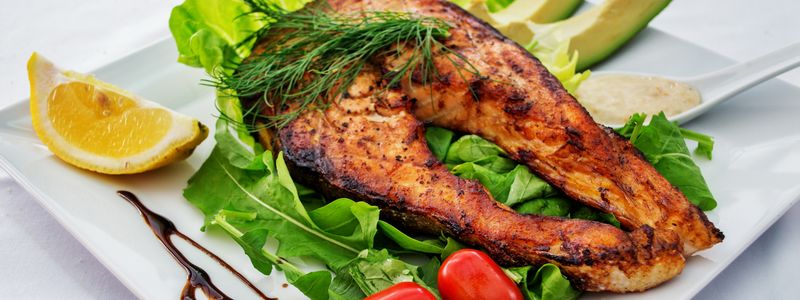
Fatty fish like salmon, mackerel, tuna and sardines sit near the top of every anti-inflammatory food list.
2
The list to eat
The Six Foods That Keep Showing Up
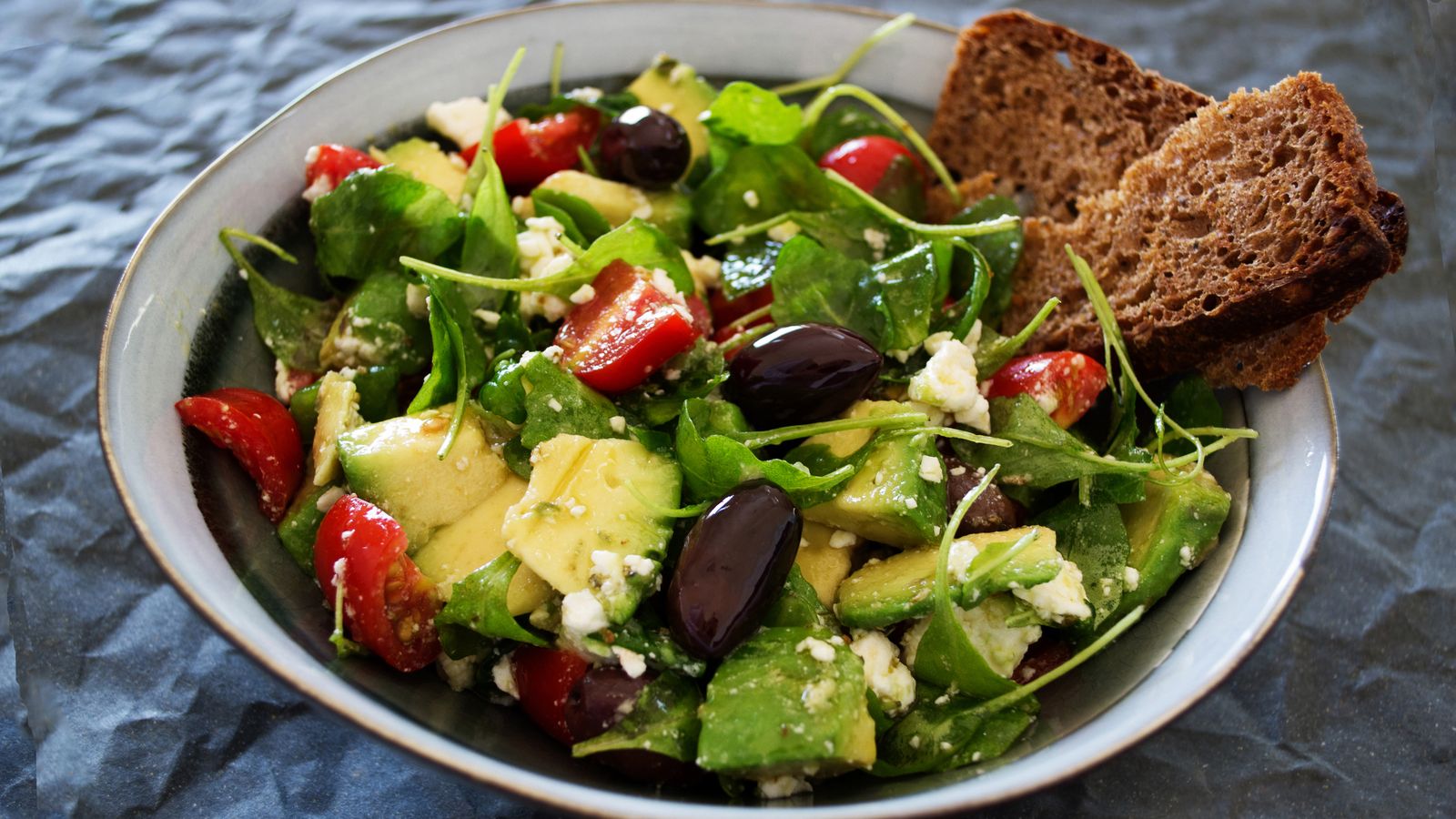
An anti-inflammatory diet should include tomatoes, olive oil, green leafy vegetables such as spinach, kale and collards, nuts like almonds and walnuts, fatty fish like salmon, mackerel, tuna and sardines, and fruit such as strawberries, blueberries, cherries and oranges. Six categories, per Harvard Health Publishing. That is the whole shopping list.
The reason they cluster is chemistry. Fruits and vegetables like blueberries, apples and leafy greens are high in natural antioxidants and polyphenols, the protective compounds plants make for themselves. Studies have also linked nuts with reduced markers of inflammation and a lower risk of cardiovascular disease and diabetes. Coffee, which carries polyphenols too, may help as well.
Tomatoes
Olive oil
Green leafy vegetables, such as spinach, kale and collards
Nuts, such as almonds and walnuts
Fatty fish, such as salmon, mackerel, tuna and sardines
Fruit, such as strawberries, blueberries, cherries and oranges
Many major diseases that plague us have been linked to chronic inflammation.
Cancer, heart disease, diabetes, arthritis, depression and Alzheimer's are the ones named. That is the reason a grocery list is worth this much attention.
Harvard Health Publishing, 2026
3
The list to cut
The Five Foods Working Against You
On the other side: refined carbohydrates such as white bread and pastries, French fries and other fried foods, soda and other sugar sweetened beverages, red meat like burgers and steaks along with processed meat like hot dogs and sausage, and margarine, shortening and lard. Limit them as much as you reasonably can.
These are the same foods already tied to a higher risk of type 2 diabetes and heart disease, which is not a coincidence, since inflammation is an important underlying mechanism in how those diseases develop. They also drive weight gain, itself a risk factor. Even after researchers accounted for obesity, the link between these foods and inflammation held.
Refined carbohydrates, such as white bread and pastries
French fries and other fried foods
Soda and other sugar sweetened beverages
Red meat such as burgers and steaks, and processed meat such as hot dogs and sausage
Margarine, shortening and lard
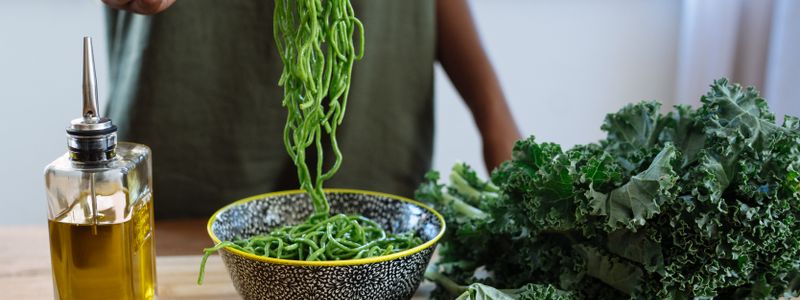
Olive oil and leafy greens are two of the six, and they happen to be the backbone of the Mediterranean pattern.
4
The shortcut
One Eating Pattern Covers Almost the Whole List
If eleven separate rules sounds like a lot to hold, there is a shortcut. The Mediterranean diet follows the tenets of anti-inflammatory eating closely: high in fruits, vegetables, nuts, whole grains, fish and healthy oils. Choose that pattern and the six show up by default while most of the five quietly drop out.
The wider aim is simply an overall healthy diet rather than a hunt for single miracle ingredients. A more natural, less processed way of eating has noticeable effects beyond inflammation, on mood and quality of life as well as on chronic disease risk. Consistency is what does the work here, not any one meal, and not any one week.
5
The honest limits
What Food Can and Cannot Do Here
Food is a lever, not a cure. Choose the right foods and you may be able to reduce your risk of illness; consistently pick the wrong ones and you could accelerate the inflammatory disease process. That is the claim the evidence supports, and it is deliberately worded as risk rather than as a guarantee.
If you already have an inflammatory condition, eating well sits alongside treatment rather than replacing it. For osteoarthritis, for instance, NIAMS puts exercise, weight management and prescribed braces or orthotics at the center of care, with medication and surgery behind them. Your plate supports that plan. It does not stand in for it.
Start with one swap a week rather than eleven changes at once
Put the six on the shopping list before you decide on recipes
Treat sugary drinks as the easiest single cut on the list
Talk to your clinician before changing your diet around a diagnosis
Nothing here is exotic, expensive or new. It is tomatoes, olive oil, greens, nuts, fish and fruit, on the plate often enough to become the default rather than the good week. That is what an anti-inflammatory diet is, and there is no version of it that comes in a bottle.
Which is the quietly useful part. No supplement made this list, because the compounds doing the work arrive attached to food that also brings fiber, protein and everything else a plate is supposed to deliver. In this particular story the grocery store is the pharmacy, and that is unusual enough to be worth saying out loud.
Take the food list with you
Your free one-page guide: the six to eat, the five to cut, and the one pattern that covers almost all of it.
One email. No spam. Unsubscribe anytime.
Free Lifestyle Assessment
How Healthy Is Your Current Lifestyle?
Answer honestly for five minutes and walk away with your personal scorecard: all six areas of your health rated, the one that needs your attention first, and a 30-day plan built from your answers. It shows up the second you finish.
Free. About 5 minutes. Your results appear instantly.
📋 Your Coach's Recommendations
1
Put the six on your shopping list
Tomatoes, olive oil, green leafy vegetables, nuts, fatty fish and fruit. Buy them before you plan meals, so the anti-inflammatory foods are the ones already in the house on a busy night.
2
Cut the five, starting with the easiest
Refined carbohydrates, fried foods, sugary drinks, red and processed meat, and margarine, shortening and lard. Sugary drinks are usually the cut that costs you the least and moves the most.
3
Let the Mediterranean pattern do the sorting
High in fruits, vegetables, nuts, whole grains, fish and healthy oils. Follow the pattern and most of the six arrive on their own while most of the five quietly leave. Aim for an overall healthy diet, not a perfect meal.
?
How it works. Just a quiet check-in, not an alert and not a recurring nag. The event lands as a 30-minute slot at 9am two weeks from today, with your plan in the notes and a link back to this article. Works with Apple Calendar, Google Calendar, and Outlook. Yours to move, snooze, or delete whenever.
Keep this food list
Get the one-page guide: the six to eat, the five to cut, and what each one is doing.
One email. No spam. Unsubscribe anytime.
Where should we send it?
Your anti-inflammatory food plan, straight to your inbox.
We send the plan plus one short evidence brief each week. Unsubscribe anytime.
✓
It is on the way
Check your inbox in the next minute. Your first Ageless Brief arrives this week: one study, translated, no hype.
Tomatoes, olive oil, green leafy vegetables such as spinach, kale and collards, nuts like almonds and walnuts, fatty fish like salmon, mackerel, tuna and sardines, and fruit such as strawberries, blueberries, cherries and oranges.
Which foods cause inflammation?
Refined carbohydrates such as white bread and pastries, French fries and other fried foods, soda and other sugar sweetened beverages, red meat and processed meat, and margarine, shortening and lard.
Is there one diet that covers all of this?
The Mediterranean diet comes closest. It is high in fruits, vegetables, nuts, whole grains, fish and healthy oils, which follows the tenets of anti-inflammatory eating closely without you tracking every food.
Does coffee help or hurt?
Coffee contains polyphenols and other anti-inflammatory compounds, and it may protect against inflammation. It sits on the helpful side, though it is not one of the six core foods.
Will changing my diet cure an inflammatory condition?
No. Food changes your risk rather than curing a diagnosis. For a condition like osteoarthritis, exercise, weight management and prescribed supports remain the center of care, with diet supporting them.
Is this medical advice?
No. This article is educational and is not a substitute for your clinician. Talk to a doctor or a registered dietitian before making significant dietary changes, especially around a diagnosis or medication.
Curious where you stand? Take the free 5-minute lifestyle assessment and your personal scorecard appears the second you finish.
By the Ageless Coach Editorial Team · Published August 14, 2026 · Last updated August 14, 2026
<style>
:root{--dark-base:#0D1B2A;--dark-mid:#1B3A4B;--teal:#0EA5A0;--teal-dark:#0C8C88;--teal-bright:#14D4CD;--fog:#D8E8E8;--deep-fog:#C8DCDC;--fog-border:#A8C4C4;--ink:#313743;--ink-soft:#49505f;--muted:#6b7280;--warm:#9A6841;--warm-light:#be7b4c;--serif:"Source Serif 4",Georgia,serif;--sans:Inter,-apple-system,BlinkMacSystemFont,"Segoe UI",sans-serif}
.w-richtext p,.w-richtext li,.w-richtext td{font-size:20.5px;line-height:1.7;color:var(--ink-soft)}
.w-richtext ul{list-style-type:disc;padding-left:24px;margin:12px 0}
.w-richtext ul li{margin-bottom:8px}
.ac-answer{background:#fff;border:1px solid #D4E4E4;border-top:5px solid var(--teal);border-radius:16px;padding:22px 24px 18px;margin:16px 0 28px;box-shadow:0 6px 22px rgba(13,27,42,.07)}
.ac-answer .aa-eyebrow{font:800 12px/1 var(--sans);letter-spacing:2.5px;text-transform:uppercase;color:var(--teal-dark);margin-bottom:8px}
.ac-answer .aa-head{font-family:var(--serif);font-size:24px;line-height:1.2;font-weight:800;color:var(--dark-base);margin:0 0 16px}
.ac-answer .aa-list{list-style:none;margin:0;padding:0}
.ac-answer .aa-list li{display:flex;gap:12px;align-items:baseline;padding:11px 0;border-bottom:1px solid #EDF3F3;font:700 16.5px/1.4 var(--sans);color:var(--ink)}
.ac-answer .aa-list li:last-child{border-bottom:none}
.ac-answer .aa-n{flex-shrink:0;width:24px;height:24px;border-radius:50%;background:var(--teal-dark);color:#fff;font:800 12px/24px var(--sans);text-align:center}
.ac-answer .aa-food{color:var(--teal-dark);font-weight:800}
.ac-answer .aa-cue{margin-top:18px;text-align:center}
.ac-answer .aa-cta{display:inline-flex;align-items:center;gap:10px;background:var(--teal-dark);color:#fff;font:800 14px/1 var(--sans);letter-spacing:.2px;padding:14px 26px;border-radius:50px;text-decoration:none;box-shadow:0 6px 16px rgba(12,140,136,.30)}
.ac-answer .aa-cta:hover{background:#0A7A76}
.ac-answer .aa-arw{display:inline-block;animation:aa-nudge 1.4s ease-in-out infinite}
@keyframes aa-nudge{0%,100%{transform:translateY(0)}50%{transform:translateY(4px)}}
@media(max-width:560px){.ac-answer{padding:20px 18px 16px}.ac-answer .aa-head{font-size:21px}.ac-answer .aa-list li{font-size:15px}}
.ac-band{margin:56px 0 24px;padding:26px 24px 12px;background:linear-gradient(180deg,#F0F7F7,#fff);border-radius:16px}
.ac-band.hype{background:linear-gradient(180deg,#FAF3EB,#fff)}
.ac-band .inner{display:flex;gap:20px;align-items:center}
.ac-band .big{font:900 72px/1 var(--sans);color:var(--deep-fog);flex-shrink:0}
.ac-band.hype .big{color:#EAD9C6}
.ac-band .q{font:700 13px/1.4 var(--sans);letter-spacing:2px;text-transform:uppercase;color:var(--teal-dark)}
.ac-band.hype .q{color:var(--warm)}
.ac-band h3{font-family:var(--serif);font-size:30px;line-height:1.2;font-weight:800;color:var(--ink);margin:0}
.ac-callout{border-left:4px solid var(--teal);background:#F4FAFA;border-radius:0 12px 12px 0;padding:18px 22px;margin:28px 0}
.ac-callout .n{font:800 20px/1.35 var(--sans);color:var(--dark-mid);margin-bottom:6px}
.ac-callout .d{font:500 15px/1.55 var(--sans);color:var(--ink-soft)}
.ac-callout .c{font:600 11.5px/1 var(--sans);letter-spacing:1.5px;text-transform:uppercase;color:var(--muted);margin-top:10px}
.ac-plan{background:linear-gradient(135deg,#F4FAFA 0%,#fff 100%);border-left:5px solid var(--teal-dark);border-radius:14px;padding:30px 26px;margin:40px 0 0;box-shadow:0 2px 12px rgba(0,0,0,.06);scroll-margin-top:100px}
.ac-plan .ptitle{font-family:var(--serif);font-size:24px;font-weight:800;color:var(--ink);margin-bottom:22px}
.ac-plan .step{display:flex;gap:16px;margin-bottom:18px;align-items:flex-start}
.ac-plan .step .n{min-width:38px;width:38px;height:38px;background:var(--teal-dark);border-radius:50%;color:#fff;font:800 17px/38px var(--sans);text-align:center;flex-shrink:0}
.ac-plan .sh{font:800 16.5px/1.4 var(--sans);color:var(--ink);margin-bottom:3px}
.ac-plan .sd{font:400 15px/1.6 var(--sans);color:var(--muted)}
.ac-plan .actions{border-top:1px solid #D8E8E8;margin-top:16px;padding-top:20px}
.ac-primary-row{display:flex;align-items:center;gap:10px;padding:0 4px}
.ac-btn-primary-wide{flex:1;background:var(--teal);color:#fff;border:1.5px solid var(--teal);border-radius:14px;padding:12px 22px;box-shadow:0 4px 14px rgba(14,165,160,.22);font-family:var(--sans);cursor:pointer;display:grid;grid-template-columns:auto 1fr;gap:14px;align-items:center;transition:all .18s ease}
.ac-btn-primary-wide:hover{background:var(--teal-dark);border-color:var(--teal-dark)}
.ac-btn-primary-wide .icon svg{width:22px;height:22px;color:#fff;display:block}
.ac-btn-primary-wide .label{text-align:left;line-height:1.25}
.ac-btn-primary-wide .label .top{display:block;font-weight:700;font-size:15.5px;color:#fff}
.ac-btn-primary-wide .label .top em{font-style:italic;font-weight:700}
.ac-cal-help{position:relative;flex-shrink:0}
.ac-cal-help summary{list-style:none;width:24px;height:24px;border-radius:50%;background:#E4F1F1;border:1px solid var(--fog-border);color:var(--dark-mid);font:700 13px/22px var(--sans);text-align:center;cursor:pointer;display:block}
.ac-cal-help summary::-webkit-details-marker{display:none}
.ac-cal-help .tip{position:absolute;right:0;top:32px;z-index:50;width:290px;background:var(--dark-base);color:var(--fog);border-radius:12px;padding:14px 16px;font:500 12.5px/1.55 var(--sans);box-shadow:0 10px 30px rgba(13,27,42,.35)}
.ac-cal-help .tip strong{color:#fff}
.ac-btn-share-wide{display:flex;width:100%;align-items:center;justify-content:center;gap:10px;background:#fff;color:var(--teal-dark);border:1.5px solid var(--teal-dark);border-radius:14px;padding:12px 22px;margin-top:10px;font:800 15px/1 var(--sans);cursor:pointer}
.ac-btn-share-wide svg{width:18px;height:18px}
.ac-midcap{background:linear-gradient(180deg,#F0F7F7,#fff);border:1.5px solid var(--fog-border);border-radius:16px;padding:24px 22px;margin:34px 0;text-align:center}
.ac-midcap h4{font-family:var(--serif);font-size:22px;font-weight:800;color:var(--ink);margin:0 0 6px}
.ac-midcap .sub{font:500 14px/1.55 var(--sans);color:var(--ink-soft);margin:0 auto 14px;max-width:400px}
.ac-midcap .mcform{display:flex;gap:8px;max-width:400px;margin:0 auto}
.ac-midcap .mcform input{flex:1;border:1.5px solid var(--fog-border);border-radius:50px;padding:12px 18px;font:500 14px/1 var(--sans);min-width:0}
.ac-midcap .mcform button{background:var(--teal-dark);color:#fff;border:none;border-radius:50px;padding:12px 20px;font:800 13.5px/1 var(--sans);cursor:pointer;white-space:nowrap}
.ac-midcap .fine{font:500 11.5px/1.5 var(--sans);color:var(--muted);margin-top:10px}
@media (max-width:520px){.ac-midcap .mcform{flex-direction:column}}
.ac-assess-promo{background:linear-gradient(135deg,#D8E8E8,#C8DCDC);border:1px solid var(--fog-border);border-radius:16px;padding:34px 30px;margin:44px 0;text-align:center}
.ac-assess-promo .eyebrow{color:var(--teal-dark);font:800 12px/1 var(--sans);letter-spacing:2.5px;text-transform:uppercase;margin:0 0 10px}
.ac-assess-promo h4{font-family:var(--serif);color:var(--dark-base);font-size:26px;font-weight:800;margin:0 0 12px}
.w-embed .ac-assess-promo p.ap-body,.ac-assess-promo p.ap-body{font-family:Georgia,serif;color:#3A5555;font-size:15.5px;font-weight:500;line-height:1.65;max-width:540px;margin:0 auto 22px}
.ac-assess-promo .ap-cta{display:inline-block;background:var(--teal-bright);color:var(--dark-base);font:800 15px/1 var(--sans);padding:15px 30px;border-radius:50px;text-decoration:none}
.ac-assess-promo .ap-fine{color:#4E6B6B;font:500 13px/1.5 var(--sans);margin:14px 0 0}
.ac-assess-line{border-top:1px solid #E2ECEC;margin-top:30px;padding:22px 10px 0;text-align:center;font:500 15.5px/1.6 var(--sans);color:#3A5555}
.w-embed .ac-assess-line a,.ac-assess-line a{color:var(--teal-dark);font-weight:700;text-decoration:underline;text-underline-offset:3px}
.ac-articlemeta{font:500 12.5px/1.6 var(--sans);color:#98a0a6;text-align:center;margin:24px 0 0}
.ac-capture{background:linear-gradient(180deg,#F0F7F7,#fff);border:1.5px solid var(--fog-border);border-radius:16px;padding:30px 28px;margin:26px 0 44px;text-align:center}
.ac-capture .cap-state{display:none}
.ac-capture[data-state="trigger"] .st-trigger{display:block}
.ac-capture[data-state="form"] .st-form{display:block}
.ac-capture[data-state="sent"] .st-sent{display:block}
.ac-capture h4{font-family:var(--serif);font-size:24px;font-weight:800;color:var(--ink);margin:0 0 8px}
.ac-capture .sub{font:500 15px/1.55 var(--sans);color:var(--ink-soft);margin:0 auto 18px;max-width:430px}
.ac-capture .bigbtn{display:inline-flex;align-items:center;gap:10px;background:var(--teal-dark);color:#fff;border:none;border-radius:50px;padding:16px 30px;font:800 16px/1 var(--sans);cursor:pointer;box-shadow:0 6px 18px rgba(12,140,136,.28)}
.ac-capture .capform{display:flex;gap:10px;max-width:430px;margin:0 auto}
.ac-capture .capform input{flex:1;border:1.5px solid var(--fog-border);border-radius:50px;padding:14px 20px;font:500 15px/1 var(--sans)}
.ac-capture .capform button{background:var(--teal-dark);color:#fff;border:none;border-radius:50px;padding:14px 24px;font:800 14px/1 var(--sans);cursor:pointer}
.ac-capture .sent-check{width:52px;height:52px;border-radius:50%;background:var(--teal);color:#fff;font:800 26px/52px var(--sans);margin:0 auto 12px}
.ac-capture .dl{display:inline-block;margin-top:6px;color:var(--teal-dark);font:700 15px/1 var(--sans);text-decoration:underline;cursor:pointer}
.ac-capture .fine{font:500 12px/1.5 var(--sans);color:var(--muted);margin-top:12px}
.ac-sig{margin-top:36px}
.ac-sig .rule{width:60px;height:2px;background:linear-gradient(90deg,var(--teal-dark),var(--teal-bright));margin-bottom:18px;border-radius:2px}
.ac-sig .toyour{font-family:var(--serif);font-size:16px;font-style:italic;color:#777;margin:0 0 10px;padding-left:2px}
.ac-faq{margin-top:40px;border-top:1px solid #e5e7eb;padding-top:30px;margin-bottom:40px}
.ac-faq h2{font-family:var(--serif);font-size:23px;font-weight:800;color:var(--ink);margin:0 0 18px}
.ac-faq details{border:1px solid #e5e7eb;border-radius:10px;margin-bottom:10px}
.ac-faq summary{padding:15px 18px;font:700 16px/1.4 var(--sans);color:var(--ink);cursor:pointer;display:flex;justify-content:space-between;align-items:center;list-style:none}
.ac-faq summary:after{content:"\25BE";color:var(--warm)}
.ac-faq .a{padding:0 18px 16px;font-size:17px;line-height:1.65;color:#555}
.article-header-section .article-container{max-width:1080px !important;margin:0 auto !important;padding:0 20px !important}
.article-header-section .article-hero-image{display:block;width:100%;max-width:660px;margin:0}
.article-header-section .article-title{display:block !important;font-family:var(--serif);font-size:32px;line-height:1.25;font-weight:700;color:#313743;margin:20px 0 12px 0;text-align:left;max-width:660px}
@media (max-width:767px){.article-header-section .article-title{font-size:26px}.article-header-section .article-hero-image{max-width:100%}}
@media (max-width:640px){.ac-band .big{font-size:52px}}
@media (max-width:520px){.ac-capture .capform{flex-direction:column}}
.ac-figure{margin:30px 0}.ac-figure img{display:block;width:100%;border-radius:14px;height:auto;aspect-ratio:800/300}.ac-figure figcaption{font:500 13px/1.5 var(--sans);color:var(--muted);margin-top:9px}</style><div class="ac-answer"><div class="aa-eyebrow">What the evidence actually says</div><h2 class="aa-head">Six foods carry most of the anti-inflammatory evidence: tomatoes, olive oil, green leafy vegetables, nuts, fatty fish and fruit. Five work the other way and are worth limiting: refined carbohydrates, fried foods, sugary drinks, red and processed meat, and margarine, shortening and lard. That is the whole list, and no supplement is on it.</h2><ol class="aa-list"><li><span class="aa-n">1</span><span><span class="aa-food">The 6 to eat</span> · tomatoes, olive oil, leafy greens, nuts, fatty fish and fruit like berries and oranges</span></li><li><span class="aa-n">2</span><span><span class="aa-food">The 5 to cut</span> · refined carbs, fried foods, sugary drinks, red and processed meat, and hard fats</span></li><li><span class="aa-n">3</span><span><span class="aa-food">Why it matters</span> · chronic inflammation is linked to heart disease, diabetes, arthritis and more</span></li><li><span class="aa-n">4</span><span><span class="aa-food">The pattern beats the list</span> · the Mediterranean diet follows these rules almost exactly</span></li><li><span class="aa-n">5</span><span><span class="aa-food">No pill required</span> · the evidence here sits in the grocery store, not the supplement aisle</span></li></ol><div class="aa-cue"><a class="aa-cta" href="#coach-recommendations">Get Your Coach's 3-Step Plan <span class="aa-arw">↓</span></a></div></div><p>Inflammation is not the enemy. When your body meets a splinter or a virus, the immune system floods the area, does the repair work and then stands down. That version keeps you alive. The problem is the version that never stands down, running quietly for years in tissue that was never under attack.</p><p>That is chronic inflammation, and it turns up alongside a long list of the diseases people worry about most. Food will not switch it off on its own. But what you eat consistently is one of the few levers you control, and the list of foods on each side of it is shorter than you would expect.</p><div class="ac-band"><div class="inner"><div class="big">1</div><div><div class="q">What is actually happening</div><h3>Chronic Inflammation Is the Alarm That Never Switches Off</h3></div></div></div><p>Acute inflammation has an obvious cause and a well orchestrated response, and then it ends. In chronic inflammation the immune cells and the chemicals they produce stay present at high levels, constantly rather than temporarily, <a href="https://www.health.harvard.edu/bones-and-joints/what-is-chronic-inflammation" target="_blank" rel="noopener">Harvard Health</a> explains. Why it develops, and why it will not turn itself off, is still largely a mystery.</p><p>What is not a mystery is the company it keeps. Cancer, heart disease, diabetes, arthritis, depression and Alzheimer's have all been linked to chronic inflammation. That is why a grocery list ends up mattering here at all, and why the same foods keep showing up in advice about the heart, the joints and the brain.</p><figure class="ac-figure"><img src="https://images.pexels.com/photos/262959/pexels-photo-262959.jpeg?auto=compress&cs=tinysrgb&w=800&h=300&fit=crop" alt="A cooked salmon fillet served on greens with lemon and tomatoes" width="800" height="300" loading="lazy" decoding="async"><figcaption>Fatty fish like salmon, mackerel, tuna and sardines sit near the top of every anti-inflammatory food list.</figcaption></figure><div class="ac-band"><div class="inner"><div class="big">2</div><div><div class="q">The list to eat</div><h3>The Six Foods That Keep Showing Up</h3></div></div></div><p>An anti-inflammatory diet should include tomatoes, olive oil, green leafy vegetables such as spinach, kale and collards, nuts like almonds and walnuts, fatty fish like salmon, mackerel, tuna and sardines, and fruit such as strawberries, blueberries, cherries and oranges. Six categories, per <a href="https://www.health.harvard.edu/healthy-aging-and-longevity/foods-that-fight-inflammation" target="_blank" rel="noopener">Harvard Health Publishing</a>. That is the whole shopping list.</p><p>The reason they cluster is chemistry. Fruits and vegetables like blueberries, apples and leafy greens are high in natural antioxidants and polyphenols, the protective compounds plants make for themselves. Studies have also linked nuts with reduced markers of inflammation and a lower risk of cardiovascular disease and diabetes. Coffee, which carries polyphenols too, may help as well.</p><ul><li>Tomatoes</li><li>Olive oil</li><li>Green leafy vegetables, such as spinach, kale and collards</li><li>Nuts, such as almonds and walnuts</li><li>Fatty fish, such as salmon, mackerel, tuna and sardines</li><li>Fruit, such as strawberries, blueberries, cherries and oranges</li></ul><div class="ac-callout"><div class="n">Many major diseases that plague us have been linked to chronic inflammation.</div><div class="d">Cancer, heart disease, diabetes, arthritis, depression and Alzheimer's are the ones named. That is the reason a grocery list is worth this much attention.</div><div class="c">Harvard Health Publishing, 2026</div></div><div class="ac-band"><div class="inner"><div class="big">3</div><div><div class="q">The list to cut</div><h3>The Five Foods Working Against You</h3></div></div></div><p>On the other side: refined carbohydrates such as white bread and pastries, French fries and other fried foods, soda and other sugar sweetened beverages, red meat like burgers and steaks along with processed meat like hot dogs and sausage, and margarine, shortening and lard. Limit them as much as you reasonably can.</p><p>These are the same foods already tied to a higher risk of type 2 diabetes and heart disease, which is not a coincidence, since inflammation is an important underlying mechanism in how those diseases develop. They also drive weight gain, itself a risk factor. Even after researchers accounted for obesity, the link between these foods and inflammation held.</p><ul><li>Refined carbohydrates, such as white bread and pastries</li><li>French fries and other fried foods</li><li>Soda and other sugar sweetened beverages</li><li>Red meat such as burgers and steaks, and processed meat such as hot dogs and sausage</li><li>Margarine, shortening and lard</li></ul><figure class="ac-figure"><img src="https://images.pexels.com/photos/3621221/pexels-photo-3621221.jpeg?auto=compress&cs=tinysrgb&w=800&h=300&fit=crop" alt="A bottle of olive oil beside fresh kale and a bowl of greens" width="800" height="300" loading="lazy" decoding="async"><figcaption>Olive oil and leafy greens are two of the six, and they happen to be the backbone of the Mediterranean pattern.</figcaption></figure><div class="ac-band hype"><div class="inner"><div class="big">4</div><div><div class="q">The shortcut</div><h3>One Eating Pattern Covers Almost the Whole List</h3></div></div></div><p>If eleven separate rules sounds like a lot to hold, there is a shortcut. The Mediterranean diet follows the tenets of anti-inflammatory eating closely: high in fruits, vegetables, nuts, whole grains, fish and healthy oils. Choose that pattern and the six show up by default while most of the five quietly drop out.</p><p>The wider aim is simply an overall healthy diet rather than a hunt for single miracle ingredients. A more natural, less processed way of eating has noticeable effects beyond inflammation, on mood and quality of life as well as on chronic disease risk. Consistency is what does the work here, not any one meal, and not any one week.</p><div class="ac-band"><div class="inner"><div class="big">5</div><div><div class="q">The honest limits</div><h3>What Food Can and Cannot Do Here</h3></div></div></div><p>Food is a lever, not a cure. Choose the right foods and you may be able to reduce your risk of illness; consistently pick the wrong ones and you could accelerate the inflammatory disease process. That is the claim the evidence supports, and it is deliberately worded as risk rather than as a guarantee.</p><p>If you already have an inflammatory condition, eating well sits alongside treatment rather than replacing it. For osteoarthritis, for instance, <a href="https://www.niams.nih.gov/health-topics/osteoarthritis" target="_blank" rel="noopener">NIAMS</a> puts exercise, weight management and prescribed braces or orthotics at the center of care, with medication and surgery behind them. Your plate supports that plan. It does not stand in for it.</p><ul><li>Start with one swap a week rather than eleven changes at once</li><li>Put the six on the shopping list before you decide on recipes</li><li>Treat sugary drinks as the easiest single cut on the list</li><li>Talk to your clinician before changing your diet around a diagnosis</li></ul><p>Nothing here is exotic, expensive or new. It is tomatoes, olive oil, greens, nuts, fish and fruit, on the plate often enough to become the default rather than the good week. That is what an anti-inflammatory diet is, and there is no version of it that comes in a bottle.</p><p>Which is the quietly useful part. No supplement made this list, because the compounds doing the work arrive attached to food that also brings fiber, protein and everything else a plate is supposed to deliver. In this particular story the grocery store is the pharmacy, and that is unusual enough to be worth saying out loud.</p><div class="ac-midcap"><h4>Take the food list with you</h4><p class="sub">Your free one-page guide: the six to eat, the five to cut, and the one pattern that covers almost all of it.</p><div class="mcform"><input type="email" placeholder="Your email address" aria-label="Email address"><button type="button">Send My Plan (Free)</button></div><div class="fine">One email. No spam. Unsubscribe anytime.</div></div><div class="ac-assess-promo"><p class="eyebrow">Free Lifestyle Assessment</p><h4>How Healthy Is Your Current Lifestyle?</h4><p class="ap-body">Answer honestly for five minutes and walk away with your personal scorecard: all six areas of your health rated, the one that needs your attention first, and a 30-day plan built from your answers. It shows up the second you finish.</p><a class="ap-cta" href="/#assessment">See How the Assessment Works →</a><p class="ap-fine">Free. About 5 minutes. Your results appear instantly.</p></div><div class="ac-plan" id="coach-recommendations"><div class="ptitle">📋 Your Coach's Recommendations</div><div class="step"><div class="n">1</div><div><div class="sh">Put the six on your shopping list</div><div class="sd">Tomatoes, olive oil, green leafy vegetables, nuts, fatty fish and fruit. Buy them before you plan meals, so the anti-inflammatory foods are the ones already in the house on a busy night.</div></div></div><div class="step"><div class="n">2</div><div><div class="sh">Cut the five, starting with the easiest</div><div class="sd">Refined carbohydrates, fried foods, sugary drinks, red and processed meat, and margarine, shortening and lard. Sugary drinks are usually the cut that costs you the least and moves the most.</div></div></div><div class="step"><div class="n">3</div><div><div class="sh">Let the Mediterranean pattern do the sorting</div><div class="sd">High in fruits, vegetables, nuts, whole grains, fish and healthy oils. Follow the pattern and most of the six arrive on their own while most of the five quietly leave. Aim for an overall healthy diet, not a perfect meal.</div></div></div><div class="actions"><div class="ac-primary-row"><button type="button" class="ac-btn-primary-wide" data-ac-cal><span class="icon"><svg viewBox="0 0 24 24" fill="none" stroke="currentColor" stroke-width="2" stroke-linecap="round" stroke-linejoin="round"><rect x="3" y="4" width="18" height="18" rx="2"></rect><path d="M16 2v4M8 2v4M3 10h18"></path></svg></span><span class="label"><span class="top">Add <em>Your Coach's Recommendations to Your Calendar</em></span></span></button><details class="ac-cal-help"><summary aria-label="What does this do?">?</summary><div class="tip"><strong>How it works.</strong> Just a quiet check-in, not an alert and not a recurring nag. The event lands as a 30-minute slot at 9am two weeks from today, with your plan in the notes and a link back to this article. Works with Apple Calendar, Google Calendar, and Outlook. Yours to move, snooze, or delete whenever.</div></details></div><button type="button" class="ac-btn-share-wide" data-ac-share><svg viewBox="0 0 24 24" fill="none" stroke="currentColor" stroke-width="2" stroke-linecap="round" stroke-linejoin="round"><path d="M4 12v8a2 2 0 002 2h12a2 2 0 002-2v-8"></path><polyline points="16 6 12 2 8 6"></polyline><line x1="12" y1="2" x2="12" y2="15"></line></svg> Share this article</button></div></div><div class="ac-capture" data-state="trigger" data-article-slug="anti-inflammatory-foods-the-6-to-eat-and-5-to-cut" data-pdf-url="https://cdn.prod.website-files.com/69be1026a027224999b7936b/6a7f0c524365a0d74b586752_ac-anti-inflammatory-food-plan.pdf" data-plan-title="The Anti-Inflammatory Food Plan" data-plan-desc="The six foods to eat, the five to cut, and the pattern that covers almost all of it."><div class="st-trigger cap-state"><h4>Keep this food list</h4><p class="sub">Get the one-page guide: the six to eat, the five to cut, and what each one is doing.</p><button class="bigbtn" type="button" data-cap="form">📩 Email Me This Plan (Free PDF)</button><div class="fine">One email. No spam. Unsubscribe anytime.</div></div><div class="st-form cap-state"><h4>Where should we send it?</h4><p class="sub">Your anti-inflammatory food plan, straight to your inbox.</p><form class="capform"><input type="email" name="email" required placeholder="Your email address" aria-label="Email address"><button type="submit">Send My Plan</button></form><div class="fine">We send the plan plus one short evidence brief each week. Unsubscribe anytime.</div></div><div class="st-sent cap-state"><div class="sent-check">✓</div><h4>It is on the way</h4><p class="sub">Check your inbox in the next minute. Your first Ageless Brief arrives this week: one study, translated, no hype.</p><a class="dl" href="https://cdn.prod.website-files.com/69be1026a027224999b7936b/6a7f0c524365a0d74b586752_ac-anti-inflammatory-food-plan.pdf" download>⬇ Download your plan (PDF)</a></div></div><div class="ac-sig"><div class="rule"></div><p class="toyour">To your health,</p><svg width="320" height="72" viewBox="0 0 320 72" role="img" aria-label="Ageless Coach. Age Strong. Live Long." xmlns="http://www.w3.org/2000/svg" xmlns:xlink="http://www.w3.org/1999/xlink"><defs><clipPath id="acSigIconClip"><rect x="0" y="6" width="60" height="60" rx="12" ry="12"/></clipPath></defs><image x="0" y="6" width="60" height="60" clip-path="url(#acSigIconClip)" preserveAspectRatio="xMidYMid slice" href="https://cdn.prod.website-files.com/69be1026a027224999b7936b/6a0b22c6afd5d6fd115b9c1a_ac-closing-brand-icon.webp" xlink:href="https://cdn.prod.website-files.com/69be1026a027224999b7936b/6a0b22c6afd5d6fd115b9c1a_ac-closing-brand-icon.webp"/><text x="76" y="42" style="font-family:Inter,system-ui,-apple-system,'Helvetica Neue',Arial,sans-serif;font-size:27px;letter-spacing:-0.3px"><tspan style="font-weight:800;fill:#0D1B2A">Ageless</tspan><tspan style="font-weight:300;fill:rgba(13,27,42,0.6)">Coach</tspan><tspan dy="-12" style="font-size:16px;font-weight:600;fill:rgba(13,27,42,0.6)">™</tspan></text><text x="76" y="60" style="font-family:Inter,system-ui,-apple-system,'Helvetica Neue',Arial,sans-serif;font-size:10.5px;letter-spacing:2.5px;font-weight:500;fill:#0C8C88;text-transform:uppercase">AGE STRONG. LIVE LONG.</text></svg></div><div class="ac-faq"><h2>Frequently Asked Questions</h2><details><summary>What are the best anti-inflammatory foods?</summary><div class="a">Tomatoes, olive oil, green leafy vegetables such as spinach, kale and collards, nuts like almonds and walnuts, fatty fish like salmon, mackerel, tuna and sardines, and fruit such as strawberries, blueberries, cherries and oranges.</div></details><details><summary>Which foods cause inflammation?</summary><div class="a">Refined carbohydrates such as white bread and pastries, French fries and other fried foods, soda and other sugar sweetened beverages, red meat and processed meat, and margarine, shortening and lard.</div></details><details><summary>Is there one diet that covers all of this?</summary><div class="a">The Mediterranean diet comes closest. It is high in fruits, vegetables, nuts, whole grains, fish and healthy oils, which follows the tenets of anti-inflammatory eating closely without you tracking every food.</div></details><details><summary>Does coffee help or hurt?</summary><div class="a">Coffee contains polyphenols and other anti-inflammatory compounds, and it may protect against inflammation. It sits on the helpful side, though it is not one of the six core foods.</div></details><details><summary>Will changing my diet cure an inflammatory condition?</summary><div class="a">No. Food changes your risk rather than curing a diagnosis. For a condition like osteoarthritis, exercise, weight management and prescribed supports remain the center of care, with diet supporting them.</div></details><details><summary>Is this medical advice?</summary><div class="a">No. This article is educational and is not a substitute for your clinician. Talk to a doctor or a registered dietitian before making significant dietary changes, especially around a diagnosis or medication.</div></details></div><div class="ac-assess-line">Curious where you stand? Take the free <a href="/#assessment">5-minute lifestyle assessment</a> and your personal scorecard appears the second you finish.</div><p class="ac-articlemeta">By the Ageless Coach Editorial Team · Published August 14, 2026 · Last updated August 14, 2026</p>
Subscribe to the Free Newsletter
One article a week. Trusted research made simple. Start making smarter health decisions today.