

Most bad breath starts in the mouth, not the stomach. The bacteria that cause it live on the back of the tongue, which is the one surface almost nobody cleans. Mouthwash covers the smell for a while and changes none of that.
Most bad breath starts in your mouth, and the single biggest source is the back of your tongue.
Bacteria living there break down food particles and release sulfur compounds, which is the smell. Brushing your teeth does not reach them.
Here are the six real causes in order of how often they explain it, why the mouthwash aisle cannot solve any of them, and the two week routine that usually can.
The Six Real Causes, Starting With the Common One
Mayo Clinic opens its causes list with a single sentence that reorders the whole problem. Most bad breath starts in your mouth.
Cleveland Clinic names the top of that list directly: the main cause of halitosis is poor oral hygiene.
- Bacteria on the back of the tongue. Johns Hopkins Medicine says certain bacteria on the back of the tongue interact with amino acids in foods and make smelly sulfur compounds. This is the most commonly missed cause because a toothbrush aimed at teeth never gets there.
- Food and plaque left between the teeth. Mayo Clinic says the breakdown of food particles in and around your teeth leads to more bacteria and a foul odour. If you do not brush and floss daily, plaque forms and stays.
- Dry mouth. Saliva rinses your mouth continuously. Cleveland Clinic says not having enough leads to halitosis, and that many medicines and health conditions cause dry mouth. Smoking dries it too.
- Gum disease. Plaque on teeth and tongue causes gingivitis, the early and reversible stage. Cleveland Clinic says untreated gingivitis leads to periodontitis, which involves bone loss. Mayo names gum disease as a source of bad breath in its own right.
- Tonsil stones. Cleveland Clinic describes food getting stuck in the tonsils and hardening into bad smelling calcium deposits at the back of the throat. They are small, easy to miss, and smell far worse than they look.
- Infections in the nose, throat or lungs. Cleveland Clinic says infections here can lead to foul smelling fluid at the back of the throat. This is the cause that needs a doctor rather than a better toothbrush.
Five of those six live in the mouth and throat. Only the last one sends you anywhere else.
Tobacco belongs on the list too. Mayo notes that smoking causes unpleasant mouth odour and that tobacco users are also more likely to have gum disease, which is a second source on top of the first.
Why the Mouthwash Aisle Cannot Solve This
All three sources land in the same place on this, which is unusual and worth noticing.
Cleveland Clinic says some mouthwashes only mask odours, and that mints and mouthwashes may mask the smell. Johns Hopkins says some only mask the odour for a short time.
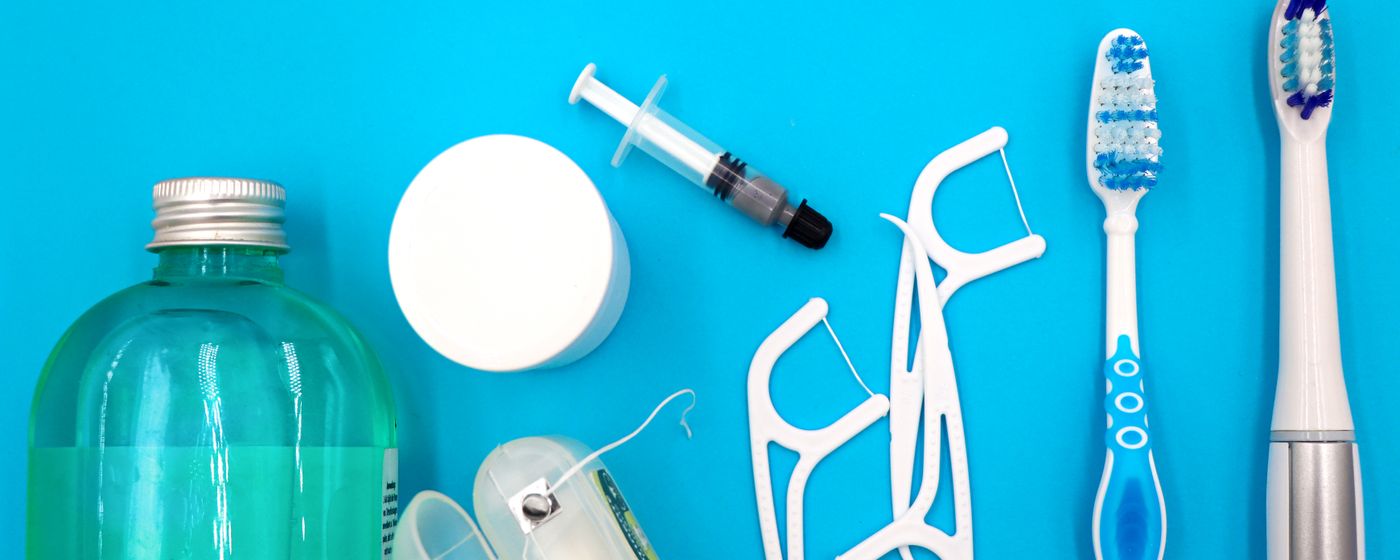
There is a second problem with the strong rinses specifically. Dry mouth is one of the six causes, and Cleveland Clinic suggests rinsing with an alcohol free antibacterial mouthwash.
An alcohol heavy rinse dries the mouth it is supposed to be treating. Read the label for alcohol content before you buy the one that stings the most.
Most bad breath starts in your mouth.
Take the six causes with you
One printable sheet: the six real causes in order, the daily routine that fixes most cases, and the point where it becomes a dentist visit. Free, unlocked right here.
Enter your email to unlock your plan
Your 1-page bad breath plan, unlocked right here.
Your plan is ready
Download or print it below. Save it anywhere.
⬇ Download your plan (PDF)The Two Week Routine That Fixes Most Cases
The fix is unglamorous and it is mostly one habit nobody taught you. Clean your tongue.
Johns Hopkins says to brush your tongue gently each time you brush your teeth, along with your cheeks and the roof of your mouth.

Add daily flossing, because Mayo is specific that food particles remain between teeth without it. Then keep your mouth wet, since dry mouth is a named cause and water does more for it than a mint.
Give that two weeks. Most cases are oral, and oral causes respond to this. If nothing changes, you now have something useful to tell a dentist: what you did, for how long, and that it made no difference.
Three Bad Breath Beliefs Worth Dropping Today
Three corrections worth carrying to the bathroom mirror.
It is coming from my stomach. Almost certainly not. Mayo Clinic's causes section opens by saying most bad breath starts in your mouth, and its list runs through food, tobacco, poor cleaning and gum disease before it reaches anything else. Start where the odds are, not where the folklore is.
A mint or a stronger rinse will handle it. Both buy you minutes. Johns Hopkins Medicine says these only mask the odour for a short time, and Cleveland Clinic says some mouthwashes only mask odours. Nothing on that shelf removes the bacteria on the back of your tongue.
If I brush twice a day I do not need a dentist. Brushing does not reach below the gumline, and early gum disease does not hurt. Cleveland Clinic points to routine dental cleanings alongside brushing and flossing, and gingivitis is reversible while periodontitis involves bone loss. The cheap version of this problem is the early one.
To your health,
Ageless Coach
Age Strong. Live Long.
This article is education, not medical advice. Bad breath with bleeding gums, loose teeth, a persistent bad taste, or a fever and sore throat needs a dentist or doctor rather than a stronger rinse.