Most chronic dryness, stinging and sensitivity is not a product you are missing. It is the outer layer of your skin being stripped faster than it can rebuild, mostly by things you do every single morning.
1Bricks and mortar · dead cells held together by natural fats
2Hot water · melts those fats the way it melts butter off a knife
3Soap · cannot tell your good bacteria from the bad
4Ceramides · about half of your outer layer is made of these fats
5Three to four months · how long repair takes to show, not three days
Skin that stings when you put product on it. Patches that stay rough no matter how much lotion you use. Redness that turns up without an obvious trigger. The instinct is to buy something stronger. The evidence points the other way.
Cleveland Clinic puts the anatomy simply through dermatologist Melissa Piliang: your skin barrier is basically the outer layer of your skin, it is dead rather than alive, and it is made up of dead cells, lipids, proteins and fats that protect your skin from the environment. Its job is to keep water in and to keep chemicals and infectious bacteria out.
1
The mechanism
A Brick Wall Made of Dead Cells and Fat
The structure is often likened to a brick wall, and the comparison is useful because it explains what goes wrong. Cleveland Clinic describes corneocytes as the tough skin cells that make up the bricks, and lipids as the natural fats that act as the mortar filling the gaps between them. Those same lipids, ceramides, cholesterol and fatty acids, are the ingredients you see listed on the better moisturizers.
Pull out the mortar and the wall still looks like a wall. It just stops working. Cleveland Clinic lists the signs: dry, scaly or flaky skin, rough patches, itchiness, inflammation and irritation, tenderness or sensitivity, acne, and stinging especially when you apply skin care products. That last one is the tell most people misread as a product working.
2
The daily habit
Hot Water Melts It Like Butter Off a Knife
Here is the analogy from Cleveland Clinic that is hard to unhear. If you have butter on a knife and you put it under hot water, the butter melts away instantly. Dr. Piliang says the same is true when you clean your skin: hot water washes away all those healthy natural oils. Warm water, not scalding, is the instruction.
Mayo Clinic arrives at the same place from a different direction, advising that some experts consider it ideal to bathe for no longer than five minutes at a time, using warm water rather than hot. Mayo also says to pat or blot your skin dry rather than rubbing, so that some moisture stays on the skin, and to moisturize while it is still there.
Cleveland Clinic's instruction is warm water rather than hot. Hot water strips the natural oils that hold the outer layer together.
3
The second habit
Soap Cannot Tell Good Bacteria From Bad
Cleveland Clinic is direct about this: soap can strip your skin of its natural oils and wash away good bacteria, which damages the barrier, because soap cannot tell the difference between the good stuff and the bad stuff. The recommendation is a mild, soap-free cleanser formulated for sensitive skin and fragrance free.
Then there is the length of the wash. Dr. Piliang specifically pushes back on the social media habit of cleansing for a full minute, saying the ideal way is to massage the cleanser on and rinse it off, that there is no benefit to massaging longer, and that you may do damage because the fatty layer of the barrier begins to break down. Over-exfoliating and scrubbing sit in the same category of harm, along with simply not using a moisturizer.
Mayo Clinic adds the same warning in plainer terms: strong soaps and detergents strip oil from the skin, so choose mild cleansers instead.
Soap-free, fragrance-free, and rinsed off rather than massaged in for a minute. Cleveland Clinic says the long-wash habit can break down the fatty layer.
4
What rebuilds it
Put the Mortar Back, Then Protect It
Rebuilding is mostly about replacing what was removed. Cleveland Clinic advises looking for products that include ceramides, fatty acids and lipids, because those naturally make up a large percentage of the barrier. Cleveland Clinic puts a figure on why ceramides matter: about 50% of your epidermis is made up of these fats that bind skin cells together, and they help protect skin from environmental stressors and prevent moisture loss.
Cleveland Clinic's aesthetician Ashlyn Yanke names the same short routine in the 2026 trends round-up: gentle, fragrance-free products, regular moisturizing, and a broad spectrum sunscreen of SPF 30 or higher daily. If skin is dry, a moisturizer containing a hydrating serum such as hyaluronic acid can help. Niacinamide, a form of vitamin B3, is offered as a second option for sensitive skin.
Less is more here. The same piece notes that the more products you use, the higher the chance you irritate the skin. Mayo Clinic agrees on the sun half of it, setting the bar at a palm-sized amount of broad-spectrum SPF 30 or higher, reapplied every two hours.
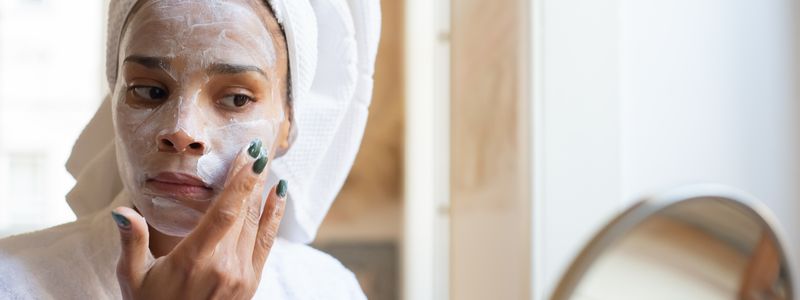
Cleveland Clinic says to look for ceramides, fatty acids and lipids, the same fats that make up a large share of the barrier itself.
As we age, our skin barrier does not replace itself as well or as quickly.
Dr. Piliang puts numbers on it: a young person can shower three times a day with hot water and soap and rebuild the barrier within six or seven hours. Once you are in your 50s, 60s or 70s, it does not come back that fast. The routine has to change with you.
Cleveland Clinic
5
The honest limit
Three or Four Months, Not Three Days
This is where most barrier resets fail, and it is worth stating before you start. Cleveland Clinic says it typically takes three or four months to start seeing the benefits of your efforts, and Dr. Piliang is candid that this is frustrating: it took a long time for your skin to get to this point, so give the products and habits time to work.
Age changes the arithmetic too. The National Institute on Aging notes that with aging the outer layer of skin gets thinner, paler and less elastic, that hormonal changes such as those at menopause can make skin thinner and drier, and that hot baths and showers, or too much soap, antiperspirant or perfume can make dry skin worse. Its home advice is unglamorous and correct: moisturizers every day, mild soap and warm rather than hot water, and a humidifier if the air is dry.
Two limits worth respecting. The National Institute on Aging warns to be skeptical of antiaging claims, since many such products are regulated as cosmetics rather than drugs and need no human testing or FDA approval. And Cleveland Clinic notes a damaged barrier can be driven by eczema, rosacea or psoriasis, in which case the right move is a dermatologist rather than another jar.
Take the barrier reset with you
Your free 2-page guide: the four habits doing the damage, the ingredients that actually rebuild, and a realistic timeline.
One email. No spam. Unsubscribe anytime.
Free Lifestyle Assessment
How Healthy Is Your Current Lifestyle?
Answer honestly for five minutes and walk away with your personal scorecard: all six areas of your health rated, the one that needs your attention first, and a 30-day plan built from your answers. It shows up the second you finish.
Free. About 5 minutes. Your results appear instantly.
📋 Your Coach's Recommendations
1
Turn the Water Down and the Clock Back
Cleveland Clinic compares hot water on skin to hot water on a buttered knife: the natural oils go instantly. Switch to warm, and take Mayo Clinic's five minute guideline seriously. Pat dry rather than rubbing so some moisture stays on the skin, then moisturize while it is still damp.
2
Swap the Soap and Shorten the Wash
Use a mild, soap-free cleanser formulated for sensitive skin and fragrance free. Massage it on and rinse it off. Cleveland Clinic says there is no benefit to washing for a full minute and that doing so can break down the fatty layer of the barrier. Park the scrubs and acids while things settle.
3
Rebuild With Ceramides, Then Add Sunscreen
Look for ceramides, fatty acids and lipids on the label, the same fats that make up a large share of the barrier. Add a broad spectrum SPF 30 or higher every day. Then wait: Cleveland Clinic says it typically takes three or four months to start seeing the benefit.
?
How it works. Just a quiet check-in, not an alert and not a recurring nag. The event lands as a 30-minute slot at 9am two weeks from today, with your plan in the notes and a link back to this article. Works with Apple Calendar, Google Calendar, and Outlook. Yours to move, snooze, or delete whenever.
Keep this plan
Get the 2-page guide: what to stop doing and what to look for on a label.
One email. No spam. Unsubscribe anytime.
Where should we send it?
Your barrier reset plan, straight to your inbox.
We send the plan plus one short evidence brief each week. Unsubscribe anytime.
✓
It is on the way
Check your inbox in the next minute. Want it right now?
Your first Ageless Brief arrives this week: one study, translated, no hype.
To your health,
Frequently Asked Questions
How do I know my skin barrier is damaged?
Cleveland Clinic lists the signs as dry, scaly or flaky skin, rough patches, itchiness, inflammation and irritation, tenderness or sensitivity, acne, infection, and stinging when you apply skin care products. If you are having a skin issue at all, the barrier has likely taken some damage.
Is hot water really that bad for skin?
Cleveland Clinic compares it to putting a buttered knife under hot water: the fat melts away instantly, and hot water washes away the healthy natural oils on your skin the same way. Warm water is the recommendation. Mayo Clinic suggests limiting baths to about five minutes.
What ingredients should I look for?
Cleveland Clinic recommends products containing ceramides, fatty acids and lipids, since those naturally make up a large percentage of the skin barrier. About 50% of the epidermis is made of ceramides. Hyaluronic acid helps hydrate dry skin, and niacinamide is a further option for sensitive skin.
How long does it take to repair?
Cleveland Clinic says it typically takes three or four months to start seeing the benefits. It also notes the barrier replaces itself more slowly with age, so a routine that worked in your 30s may not be enough later.
Do antiaging creams help the barrier?
Be careful. The National Institute on Aging advises skepticism about products claiming to be antiaging, because many are regulated as cosmetics rather than drugs, are not required to be tested in humans, and do not need FDA approval before going on the market. Ask a dermatologist or doctor what is safe and effective for you.
Is this medical advice?
No. This article is educational and is not a substitute for care from your doctor. Cleveland Clinic notes that a damaged barrier can stem from conditions such as eczema, rosacea or psoriasis, so persistent problems belong with a dermatologist.
Curious where you stand? Take the free 5-minute lifestyle assessment and your personal scorecard appears the second you finish.
By the Ageless Coach Editorial Team · Published February 19, 2026 · Last updated July 20, 2026
<style>
:root{--dark-base:#0D1B2A;--dark-mid:#1B3A4B;--teal:#0EA5A0;--teal-dark:#0C8C88;--teal-bright:#14D4CD;--fog:#D8E8E8;--deep-fog:#C8DCDC;--fog-border:#A8C4C4;--ink:#313743;--ink-soft:#49505f;--muted:#6b7280;--warm:#9A6841;--warm-light:#be7b4c;--serif:"Source Serif 4",Georgia,serif;--sans:Inter,-apple-system,BlinkMacSystemFont,"Segoe UI",sans-serif}
.w-richtext p,.w-richtext li,.w-richtext td{font-size:20.5px;line-height:1.7;color:var(--ink-soft)}
.w-richtext ul{list-style-type:disc;padding-left:24px;margin:12px 0}
.w-richtext ul li{margin-bottom:8px}
.ac-answer{background:#fff;border:1px solid #D4E4E4;border-top:5px solid var(--teal);border-radius:16px;padding:22px 24px 18px;margin:16px 0 28px;box-shadow:0 6px 22px rgba(13,27,42,.07)}
.ac-answer .aa-eyebrow{font:800 12px/1 var(--sans);letter-spacing:2.5px;text-transform:uppercase;color:var(--teal-dark);margin-bottom:8px}
.ac-answer .aa-head{font-family:var(--serif);font-size:24px;line-height:1.2;font-weight:800;color:var(--dark-base);margin:0 0 16px}
.ac-answer .aa-list{list-style:none;margin:0;padding:0}
.ac-answer .aa-list li{display:flex;gap:12px;align-items:baseline;padding:11px 0;border-bottom:1px solid #EDF3F3;font:700 16.5px/1.4 var(--sans);color:var(--ink)}
.ac-answer .aa-list li:last-child{border-bottom:none}
.ac-answer .aa-n{flex-shrink:0;width:24px;height:24px;border-radius:50%;background:var(--teal-dark);color:#fff;font:800 12px/24px var(--sans);text-align:center}
.ac-answer .aa-food{color:var(--teal-dark);font-weight:800}
.ac-answer .aa-cue{margin-top:18px;text-align:center}
.ac-answer .aa-cta{display:inline-flex;align-items:center;gap:10px;background:var(--teal-dark);color:#fff;font:800 14px/1 var(--sans);letter-spacing:.2px;padding:14px 26px;border-radius:50px;text-decoration:none;box-shadow:0 6px 16px rgba(12,140,136,.30)}
.ac-answer .aa-cta:hover{background:#0A7A76}
.ac-answer .aa-arw{display:inline-block;animation:aa-nudge 1.4s ease-in-out infinite}
@keyframes aa-nudge{0%,100%{transform:translateY(0)}50%{transform:translateY(4px)}}
@media(max-width:560px){.ac-answer{padding:20px 18px 16px}.ac-answer .aa-head{font-size:21px}.ac-answer .aa-list li{font-size:15px}}
.ac-band{margin:56px 0 24px;padding:26px 24px 12px;background:linear-gradient(180deg,#F0F7F7,#fff);border-radius:16px}
.ac-band.hype{background:linear-gradient(180deg,#FAF3EB,#fff)}
.ac-band .inner{display:flex;gap:20px;align-items:center}
.ac-band .big{font:900 72px/1 var(--sans);color:var(--deep-fog);flex-shrink:0}
.ac-band.hype .big{color:#EAD9C6}
.ac-band .q{font:700 13px/1.4 var(--sans);letter-spacing:2px;text-transform:uppercase;color:var(--teal-dark)}
.ac-band.hype .q{color:var(--warm)}
.ac-band h3{font-family:var(--serif);font-size:30px;line-height:1.2;font-weight:800;color:var(--ink);margin:0}
.ac-callout{border-left:4px solid var(--teal);background:#F4FAFA;border-radius:0 12px 12px 0;padding:18px 22px;margin:28px 0}
.ac-callout .n{font:800 20px/1.35 var(--sans);color:var(--dark-mid);margin-bottom:6px}
.ac-callout .d{font:500 15px/1.55 var(--sans);color:var(--ink-soft)}
.ac-callout .c{font:600 11.5px/1 var(--sans);letter-spacing:1.5px;text-transform:uppercase;color:var(--muted);margin-top:10px}
.ac-plan{background:linear-gradient(135deg,#F4FAFA 0%,#fff 100%);border-left:5px solid var(--teal-dark);border-radius:14px;padding:30px 26px;margin:40px 0 0;box-shadow:0 2px 12px rgba(0,0,0,.06);scroll-margin-top:100px}
.ac-plan .ptitle{font-family:var(--serif);font-size:24px;font-weight:800;color:var(--ink);margin-bottom:22px}
.ac-plan .step{display:flex;gap:16px;margin-bottom:18px;align-items:flex-start}
.ac-plan .step .n{min-width:38px;width:38px;height:38px;background:var(--teal-dark);border-radius:50%;color:#fff;font:800 17px/38px var(--sans);text-align:center;flex-shrink:0}
.ac-plan .sh{font:800 16.5px/1.4 var(--sans);color:var(--ink);margin-bottom:3px}
.ac-plan .sd{font:400 15px/1.6 var(--sans);color:var(--muted)}
.ac-plan .actions{border-top:1px solid #D8E8E8;margin-top:16px;padding-top:20px}
.ac-primary-row{display:flex;align-items:center;gap:10px;padding:0 4px}
.ac-btn-primary-wide{flex:1;background:var(--teal);color:#fff;border:1.5px solid var(--teal);border-radius:14px;padding:12px 22px;box-shadow:0 4px 14px rgba(14,165,160,.22);font-family:var(--sans);cursor:pointer;display:grid;grid-template-columns:auto 1fr;gap:14px;align-items:center;transition:all .18s ease}
.ac-btn-primary-wide:hover{background:var(--teal-dark);border-color:var(--teal-dark)}
.ac-btn-primary-wide .icon svg{width:22px;height:22px;color:#fff;display:block}
.ac-btn-primary-wide .label{text-align:left;line-height:1.25}
.ac-btn-primary-wide .label .top{display:block;font-weight:700;font-size:15.5px;color:#fff}
.ac-btn-primary-wide .label .top em{font-style:italic;font-weight:700}
.ac-cal-help{position:relative;flex-shrink:0}
.ac-cal-help summary{list-style:none;width:24px;height:24px;border-radius:50%;background:#E4F1F1;border:1px solid var(--fog-border);color:var(--dark-mid);font:700 13px/22px var(--sans);text-align:center;cursor:pointer;display:block}
.ac-cal-help summary::-webkit-details-marker{display:none}
.ac-cal-help .tip{position:absolute;right:0;top:32px;z-index:50;width:290px;background:var(--dark-base);color:var(--fog);border-radius:12px;padding:14px 16px;font:500 12.5px/1.55 var(--sans);box-shadow:0 10px 30px rgba(13,27,42,.35)}
.ac-cal-help .tip strong{color:#fff}
.ac-btn-share-wide{display:flex;width:100%;align-items:center;justify-content:center;gap:10px;background:#fff;color:var(--teal-dark);border:1.5px solid var(--teal-dark);border-radius:14px;padding:12px 22px;margin-top:10px;font:800 15px/1 var(--sans);cursor:pointer}
.ac-btn-share-wide svg{width:18px;height:18px}
.ac-midcap{background:linear-gradient(180deg,#F0F7F7,#fff);border:1.5px solid var(--fog-border);border-radius:16px;padding:24px 22px;margin:34px 0;text-align:center}
.ac-midcap h4{font-family:var(--serif);font-size:22px;font-weight:800;color:var(--ink);margin:0 0 6px}
.ac-midcap .sub{font:500 14px/1.55 var(--sans);color:var(--ink-soft);margin:0 auto 14px;max-width:400px}
.ac-midcap .mcform{display:flex;gap:8px;max-width:400px;margin:0 auto}
.ac-midcap .mcform input{flex:1;border:1.5px solid var(--fog-border);border-radius:50px;padding:12px 18px;font:500 14px/1 var(--sans);min-width:0}
.ac-midcap .mcform button{background:var(--teal-dark);color:#fff;border:none;border-radius:50px;padding:12px 20px;font:800 13.5px/1 var(--sans);cursor:pointer;white-space:nowrap}
.ac-midcap .fine{font:500 11.5px/1.5 var(--sans);color:var(--muted);margin-top:10px}
@media (max-width:520px){.ac-midcap .mcform{flex-direction:column}}
.ac-assess-promo{background:linear-gradient(135deg,#D8E8E8,#C8DCDC);border:1px solid var(--fog-border);border-radius:16px;padding:34px 30px;margin:44px 0;text-align:center}
.ac-assess-promo .eyebrow{color:var(--teal-dark);font:800 12px/1 var(--sans);letter-spacing:2.5px;text-transform:uppercase;margin:0 0 10px}
.ac-assess-promo h4{font-family:var(--serif);color:var(--dark-base);font-size:26px;font-weight:800;margin:0 0 12px}
.w-embed .ac-assess-promo p.ap-body,.ac-assess-promo p.ap-body{font-family:Georgia,serif;color:#3A5555;font-size:15.5px;font-weight:500;line-height:1.65;max-width:540px;margin:0 auto 22px}
.ac-assess-promo .ap-cta{display:inline-block;background:var(--teal-bright);color:var(--dark-base);font:800 15px/1 var(--sans);padding:15px 30px;border-radius:50px;text-decoration:none}
.ac-assess-promo .ap-fine{color:#4E6B6B;font:500 13px/1.5 var(--sans);margin:14px 0 0}
.ac-assess-line{border-top:1px solid #E2ECEC;margin-top:30px;padding:22px 10px 0;text-align:center;font:500 15.5px/1.6 var(--sans);color:#3A5555}
.w-embed .ac-assess-line a,.ac-assess-line a{color:var(--teal-dark);font-weight:700;text-decoration:underline;text-underline-offset:3px}
.ac-articlemeta{font:500 12.5px/1.6 var(--sans);color:#98a0a6;text-align:center;margin:24px 0 0}
.ac-capture{background:linear-gradient(180deg,#F0F7F7,#fff);border:1.5px solid var(--fog-border);border-radius:16px;padding:30px 28px;margin:26px 0 44px;text-align:center}
.ac-capture .cap-state{display:none}
.ac-capture[data-state="trigger"] .st-trigger{display:block}
.ac-capture[data-state="form"] .st-form{display:block}
.ac-capture[data-state="sent"] .st-sent{display:block}
.ac-capture h4{font-family:var(--serif);font-size:24px;font-weight:800;color:var(--ink);margin:0 0 8px}
.ac-capture .sub{font:500 15px/1.55 var(--sans);color:var(--ink-soft);margin:0 auto 18px;max-width:430px}
.ac-capture .bigbtn{display:inline-flex;align-items:center;gap:10px;background:var(--teal-dark);color:#fff;border:none;border-radius:50px;padding:16px 30px;font:800 16px/1 var(--sans);cursor:pointer;box-shadow:0 6px 18px rgba(12,140,136,.28)}
.ac-capture .capform{display:flex;gap:10px;max-width:430px;margin:0 auto}
.ac-capture .capform input{flex:1;border:1.5px solid var(--fog-border);border-radius:50px;padding:14px 20px;font:500 15px/1 var(--sans)}
.ac-capture .capform button{background:var(--teal-dark);color:#fff;border:none;border-radius:50px;padding:14px 24px;font:800 14px/1 var(--sans);cursor:pointer}
.ac-capture .sent-check{width:52px;height:52px;border-radius:50%;background:var(--teal);color:#fff;font:800 26px/52px var(--sans);margin:0 auto 12px}
.ac-capture .dl{display:inline-block;margin-top:6px;color:var(--teal-dark);font:700 15px/1 var(--sans);text-decoration:underline;cursor:pointer}
.ac-capture .fine{font:500 12px/1.5 var(--sans);color:var(--muted);margin-top:12px}
.ac-sig{margin-top:36px}
.ac-sig .rule{width:60px;height:2px;background:linear-gradient(90deg,var(--teal-dark),var(--teal-bright));margin-bottom:18px;border-radius:2px}
.ac-sig .toyour{font-family:var(--serif);font-size:16px;font-style:italic;color:#777;margin:0 0 10px;padding-left:2px}
.ac-faq{margin-top:40px;border-top:1px solid #e5e7eb;padding-top:30px;margin-bottom:40px}
.ac-faq h2{font-family:var(--serif);font-size:23px;font-weight:800;color:var(--ink);margin:0 0 18px}
.ac-faq details{border:1px solid #e5e7eb;border-radius:10px;margin-bottom:10px}
.ac-faq summary{padding:15px 18px;font:700 16px/1.4 var(--sans);color:var(--ink);cursor:pointer;display:flex;justify-content:space-between;align-items:center;list-style:none}
.ac-faq summary:after{content:"\25BE";color:var(--warm)}
.ac-faq .a{padding:0 18px 16px;font-size:17px;line-height:1.65;color:#555}
.article-header-section .article-container{max-width:1080px !important;margin:0 auto !important;padding:0 20px !important}
.article-header-section .article-hero-image{display:block;width:100%;max-width:660px;margin:0}
.article-header-section .article-title{display:block !important;font-family:var(--serif);font-size:32px;line-height:1.25;font-weight:700;color:#313743;margin:20px 0 12px 0;text-align:left;max-width:660px}
@media (max-width:767px){.article-header-section .article-title{font-size:26px}.article-header-section .article-hero-image{max-width:100%}}
@media (max-width:640px){.ac-band .big{font-size:52px}}
@media (max-width:520px){.ac-capture .capform{flex-direction:column}}
.ac-figure{margin:30px 0}.ac-figure img{display:block;width:100%;border-radius:14px;height:auto;aspect-ratio:800/300}.ac-figure figcaption{font:500 13px/1.5 var(--sans);color:var(--muted);margin-top:9px}</style><div class="ac-answer"><div class="aa-eyebrow">What the evidence actually says</div><h2 class="aa-head">Most chronic dryness, stinging and sensitivity is not a product you are missing. It is the outer layer of your skin being stripped faster than it can rebuild, mostly by things you do every single morning.</h2><ol class="aa-list"><li><span class="aa-n">1</span><span><span class="aa-food">Bricks and mortar</span> · dead cells held together by natural fats</span></li><li><span class="aa-n">2</span><span><span class="aa-food">Hot water</span> · melts those fats the way it melts butter off a knife</span></li><li><span class="aa-n">3</span><span><span class="aa-food">Soap</span> · cannot tell your good bacteria from the bad</span></li><li><span class="aa-n">4</span><span><span class="aa-food">Ceramides</span> · about half of your outer layer is made of these fats</span></li><li><span class="aa-n">5</span><span><span class="aa-food">Three to four months</span> · how long repair takes to show, not three days</span></li></ol><div class="aa-cue"><a class="aa-cta" href="#coach-recommendations">Get Your Coach's 3-Step Plan <span class="aa-arw">↓</span></a></div></div><p>Skin that stings when you put product on it. Patches that stay rough no matter how much lotion you use. Redness that turns up without an obvious trigger. The instinct is to buy something stronger. The evidence points the other way.</p><p><a href="https://health.clevelandclinic.org/skin-barrier" target="_blank" rel="noopener">Cleveland Clinic</a> puts the anatomy simply through dermatologist Melissa Piliang: your skin barrier is basically the outer layer of your skin, it is dead rather than alive, and it is made up of dead cells, lipids, proteins and fats that protect your skin from the environment. Its job is to keep water in and to keep chemicals and infectious bacteria out.</p><div class="ac-band"><div class="inner"><div class="big">1</div><div><div class="q">The mechanism</div><h3>A Brick Wall Made of Dead Cells and Fat</h3></div></div></div><p>The structure is often likened to a brick wall, and the comparison is useful because it explains what goes wrong. <a href="https://health.clevelandclinic.org/skin-barrier" target="_blank" rel="noopener">Cleveland Clinic</a> describes corneocytes as the tough skin cells that make up the bricks, and lipids as the natural fats that act as the mortar filling the gaps between them. Those same lipids, ceramides, cholesterol and fatty acids, are the ingredients you see listed on the better moisturizers.</p><p>Pull out the mortar and the wall still looks like a wall. It just stops working. <a href="https://health.clevelandclinic.org/skin-barrier" target="_blank" rel="noopener">Cleveland Clinic</a> lists the signs: dry, scaly or flaky skin, rough patches, itchiness, inflammation and irritation, tenderness or sensitivity, acne, and stinging especially when you apply skin care products. That last one is the tell most people misread as a product working.</p><div class="ac-band hype"><div class="inner"><div class="big">2</div><div><div class="q">The daily habit</div><h3>Hot Water Melts It Like Butter Off a Knife</h3></div></div></div><p>Here is the analogy from <a href="https://health.clevelandclinic.org/skin-barrier" target="_blank" rel="noopener">Cleveland Clinic</a> that is hard to unhear. If you have butter on a knife and you put it under hot water, the butter melts away instantly. Dr. Piliang says the same is true when you clean your skin: hot water washes away all those healthy natural oils. Warm water, not scalding, is the instruction.</p><p><a href="https://www.mayoclinic.org/healthy-lifestyle/adult-health/in-depth/skin-care/art-20048237" target="_blank" rel="noopener">Mayo Clinic</a> arrives at the same place from a different direction, advising that some experts consider it ideal to bathe for no longer than five minutes at a time, using warm water rather than hot. Mayo also says to pat or blot your skin dry rather than rubbing, so that some moisture stays on the skin, and to moisturize while it is still there.</p><figure class="ac-figure"><img src="https://images.pexels.com/photos/12322944/pexels-photo-12322944.jpeg?auto=compress&cs=tinysrgb&w=800&h=300&fit=crop" alt="A man leaning over a white bathroom sink rinsing his face with running water" width="800" height="300" loading="lazy" decoding="async"><figcaption>Cleveland Clinic's instruction is warm water rather than hot. Hot water strips the natural oils that hold the outer layer together.</figcaption></figure><div class="ac-band"><div class="inner"><div class="big">3</div><div><div class="q">The second habit</div><h3>Soap Cannot Tell Good Bacteria From Bad</h3></div></div></div><p><a href="https://health.clevelandclinic.org/skin-barrier" target="_blank" rel="noopener">Cleveland Clinic</a> is direct about this: soap can strip your skin of its natural oils and wash away good bacteria, which damages the barrier, because soap cannot tell the difference between the good stuff and the bad stuff. The recommendation is a mild, soap-free cleanser formulated for sensitive skin and fragrance free.</p><p>Then there is the length of the wash. Dr. Piliang specifically pushes back on the social media habit of cleansing for a full minute, saying the ideal way is to massage the cleanser on and rinse it off, that there is no benefit to massaging longer, and that you may do damage because the fatty layer of the barrier begins to break down. Over-exfoliating and scrubbing sit in the same category of harm, along with simply not using a moisturizer.</p><p><a href="https://www.mayoclinic.org/healthy-lifestyle/adult-health/in-depth/skin-care/art-20048237" target="_blank" rel="noopener">Mayo Clinic</a> adds the same warning in plainer terms: strong soaps and detergents strip oil from the skin, so choose mild cleansers instead.</p><figure class="ac-figure"><img src="https://images.pexels.com/photos/8142196/pexels-photo-8142196.jpeg?auto=compress&cs=tinysrgb&w=800&h=300&fit=crop" alt="A smiling woman with a towel wrapped around her hair lathering a white cleanser across her cheeks" width="800" height="300" loading="lazy" decoding="async"><figcaption>Soap-free, fragrance-free, and rinsed off rather than massaged in for a minute. Cleveland Clinic says the long-wash habit can break down the fatty layer.</figcaption></figure><div class="ac-band"><div class="inner"><div class="big">4</div><div><div class="q">What rebuilds it</div><h3>Put the Mortar Back, Then Protect It</h3></div></div></div><p>Rebuilding is mostly about replacing what was removed. <a href="https://health.clevelandclinic.org/skin-barrier" target="_blank" rel="noopener">Cleveland Clinic</a> advises looking for products that include ceramides, fatty acids and lipids, because those naturally make up a large percentage of the barrier. <a href="https://health.clevelandclinic.org/skin-care-trends" target="_blank" rel="noopener">Cleveland Clinic</a> puts a figure on why ceramides matter: about 50% of your epidermis is made up of these fats that bind skin cells together, and they help protect skin from environmental stressors and prevent moisture loss.</p><p>Cleveland Clinic's aesthetician Ashlyn Yanke names the same short routine in the <a href="https://health.clevelandclinic.org/skin-care-trends" target="_blank" rel="noopener">2026 trends round-up</a>: gentle, fragrance-free products, regular moisturizing, and a broad spectrum sunscreen of SPF 30 or higher daily. If skin is dry, a moisturizer containing a hydrating serum such as hyaluronic acid can help. Niacinamide, a form of vitamin B3, is offered as a second option for sensitive skin.</p><p>Less is more here. The same piece notes that the more products you use, the higher the chance you irritate the skin. <a href="https://www.mayoclinic.org/healthy-lifestyle/adult-health/in-depth/skin-care/art-20048237" target="_blank" rel="noopener">Mayo Clinic</a> agrees on the sun half of it, setting the bar at a palm-sized amount of broad-spectrum SPF 30 or higher, reapplied every two hours.</p><figure class="ac-figure"><img src="https://images.pexels.com/photos/6948180/pexels-photo-6948180.jpeg?auto=compress&cs=tinysrgb&w=800&h=300&fit=crop" alt="A woman with a towel on her hair spreading white moisturizing cream across her cheek" width="800" height="300" loading="lazy" decoding="async"><figcaption>Cleveland Clinic says to look for ceramides, fatty acids and lipids, the same fats that make up a large share of the barrier itself.</figcaption></figure><div class="ac-callout"><div class="n">As we age, our skin barrier does not replace itself as well or as quickly.</div><div class="d">Dr. Piliang puts numbers on it: a young person can shower three times a day with hot water and soap and rebuild the barrier within six or seven hours. Once you are in your 50s, 60s or 70s, it does not come back that fast. The routine has to change with you.</div><div class="c">Cleveland Clinic</div></div><div class="ac-band"><div class="inner"><div class="big">5</div><div><div class="q">The honest limit</div><h3>Three or Four Months, Not Three Days</h3></div></div></div><p>This is where most barrier resets fail, and it is worth stating before you start. <a href="https://health.clevelandclinic.org/skin-barrier" target="_blank" rel="noopener">Cleveland Clinic</a> says it typically takes three or four months to start seeing the benefits of your efforts, and Dr. Piliang is candid that this is frustrating: it took a long time for your skin to get to this point, so give the products and habits time to work.</p><p>Age changes the arithmetic too. <a href="https://www.nia.nih.gov/health/skin-care/skin-care-and-aging" target="_blank" rel="noopener">The National Institute on Aging</a> notes that with aging the outer layer of skin gets thinner, paler and less elastic, that hormonal changes such as those at menopause can make skin thinner and drier, and that hot baths and showers, or too much soap, antiperspirant or perfume can make dry skin worse. Its home advice is unglamorous and correct: moisturizers every day, mild soap and warm rather than hot water, and a humidifier if the air is dry.</p><p>Two limits worth respecting. <a href="https://www.nia.nih.gov/health/skin-care/skin-care-and-aging" target="_blank" rel="noopener">The National Institute on Aging</a> warns to be skeptical of antiaging claims, since many such products are regulated as cosmetics rather than drugs and need no human testing or FDA approval. And <a href="https://health.clevelandclinic.org/skin-barrier" target="_blank" rel="noopener">Cleveland Clinic</a> notes a damaged barrier can be driven by eczema, rosacea or psoriasis, in which case the right move is a dermatologist rather than another jar.</p><div class="ac-midcap"><h4>Take the barrier reset with you</h4><p class="sub">Your free 2-page guide: the four habits doing the damage, the ingredients that actually rebuild, and a realistic timeline.</p><div class="mcform"><input type="email" placeholder="Your email address" aria-label="Email address"><button type="button">Send My Plan (Free)</button></div><div class="fine">One email. No spam. Unsubscribe anytime.</div></div><div class="ac-assess-promo"><p class="eyebrow">Free Lifestyle Assessment</p><h4>How Healthy Is Your Current Lifestyle?</h4><p class="ap-body">Answer honestly for five minutes and walk away with your personal scorecard: all six areas of your health rated, the one that needs your attention first, and a 30-day plan built from your answers. It shows up the second you finish.</p><a class="ap-cta" href="/#assessment">See How the Assessment Works →</a><p class="ap-fine">Free. About 5 minutes. Your results appear instantly.</p></div><div class="ac-plan" id="coach-recommendations"><div class="ptitle">📋 Your Coach's Recommendations</div><div class="step"><div class="n">1</div><div><div class="sh">Turn the Water Down and the Clock Back</div><div class="sd">Cleveland Clinic compares hot water on skin to hot water on a buttered knife: the natural oils go instantly. Switch to warm, and take Mayo Clinic's five minute guideline seriously. Pat dry rather than rubbing so some moisture stays on the skin, then moisturize while it is still damp.</div></div></div><div class="step"><div class="n">2</div><div><div class="sh">Swap the Soap and Shorten the Wash</div><div class="sd">Use a mild, soap-free cleanser formulated for sensitive skin and fragrance free. Massage it on and rinse it off. Cleveland Clinic says there is no benefit to washing for a full minute and that doing so can break down the fatty layer of the barrier. Park the scrubs and acids while things settle.</div></div></div><div class="step"><div class="n">3</div><div><div class="sh">Rebuild With Ceramides, Then Add Sunscreen</div><div class="sd">Look for ceramides, fatty acids and lipids on the label, the same fats that make up a large share of the barrier. Add a broad spectrum SPF 30 or higher every day. Then wait: Cleveland Clinic says it typically takes three or four months to start seeing the benefit.</div></div></div><div class="actions">
<div class="ac-primary-row">
<button type="button" class="ac-btn-primary-wide" data-ac-cal>
<span class="icon"><svg viewBox="0 0 24 24" fill="none" stroke="currentColor" stroke-width="2" stroke-linecap="round" stroke-linejoin="round"><rect x="3" y="4" width="18" height="18" rx="2"></rect><path d="M16 2v4M8 2v4M3 10h18"></path></svg></span>
<span class="label"><span class="top">Add <em>Your Coach's Recommendations to Your Calendar</em></span></span>
</button>
<details class="ac-cal-help">
<summary aria-label="What does this do?">?</summary>
<div class="tip"><strong>How it works.</strong> Just a quiet check-in, not an alert and not a recurring nag. The event lands as a 30-minute slot at 9am two weeks from today, with your plan in the notes and a link back to this article. Works with Apple Calendar, Google Calendar, and Outlook. Yours to move, snooze, or delete whenever.</div>
</details>
</div>
<button type="button" class="ac-btn-share-wide" data-ac-share>
<svg viewBox="0 0 24 24" fill="none" stroke="currentColor" stroke-width="2" stroke-linecap="round" stroke-linejoin="round"><path d="M4 12v8a2 2 0 002 2h12a2 2 0 002-2v-8"></path><polyline points="16 6 12 2 8 6"></polyline><line x1="12" y1="2" x2="12" y2="15"></line></svg>
Share this article
</button>
</div></div><div class="ac-capture" data-state="trigger" data-article-slug="dermatologists-say-stop-doing-this-to-your-skin-how-to-fix-your-barrier" data-pdf-url="https://cdn.prod.website-files.com/69be1026a027224999b7936b/6a5e03e91017cb3c05f380f1_the-skin-barrier-reset.pdf" data-plan-title="The Skin Barrier Reset" data-plan-desc="Your free 2-page guide: the habits that strip the barrier, the ingredients that rebuild it, and how long it honestly takes. Checked against Cleveland Clinic, Mayo Clinic and the National Institute on Aging."><div class="st-trigger cap-state"><h4>Keep this plan</h4><p class="sub">Get the 2-page guide: what to stop doing and what to look for on a label.</p><button class="bigbtn" type="button" data-cap="form">📩 Email Me This Plan (Free PDF)</button><div class="fine">One email. No spam. Unsubscribe anytime.</div></div><div class="st-form cap-state"><h4>Where should we send it?</h4><p class="sub">Your barrier reset plan, straight to your inbox.</p><form class="capform"><input type="email" name="email" required placeholder="Your email address" aria-label="Email address"><button type="submit">Send My Plan</button></form><div class="fine">We send the plan plus one short evidence brief each week. Unsubscribe anytime.</div></div><div class="st-sent cap-state"><div class="sent-check">✓</div><h4>It is on the way</h4><p class="sub">Check your inbox in the next minute. Want it right now?</p><a class="dl" href="https://cdn.prod.website-files.com/69be1026a027224999b7936b/6a5e03e91017cb3c05f380f1_the-skin-barrier-reset.pdf" download>⬇ Download your plan (PDF)</a><div class="fine">Your first Ageless Brief arrives this week: one study, translated, no hype.</div></div></div><div class="ac-sig">
<div class="rule"></div>
<p class="toyour">To your health,</p>
<svg width="320" height="72" viewBox="0 0 320 72" role="img" aria-label="Ageless Coach. Age Strong. Live Long." xmlns="http://www.w3.org/2000/svg" xmlns:xlink="http://www.w3.org/1999/xlink">
<defs><clipPath id="acSigIconClip"><rect x="0" y="6" width="60" height="60" rx="12" ry="12"/></clipPath></defs>
<image x="0" y="6" width="60" height="60" clip-path="url(#acSigIconClip)" preserveAspectRatio="xMidYMid slice" href="https://cdn.prod.website-files.com/69be1026a027224999b7936b/6a0b22c6afd5d6fd115b9c1a_ac-closing-brand-icon.webp" xlink:href="https://cdn.prod.website-files.com/69be1026a027224999b7936b/6a0b22c6afd5d6fd115b9c1a_ac-closing-brand-icon.webp"/>
<text x="76" y="42" style="font-family:Inter,system-ui,-apple-system,'Helvetica Neue',Arial,sans-serif;font-size:27px;letter-spacing:-0.3px">
<tspan style="font-weight:800;fill:#0D1B2A">Ageless</tspan><tspan style="font-weight:300;fill:rgba(13,27,42,0.6)">Coach</tspan><tspan dy="-12" style="font-size:16px;font-weight:600;fill:rgba(13,27,42,0.6)">™</tspan>
</text>
<text x="76" y="60" style="font-family:Inter,system-ui,-apple-system,'Helvetica Neue',Arial,sans-serif;font-size:10.5px;letter-spacing:2.5px;font-weight:500;fill:#0C8C88;text-transform:uppercase">AGE STRONG. LIVE LONG.</text>
</svg>
</div><div class="ac-faq"><h2>Frequently Asked Questions</h2><details><summary>How do I know my skin barrier is damaged?</summary><div class="a">Cleveland Clinic lists the signs as dry, scaly or flaky skin, rough patches, itchiness, inflammation and irritation, tenderness or sensitivity, acne, infection, and stinging when you apply skin care products. If you are having a skin issue at all, the barrier has likely taken some damage.</div></details><details><summary>Is hot water really that bad for skin?</summary><div class="a">Cleveland Clinic compares it to putting a buttered knife under hot water: the fat melts away instantly, and hot water washes away the healthy natural oils on your skin the same way. Warm water is the recommendation. Mayo Clinic suggests limiting baths to about five minutes.</div></details><details><summary>What ingredients should I look for?</summary><div class="a">Cleveland Clinic recommends products containing ceramides, fatty acids and lipids, since those naturally make up a large percentage of the skin barrier. About 50% of the epidermis is made of ceramides. Hyaluronic acid helps hydrate dry skin, and niacinamide is a further option for sensitive skin.</div></details><details><summary>How long does it take to repair?</summary><div class="a">Cleveland Clinic says it typically takes three or four months to start seeing the benefits. It also notes the barrier replaces itself more slowly with age, so a routine that worked in your 30s may not be enough later.</div></details><details><summary>Do antiaging creams help the barrier?</summary><div class="a">Be careful. The National Institute on Aging advises skepticism about products claiming to be antiaging, because many are regulated as cosmetics rather than drugs, are not required to be tested in humans, and do not need FDA approval before going on the market. Ask a dermatologist or doctor what is safe and effective for you.</div></details><details><summary>Is this medical advice?</summary><div class="a">No. This article is educational and is not a substitute for care from your doctor. Cleveland Clinic notes that a damaged barrier can stem from conditions such as eczema, rosacea or psoriasis, so persistent problems belong with a dermatologist.</div></details></div><div class="ac-assess-line">Curious where you stand? Take the free <a href="/#assessment">5-minute lifestyle assessment</a> and your personal scorecard appears the second you finish.</div><p class="ac-articlemeta">By the Ageless Coach Editorial Team · Published February 19, 2026 · Last updated July 20, 2026</p>
Subscribe to the Free Newsletter
One article a week. Trusted research made simple. Start making smarter health decisions today.