The Daily Handful of Walnuts That Fights Inflammation
What the evidence actually says
A daily ounce of walnuts is a small, unusually well-studied habit. Cleveland Clinic calls walnuts an antioxidant powerhouse that helps fight inflammation, and the heart benefits show up without the weight gain people expect.
1One ounce · about a handful, or 12 to 14 walnut halves
22.5 grams of ALA · the plant omega-3 packed into that single serving
3Up to 4 percent · how much regular walnuts may lower LDL cholesterol
4Antioxidant powerhouse · Cleveland Clinic's phrase for how walnuts fight inflammation
5No extra pounds · walnut eaters in a two-year trial did not gain weight
The advice sounds too simple to be worth reading: eat a handful of walnuts most days. The research behind it is not simple at all, and it keeps pointing the same direction.
Cleveland Clinic describes walnuts as an antioxidant powerhouse that helps fight inflammation, crediting a mix of the plant omega-3 ALA, the amino acid arginine, polyphenols and magnesium. Harvard's Nutrition Source adds the mechanism researchers keep returning to: nuts can improve blood lipids, attenuate inflammation, and benefit the endothelium, the lining of your blood vessels.
1
The mechanism
Why Inflammation Sits at the Center
Chronic inflammation is the thread that ties walnuts to the heart. Cleveland Clinic explains that oxidative stress, which happens when there are too many free radicals in the body, feeds inflammation, and that this inflammation can be a driving force behind a long list of chronic illnesses.
Antioxidants work in the other direction, canceling out free radicals. Walnuts are dense in them: alongside ALA, Cleveland Clinic lists arginine, polyphenols, vitamin E and magnesium. In one small study it cites, the antioxidants in walnuts fought the oxidative stress caused by LDL cholesterol, the same process that damages artery walls and drives atherosclerosis. The benefit reaches beyond the bloodstream: Cleveland Clinic points to a trial in which adults eating about 1.5 ounces of walnuts a day for eight weeks grew more beneficial gut bacteria, and those gut microbes help regulate inflammation in turn.
2
The stakes
The Plant Omega-3 Most Diets Miss
What sets walnuts apart from other nuts is one fat. Harvard Health notes walnuts are especially rich in alpha-linolenic acid, or ALA, a precursor to the omega-3 fatty acids EPA and DHA found in fatty fish, which your body converts, though the efficiency varies from person to person.
The dose is meaningful. Cleveland Clinic reports that walnuts contain about 2.5 grams of ALA per one-ounce serving, and that for each gram of ALA you eat per day, you lower your risk of dying from heart disease by 10 percent. That is a large return on a small handful.
Walnuts are especially rich in ALA, a plant omega-3, carrying about 2.5 grams in a single one-ounce serving.
3
The evidence
What Two Years of Walnuts Did
The strongest recent test ran long. Harvard Health describes the Walnuts and Healthy Aging trial, a randomized controlled study of 708 adults ages 63 to 79 in California and Spain. One group added roughly a quarter to a half cup of walnuts daily for two years, the other ate none, and the walnut group ended with lower LDL cholesterol and fewer of the small, dense LDL particles most likely to trigger artery plaque, without packing on extra pounds.
Shorter studies agree. A 2018 review of 26 controlled trials involving more than 1,000 people found walnut-enriched diets led to lower total cholesterol, LDL cholesterol and triglycerides. Cleveland Clinic puts rough numbers on it: adding walnuts regularly may lower total cholesterol up to 3 percent, LDL up to 4 percent, and triglycerides up to 5 percent, and it notes the participants got those benefits without gaining weight.
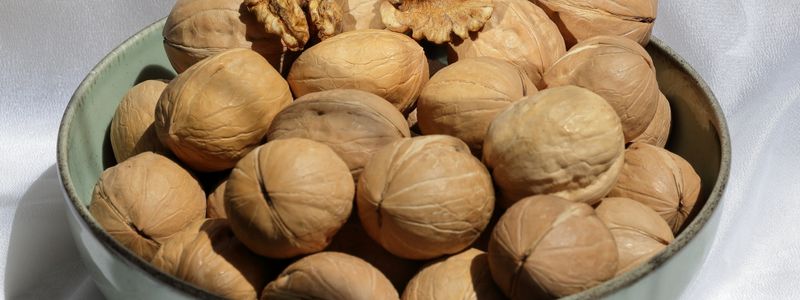
A one-ounce serving is about 12 to 14 walnut halves, roughly the amount that fits in your palm.
4
The heart signal
Fewer Heart Events in the Big Cohorts
Zoom out to whole populations and the pattern holds. Harvard's Nutrition Source reports on more than 210,000 health professionals followed up to 32 years: people who ate a one-ounce handful of nuts five or more times a week had a 14 percent lower risk of cardiovascular disease and a 20 percent lower risk of coronary heart disease than those who rarely ate them, with walnuts specifically linked to lower risk.
Part of the how is chemical. Harvard notes nuts are rich in arginine, an amino acid the body uses to make nitric oxide, a molecule that relaxes constricted blood vessels and eases blood flow. The unsaturated fats also lower LDL and raise HDL. The Food and Drug Administration even allows a qualified claim on walnuts: eating a diet that includes one ounce of nuts daily can reduce your risk of heart disease. The signal is even stronger for people with type 2 diabetes, where Harvard reports that eating five servings of nuts a week was tied to a markedly lower risk of dying from cardiovascular disease.
For each gram of ALA you eat per day, you lower your risk of dying from heart disease by 10 percent.
A single one-ounce serving of walnuts, about 12 to 14 halves, carries roughly 2.5 grams of ALA, which is why Cleveland Clinic calls this wrinkled nut a heart and anti-inflammatory workhorse.
Cleveland Clinic
5
How to use it
The Handful That Actually Helps
Portion is the whole game. Cleveland Clinic sets a serving at about one ounce, 12 to 14 walnut halves, or the amount that fits in your palm, at roughly 185 calories, and suggests choosing raw, unsalted walnuts and sticking to a single serving on most days.
The one caution is real. Harvard's Nutrition Source warns that eating nuts on top of your usual snacks, rather than in place of them, could add 10 pounds or more in a year, which would tip you toward heart disease rather than away from it. So swap, do not stack: use walnuts instead of chips, sprinkle them on oatmeal, yogurt or salads, and let them replace a less healthy bite.
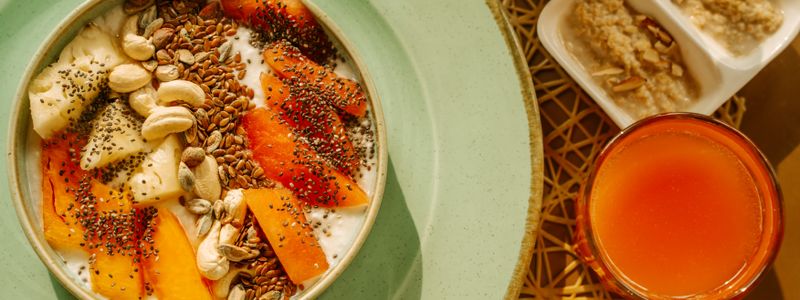
Cleveland Clinic suggests sprinkling walnuts onto oatmeal, yogurt or salads, so they replace a less healthy snack rather than adding to it.
Take the daily walnut plan with you
Your free 2-page guide: the exact serving size, how to swap walnuts in without gaining weight, and where to add them so the habit actually sticks.
One email. No spam. Unsubscribe anytime.
Free Lifestyle Assessment
How Healthy Is Your Current Lifestyle?
Answer honestly for five minutes and walk away with your personal scorecard: all six areas of your health rated, the one that needs your attention first, and a 30-day plan built from your answers. It shows up the second you finish.
Free. About 5 minutes. Your results appear instantly.
📋 Your Coach's Recommendations
1
Make It One Ounce, Most Days
Cleveland Clinic sets a serving at about one ounce, 12 to 14 walnut halves, or a palmful, carrying about 2.5 grams of the plant omega-3 ALA. Choose raw, unsalted walnuts and keep it to a single serving on most days.
2
Swap, Do Not Add
Harvard notes a handful of walnuts is about 185 calories, so eat them instead of chips or a less healthy snack. In trials, walnut eaters lowered harmful blood lipids without gaining weight, but only because the nuts replaced other calories.
3
Put Them Where You Already Eat
Cleveland Clinic suggests sprinkling walnuts onto oatmeal, yogurt or salads. Harvard's cohorts found the biggest benefit in people eating a handful of nuts five or more times a week, so aim for most days, not perfection.
?
How it works. Just a quiet check-in, not an alert and not a recurring nag. The event lands as a 30-minute slot at 9am two weeks from today, with your plan in the notes and a link back to this article. Works with Apple Calendar, Google Calendar, and Outlook. Yours to move, snooze, or delete whenever.
Keep this plan
Get the 2-page guide: the serving size, the smart swap, and where to add walnuts so it sticks.
One email. No spam. Unsubscribe anytime.
Where should we send it?
Your daily walnut plan, straight to your inbox.
We send the plan plus one short evidence brief each week. Unsubscribe anytime.
✓
It is on the way
Check your inbox in the next minute. Want it right now?
Your first Ageless Brief arrives this week: one study, translated, no hype.
To your health,
Frequently Asked Questions
How many walnuts is a serving?
Cleveland Clinic puts a serving at about one ounce, which is 12 to 14 walnut halves, or a quarter cup, or roughly the amount that fits in the palm of your hand. That single serving is around 185 calories and carries about 2.5 grams of the plant omega-3 ALA.
Do walnuts really lower cholesterol?
The evidence is consistent. Cleveland Clinic reports that adding walnuts regularly may lower total cholesterol up to 3 percent, LDL up to 4 percent, and triglycerides up to 5 percent. Harvard Health describes a two-year randomized trial in which walnut eaters ended with lower LDL and fewer harmful small LDL particles.
Will walnuts make me gain weight?
Not if they replace other food. In the trials Harvard Health cites, walnut eaters did not gain weight. But Harvard's Nutrition Source warns that eating nuts on top of your usual diet, at about 185 calories a handful, could add 10 pounds or more in a year. The trick is to swap, not stack.
Raw or roasted?
Cleveland Clinic suggests choosing raw, unsalted walnuts to maximize the benefits. Harvard notes walnuts are usually eaten raw, which gives them greater antioxidant ability than nuts that are typically roasted.
Are walnuts better than other nuts?
All nuts are good for the heart. Cleveland Clinic notes people who eat five servings of tree nuts a week have a lower risk of heart disease, and Harvard cohorts found benefits across nut types. Walnuts stand out mainly because they are especially rich in the plant omega-3 ALA.
Is this medical advice?
No. This article is educational and is not a substitute for advice from your doctor. If you have high cholesterol or another health concern, talk with your provider about how walnuts and other foods fit into your overall plan.
Curious where you stand? Take the free 5-minute lifestyle assessment and your personal scorecard appears the second you finish.
By the Ageless Coach Editorial Team · Published May 30, 2026 · Last updated July 22, 2026
<style>
:root{--dark-base:#0D1B2A;--dark-mid:#1B3A4B;--teal:#0EA5A0;--teal-dark:#0C8C88;--teal-bright:#14D4CD;--fog:#D8E8E8;--deep-fog:#C8DCDC;--fog-border:#A8C4C4;--ink:#313743;--ink-soft:#49505f;--muted:#6b7280;--warm:#9A6841;--warm-light:#be7b4c;--serif:"Source Serif 4",Georgia,serif;--sans:Inter,-apple-system,BlinkMacSystemFont,"Segoe UI",sans-serif}
.w-richtext p,.w-richtext li,.w-richtext td{font-size:20.5px;line-height:1.7;color:var(--ink-soft)}
.w-richtext ul{list-style-type:disc;padding-left:24px;margin:12px 0}
.w-richtext ul li{margin-bottom:8px}
.ac-answer{background:#fff;border:1px solid #D4E4E4;border-top:5px solid var(--teal);border-radius:16px;padding:22px 24px 18px;margin:16px 0 28px;box-shadow:0 6px 22px rgba(13,27,42,.07)}
.ac-answer .aa-eyebrow{font:800 12px/1 var(--sans);letter-spacing:2.5px;text-transform:uppercase;color:var(--teal-dark);margin-bottom:8px}
.ac-answer .aa-head{font-family:var(--serif);font-size:24px;line-height:1.2;font-weight:800;color:var(--dark-base);margin:0 0 16px}
.ac-answer .aa-list{list-style:none;margin:0;padding:0}
.ac-answer .aa-list li{display:flex;gap:12px;align-items:baseline;padding:11px 0;border-bottom:1px solid #EDF3F3;font:700 16.5px/1.4 var(--sans);color:var(--ink)}
.ac-answer .aa-list li:last-child{border-bottom:none}
.ac-answer .aa-n{flex-shrink:0;width:24px;height:24px;border-radius:50%;background:var(--teal-dark);color:#fff;font:800 12px/24px var(--sans);text-align:center}
.ac-answer .aa-food{color:var(--teal-dark);font-weight:800}
.ac-answer .aa-cue{margin-top:18px;text-align:center}
.ac-answer .aa-cta{display:inline-flex;align-items:center;gap:10px;background:var(--teal-dark);color:#fff;font:800 14px/1 var(--sans);letter-spacing:.2px;padding:14px 26px;border-radius:50px;text-decoration:none;box-shadow:0 6px 16px rgba(12,140,136,.30)}
.ac-answer .aa-cta:hover{background:#0A7A76}
.ac-answer .aa-arw{display:inline-block;animation:aa-nudge 1.4s ease-in-out infinite}
@keyframes aa-nudge{0%,100%{transform:translateY(0)}50%{transform:translateY(4px)}}
@media(max-width:560px){.ac-answer{padding:20px 18px 16px}.ac-answer .aa-head{font-size:21px}.ac-answer .aa-list li{font-size:15px}}
.ac-band{margin:56px 0 24px;padding:26px 24px 12px;background:linear-gradient(180deg,#F0F7F7,#fff);border-radius:16px}
.ac-band.hype{background:linear-gradient(180deg,#FAF3EB,#fff)}
.ac-band .inner{display:flex;gap:20px;align-items:center}
.ac-band .big{font:900 72px/1 var(--sans);color:var(--deep-fog);flex-shrink:0}
.ac-band.hype .big{color:#EAD9C6}
.ac-band .q{font:700 13px/1.4 var(--sans);letter-spacing:2px;text-transform:uppercase;color:var(--teal-dark)}
.ac-band.hype .q{color:var(--warm)}
.ac-band h3{font-family:var(--serif);font-size:30px;line-height:1.2;font-weight:800;color:var(--ink);margin:0}
.ac-callout{border-left:4px solid var(--teal);background:#F4FAFA;border-radius:0 12px 12px 0;padding:18px 22px;margin:28px 0}
.ac-callout .n{font:800 20px/1.35 var(--sans);color:var(--dark-mid);margin-bottom:6px}
.ac-callout .d{font:500 15px/1.55 var(--sans);color:var(--ink-soft)}
.ac-callout .c{font:600 11.5px/1 var(--sans);letter-spacing:1.5px;text-transform:uppercase;color:var(--muted);margin-top:10px}
.ac-plan{background:linear-gradient(135deg,#F4FAFA 0%,#fff 100%);border-left:5px solid var(--teal-dark);border-radius:14px;padding:30px 26px;margin:40px 0 0;box-shadow:0 2px 12px rgba(0,0,0,.06);scroll-margin-top:100px}
.ac-plan .ptitle{font-family:var(--serif);font-size:24px;font-weight:800;color:var(--ink);margin-bottom:22px}
.ac-plan .step{display:flex;gap:16px;margin-bottom:18px;align-items:flex-start}
.ac-plan .step .n{min-width:38px;width:38px;height:38px;background:var(--teal-dark);border-radius:50%;color:#fff;font:800 17px/38px var(--sans);text-align:center;flex-shrink:0}
.ac-plan .sh{font:800 16.5px/1.4 var(--sans);color:var(--ink);margin-bottom:3px}
.ac-plan .sd{font:400 15px/1.6 var(--sans);color:var(--muted)}
.ac-plan .actions{border-top:1px solid #D8E8E8;margin-top:16px;padding-top:20px}
.ac-primary-row{display:flex;align-items:center;gap:10px;padding:0 4px}
.ac-btn-primary-wide{flex:1;background:var(--teal);color:#fff;border:1.5px solid var(--teal);border-radius:14px;padding:12px 22px;box-shadow:0 4px 14px rgba(14,165,160,.22);font-family:var(--sans);cursor:pointer;display:grid;grid-template-columns:auto 1fr;gap:14px;align-items:center;transition:all .18s ease}
.ac-btn-primary-wide:hover{background:var(--teal-dark);border-color:var(--teal-dark)}
.ac-btn-primary-wide .icon svg{width:22px;height:22px;color:#fff;display:block}
.ac-btn-primary-wide .label{text-align:left;line-height:1.25}
.ac-btn-primary-wide .label .top{display:block;font-weight:700;font-size:15.5px;color:#fff}
.ac-btn-primary-wide .label .top em{font-style:italic;font-weight:700}
.ac-cal-help{position:relative;flex-shrink:0}
.ac-cal-help summary{list-style:none;width:24px;height:24px;border-radius:50%;background:#E4F1F1;border:1px solid var(--fog-border);color:var(--dark-mid);font:700 13px/22px var(--sans);text-align:center;cursor:pointer;display:block}
.ac-cal-help summary::-webkit-details-marker{display:none}
.ac-cal-help .tip{position:absolute;right:0;top:32px;z-index:50;width:290px;background:var(--dark-base);color:var(--fog);border-radius:12px;padding:14px 16px;font:500 12.5px/1.55 var(--sans);box-shadow:0 10px 30px rgba(13,27,42,.35)}
.ac-cal-help .tip strong{color:#fff}
.ac-btn-share-wide{display:flex;width:100%;align-items:center;justify-content:center;gap:10px;background:#fff;color:var(--teal-dark);border:1.5px solid var(--teal-dark);border-radius:14px;padding:12px 22px;margin-top:10px;font:800 15px/1 var(--sans);cursor:pointer}
.ac-btn-share-wide svg{width:18px;height:18px}
.ac-midcap{background:linear-gradient(180deg,#F0F7F7,#fff);border:1.5px solid var(--fog-border);border-radius:16px;padding:24px 22px;margin:34px 0;text-align:center}
.ac-midcap h4{font-family:var(--serif);font-size:22px;font-weight:800;color:var(--ink);margin:0 0 6px}
.ac-midcap .sub{font:500 14px/1.55 var(--sans);color:var(--ink-soft);margin:0 auto 14px;max-width:400px}
.ac-midcap .mcform{display:flex;gap:8px;max-width:400px;margin:0 auto}
.ac-midcap .mcform input{flex:1;border:1.5px solid var(--fog-border);border-radius:50px;padding:12px 18px;font:500 14px/1 var(--sans);min-width:0}
.ac-midcap .mcform button{background:var(--teal-dark);color:#fff;border:none;border-radius:50px;padding:12px 20px;font:800 13.5px/1 var(--sans);cursor:pointer;white-space:nowrap}
.ac-midcap .fine{font:500 11.5px/1.5 var(--sans);color:var(--muted);margin-top:10px}
@media (max-width:520px){.ac-midcap .mcform{flex-direction:column}}
.ac-assess-promo{background:linear-gradient(135deg,#D8E8E8,#C8DCDC);border:1px solid var(--fog-border);border-radius:16px;padding:34px 30px;margin:44px 0;text-align:center}
.ac-assess-promo .eyebrow{color:var(--teal-dark);font:800 12px/1 var(--sans);letter-spacing:2.5px;text-transform:uppercase;margin:0 0 10px}
.ac-assess-promo h4{font-family:var(--serif);color:var(--dark-base);font-size:26px;font-weight:800;margin:0 0 12px}
.w-embed .ac-assess-promo p.ap-body,.ac-assess-promo p.ap-body{font-family:Georgia,serif;color:#3A5555;font-size:15.5px;font-weight:500;line-height:1.65;max-width:540px;margin:0 auto 22px}
.ac-assess-promo .ap-cta{display:inline-block;background:var(--teal-bright);color:var(--dark-base);font:800 15px/1 var(--sans);padding:15px 30px;border-radius:50px;text-decoration:none}
.ac-assess-promo .ap-fine{color:#4E6B6B;font:500 13px/1.5 var(--sans);margin:14px 0 0}
.ac-assess-line{border-top:1px solid #E2ECEC;margin-top:30px;padding:22px 10px 0;text-align:center;font:500 15.5px/1.6 var(--sans);color:#3A5555}
.w-embed .ac-assess-line a,.ac-assess-line a{color:var(--teal-dark);font-weight:700;text-decoration:underline;text-underline-offset:3px}
.ac-articlemeta{font:500 12.5px/1.6 var(--sans);color:#98a0a6;text-align:center;margin:24px 0 0}
.ac-capture{background:linear-gradient(180deg,#F0F7F7,#fff);border:1.5px solid var(--fog-border);border-radius:16px;padding:30px 28px;margin:26px 0 44px;text-align:center}
.ac-capture .cap-state{display:none}
.ac-capture[data-state="trigger"] .st-trigger{display:block}
.ac-capture[data-state="form"] .st-form{display:block}
.ac-capture[data-state="sent"] .st-sent{display:block}
.ac-capture h4{font-family:var(--serif);font-size:24px;font-weight:800;color:var(--ink);margin:0 0 8px}
.ac-capture .sub{font:500 15px/1.55 var(--sans);color:var(--ink-soft);margin:0 auto 18px;max-width:430px}
.ac-capture .bigbtn{display:inline-flex;align-items:center;gap:10px;background:var(--teal-dark);color:#fff;border:none;border-radius:50px;padding:16px 30px;font:800 16px/1 var(--sans);cursor:pointer;box-shadow:0 6px 18px rgba(12,140,136,.28)}
.ac-capture .capform{display:flex;gap:10px;max-width:430px;margin:0 auto}
.ac-capture .capform input{flex:1;border:1.5px solid var(--fog-border);border-radius:50px;padding:14px 20px;font:500 15px/1 var(--sans)}
.ac-capture .capform button{background:var(--teal-dark);color:#fff;border:none;border-radius:50px;padding:14px 24px;font:800 14px/1 var(--sans);cursor:pointer}
.ac-capture .sent-check{width:52px;height:52px;border-radius:50%;background:var(--teal);color:#fff;font:800 26px/52px var(--sans);margin:0 auto 12px}
.ac-capture .dl{display:inline-block;margin-top:6px;color:var(--teal-dark);font:700 15px/1 var(--sans);text-decoration:underline;cursor:pointer}
.ac-capture .fine{font:500 12px/1.5 var(--sans);color:var(--muted);margin-top:12px}
.ac-sig{margin-top:36px}
.ac-sig .rule{width:60px;height:2px;background:linear-gradient(90deg,var(--teal-dark),var(--teal-bright));margin-bottom:18px;border-radius:2px}
.ac-sig .toyour{font-family:var(--serif);font-size:16px;font-style:italic;color:#777;margin:0 0 10px;padding-left:2px}
.ac-faq{margin-top:40px;border-top:1px solid #e5e7eb;padding-top:30px;margin-bottom:40px}
.ac-faq h2{font-family:var(--serif);font-size:23px;font-weight:800;color:var(--ink);margin:0 0 18px}
.ac-faq details{border:1px solid #e5e7eb;border-radius:10px;margin-bottom:10px}
.ac-faq summary{padding:15px 18px;font:700 16px/1.4 var(--sans);color:var(--ink);cursor:pointer;display:flex;justify-content:space-between;align-items:center;list-style:none}
.ac-faq summary:after{content:"\25BE";color:var(--warm)}
.ac-faq .a{padding:0 18px 16px;font-size:17px;line-height:1.65;color:#555}
.article-header-section .article-container{max-width:1080px !important;margin:0 auto !important;padding:0 20px !important}
.article-header-section .article-hero-image{display:block;width:100%;max-width:660px;margin:0}
.article-header-section .article-title{display:block !important;font-family:var(--serif);font-size:32px;line-height:1.25;font-weight:700;color:#313743;margin:20px 0 12px 0;text-align:left;max-width:660px}
@media (max-width:767px){.article-header-section .article-title{font-size:26px}.article-header-section .article-hero-image{max-width:100%}}
@media (max-width:640px){.ac-band .big{font-size:52px}}
@media (max-width:520px){.ac-capture .capform{flex-direction:column}}
.ac-figure{margin:30px 0}.ac-figure img{display:block;width:100%;border-radius:14px;height:auto;aspect-ratio:800/300}.ac-figure figcaption{font:500 13px/1.5 var(--sans);color:var(--muted);margin-top:9px}</style><div class="ac-answer"><div class="aa-eyebrow">What the evidence actually says</div><h2 class="aa-head">A daily ounce of walnuts is a small, unusually well-studied habit. Cleveland Clinic calls walnuts an antioxidant powerhouse that helps fight inflammation, and the heart benefits show up without the weight gain people expect.</h2><ol class="aa-list"><li><span class="aa-n">1</span><span><span class="aa-food">One ounce</span> · about a handful, or 12 to 14 walnut halves</span></li><li><span class="aa-n">2</span><span><span class="aa-food">2.5 grams of ALA</span> · the plant omega-3 packed into that single serving</span></li><li><span class="aa-n">3</span><span><span class="aa-food">Up to 4 percent</span> · how much regular walnuts may lower LDL cholesterol</span></li><li><span class="aa-n">4</span><span><span class="aa-food">Antioxidant powerhouse</span> · Cleveland Clinic's phrase for how walnuts fight inflammation</span></li><li><span class="aa-n">5</span><span><span class="aa-food">No extra pounds</span> · walnut eaters in a two-year trial did not gain weight</span></li></ol><div class="aa-cue"><a class="aa-cta" href="#coach-recommendations">Get Your Coach's 3-Step Plan <span class="aa-arw">↓</span></a></div></div><p>The advice sounds too simple to be worth reading: eat a handful of walnuts most days. The research behind it is not simple at all, and it keeps pointing the same direction.</p><p><a href="https://health.clevelandclinic.org/health-benefits-of-walnuts" target="_blank" rel="noopener">Cleveland Clinic</a> describes walnuts as an antioxidant powerhouse that helps fight inflammation, crediting a mix of the plant omega-3 ALA, the amino acid arginine, polyphenols and magnesium. <a href="https://nutritionsource.hsph.harvard.edu/nuts-for-the-heart/" target="_blank" rel="noopener">Harvard's Nutrition Source</a> adds the mechanism researchers keep returning to: nuts can improve blood lipids, attenuate inflammation, and benefit the endothelium, the lining of your blood vessels.</p><div class="ac-band"><div class="inner"><div class="big">1</div><div><div class="q">The mechanism</div><h3>Why Inflammation Sits at the Center</h3></div></div></div><p>Chronic inflammation is the thread that ties walnuts to the heart. <a href="https://health.clevelandclinic.org/health-benefits-of-walnuts" target="_blank" rel="noopener">Cleveland Clinic</a> explains that oxidative stress, which happens when there are too many free radicals in the body, feeds inflammation, and that this inflammation can be a driving force behind a long list of chronic illnesses.</p><p>Antioxidants work in the other direction, canceling out free radicals. Walnuts are dense in them: alongside ALA, Cleveland Clinic lists arginine, polyphenols, vitamin E and magnesium. In one small study it cites, the antioxidants in walnuts fought the oxidative stress caused by LDL cholesterol, the same process that damages artery walls and drives atherosclerosis. The benefit reaches beyond the bloodstream: Cleveland Clinic points to a trial in which adults eating about 1.5 ounces of walnuts a day for eight weeks grew more beneficial gut bacteria, and those gut microbes help regulate inflammation in turn.</p><div class="ac-band hype"><div class="inner"><div class="big">2</div><div><div class="q">The stakes</div><h3>The Plant Omega-3 Most Diets Miss</h3></div></div></div><p>What sets walnuts apart from other nuts is one fat. <a href="https://www.health.harvard.edu/blog/walnuts-a-worthy-addition-to-your-daily-diet-202111172640" target="_blank" rel="noopener">Harvard Health</a> notes walnuts are especially rich in alpha-linolenic acid, or ALA, a precursor to the omega-3 fatty acids EPA and DHA found in fatty fish, which your body converts, though the efficiency varies from person to person.</p><p>The dose is meaningful. <a href="https://health.clevelandclinic.org/health-benefits-of-walnuts" target="_blank" rel="noopener">Cleveland Clinic</a> reports that walnuts contain about 2.5 grams of ALA per one-ounce serving, and that for each gram of ALA you eat per day, you lower your risk of dying from heart disease by 10 percent. That is a large return on a small handful.</p><figure class="ac-figure"><img src="https://images.pexels.com/photos/33811984/pexels-photo-33811984.jpeg?auto=compress&cs=tinysrgb&w=800&h=300&fit=crop" alt="A close-up of a cracked walnut showing the wrinkled kernel inside" width="800" height="300" loading="lazy" decoding="async"><figcaption>Walnuts are especially rich in ALA, a plant omega-3, carrying about 2.5 grams in a single one-ounce serving.</figcaption></figure><div class="ac-band"><div class="inner"><div class="big">3</div><div><div class="q">The evidence</div><h3>What Two Years of Walnuts Did</h3></div></div></div><p>The strongest recent test ran long. <a href="https://www.health.harvard.edu/blog/walnuts-a-worthy-addition-to-your-daily-diet-202111172640" target="_blank" rel="noopener">Harvard Health</a> describes the Walnuts and Healthy Aging trial, a randomized controlled study of 708 adults ages 63 to 79 in California and Spain. One group added roughly a quarter to a half cup of walnuts daily for two years, the other ate none, and the walnut group ended with lower LDL cholesterol and fewer of the small, dense LDL particles most likely to trigger artery plaque, without packing on extra pounds.</p><p>Shorter studies agree. A 2018 review of 26 controlled trials involving more than 1,000 people found walnut-enriched diets led to lower total cholesterol, LDL cholesterol and triglycerides. <a href="https://health.clevelandclinic.org/health-benefits-of-walnuts" target="_blank" rel="noopener">Cleveland Clinic</a> puts rough numbers on it: adding walnuts regularly may lower total cholesterol up to 3 percent, LDL up to 4 percent, and triglycerides up to 5 percent, and it notes the participants got those benefits without gaining weight.</p><figure class="ac-figure"><img src="https://images.pexels.com/photos/32107065/pexels-photo-32107065.jpeg?auto=compress&cs=tinysrgb&w=800&h=300&fit=crop" alt="A ceramic bowl filled with whole walnuts" width="800" height="300" loading="lazy" decoding="async"><figcaption>A one-ounce serving is about 12 to 14 walnut halves, roughly the amount that fits in your palm.</figcaption></figure><div class="ac-band"><div class="inner"><div class="big">4</div><div><div class="q">The heart signal</div><h3>Fewer Heart Events in the Big Cohorts</h3></div></div></div><p>Zoom out to whole populations and the pattern holds. <a href="https://nutritionsource.hsph.harvard.edu/nuts-for-the-heart/" target="_blank" rel="noopener">Harvard's Nutrition Source</a> reports on more than 210,000 health professionals followed up to 32 years: people who ate a one-ounce handful of nuts five or more times a week had a 14 percent lower risk of cardiovascular disease and a 20 percent lower risk of coronary heart disease than those who rarely ate them, with walnuts specifically linked to lower risk.</p><p>Part of the how is chemical. Harvard notes nuts are rich in arginine, an amino acid the body uses to make nitric oxide, a molecule that relaxes constricted blood vessels and eases blood flow. The unsaturated fats also lower LDL and raise HDL. The Food and Drug Administration even allows a qualified claim on walnuts: eating a diet that includes one ounce of nuts daily can reduce your risk of heart disease. The signal is even stronger for people with type 2 diabetes, where Harvard reports that eating five servings of nuts a week was tied to a markedly lower risk of dying from cardiovascular disease.</p><div class="ac-callout"><div class="n">For each gram of ALA you eat per day, you lower your risk of dying from heart disease by 10 percent.</div><div class="d">A single one-ounce serving of walnuts, about 12 to 14 halves, carries roughly 2.5 grams of ALA, which is why Cleveland Clinic calls this wrinkled nut a heart and anti-inflammatory workhorse.</div><div class="c">Cleveland Clinic</div></div><div class="ac-band"><div class="inner"><div class="big">5</div><div><div class="q">How to use it</div><h3>The Handful That Actually Helps</h3></div></div></div><p>Portion is the whole game. <a href="https://health.clevelandclinic.org/health-benefits-of-walnuts" target="_blank" rel="noopener">Cleveland Clinic</a> sets a serving at about one ounce, 12 to 14 walnut halves, or the amount that fits in your palm, at roughly 185 calories, and suggests choosing raw, unsalted walnuts and sticking to a single serving on most days.</p><p>The one caution is real. <a href="https://nutritionsource.hsph.harvard.edu/nuts-for-the-heart/" target="_blank" rel="noopener">Harvard's Nutrition Source</a> warns that eating nuts on top of your usual snacks, rather than in place of them, could add 10 pounds or more in a year, which would tip you toward heart disease rather than away from it. So swap, do not stack: use walnuts instead of chips, sprinkle them on oatmeal, yogurt or salads, and let them replace a less healthy bite.</p><figure class="ac-figure"><img src="https://images.pexels.com/photos/16744880/pexels-photo-16744880.jpeg?auto=compress&cs=tinysrgb&w=800&h=300&fit=crop" alt="A breakfast bowl topped with nuts and seeds beside a glass of juice" width="800" height="300" loading="lazy" decoding="async"><figcaption>Cleveland Clinic suggests sprinkling walnuts onto oatmeal, yogurt or salads, so they replace a less healthy snack rather than adding to it.</figcaption></figure><div class="ac-midcap"><h4>Take the daily walnut plan with you</h4><p class="sub">Your free 2-page guide: the exact serving size, how to swap walnuts in without gaining weight, and where to add them so the habit actually sticks.</p><div class="mcform"><input type="email" placeholder="Your email address" aria-label="Email address"><button type="button">Send My Plan (Free)</button></div><div class="fine">One email. No spam. Unsubscribe anytime.</div></div><div class="ac-assess-promo"><p class="eyebrow">Free Lifestyle Assessment</p><h4>How Healthy Is Your Current Lifestyle?</h4><p class="ap-body">Answer honestly for five minutes and walk away with your personal scorecard: all six areas of your health rated, the one that needs your attention first, and a 30-day plan built from your answers. It shows up the second you finish.</p><a class="ap-cta" href="/#assessment">See How the Assessment Works →</a><p class="ap-fine">Free. About 5 minutes. Your results appear instantly.</p></div><div class="ac-plan" id="coach-recommendations"><div class="ptitle">📋 Your Coach's Recommendations</div><div class="step"><div class="n">1</div><div><div class="sh">Make It One Ounce, Most Days</div><div class="sd">Cleveland Clinic sets a serving at about one ounce, 12 to 14 walnut halves, or a palmful, carrying about 2.5 grams of the plant omega-3 ALA. Choose raw, unsalted walnuts and keep it to a single serving on most days.</div></div></div><div class="step"><div class="n">2</div><div><div class="sh">Swap, Do Not Add</div><div class="sd">Harvard notes a handful of walnuts is about 185 calories, so eat them instead of chips or a less healthy snack. In trials, walnut eaters lowered harmful blood lipids without gaining weight, but only because the nuts replaced other calories.</div></div></div><div class="step"><div class="n">3</div><div><div class="sh">Put Them Where You Already Eat</div><div class="sd">Cleveland Clinic suggests sprinkling walnuts onto oatmeal, yogurt or salads. Harvard's cohorts found the biggest benefit in people eating a handful of nuts five or more times a week, so aim for most days, not perfection.</div></div></div><div class="actions">
<div class="ac-primary-row">
<button type="button" class="ac-btn-primary-wide" data-ac-cal>
<span class="icon"><svg viewBox="0 0 24 24" fill="none" stroke="currentColor" stroke-width="2" stroke-linecap="round" stroke-linejoin="round"><rect x="3" y="4" width="18" height="18" rx="2"></rect><path d="M16 2v4M8 2v4M3 10h18"></path></svg></span>
<span class="label"><span class="top">Add <em>Your Coach's Recommendations to Your Calendar</em></span></span>
</button>
<details class="ac-cal-help">
<summary aria-label="What does this do?">?</summary>
<div class="tip"><strong>How it works.</strong> Just a quiet check-in, not an alert and not a recurring nag. The event lands as a 30-minute slot at 9am two weeks from today, with your plan in the notes and a link back to this article. Works with Apple Calendar, Google Calendar, and Outlook. Yours to move, snooze, or delete whenever.</div>
</details>
</div>
<button type="button" class="ac-btn-share-wide" data-ac-share>
<svg viewBox="0 0 24 24" fill="none" stroke="currentColor" stroke-width="2" stroke-linecap="round" stroke-linejoin="round"><path d="M4 12v8a2 2 0 002 2h12a2 2 0 002-2v-8"></path><polyline points="16 6 12 2 8 6"></polyline><line x1="12" y1="2" x2="12" y2="15"></line></svg>
Share this article
</button>
</div><div class="ac-capture" data-state="trigger" data-article-slug="ditch-cashews-1oz-of-this-nut-clears-arteries-and-drops-inflammation" data-pdf-url="https://cdn.prod.website-files.com/69be1026a027224999b7936b/6a60a67e21a9950d8d43e9d6_the-daily-walnut-plan.pdf" data-plan-title="The Daily Walnut Plan" data-plan-desc="Your free 2-page guide: the exact serving size, how to swap walnuts in without gaining weight, and where to add them so the habit sticks."><div class="st-trigger cap-state"><h4>Keep this plan</h4><p class="sub">Get the 2-page guide: the serving size, the smart swap, and where to add walnuts so it sticks.</p><button class="bigbtn" type="button" data-cap="form">📩 Email Me This Plan (Free PDF)</button><div class="fine">One email. No spam. Unsubscribe anytime.</div></div><div class="st-form cap-state"><h4>Where should we send it?</h4><p class="sub">Your daily walnut plan, straight to your inbox.</p><form class="capform"><input type="email" name="email" required placeholder="Your email address" aria-label="Email address"><button type="submit">Send My Plan</button></form><div class="fine">We send the plan plus one short evidence brief each week. Unsubscribe anytime.</div></div><div class="st-sent cap-state"><div class="sent-check">✓</div><h4>It is on the way</h4><p class="sub">Check your inbox in the next minute. Want it right now?</p><a class="dl" href="https://cdn.prod.website-files.com/69be1026a027224999b7936b/6a60a67e21a9950d8d43e9d6_the-daily-walnut-plan.pdf" download>⬇ Download your plan (PDF)</a><div class="fine">Your first Ageless Brief arrives this week: one study, translated, no hype.</div></div></div><div class="ac-sig">
<div class="rule"></div>
<p class="toyour">To your health,</p>
<svg width="320" height="72" viewBox="0 0 320 72" role="img" aria-label="Ageless Coach. Age Strong. Live Long." xmlns="http://www.w3.org/2000/svg" xmlns:xlink="http://www.w3.org/1999/xlink">
<defs><clipPath id="acSigIconClip"><rect x="0" y="6" width="60" height="60" rx="12" ry="12"/></clipPath></defs>
<image x="0" y="6" width="60" height="60" clip-path="url(#acSigIconClip)" preserveAspectRatio="xMidYMid slice" href="https://cdn.prod.website-files.com/69be1026a027224999b7936b/6a0b22c6afd5d6fd115b9c1a_ac-closing-brand-icon.webp" xlink:href="https://cdn.prod.website-files.com/69be1026a027224999b7936b/6a0b22c6afd5d6fd115b9c1a_ac-closing-brand-icon.webp"/>
<text x="76" y="42" style="font-family:Inter,system-ui,-apple-system,'Helvetica Neue',Arial,sans-serif;font-size:27px;letter-spacing:-0.3px">
<tspan style="font-weight:800;fill:#0D1B2A">Ageless</tspan><tspan style="font-weight:300;fill:rgba(13,27,42,0.6)">Coach</tspan><tspan dy="-12" style="font-size:16px;font-weight:600;fill:rgba(13,27,42,0.6)">™</tspan>
</text>
<text x="76" y="60" style="font-family:Inter,system-ui,-apple-system,'Helvetica Neue',Arial,sans-serif;font-size:10.5px;letter-spacing:2.5px;font-weight:500;fill:#0C8C88;text-transform:uppercase">AGE STRONG. LIVE LONG.</text>
</svg>
</div><div class="ac-faq"><h2>Frequently Asked Questions</h2><details><summary>How many walnuts is a serving?</summary><div class="a">Cleveland Clinic puts a serving at about one ounce, which is 12 to 14 walnut halves, or a quarter cup, or roughly the amount that fits in the palm of your hand. That single serving is around 185 calories and carries about 2.5 grams of the plant omega-3 ALA.</div></details><details><summary>Do walnuts really lower cholesterol?</summary><div class="a">The evidence is consistent. Cleveland Clinic reports that adding walnuts regularly may lower total cholesterol up to 3 percent, LDL up to 4 percent, and triglycerides up to 5 percent. Harvard Health describes a two-year randomized trial in which walnut eaters ended with lower LDL and fewer harmful small LDL particles.</div></details><details><summary>Will walnuts make me gain weight?</summary><div class="a">Not if they replace other food. In the trials Harvard Health cites, walnut eaters did not gain weight. But Harvard's Nutrition Source warns that eating nuts on top of your usual diet, at about 185 calories a handful, could add 10 pounds or more in a year. The trick is to swap, not stack.</div></details><details><summary>Raw or roasted?</summary><div class="a">Cleveland Clinic suggests choosing raw, unsalted walnuts to maximize the benefits. Harvard notes walnuts are usually eaten raw, which gives them greater antioxidant ability than nuts that are typically roasted.</div></details><details><summary>Are walnuts better than other nuts?</summary><div class="a">All nuts are good for the heart. Cleveland Clinic notes people who eat five servings of tree nuts a week have a lower risk of heart disease, and Harvard cohorts found benefits across nut types. Walnuts stand out mainly because they are especially rich in the plant omega-3 ALA.</div></details><details><summary>Is this medical advice?</summary><div class="a">No. This article is educational and is not a substitute for advice from your doctor. If you have high cholesterol or another health concern, talk with your provider about how walnuts and other foods fit into your overall plan.</div></details></div><div class="ac-assess-line">Curious where you stand? Take the free <a href="/#assessment">5-minute lifestyle assessment</a> and your personal scorecard appears the second you finish.</div><p class="ac-articlemeta">By the Ageless Coach Editorial Team · Published May 30, 2026 · Last updated July 22, 2026</p>
Subscribe to the Free Newsletter
One article a week. Trusted research made simple. Start making smarter health decisions today.