
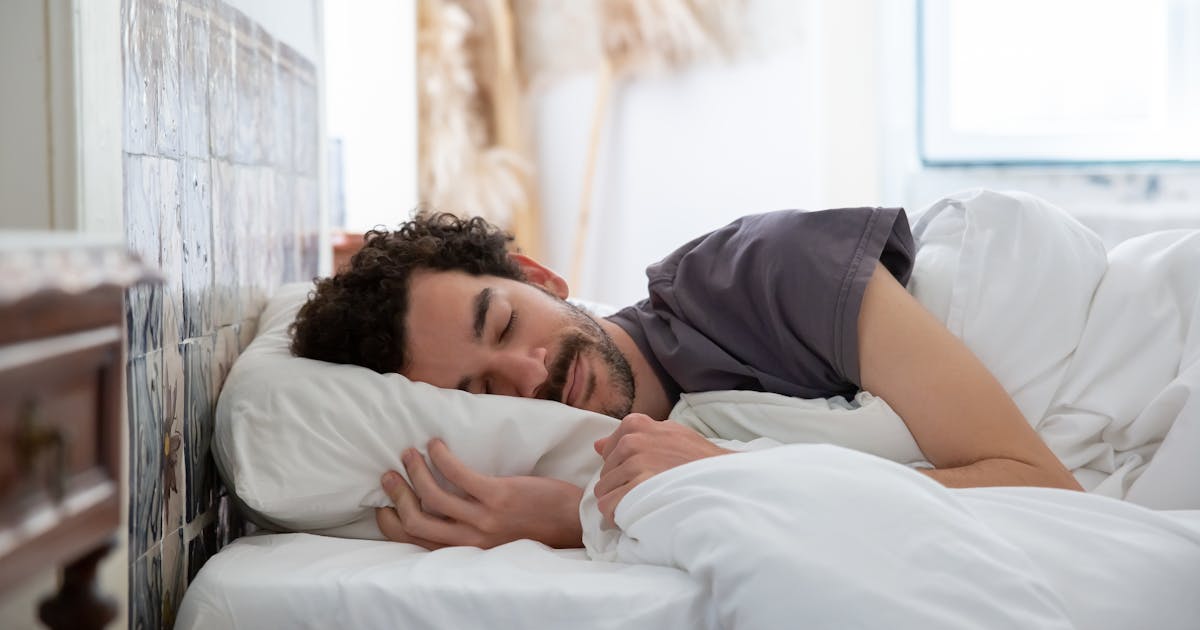
Published: May 21, 2026 · Last updated: May 21, 2026
- Snoring happens when air squeezes past relaxed, vibrating tissue in a narrowed airway during sleep (Cleveland Clinic, 2024)
- Loud, nightly snoring with breathing pauses, gasping, or daytime exhaustion can be a sign of obstructive sleep apnea (Mayo Clinic, 2024)
- Side sleeping, modest weight loss, and avoiding alcohol before bed are among the most effective ways to reduce snoring (Harvard Health, 2024)
Maybe your partner has started slipping off to the guest room. Maybe you wake up groggy after a full night in bed, throat dry, with no clear reason why. Snoring is easy to treat as harmless background noise, and most nights that is exactly what it is.
But snoring is really the sound of air fighting its way past a partly blocked airway while you sleep. Often a few simple changes quiet it down for good. Sometimes, though, it is the loudest signal your body has that your breathing keeps stopping at night.
Why You Snore
A Narrowed Airway: Snoring starts when the muscles of your throat, tongue, and soft palate relax during sleep. Air moving past that slack tissue makes it flutter and vibrate, and the vibration is the sound you hear.
The narrower the airway, the harder the air has to push, and the louder the snore becomes. Anything that crowds or further relaxes the throat tends to make it worse.
The shape of your airway matters as much as anything you do. A naturally low, thick soft palate or an enlarged uvula leaves less room for air to pass.
For some people snoring is occasional and quiet. For others it happens every night and slowly grows louder over the years (Cleveland Clinic, 2024).
Knowing why you snore is the first real step, because the fix depends entirely on the cause.
What Makes Snoring Worse
Everyday Triggers: Body weight is one of the biggest factors, because extra tissue around the neck narrows the airway from the outside in.
Alcohol and sedatives relax the throat muscles even further, which is why snoring is often loudest after an evening drink.
Sleeping flat on your back lets your tongue fall backward toward the throat, narrowing the space air has to move through.
Nasal congestion from allergies, a cold, or a deviated septum forces mouth breathing, which also drives snoring.
Age plays a quiet role too. Throat muscles naturally lose tone over time, so snoring tends to become more common and more persistent after 40 (Mayo Clinic, 2024).
The Difference Between Snoring and Apnea
The Sleep Apnea Signal: Most snoring is harmless. But loud, frequent snoring paired with a few other signs can point to obstructive sleep apnea, a condition in which breathing repeatedly stops and starts during the night.
Watch for breathing pauses that a partner notices, along with gasping or choking sounds and morning headaches.
Heavy daytime sleepiness is another red flag, especially when it shows up after what should have been a full night of sleep.
The difference matters because untreated sleep apnea raises the risk of high blood pressure, heart trouble, and accidents caused by fatigue.
If you are over 50 and your snoring has grown louder alongside daytime tiredness, apnea is worth ruling out rather than assuming it is simply age.
Simple Changes That Quiet Snoring
What Actually Helps: Side sleeping is the simplest fix of all. A body pillow, or a tennis ball sewn into the back of a sleep shirt, can keep you from rolling onto your back.
Losing even a modest amount of weight often reduces snoring noticeably when excess weight is part of the picture.
Avoiding alcohol for at least three hours before bed gives your throat muscles time to regain their tone before you sleep.
Treating nasal congestion with a saline rinse, or keeping the bedroom humidified, can clear the path for quieter breathing.
Raising the head of the bed a few inches helps some people too, by keeping the airway a little more open through the night.
None of these steps cost much, and most show results within a week or two if your snoring is going to respond to them at all.
Treatments Worth Knowing About
When Basics Are Not Enough: A custom oral appliance, fitted by a dentist, gently moves the lower jaw forward to keep the airway open. It helps many chronic snorers and people with mild sleep apnea.
If testing shows obstructive sleep apnea, a continuous positive airway pressure machine, known as CPAP, keeps the airway open with a steady stream of air and is highly effective.
Newer options exist as well, including position trainers and, in select cases, surgery to remove excess throat tissue.
No single treatment fits everyone, because the right choice depends on what is narrowing your airway in the first place.
That is why persistent, disruptive snoring is worth a proper conversation with a doctor rather than another gadget from the pharmacy shelf (Harvard Health, 2024).
To your health,

Ageless Coach
Age Strong. Live Long.
Trusted Sources Behind This Article
This content is for educational purposes only and is not a substitute for professional medical advice, diagnosis, or treatment. Reading this article does not create a provider-patient relationship. Always consult your physician or qualified healthcare provider before making changes to your diet, exercise, or health routine. Ageless Coach is not liable for any actions taken based on this information.
Frequently Asked Questions
Want one verified-science article like this every week?
Get Better Health, Weekly