IBS Trigger Foods: The 7 Groups to Limit and What to Eat
What the evidence actually says
NIDDK names seven groups of FODMAP foods that commonly trigger IBS symptoms: certain fruits, fruit juice and dried fruit, certain vegetables, dairy, wheat and rye, honey and high fructose corn syrup, and sweeteners ending in ol. Soluble fiber is the change that most often helps, added slowly toward the adult range of 22 to 34 grams a day. Cut for a few weeks, then add each group back one at a time.
1Soluble fiber first · beans, fruit and oat products, the type research favors for IBS
222 to 34 grams a day · the adult fiber range in the Dietary Guidelines for Americans
3Add 2 to 3 grams a day · adding faster causes the gas you were trying to avoid
4Seven FODMAP groups · a trial that runs a few weeks, not a life sentence
5Then add them back · many people tolerate some FODMAP foods without symptoms
Almost everybody with IBS ends up with a mental list of foods they think are the problem. Some of that list is right and some of it is superstition, and the difference matters because every food you cut without reason makes eating smaller and harder for no return.
There is a published list to start from instead. Below are the seven groups NIDDK names, the fiber number worth aiming at, the separate gluten question that gets tangled up with it, and the part almost everybody skips: putting the foods back in and finding out which ones were never the problem.
1
Start here
Fiber Comes First, and Only One Kind Usually Helps
Diet is where IBS treatment starts, and NIDDK names three changes a doctor may suggest: eat more fiber, avoid gluten, or follow the low FODMAP diet. Different changes help different people, and each one needs several weeks before you can tell. Fiber is the usual first move because it is the easiest thing to add.
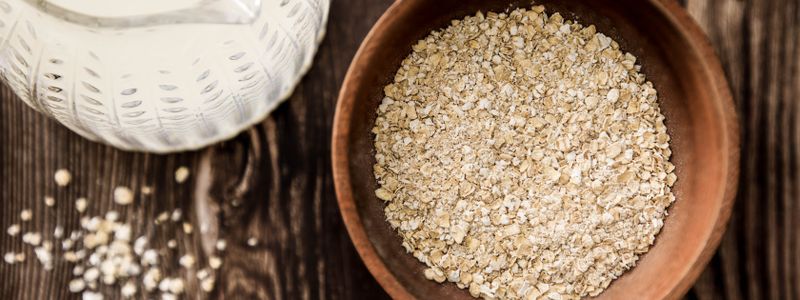
Two kinds exist. Soluble fiber is found in beans, fruit and oat products. Insoluble fiber is found in whole grain products and vegetables. Research suggests soluble fiber is the more helpful of the two for IBS symptoms, and it eases constipation by making stool softer and easier to pass.
Oat products are one of the three soluble fiber sources NIDDK names, alongside beans and fruit.
2
The list itself
The Seven Groups, Named
Adults are advised to get 22 to 34 grams of fiber a day, a figure NIDDK takes from the Dietary Guidelines for Americans, 2020 to 2025 edition. Getting there in one week is a mistake. Too much fiber at once causes gas, and gas triggers IBS symptoms, so add it roughly 2 to 3 grams a day until your gut has adjusted to the new amount.
FODMAPs are the other lever. They are carbohydrates that are hard to digest, and seven groups of foods carry them. Some people are sensitive to these carbohydrates and some are not, which is exactly why the low FODMAP diet is run as a trial rather than adopted as a permanent house rule.
Certain fruits: apples, apricots, blackberries, cherries, mango, nectarines, pears, plums and watermelon
Canned fruit in natural juice, large amounts of fruit juice, and dried fruit
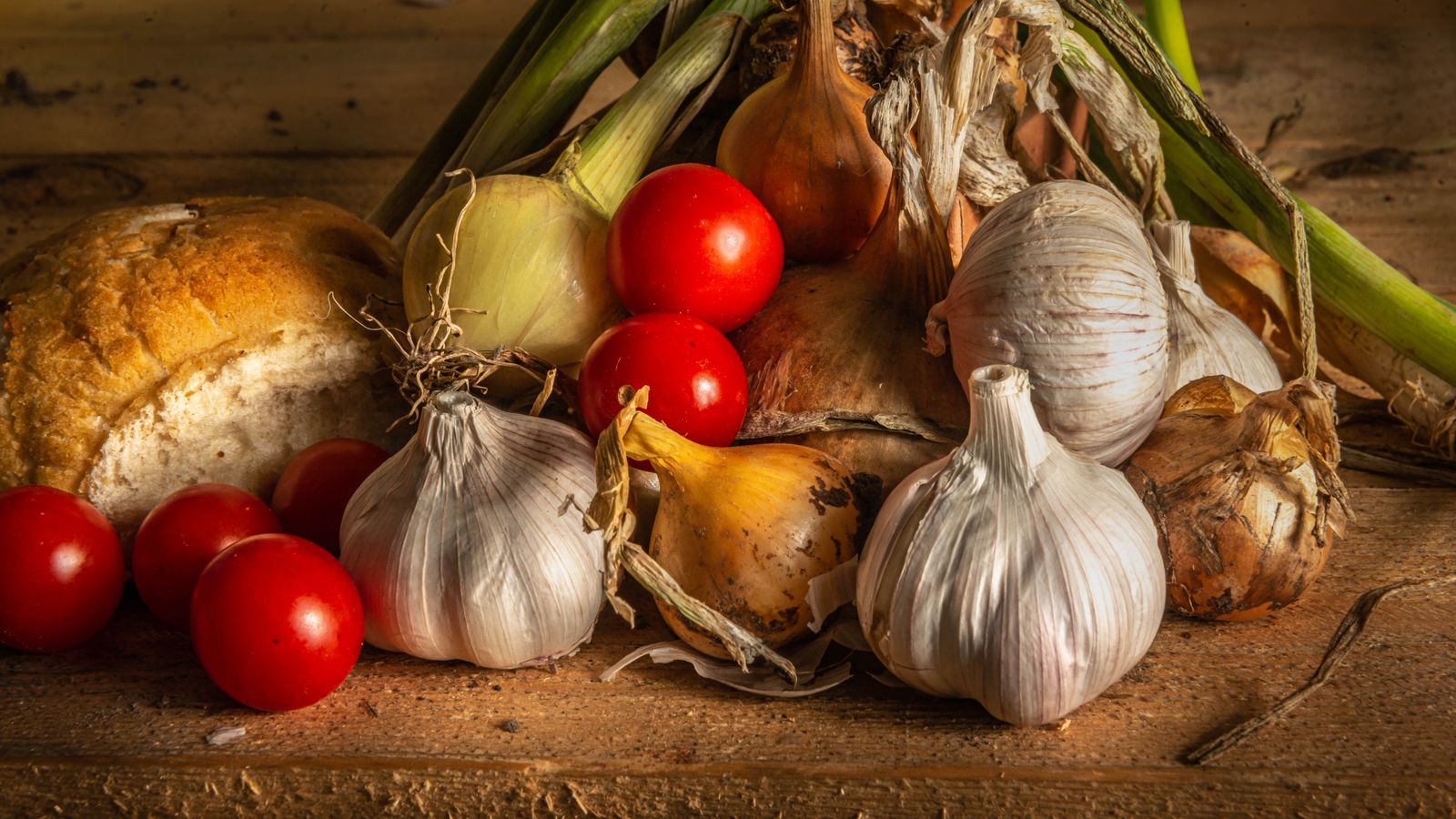
Certain vegetables: artichokes, asparagus, beans, cabbage, cauliflower, garlic, lentils, mushrooms, onions and snow peas
Dairy products: milk, soft cheeses, yogurt, custard and ice cream
Wheat and rye products, which covers most cereal, bread and pasta
Honey and foods made with high fructose corn syrup
Candy and gum with sweeteners ending in ol, such as sorbitol, mannitol, xylitol and maltitol
Onions, garlic and wheat turn up on that list more often than anything else, which is what makes it feel so restrictive. They are in almost every savory recipe most people cook, which is why the first week feels punishing. That is also the reason the diet was never designed to be permanent, and why the phase that comes after it matters more than the phase everybody talks about.
Research suggests that soluble fiber is more helpful in relieving IBS symptoms.
One sentence that saves a lot of money. Before any elimination list, the first change worth making is which kind of fiber you are eating and how fast you add it.
NIDDK
3
A separate question
Gluten Is Its Own Test, Not Part of the FODMAP One
A doctor may suggest avoiding gluten, a protein found in wheat, barley and rye, to see whether symptoms improve. Some people with IBS have more symptoms after eating gluten even though they do not have celiac disease, and Mayo Clinic notes the reported improvement shows up mainly in diarrhea.
The overlap is what confuses people. Wheat and rye sit on the FODMAP list, and gluten lives in wheat, barley and rye, so cutting bread changes two variables at once. If you want to know which one is actually doing the work, run the two tests one after the other rather than together.
The add-back log is the part that turns an elimination diet into an answer instead of a habit.
4
The step people skip
Cutting Is the Experiment. Adding Back Is the Point.
The cutting phase is not the treatment. NIDDK says to try the low FODMAP diet for a few weeks, and if symptoms improve, to slowly add FODMAP foods back into the diet. You may be able to eat some of them without any symptoms at all, and the only way to find out which is to reintroduce them one at a time.
Which is why the notebook matters more than the shopping list. Write down what went back in, on which day, and what happened over the following two days. Without that record the trial quietly becomes permanent, and far more restrictive than the evidence ever asked for.
Give the elimination phase a few weeks, not a few days
Add one group back at a time, and only one
Leave two or three days between reintroductions before you judge it
Write the date, the food and what happened, every time
Keep the groups that pass. They are food again, not a risk
A dietitian can help with these changes, and NIDDK recommends talking with one. This is one of the few places in health where a single appointment can save months of guessing on your own.
5
Everything else
What Else Helps, and What Is Not IBS at All
Outside the food list the basics still carry weight. Mayo Clinic keeps the advice for mild symptoms short: stay away from foods that trigger symptoms, eat high fiber foods, drink plenty of fluids, exercise regularly and get enough sleep. Eating at regular times helps too, and small frequent meals often suit diarrhea better.
Some symptoms are not IBS and should never be managed with a diet. There is no test that definitively proves IBS, so a clinician works by ruling out the conditions that resemble it, and the following signs are the ones that send them looking.
Symptoms that started after age 50, or unexplained weight loss
Rectal bleeding, fever, or repeated nausea and vomiting
Belly pain at night, or pain not related to passing stool
Diarrhea that is ongoing or wakes you from sleep
Anemia related to low iron on a blood test
NIDDK lists the medicines and other options a clinician can add once IBS is confirmed. Take the signs above to an appointment rather than to a food list. They do not mean something serious is happening, but they do mean the answer is not going to be found in your grocery cart.
Take the food plan with you
Your free one-page guide: the seven groups, the fiber number, and the add-back log that turns the trial into an answer.
One email. No spam. Unsubscribe anytime.
Free Lifestyle Assessment
How Healthy Is Your Current Lifestyle?
Answer honestly for five minutes and walk away with your personal scorecard: all six areas of your health rated, the one that needs your attention first, and a 30-day plan built from your answers. It shows up the second you finish.
Free. About 5 minutes. Your results appear instantly.
📋 Your Coach's Recommendations
1
Add soluble fiber slowly, 2 to 3 grams a day
Beans, fruit and oat products are the three sources NIDDK names, and soluble is the type research favors for IBS. Build toward the adult range of 22 to 34 grams a day, slowly enough that you do not trade constipation for gas.
2
Test the seven groups for a few weeks
Run the low FODMAP list as a trial with an end date, not a new set of rules. Keep gluten as a separate test afterward, because wheat sits on both lists and cutting bread changes two things at once.
3
Add one group back at a time and write it down
If symptoms improved, reintroduce one group, wait two or three days, and record what happened. Many people tolerate some FODMAP foods, and a dietitian can shorten the whole process considerably.
?
How it works. Just a quiet check-in, not an alert and not a recurring nag. The event lands as a 30-minute slot at 9am two weeks from today, with your plan in the notes and a link back to this article. Works with Apple Calendar, Google Calendar, and Outlook. Yours to move, snooze, or delete whenever.
Keep this food plan
Get the one-page guide: the seven groups, the fiber number, and the add-back log.
One email. No spam. Unsubscribe anytime.
Where should we send it?
Your IBS food plan, straight to your inbox.
We send the plan plus one short evidence brief each week. Unsubscribe anytime.
✓
It is on the way
Check your inbox in the next minute. Your first Ageless Brief arrives this week: one study, translated, no hype.
NIDDK names seven groups of FODMAP foods: certain fruits, fruit juice and dried fruit, certain vegetables, dairy, wheat and rye products, honey and high fructose corn syrup, and sweeteners ending in ol. Onions, garlic and wheat appear most often in ordinary cooking.
How much fiber should I eat with IBS?
NIDDK cites the Dietary Guidelines for Americans, 2020 to 2025, which put the adult range at 22 to 34 grams a day. Add it slowly, around 2 to 3 grams a day, because too much fiber at once causes gas, which triggers IBS symptoms.
Is soluble or insoluble fiber better for IBS?
Research suggests soluble fiber is more helpful for relieving IBS symptoms. Soluble fiber is found in beans, fruit and oat products. Insoluble fiber is found in whole grain products and vegetables.
Do I have to avoid gluten if I have IBS?
Not necessarily. A doctor may suggest trying it, since some people with IBS report fewer symptoms without gluten even without celiac disease. Run it as a separate test from the FODMAP trial, because wheat appears on both lists.
How long does the low FODMAP diet last?
A few weeks. If symptoms improve, foods containing FODMAPs are added back slowly. Many people can eat some of them without symptoms, so the restriction is meant to narrow down triggers rather than to stay in place.
Is this medical advice?
No. This article is educational and is not a substitute for your clinician. IBS has no single diagnostic test, and several conditions look similar, so symptoms like bleeding, weight loss or fever need a professional opinion.
Curious where you stand? Take the free 5-minute lifestyle assessment and your personal scorecard appears the second you finish.
By the Ageless Coach Editorial Team · Published August 17, 2026 · Last updated August 17, 2026
<style>
:root{--dark-base:#0D1B2A;--dark-mid:#1B3A4B;--teal:#0EA5A0;--teal-dark:#0C8C88;--teal-bright:#14D4CD;--fog:#D8E8E8;--deep-fog:#C8DCDC;--fog-border:#A8C4C4;--ink:#313743;--ink-soft:#49505f;--muted:#6b7280;--warm:#9A6841;--warm-light:#be7b4c;--serif:"Source Serif 4",Georgia,serif;--sans:Inter,-apple-system,BlinkMacSystemFont,"Segoe UI",sans-serif}
.w-richtext p,.w-richtext li,.w-richtext td{font-size:20.5px;line-height:1.7;color:var(--ink-soft)}
.w-richtext ul{list-style-type:disc;padding-left:24px;margin:12px 0}
.w-richtext ul li{margin-bottom:8px}
.ac-answer{background:#fff;border:1px solid #D4E4E4;border-top:5px solid var(--teal);border-radius:16px;padding:22px 24px 18px;margin:16px 0 28px;box-shadow:0 6px 22px rgba(13,27,42,.07)}
.ac-answer .aa-eyebrow{font:800 12px/1 var(--sans);letter-spacing:2.5px;text-transform:uppercase;color:var(--teal-dark);margin-bottom:8px}
.ac-answer .aa-head{font-family:var(--serif);font-size:24px;line-height:1.2;font-weight:800;color:var(--dark-base);margin:0 0 16px}
.ac-answer .aa-list{list-style:none;margin:0;padding:0}
.ac-answer .aa-list li{display:flex;gap:12px;align-items:baseline;padding:11px 0;border-bottom:1px solid #EDF3F3;font:700 16.5px/1.4 var(--sans);color:var(--ink)}
.ac-answer .aa-list li:last-child{border-bottom:none}
.ac-answer .aa-n{flex-shrink:0;width:24px;height:24px;border-radius:50%;background:var(--teal-dark);color:#fff;font:800 12px/24px var(--sans);text-align:center}
.ac-answer .aa-food{color:var(--teal-dark);font-weight:800}
.ac-answer .aa-cue{margin-top:18px;text-align:center}
.ac-answer .aa-cta{display:inline-flex;align-items:center;gap:10px;background:var(--teal-dark);color:#fff;font:800 14px/1 var(--sans);letter-spacing:.2px;padding:14px 26px;border-radius:50px;text-decoration:none;box-shadow:0 6px 16px rgba(12,140,136,.30)}
.ac-answer .aa-cta:hover{background:#0A7A76}
.ac-answer .aa-arw{display:inline-block;animation:aa-nudge 1.4s ease-in-out infinite}
@keyframes aa-nudge{0%,100%{transform:translateY(0)}50%{transform:translateY(4px)}}
@media(max-width:560px){.ac-answer{padding:20px 18px 16px}.ac-answer .aa-head{font-size:21px}.ac-answer .aa-list li{font-size:15px}}
.ac-band{margin:56px 0 24px;padding:26px 24px 12px;background:linear-gradient(180deg,#F0F7F7,#fff);border-radius:16px}
.ac-band.hype{background:linear-gradient(180deg,#FAF3EB,#fff)}
.ac-band .inner{display:flex;gap:20px;align-items:center}
.ac-band .big{font:900 72px/1 var(--sans);color:var(--deep-fog);flex-shrink:0}
.ac-band.hype .big{color:#EAD9C6}
.ac-band .q{font:700 13px/1.4 var(--sans);letter-spacing:2px;text-transform:uppercase;color:var(--teal-dark)}
.ac-band.hype .q{color:var(--warm)}
.ac-band h3{font-family:var(--serif);font-size:30px;line-height:1.2;font-weight:800;color:var(--ink);margin:0}
.ac-callout{border-left:4px solid var(--teal);background:#F4FAFA;border-radius:0 12px 12px 0;padding:18px 22px;margin:28px 0}
.ac-callout .n{font:800 20px/1.35 var(--sans);color:var(--dark-mid);margin-bottom:6px}
.ac-callout .d{font:500 15px/1.55 var(--sans);color:var(--ink-soft)}
.ac-callout .c{font:600 11.5px/1 var(--sans);letter-spacing:1.5px;text-transform:uppercase;color:var(--muted);margin-top:10px}
.ac-plan{background:linear-gradient(135deg,#F4FAFA 0%,#fff 100%);border-left:5px solid var(--teal-dark);border-radius:14px;padding:30px 26px;margin:40px 0 0;box-shadow:0 2px 12px rgba(0,0,0,.06);scroll-margin-top:100px}
.ac-plan .ptitle{font-family:var(--serif);font-size:24px;font-weight:800;color:var(--ink);margin-bottom:22px}
.ac-plan .step{display:flex;gap:16px;margin-bottom:18px;align-items:flex-start}
.ac-plan .step .n{min-width:38px;width:38px;height:38px;background:var(--teal-dark);border-radius:50%;color:#fff;font:800 17px/38px var(--sans);text-align:center;flex-shrink:0}
.ac-plan .sh{font:800 16.5px/1.4 var(--sans);color:var(--ink);margin-bottom:3px}
.ac-plan .sd{font:400 15px/1.6 var(--sans);color:var(--muted)}
.ac-plan .actions{border-top:1px solid #D8E8E8;margin-top:16px;padding-top:20px}
.ac-primary-row{display:flex;align-items:center;gap:10px;padding:0 4px}
.ac-btn-primary-wide{flex:1;background:var(--teal);color:#fff;border:1.5px solid var(--teal);border-radius:14px;padding:12px 22px;box-shadow:0 4px 14px rgba(14,165,160,.22);font-family:var(--sans);cursor:pointer;display:grid;grid-template-columns:auto 1fr;gap:14px;align-items:center;transition:all .18s ease}
.ac-btn-primary-wide:hover{background:var(--teal-dark);border-color:var(--teal-dark)}
.ac-btn-primary-wide .icon svg{width:22px;height:22px;color:#fff;display:block}
.ac-btn-primary-wide .label{text-align:left;line-height:1.25}
.ac-btn-primary-wide .label .top{display:block;font-weight:700;font-size:15.5px;color:#fff}
.ac-btn-primary-wide .label .top em{font-style:italic;font-weight:700}
.ac-cal-help{position:relative;flex-shrink:0}
.ac-cal-help summary{list-style:none;width:24px;height:24px;border-radius:50%;background:#E4F1F1;border:1px solid var(--fog-border);color:var(--dark-mid);font:700 13px/22px var(--sans);text-align:center;cursor:pointer;display:block}
.ac-cal-help summary::-webkit-details-marker{display:none}
.ac-cal-help .tip{position:absolute;right:0;top:32px;z-index:50;width:290px;background:var(--dark-base);color:var(--fog);border-radius:12px;padding:14px 16px;font:500 12.5px/1.55 var(--sans);box-shadow:0 10px 30px rgba(13,27,42,.35)}
.ac-cal-help .tip strong{color:#fff}
.ac-btn-share-wide{display:flex;width:100%;align-items:center;justify-content:center;gap:10px;background:#fff;color:var(--teal-dark);border:1.5px solid var(--teal-dark);border-radius:14px;padding:12px 22px;margin-top:10px;font:800 15px/1 var(--sans);cursor:pointer}
.ac-btn-share-wide svg{width:18px;height:18px}
.ac-midcap{background:linear-gradient(180deg,#F0F7F7,#fff);border:1.5px solid var(--fog-border);border-radius:16px;padding:24px 22px;margin:34px 0;text-align:center}
.ac-midcap h4{font-family:var(--serif);font-size:22px;font-weight:800;color:var(--ink);margin:0 0 6px}
.ac-midcap .sub{font:500 14px/1.55 var(--sans);color:var(--ink-soft);margin:0 auto 14px;max-width:400px}
.ac-midcap .mcform{display:flex;gap:8px;max-width:400px;margin:0 auto}
.ac-midcap .mcform input{flex:1;border:1.5px solid var(--fog-border);border-radius:50px;padding:12px 18px;font:500 14px/1 var(--sans);min-width:0}
.ac-midcap .mcform button{background:var(--teal-dark);color:#fff;border:none;border-radius:50px;padding:12px 20px;font:800 13.5px/1 var(--sans);cursor:pointer;white-space:nowrap}
.ac-midcap .fine{font:500 11.5px/1.5 var(--sans);color:var(--muted);margin-top:10px}
@media (max-width:520px){.ac-midcap .mcform{flex-direction:column}}
.ac-assess-promo{background:linear-gradient(135deg,#D8E8E8,#C8DCDC);border:1px solid var(--fog-border);border-radius:16px;padding:34px 30px;margin:44px 0;text-align:center}
.ac-assess-promo .eyebrow{color:var(--teal-dark);font:800 12px/1 var(--sans);letter-spacing:2.5px;text-transform:uppercase;margin:0 0 10px}
.ac-assess-promo h4{font-family:var(--serif);color:var(--dark-base);font-size:26px;font-weight:800;margin:0 0 12px}
.w-embed .ac-assess-promo p.ap-body,.ac-assess-promo p.ap-body{font-family:Georgia,serif;color:#3A5555;font-size:15.5px;font-weight:500;line-height:1.65;max-width:540px;margin:0 auto 22px}
.ac-assess-promo .ap-cta{display:inline-block;background:var(--teal-bright);color:var(--dark-base);font:800 15px/1 var(--sans);padding:15px 30px;border-radius:50px;text-decoration:none}
.ac-assess-promo .ap-fine{color:#4E6B6B;font:500 13px/1.5 var(--sans);margin:14px 0 0}
.ac-assess-line{border-top:1px solid #E2ECEC;margin-top:30px;padding:22px 10px 0;text-align:center;font:500 15.5px/1.6 var(--sans);color:#3A5555}
.w-embed .ac-assess-line a,.ac-assess-line a{color:var(--teal-dark);font-weight:700;text-decoration:underline;text-underline-offset:3px}
.ac-articlemeta{font:500 12.5px/1.6 var(--sans);color:#98a0a6;text-align:center;margin:24px 0 0}
.ac-capture{background:linear-gradient(180deg,#F0F7F7,#fff);border:1.5px solid var(--fog-border);border-radius:16px;padding:30px 28px;margin:26px 0 44px;text-align:center}
.ac-capture .cap-state{display:none}
.ac-capture[data-state="trigger"] .st-trigger{display:block}
.ac-capture[data-state="form"] .st-form{display:block}
.ac-capture[data-state="sent"] .st-sent{display:block}
.ac-capture h4{font-family:var(--serif);font-size:24px;font-weight:800;color:var(--ink);margin:0 0 8px}
.ac-capture .sub{font:500 15px/1.55 var(--sans);color:var(--ink-soft);margin:0 auto 18px;max-width:430px}
.ac-capture .bigbtn{display:inline-flex;align-items:center;gap:10px;background:var(--teal-dark);color:#fff;border:none;border-radius:50px;padding:16px 30px;font:800 16px/1 var(--sans);cursor:pointer;box-shadow:0 6px 18px rgba(12,140,136,.28)}
.ac-capture .capform{display:flex;gap:10px;max-width:430px;margin:0 auto}
.ac-capture .capform input{flex:1;border:1.5px solid var(--fog-border);border-radius:50px;padding:14px 20px;font:500 15px/1 var(--sans)}
.ac-capture .capform button{background:var(--teal-dark);color:#fff;border:none;border-radius:50px;padding:14px 24px;font:800 14px/1 var(--sans);cursor:pointer}
.ac-capture .sent-check{width:52px;height:52px;border-radius:50%;background:var(--teal);color:#fff;font:800 26px/52px var(--sans);margin:0 auto 12px}
.ac-capture .dl{display:inline-block;margin-top:6px;color:var(--teal-dark);font:700 15px/1 var(--sans);text-decoration:underline;cursor:pointer}
.ac-capture .fine{font:500 12px/1.5 var(--sans);color:var(--muted);margin-top:12px}
.ac-sig{margin-top:36px}
.ac-sig .rule{width:60px;height:2px;background:linear-gradient(90deg,var(--teal-dark),var(--teal-bright));margin-bottom:18px;border-radius:2px}
.ac-sig .toyour{font-family:var(--serif);font-size:16px;font-style:italic;color:#777;margin:0 0 10px;padding-left:2px}
.ac-faq{margin-top:40px;border-top:1px solid #e5e7eb;padding-top:30px;margin-bottom:40px}
.ac-faq h2{font-family:var(--serif);font-size:23px;font-weight:800;color:var(--ink);margin:0 0 18px}
.ac-faq details{border:1px solid #e5e7eb;border-radius:10px;margin-bottom:10px}
.ac-faq summary{padding:15px 18px;font:700 16px/1.4 var(--sans);color:var(--ink);cursor:pointer;display:flex;justify-content:space-between;align-items:center;list-style:none}
.ac-faq summary:after{content:"\25BE";color:var(--warm)}
.ac-faq .a{padding:0 18px 16px;font-size:17px;line-height:1.65;color:#555}
.article-header-section .article-container{max-width:1080px !important;margin:0 auto !important;padding:0 20px !important}
.article-header-section .article-hero-image{display:block;width:100%;max-width:660px;margin:0}
.article-header-section .article-title{display:block !important;font-family:var(--serif);font-size:32px;line-height:1.25;font-weight:700;color:#313743;margin:20px 0 12px 0;text-align:left;max-width:660px}
@media (max-width:767px){.article-header-section .article-title{font-size:26px}.article-header-section .article-hero-image{max-width:100%}}
@media (max-width:640px){.ac-band .big{font-size:52px}}
@media (max-width:520px){.ac-capture .capform{flex-direction:column}}
.ac-figure{margin:30px 0}.ac-figure img{display:block;width:100%;border-radius:14px;height:auto;aspect-ratio:800/300}.ac-figure figcaption{font:500 13px/1.5 var(--sans);color:var(--muted);margin-top:9px}</style><div class="ac-answer"><div class="aa-eyebrow">What the evidence actually says</div><h2 class="aa-head">NIDDK names seven groups of FODMAP foods that commonly trigger IBS symptoms: certain fruits, fruit juice and dried fruit, certain vegetables, dairy, wheat and rye, honey and high fructose corn syrup, and sweeteners ending in ol. Soluble fiber is the change that most often helps, added slowly toward the adult range of 22 to 34 grams a day. Cut for a few weeks, then add each group back one at a time.</h2><ol class="aa-list"><li><span class="aa-n">1</span><span><span class="aa-food">Soluble fiber first</span> · beans, fruit and oat products, the type research favors for IBS</span></li><li><span class="aa-n">2</span><span><span class="aa-food">22 to 34 grams a day</span> · the adult fiber range in the Dietary Guidelines for Americans</span></li><li><span class="aa-n">3</span><span><span class="aa-food">Add 2 to 3 grams a day</span> · adding faster causes the gas you were trying to avoid</span></li><li><span class="aa-n">4</span><span><span class="aa-food">Seven FODMAP groups</span> · a trial that runs a few weeks, not a life sentence</span></li><li><span class="aa-n">5</span><span><span class="aa-food">Then add them back</span> · many people tolerate some FODMAP foods without symptoms</span></li></ol><div class="aa-cue"><a class="aa-cta" href="#coach-recommendations">Get Your Coach's 3-Step Plan <span class="aa-arw">↓</span></a></div></div><p>Almost everybody with IBS ends up with a mental list of foods they think are the problem. Some of that list is right and some of it is superstition, and the difference matters because every food you cut without reason makes eating smaller and harder for no return.</p><p>There is a published list to start from instead. Below are the seven groups NIDDK names, the fiber number worth aiming at, the separate gluten question that gets tangled up with it, and the part almost everybody skips: putting the foods back in and finding out which ones were never the problem.</p><div class="ac-band"><div class="inner"><div class="big">1</div><div><div class="q">Start here</div><h3>Fiber Comes First, and Only One Kind Usually Helps</h3></div></div></div><p>Diet is where IBS treatment starts, and <a href="https://www.niddk.nih.gov/health-information/digestive-diseases/irritable-bowel-syndrome/eating-diet-nutrition" target="_blank" rel="noopener">NIDDK</a> names three changes a doctor may suggest: eat more fiber, avoid gluten, or follow the low FODMAP diet. Different changes help different people, and each one needs several weeks before you can tell. Fiber is the usual first move because it is the easiest thing to add.</p><p>Two kinds exist. Soluble fiber is found in beans, fruit and oat products. Insoluble fiber is found in whole grain products and vegetables. Research suggests soluble fiber is the more helpful of the two for IBS symptoms, and it eases constipation by making stool softer and easier to pass.</p><figure class="ac-figure"><img src="https://images.pexels.com/photos/36285315/pexels-photo-36285315.jpeg?auto=compress&cs=tinysrgb&w=800&h=300&fit=crop" alt="A wooden bowl of raw rolled oats on a dark table" width="800" height="300" loading="lazy" decoding="async"><figcaption>Oat products are one of the three soluble fiber sources NIDDK names, alongside beans and fruit.</figcaption></figure><div class="ac-band"><div class="inner"><div class="big">2</div><div><div class="q">The list itself</div><h3>The Seven Groups, Named</h3></div></div></div><p>Adults are advised to get 22 to 34 grams of fiber a day, a figure NIDDK takes from the <a href="https://dietaryguidelines.gov/" target="_blank" rel="noopener">Dietary Guidelines for Americans</a>, 2020 to 2025 edition. Getting there in one week is a mistake. Too much fiber at once causes gas, and gas triggers IBS symptoms, so add it roughly 2 to 3 grams a day until your gut has adjusted to the new amount.</p><p>FODMAPs are the other lever. They are carbohydrates that are hard to digest, and seven groups of foods carry them. Some people are sensitive to these carbohydrates and some are not, which is exactly why the low FODMAP diet is run as a trial rather than adopted as a permanent house rule.</p><ul><li>Certain fruits: apples, apricots, blackberries, cherries, mango, nectarines, pears, plums and watermelon</li><li>Canned fruit in natural juice, large amounts of fruit juice, and dried fruit</li><li>Certain vegetables: artichokes, asparagus, beans, cabbage, cauliflower, garlic, lentils, mushrooms, onions and snow peas</li><li>Dairy products: milk, soft cheeses, yogurt, custard and ice cream</li><li>Wheat and rye products, which covers most cereal, bread and pasta</li><li>Honey and foods made with high fructose corn syrup</li><li>Candy and gum with sweeteners ending in ol, such as sorbitol, mannitol, xylitol and maltitol</li></ul><p>Onions, garlic and wheat turn up on that list more often than anything else, which is what makes it feel so restrictive. They are in almost every savory recipe most people cook, which is why the first week feels punishing. That is also the reason the diet was never designed to be permanent, and why the phase that comes after it matters more than the phase everybody talks about.</p><div class="ac-callout"><div class="n">Research suggests that soluble fiber is more helpful in relieving IBS symptoms.</div><div class="d">One sentence that saves a lot of money. Before any elimination list, the first change worth making is which kind of fiber you are eating and how fast you add it.</div><div class="c">NIDDK</div></div><div class="ac-band"><div class="inner"><div class="big">3</div><div><div class="q">A separate question</div><h3>Gluten Is Its Own Test, Not Part of the FODMAP One</h3></div></div></div><p>A doctor may suggest avoiding gluten, a protein found in wheat, barley and rye, to see whether symptoms improve. Some people with IBS have more symptoms after eating gluten even though they do not have celiac disease, and <a href="https://www.mayoclinic.org/diseases-conditions/irritable-bowel-syndrome/diagnosis-treatment/drc-20360064" target="_blank" rel="noopener">Mayo Clinic</a> notes the reported improvement shows up mainly in diarrhea.</p><p>The overlap is what confuses people. Wheat and rye sit on the FODMAP list, and gluten lives in wheat, barley and rye, so cutting bread changes two variables at once. If you want to know which one is actually doing the work, run the two tests one after the other rather than together.</p><figure class="ac-figure"><img src="https://images.pexels.com/photos/8844564/pexels-photo-8844564.jpeg?auto=compress&cs=tinysrgb&w=800&h=300&fit=crop" alt="A hand filling in a weekly meal and symptom tracking sheet" width="800" height="300" loading="lazy" decoding="async"><figcaption>The add-back log is the part that turns an elimination diet into an answer instead of a habit.</figcaption></figure><div class="ac-band hype"><div class="inner"><div class="big">4</div><div><div class="q">The step people skip</div><h3>Cutting Is the Experiment. Adding Back Is the Point.</h3></div></div></div><p>The cutting phase is not the treatment. <a href="https://www.niddk.nih.gov/health-information/digestive-diseases/irritable-bowel-syndrome/eating-diet-nutrition" target="_blank" rel="noopener">NIDDK</a> says to try the low FODMAP diet for a few weeks, and if symptoms improve, to slowly add FODMAP foods back into the diet. You may be able to eat some of them without any symptoms at all, and the only way to find out which is to reintroduce them one at a time.</p><p>Which is why the notebook matters more than the shopping list. Write down what went back in, on which day, and what happened over the following two days. Without that record the trial quietly becomes permanent, and far more restrictive than the evidence ever asked for.</p><ul><li>Give the elimination phase a few weeks, not a few days</li><li>Add one group back at a time, and only one</li><li>Leave two or three days between reintroductions before you judge it</li><li>Write the date, the food and what happened, every time</li><li>Keep the groups that pass. They are food again, not a risk</li></ul><p>A dietitian can help with these changes, and NIDDK recommends talking with one. This is one of the few places in health where a single appointment can save months of guessing on your own.</p><div class="ac-band"><div class="inner"><div class="big">5</div><div><div class="q">Everything else</div><h3>What Else Helps, and What Is Not IBS at All</h3></div></div></div><p>Outside the food list the basics still carry weight. <a href="https://www.mayoclinic.org/diseases-conditions/irritable-bowel-syndrome/diagnosis-treatment/drc-20360064" target="_blank" rel="noopener">Mayo Clinic</a> keeps the advice for mild symptoms short: stay away from foods that trigger symptoms, eat high fiber foods, drink plenty of fluids, exercise regularly and get enough sleep. Eating at regular times helps too, and small frequent meals often suit diarrhea better.</p><p>Some symptoms are not IBS and should never be managed with a diet. There is no test that definitively proves IBS, so a clinician works by ruling out the conditions that resemble it, and the following signs are the ones that send them looking.</p><ul><li>Symptoms that started after age 50, or unexplained weight loss</li><li>Rectal bleeding, fever, or repeated nausea and vomiting</li><li>Belly pain at night, or pain not related to passing stool</li><li>Diarrhea that is ongoing or wakes you from sleep</li><li>Anemia related to low iron on a blood test</li></ul><p><a href="https://www.niddk.nih.gov/health-information/digestive-diseases/irritable-bowel-syndrome/treatment" target="_blank" rel="noopener">NIDDK</a> lists the medicines and other options a clinician can add once IBS is confirmed. Take the signs above to an appointment rather than to a food list. They do not mean something serious is happening, but they do mean the answer is not going to be found in your grocery cart.</p><div class="ac-midcap"><h4>Take the food plan with you</h4><p class="sub">Your free one-page guide: the seven groups, the fiber number, and the add-back log that turns the trial into an answer.</p><div class="mcform"><input type="email" placeholder="Your email address" aria-label="Email address"><button type="button">Send My Plan (Free)</button></div><div class="fine">One email. No spam. Unsubscribe anytime.</div></div><div class="ac-assess-promo"><p class="eyebrow">Free Lifestyle Assessment</p><h4>How Healthy Is Your Current Lifestyle?</h4><p class="ap-body">Answer honestly for five minutes and walk away with your personal scorecard: all six areas of your health rated, the one that needs your attention first, and a 30-day plan built from your answers. It shows up the second you finish.</p><a class="ap-cta" href="/#assessment">See How the Assessment Works →</a><p class="ap-fine">Free. About 5 minutes. Your results appear instantly.</p></div><div class="ac-plan" id="coach-recommendations"><div class="ptitle">📋 Your Coach's Recommendations</div><div class="step"><div class="n">1</div><div><div class="sh">Add soluble fiber slowly, 2 to 3 grams a day</div><div class="sd">Beans, fruit and oat products are the three sources NIDDK names, and soluble is the type research favors for IBS. Build toward the adult range of 22 to 34 grams a day, slowly enough that you do not trade constipation for gas.</div></div></div><div class="step"><div class="n">2</div><div><div class="sh">Test the seven groups for a few weeks</div><div class="sd">Run the low FODMAP list as a trial with an end date, not a new set of rules. Keep gluten as a separate test afterward, because wheat sits on both lists and cutting bread changes two things at once.</div></div></div><div class="step"><div class="n">3</div><div><div class="sh">Add one group back at a time and write it down</div><div class="sd">If symptoms improved, reintroduce one group, wait two or three days, and record what happened. Many people tolerate some FODMAP foods, and a dietitian can shorten the whole process considerably.</div></div></div><div class="actions"><div class="ac-primary-row"><button type="button" class="ac-btn-primary-wide" data-ac-cal><span class="icon"><svg viewBox="0 0 24 24" fill="none" stroke="currentColor" stroke-width="2" stroke-linecap="round" stroke-linejoin="round"><rect x="3" y="4" width="18" height="18" rx="2"></rect><path d="M16 2v4M8 2v4M3 10h18"></path></svg></span><span class="label"><span class="top">Add <em>Your Coach's Recommendations to Your Calendar</em></span></span></button><details class="ac-cal-help"><summary aria-label="What does this do?">?</summary><div class="tip"><strong>How it works.</strong> Just a quiet check-in, not an alert and not a recurring nag. The event lands as a 30-minute slot at 9am two weeks from today, with your plan in the notes and a link back to this article. Works with Apple Calendar, Google Calendar, and Outlook. Yours to move, snooze, or delete whenever.</div></details></div><button type="button" class="ac-btn-share-wide" data-ac-share><svg viewBox="0 0 24 24" fill="none" stroke="currentColor" stroke-width="2" stroke-linecap="round" stroke-linejoin="round"><path d="M4 12v8a2 2 0 002 2h12a2 2 0 002-2v-8"></path><polyline points="16 6 12 2 8 6"></polyline><line x1="12" y1="2" x2="12" y2="15"></line></svg> Share this article</button></div></div><div class="ac-capture" data-state="trigger" data-article-slug="ibs-trigger-foods-the-7-groups-to-limit-and-what-to-eat" data-pdf-url="https://cdn.prod.website-files.com/69be1026a027224999b7936b/6a83b17c572f1e9412814381_ac-ibs-food-plan.pdf" data-plan-title="The IBS Food Plan" data-plan-desc="The seven FODMAP groups, the daily fiber number, and the add-back log that turns the trial into an answer."><div class="st-trigger cap-state"><h4>Keep this food plan</h4><p class="sub">Get the one-page guide: the seven groups, the fiber number, and the add-back log.</p><button class="bigbtn" type="button" data-cap="form">📩 Email Me This Plan (Free PDF)</button><div class="fine">One email. No spam. Unsubscribe anytime.</div></div><div class="st-form cap-state"><h4>Where should we send it?</h4><p class="sub">Your IBS food plan, straight to your inbox.</p><form class="capform"><input type="email" name="email" required placeholder="Your email address" aria-label="Email address"><button type="submit">Send My Plan</button></form><div class="fine">We send the plan plus one short evidence brief each week. Unsubscribe anytime.</div></div><div class="st-sent cap-state"><div class="sent-check">✓</div><h4>It is on the way</h4><p class="sub">Check your inbox in the next minute. Your first Ageless Brief arrives this week: one study, translated, no hype.</p><a class="dl" href="https://cdn.prod.website-files.com/69be1026a027224999b7936b/6a83b17c572f1e9412814381_ac-ibs-food-plan.pdf" download>⬇ Download your plan (PDF)</a></div></div><div class="ac-sig"><div class="rule"></div><p class="toyour">To your health,</p><svg width="320" height="72" viewBox="0 0 320 72" role="img" aria-label="Ageless Coach. Age Strong. Live Long." xmlns="http://www.w3.org/2000/svg" xmlns:xlink="http://www.w3.org/1999/xlink"><defs><clipPath id="acSigIconClip"><rect x="0" y="6" width="60" height="60" rx="12" ry="12"/></clipPath></defs><image x="0" y="6" width="60" height="60" clip-path="url(#acSigIconClip)" preserveAspectRatio="xMidYMid slice" href="https://cdn.prod.website-files.com/69be1026a027224999b7936b/6a0b22c6afd5d6fd115b9c1a_ac-closing-brand-icon.webp" xlink:href="https://cdn.prod.website-files.com/69be1026a027224999b7936b/6a0b22c6afd5d6fd115b9c1a_ac-closing-brand-icon.webp"/><text x="76" y="42" style="font-family:Inter,system-ui,-apple-system,'Helvetica Neue',Arial,sans-serif;font-size:27px;letter-spacing:-0.3px"><tspan style="font-weight:800;fill:#0D1B2A">Ageless</tspan><tspan style="font-weight:300;fill:rgba(13,27,42,0.6)">Coach</tspan><tspan dy="-12" style="font-size:16px;font-weight:600;fill:rgba(13,27,42,0.6)">™</tspan></text><text x="76" y="60" style="font-family:Inter,system-ui,-apple-system,'Helvetica Neue',Arial,sans-serif;font-size:10.5px;letter-spacing:2.5px;font-weight:500;fill:#0C8C88;text-transform:uppercase">AGE STRONG. LIVE LONG.</text></svg></div><div class="ac-faq"><h2>Frequently Asked Questions</h2><details><summary>What foods trigger IBS symptoms most often?</summary><div class="a">NIDDK names seven groups of FODMAP foods: certain fruits, fruit juice and dried fruit, certain vegetables, dairy, wheat and rye products, honey and high fructose corn syrup, and sweeteners ending in ol. Onions, garlic and wheat appear most often in ordinary cooking.</div></details><details><summary>How much fiber should I eat with IBS?</summary><div class="a">NIDDK cites the Dietary Guidelines for Americans, 2020 to 2025, which put the adult range at 22 to 34 grams a day. Add it slowly, around 2 to 3 grams a day, because too much fiber at once causes gas, which triggers IBS symptoms.</div></details><details><summary>Is soluble or insoluble fiber better for IBS?</summary><div class="a">Research suggests soluble fiber is more helpful for relieving IBS symptoms. Soluble fiber is found in beans, fruit and oat products. Insoluble fiber is found in whole grain products and vegetables.</div></details><details><summary>Do I have to avoid gluten if I have IBS?</summary><div class="a">Not necessarily. A doctor may suggest trying it, since some people with IBS report fewer symptoms without gluten even without celiac disease. Run it as a separate test from the FODMAP trial, because wheat appears on both lists.</div></details><details><summary>How long does the low FODMAP diet last?</summary><div class="a">A few weeks. If symptoms improve, foods containing FODMAPs are added back slowly. Many people can eat some of them without symptoms, so the restriction is meant to narrow down triggers rather than to stay in place.</div></details><details><summary>Is this medical advice?</summary><div class="a">No. This article is educational and is not a substitute for your clinician. IBS has no single diagnostic test, and several conditions look similar, so symptoms like bleeding, weight loss or fever need a professional opinion.</div></details></div><div class="ac-assess-line">Curious where you stand? Take the free <a href="/#assessment">5-minute lifestyle assessment</a> and your personal scorecard appears the second you finish.</div><p class="ac-articlemeta">By the Ageless Coach Editorial Team · Published August 17, 2026 · Last updated August 17, 2026</p>
Subscribe to the Free Newsletter
One article a week. Trusted research made simple. Start making smarter health decisions today.