The Brain Diet Scientists Built From Greens and Berries
What the evidence actually says
The MIND diet is not a trend. Researchers built it by combining the two eating patterns with the best track records, then tuned it for the brain. Here is what it asks for, and what the evidence honestly shows.
1Leafy greens · spinach, kale, and romaine are the standout food in the data
2Berries first · berries are the one fruit the plan singles out
3Beans and nuts · everyday plant protein anchors the plate
4Fish weekly · one or more servings a week, plus olive oil and whole grains
5Honest caveat · the evidence is largely observational and not yet conclusive
Most diets are built for the waistline and then marketed to the brain. The MIND diet went the other way. Its name is short for Mediterranean-DASH Intervention for Neurodegenerative Delay, and researchers designed it by merging the Mediterranean diet with DASH, the plan built to lower blood pressure, then weighting it toward the foods most associated with brain health (Mayo Clinic).
The result is a short, specific grocery list rather than a philosophy. Plenty of green leafy vegetables and other vegetables, berries, beans, nuts, whole grains, fish, poultry, and olive oil, with butter, cheese, red meat, and sweets kept low (Mayo Clinic). What makes it interesting is what happened when researchers followed people who actually ate this way.
1
The design
Two Proven Diets, Merged for the Brain
Both parent diets already had evidence behind them. The Mediterranean pattern has long been tied to lower dementia risk in observational research, and DASH was built and tested to bring blood pressure down (National Institute on Aging). MIND takes the overlap and sharpens it.
The practical difference is emphasis. Where the Mediterranean diet says eat vegetables and fruit, MIND says eat green leafy vegetables specifically, and choose berries over other fruit (National Institute on Aging). Those two instructions are where most of the brain signal in the research sits.
That specificity is also what makes the plan easy to follow badly. People hear brain diet and reach for a supplement or a superfood powder. The MIND diet asks for none of that. It asks for a salad, a handful of berries, some beans, and fish once or twice a week (Mayo Clinic).
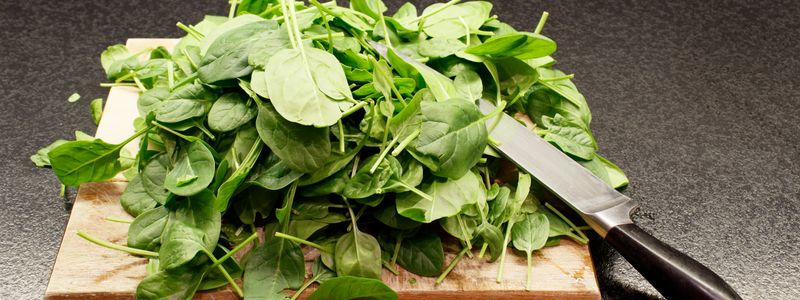
The MIND diet singles out green leafy vegetables such as spinach, kale, and romaine, the food most consistently tied to less Alzheimer's brain pathology.
2
The standout
Leafy Greens Do the Heavy Lifting
The most striking evidence comes from brain autopsies. In NIA-funded research, older adults who had reported following a MIND or Mediterranean diet showed fewer of the hallmark signs of Alzheimer's in their brains, including amyloid plaques and tau tangles (National Institute on Aging).
Among all the individual food groups examined, higher green leafy vegetable intake stood out as the one most associated with less Alzheimer's pathology (National Institute on Aging). One salad a day is a small habit with a surprisingly large amount of research behind it.
Why greens specifically is still being worked out. Leafy vegetables are dense in folate, vitamin K, lutein, and nitrates, and researchers have looked at effects on immunity and cholesterol as possible pathways (National Institute on Aging). The mechanism is not settled, but the association has now shown up in both living cohorts and brain tissue after death, which is a stronger pairing than most nutrition claims can offer.
3
The rest of the plate
Berries, Beans, Nuts, and Fish
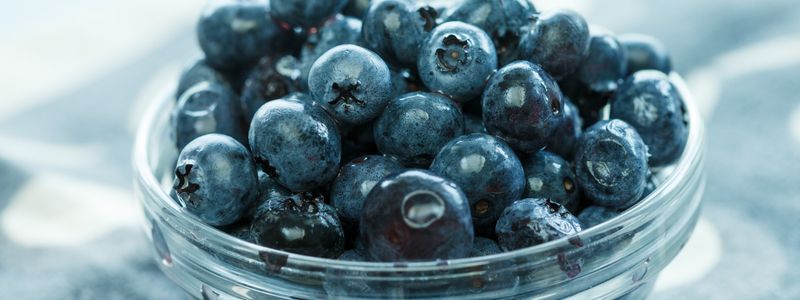
Berries are the fruit the plan names, and the reason is practical rather than magical: they are the fruit that showed up most in the brain-health data (National Institute on Aging). A handful of blueberries or strawberries several times a week is the whole instruction.
Beans, nuts, whole grains, olive oil, and one or more weekly servings of fish fill in the rest, with poultry over red meat and a firm limit on butter, cheese, and sweets (Mayo Clinic). Nothing here is exotic or expensive, which is the point of a pattern meant to be followed for decades.
Berries are the one fruit the MIND diet singles out, chosen because they appeared most consistently in the brain-health research.
4
The honest part
What the Evidence Does and Does Not Show
Here is the part worth being careful about. Observational studies of more than 900 dementia-free older adults found that closely following the MIND diet was associated with reduced Alzheimer's risk and slower cognitive decline (National Institute on Aging). Association is not the same as proof.
The NIA is direct about this: evidence that any particular diet preserves cognition or reduces Alzheimer's risk is mixed, results are not conclusive, and a major review did not find enough evidence to recommend one specific diet (National Institute on Aging). Trials testing these patterns directly are still underway. Anyone promising this diet prevents dementia is ahead of the data.
It is also worth knowing what the observational design cannot rule out. People who eat this way often exercise more, sleep better, and have more resources, and those things track with brain health too (National Institute on Aging). Researchers adjust for what they can measure, but the honest summary is that following this pattern is associated with better outcomes, not proven to cause them.
People who followed the MIND diet most closely showed fewer amyloid plaques and tau tangles in brain autopsies, with leafy greens the standout food.
That finding is real and it is observational. The NIA notes results across studies are mixed and not conclusive, and trials testing these diets directly are still running.
National Institute on Aging
5
The good news
You Do Not Have to Follow It Perfectly
The most encouraging finding for real life is that partial credit counts. In the research, even moderate adherence to the MIND diet was associated with a measurable reduction in Alzheimer's risk, while the Mediterranean and DASH diets needed near-strict adherence to show similar protection (National Institute on Aging).
Because it is built from a wide variety of ordinary foods, Mayo Clinic notes the MIND diet is safe for most people (Mayo Clinic). And it stacks with the rest of brain health: Mayo puts regular physical activity, quality sleep, and staying socially connected alongside diet (Mayo Clinic). Start with the salad.
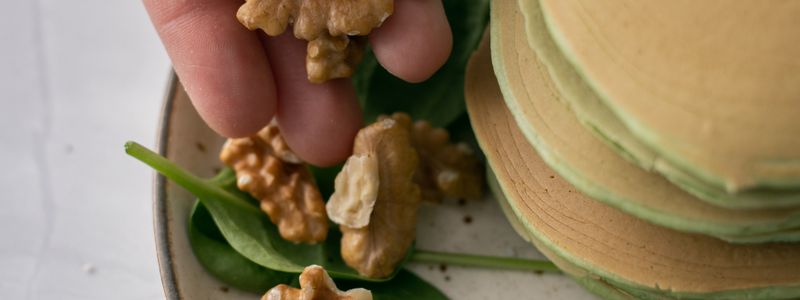
Greens plus nuts is the MIND diet in one bowl, and even moderate adherence was linked to lower Alzheimer's risk in the research.
Take the MIND diet cheat sheet with you
Your free 2-page guide: the ten foods the MIND diet asks for, the five to limit, and what the research honestly shows.
One email. No spam. Unsubscribe anytime.
Free Lifestyle Assessment
How Healthy Is Your Current Lifestyle?
Answer honestly for five minutes and walk away with your personal scorecard: all six areas of your health rated, the one that needs your attention first, and a 30-day plan built from your answers. It shows up the second you finish.
Free. About 5 minutes. Your results appear instantly.
📋 Your Coach's Recommendations
1
Put Leafy Greens on the Plate Daily
Green leafy vegetables were the single food group most associated with less Alzheimer's pathology in NIA-funded research. Spinach, kale, romaine, or collards, roughly a serving a day. A side salad or a handful wilted into whatever you are already cooking counts.
2
Make Berries Your Default Fruit
Berries are the one fruit the MIND diet singles out, because they showed up most in the brain-health data. Blueberries or strawberries several times a week, fresh or frozen. Frozen is cheaper and works just as well.
3
Fill the Rest In With Beans, Nuts, Fish, and Olive Oil
Add beans and nuts most days, fish once or twice a week, whole grains, and olive oil as your main fat, while keeping butter, cheese, red meat, and sweets low. Mayo Clinic notes the pattern is safe for most people and does not require perfection.
?
How it works. Just a quiet check-in, not an alert and not a recurring nag. The event lands as a 30-minute slot at 9am two weeks from today, with your plan in the notes and a link back to this article. Works with Apple Calendar, Google Calendar, and Outlook. Yours to move, snooze, or delete whenever.
Keep this plan
Get the one-page guide: the ten MIND foods, the five to limit, and what the evidence actually says.
One email. No spam. Unsubscribe anytime.
Where should we send it?
Your 1-page MIND diet guide, straight to your inbox.
We send the plan plus one short evidence brief each week. Unsubscribe anytime.
✓
It's on the way
Check your inbox in the next minute. Want it right now?
Your first Ageless Brief arrives this week: one study, translated, no hype.
To your health,
Frequently Asked Questions
What is the MIND diet?
MIND stands for Mediterranean-DASH Intervention for Neurodegenerative Delay. It combines the Mediterranean diet with DASH, the eating plan built to lower blood pressure, and weights the result toward foods associated with brain health, especially green leafy vegetables and berries.
What do you eat on the MIND diet?
Green leafy vegetables and other vegetables, berries, beans, nuts, whole grains, fish, poultry, and olive oil. Mayo Clinic notes it limits butter, cheese, red meat, and sweets. Nothing on the list is exotic or expensive.
Does the MIND diet actually prevent Alzheimer's?
It has not been proven to. Observational studies link closer adherence to lower Alzheimer's risk and slower cognitive decline, and brain autopsies show fewer plaques and tangles, but the NIA says results across studies are mixed and not conclusive.
Which food matters most on the MIND diet?
Green leafy vegetables. In NIA-funded research examining brain tissue, higher intake of leafy greens such as spinach, kale, and romaine was the food group most associated with less Alzheimer's pathology.
Do I have to follow it perfectly to benefit?
No, and that is one of its more useful findings. Even moderate adherence to the MIND diet was associated with a measurable reduction in Alzheimer's risk, while the Mediterranean and DASH patterns required much stricter adherence to show similar protection.
Is this medical advice?
No. This article is educational and not a substitute for care from your doctor. Talk to a professional about your own diet and brain health, especially if you have memory concerns or manage a medical condition.
Curious where you stand? Take the free 5-minute lifestyle assessment and your personal scorecard appears the second you finish.
By the Ageless Coach Editorial Team · Published May 21, 2026 · Last updated July 18, 2026
<style>
:root{--dark-base:#0D1B2A;--dark-mid:#1B3A4B;--teal:#0EA5A0;--teal-dark:#0C8C88;--teal-bright:#14D4CD;--fog:#D8E8E8;--deep-fog:#C8DCDC;--fog-border:#A8C4C4;--ink:#313743;--ink-soft:#49505f;--muted:#6b7280;--warm:#9A6841;--warm-light:#be7b4c;--serif:"Source Serif 4",Georgia,serif;--sans:Inter,-apple-system,BlinkMacSystemFont,"Segoe UI",sans-serif}
.w-richtext p,.w-richtext li,.w-richtext td{font-size:20.5px;line-height:1.7;color:var(--ink-soft)}
.w-richtext ul{list-style-type:disc;padding-left:24px;margin:12px 0}
.w-richtext ul li{margin-bottom:8px}
.ac-answer{background:#fff;border:1px solid #D4E4E4;border-top:5px solid var(--teal);border-radius:16px;padding:22px 24px 18px;margin:16px 0 28px;box-shadow:0 6px 22px rgba(13,27,42,.07)}
.ac-answer .aa-eyebrow{font:800 12px/1 var(--sans);letter-spacing:2.5px;text-transform:uppercase;color:var(--teal-dark);margin-bottom:8px}
.ac-answer .aa-head{font-family:var(--serif);font-size:24px;line-height:1.2;font-weight:800;color:var(--dark-base);margin:0 0 16px}
.ac-answer .aa-list{list-style:none;margin:0;padding:0}
.ac-answer .aa-list li{display:flex;gap:12px;align-items:baseline;padding:11px 0;border-bottom:1px solid #EDF3F3;font:700 16.5px/1.4 var(--sans);color:var(--ink)}
.ac-answer .aa-list li:last-child{border-bottom:none}
.ac-answer .aa-n{flex-shrink:0;width:24px;height:24px;border-radius:50%;background:var(--teal-dark);color:#fff;font:800 12px/24px var(--sans);text-align:center}
.ac-answer .aa-food{color:var(--teal-dark);font-weight:800}
.ac-answer .aa-cue{margin-top:18px;text-align:center}
.ac-answer .aa-cta{display:inline-flex;align-items:center;gap:10px;background:var(--teal-dark);color:#fff;font:800 14px/1 var(--sans);letter-spacing:.2px;padding:14px 26px;border-radius:50px;text-decoration:none;box-shadow:0 6px 16px rgba(12,140,136,.30)}
.ac-answer .aa-cta:hover{background:#0A7A76}
.ac-answer .aa-arw{display:inline-block;animation:aa-nudge 1.4s ease-in-out infinite}
@keyframes aa-nudge{0%,100%{transform:translateY(0)}50%{transform:translateY(4px)}}
@media(max-width:560px){.ac-answer{padding:20px 18px 16px}.ac-answer .aa-head{font-size:21px}.ac-answer .aa-list li{font-size:15px}}
.ac-band{margin:56px 0 24px;padding:26px 24px 12px;background:linear-gradient(180deg,#F0F7F7,#fff);border-radius:16px}
.ac-band.hype{background:linear-gradient(180deg,#FAF3EB,#fff)}
.ac-band .inner{display:flex;gap:20px;align-items:center}
.ac-band .big{font:900 72px/1 var(--sans);color:var(--deep-fog);flex-shrink:0}
.ac-band.hype .big{color:#EAD9C6}
.ac-band .q{font:700 13px/1.4 var(--sans);letter-spacing:2px;text-transform:uppercase;color:var(--teal-dark)}
.ac-band.hype .q{color:var(--warm)}
.ac-band h3{font-family:var(--serif);font-size:30px;line-height:1.2;font-weight:800;color:var(--ink);margin:0}
.ac-callout{border-left:4px solid var(--teal);background:#F4FAFA;border-radius:0 12px 12px 0;padding:18px 22px;margin:28px 0}
.ac-callout .n{font:800 20px/1.35 var(--sans);color:var(--dark-mid);margin-bottom:6px}
.ac-callout .d{font:500 15px/1.55 var(--sans);color:var(--ink-soft)}
.ac-callout .c{font:600 11.5px/1 var(--sans);letter-spacing:1.5px;text-transform:uppercase;color:var(--muted);margin-top:10px}
.ac-plan{background:linear-gradient(135deg,#F4FAFA 0%,#fff 100%);border-left:5px solid var(--teal-dark);border-radius:14px;padding:30px 26px;margin:40px 0 0;box-shadow:0 2px 12px rgba(0,0,0,.06);scroll-margin-top:100px}
.ac-plan .ptitle{font-family:var(--serif);font-size:24px;font-weight:800;color:var(--ink);margin-bottom:22px}
.ac-plan .step{display:flex;gap:16px;margin-bottom:18px;align-items:flex-start}
.ac-plan .step .n{min-width:38px;width:38px;height:38px;background:var(--teal-dark);border-radius:50%;color:#fff;font:800 17px/38px var(--sans);text-align:center;flex-shrink:0}
.ac-plan .sh{font:800 16.5px/1.4 var(--sans);color:var(--ink);margin-bottom:3px}
.ac-plan .sd{font:400 15px/1.6 var(--sans);color:var(--muted)}
.ac-plan .actions{border-top:1px solid #D8E8E8;margin-top:16px;padding-top:20px}
.ac-primary-row{display:flex;align-items:center;gap:10px;padding:0 4px}
.ac-btn-primary-wide{flex:1;background:var(--teal);color:#fff;border:1.5px solid var(--teal);border-radius:14px;padding:12px 22px;box-shadow:0 4px 14px rgba(14,165,160,.22);font-family:var(--sans);cursor:pointer;display:grid;grid-template-columns:auto 1fr;gap:14px;align-items:center;transition:all .18s ease}
.ac-btn-primary-wide:hover{background:var(--teal-dark);border-color:var(--teal-dark)}
.ac-btn-primary-wide .icon svg{width:22px;height:22px;color:#fff;display:block}
.ac-btn-primary-wide .label{text-align:left;line-height:1.25}
.ac-btn-primary-wide .label .top{display:block;font-weight:700;font-size:15.5px;color:#fff}
.ac-btn-primary-wide .label .top em{font-style:italic;font-weight:700}
.ac-cal-help{position:relative;flex-shrink:0}
.ac-cal-help summary{list-style:none;width:24px;height:24px;border-radius:50%;background:#E4F1F1;border:1px solid var(--fog-border);color:var(--dark-mid);font:700 13px/22px var(--sans);text-align:center;cursor:pointer;display:block}
.ac-cal-help summary::-webkit-details-marker{display:none}
.ac-cal-help .tip{position:absolute;right:0;top:32px;z-index:50;width:290px;background:var(--dark-base);color:var(--fog);border-radius:12px;padding:14px 16px;font:500 12.5px/1.55 var(--sans);box-shadow:0 10px 30px rgba(13,27,42,.35)}
.ac-cal-help .tip strong{color:#fff}
.ac-btn-share-wide{display:flex;width:100%;align-items:center;justify-content:center;gap:10px;background:#fff;color:var(--teal-dark);border:1.5px solid var(--teal-dark);border-radius:14px;padding:12px 22px;margin-top:10px;font:800 15px/1 var(--sans);cursor:pointer}
.ac-btn-share-wide svg{width:18px;height:18px}
.ac-midcap{background:linear-gradient(180deg,#F0F7F7,#fff);border:1.5px solid var(--fog-border);border-radius:16px;padding:24px 22px;margin:34px 0;text-align:center}
.ac-midcap h4{font-family:var(--serif);font-size:22px;font-weight:800;color:var(--ink);margin:0 0 6px}
.ac-midcap .sub{font:500 14px/1.55 var(--sans);color:var(--ink-soft);margin:0 auto 14px;max-width:400px}
.ac-midcap .mcform{display:flex;gap:8px;max-width:400px;margin:0 auto}
.ac-midcap .mcform input{flex:1;border:1.5px solid var(--fog-border);border-radius:50px;padding:12px 18px;font:500 14px/1 var(--sans);min-width:0}
.ac-midcap .mcform button{background:var(--teal-dark);color:#fff;border:none;border-radius:50px;padding:12px 20px;font:800 13.5px/1 var(--sans);cursor:pointer;white-space:nowrap}
.ac-midcap .fine{font:500 11.5px/1.5 var(--sans);color:var(--muted);margin-top:10px}
@media (max-width:520px){.ac-midcap .mcform{flex-direction:column}}
.ac-assess-promo{background:linear-gradient(135deg,#D8E8E8,#C8DCDC);border:1px solid var(--fog-border);border-radius:16px;padding:34px 30px;margin:44px 0;text-align:center}
.ac-assess-promo .eyebrow{color:var(--teal-dark);font:800 12px/1 var(--sans);letter-spacing:2.5px;text-transform:uppercase;margin:0 0 10px}
.ac-assess-promo h4{font-family:var(--serif);color:var(--dark-base);font-size:26px;font-weight:800;margin:0 0 12px}
.w-embed .ac-assess-promo p.ap-body,.ac-assess-promo p.ap-body{font-family:Georgia,serif;color:#3A5555;font-size:15.5px;font-weight:500;line-height:1.65;max-width:540px;margin:0 auto 22px}
.ac-assess-promo .ap-cta{display:inline-block;background:var(--teal-bright);color:var(--dark-base);font:800 15px/1 var(--sans);padding:15px 30px;border-radius:50px;text-decoration:none}
.ac-assess-promo .ap-fine{color:#4E6B6B;font:500 13px/1.5 var(--sans);margin:14px 0 0}
.ac-assess-line{border-top:1px solid #E2ECEC;margin-top:30px;padding:22px 10px 0;text-align:center;font:500 15.5px/1.6 var(--sans);color:#3A5555}
.w-embed .ac-assess-line a,.ac-assess-line a{color:var(--teal-dark);font-weight:700;text-decoration:underline;text-underline-offset:3px}
.ac-articlemeta{font:500 12.5px/1.6 var(--sans);color:#98a0a6;text-align:center;margin:24px 0 0}
.ac-capture{background:linear-gradient(180deg,#F0F7F7,#fff);border:1.5px solid var(--fog-border);border-radius:16px;padding:30px 28px;margin:26px 0 44px;text-align:center}
.ac-capture .cap-state{display:none}
.ac-capture[data-state="trigger"] .st-trigger{display:block}
.ac-capture[data-state="form"] .st-form{display:block}
.ac-capture[data-state="sent"] .st-sent{display:block}
.ac-capture h4{font-family:var(--serif);font-size:24px;font-weight:800;color:var(--ink);margin:0 0 8px}
.ac-capture .sub{font:500 15px/1.55 var(--sans);color:var(--ink-soft);margin:0 auto 18px;max-width:430px}
.ac-capture .bigbtn{display:inline-flex;align-items:center;gap:10px;background:var(--teal-dark);color:#fff;border:none;border-radius:50px;padding:16px 30px;font:800 16px/1 var(--sans);cursor:pointer;box-shadow:0 6px 18px rgba(12,140,136,.28)}
.ac-capture .capform{display:flex;gap:10px;max-width:430px;margin:0 auto}
.ac-capture .capform input{flex:1;border:1.5px solid var(--fog-border);border-radius:50px;padding:14px 20px;font:500 15px/1 var(--sans)}
.ac-capture .capform button{background:var(--teal-dark);color:#fff;border:none;border-radius:50px;padding:14px 24px;font:800 14px/1 var(--sans);cursor:pointer}
.ac-capture .sent-check{width:52px;height:52px;border-radius:50%;background:var(--teal);color:#fff;font:800 26px/52px var(--sans);margin:0 auto 12px}
.ac-capture .dl{display:inline-block;margin-top:6px;color:var(--teal-dark);font:700 15px/1 var(--sans);text-decoration:underline;cursor:pointer}
.ac-capture .fine{font:500 12px/1.5 var(--sans);color:var(--muted);margin-top:12px}
.ac-sig{margin-top:36px}
.ac-sig .rule{width:60px;height:2px;background:linear-gradient(90deg,var(--teal-dark),var(--teal-bright));margin-bottom:18px;border-radius:2px}
.ac-sig .toyour{font-family:var(--serif);font-size:16px;font-style:italic;color:#777;margin:0 0 10px;padding-left:2px}
.ac-faq{margin-top:40px;border-top:1px solid #e5e7eb;padding-top:30px;margin-bottom:40px}
.ac-faq h2{font-family:var(--serif);font-size:23px;font-weight:800;color:var(--ink);margin:0 0 18px}
.ac-faq details{border:1px solid #e5e7eb;border-radius:10px;margin-bottom:10px}
.ac-faq summary{padding:15px 18px;font:700 16px/1.4 var(--sans);color:var(--ink);cursor:pointer;display:flex;justify-content:space-between;align-items:center;list-style:none}
.ac-faq summary:after{content:"\25BE";color:var(--warm)}
.ac-faq .a{padding:0 18px 16px;font-size:17px;line-height:1.65;color:#555}
.article-header-section .article-container{max-width:1080px !important;margin:0 auto !important;padding:0 20px !important}
.article-header-section .article-hero-image{display:block;width:100%;max-width:660px;margin:0}
.article-header-section .article-title{display:block !important;font-family:var(--serif);font-size:32px;line-height:1.25;font-weight:700;color:#313743;margin:20px 0 12px 0;text-align:left;max-width:660px}
@media (max-width:767px){.article-header-section .article-title{font-size:26px}.article-header-section .article-hero-image{max-width:100%}}
@media (max-width:640px){.ac-band .big{font-size:52px}}
@media (max-width:520px){.ac-capture .capform{flex-direction:column}}
.ac-figure{margin:30px 0}.ac-figure img{display:block;width:100%;border-radius:14px;height:auto;aspect-ratio:800/300}.ac-figure figcaption{font:500 13px/1.5 var(--sans);color:var(--muted);margin-top:9px}</style><div class="ac-answer"><div class="aa-eyebrow">What the evidence actually says</div><h2 class="aa-head">The MIND diet is not a trend. Researchers built it by combining the two eating patterns with the best track records, then tuned it for the brain. Here is what it asks for, and what the evidence honestly shows.</h2><ol class="aa-list"><li><span class="aa-n">1</span><span><span class="aa-food">Leafy greens</span> · spinach, kale, and romaine are the standout food in the data</span></li><li><span class="aa-n">2</span><span><span class="aa-food">Berries first</span> · berries are the one fruit the plan singles out</span></li><li><span class="aa-n">3</span><span><span class="aa-food">Beans and nuts</span> · everyday plant protein anchors the plate</span></li><li><span class="aa-n">4</span><span><span class="aa-food">Fish weekly</span> · one or more servings a week, plus olive oil and whole grains</span></li><li><span class="aa-n">5</span><span><span class="aa-food">Honest caveat</span> · the evidence is largely observational and not yet conclusive</span></li></ol><div class="aa-cue"><a class="aa-cta" href="#coach-recommendations">Get Your Coach's 3-Step Plan <span class="aa-arw">↓</span></a></div></div><p>Most diets are built for the waistline and then marketed to the brain. The MIND diet went the other way. Its name is short for Mediterranean-DASH Intervention for Neurodegenerative Delay, and researchers designed it by merging the Mediterranean diet with DASH, the plan built to lower blood pressure, then weighting it toward the foods most associated with brain health (<a href="https://newsnetwork.mayoclinic.org/discussion/mayo-clinic-q-and-a-mind-diet-includes-variety-of-healthy-foods-is-safe-for-most/" target="_blank" rel="noopener">Mayo Clinic</a>).</p><p>The result is a short, specific grocery list rather than a philosophy. Plenty of green leafy vegetables and other vegetables, berries, beans, nuts, whole grains, fish, poultry, and olive oil, with butter, cheese, red meat, and sweets kept low (<a href="https://newsnetwork.mayoclinic.org/discussion/mayo-clinic-q-and-a-mind-diet-includes-variety-of-healthy-foods-is-safe-for-most/" target="_blank" rel="noopener">Mayo Clinic</a>). What makes it interesting is what happened when researchers followed people who actually ate this way.</p><div class="ac-band"><div class="inner"><div class="big">1</div><div><div class="q">The design</div><h3>Two Proven Diets, Merged for the Brain</h3></div></div></div><p>Both parent diets already had evidence behind them. The Mediterranean pattern has long been tied to lower dementia risk in observational research, and DASH was built and tested to bring blood pressure down (<a href="https://www.nia.nih.gov/health/alzheimers-and-dementia/what-do-we-know-about-diet-and-prevention-alzheimers-disease" target="_blank" rel="noopener">National Institute on Aging</a>). MIND takes the overlap and sharpens it.</p><p>The practical difference is emphasis. Where the Mediterranean diet says eat vegetables and fruit, MIND says eat green leafy vegetables specifically, and choose berries over other fruit (<a href="https://www.nia.nih.gov/news/mind-and-mediterranean-diets-linked-fewer-signs-alzheimers-brain-pathology" target="_blank" rel="noopener">National Institute on Aging</a>). Those two instructions are where most of the brain signal in the research sits.</p><p>That specificity is also what makes the plan easy to follow badly. People hear brain diet and reach for a supplement or a superfood powder. The MIND diet asks for none of that. It asks for a salad, a handful of berries, some beans, and fish once or twice a week (<a href="https://newsnetwork.mayoclinic.org/discussion/mayo-clinic-q-and-a-mind-diet-includes-variety-of-healthy-foods-is-safe-for-most/" target="_blank" rel="noopener">Mayo Clinic</a>).</p><figure class="ac-figure"><img src="https://images.pexels.com/photos/19957370/pexels-photo-19957370.jpeg?auto=compress&cs=tinysrgb&w=800&h=300&fit=crop" alt="A large pile of fresh spinach leaves on a wooden cutting board beside a knife" width="800" height="300" loading="lazy" decoding="async"><figcaption>The MIND diet singles out green leafy vegetables such as spinach, kale, and romaine, the food most consistently tied to less Alzheimer's brain pathology.</figcaption></figure><div class="ac-band hype"><div class="inner"><div class="big">2</div><div><div class="q">The standout</div><h3>Leafy Greens Do the Heavy Lifting</h3></div></div></div><p>The most striking evidence comes from brain autopsies. In NIA-funded research, older adults who had reported following a MIND or Mediterranean diet showed fewer of the hallmark signs of Alzheimer's in their brains, including amyloid plaques and tau tangles (<a href="https://www.nia.nih.gov/news/mind-and-mediterranean-diets-linked-fewer-signs-alzheimers-brain-pathology" target="_blank" rel="noopener">National Institute on Aging</a>).</p><p>Among all the individual food groups examined, higher green leafy vegetable intake stood out as the one most associated with less Alzheimer's pathology (<a href="https://www.nia.nih.gov/news/mind-and-mediterranean-diets-linked-fewer-signs-alzheimers-brain-pathology" target="_blank" rel="noopener">National Institute on Aging</a>). One salad a day is a small habit with a surprisingly large amount of research behind it.</p><p>Why greens specifically is still being worked out. Leafy vegetables are dense in folate, vitamin K, lutein, and nitrates, and researchers have looked at effects on immunity and cholesterol as possible pathways (<a href="https://www.nia.nih.gov/health/alzheimers-and-dementia/what-do-we-know-about-diet-and-prevention-alzheimers-disease" target="_blank" rel="noopener">National Institute on Aging</a>). The mechanism is not settled, but the association has now shown up in both living cohorts and brain tissue after death, which is a stronger pairing than most nutrition claims can offer.</p><div class="ac-band"><div class="inner"><div class="big">3</div><div><div class="q">The rest of the plate</div><h3>Berries, Beans, Nuts, and Fish</h3></div></div></div><p>Berries are the fruit the plan names, and the reason is practical rather than magical: they are the fruit that showed up most in the brain-health data (<a href="https://www.nia.nih.gov/news/mind-and-mediterranean-diets-linked-fewer-signs-alzheimers-brain-pathology" target="_blank" rel="noopener">National Institute on Aging</a>). A handful of blueberries or strawberries several times a week is the whole instruction.</p><p>Beans, nuts, whole grains, olive oil, and one or more weekly servings of fish fill in the rest, with poultry over red meat and a firm limit on butter, cheese, and sweets (<a href="https://newsnetwork.mayoclinic.org/discussion/mayo-clinic-q-and-a-mind-diet-includes-variety-of-healthy-foods-is-safe-for-most/" target="_blank" rel="noopener">Mayo Clinic</a>). Nothing here is exotic or expensive, which is the point of a pattern meant to be followed for decades.</p><figure class="ac-figure"><img src="https://images.pexels.com/photos/15305308/pexels-photo-15305308.jpeg?auto=compress&cs=tinysrgb&w=800&h=300&fit=crop" alt="Fresh blueberries in a clear glass bowl" width="800" height="300" loading="lazy" decoding="async"><figcaption>Berries are the one fruit the MIND diet singles out, chosen because they appeared most consistently in the brain-health research.</figcaption></figure><div class="ac-band"><div class="inner"><div class="big">4</div><div><div class="q">The honest part</div><h3>What the Evidence Does and Does Not Show</h3></div></div></div><p>Here is the part worth being careful about. Observational studies of more than 900 dementia-free older adults found that closely following the MIND diet was associated with reduced Alzheimer's risk and slower cognitive decline (<a href="https://www.nia.nih.gov/health/alzheimers-and-dementia/what-do-we-know-about-diet-and-prevention-alzheimers-disease" target="_blank" rel="noopener">National Institute on Aging</a>). Association is not the same as proof.</p><p>The NIA is direct about this: evidence that any particular diet preserves cognition or reduces Alzheimer's risk is mixed, results are not conclusive, and a major review did not find enough evidence to recommend one specific diet (<a href="https://www.nia.nih.gov/health/alzheimers-and-dementia/what-do-we-know-about-diet-and-prevention-alzheimers-disease" target="_blank" rel="noopener">National Institute on Aging</a>). Trials testing these patterns directly are still underway. Anyone promising this diet prevents dementia is ahead of the data.</p><p>It is also worth knowing what the observational design cannot rule out. People who eat this way often exercise more, sleep better, and have more resources, and those things track with brain health too (<a href="https://www.nia.nih.gov/health/alzheimers-and-dementia/what-do-we-know-about-diet-and-prevention-alzheimers-disease" target="_blank" rel="noopener">National Institute on Aging</a>). Researchers adjust for what they can measure, but the honest summary is that following this pattern is associated with better outcomes, not proven to cause them.</p><div class="ac-callout"><div class="n">People who followed the MIND diet most closely showed fewer amyloid plaques and tau tangles in brain autopsies, with leafy greens the standout food.</div><div class="d">That finding is real and it is observational. The NIA notes results across studies are mixed and not conclusive, and trials testing these diets directly are still running.</div><div class="c">National Institute on Aging</div></div><div class="ac-band"><div class="inner"><div class="big">5</div><div><div class="q">The good news</div><h3>You Do Not Have to Follow It Perfectly</h3></div></div></div><p>The most encouraging finding for real life is that partial credit counts. In the research, even moderate adherence to the MIND diet was associated with a measurable reduction in Alzheimer's risk, while the Mediterranean and DASH diets needed near-strict adherence to show similar protection (<a href="https://www.nia.nih.gov/health/alzheimers-and-dementia/what-do-we-know-about-diet-and-prevention-alzheimers-disease" target="_blank" rel="noopener">National Institute on Aging</a>).</p><p>Because it is built from a wide variety of ordinary foods, Mayo Clinic notes the MIND diet is safe for most people (<a href="https://newsnetwork.mayoclinic.org/discussion/mayo-clinic-q-and-a-mind-diet-includes-variety-of-healthy-foods-is-safe-for-most/" target="_blank" rel="noopener">Mayo Clinic</a>). And it stacks with the rest of brain health: Mayo puts regular physical activity, quality sleep, and staying socially connected alongside diet (<a href="https://www.mayoclinic.org/healthy-lifestyle/healthy-aging/in-depth/brain-health-tips/art-20555198" target="_blank" rel="noopener">Mayo Clinic</a>). Start with the salad.</p><figure class="ac-figure"><img src="https://images.pexels.com/photos/7144346/pexels-photo-7144346.jpeg?auto=compress&cs=tinysrgb&w=800&h=300&fit=crop" alt="A fresh spinach salad topped with walnuts on a plate" width="800" height="300" loading="lazy" decoding="async"><figcaption>Greens plus nuts is the MIND diet in one bowl, and even moderate adherence was linked to lower Alzheimer's risk in the research.</figcaption></figure><div class="ac-midcap"><h4>Take the MIND diet cheat sheet with you</h4><p class="sub">Your free 2-page guide: the ten foods the MIND diet asks for, the five to limit, and what the research honestly shows.</p><div class="mcform"><input type="email" placeholder="Your email address" aria-label="Email address"><button type="button">Send My Plan (Free)</button></div><div class="fine">One email. No spam. Unsubscribe anytime.</div></div><div class="ac-assess-promo"><p class="eyebrow">Free Lifestyle Assessment</p><h4>How Healthy Is Your Current Lifestyle?</h4><p class="ap-body">Answer honestly for five minutes and walk away with your personal scorecard: all six areas of your health rated, the one that needs your attention first, and a 30-day plan built from your answers. It shows up the second you finish.</p><a class="ap-cta" href="/#assessment">See How the Assessment Works →</a><p class="ap-fine">Free. About 5 minutes. Your results appear instantly.</p></div><div class="ac-plan" id="coach-recommendations"><div class="ptitle">📋 Your Coach's Recommendations</div><div class="step"><div class="n">1</div><div><div class="sh">Put Leafy Greens on the Plate Daily</div><div class="sd">Green leafy vegetables were the single food group most associated with less Alzheimer's pathology in NIA-funded research. Spinach, kale, romaine, or collards, roughly a serving a day. A side salad or a handful wilted into whatever you are already cooking counts.</div></div></div><div class="step"><div class="n">2</div><div><div class="sh">Make Berries Your Default Fruit</div><div class="sd">Berries are the one fruit the MIND diet singles out, because they showed up most in the brain-health data. Blueberries or strawberries several times a week, fresh or frozen. Frozen is cheaper and works just as well.</div></div></div><div class="step"><div class="n">3</div><div><div class="sh">Fill the Rest In With Beans, Nuts, Fish, and Olive Oil</div><div class="sd">Add beans and nuts most days, fish once or twice a week, whole grains, and olive oil as your main fat, while keeping butter, cheese, red meat, and sweets low. Mayo Clinic notes the pattern is safe for most people and does not require perfection.</div></div></div><div class="actions">
<div class="ac-primary-row">
<button type="button" class="ac-btn-primary-wide" data-ac-cal>
<span class="icon"><svg viewBox="0 0 24 24" fill="none" stroke="currentColor" stroke-width="2" stroke-linecap="round" stroke-linejoin="round"><rect x="3" y="4" width="18" height="18" rx="2"></rect><path d="M16 2v4M8 2v4M3 10h18"></path></svg></span>
<span class="label"><span class="top">Add <em>Your Coach's Recommendations to Your Calendar</em></span></span>
</button>
<details class="ac-cal-help">
<summary aria-label="What does this do?">?</summary>
<div class="tip"><strong>How it works.</strong> Just a quiet check-in, not an alert and not a recurring nag. The event lands as a 30-minute slot at 9am two weeks from today, with your plan in the notes and a link back to this article. Works with Apple Calendar, Google Calendar, and Outlook. Yours to move, snooze, or delete whenever.</div>
</details>
</div>
<button type="button" class="ac-btn-share-wide" data-ac-share>
<svg viewBox="0 0 24 24" fill="none" stroke="currentColor" stroke-width="2" stroke-linecap="round" stroke-linejoin="round"><path d="M4 12v8a2 2 0 002 2h12a2 2 0 002-2v-8"></path><polyline points="16 6 12 2 8 6"></polyline><line x1="12" y1="2" x2="12" y2="15"></line></svg>
Share this article
</button>
</div></div><div class="ac-capture" data-state="trigger" data-article-slug="mind-diet-brain-health-explained" data-pdf-url="" data-plan-title="The MIND Diet Starter Plan" data-plan-desc="Your free 2-page guide to the brain-focused eating pattern: the ten foods to add, the five to limit, and an honest read on what the research shows. Checked against the NIA and Mayo Clinic."><div class="st-trigger cap-state"><h4>Keep this plan</h4><p class="sub">Get the one-page guide: the ten MIND foods, the five to limit, and what the evidence actually says.</p><button class="bigbtn" type="button" data-cap="form">📩 Email Me This Plan (Free PDF)</button><div class="fine">One email. No spam. Unsubscribe anytime.</div></div><div class="st-form cap-state"><h4>Where should we send it?</h4><p class="sub">Your 1-page MIND diet guide, straight to your inbox.</p><form class="capform"><input type="email" name="email" required placeholder="Your email address" aria-label="Email address"><button type="submit">Send My Plan</button></form><div class="fine">We send the plan plus one short evidence brief each week. Unsubscribe anytime.</div></div><div class="st-sent cap-state"><div class="sent-check">✓</div><h4>It's on the way</h4><p class="sub">Check your inbox in the next minute. Want it right now?</p><a class="dl" href="/newsletter" download>⬇ Download your plan (PDF)</a><div class="fine">Your first Ageless Brief arrives this week: one study, translated, no hype.</div></div></div><div class="ac-sig">
<div class="rule"></div>
<p class="toyour">To your health,</p>
<svg width="320" height="72" viewBox="0 0 320 72" role="img" aria-label="Ageless Coach. Age Strong. Live Long." xmlns="http://www.w3.org/2000/svg" xmlns:xlink="http://www.w3.org/1999/xlink">
<defs><clipPath id="acSigIconClip"><rect x="0" y="6" width="60" height="60" rx="12" ry="12"/></clipPath></defs>
<image x="0" y="6" width="60" height="60" clip-path="url(#acSigIconClip)" preserveAspectRatio="xMidYMid slice" href="https://cdn.prod.website-files.com/69be1026a027224999b7936b/6a0b22c6afd5d6fd115b9c1a_ac-closing-brand-icon.webp" xlink:href="https://cdn.prod.website-files.com/69be1026a027224999b7936b/6a0b22c6afd5d6fd115b9c1a_ac-closing-brand-icon.webp"/>
<text x="76" y="42" style="font-family:Inter,system-ui,-apple-system,'Helvetica Neue',Arial,sans-serif;font-size:27px;letter-spacing:-0.3px">
<tspan style="font-weight:800;fill:#0D1B2A">Ageless</tspan><tspan style="font-weight:300;fill:rgba(13,27,42,0.6)">Coach</tspan><tspan dy="-12" style="font-size:16px;font-weight:600;fill:rgba(13,27,42,0.6)">™</tspan>
</text>
<text x="76" y="60" style="font-family:Inter,system-ui,-apple-system,'Helvetica Neue',Arial,sans-serif;font-size:10.5px;letter-spacing:2.5px;font-weight:500;fill:#0C8C88;text-transform:uppercase">AGE STRONG. LIVE LONG.</text>
</svg>
</div><div class="ac-faq"><h2>Frequently Asked Questions</h2><details><summary>What is the MIND diet?</summary><div class="a">MIND stands for Mediterranean-DASH Intervention for Neurodegenerative Delay. It combines the Mediterranean diet with DASH, the eating plan built to lower blood pressure, and weights the result toward foods associated with brain health, especially green leafy vegetables and berries.</div></details><details><summary>What do you eat on the MIND diet?</summary><div class="a">Green leafy vegetables and other vegetables, berries, beans, nuts, whole grains, fish, poultry, and olive oil. Mayo Clinic notes it limits butter, cheese, red meat, and sweets. Nothing on the list is exotic or expensive.</div></details><details><summary>Does the MIND diet actually prevent Alzheimer's?</summary><div class="a">It has not been proven to. Observational studies link closer adherence to lower Alzheimer's risk and slower cognitive decline, and brain autopsies show fewer plaques and tangles, but the NIA says results across studies are mixed and not conclusive.</div></details><details><summary>Which food matters most on the MIND diet?</summary><div class="a">Green leafy vegetables. In NIA-funded research examining brain tissue, higher intake of leafy greens such as spinach, kale, and romaine was the food group most associated with less Alzheimer's pathology.</div></details><details><summary>Do I have to follow it perfectly to benefit?</summary><div class="a">No, and that is one of its more useful findings. Even moderate adherence to the MIND diet was associated with a measurable reduction in Alzheimer's risk, while the Mediterranean and DASH patterns required much stricter adherence to show similar protection.</div></details><details><summary>Is this medical advice?</summary><div class="a">No. This article is educational and not a substitute for care from your doctor. Talk to a professional about your own diet and brain health, especially if you have memory concerns or manage a medical condition.</div></details></div><div class="ac-assess-line">Curious where you stand? Take the free <a href="/#assessment">5-minute lifestyle assessment</a> and your personal scorecard appears the second you finish.</div><p class="ac-articlemeta">By the Ageless Coach Editorial Team · Published May 21, 2026 · Last updated July 18, 2026</p>
Subscribe to the Free Newsletter
One article a week. Trusted research made simple. Start making smarter health decisions today.