The Fall Risk That Strength Training Alone Won't Fix
What the evidence actually says
Falls usually get blamed on weak legs, but balance is a separate system, run by your inner ear, your eyes, and the position sensors in your joints. It can fade on its own while your strength holds, which is why lifting alone does not make you steady. The good news is that balance is trainable, and it responds to different work than strength does.
1Two problems, not one · the CDC lists lower-body weakness and balance trouble as separate fall risk factors
2A hidden system · balance runs on your inner ear, your vision and your joint sensors, not muscle alone
3Strength is not steadiness · you can have strong legs and still sway, because they train different things
4It is common · more than one in four adults age 65 and older fall every year
5It trains back · tai chi, yoga and standing drills rebuild balance the way lifting rebuilds muscle
Most people picture a fall as a strength problem. The legs give out, so the fix must be more muscle. That story is half right, and the missing half is why so many people who exercise still lose their footing.
Balance is its own system. Your brain builds a sense of where your body is from three streams at once: your inner ear, your eyes, and the position sensors packed into your joints and muscles. When one stream weakens, steadiness slips, even if your legs are strong.
1
Where the confusion starts
Falls Get Blamed on Weak Legs
According to the CDC, more than one in four adults age 65 and older fall each year, and less than half tell their doctor. When a fall does come up, muscle usually takes the blame. Strength matters, but it is only one piece of a much larger picture.
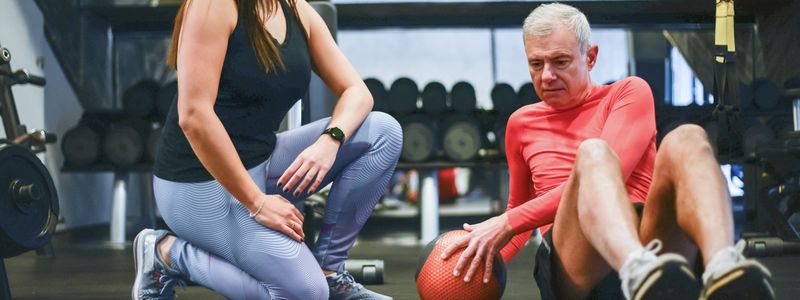
Strength work matters, but it is only one of several fall risk factors, and it does not train balance on its own.
2
Two problems, not one
Balance and Strength Are Separate Risks
The CDC's own list of fall risk factors names lower-body weakness and difficulty with walking and balance as two different items. That split matters. A person can pass a strength test and still fail a balance test, because the body builds the two abilities in different ways.
3
The hidden machinery
Your Steadiness Runs on More Than Muscle
The National Institute on Aging explains that eyesight, hearing and reflexes all feed your balance, and that problems with your nerves, blood vessels or blood pressure can throw it off. Age-related muscle loss is on that list, but so are vision changes and a pressure drop when you stand.
Most falls are caused by a combination of risk factors. The more risk factors a person has, the greater their chances of falling.
That is the quiet lesson. Steadiness is not one thing you can strengthen away. It is several systems that each need their own attention.
Centers for Disease Control and Prevention, 2026
4
The part people skip
Balance Responds to Its Own Training
Here is the encouraging part. The NIA points to balance and strength training together, naming tai chi, yoga and Pilates as ways to improve both balance and muscle. Harvard Health agrees these practices improve stability, and that simple drills like standing on one foot or walking heel to toe train the balance system directly, in a way a heavy squat does not.
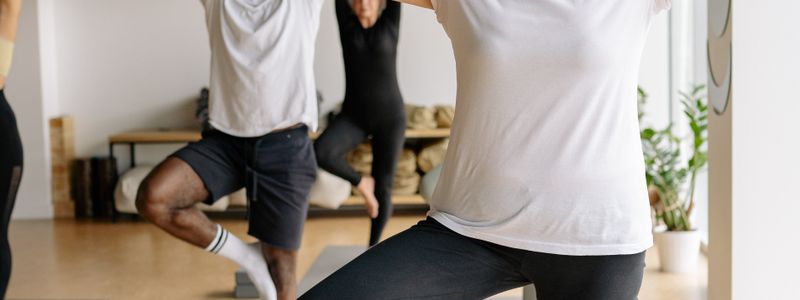
Single-leg holds, heel-to-toe walking, tai chi and yoga train the balance system in a way a heavy lift does not.
5
The everyday fixes
Small Habits Steady You Between Workouts
The NIA adds simple moves that matter. Stand up slowly, since a sudden rise can drop your blood pressure and leave you wobbly. Keep your vision and hearing checked, review any medicine that causes dizziness, and aim for about 150 minutes of activity a week. None of it requires a gym.
Take the balance routine with you
Your free one-page guide: the three systems behind steadiness, the drills that train them, and the daily habits that keep you upright.
One email. No spam. Unsubscribe anytime.
Free Lifestyle Assessment
How Healthy Is Your Current Lifestyle?
Answer honestly for five minutes and walk away with your personal scorecard: all six areas of your health rated, the one that needs your attention first, and a 30-day plan built from your answers. It shows up the second you finish.
Free. About 5 minutes. Your results appear instantly.
📋 Your Coach's Recommendations
1
Train Balance on Purpose, Not by Accident
Add a few minutes of direct balance work most days: stand on one foot at the counter, walk heel to toe, or follow a beginner tai chi or yoga routine. The NIA names these as balance builders that strength work alone does not replace.
2
Keep Strength in the Plan, Just Not as the Whole Plan
Strong legs still help you catch yourself, so keep lifting or using resistance bands and aim for about 150 minutes of activity a week. Just treat balance as a separate skill that earns its own time.
3
Fix the Quiet Triggers Around You
Have your eyes and hearing checked, stand up slowly to avoid a pressure dip, ask your provider about medicines that cause dizziness, and clear trip hazards at home. Most falls come from several small factors stacking up.
?
How it works. Just a quiet check-in, not an alert and not a recurring nag. The event lands as a 30-minute slot at 9am two weeks from today, with your plan in the notes and a link back to this article. Works with Apple Calendar, Google Calendar, and Outlook. Yours to move, snooze, or delete whenever.
Keep this plan
Get the one-page guide: the three systems behind steadiness, the drills that train them, and the habits that keep you upright.
One email. No spam. Unsubscribe anytime.
Where should we send it?
Your balance routine, straight to your inbox.
We send the plan plus one short evidence brief each week. Unsubscribe anytime.
✓
It is on the way
Check your inbox in the next minute. Your first Ageless Brief arrives this week: one study, translated, no hype.
It helps, but not by itself. The CDC lists lower-body weakness and balance problems as separate fall risk factors, and the NIA recommends balance training such as tai chi or yoga alongside strength work.
What is balance, exactly?
Balance is your brain's sense of where your body is in space. It is built from three inputs at once: your inner ear, your vision, and the position sensors in your joints and muscles.
How common are falls?
The CDC reports that more than one in four adults age 65 and older fall each year, and that falling once roughly doubles your chances of falling again.
What exercises improve balance?
The NIA names tai chi, yoga and Pilates, along with simple drills like standing on one foot or walking heel to toe. These train steadiness directly rather than raw strength.
Why do I feel wobbly when I stand up quickly?
A quick rise can cause your blood pressure to drop, which the NIA notes can make you feel unsteady. Standing up slowly and having your blood pressure checked can help.
Is this medical advice?
No. This article is educational and is not a substitute for your clinician. Talk to your provider if you have fallen or feel unsteady, especially if you take medication.
Curious where you stand? Take the free 5-minute lifestyle assessment and your personal scorecard appears the second you finish.
By the Ageless Coach Editorial Team · Published August 11, 2026 · Last updated August 11, 2026
<style>
:root{--dark-base:#0D1B2A;--dark-mid:#1B3A4B;--teal:#0EA5A0;--teal-dark:#0C8C88;--teal-bright:#14D4CD;--fog:#D8E8E8;--deep-fog:#C8DCDC;--fog-border:#A8C4C4;--ink:#313743;--ink-soft:#49505f;--muted:#6b7280;--warm:#9A6841;--warm-light:#be7b4c;--serif:"Source Serif 4",Georgia,serif;--sans:Inter,-apple-system,BlinkMacSystemFont,"Segoe UI",sans-serif}
.w-richtext p,.w-richtext li,.w-richtext td{font-size:20.5px;line-height:1.7;color:var(--ink-soft)}
.w-richtext ul{list-style-type:disc;padding-left:24px;margin:12px 0}
.w-richtext ul li{margin-bottom:8px}
.ac-answer{background:#fff;border:1px solid #D4E4E4;border-top:5px solid var(--teal);border-radius:16px;padding:22px 24px 18px;margin:16px 0 28px;box-shadow:0 6px 22px rgba(13,27,42,.07)}
.ac-answer .aa-eyebrow{font:800 12px/1 var(--sans);letter-spacing:2.5px;text-transform:uppercase;color:var(--teal-dark);margin-bottom:8px}
.ac-answer .aa-head{font-family:var(--serif);font-size:24px;line-height:1.2;font-weight:800;color:var(--dark-base);margin:0 0 16px}
.ac-answer .aa-list{list-style:none;margin:0;padding:0}
.ac-answer .aa-list li{display:flex;gap:12px;align-items:baseline;padding:11px 0;border-bottom:1px solid #EDF3F3;font:700 16.5px/1.4 var(--sans);color:var(--ink)}
.ac-answer .aa-list li:last-child{border-bottom:none}
.ac-answer .aa-n{flex-shrink:0;width:24px;height:24px;border-radius:50%;background:var(--teal-dark);color:#fff;font:800 12px/24px var(--sans);text-align:center}
.ac-answer .aa-food{color:var(--teal-dark);font-weight:800}
.ac-answer .aa-cue{margin-top:18px;text-align:center}
.ac-answer .aa-cta{display:inline-flex;align-items:center;gap:10px;background:var(--teal-dark);color:#fff;font:800 14px/1 var(--sans);letter-spacing:.2px;padding:14px 26px;border-radius:50px;text-decoration:none;box-shadow:0 6px 16px rgba(12,140,136,.30)}
.ac-answer .aa-cta:hover{background:#0A7A76}
.ac-answer .aa-arw{display:inline-block;animation:aa-nudge 1.4s ease-in-out infinite}
@keyframes aa-nudge{0%,100%{transform:translateY(0)}50%{transform:translateY(4px)}}
@media(max-width:560px){.ac-answer{padding:20px 18px 16px}.ac-answer .aa-head{font-size:21px}.ac-answer .aa-list li{font-size:15px}}
.ac-band{margin:56px 0 24px;padding:26px 24px 12px;background:linear-gradient(180deg,#F0F7F7,#fff);border-radius:16px}
.ac-band.hype{background:linear-gradient(180deg,#FAF3EB,#fff)}
.ac-band .inner{display:flex;gap:20px;align-items:center}
.ac-band .big{font:900 72px/1 var(--sans);color:var(--deep-fog);flex-shrink:0}
.ac-band.hype .big{color:#EAD9C6}
.ac-band .q{font:700 13px/1.4 var(--sans);letter-spacing:2px;text-transform:uppercase;color:var(--teal-dark)}
.ac-band.hype .q{color:var(--warm)}
.ac-band h3{font-family:var(--serif);font-size:30px;line-height:1.2;font-weight:800;color:var(--ink);margin:0}
.ac-callout{border-left:4px solid var(--teal);background:#F4FAFA;border-radius:0 12px 12px 0;padding:18px 22px;margin:28px 0}
.ac-callout .n{font:800 20px/1.35 var(--sans);color:var(--dark-mid);margin-bottom:6px}
.ac-callout .d{font:500 15px/1.55 var(--sans);color:var(--ink-soft)}
.ac-callout .c{font:600 11.5px/1 var(--sans);letter-spacing:1.5px;text-transform:uppercase;color:var(--muted);margin-top:10px}
.ac-plan{background:linear-gradient(135deg,#F4FAFA 0%,#fff 100%);border-left:5px solid var(--teal-dark);border-radius:14px;padding:30px 26px;margin:40px 0 0;box-shadow:0 2px 12px rgba(0,0,0,.06);scroll-margin-top:100px}
.ac-plan .ptitle{font-family:var(--serif);font-size:24px;font-weight:800;color:var(--ink);margin-bottom:22px}
.ac-plan .step{display:flex;gap:16px;margin-bottom:18px;align-items:flex-start}
.ac-plan .step .n{min-width:38px;width:38px;height:38px;background:var(--teal-dark);border-radius:50%;color:#fff;font:800 17px/38px var(--sans);text-align:center;flex-shrink:0}
.ac-plan .sh{font:800 16.5px/1.4 var(--sans);color:var(--ink);margin-bottom:3px}
.ac-plan .sd{font:400 15px/1.6 var(--sans);color:var(--muted)}
.ac-plan .actions{border-top:1px solid #D8E8E8;margin-top:16px;padding-top:20px}
.ac-primary-row{display:flex;align-items:center;gap:10px;padding:0 4px}
.ac-btn-primary-wide{flex:1;background:var(--teal);color:#fff;border:1.5px solid var(--teal);border-radius:14px;padding:12px 22px;box-shadow:0 4px 14px rgba(14,165,160,.22);font-family:var(--sans);cursor:pointer;display:grid;grid-template-columns:auto 1fr;gap:14px;align-items:center;transition:all .18s ease}
.ac-btn-primary-wide:hover{background:var(--teal-dark);border-color:var(--teal-dark)}
.ac-btn-primary-wide .icon svg{width:22px;height:22px;color:#fff;display:block}
.ac-btn-primary-wide .label{text-align:left;line-height:1.25}
.ac-btn-primary-wide .label .top{display:block;font-weight:700;font-size:15.5px;color:#fff}
.ac-btn-primary-wide .label .top em{font-style:italic;font-weight:700}
.ac-cal-help{position:relative;flex-shrink:0}
.ac-cal-help summary{list-style:none;width:24px;height:24px;border-radius:50%;background:#E4F1F1;border:1px solid var(--fog-border);color:var(--dark-mid);font:700 13px/22px var(--sans);text-align:center;cursor:pointer;display:block}
.ac-cal-help summary::-webkit-details-marker{display:none}
.ac-cal-help .tip{position:absolute;right:0;top:32px;z-index:50;width:290px;background:var(--dark-base);color:var(--fog);border-radius:12px;padding:14px 16px;font:500 12.5px/1.55 var(--sans);box-shadow:0 10px 30px rgba(13,27,42,.35)}
.ac-cal-help .tip strong{color:#fff}
.ac-btn-share-wide{display:flex;width:100%;align-items:center;justify-content:center;gap:10px;background:#fff;color:var(--teal-dark);border:1.5px solid var(--teal-dark);border-radius:14px;padding:12px 22px;margin-top:10px;font:800 15px/1 var(--sans);cursor:pointer}
.ac-btn-share-wide svg{width:18px;height:18px}
.ac-midcap{background:linear-gradient(180deg,#F0F7F7,#fff);border:1.5px solid var(--fog-border);border-radius:16px;padding:24px 22px;margin:34px 0;text-align:center}
.ac-midcap h4{font-family:var(--serif);font-size:22px;font-weight:800;color:var(--ink);margin:0 0 6px}
.ac-midcap .sub{font:500 14px/1.55 var(--sans);color:var(--ink-soft);margin:0 auto 14px;max-width:400px}
.ac-midcap .mcform{display:flex;gap:8px;max-width:400px;margin:0 auto}
.ac-midcap .mcform input{flex:1;border:1.5px solid var(--fog-border);border-radius:50px;padding:12px 18px;font:500 14px/1 var(--sans);min-width:0}
.ac-midcap .mcform button{background:var(--teal-dark);color:#fff;border:none;border-radius:50px;padding:12px 20px;font:800 13.5px/1 var(--sans);cursor:pointer;white-space:nowrap}
.ac-midcap .fine{font:500 11.5px/1.5 var(--sans);color:var(--muted);margin-top:10px}
@media (max-width:520px){.ac-midcap .mcform{flex-direction:column}}
.ac-assess-promo{background:linear-gradient(135deg,#D8E8E8,#C8DCDC);border:1px solid var(--fog-border);border-radius:16px;padding:34px 30px;margin:44px 0;text-align:center}
.ac-assess-promo .eyebrow{color:var(--teal-dark);font:800 12px/1 var(--sans);letter-spacing:2.5px;text-transform:uppercase;margin:0 0 10px}
.ac-assess-promo h4{font-family:var(--serif);color:var(--dark-base);font-size:26px;font-weight:800;margin:0 0 12px}
.w-embed .ac-assess-promo p.ap-body,.ac-assess-promo p.ap-body{font-family:Georgia,serif;color:#3A5555;font-size:15.5px;font-weight:500;line-height:1.65;max-width:540px;margin:0 auto 22px}
.ac-assess-promo .ap-cta{display:inline-block;background:var(--teal-bright);color:var(--dark-base);font:800 15px/1 var(--sans);padding:15px 30px;border-radius:50px;text-decoration:none}
.ac-assess-promo .ap-fine{color:#4E6B6B;font:500 13px/1.5 var(--sans);margin:14px 0 0}
.ac-assess-line{border-top:1px solid #E2ECEC;margin-top:30px;padding:22px 10px 0;text-align:center;font:500 15.5px/1.6 var(--sans);color:#3A5555}
.w-embed .ac-assess-line a,.ac-assess-line a{color:var(--teal-dark);font-weight:700;text-decoration:underline;text-underline-offset:3px}
.ac-articlemeta{font:500 12.5px/1.6 var(--sans);color:#98a0a6;text-align:center;margin:24px 0 0}
.ac-capture{background:linear-gradient(180deg,#F0F7F7,#fff);border:1.5px solid var(--fog-border);border-radius:16px;padding:30px 28px;margin:26px 0 44px;text-align:center}
.ac-capture .cap-state{display:none}
.ac-capture[data-state="trigger"] .st-trigger{display:block}
.ac-capture[data-state="form"] .st-form{display:block}
.ac-capture[data-state="sent"] .st-sent{display:block}
.ac-capture h4{font-family:var(--serif);font-size:24px;font-weight:800;color:var(--ink);margin:0 0 8px}
.ac-capture .sub{font:500 15px/1.55 var(--sans);color:var(--ink-soft);margin:0 auto 18px;max-width:430px}
.ac-capture .bigbtn{display:inline-flex;align-items:center;gap:10px;background:var(--teal-dark);color:#fff;border:none;border-radius:50px;padding:16px 30px;font:800 16px/1 var(--sans);cursor:pointer;box-shadow:0 6px 18px rgba(12,140,136,.28)}
.ac-capture .capform{display:flex;gap:10px;max-width:430px;margin:0 auto}
.ac-capture .capform input{flex:1;border:1.5px solid var(--fog-border);border-radius:50px;padding:14px 20px;font:500 15px/1 var(--sans)}
.ac-capture .capform button{background:var(--teal-dark);color:#fff;border:none;border-radius:50px;padding:14px 24px;font:800 14px/1 var(--sans);cursor:pointer}
.ac-capture .sent-check{width:52px;height:52px;border-radius:50%;background:var(--teal);color:#fff;font:800 26px/52px var(--sans);margin:0 auto 12px}
.ac-capture .dl{display:inline-block;margin-top:6px;color:var(--teal-dark);font:700 15px/1 var(--sans);text-decoration:underline;cursor:pointer}
.ac-capture .fine{font:500 12px/1.5 var(--sans);color:var(--muted);margin-top:12px}
.ac-sig{margin-top:36px}
.ac-sig .rule{width:60px;height:2px;background:linear-gradient(90deg,var(--teal-dark),var(--teal-bright));margin-bottom:18px;border-radius:2px}
.ac-sig .toyour{font-family:var(--serif);font-size:16px;font-style:italic;color:#777;margin:0 0 10px;padding-left:2px}
.ac-faq{margin-top:40px;border-top:1px solid #e5e7eb;padding-top:30px;margin-bottom:40px}
.ac-faq h2{font-family:var(--serif);font-size:23px;font-weight:800;color:var(--ink);margin:0 0 18px}
.ac-faq details{border:1px solid #e5e7eb;border-radius:10px;margin-bottom:10px}
.ac-faq summary{padding:15px 18px;font:700 16px/1.4 var(--sans);color:var(--ink);cursor:pointer;display:flex;justify-content:space-between;align-items:center;list-style:none}
.ac-faq summary:after{content:"\25BE";color:var(--warm)}
.ac-faq .a{padding:0 18px 16px;font-size:17px;line-height:1.65;color:#555}
.article-header-section .article-container{max-width:1080px !important;margin:0 auto !important;padding:0 20px !important}
.article-header-section .article-hero-image{display:block;width:100%;max-width:660px;margin:0}
.article-header-section .article-title{display:block !important;font-family:var(--serif);font-size:32px;line-height:1.25;font-weight:700;color:#313743;margin:20px 0 12px 0;text-align:left;max-width:660px}
@media (max-width:767px){.article-header-section .article-title{font-size:26px}.article-header-section .article-hero-image{max-width:100%}}
@media (max-width:640px){.ac-band .big{font-size:52px}}
@media (max-width:520px){.ac-capture .capform{flex-direction:column}}
.ac-figure{margin:30px 0}.ac-figure img{display:block;width:100%;border-radius:14px;height:auto;aspect-ratio:800/300}.ac-figure figcaption{font:500 13px/1.5 var(--sans);color:var(--muted);margin-top:9px}</style>
<div class="ac-answer"><div class="aa-eyebrow">What the evidence actually says</div><h2 class="aa-head">Falls usually get blamed on weak legs, but balance is a separate system, run by your inner ear, your eyes, and the position sensors in your joints. It can fade on its own while your strength holds, which is why lifting alone does not make you steady. The good news is that balance is trainable, and it responds to different work than strength does.</h2><ol class="aa-list"><li><span class="aa-n">1</span><span><span class="aa-food">Two problems, not one</span> · the CDC lists lower-body weakness and balance trouble as separate fall risk factors</span></li><li><span class="aa-n">2</span><span><span class="aa-food">A hidden system</span> · balance runs on your inner ear, your vision and your joint sensors, not muscle alone</span></li><li><span class="aa-n">3</span><span><span class="aa-food">Strength is not steadiness</span> · you can have strong legs and still sway, because they train different things</span></li><li><span class="aa-n">4</span><span><span class="aa-food">It is common</span> · more than one in four adults age 65 and older fall every year</span></li><li><span class="aa-n">5</span><span><span class="aa-food">It trains back</span> · tai chi, yoga and standing drills rebuild balance the way lifting rebuilds muscle</span></li></ol><div class="aa-cue"><a class="aa-cta" href="#coach-recommendations">Get Your Coach's 3-Step Plan <span class="aa-arw">↓</span></a></div></div>
<p>Most people picture a fall as a strength problem. The legs give out, so the fix must be more muscle. That story is half right, and the missing half is why so many people who exercise still lose their footing.</p>
<p>Balance is its own system. Your brain builds a sense of where your body is from three streams at once: your inner ear, your eyes, and the position sensors packed into your joints and muscles. When one stream weakens, steadiness slips, even if your legs are strong.</p>
<div class="ac-band"><div class="inner"><div class="big">1</div><div><div class="q">Where the confusion starts</div><h3>Falls Get Blamed on Weak Legs</h3></div></div></div>
<p>According to the <a href="https://www.cdc.gov/falls/data-research/facts-stats/index.html" target="_blank" rel="noopener">CDC</a>, more than one in four adults age 65 and older fall each year, and less than half tell their doctor. When a fall does come up, muscle usually takes the blame. Strength matters, but it is only one piece of a much larger picture.</p>
<figure class="ac-figure"><img src="https://images.pexels.com/photos/6922165/pexels-photo-6922165.jpeg?auto=compress&cs=tinysrgb&w=800&h=300&fit=crop" alt="A senior man working with a personal trainer on a strength exercise in a gym" width="800" height="300" loading="lazy" decoding="async"><figcaption>Strength work matters, but it is only one of several fall risk factors, and it does not train balance on its own.</figcaption></figure>
<div class="ac-band"><div class="inner"><div class="big">2</div><div><div class="q">Two problems, not one</div><h3>Balance and Strength Are Separate Risks</h3></div></div></div>
<p>The CDC's own list of fall risk factors names lower-body weakness and difficulty with walking and balance as two different items. That split matters. A person can pass a strength test and still fail a balance test, because the body builds the two abilities in different ways.</p>
<div class="ac-band"><div class="inner"><div class="big">3</div><div><div class="q">The hidden machinery</div><h3>Your Steadiness Runs on More Than Muscle</h3></div></div></div>
<p>The <a href="https://www.nia.nih.gov/health/falls-and-falls-prevention/falls-and-fractures-older-adults-causes-and-prevention" target="_blank" rel="noopener">National Institute on Aging</a> explains that eyesight, hearing and reflexes all feed your balance, and that problems with your nerves, blood vessels or blood pressure can throw it off. Age-related muscle loss is on that list, but so are vision changes and a pressure drop when you stand.</p>
<div class="ac-callout"><div class="n">Most falls are caused by a combination of risk factors. The more risk factors a person has, the greater their chances of falling.</div><div class="d">That is the quiet lesson. Steadiness is not one thing you can strengthen away. It is several systems that each need their own attention.</div><div class="c">Centers for Disease Control and Prevention, 2026</div></div>
<div class="ac-band hype"><div class="inner"><div class="big">4</div><div><div class="q">The part people skip</div><h3>Balance Responds to Its Own Training</h3></div></div></div>
<p>Here is the encouraging part. The NIA points to balance and strength training together, naming tai chi, yoga and Pilates as ways to improve both balance and muscle. <a href="https://www.health.harvard.edu/exercise-and-fitness/better-balance-simple-exercises-to-improve-stability-and-prevent-falls" target="_blank" rel="noopener">Harvard Health</a> agrees these practices improve stability, and that simple drills like standing on one foot or walking heel to toe train the balance system directly, in a way a heavy squat does not.</p>
<figure class="ac-figure"><img src="https://images.pexels.com/photos/8436593/pexels-photo-8436593.jpeg?auto=compress&cs=tinysrgb&w=800&h=300&fit=crop" alt="Adults holding a single-leg balance pose during a studio exercise class" width="800" height="300" loading="lazy" decoding="async"><figcaption>Single-leg holds, heel-to-toe walking, tai chi and yoga train the balance system in a way a heavy lift does not.</figcaption></figure>
<div class="ac-band"><div class="inner"><div class="big">5</div><div><div class="q">The everyday fixes</div><h3>Small Habits Steady You Between Workouts</h3></div></div></div>
<p>The NIA adds simple moves that matter. Stand up slowly, since a sudden rise can drop your blood pressure and leave you wobbly. Keep your vision and hearing checked, review any medicine that causes dizziness, and aim for about 150 minutes of activity a week. None of it requires a gym.</p>
<div class="ac-midcap"><h4>Take the balance routine with you</h4><p class="sub">Your free one-page guide: the three systems behind steadiness, the drills that train them, and the daily habits that keep you upright.</p><div class="mcform"><input type="email" placeholder="Your email address" aria-label="Email address"><button type="button">Send My Plan (Free)</button></div><div class="fine">One email. No spam. Unsubscribe anytime.</div></div>
<div class="ac-assess-promo"><p class="eyebrow">Free Lifestyle Assessment</p><h4>How Healthy Is Your Current Lifestyle?</h4><p class="ap-body">Answer honestly for five minutes and walk away with your personal scorecard: all six areas of your health rated, the one that needs your attention first, and a 30-day plan built from your answers. It shows up the second you finish.</p><a class="ap-cta" href="/#assessment">See How the Assessment Works →</a><p class="ap-fine">Free. About 5 minutes. Your results appear instantly.</p></div>
<div class="ac-plan" id="coach-recommendations"><div class="ptitle">📋 Your Coach's Recommendations</div><div class="step"><div class="n">1</div><div><div class="sh">Train Balance on Purpose, Not by Accident</div><div class="sd">Add a few minutes of direct balance work most days: stand on one foot at the counter, walk heel to toe, or follow a beginner tai chi or yoga routine. The NIA names these as balance builders that strength work alone does not replace.</div></div></div><div class="step"><div class="n">2</div><div><div class="sh">Keep Strength in the Plan, Just Not as the Whole Plan</div><div class="sd">Strong legs still help you catch yourself, so keep lifting or using resistance bands and aim for about 150 minutes of activity a week. Just treat balance as a separate skill that earns its own time.</div></div></div><div class="step"><div class="n">3</div><div><div class="sh">Fix the Quiet Triggers Around You</div><div class="sd">Have your eyes and hearing checked, stand up slowly to avoid a pressure dip, ask your provider about medicines that cause dizziness, and clear trip hazards at home. Most falls come from several small factors stacking up.</div></div></div><div class="actions">
<div class="ac-primary-row">
<button type="button" class="ac-btn-primary-wide" data-ac-cal>
<span class="icon"><svg viewBox="0 0 24 24" fill="none" stroke="currentColor" stroke-width="2" stroke-linecap="round" stroke-linejoin="round"><rect x="3" y="4" width="18" height="18" rx="2"></rect><path d="M16 2v4M8 2v4M3 10h18"></path></svg></span>
<span class="label"><span class="top">Add <em>Your Coach's Recommendations to Your Calendar</em></span></span>
</button>
<details class="ac-cal-help"><summary aria-label="What does this do?">?</summary><div class="tip"><strong>How it works.</strong> Just a quiet check-in, not an alert and not a recurring nag. The event lands as a 30-minute slot at 9am two weeks from today, with your plan in the notes and a link back to this article. Works with Apple Calendar, Google Calendar, and Outlook. Yours to move, snooze, or delete whenever.</div></details>
</div>
<button type="button" class="ac-btn-share-wide" data-ac-share><svg viewBox="0 0 24 24" fill="none" stroke="currentColor" stroke-width="2" stroke-linecap="round" stroke-linejoin="round"><path d="M4 12v8a2 2 0 002 2h12a2 2 0 002-2v-8"></path><polyline points="16 6 12 2 8 6"></polyline><line x1="12" y1="2" x2="12" y2="15"></line></svg> Share this article</button>
</div></div>
<div class="ac-capture" data-state="trigger" data-article-slug="the-fall-risk-that-strength-training-alone-wont-fix" data-pdf-url="https://cdn.prod.website-files.com/69be1026a027224999b7936b/6a7ae94ffcb6f9247cdc66df_ac-balance-routine-plan.pdf" data-plan-title="The Balance Routine" data-plan-desc="Your free one-page guide: the three systems behind steadiness, the drills that train them, and the daily habits that keep you upright."><div class="st-trigger cap-state"><h4>Keep this plan</h4><p class="sub">Get the one-page guide: the three systems behind steadiness, the drills that train them, and the habits that keep you upright.</p><button class="bigbtn" type="button" data-cap="form">📩 Email Me This Plan (Free PDF)</button><div class="fine">One email. No spam. Unsubscribe anytime.</div></div><div class="st-form cap-state"><h4>Where should we send it?</h4><p class="sub">Your balance routine, straight to your inbox.</p><form class="capform"><input type="email" name="email" required placeholder="Your email address" aria-label="Email address"><button type="submit">Send My Plan</button></form><div class="fine">We send the plan plus one short evidence brief each week. Unsubscribe anytime.</div></div><div class="st-sent cap-state"><div class="sent-check">✓</div><h4>It is on the way</h4><p class="sub">Check your inbox in the next minute. Your first Ageless Brief arrives this week: one study, translated, no hype.</p><a class="dl" href="https://cdn.prod.website-files.com/69be1026a027224999b7936b/6a7ae94ffcb6f9247cdc66df_ac-balance-routine-plan.pdf" download>⬇ Download your plan (PDF)</a></div></div>
<div class="ac-sig"><div class="rule"></div><p class="toyour">To your health,</p><svg width="320" height="72" viewBox="0 0 320 72" role="img" aria-label="Ageless Coach. Age Strong. Live Long." xmlns="http://www.w3.org/2000/svg" xmlns:xlink="http://www.w3.org/1999/xlink"><defs><clipPath id="acSigIconClip"><rect x="0" y="6" width="60" height="60" rx="12" ry="12"/></clipPath></defs><image x="0" y="6" width="60" height="60" clip-path="url(#acSigIconClip)" preserveAspectRatio="xMidYMid slice" href="https://cdn.prod.website-files.com/69be1026a027224999b7936b/6a0b22c6afd5d6fd115b9c1a_ac-closing-brand-icon.webp" xlink:href="https://cdn.prod.website-files.com/69be1026a027224999b7936b/6a0b22c6afd5d6fd115b9c1a_ac-closing-brand-icon.webp"/><text x="76" y="42" style="font-family:Inter,system-ui,-apple-system,'Helvetica Neue',Arial,sans-serif;font-size:27px;letter-spacing:-0.3px"><tspan style="font-weight:800;fill:#0D1B2A">Ageless</tspan><tspan style="font-weight:300;fill:rgba(13,27,42,0.6)">Coach</tspan><tspan dy="-12" style="font-size:16px;font-weight:600;fill:rgba(13,27,42,0.6)">™</tspan></text><text x="76" y="60" style="font-family:Inter,system-ui,-apple-system,'Helvetica Neue',Arial,sans-serif;font-size:10.5px;letter-spacing:2.5px;font-weight:500;fill:#0C8C88;text-transform:uppercase">AGE STRONG. LIVE LONG.</text></svg></div>
<div class="ac-faq"><h2>Frequently Asked Questions</h2><details><summary>Does strength training prevent falls on its own?</summary><div class="a">It helps, but not by itself. The CDC lists lower-body weakness and balance problems as separate fall risk factors, and the NIA recommends balance training such as tai chi or yoga alongside strength work.</div></details><details><summary>What is balance, exactly?</summary><div class="a">Balance is your brain's sense of where your body is in space. It is built from three inputs at once: your inner ear, your vision, and the position sensors in your joints and muscles.</div></details><details><summary>How common are falls?</summary><div class="a">The CDC reports that more than one in four adults age 65 and older fall each year, and that falling once roughly doubles your chances of falling again.</div></details><details><summary>What exercises improve balance?</summary><div class="a">The NIA names tai chi, yoga and Pilates, along with simple drills like standing on one foot or walking heel to toe. These train steadiness directly rather than raw strength.</div></details><details><summary>Why do I feel wobbly when I stand up quickly?</summary><div class="a">A quick rise can cause your blood pressure to drop, which the NIA notes can make you feel unsteady. Standing up slowly and having your blood pressure checked can help.</div></details><details><summary>Is this medical advice?</summary><div class="a">No. This article is educational and is not a substitute for your clinician. Talk to your provider if you have fallen or feel unsteady, especially if you take medication.</div></details></div>
<div class="ac-assess-line">Curious where you stand? Take the free <a href="/#assessment">5-minute lifestyle assessment</a> and your personal scorecard appears the second you finish.</div>
<p class="ac-articlemeta">By the Ageless Coach Editorial Team · Published August 11, 2026 · Last updated August 11, 2026</p>
Subscribe to the Free Newsletter
One article a week. Trusted research made simple. Start making smarter health decisions today.