One type of fiber, called soluble fiber, does something most foods cannot: it binds cholesterol in your gut and carries it out of the body before it reaches your blood. Mayo Clinic says 5 to 10 grams a day can measurably lower LDL, the harmful cholesterol. You will find it in oats, beans and a handful of everyday foods.
1Soluble fiber · the type that dissolves into a gel and binds cholesterol in your gut
2The dose · 5 to 10 grams a day can lower your LDL cholesterol, per Mayo Clinic
3Best sources · oats, beans, lentils, barley, apples and pears
4How it works · it traps bile acids, so your liver pulls cholesterol from your blood
5A bonus · plant sterols in fortified foods can lower LDL by about 10 percent
If you have ever been told to "eat more fiber" for your cholesterol, you were told half the story. Fiber is not one thing, and only one kind actually moves your LDL. The type that matters is soluble fiber.
Soluble fiber dissolves into a gel in your gut, binds cholesterol and the bile acids made from it, and carries them out of the body before they reach your blood. That is why Mayo Clinic says 5 to 10 grams of it a day can measurably lower LDL, the cholesterol you want down.
1
The type that matters
Not All Fiber Lowers Your Cholesterol
There are two broad kinds of fiber. Insoluble fiber, the sort in wheat bran, mostly keeps you regular. Soluble fiber is the one that lowers cholesterol, because it dissolves and turns thick in your digestive tract. When a food label just says "fiber," it rarely tells you which kind you are getting, which is why the source matters more than the total.
2
The mechanism
Soluble Fiber Traps Cholesterol and Drags It Out
Here is the part worth understanding. Soluble fiber binds cholesterol and its precursors in the digestive system and drags them out of the body before they enter circulation, as Harvard Health explains. Because it also traps the bile acids your liver makes from cholesterol, your liver has to pull more cholesterol from your blood to replace them.
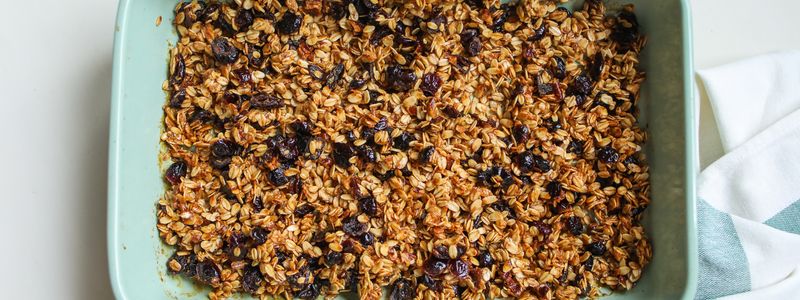
Oats are one of the easiest sources of soluble fiber, the kind that binds cholesterol in the gut.
3
The dose
Five to Ten Grams a Day Moves the Number
You do not need a dramatic diet to see a difference. Mayo Clinic reports that 5 to 10 grams or more of soluble fiber a day can decrease LDL cholesterol. A single serving of oatmeal or oat-bran cereal delivers 3 to 4 grams of fiber, and adding fruit pushes it higher, so the target is realistic on a normal plate.
Five to 10 grams or more of soluble fiber a day can decrease your LDL cholesterol.
Fiber helps remove cholesterol from your body before it gets into your blood.
Mayo Clinic
4
The foods
Where to Actually Get Soluble Fiber
The best sources are simple and cheap. Oats give you 1 to 2 grams of soluble fiber per bowl, and Harvard Health notes that beans are especially rich in it. Lentils, barley, apples, pears and okra add more. Beans do double duty, since they digest slowly and keep you full, which helps if you are also watching your weight.
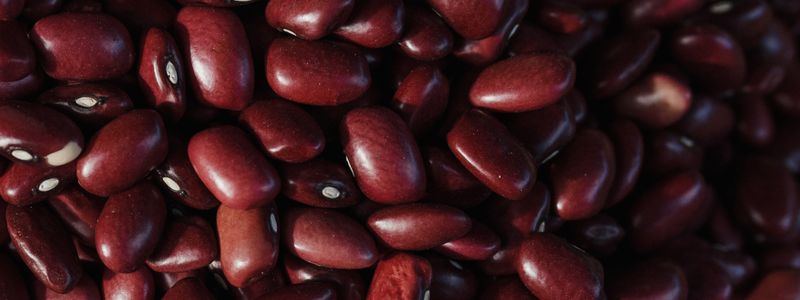
Beans and lentils are among the richest soluble-fiber foods, and they keep you full for longer.
5
The multiplier
Small Swaps Stack Into a Real Drop
No single food is a cure, and none has to be. Mayo Clinic notes that each cholesterol-lowering food helps a little, but using several together over time has a much greater effect. Foods fortified with 2 grams of plant sterols a day can lower LDL by about 10 percent, so oats, beans and a sterol spread can add up to a meaningful drop.
Take the cholesterol fiber plan with you
Your free 2-page guide: how soluble fiber works, the daily target, and the simple foods that hit it without a special diet.
One email. No spam. Unsubscribe anytime.
Free Lifestyle Assessment
How Healthy Is Your Current Lifestyle?
Answer honestly for five minutes and walk away with your personal scorecard: all six areas of your health rated, the one that needs your attention first, and a 30-day plan built from your answers. It shows up the second you finish.
Free. About 5 minutes. Your results appear instantly.
📋 Your Coach's Recommendations
1
Start Your Morning With Oats
A bowl of oatmeal or an oat-based cereal gives you 3 to 4 grams of fiber to start the day. Add berries or a sliced banana for another half gram or more, and you are already close to the target.
2
Put Beans on the Plate Most Days
Beans and lentils are among the richest soluble-fiber foods. Swap a few meat meals each week for a bean-based one, and add them to soups, salads and chili to make the habit effortless.
3
Stack Small Swaps
Barley, apples, pears and sterol-fortified spreads each add a little. Mayo Clinic notes that combining several over time has a much greater effect than any one alone, so let the small changes accumulate.
?
How it works. Just a quiet check-in, not an alert and not a recurring nag. The event lands as a 30-minute slot at 9am two weeks from today, with your plan in the notes and a link back to this article. Works with Apple Calendar, Google Calendar, and Outlook. Yours to move, snooze, or delete whenever.
Keep this plan
Get the 2-page guide: how soluble fiber works, the daily target, and the simple foods that hit it.
One email. No spam. Unsubscribe anytime.
Where should we send it?
Your cholesterol fiber plan, straight to your inbox.
We send the plan plus one short evidence brief each week. Unsubscribe anytime.
✓
It is on the way
Check your inbox in the next minute. Your first Ageless Brief arrives this week: one study, translated, no hype.
Soluble fiber is the type that dissolves into a gel in your gut and binds cholesterol and bile acids. Insoluble fiber, by contrast, mostly adds bulk and keeps you regular. Soluble fiber is the kind that lowers LDL cholesterol.
How much soluble fiber lowers cholesterol?
Mayo Clinic says 5 to 10 grams or more of soluble fiber a day can decrease your LDL cholesterol. A serving of oatmeal or oat-bran cereal supplies 3 to 4 grams of fiber to get you started.
Which foods have the most soluble fiber?
Oats, beans, lentils, barley, apples, pears, okra and psyllium are among the richest sources. Harvard Health notes that beans in particular are especially rich in soluble fiber.
How does fiber actually lower cholesterol?
It binds cholesterol and bile acids in the gut so they leave the body. To replace the lost bile acids, the liver pulls more cholesterol out of your blood, which lowers your circulating LDL.
Do fiber supplements work?
Psyllium is a soluble fiber that can help lower cholesterol, but whole foods bring extra nutrients along with the fiber. Add fiber gradually and drink water, and talk to your provider if you take medication.
Is this medical advice?
No. This article is educational and is not a substitute for your clinician. If you take cholesterol medication, keep taking it and discuss any changes with your doctor.
Curious where you stand? Take the free 5-minute lifestyle assessment and your personal scorecard appears the second you finish.
By the Ageless Coach Editorial Team · Published August 10, 2026 · Last updated August 10, 2026
<style>
:root{--dark-base:#0D1B2A;--dark-mid:#1B3A4B;--teal:#0EA5A0;--teal-dark:#0C8C88;--teal-bright:#14D4CD;--fog:#D8E8E8;--deep-fog:#C8DCDC;--fog-border:#A8C4C4;--ink:#313743;--ink-soft:#49505f;--muted:#6b7280;--warm:#9A6841;--warm-light:#be7b4c;--serif:"Source Serif 4",Georgia,serif;--sans:Inter,-apple-system,BlinkMacSystemFont,"Segoe UI",sans-serif}
.w-richtext p,.w-richtext li,.w-richtext td{font-size:20.5px;line-height:1.7;color:var(--ink-soft)}
.w-richtext ul{list-style-type:disc;padding-left:24px;margin:12px 0}
.w-richtext ul li{margin-bottom:8px}
.ac-answer{background:#fff;border:1px solid #D4E4E4;border-top:5px solid var(--teal);border-radius:16px;padding:22px 24px 18px;margin:16px 0 28px;box-shadow:0 6px 22px rgba(13,27,42,.07)}
.ac-answer .aa-eyebrow{font:800 12px/1 var(--sans);letter-spacing:2.5px;text-transform:uppercase;color:var(--teal-dark);margin-bottom:8px}
.ac-answer .aa-head{font-family:var(--serif);font-size:24px;line-height:1.2;font-weight:800;color:var(--dark-base);margin:0 0 16px}
.ac-answer .aa-list{list-style:none;margin:0;padding:0}
.ac-answer .aa-list li{display:flex;gap:12px;align-items:baseline;padding:11px 0;border-bottom:1px solid #EDF3F3;font:700 16.5px/1.4 var(--sans);color:var(--ink)}
.ac-answer .aa-list li:last-child{border-bottom:none}
.ac-answer .aa-n{flex-shrink:0;width:24px;height:24px;border-radius:50%;background:var(--teal-dark);color:#fff;font:800 12px/24px var(--sans);text-align:center}
.ac-answer .aa-food{color:var(--teal-dark);font-weight:800}
.ac-answer .aa-cue{margin-top:18px;text-align:center}
.ac-answer .aa-cta{display:inline-flex;align-items:center;gap:10px;background:var(--teal-dark);color:#fff;font:800 14px/1 var(--sans);letter-spacing:.2px;padding:14px 26px;border-radius:50px;text-decoration:none;box-shadow:0 6px 16px rgba(12,140,136,.30)}
.ac-answer .aa-cta:hover{background:#0A7A76}
.ac-answer .aa-arw{display:inline-block;animation:aa-nudge 1.4s ease-in-out infinite}
@keyframes aa-nudge{0%,100%{transform:translateY(0)}50%{transform:translateY(4px)}}
@media(max-width:560px){.ac-answer{padding:20px 18px 16px}.ac-answer .aa-head{font-size:21px}.ac-answer .aa-list li{font-size:15px}}
.ac-band{margin:56px 0 24px;padding:26px 24px 12px;background:linear-gradient(180deg,#F0F7F7,#fff);border-radius:16px}
.ac-band.hype{background:linear-gradient(180deg,#FAF3EB,#fff)}
.ac-band .inner{display:flex;gap:20px;align-items:center}
.ac-band .big{font:900 72px/1 var(--sans);color:var(--deep-fog);flex-shrink:0}
.ac-band.hype .big{color:#EAD9C6}
.ac-band .q{font:700 13px/1.4 var(--sans);letter-spacing:2px;text-transform:uppercase;color:var(--teal-dark)}
.ac-band.hype .q{color:var(--warm)}
.ac-band h3{font-family:var(--serif);font-size:30px;line-height:1.2;font-weight:800;color:var(--ink);margin:0}
.ac-callout{border-left:4px solid var(--teal);background:#F4FAFA;border-radius:0 12px 12px 0;padding:18px 22px;margin:28px 0}
.ac-callout .n{font:800 20px/1.35 var(--sans);color:var(--dark-mid);margin-bottom:6px}
.ac-callout .d{font:500 15px/1.55 var(--sans);color:var(--ink-soft)}
.ac-callout .c{font:600 11.5px/1 var(--sans);letter-spacing:1.5px;text-transform:uppercase;color:var(--muted);margin-top:10px}
.ac-plan{background:linear-gradient(135deg,#F4FAFA 0%,#fff 100%);border-left:5px solid var(--teal-dark);border-radius:14px;padding:30px 26px;margin:40px 0 0;box-shadow:0 2px 12px rgba(0,0,0,.06);scroll-margin-top:100px}
.ac-plan .ptitle{font-family:var(--serif);font-size:24px;font-weight:800;color:var(--ink);margin-bottom:22px}
.ac-plan .step{display:flex;gap:16px;margin-bottom:18px;align-items:flex-start}
.ac-plan .step .n{min-width:38px;width:38px;height:38px;background:var(--teal-dark);border-radius:50%;color:#fff;font:800 17px/38px var(--sans);text-align:center;flex-shrink:0}
.ac-plan .sh{font:800 16.5px/1.4 var(--sans);color:var(--ink);margin-bottom:3px}
.ac-plan .sd{font:400 15px/1.6 var(--sans);color:var(--muted)}
.ac-plan .actions{border-top:1px solid #D8E8E8;margin-top:16px;padding-top:20px}
.ac-primary-row{display:flex;align-items:center;gap:10px;padding:0 4px}
.ac-btn-primary-wide{flex:1;background:var(--teal);color:#fff;border:1.5px solid var(--teal);border-radius:14px;padding:12px 22px;box-shadow:0 4px 14px rgba(14,165,160,.22);font-family:var(--sans);cursor:pointer;display:grid;grid-template-columns:auto 1fr;gap:14px;align-items:center;transition:all .18s ease}
.ac-btn-primary-wide:hover{background:var(--teal-dark);border-color:var(--teal-dark)}
.ac-btn-primary-wide .icon svg{width:22px;height:22px;color:#fff;display:block}
.ac-btn-primary-wide .label{text-align:left;line-height:1.25}
.ac-btn-primary-wide .label .top{display:block;font-weight:700;font-size:15.5px;color:#fff}
.ac-btn-primary-wide .label .top em{font-style:italic;font-weight:700}
.ac-cal-help{position:relative;flex-shrink:0}
.ac-cal-help summary{list-style:none;width:24px;height:24px;border-radius:50%;background:#E4F1F1;border:1px solid var(--fog-border);color:var(--dark-mid);font:700 13px/22px var(--sans);text-align:center;cursor:pointer;display:block}
.ac-cal-help summary::-webkit-details-marker{display:none}
.ac-cal-help .tip{position:absolute;right:0;top:32px;z-index:50;width:290px;background:var(--dark-base);color:var(--fog);border-radius:12px;padding:14px 16px;font:500 12.5px/1.55 var(--sans);box-shadow:0 10px 30px rgba(13,27,42,.35)}
.ac-cal-help .tip strong{color:#fff}
.ac-btn-share-wide{display:flex;width:100%;align-items:center;justify-content:center;gap:10px;background:#fff;color:var(--teal-dark);border:1.5px solid var(--teal-dark);border-radius:14px;padding:12px 22px;margin-top:10px;font:800 15px/1 var(--sans);cursor:pointer}
.ac-btn-share-wide svg{width:18px;height:18px}
.ac-midcap{background:linear-gradient(180deg,#F0F7F7,#fff);border:1.5px solid var(--fog-border);border-radius:16px;padding:24px 22px;margin:34px 0;text-align:center}
.ac-midcap h4{font-family:var(--serif);font-size:22px;font-weight:800;color:var(--ink);margin:0 0 6px}
.ac-midcap .sub{font:500 14px/1.55 var(--sans);color:var(--ink-soft);margin:0 auto 14px;max-width:400px}
.ac-midcap .mcform{display:flex;gap:8px;max-width:400px;margin:0 auto}
.ac-midcap .mcform input{flex:1;border:1.5px solid var(--fog-border);border-radius:50px;padding:12px 18px;font:500 14px/1 var(--sans);min-width:0}
.ac-midcap .mcform button{background:var(--teal-dark);color:#fff;border:none;border-radius:50px;padding:12px 20px;font:800 13.5px/1 var(--sans);cursor:pointer;white-space:nowrap}
.ac-midcap .fine{font:500 11.5px/1.5 var(--sans);color:var(--muted);margin-top:10px}
@media (max-width:520px){.ac-midcap .mcform{flex-direction:column}}
.ac-assess-promo{background:linear-gradient(135deg,#D8E8E8,#C8DCDC);border:1px solid var(--fog-border);border-radius:16px;padding:34px 30px;margin:44px 0;text-align:center}
.ac-assess-promo .eyebrow{color:var(--teal-dark);font:800 12px/1 var(--sans);letter-spacing:2.5px;text-transform:uppercase;margin:0 0 10px}
.ac-assess-promo h4{font-family:var(--serif);color:var(--dark-base);font-size:26px;font-weight:800;margin:0 0 12px}
.w-embed .ac-assess-promo p.ap-body,.ac-assess-promo p.ap-body{font-family:Georgia,serif;color:#3A5555;font-size:15.5px;font-weight:500;line-height:1.65;max-width:540px;margin:0 auto 22px}
.ac-assess-promo .ap-cta{display:inline-block;background:var(--teal-bright);color:var(--dark-base);font:800 15px/1 var(--sans);padding:15px 30px;border-radius:50px;text-decoration:none}
.ac-assess-promo .ap-fine{color:#4E6B6B;font:500 13px/1.5 var(--sans);margin:14px 0 0}
.ac-assess-line{border-top:1px solid #E2ECEC;margin-top:30px;padding:22px 10px 0;text-align:center;font:500 15.5px/1.6 var(--sans);color:#3A5555}
.w-embed .ac-assess-line a,.ac-assess-line a{color:var(--teal-dark);font-weight:700;text-decoration:underline;text-underline-offset:3px}
.ac-articlemeta{font:500 12.5px/1.6 var(--sans);color:#98a0a6;text-align:center;margin:24px 0 0}
.ac-capture{background:linear-gradient(180deg,#F0F7F7,#fff);border:1.5px solid var(--fog-border);border-radius:16px;padding:30px 28px;margin:26px 0 44px;text-align:center}
.ac-capture .cap-state{display:none}
.ac-capture[data-state="trigger"] .st-trigger{display:block}
.ac-capture[data-state="form"] .st-form{display:block}
.ac-capture[data-state="sent"] .st-sent{display:block}
.ac-capture h4{font-family:var(--serif);font-size:24px;font-weight:800;color:var(--ink);margin:0 0 8px}
.ac-capture .sub{font:500 15px/1.55 var(--sans);color:var(--ink-soft);margin:0 auto 18px;max-width:430px}
.ac-capture .bigbtn{display:inline-flex;align-items:center;gap:10px;background:var(--teal-dark);color:#fff;border:none;border-radius:50px;padding:16px 30px;font:800 16px/1 var(--sans);cursor:pointer;box-shadow:0 6px 18px rgba(12,140,136,.28)}
.ac-capture .capform{display:flex;gap:10px;max-width:430px;margin:0 auto}
.ac-capture .capform input{flex:1;border:1.5px solid var(--fog-border);border-radius:50px;padding:14px 20px;font:500 15px/1 var(--sans)}
.ac-capture .capform button{background:var(--teal-dark);color:#fff;border:none;border-radius:50px;padding:14px 24px;font:800 14px/1 var(--sans);cursor:pointer}
.ac-capture .sent-check{width:52px;height:52px;border-radius:50%;background:var(--teal);color:#fff;font:800 26px/52px var(--sans);margin:0 auto 12px}
.ac-capture .dl{display:inline-block;margin-top:6px;color:var(--teal-dark);font:700 15px/1 var(--sans);text-decoration:underline;cursor:pointer}
.ac-capture .fine{font:500 12px/1.5 var(--sans);color:var(--muted);margin-top:12px}
.ac-sig{margin-top:36px}
.ac-sig .rule{width:60px;height:2px;background:linear-gradient(90deg,var(--teal-dark),var(--teal-bright));margin-bottom:18px;border-radius:2px}
.ac-sig .toyour{font-family:var(--serif);font-size:16px;font-style:italic;color:#777;margin:0 0 10px;padding-left:2px}
.ac-faq{margin-top:40px;border-top:1px solid #e5e7eb;padding-top:30px;margin-bottom:40px}
.ac-faq h2{font-family:var(--serif);font-size:23px;font-weight:800;color:var(--ink);margin:0 0 18px}
.ac-faq details{border:1px solid #e5e7eb;border-radius:10px;margin-bottom:10px}
.ac-faq summary{padding:15px 18px;font:700 16px/1.4 var(--sans);color:var(--ink);cursor:pointer;display:flex;justify-content:space-between;align-items:center;list-style:none}
.ac-faq summary:after{content:"\25BE";color:var(--warm)}
.ac-faq .a{padding:0 18px 16px;font-size:17px;line-height:1.65;color:#555}
.article-header-section .article-container{max-width:1080px !important;margin:0 auto !important;padding:0 20px !important}
.article-header-section .article-hero-image{display:block;width:100%;max-width:660px;margin:0}
.article-header-section .article-title{display:block !important;font-family:var(--serif);font-size:32px;line-height:1.25;font-weight:700;color:#313743;margin:20px 0 12px 0;text-align:left;max-width:660px}
@media (max-width:767px){.article-header-section .article-title{font-size:26px}.article-header-section .article-hero-image{max-width:100%}}
@media (max-width:640px){.ac-band .big{font-size:52px}}
@media (max-width:520px){.ac-capture .capform{flex-direction:column}}
.ac-figure{margin:30px 0}.ac-figure img{display:block;width:100%;border-radius:14px;height:auto;aspect-ratio:800/300}.ac-figure figcaption{font:500 13px/1.5 var(--sans);color:var(--muted);margin-top:9px}</style>
<div class="ac-answer"><div class="aa-eyebrow">What the evidence actually says</div><h2 class="aa-head">One type of fiber, called soluble fiber, does something most foods cannot: it binds cholesterol in your gut and carries it out of the body before it reaches your blood. Mayo Clinic says 5 to 10 grams a day can measurably lower LDL, the harmful cholesterol. You will find it in oats, beans and a handful of everyday foods.</h2><ol class="aa-list"><li><span class="aa-n">1</span><span><span class="aa-food">Soluble fiber</span> · the type that dissolves into a gel and binds cholesterol in your gut</span></li><li><span class="aa-n">2</span><span><span class="aa-food">The dose</span> · 5 to 10 grams a day can lower your LDL cholesterol, per Mayo Clinic</span></li><li><span class="aa-n">3</span><span><span class="aa-food">Best sources</span> · oats, beans, lentils, barley, apples and pears</span></li><li><span class="aa-n">4</span><span><span class="aa-food">How it works</span> · it traps bile acids, so your liver pulls cholesterol from your blood</span></li><li><span class="aa-n">5</span><span><span class="aa-food">A bonus</span> · plant sterols in fortified foods can lower LDL by about 10 percent</span></li></ol><div class="aa-cue"><a class="aa-cta" href="#coach-recommendations">Get Your Coach's 3-Step Plan <span class="aa-arw">↓</span></a></div></div>
<p>If you have ever been told to "eat more fiber" for your cholesterol, you were told half the story. Fiber is not one thing, and only one kind actually moves your LDL. The type that matters is soluble fiber.</p>
<p>Soluble fiber dissolves into a gel in your gut, binds cholesterol and the bile acids made from it, and carries them out of the body before they reach your blood. That is why Mayo Clinic says 5 to 10 grams of it a day can measurably lower LDL, the cholesterol you want down.</p>
<div class="ac-band"><div class="inner"><div class="big">1</div><div><div class="q">The type that matters</div><h3>Not All Fiber Lowers Your Cholesterol</h3></div></div></div>
<p>There are two broad kinds of fiber. Insoluble fiber, the sort in wheat bran, mostly keeps you regular. Soluble fiber is the one that lowers cholesterol, because it dissolves and turns thick in your digestive tract. When a food label just says "fiber," it rarely tells you which kind you are getting, which is why the source matters more than the total.</p>
<div class="ac-band"><div class="inner"><div class="big">2</div><div><div class="q">The mechanism</div><h3>Soluble Fiber Traps Cholesterol and Drags It Out</h3></div></div></div>
<p>Here is the part worth understanding. Soluble fiber <a href="https://www.health.harvard.edu/heart-health/5-foods-that-fight-high-cholesterol" target="_blank" rel="noopener">binds cholesterol and its precursors in the digestive system</a> and drags them out of the body before they enter circulation, as Harvard Health explains. Because it also traps the bile acids your liver makes from cholesterol, your liver has to pull more cholesterol from your blood to replace them.</p>
<figure class="ac-figure"><img src="https://images.pexels.com/photos/3872352/pexels-photo-3872352.jpeg?auto=compress&cs=tinysrgb&w=800&h=300&fit=crop" alt="A dish of baked oats, a food rich in soluble fiber" width="800" height="300" loading="lazy" decoding="async"><figcaption>Oats are one of the easiest sources of soluble fiber, the kind that binds cholesterol in the gut.</figcaption></figure>
<div class="ac-band"><div class="inner"><div class="big">3</div><div><div class="q">The dose</div><h3>Five to Ten Grams a Day Moves the Number</h3></div></div></div>
<p>You do not need a dramatic diet to see a difference. <a href="https://www.mayoclinic.org/diseases-conditions/high-blood-cholesterol/in-depth/cholesterol/art-20045192" target="_blank" rel="noopener">Mayo Clinic</a> reports that 5 to 10 grams or more of soluble fiber a day can decrease LDL cholesterol. A single serving of oatmeal or oat-bran cereal delivers 3 to 4 grams of fiber, and adding fruit pushes it higher, so the target is realistic on a normal plate.</p>
<div class="ac-callout"><div class="n">Five to 10 grams or more of soluble fiber a day can decrease your LDL cholesterol.</div><div class="d">Fiber helps remove cholesterol from your body before it gets into your blood.</div><div class="c">Mayo Clinic</div></div>
<div class="ac-band"><div class="inner"><div class="big">4</div><div><div class="q">The foods</div><h3>Where to Actually Get Soluble Fiber</h3></div></div></div>
<p>The best sources are simple and cheap. Oats give you 1 to 2 grams of soluble fiber per bowl, and Harvard Health notes that beans are especially rich in it. Lentils, barley, apples, pears and okra add more. Beans do double duty, since they digest slowly and keep you full, which helps if you are also watching your weight.</p>
<figure class="ac-figure"><img src="https://images.pexels.com/photos/6316671/pexels-photo-6316671.jpeg?auto=compress&cs=tinysrgb&w=800&h=300&fit=crop" alt="A close-up of red kidney beans, a food rich in soluble fiber" width="800" height="300" loading="lazy" decoding="async"><figcaption>Beans and lentils are among the richest soluble-fiber foods, and they keep you full for longer.</figcaption></figure>
<div class="ac-band"><div class="inner"><div class="big">5</div><div><div class="q">The multiplier</div><h3>Small Swaps Stack Into a Real Drop</h3></div></div></div>
<p>No single food is a cure, and none has to be. Mayo Clinic notes that each cholesterol-lowering food helps a little, but using several together over time has a much greater effect. Foods fortified with 2 grams of plant sterols a day can lower LDL by about 10 percent, so oats, beans and a sterol spread can add up to a meaningful drop.</p>
<div class="ac-midcap"><h4>Take the cholesterol fiber plan with you</h4><p class="sub">Your free 2-page guide: how soluble fiber works, the daily target, and the simple foods that hit it without a special diet.</p><div class="mcform"><input type="email" placeholder="Your email address" aria-label="Email address"><button type="button">Send My Plan (Free)</button></div><div class="fine">One email. No spam. Unsubscribe anytime.</div></div>
<div class="ac-assess-promo"><p class="eyebrow">Free Lifestyle Assessment</p><h4>How Healthy Is Your Current Lifestyle?</h4><p class="ap-body">Answer honestly for five minutes and walk away with your personal scorecard: all six areas of your health rated, the one that needs your attention first, and a 30-day plan built from your answers. It shows up the second you finish.</p><a class="ap-cta" href="/#assessment">See How the Assessment Works →</a><p class="ap-fine">Free. About 5 minutes. Your results appear instantly.</p></div>
<div class="ac-plan" id="coach-recommendations"><div class="ptitle">📋 Your Coach's Recommendations</div><div class="step"><div class="n">1</div><div><div class="sh">Start Your Morning With Oats</div><div class="sd">A bowl of oatmeal or an oat-based cereal gives you 3 to 4 grams of fiber to start the day. Add berries or a sliced banana for another half gram or more, and you are already close to the target.</div></div></div><div class="step"><div class="n">2</div><div><div class="sh">Put Beans on the Plate Most Days</div><div class="sd">Beans and lentils are among the richest soluble-fiber foods. Swap a few meat meals each week for a bean-based one, and add them to soups, salads and chili to make the habit effortless.</div></div></div><div class="step"><div class="n">3</div><div><div class="sh">Stack Small Swaps</div><div class="sd">Barley, apples, pears and sterol-fortified spreads each add a little. Mayo Clinic notes that combining several over time has a much greater effect than any one alone, so let the small changes accumulate.</div></div></div><div class="actions">
<div class="ac-primary-row">
<button type="button" class="ac-btn-primary-wide" data-ac-cal>
<span class="icon"><svg viewBox="0 0 24 24" fill="none" stroke="currentColor" stroke-width="2" stroke-linecap="round" stroke-linejoin="round"><rect x="3" y="4" width="18" height="18" rx="2"></rect><path d="M16 2v4M8 2v4M3 10h18"></path></svg></span>
<span class="label"><span class="top">Add <em>Your Coach's Recommendations to Your Calendar</em></span></span>
</button>
<details class="ac-cal-help"><summary aria-label="What does this do?">?</summary><div class="tip"><strong>How it works.</strong> Just a quiet check-in, not an alert and not a recurring nag. The event lands as a 30-minute slot at 9am two weeks from today, with your plan in the notes and a link back to this article. Works with Apple Calendar, Google Calendar, and Outlook. Yours to move, snooze, or delete whenever.</div></details>
</div>
<button type="button" class="ac-btn-share-wide" data-ac-share><svg viewBox="0 0 24 24" fill="none" stroke="currentColor" stroke-width="2" stroke-linecap="round" stroke-linejoin="round"><path d="M4 12v8a2 2 0 002 2h12a2 2 0 002-2v-8"></path><polyline points="16 6 12 2 8 6"></polyline><line x1="12" y1="2" x2="12" y2="15"></line></svg> Share this article</button>
</div>
</div>
<div class="ac-capture" data-state="trigger" data-article-slug="the-fiber-that-pulls-cholesterol-out-of-your-body" data-pdf-url="https://cdn.prod.website-files.com/69be1026a027224999b7936b/6a7996394bedb86c3235fcf5_ac-cholesterol-fiber-plan.pdf" data-plan-title="The Cholesterol-Lowering Fiber Plan" data-plan-desc="Your free 2-page guide: how soluble fiber works, the daily target, and the simple foods that hit it without a special diet."><div class="st-trigger cap-state"><h4>Keep this plan</h4><p class="sub">Get the 2-page guide: how soluble fiber works, the daily target, and the simple foods that hit it.</p><button class="bigbtn" type="button" data-cap="form">📩 Email Me This Plan (Free PDF)</button><div class="fine">One email. No spam. Unsubscribe anytime.</div></div><div class="st-form cap-state"><h4>Where should we send it?</h4><p class="sub">Your cholesterol fiber plan, straight to your inbox.</p><form class="capform"><input type="email" name="email" required placeholder="Your email address" aria-label="Email address"><button type="submit">Send My Plan</button></form><div class="fine">We send the plan plus one short evidence brief each week. Unsubscribe anytime.</div></div><div class="st-sent cap-state"><div class="sent-check">✓</div><h4>It is on the way</h4><p class="sub">Check your inbox in the next minute. Your first Ageless Brief arrives this week: one study, translated, no hype.</p><a class="dl" href="https://cdn.prod.website-files.com/69be1026a027224999b7936b/6a7996394bedb86c3235fcf5_ac-cholesterol-fiber-plan.pdf" download>⬇ Download your plan (PDF)</a></div></div>
<div class="ac-sig"><div class="rule"></div><p class="toyour">To your health,</p><svg width="320" height="72" viewBox="0 0 320 72" role="img" aria-label="Ageless Coach. Age Strong. Live Long." xmlns="http://www.w3.org/2000/svg" xmlns:xlink="http://www.w3.org/1999/xlink"><defs><clipPath id="acSigIconClip"><rect x="0" y="6" width="60" height="60" rx="12" ry="12"/></clipPath></defs><image x="0" y="6" width="60" height="60" clip-path="url(#acSigIconClip)" preserveAspectRatio="xMidYMid slice" href="https://cdn.prod.website-files.com/69be1026a027224999b7936b/6a0b22c6afd5d6fd115b9c1a_ac-closing-brand-icon.webp" xlink:href="https://cdn.prod.website-files.com/69be1026a027224999b7936b/6a0b22c6afd5d6fd115b9c1a_ac-closing-brand-icon.webp"/><text x="76" y="42" style="font-family:Inter,system-ui,-apple-system,'Helvetica Neue',Arial,sans-serif;font-size:27px;letter-spacing:-0.3px"><tspan style="font-weight:800;fill:#0D1B2A">Ageless</tspan><tspan style="font-weight:300;fill:rgba(13,27,42,0.6)">Coach</tspan><tspan dy="-12" style="font-size:16px;font-weight:600;fill:rgba(13,27,42,0.6)">™</tspan></text><text x="76" y="60" style="font-family:Inter,system-ui,-apple-system,'Helvetica Neue',Arial,sans-serif;font-size:10.5px;letter-spacing:2.5px;font-weight:500;fill:#0C8C88;text-transform:uppercase">AGE STRONG. LIVE LONG.</text></svg></div>
<div class="ac-faq"><h2>Frequently Asked Questions</h2><details><summary>What is soluble fiber?</summary><div class="a">Soluble fiber is the type that dissolves into a gel in your gut and binds cholesterol and bile acids. Insoluble fiber, by contrast, mostly adds bulk and keeps you regular. Soluble fiber is the kind that lowers LDL cholesterol.</div></details><details><summary>How much soluble fiber lowers cholesterol?</summary><div class="a">Mayo Clinic says 5 to 10 grams or more of soluble fiber a day can decrease your LDL cholesterol. A serving of oatmeal or oat-bran cereal supplies 3 to 4 grams of fiber to get you started.</div></details><details><summary>Which foods have the most soluble fiber?</summary><div class="a">Oats, beans, lentils, barley, apples, pears, okra and psyllium are among the richest sources. Harvard Health notes that beans in particular are especially rich in soluble fiber.</div></details><details><summary>How does fiber actually lower cholesterol?</summary><div class="a">It binds cholesterol and bile acids in the gut so they leave the body. To replace the lost bile acids, the liver pulls more cholesterol out of your blood, which lowers your circulating LDL.</div></details><details><summary>Do fiber supplements work?</summary><div class="a">Psyllium is a soluble fiber that can help lower cholesterol, but whole foods bring extra nutrients along with the fiber. Add fiber gradually and drink water, and talk to your provider if you take medication.</div></details><details><summary>Is this medical advice?</summary><div class="a">No. This article is educational and is not a substitute for your clinician. If you take cholesterol medication, keep taking it and discuss any changes with your doctor.</div></details></div>
<div class="ac-assess-line">Curious where you stand? Take the free <a href="/#assessment">5-minute lifestyle assessment</a> and your personal scorecard appears the second you finish.</div>
<p class="ac-articlemeta">By the Ageless Coach Editorial Team · Published August 10, 2026 · Last updated August 10, 2026</p>
Subscribe to the Free Newsletter
One article a week. Trusted research made simple. Start making smarter health decisions today.