Olive oil is not a miracle in a bottle, but it is one of the most heart-smart fats you can eat. Used in place of butter, its blend of monounsaturated fat and plant compounds nudges your cholesterol and inflammation in the right direction.
175 percent · how much of olive oil is monounsaturated fat, the kind that helps lower bad cholesterol
2Swap, not add · the benefit comes from using it instead of butter, not pouring more on top of a rich plate
3Beyond cholesterol · its antioxidant and anti-inflammatory compounds add benefits past the lipid numbers
4Extra virgin · cold-pressing keeps the plant phenols that heavy processing strips out
5One part of a pattern · olive oil works because it sits inside a whole Mediterranean way of eating, not alone
Olive oil gets talked about like a health supplement, as if a daily spoonful could rewrite your heart's future on its own. The truth is quieter and, in a way, more useful. It is a genuinely good fat, and the reason it helps is simple enough to act on at your next meal.
According to Mayo Clinic, the Mediterranean way of eating has been tied to lower rates of heart disease since a study in the 1960s found fewer heart-disease deaths in Greece and Italy than in the United States. Olive oil sits at the center of that pattern, and it is one of the most closely studied parts of it.
1
The mechanism
The Fat That Works in Your Favor
Most fats get lumped together as bad for you. Olive oil breaks that rule. Harvard Health notes it is roughly 75 percent monounsaturated fat, and when that fat replaces saturated fat in your meals it helps lower your LDL, the cholesterol that builds up in arteries.
Mayo Clinic frames it the same way: when unsaturated fat comes from plants, it tends to pull down both total and LDL cholesterol. The catch hides in the word replace. The heart benefit shows up when olive oil takes the place of butter or lard, not when it is simply poured over an already rich plate.
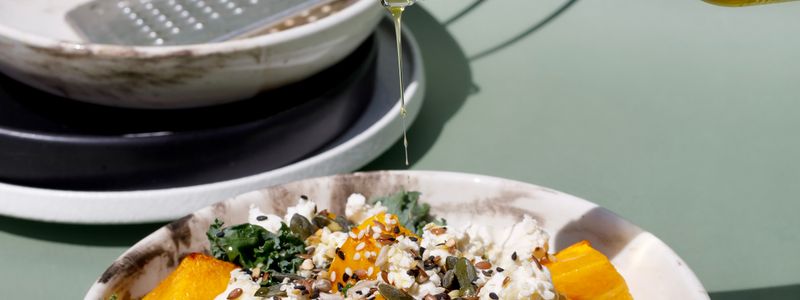
The heart benefit shows up when olive oil replaces butter or other saturated fats, not when it is added on top of everything else.
2
The extra
Why Extra Virgin Is Worth It
There is a reason the good bottles say extra virgin. That oil is pressed mechanically from ripe olives without high heat or chemical solvents, which protects fragile plant compounds called phenols. Heavier processing strips many of them out along the way. Those phenols are the same family of compounds that give a fresh oil its green, peppery character, and they are largely what separates a well-made bottle from a cheap refined one.
Those phenols matter because olive oil does more than move cholesterol. Its antioxidant and anti-inflammatory properties, Harvard Health explains, add benefits beyond the lipid panel, and low-grade inflammation is one of the quiet drivers of heart disease.
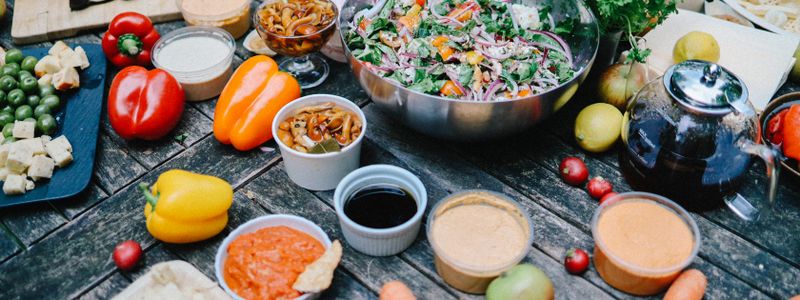
Olive oil does its best work inside a whole pattern of eating, alongside vegetables, whole grains, beans, nuts and fish.
It is worth being honest about the limits. Harvard Health points out there is still no definitive trial proving extra virgin beats regular olive oil for preventing heart disease. The laboratory signals are promising, but the strongest evidence sits with the eating pattern, not any single bottle on the shelf. In other words, treat the extra virgin label as a good reason to choose a better oil, not as a health promise printed on the front.
3
The pattern
One Ingredient in a Bigger Recipe
This is the part the headlines skip. Olive oil is not the whole story. Mayo Clinic is clear that it is one aspect of a Mediterranean pattern built on vegetables, fruits, whole grains, beans, nuts and fish, with red meat eaten only once in a while.
That framing changes what you do with it. A drizzle of good oil over a plate of fast food will not save your heart. The same drizzle over roasted vegetables, beans and whole grains is where the research actually lives, and it is why the pattern beats any one food. The oil is a multiplier for good meals, not a rescue for bad ones.
Olive oil is about 75 percent monounsaturated fat, and swapping it in for butter helps lower the LDL cholesterol that builds up in arteries.
Its antioxidant and anti-inflammatory plant compounds add benefits beyond cholesterol, but the strongest evidence is for the whole Mediterranean pattern.
Harvard Health, Mayo Clinic
None of this asks you to overhaul your kitchen overnight. It asks for one swap and a little patience. Mayo Clinic notes the heart benefit comes from following the pattern over the long term, not from a single virtuous week of good intentions. Think of it as trading one habit at a time until the healthier choice becomes the automatic one.
4
What to do
How to Actually Use It
Start where butter and margarine already live. Use olive oil for cooking and at the table, Mayo Clinic suggests, and reach for nut or seed spreads on toast instead of butter. Small, repeated swaps do far more than any occasional burst of healthy eating.
Store it somewhere cool and dark, and buy a size you will finish within a few months so it stays fresh. The aim is to make good oil the everyday default in your kitchen rather than a special-occasion treat, because the benefit comes from steady, ordinary use.
5
The bottom line
What the Evidence Supports
So what should you actually take from all this? Olive oil earns its reputation, but as a swap and a staple, not as a supplement. Trading saturated fats for it is one of the simplest heart-smart moves available in any kitchen. It will not undo a diet built on processed food, yet as a daily habit it is one of the easiest upgrades most people can make.
The bigger win is the company it keeps. Build your meals around vegetables, whole grains, beans, nuts and fish, use olive oil as your main fat, and you are eating the pattern that decades of research keep pointing back toward.
Take the olive oil cheat sheet with you
Your free 2-page guide: how to swap olive oil in for butter, what extra virgin really means, and the simple Mediterranean plate it belongs on.
One email. No spam. Unsubscribe anytime.
Free Lifestyle Assessment
How Healthy Is Your Current Lifestyle?
Answer honestly for five minutes and walk away with your personal scorecard: all six areas of your health rated, the one that needs your attention first, and a 30-day plan built from your answers. It shows up the second you finish.
Free. About 5 minutes. Your results appear instantly.
📋 Your Coach's Recommendations
1
Make Olive Oil Your Default Fat
Use extra virgin olive oil where butter, margarine or lard usually go, in cooking and at the table. Mayo Clinic notes the heart benefit comes from replacing saturated fat, not adding more fat on top. This one swap is the highest-value move on this page.
2
Build the Plate Around Plants
Olive oil shines inside the Mediterranean pattern: vegetables, whole grains, beans, nuts and fish, with red meat only once in a while. A drizzle over roasted vegetables does far more for you than the same drizzle over fast food.
3
Play the Long Game
The research rewards consistency, not a single healthy week. Keep a good bottle within reach, use it daily, and give the pattern months rather than days. Steady habits are what move cholesterol and calm inflammation over time.
?
How it works. Just a quiet check-in, not an alert and not a recurring nag. The event lands as a 30-minute slot at 9am two weeks from today, with your plan in the notes and a link back to this article. Works with Apple Calendar, Google Calendar, and Outlook. Yours to move, snooze, or delete whenever.
Keep this plan
Get the 2-page guide: how to swap olive oil in for butter, what extra virgin really means, and the Mediterranean plate it belongs on.
One email. No spam. Unsubscribe anytime.
Where should we send it?
Your olive oil cheat sheet, straight to your inbox.
We send the plan plus one short evidence brief each week. Unsubscribe anytime.
✓
It is on the way
Check your inbox in the next minute. Your first Ageless Brief arrives this week: one study, translated, no hype.
Yes, used the right way. Harvard Health notes olive oil is about 75 percent monounsaturated fat, which helps lower LDL cholesterol when it replaces saturated fats like butter. Its antioxidant and anti-inflammatory compounds add benefits beyond cholesterol.
Is extra virgin olive oil better than regular?
It may be. Extra virgin is pressed without high heat or chemicals, which protects beneficial plant compounds called phenols. But Harvard Health notes there is still no definitive trial proving extra virgin prevents heart disease better than regular olive oil.
How much olive oil should I use?
There is no single magic dose. The evidence favors using olive oil as your main fat in place of butter and other saturated fats, within an overall Mediterranean pattern, rather than adding large amounts on top of what you already eat.
Does olive oil lower cholesterol?
It can help. Mayo Clinic notes that when unsaturated fat from plants replaces saturated fat, it tends to lower total and LDL cholesterol. The key word is replace: the benefit comes from the swap, not from simply adding more oil.
Can I cook with extra virgin olive oil?
Yes. Mayo Clinic suggests using olive oil in cooking and at the table in place of butter. For everyday cooking it is a sound choice, and the main idea is to make it your default fat rather than reserving it for special dishes.
Is this medical advice?
No. This article is educational and is not a substitute for advice from your doctor or a dietitian. If you have heart disease, high cholesterol or other conditions, talk with your provider about the eating pattern that fits you.
Curious where you stand? Take the free 5-minute lifestyle assessment and your personal scorecard appears the second you finish.
By the Ageless Coach Editorial Team · Published July 30, 2026 · Last updated July 30, 2026
<style>
:root{--dark-base:#0D1B2A;--dark-mid:#1B3A4B;--teal:#0EA5A0;--teal-dark:#0C8C88;--teal-bright:#14D4CD;--fog:#D8E8E8;--deep-fog:#C8DCDC;--fog-border:#A8C4C4;--ink:#313743;--ink-soft:#49505f;--muted:#6b7280;--warm:#9A6841;--warm-light:#be7b4c;--serif:"Source Serif 4",Georgia,serif;--sans:Inter,-apple-system,BlinkMacSystemFont,"Segoe UI",sans-serif}
.w-richtext p,.w-richtext li,.w-richtext td{font-size:20.5px;line-height:1.7;color:var(--ink-soft)}
.w-richtext ul{list-style-type:disc;padding-left:24px;margin:12px 0}
.w-richtext ul li{margin-bottom:8px}
.ac-answer{background:#fff;border:1px solid #D4E4E4;border-top:5px solid var(--teal);border-radius:16px;padding:22px 24px 18px;margin:16px 0 28px;box-shadow:0 6px 22px rgba(13,27,42,.07)}
.ac-answer .aa-eyebrow{font:800 12px/1 var(--sans);letter-spacing:2.5px;text-transform:uppercase;color:var(--teal-dark);margin-bottom:8px}
.ac-answer .aa-head{font-family:var(--serif);font-size:24px;line-height:1.2;font-weight:800;color:var(--dark-base);margin:0 0 16px}
.ac-answer .aa-list{list-style:none;margin:0;padding:0}
.ac-answer .aa-list li{display:flex;gap:12px;align-items:baseline;padding:11px 0;border-bottom:1px solid #EDF3F3;font:700 16.5px/1.4 var(--sans);color:var(--ink)}
.ac-answer .aa-list li:last-child{border-bottom:none}
.ac-answer .aa-n{flex-shrink:0;width:24px;height:24px;border-radius:50%;background:var(--teal-dark);color:#fff;font:800 12px/24px var(--sans);text-align:center}
.ac-answer .aa-food{color:var(--teal-dark);font-weight:800}
.ac-answer .aa-cue{margin-top:18px;text-align:center}
.ac-answer .aa-cta{display:inline-flex;align-items:center;gap:10px;background:var(--teal-dark);color:#fff;font:800 14px/1 var(--sans);letter-spacing:.2px;padding:14px 26px;border-radius:50px;text-decoration:none;box-shadow:0 6px 16px rgba(12,140,136,.30)}
.ac-answer .aa-cta:hover{background:#0A7A76}
.ac-answer .aa-arw{display:inline-block;animation:aa-nudge 1.4s ease-in-out infinite}
@keyframes aa-nudge{0%,100%{transform:translateY(0)}50%{transform:translateY(4px)}}
@media(max-width:560px){.ac-answer{padding:20px 18px 16px}.ac-answer .aa-head{font-size:21px}.ac-answer .aa-list li{font-size:15px}}
.ac-band{margin:56px 0 24px;padding:26px 24px 12px;background:linear-gradient(180deg,#F0F7F7,#fff);border-radius:16px}
.ac-band.hype{background:linear-gradient(180deg,#FAF3EB,#fff)}
.ac-band .inner{display:flex;gap:20px;align-items:center}
.ac-band .big{font:900 72px/1 var(--sans);color:var(--deep-fog);flex-shrink:0}
.ac-band.hype .big{color:#EAD9C6}
.ac-band .q{font:700 13px/1.4 var(--sans);letter-spacing:2px;text-transform:uppercase;color:var(--teal-dark)}
.ac-band.hype .q{color:var(--warm)}
.ac-band h3{font-family:var(--serif);font-size:30px;line-height:1.2;font-weight:800;color:var(--ink);margin:0}
.ac-callout{border-left:4px solid var(--teal);background:#F4FAFA;border-radius:0 12px 12px 0;padding:18px 22px;margin:28px 0}
.ac-callout .n{font:800 20px/1.35 var(--sans);color:var(--dark-mid);margin-bottom:6px}
.ac-callout .d{font:500 15px/1.55 var(--sans);color:var(--ink-soft)}
.ac-callout .c{font:600 11.5px/1 var(--sans);letter-spacing:1.5px;text-transform:uppercase;color:var(--muted);margin-top:10px}
.ac-plan{background:linear-gradient(135deg,#F4FAFA 0%,#fff 100%);border-left:5px solid var(--teal-dark);border-radius:14px;padding:30px 26px;margin:40px 0 0;box-shadow:0 2px 12px rgba(0,0,0,.06);scroll-margin-top:100px}
.ac-plan .ptitle{font-family:var(--serif);font-size:24px;font-weight:800;color:var(--ink);margin-bottom:22px}
.ac-plan .step{display:flex;gap:16px;margin-bottom:18px;align-items:flex-start}
.ac-plan .step .n{min-width:38px;width:38px;height:38px;background:var(--teal-dark);border-radius:50%;color:#fff;font:800 17px/38px var(--sans);text-align:center;flex-shrink:0}
.ac-plan .sh{font:800 16.5px/1.4 var(--sans);color:var(--ink);margin-bottom:3px}
.ac-plan .sd{font:400 15px/1.6 var(--sans);color:var(--muted)}
.ac-plan .actions{border-top:1px solid #D8E8E8;margin-top:16px;padding-top:20px}
.ac-primary-row{display:flex;align-items:center;gap:10px;padding:0 4px}
.ac-btn-primary-wide{flex:1;background:var(--teal);color:#fff;border:1.5px solid var(--teal);border-radius:14px;padding:12px 22px;box-shadow:0 4px 14px rgba(14,165,160,.22);font-family:var(--sans);cursor:pointer;display:grid;grid-template-columns:auto 1fr;gap:14px;align-items:center;transition:all .18s ease}
.ac-btn-primary-wide:hover{background:var(--teal-dark);border-color:var(--teal-dark)}
.ac-btn-primary-wide .icon svg{width:22px;height:22px;color:#fff;display:block}
.ac-btn-primary-wide .label{text-align:left;line-height:1.25}
.ac-btn-primary-wide .label .top{display:block;font-weight:700;font-size:15.5px;color:#fff}
.ac-btn-primary-wide .label .top em{font-style:italic;font-weight:700}
.ac-cal-help{position:relative;flex-shrink:0}
.ac-cal-help summary{list-style:none;width:24px;height:24px;border-radius:50%;background:#E4F1F1;border:1px solid var(--fog-border);color:var(--dark-mid);font:700 13px/22px var(--sans);text-align:center;cursor:pointer;display:block}
.ac-cal-help summary::-webkit-details-marker{display:none}
.ac-cal-help .tip{position:absolute;right:0;top:32px;z-index:50;width:290px;background:var(--dark-base);color:var(--fog);border-radius:12px;padding:14px 16px;font:500 12.5px/1.55 var(--sans);box-shadow:0 10px 30px rgba(13,27,42,.35)}
.ac-cal-help .tip strong{color:#fff}
.ac-btn-share-wide{display:flex;width:100%;align-items:center;justify-content:center;gap:10px;background:#fff;color:var(--teal-dark);border:1.5px solid var(--teal-dark);border-radius:14px;padding:12px 22px;margin-top:10px;font:800 15px/1 var(--sans);cursor:pointer}
.ac-btn-share-wide svg{width:18px;height:18px}
.ac-midcap{background:linear-gradient(180deg,#F0F7F7,#fff);border:1.5px solid var(--fog-border);border-radius:16px;padding:24px 22px;margin:34px 0;text-align:center}
.ac-midcap h4{font-family:var(--serif);font-size:22px;font-weight:800;color:var(--ink);margin:0 0 6px}
.ac-midcap .sub{font:500 14px/1.55 var(--sans);color:var(--ink-soft);margin:0 auto 14px;max-width:400px}
.ac-midcap .mcform{display:flex;gap:8px;max-width:400px;margin:0 auto}
.ac-midcap .mcform input{flex:1;border:1.5px solid var(--fog-border);border-radius:50px;padding:12px 18px;font:500 14px/1 var(--sans);min-width:0}
.ac-midcap .mcform button{background:var(--teal-dark);color:#fff;border:none;border-radius:50px;padding:12px 20px;font:800 13.5px/1 var(--sans);cursor:pointer;white-space:nowrap}
.ac-midcap .fine{font:500 11.5px/1.5 var(--sans);color:var(--muted);margin-top:10px}
@media (max-width:520px){.ac-midcap .mcform{flex-direction:column}}
.ac-assess-promo{background:linear-gradient(135deg,#D8E8E8,#C8DCDC);border:1px solid var(--fog-border);border-radius:16px;padding:34px 30px;margin:44px 0;text-align:center}
.ac-assess-promo .eyebrow{color:var(--teal-dark);font:800 12px/1 var(--sans);letter-spacing:2.5px;text-transform:uppercase;margin:0 0 10px}
.ac-assess-promo h4{font-family:var(--serif);color:var(--dark-base);font-size:26px;font-weight:800;margin:0 0 12px}
.w-embed .ac-assess-promo p.ap-body,.ac-assess-promo p.ap-body{font-family:Georgia,serif;color:#3A5555;font-size:15.5px;font-weight:500;line-height:1.65;max-width:540px;margin:0 auto 22px}
.ac-assess-promo .ap-cta{display:inline-block;background:var(--teal-bright);color:var(--dark-base);font:800 15px/1 var(--sans);padding:15px 30px;border-radius:50px;text-decoration:none}
.ac-assess-promo .ap-fine{color:#4E6B6B;font:500 13px/1.5 var(--sans);margin:14px 0 0}
.ac-assess-line{border-top:1px solid #E2ECEC;margin-top:30px;padding:22px 10px 0;text-align:center;font:500 15.5px/1.6 var(--sans);color:#3A5555}
.w-embed .ac-assess-line a,.ac-assess-line a{color:var(--teal-dark);font-weight:700;text-decoration:underline;text-underline-offset:3px}
.ac-articlemeta{font:500 12.5px/1.6 var(--sans);color:#98a0a6;text-align:center;margin:24px 0 0}
.ac-capture{background:linear-gradient(180deg,#F0F7F7,#fff);border:1.5px solid var(--fog-border);border-radius:16px;padding:30px 28px;margin:26px 0 44px;text-align:center}
.ac-capture .cap-state{display:none}
.ac-capture[data-state="trigger"] .st-trigger{display:block}
.ac-capture[data-state="form"] .st-form{display:block}
.ac-capture[data-state="sent"] .st-sent{display:block}
.ac-capture h4{font-family:var(--serif);font-size:24px;font-weight:800;color:var(--ink);margin:0 0 8px}
.ac-capture .sub{font:500 15px/1.55 var(--sans);color:var(--ink-soft);margin:0 auto 18px;max-width:430px}
.ac-capture .bigbtn{display:inline-flex;align-items:center;gap:10px;background:var(--teal-dark);color:#fff;border:none;border-radius:50px;padding:16px 30px;font:800 16px/1 var(--sans);cursor:pointer;box-shadow:0 6px 18px rgba(12,140,136,.28)}
.ac-capture .capform{display:flex;gap:10px;max-width:430px;margin:0 auto}
.ac-capture .capform input{flex:1;border:1.5px solid var(--fog-border);border-radius:50px;padding:14px 20px;font:500 15px/1 var(--sans)}
.ac-capture .capform button{background:var(--teal-dark);color:#fff;border:none;border-radius:50px;padding:14px 24px;font:800 14px/1 var(--sans);cursor:pointer}
.ac-capture .sent-check{width:52px;height:52px;border-radius:50%;background:var(--teal);color:#fff;font:800 26px/52px var(--sans);margin:0 auto 12px}
.ac-capture .dl{display:inline-block;margin-top:6px;color:var(--teal-dark);font:700 15px/1 var(--sans);text-decoration:underline;cursor:pointer}
.ac-capture .fine{font:500 12px/1.5 var(--sans);color:var(--muted);margin-top:12px}
.ac-sig{margin-top:36px}
.ac-sig .rule{width:60px;height:2px;background:linear-gradient(90deg,var(--teal-dark),var(--teal-bright));margin-bottom:18px;border-radius:2px}
.ac-sig .toyour{font-family:var(--serif);font-size:16px;font-style:italic;color:#777;margin:0 0 10px;padding-left:2px}
.ac-faq{margin-top:40px;border-top:1px solid #e5e7eb;padding-top:30px;margin-bottom:40px}
.ac-faq h2{font-family:var(--serif);font-size:23px;font-weight:800;color:var(--ink);margin:0 0 18px}
.ac-faq details{border:1px solid #e5e7eb;border-radius:10px;margin-bottom:10px}
.ac-faq summary{padding:15px 18px;font:700 16px/1.4 var(--sans);color:var(--ink);cursor:pointer;display:flex;justify-content:space-between;align-items:center;list-style:none}
.ac-faq summary:after{content:"\25BE";color:var(--warm)}
.ac-faq .a{padding:0 18px 16px;font-size:17px;line-height:1.65;color:#555}
.article-header-section .article-container{max-width:1080px !important;margin:0 auto !important;padding:0 20px !important}
.article-header-section .article-hero-image{display:block;width:100%;max-width:660px;margin:0}
.article-header-section .article-title{display:block !important;font-family:var(--serif);font-size:32px;line-height:1.25;font-weight:700;color:#313743;margin:20px 0 12px 0;text-align:left;max-width:660px}
@media (max-width:767px){.article-header-section .article-title{font-size:26px}.article-header-section .article-hero-image{max-width:100%}}
@media (max-width:640px){.ac-band .big{font-size:52px}}
@media (max-width:520px){.ac-capture .capform{flex-direction:column}}
.ac-figure{margin:30px 0}.ac-figure img{display:block;width:100%;border-radius:14px;height:auto;aspect-ratio:800/300}.ac-figure figcaption{font:500 13px/1.5 var(--sans);color:var(--muted);margin-top:9px}</style>
<div class="ac-answer">
<div class="aa-eyebrow">What the evidence actually says</div>
<h2 class="aa-head">Olive oil is not a miracle in a bottle, but it is one of the most heart-smart fats you can eat. Used in place of butter, its blend of monounsaturated fat and plant compounds nudges your cholesterol and inflammation in the right direction.</h2>
<ol class="aa-list">
<li>
<span class="aa-n">1</span>
<span>
<span class="aa-food">75 percent</span> · how much of olive oil is monounsaturated fat, the kind that helps lower bad cholesterol</span>
</li>
<li>
<span class="aa-n">2</span>
<span>
<span class="aa-food">Swap, not add</span> · the benefit comes from using it instead of butter, not pouring more on top of a rich plate</span>
</li>
<li>
<span class="aa-n">3</span>
<span>
<span class="aa-food">Beyond cholesterol</span> · its antioxidant and anti-inflammatory compounds add benefits past the lipid numbers</span>
</li>
<li>
<span class="aa-n">4</span>
<span>
<span class="aa-food">Extra virgin</span> · cold-pressing keeps the plant phenols that heavy processing strips out</span>
</li>
<li>
<span class="aa-n">5</span>
<span>
<span class="aa-food">One part of a pattern</span> · olive oil works because it sits inside a whole Mediterranean way of eating, not alone</span>
</li>
</ol>
<div class="aa-cue">
<a class="aa-cta" href="#coach-recommendations">Get Your Coach's 3-Step Plan <span class="aa-arw">↓</span>
</a>
</div>
</div>
<p>Olive oil gets talked about like a health supplement, as if a daily spoonful could rewrite your heart's future on its own. The truth is quieter and, in a way, more useful. It is a genuinely good fat, and the reason it helps is simple enough to act on at your next meal.</p>
<p>According to Mayo Clinic, the Mediterranean way of eating has been tied to lower rates of heart disease since a study in the 1960s found fewer heart-disease deaths in Greece and Italy than in the United States. Olive oil sits at the center of that pattern, and it is one of the most closely studied parts of it.</p>
<div class="ac-band">
<div class="inner">
<div class="big">1</div>
<div>
<div class="q">The mechanism</div>
<h3>The Fat That Works in Your Favor</h3>
</div>
</div>
</div>
<p>Most fats get lumped together as bad for you. Olive oil breaks that rule. <a href="https://www.health.harvard.edu/diet-and-nutrition/is-extra-virgin-olive-oil-better-for-your-heart-than-regular-olive-oil" target="_blank" rel="noopener">Harvard Health</a> notes it is roughly 75 percent monounsaturated fat, and when that fat replaces saturated fat in your meals it helps lower your LDL, the cholesterol that builds up in arteries.</p>
<p>Mayo Clinic frames it the same way: when unsaturated fat comes from plants, it tends to pull down both total and LDL cholesterol. The catch hides in the word replace. The heart benefit shows up when olive oil takes the place of butter or lard, not when it is simply poured over an already rich plate.</p>
<figure class="ac-figure">
<img src="https://images.pexels.com/photos/10281067/pexels-photo-10281067.jpeg?auto=compress&cs=tinysrgb&w=800&h=300&fit=crop" alt="Olive oil being drizzled over a fresh grain and vegetable bowl" width="800" height="300" loading="lazy" decoding="async">
<figcaption>The heart benefit shows up when olive oil replaces butter or other saturated fats, not when it is added on top of everything else.</figcaption>
</figure>
<div class="ac-band">
<div class="inner">
<div class="big">2</div>
<div>
<div class="q">The extra</div>
<h3>Why Extra Virgin Is Worth It</h3>
</div>
</div>
</div>
<p>There is a reason the good bottles say extra virgin. That oil is pressed mechanically from ripe olives without high heat or chemical solvents, which protects fragile plant compounds called phenols. Heavier processing strips many of them out along the way. Those phenols are the same family of compounds that give a fresh oil its green, peppery character, and they are largely what separates a well-made bottle from a cheap refined one.</p>
<p>Those phenols matter because olive oil does more than move cholesterol. Its antioxidant and anti-inflammatory properties, Harvard Health explains, add benefits beyond the lipid panel, and low-grade inflammation is one of the quiet drivers of heart disease.</p>
<figure class="ac-figure">
<img src="https://images.pexels.com/photos/15792419/pexels-photo-15792419.jpeg?auto=compress&cs=tinysrgb&w=800&h=300&fit=crop" alt="A spread of Mediterranean vegetables, salad and dips on a wooden table" width="800" height="300" loading="lazy" decoding="async">
<figcaption>Olive oil does its best work inside a whole pattern of eating, alongside vegetables, whole grains, beans, nuts and fish.</figcaption>
</figure>
<p>It is worth being honest about the limits. Harvard Health points out there is still no definitive trial proving extra virgin beats regular olive oil for preventing heart disease. The laboratory signals are promising, but the strongest evidence sits with the eating pattern, not any single bottle on the shelf. In other words, treat the extra virgin label as a good reason to choose a better oil, not as a health promise printed on the front.</p>
<div class="ac-band">
<div class="inner">
<div class="big">3</div>
<div>
<div class="q">The pattern</div>
<h3>One Ingredient in a Bigger Recipe</h3>
</div>
</div>
</div>
<p>This is the part the headlines skip. Olive oil is not the whole story. Mayo Clinic is clear that it is one aspect of a Mediterranean pattern built on vegetables, fruits, whole grains, beans, nuts and fish, with red meat eaten only once in a while.</p>
<p>That framing changes what you do with it. A drizzle of good oil over a plate of fast food will not save your heart. The same drizzle over roasted vegetables, beans and whole grains is where the research actually lives, and it is why the pattern beats any one food. The oil is a multiplier for good meals, not a rescue for bad ones.</p>
<div class="ac-callout">
<div class="n">Olive oil is about 75 percent monounsaturated fat, and swapping it in for butter helps lower the LDL cholesterol that builds up in arteries.</div>
<div class="d">Its antioxidant and anti-inflammatory plant compounds add benefits beyond cholesterol, but the strongest evidence is for the whole Mediterranean pattern.</div>
<div class="c">Harvard Health, Mayo Clinic</div>
</div>
<p>None of this asks you to overhaul your kitchen overnight. It asks for one swap and a little patience. Mayo Clinic notes the heart benefit comes from following the pattern over the long term, not from a single virtuous week of good intentions. Think of it as trading one habit at a time until the healthier choice becomes the automatic one.</p>
<div class="ac-band">
<div class="inner">
<div class="big">4</div>
<div>
<div class="q">What to do</div>
<h3>How to Actually Use It</h3>
</div>
</div>
</div>
<p>Start where butter and margarine already live. Use olive oil for cooking and at the table, Mayo Clinic suggests, and reach for nut or seed spreads on toast instead of butter. Small, repeated swaps do far more than any occasional burst of healthy eating.</p>
<p>Store it somewhere cool and dark, and buy a size you will finish within a few months so it stays fresh. The aim is to make good oil the everyday default in your kitchen rather than a special-occasion treat, because the benefit comes from steady, ordinary use.</p>
<div class="ac-band">
<div class="inner">
<div class="big">5</div>
<div>
<div class="q">The bottom line</div>
<h3>What the Evidence Supports</h3>
</div>
</div>
</div>
<p>So what should you actually take from all this? Olive oil earns its reputation, but as a swap and a staple, not as a supplement. Trading saturated fats for it is one of the simplest heart-smart moves available in any kitchen. It will not undo a diet built on processed food, yet as a daily habit it is one of the easiest upgrades most people can make.</p>
<p>The bigger win is the company it keeps. Build your meals around vegetables, whole grains, beans, nuts and fish, use olive oil as your main fat, and you are eating the pattern that decades of research keep pointing back toward.</p>
<div class="ac-midcap">
<h4>Take the olive oil cheat sheet with you</h4>
<p class="sub">Your free 2-page guide: how to swap olive oil in for butter, what extra virgin really means, and the simple Mediterranean plate it belongs on.</p>
<div class="mcform">
<input type="email" placeholder="Your email address" aria-label="Email address">
<button type="button">Send My Plan (Free)</button>
</div>
<div class="fine">One email. No spam. Unsubscribe anytime.</div>
</div>
<div class="ac-assess-promo">
<p class="eyebrow">Free Lifestyle Assessment</p>
<h4>How Healthy Is Your Current Lifestyle?</h4>
<p class="ap-body">Answer honestly for five minutes and walk away with your personal scorecard: all six areas of your health rated, the one that needs your attention first, and a 30-day plan built from your answers. It shows up the second you finish.</p>
<a class="ap-cta" href="/#assessment">See How the Assessment Works →</a>
<p class="ap-fine">Free. About 5 minutes. Your results appear instantly.</p>
</div>
<div class="ac-plan" id="coach-recommendations">
<div class="ptitle">📋 Your Coach's Recommendations</div>
<div class="step">
<div class="n">1</div>
<div>
<div class="sh">Make Olive Oil Your Default Fat</div>
<div class="sd">Use extra virgin olive oil where butter, margarine or lard usually go, in cooking and at the table. Mayo Clinic notes the heart benefit comes from replacing saturated fat, not adding more fat on top. This one swap is the highest-value move on this page.</div>
</div>
</div>
<div class="step">
<div class="n">2</div>
<div>
<div class="sh">Build the Plate Around Plants</div>
<div class="sd">Olive oil shines inside the Mediterranean pattern: vegetables, whole grains, beans, nuts and fish, with red meat only once in a while. A drizzle over roasted vegetables does far more for you than the same drizzle over fast food.</div>
</div>
</div>
<div class="step">
<div class="n">3</div>
<div>
<div class="sh">Play the Long Game</div>
<div class="sd">The research rewards consistency, not a single healthy week. Keep a good bottle within reach, use it daily, and give the pattern months rather than days. Steady habits are what move cholesterol and calm inflammation over time.</div>
</div>
</div>
<div class="actions">
<div class="ac-primary-row">
<button type="button" class="ac-btn-primary-wide" data-ac-cal>
<span class="icon">
<svg viewBox="0 0 24 24" fill="none" stroke="currentColor" stroke-width="2" stroke-linecap="round" stroke-linejoin="round">
<rect x="3" y="4" width="18" height="18" rx="2">
</rect>
<path d="M16 2v4M8 2v4M3 10h18">
</path>
</svg>
</span>
<span class="label">
<span class="top">Add <em>Your Coach's Recommendations to Your Calendar</em>
</span>
</span>
</button>
<details class="ac-cal-help">
<summary aria-label="What does this do?">?</summary>
<div class="tip">
<strong>How it works.</strong> Just a quiet check-in, not an alert and not a recurring nag. The event lands as a 30-minute slot at 9am two weeks from today, with your plan in the notes and a link back to this article. Works with Apple Calendar, Google Calendar, and Outlook. Yours to move, snooze, or delete whenever.</div>
</details>
</div>
<button type="button" class="ac-btn-share-wide" data-ac-share>
<svg viewBox="0 0 24 24" fill="none" stroke="currentColor" stroke-width="2" stroke-linecap="round" stroke-linejoin="round">
<path d="M4 12v8a2 2 0 002 2h12a2 2 0 002-2v-8">
</path>
<polyline points="16 6 12 2 8 6">
</polyline>
<line x1="12" y1="2" x2="12" y2="15">
</line>
</svg> Share this article</button>
</div>
</div>
<div class="ac-capture" data-state="trigger" data-article-slug="what-daily-olive-oil-really-does-to-your-heart" data-pdf-url="https://cdn.prod.website-files.com/69be1026a027224999b7936b/6a6e0e51f5a18c2037b57477_plan-olive-oil-heart-2026-08-01.pdf" data-plan-title="The Olive Oil Cheat Sheet" data-plan-desc="Your free 2-page guide: how to swap olive oil in for butter, what extra virgin really means, and the simple Mediterranean plate it belongs on.">
<div class="st-trigger cap-state">
<h4>Keep this plan</h4>
<p class="sub">Get the 2-page guide: how to swap olive oil in for butter, what extra virgin really means, and the Mediterranean plate it belongs on.</p>
<button class="bigbtn" type="button" data-cap="form">📩 Email Me This Plan (Free PDF)</button>
<div class="fine">One email. No spam. Unsubscribe anytime.</div>
</div>
<div class="st-form cap-state">
<h4>Where should we send it?</h4>
<p class="sub">Your olive oil cheat sheet, straight to your inbox.</p>
<form class="capform">
<input type="email" name="email" required placeholder="Your email address" aria-label="Email address">
<button type="submit">Send My Plan</button>
</form>
<div class="fine">We send the plan plus one short evidence brief each week. Unsubscribe anytime.</div>
</div>
<div class="st-sent cap-state">
<div class="sent-check">✓</div>
<h4>It is on the way</h4>
<p class="sub">Check your inbox in the next minute. Your first Ageless Brief arrives this week: one study, translated, no hype.</p>
<a class="dl" href="https://cdn.prod.website-files.com/69be1026a027224999b7936b/6a6e0e51f5a18c2037b57477_plan-olive-oil-heart-2026-08-01.pdf" download>⬇ Download your plan (PDF)</a>
</div>
</div>
<style>
.ac-exlib{--ac-ex-fog:#F0F7F7;--ac-ex-border:#A8C4C4;--ac-ex-teal:#0C8C88;--ac-ex-ink-teal:#0A6F6C;--ac-ex-dark:#0D1B2A;--ac-ex-body:#49505f;--ac-ex-muted:#5F6773;--ac-ex-serif:"Source Serif 4",Georgia,serif;--ac-ex-sans:Inter,-apple-system,"Segoe UI",sans-serif;background:linear-gradient(180deg,var(--ac-ex-fog),#fff);border:1.5px solid var(--ac-ex-border);border-radius:16px;padding:24px 26px;margin:36px 0 0;box-sizing:border-box}
.ac-exlib *{box-sizing:border-box}
.ac-exlib .ac-ex-eb{font:800 11.5px/1 var(--ac-ex-sans);letter-spacing:2.4px;text-transform:uppercase;color:var(--ac-ex-ink-teal);margin:0 0 10px}
.ac-exlib .ac-ex-h{font-family:var(--ac-ex-serif);font-size:22px;line-height:1.25;font-weight:800;color:var(--ac-ex-dark);margin:0 0 10px}
.ac-exlib .ac-ex-p{font:500 16px/1.6 var(--ac-ex-sans);color:var(--ac-ex-body);margin:0 0 16px}
.ac-exlib .ac-ex-go{display:inline-flex;align-items:center;gap:8px;border:1.5px solid var(--ac-ex-teal);color:var(--ac-ex-ink-teal);background:#fff;font:800 14px/1 var(--ac-ex-sans);padding:15px 24px;border-radius:50px;text-decoration:none;min-height:44px}
.ac-exlib .ac-ex-go:hover,.ac-exlib .ac-ex-go:focus{background:var(--ac-ex-fog);color:var(--ac-ex-ink-teal)}
.ac-exlib .ac-ex-go:focus-visible{outline:2px solid var(--ac-ex-ink-teal);outline-offset:3px}
.ac-exlib .ac-ex-go svg{width:14px;height:14px;stroke:currentColor;fill:none;stroke-width:2.4;flex:none}
.ac-exlib .ac-ex-note{font:500 12px/1.6 var(--ac-ex-sans);color:var(--ac-ex-muted);margin:14px 0 0}
@media(max-width:560px){.ac-exlib{padding:20px 18px}.ac-exlib .ac-ex-h{font-size:20px}.ac-exlib .ac-ex-go{width:100%;justify-content:center}}
</style>
<aside class="ac-exlib" data-template="L-examine" aria-label="Further reading">
<p class="ac-ex-eb">Read the research yourself</p>
<h3 class="ac-ex-h">We read the studies. You can too.</h3>
<p class="ac-ex-p">Everything above is sourced and linked. If you want to go deeper than one article can go, Examine maintains independent, continuously updated research summaries on olive oil and around a thousand supplements. They sell no supplements of their own. That is the reason we send people there rather than somewhere else.</p>
<a class="ac-ex-go" href="https://examine.com/refer/qed0mm2?loc=/foods/olive-oil&utm_source=agelesscoach&utm_medium=article&utm_content=tmpl-L-examine" rel="noopener sponsored" target="_blank">
See Examine's olive oil research
<svg viewBox="0 0 24 24" aria-hidden="true"><path d="M5 12h14M13 6l6 6-6 6" stroke-linecap="round" stroke-linejoin="round"/></svg>
</a>
<p class="ac-ex-note">Ageless Coach may earn a commission if you subscribe, at no additional cost to you. We were not paid to write this and it does not affect what we recommend.</p>
</aside>
<div class="ac-sig"><div class="rule"></div><p class="toyour">To your health,</p><svg width="320" height="72" viewBox="0 0 320 72" role="img" aria-label="Ageless Coach. Age Strong. Live Long." xmlns="http://www.w3.org/2000/svg" xmlns:xlink="http://www.w3.org/1999/xlink"><defs><clipPath id="acSigIconClip"><rect x="0" y="6" width="60" height="60" rx="12" ry="12"/></clipPath></defs><image x="0" y="6" width="60" height="60" clip-path="url(#acSigIconClip)" preserveAspectRatio="xMidYMid slice" href="https://cdn.prod.website-files.com/69be1026a027224999b7936b/6a0b22c6afd5d6fd115b9c1a_ac-closing-brand-icon.webp" xlink:href="https://cdn.prod.website-files.com/69be1026a027224999b7936b/6a0b22c6afd5d6fd115b9c1a_ac-closing-brand-icon.webp"/><text x="76" y="42" style="font-family:Inter,system-ui,-apple-system,'Helvetica Neue',Arial,sans-serif;font-size:27px;letter-spacing:-0.3px"><tspan style="font-weight:800;fill:#0D1B2A">Ageless</tspan><tspan style="font-weight:300;fill:rgba(13,27,42,0.6)">Coach</tspan><tspan dy="-12" style="font-size:16px;font-weight:600;fill:rgba(13,27,42,0.6)">™</tspan></text><text x="76" y="60" style="font-family:Inter,system-ui,-apple-system,'Helvetica Neue',Arial,sans-serif;font-size:10.5px;letter-spacing:2.5px;font-weight:500;fill:#0C8C88;text-transform:uppercase">AGE STRONG. LIVE LONG.</text></svg></div>
<div class="ac-faq">
<h2>Frequently Asked Questions</h2>
<details>
<summary>Is olive oil good for your heart?</summary>
<div class="a">Yes, used the right way. Harvard Health notes olive oil is about 75 percent monounsaturated fat, which helps lower LDL cholesterol when it replaces saturated fats like butter. Its antioxidant and anti-inflammatory compounds add benefits beyond cholesterol.</div>
</details>
<details>
<summary>Is extra virgin olive oil better than regular?</summary>
<div class="a">It may be. Extra virgin is pressed without high heat or chemicals, which protects beneficial plant compounds called phenols. But Harvard Health notes there is still no definitive trial proving extra virgin prevents heart disease better than regular olive oil.</div>
</details>
<details>
<summary>How much olive oil should I use?</summary>
<div class="a">There is no single magic dose. The evidence favors using olive oil as your main fat in place of butter and other saturated fats, within an overall Mediterranean pattern, rather than adding large amounts on top of what you already eat.</div>
</details>
<details>
<summary>Does olive oil lower cholesterol?</summary>
<div class="a">It can help. Mayo Clinic notes that when unsaturated fat from plants replaces saturated fat, it tends to lower total and LDL cholesterol. The key word is replace: the benefit comes from the swap, not from simply adding more oil.</div>
</details>
<details>
<summary>Can I cook with extra virgin olive oil?</summary>
<div class="a">Yes. Mayo Clinic suggests using olive oil in cooking and at the table in place of butter. For everyday cooking it is a sound choice, and the main idea is to make it your default fat rather than reserving it for special dishes.</div>
</details>
<details>
<summary>Is this medical advice?</summary>
<div class="a">No. This article is educational and is not a substitute for advice from your doctor or a dietitian. If you have heart disease, high cholesterol or other conditions, talk with your provider about the eating pattern that fits you.</div>
</details>
</div>
<div class="ac-assess-line">Curious where you stand? Take the free <a href="/#assessment">5-minute lifestyle assessment</a> and your personal scorecard appears the second you finish.</div>
<p class="ac-articlemeta">By the Ageless Coach Editorial Team · Published July 30, 2026 · Last updated July 30, 2026</p>
Subscribe to the Free Newsletter
One article a week. Trusted research made simple. Start making smarter health decisions today.