Olive oil is the fat at the center of the Mediterranean diet, and the research is unusually specific about it. Harvard found that people who used just over half a tablespoon a day died early far less often, and Cleveland Clinic explains why: antioxidants, anti-inflammatory compounds and heart-friendly fat.
1More than 7 grams · about half a tablespoon a day, the amount Harvard tied to a lower risk of dying
219 percent · lower risk of dying from heart disease in the highest olive oil group
320-plus polyphenols · the antioxidants in extra virgin olive oil that fight inflammation
4About 73 percent · how much of olive oil is oleic acid, the heart-healthy main fat
5Swap, do not add · the benefit shows up when oil replaces butter, not when it tops junk food
Olive oil gets treated like a luxury: something you drizzle for flavor and feel vaguely virtuous about. The research treats it more like a daily habit worth keeping, and it is specific about how much and why.
Harvard T.H. Chan School of Public Health followed more than 90,000 U.S. adults for 28 years and found that people in the highest category of olive oil use, more than seven grams a day, which is a little over half a tablespoon, had a 19 percent lower risk of dying from cardiovascular disease and a 17 percent lower risk of dying from cancer than people who almost never used it. Cleveland Clinic explains the machinery behind numbers like those.
1
The mechanism
Why Extra Virgin Is the One That Matters
Not all olive oil is equal. Cleveland Clinic explains there are three grades, refined, virgin and extra virgin, and that extra virgin, the least processed, is highest in antioxidants because it is not altered by heat or chemicals. Its dietitian calls extra virgin the far superior oil, and a staple of the Mediterranean diet.
The reason is a group of compounds called polyphenols. Cleveland Clinic notes that extra virgin olive oil contains more than 20 types of polyphenols, plant antioxidants that help protect your heart and reduce inflammation throughout your body by neutralizing the unstable molecules, called free radicals, that drive oxidative stress and chronic disease.
2
The anti-inflammatory part
The Compound Compared to Ibuprofen
One antioxidant stands out. Cleveland Clinic reports that oleocanthal, a main antioxidant in virgin and extra virgin olive oil, has anti-inflammatory properties strong enough that researchers have compared it to ibuprofen, and that oleic acid, the main fatty acid, has also been shown to reduce inflammation.
That matters because inflammation is not just what you see around a cut. Cleveland Clinic explains it can happen quietly inside the body and wear on your health over time. The same oleocanthal is also being studied for a role in the death of cancer cells, though Cleveland Clinic is careful to say olive oil is not a magic pill and that nothing is.
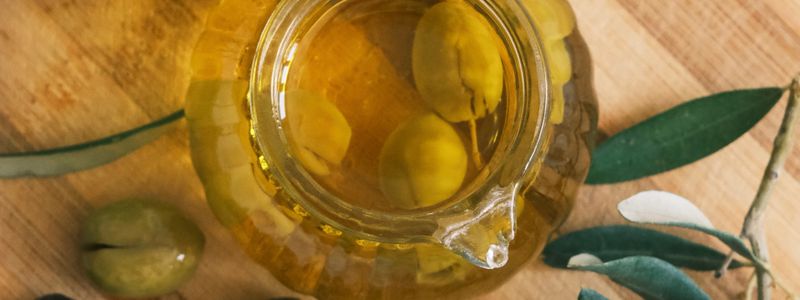
Cleveland Clinic says extra virgin olive oil, the least processed grade, is highest in the antioxidants that do the work.
3
The heart case
What It Does for Your Heart
The cardiovascular story is the best documented. Cleveland Clinic says olive oil has been shown to reduce lipids and blood pressure, and points to a 2017 study finding the polyphenols in extra virgin olive oil help protect against atherosclerosis, the hardening of the arteries, as well as stroke and cardiovascular disease.
The fat itself does work too. Cleveland Clinic notes that oleic acid makes up about 73 percent of olive oil and is a monounsaturated fat shown to lower bad LDL cholesterol, raise good HDL and reduce the risk of heart disease and stroke, while a compound called oleuropein helps lower blood pressure and protects LDL from oxidation.
4
The long game
The 28-Year Longevity Signal
Zoom out to a lifetime and the pattern holds. Harvard reports that in the highest olive oil group, the 19 percent lower risk of dying reached across causes: 17 percent lower cancer mortality, 29 percent lower death from neurodegenerative disease and 18 percent lower respiratory mortality, compared with people who rarely used it.
Cleveland Clinic frames the same 2022 study plainly: over 28 years, high olive oil consumption was associated with an 8 to 34 percent lower risk of death related to disease. These are associations from observational research, not a guarantee, but they are large and they line up with the biology.
People who used more than seven grams of olive oil a day, a little over half a tablespoon, had a 19 percent lower risk of dying from cardiovascular disease.
That is the finding from a Harvard study that followed more than 90,000 U.S. adults for 28 years, and swapping butter or margarine for olive oil is what drove it.
Harvard T.H. Chan School of Public Health
5
How to use it
The Catch: Swap, Do Not Add
Here is the part most people miss. Cleveland Clinic is emphatic that you only reap the benefits of olive oil when you use it in place of less healthy fats, not on top of them. Its dietitian puts it bluntly: you cannot add it to a diet of fried and junk food and expect results. Olive oil should be the primary fat in your diet, followed by nuts.
In practice that means simple swaps. Cleveland Clinic suggests using extra virgin olive oil instead of butter, mayo or seed oils, drizzling it on salads in place of dressing, and adding it to cooked vegetables or pasta. Harvard found the clearest benefit exactly when olive oil replaced margarine, butter, mayonnaise or dairy fat. For quality, Cleveland Clinic says look for oil certified by a body such as the International Olive Council.
Cleveland Clinic suggests using olive oil in place of butter and mayo, drizzled on salads or added to vegetables and pasta.
Take the olive oil playbook with you
Your free 2-page guide: how much extra virgin olive oil a day, the swaps that unlock the benefit, and how to buy a real one.
One email. No spam. Unsubscribe anytime.
Free Lifestyle Assessment
How Healthy Is Your Current Lifestyle?
Answer honestly for five minutes and walk away with your personal scorecard: all six areas of your health rated, the one that needs your attention first, and a 30-day plan built from your answers. It shows up the second you finish.
Free. About 5 minutes. Your results appear instantly.
📋 Your Coach's Recommendations
1
Aim for About a Tablespoon a Day
Cleveland Clinic recommends 1 to 4 tablespoons of extra virgin olive oil a day, and Harvard tied benefits to as little as half a tablespoon. Start around a tablespoon and adjust for your own calorie needs.
2
Swap It In, Do Not Pile It On
Both Cleveland Clinic and Harvard found the benefit comes from replacing butter, margarine, mayo and seed oils with olive oil, not from adding it to an unhealthy diet. Use it where a less healthy fat used to be.
3
Buy Real Extra Virgin
Cleveland Clinic says extra virgin is highest in the antioxidants that do the work, and to look for oil certified for quality by a group such as the International Olive Council. Store it away from heat and light.
?
How it works. Just a quiet check-in, not an alert and not a recurring nag. The event lands as a 30-minute slot at 9am two weeks from today, with your plan in the notes and a link back to this article. Works with Apple Calendar, Google Calendar, and Outlook. Yours to move, snooze, or delete whenever.
Keep this plan
Get the 2-page guide: the daily amount, the swaps that unlock the benefit, and how to buy a real extra virgin.
One email. No spam. Unsubscribe anytime.
Where should we send it?
Your olive oil playbook, straight to your inbox.
We send the plan plus one short evidence brief each week. Unsubscribe anytime.
✓
It is on the way
Check your inbox in the next minute. Your first Ageless Brief arrives this week: one study, translated, no hype.
To your health,
Frequently Asked Questions
How much olive oil should I use a day?
Cleveland Clinic recommends 1 to 4 tablespoons of extra virgin olive oil a day, adjusted for your age, weight, activity and calorie needs. Harvard's study tied benefits to as little as more than seven grams a day, a little over half a tablespoon.
Is extra virgin really better than regular olive oil?
Yes, for the health compounds. Cleveland Clinic says extra virgin is the least processed grade and highest in antioxidants because it is not altered by heat or chemicals. Refined and light olive oils have a milder taste but fewer antioxidants.
Does olive oil actually help you live longer?
The research is associational but strong. Harvard T.H. Chan School followed more than 90,000 U.S. adults for 28 years and found the highest olive oil users had a 19 percent lower risk of dying from cardiovascular disease, and lower risk from cancer, neurodegenerative and respiratory disease. It is a link, not a guarantee.
Do I get the benefit if I just add olive oil to my meals?
Not really. Cleveland Clinic is clear that the benefit comes from using olive oil in place of less healthy fats like butter and mayo, not adding it on top of fried or junk food. Harvard found the clearest benefit when olive oil replaced butter, margarine, mayonnaise or dairy fat.
Can I cook with extra virgin olive oil?
Yes. Cleveland Clinic suggests using it in place of seed oils and animal fats, drizzling it on salads, and adding it to cooked vegetables or pasta. You can bake with it too, though some find the flavor strong for desserts.
Is this medical advice?
No. This article is educational and is not a substitute for advice from your doctor. Olive oil is food, not medicine, and works as part of an overall healthy diet. Talk with your provider about your heart health and how your diet fits in.
Curious where you stand? Take the free 5-minute lifestyle assessment and your personal scorecard appears the second you finish.
By the Ageless Coach Editorial Team · Published July 24, 2026 · Last updated July 24, 2026
<style>
:root{--dark-base:#0D1B2A;--dark-mid:#1B3A4B;--teal:#0EA5A0;--teal-dark:#0C8C88;--teal-bright:#14D4CD;--fog:#D8E8E8;--deep-fog:#C8DCDC;--fog-border:#A8C4C4;--ink:#313743;--ink-soft:#49505f;--muted:#6b7280;--warm:#9A6841;--warm-light:#be7b4c;--serif:"Source Serif 4",Georgia,serif;--sans:Inter,-apple-system,BlinkMacSystemFont,"Segoe UI",sans-serif}
.w-richtext p,.w-richtext li,.w-richtext td{font-size:20.5px;line-height:1.7;color:var(--ink-soft)}
.w-richtext ul{list-style-type:disc;padding-left:24px;margin:12px 0}
.w-richtext ul li{margin-bottom:8px}
.ac-answer{background:#fff;border:1px solid #D4E4E4;border-top:5px solid var(--teal);border-radius:16px;padding:22px 24px 18px;margin:16px 0 28px;box-shadow:0 6px 22px rgba(13,27,42,.07)}
.ac-answer .aa-eyebrow{font:800 12px/1 var(--sans);letter-spacing:2.5px;text-transform:uppercase;color:var(--teal-dark);margin-bottom:8px}
.ac-answer .aa-head{font-family:var(--serif);font-size:24px;line-height:1.2;font-weight:800;color:var(--dark-base);margin:0 0 16px}
.ac-answer .aa-list{list-style:none;margin:0;padding:0}
.ac-answer .aa-list li{display:flex;gap:12px;align-items:baseline;padding:11px 0;border-bottom:1px solid #EDF3F3;font:700 16.5px/1.4 var(--sans);color:var(--ink)}
.ac-answer .aa-list li:last-child{border-bottom:none}
.ac-answer .aa-n{flex-shrink:0;width:24px;height:24px;border-radius:50%;background:var(--teal-dark);color:#fff;font:800 12px/24px var(--sans);text-align:center}
.ac-answer .aa-food{color:var(--teal-dark);font-weight:800}
.ac-answer .aa-cue{margin-top:18px;text-align:center}
.ac-answer .aa-cta{display:inline-flex;align-items:center;gap:10px;background:var(--teal-dark);color:#fff;font:800 14px/1 var(--sans);letter-spacing:.2px;padding:14px 26px;border-radius:50px;text-decoration:none;box-shadow:0 6px 16px rgba(12,140,136,.30)}
.ac-answer .aa-cta:hover{background:#0A7A76}
.ac-answer .aa-arw{display:inline-block;animation:aa-nudge 1.4s ease-in-out infinite}
@keyframes aa-nudge{0%,100%{transform:translateY(0)}50%{transform:translateY(4px)}}
@media(max-width:560px){.ac-answer{padding:20px 18px 16px}.ac-answer .aa-head{font-size:21px}.ac-answer .aa-list li{font-size:15px}}
.ac-band{margin:56px 0 24px;padding:26px 24px 12px;background:linear-gradient(180deg,#F0F7F7,#fff);border-radius:16px}
.ac-band.hype{background:linear-gradient(180deg,#FAF3EB,#fff)}
.ac-band .inner{display:flex;gap:20px;align-items:center}
.ac-band .big{font:900 72px/1 var(--sans);color:var(--deep-fog);flex-shrink:0}
.ac-band.hype .big{color:#EAD9C6}
.ac-band .q{font:700 13px/1.4 var(--sans);letter-spacing:2px;text-transform:uppercase;color:var(--teal-dark)}
.ac-band.hype .q{color:var(--warm)}
.ac-band h3{font-family:var(--serif);font-size:30px;line-height:1.2;font-weight:800;color:var(--ink);margin:0}
.ac-callout{border-left:4px solid var(--teal);background:#F4FAFA;border-radius:0 12px 12px 0;padding:18px 22px;margin:28px 0}
.ac-callout .n{font:800 20px/1.35 var(--sans);color:var(--dark-mid);margin-bottom:6px}
.ac-callout .d{font:500 15px/1.55 var(--sans);color:var(--ink-soft)}
.ac-callout .c{font:600 11.5px/1 var(--sans);letter-spacing:1.5px;text-transform:uppercase;color:var(--muted);margin-top:10px}
.ac-plan{background:linear-gradient(135deg,#F4FAFA 0%,#fff 100%);border-left:5px solid var(--teal-dark);border-radius:14px;padding:30px 26px;margin:40px 0 0;box-shadow:0 2px 12px rgba(0,0,0,.06);scroll-margin-top:100px}
.ac-plan .ptitle{font-family:var(--serif);font-size:24px;font-weight:800;color:var(--ink);margin-bottom:22px}
.ac-plan .step{display:flex;gap:16px;margin-bottom:18px;align-items:flex-start}
.ac-plan .step .n{min-width:38px;width:38px;height:38px;background:var(--teal-dark);border-radius:50%;color:#fff;font:800 17px/38px var(--sans);text-align:center;flex-shrink:0}
.ac-plan .sh{font:800 16.5px/1.4 var(--sans);color:var(--ink);margin-bottom:3px}
.ac-plan .sd{font:400 15px/1.6 var(--sans);color:var(--muted)}
.ac-plan .actions{border-top:1px solid #D8E8E8;margin-top:16px;padding-top:20px}
.ac-primary-row{display:flex;align-items:center;gap:10px;padding:0 4px}
.ac-btn-primary-wide{flex:1;background:var(--teal);color:#fff;border:1.5px solid var(--teal);border-radius:14px;padding:12px 22px;box-shadow:0 4px 14px rgba(14,165,160,.22);font-family:var(--sans);cursor:pointer;display:grid;grid-template-columns:auto 1fr;gap:14px;align-items:center;transition:all .18s ease}
.ac-btn-primary-wide:hover{background:var(--teal-dark);border-color:var(--teal-dark)}
.ac-btn-primary-wide .icon svg{width:22px;height:22px;color:#fff;display:block}
.ac-btn-primary-wide .label{text-align:left;line-height:1.25}
.ac-btn-primary-wide .label .top{display:block;font-weight:700;font-size:15.5px;color:#fff}
.ac-btn-primary-wide .label .top em{font-style:italic;font-weight:700}
.ac-cal-help{position:relative;flex-shrink:0}
.ac-cal-help summary{list-style:none;width:24px;height:24px;border-radius:50%;background:#E4F1F1;border:1px solid var(--fog-border);color:var(--dark-mid);font:700 13px/22px var(--sans);text-align:center;cursor:pointer;display:block}
.ac-cal-help summary::-webkit-details-marker{display:none}
.ac-cal-help .tip{position:absolute;right:0;top:32px;z-index:50;width:290px;background:var(--dark-base);color:var(--fog);border-radius:12px;padding:14px 16px;font:500 12.5px/1.55 var(--sans);box-shadow:0 10px 30px rgba(13,27,42,.35)}
.ac-cal-help .tip strong{color:#fff}
.ac-btn-share-wide{display:flex;width:100%;align-items:center;justify-content:center;gap:10px;background:#fff;color:var(--teal-dark);border:1.5px solid var(--teal-dark);border-radius:14px;padding:12px 22px;margin-top:10px;font:800 15px/1 var(--sans);cursor:pointer}
.ac-btn-share-wide svg{width:18px;height:18px}
.ac-midcap{background:linear-gradient(180deg,#F0F7F7,#fff);border:1.5px solid var(--fog-border);border-radius:16px;padding:24px 22px;margin:34px 0;text-align:center}
.ac-midcap h4{font-family:var(--serif);font-size:22px;font-weight:800;color:var(--ink);margin:0 0 6px}
.ac-midcap .sub{font:500 14px/1.55 var(--sans);color:var(--ink-soft);margin:0 auto 14px;max-width:400px}
.ac-midcap .mcform{display:flex;gap:8px;max-width:400px;margin:0 auto}
.ac-midcap .mcform input{flex:1;border:1.5px solid var(--fog-border);border-radius:50px;padding:12px 18px;font:500 14px/1 var(--sans);min-width:0}
.ac-midcap .mcform button{background:var(--teal-dark);color:#fff;border:none;border-radius:50px;padding:12px 20px;font:800 13.5px/1 var(--sans);cursor:pointer;white-space:nowrap}
.ac-midcap .fine{font:500 11.5px/1.5 var(--sans);color:var(--muted);margin-top:10px}
@media (max-width:520px){.ac-midcap .mcform{flex-direction:column}}
.ac-assess-promo{background:linear-gradient(135deg,#D8E8E8,#C8DCDC);border:1px solid var(--fog-border);border-radius:16px;padding:34px 30px;margin:44px 0;text-align:center}
.ac-assess-promo .eyebrow{color:var(--teal-dark);font:800 12px/1 var(--sans);letter-spacing:2.5px;text-transform:uppercase;margin:0 0 10px}
.ac-assess-promo h4{font-family:var(--serif);color:var(--dark-base);font-size:26px;font-weight:800;margin:0 0 12px}
.w-embed .ac-assess-promo p.ap-body,.ac-assess-promo p.ap-body{font-family:Georgia,serif;color:#3A5555;font-size:15.5px;font-weight:500;line-height:1.65;max-width:540px;margin:0 auto 22px}
.ac-assess-promo .ap-cta{display:inline-block;background:var(--teal-bright);color:var(--dark-base);font:800 15px/1 var(--sans);padding:15px 30px;border-radius:50px;text-decoration:none}
.ac-assess-promo .ap-fine{color:#4E6B6B;font:500 13px/1.5 var(--sans);margin:14px 0 0}
.ac-assess-line{border-top:1px solid #E2ECEC;margin-top:30px;padding:22px 10px 0;text-align:center;font:500 15.5px/1.6 var(--sans);color:#3A5555}
.w-embed .ac-assess-line a,.ac-assess-line a{color:var(--teal-dark);font-weight:700;text-decoration:underline;text-underline-offset:3px}
.ac-articlemeta{font:500 12.5px/1.6 var(--sans);color:#98a0a6;text-align:center;margin:24px 0 0}
.ac-capture{background:linear-gradient(180deg,#F0F7F7,#fff);border:1.5px solid var(--fog-border);border-radius:16px;padding:30px 28px;margin:26px 0 44px;text-align:center}
.ac-capture .cap-state{display:none}
.ac-capture[data-state="trigger"] .st-trigger{display:block}
.ac-capture[data-state="form"] .st-form{display:block}
.ac-capture[data-state="sent"] .st-sent{display:block}
.ac-capture h4{font-family:var(--serif);font-size:24px;font-weight:800;color:var(--ink);margin:0 0 8px}
.ac-capture .sub{font:500 15px/1.55 var(--sans);color:var(--ink-soft);margin:0 auto 18px;max-width:430px}
.ac-capture .bigbtn{display:inline-flex;align-items:center;gap:10px;background:var(--teal-dark);color:#fff;border:none;border-radius:50px;padding:16px 30px;font:800 16px/1 var(--sans);cursor:pointer;box-shadow:0 6px 18px rgba(12,140,136,.28)}
.ac-capture .capform{display:flex;gap:10px;max-width:430px;margin:0 auto}
.ac-capture .capform input{flex:1;border:1.5px solid var(--fog-border);border-radius:50px;padding:14px 20px;font:500 15px/1 var(--sans)}
.ac-capture .capform button{background:var(--teal-dark);color:#fff;border:none;border-radius:50px;padding:14px 24px;font:800 14px/1 var(--sans);cursor:pointer}
.ac-capture .sent-check{width:52px;height:52px;border-radius:50%;background:var(--teal);color:#fff;font:800 26px/52px var(--sans);margin:0 auto 12px}
.ac-capture .dl{display:inline-block;margin-top:6px;color:var(--teal-dark);font:700 15px/1 var(--sans);text-decoration:underline;cursor:pointer}
.ac-capture .fine{font:500 12px/1.5 var(--sans);color:var(--muted);margin-top:12px}
.ac-sig{margin-top:36px}
.ac-sig .rule{width:60px;height:2px;background:linear-gradient(90deg,var(--teal-dark),var(--teal-bright));margin-bottom:18px;border-radius:2px}
.ac-sig .toyour{font-family:var(--serif);font-size:16px;font-style:italic;color:#777;margin:0 0 10px;padding-left:2px}
.ac-faq{margin-top:40px;border-top:1px solid #e5e7eb;padding-top:30px;margin-bottom:40px}
.ac-faq h2{font-family:var(--serif);font-size:23px;font-weight:800;color:var(--ink);margin:0 0 18px}
.ac-faq details{border:1px solid #e5e7eb;border-radius:10px;margin-bottom:10px}
.ac-faq summary{padding:15px 18px;font:700 16px/1.4 var(--sans);color:var(--ink);cursor:pointer;display:flex;justify-content:space-between;align-items:center;list-style:none}
.ac-faq summary:after{content:"\25BE";color:var(--warm)}
.ac-faq .a{padding:0 18px 16px;font-size:17px;line-height:1.65;color:#555}
.article-header-section .article-container{max-width:1080px !important;margin:0 auto !important;padding:0 20px !important}
.article-header-section .article-hero-image{display:block;width:100%;max-width:660px;margin:0}
.article-header-section .article-title{display:block !important;font-family:var(--serif);font-size:32px;line-height:1.25;font-weight:700;color:#313743;margin:20px 0 12px 0;text-align:left;max-width:660px}
@media (max-width:767px){.article-header-section .article-title{font-size:26px}.article-header-section .article-hero-image{max-width:100%}}
@media (max-width:640px){.ac-band .big{font-size:52px}}
@media (max-width:520px){.ac-capture .capform{flex-direction:column}}
.ac-figure{margin:30px 0}.ac-figure img{display:block;width:100%;border-radius:14px;height:auto;aspect-ratio:800/300}.ac-figure figcaption{font:500 13px/1.5 var(--sans);color:var(--muted);margin-top:9px}</style><div class="ac-answer"><div class="aa-eyebrow">What the evidence actually says</div><h2 class="aa-head">Olive oil is the fat at the center of the Mediterranean diet, and the research is unusually specific about it. Harvard found that people who used just over half a tablespoon a day died early far less often, and Cleveland Clinic explains why: antioxidants, anti-inflammatory compounds and heart-friendly fat.</h2><ol class="aa-list"><li><span class="aa-n">1</span><span><span class="aa-food">More than 7 grams</span> · about half a tablespoon a day, the amount Harvard tied to a lower risk of dying</span></li><li><span class="aa-n">2</span><span><span class="aa-food">19 percent</span> · lower risk of dying from heart disease in the highest olive oil group</span></li><li><span class="aa-n">3</span><span><span class="aa-food">20-plus polyphenols</span> · the antioxidants in extra virgin olive oil that fight inflammation</span></li><li><span class="aa-n">4</span><span><span class="aa-food">About 73 percent</span> · how much of olive oil is oleic acid, the heart-healthy main fat</span></li><li><span class="aa-n">5</span><span><span class="aa-food">Swap, do not add</span> · the benefit shows up when oil replaces butter, not when it tops junk food</span></li></ol><div class="aa-cue"><a class="aa-cta" href="#coach-recommendations">Get Your Coach's 3-Step Plan <span class="aa-arw">↓</span></a></div></div><p>Olive oil gets treated like a luxury: something you drizzle for flavor and feel vaguely virtuous about. The research treats it more like a daily habit worth keeping, and it is specific about how much and why.</p><p><a href="https://hsph.harvard.edu/news/higher-olive-oil-consumption-linked-with-lower-risk-of-premature-death" target="_blank" rel="noopener">Harvard T.H. Chan School of Public Health</a> followed more than 90,000 U.S. adults for 28 years and found that people in the highest category of olive oil use, more than seven grams a day, which is a little over half a tablespoon, had a 19 percent lower risk of dying from cardiovascular disease and a 17 percent lower risk of dying from cancer than people who almost never used it. <a href="https://health.clevelandclinic.org/benefits-of-olive-oil" target="_blank" rel="noopener">Cleveland Clinic</a> explains the machinery behind numbers like those.</p><div class="ac-band"><div class="inner"><div class="big">1</div><div><div class="q">The mechanism</div><h3>Why Extra Virgin Is the One That Matters</h3></div></div></div><p>Not all olive oil is equal. <a href="https://health.clevelandclinic.org/benefits-of-olive-oil" target="_blank" rel="noopener">Cleveland Clinic</a> explains there are three grades, refined, virgin and extra virgin, and that extra virgin, the least processed, is highest in antioxidants because it is not altered by heat or chemicals. Its dietitian calls extra virgin the far superior oil, and a staple of the Mediterranean diet.</p><p>The reason is a group of compounds called polyphenols. <a href="https://health.clevelandclinic.org/benefits-of-olive-oil" target="_blank" rel="noopener">Cleveland Clinic</a> notes that extra virgin olive oil contains more than 20 types of polyphenols, plant antioxidants that help protect your heart and reduce inflammation throughout your body by neutralizing the unstable molecules, called free radicals, that drive oxidative stress and chronic disease.</p><div class="ac-band hype"><div class="inner"><div class="big">2</div><div><div class="q">The anti-inflammatory part</div><h3>The Compound Compared to Ibuprofen</h3></div></div></div><p>One antioxidant stands out. <a href="https://health.clevelandclinic.org/benefits-of-olive-oil" target="_blank" rel="noopener">Cleveland Clinic</a> reports that oleocanthal, a main antioxidant in virgin and extra virgin olive oil, has anti-inflammatory properties strong enough that researchers have compared it to ibuprofen, and that oleic acid, the main fatty acid, has also been shown to reduce inflammation.</p><p>That matters because inflammation is not just what you see around a cut. <a href="https://health.clevelandclinic.org/benefits-of-olive-oil" target="_blank" rel="noopener">Cleveland Clinic</a> explains it can happen quietly inside the body and wear on your health over time. The same oleocanthal is also being studied for a role in the death of cancer cells, though <a href="https://health.clevelandclinic.org/benefits-of-olive-oil" target="_blank" rel="noopener">Cleveland Clinic</a> is careful to say olive oil is not a magic pill and that nothing is.</p><figure class="ac-figure"><img src="https://images.pexels.com/photos/25745497/pexels-photo-25745497.jpeg?auto=compress&cs=tinysrgb&w=800&h=300&fit=crop" alt="An overhead view of a glass cruet of golden olive oil beside fresh olives and olive leaves on a wooden board" width="800" height="300" loading="lazy" decoding="async"><figcaption>Cleveland Clinic says extra virgin olive oil, the least processed grade, is highest in the antioxidants that do the work.</figcaption></figure><div class="ac-band"><div class="inner"><div class="big">3</div><div><div class="q">The heart case</div><h3>What It Does for Your Heart</h3></div></div></div><p>The cardiovascular story is the best documented. <a href="https://health.clevelandclinic.org/benefits-of-olive-oil" target="_blank" rel="noopener">Cleveland Clinic</a> says olive oil has been shown to reduce lipids and blood pressure, and points to a 2017 study finding the polyphenols in extra virgin olive oil help protect against atherosclerosis, the hardening of the arteries, as well as stroke and cardiovascular disease.</p><p>The fat itself does work too. <a href="https://health.clevelandclinic.org/benefits-of-olive-oil" target="_blank" rel="noopener">Cleveland Clinic</a> notes that oleic acid makes up about 73 percent of olive oil and is a monounsaturated fat shown to lower bad LDL cholesterol, raise good HDL and reduce the risk of heart disease and stroke, while a compound called oleuropein helps lower blood pressure and protects LDL from oxidation.</p><div class="ac-band"><div class="inner"><div class="big">4</div><div><div class="q">The long game</div><h3>The 28-Year Longevity Signal</h3></div></div></div><p>Zoom out to a lifetime and the pattern holds. <a href="https://hsph.harvard.edu/news/higher-olive-oil-consumption-linked-with-lower-risk-of-premature-death" target="_blank" rel="noopener">Harvard</a> reports that in the highest olive oil group, the 19 percent lower risk of dying reached across causes: 17 percent lower cancer mortality, 29 percent lower death from neurodegenerative disease and 18 percent lower respiratory mortality, compared with people who rarely used it.</p><p><a href="https://health.clevelandclinic.org/benefits-of-olive-oil" target="_blank" rel="noopener">Cleveland Clinic</a> frames the same 2022 study plainly: over 28 years, high olive oil consumption was associated with an 8 to 34 percent lower risk of death related to disease. These are associations from observational research, not a guarantee, but they are large and they line up with the biology.</p><div class="ac-callout"><div class="n">People who used more than seven grams of olive oil a day, a little over half a tablespoon, had a 19 percent lower risk of dying from cardiovascular disease.</div><div class="d">That is the finding from a Harvard study that followed more than 90,000 U.S. adults for 28 years, and swapping butter or margarine for olive oil is what drove it.</div><div class="c">Harvard T.H. Chan School of Public Health</div></div><div class="ac-band"><div class="inner"><div class="big">5</div><div><div class="q">How to use it</div><h3>The Catch: Swap, Do Not Add</h3></div></div></div><p>Here is the part most people miss. <a href="https://health.clevelandclinic.org/benefits-of-olive-oil" target="_blank" rel="noopener">Cleveland Clinic</a> is emphatic that you only reap the benefits of olive oil when you use it in place of less healthy fats, not on top of them. Its dietitian puts it bluntly: you cannot add it to a diet of fried and junk food and expect results. Olive oil should be the primary fat in your diet, followed by nuts.</p><p>In practice that means simple swaps. <a href="https://health.clevelandclinic.org/benefits-of-olive-oil" target="_blank" rel="noopener">Cleveland Clinic</a> suggests using extra virgin olive oil instead of butter, mayo or seed oils, drizzling it on salads in place of dressing, and adding it to cooked vegetables or pasta. <a href="https://hsph.harvard.edu/news/higher-olive-oil-consumption-linked-with-lower-risk-of-premature-death" target="_blank" rel="noopener">Harvard</a> found the clearest benefit exactly when olive oil replaced margarine, butter, mayonnaise or dairy fat. For quality, Cleveland Clinic says look for oil certified by a body such as the International Olive Council.</p><figure class="ac-figure"><img src="https://images.pexels.com/photos/34214071/pexels-photo-34214071.jpeg?auto=compress&cs=tinysrgb&w=800&h=300&fit=crop" alt="A jar of golden olive oil beside a bowl of olives, cheese and bread in a Mediterranean spread" width="800" height="300" loading="lazy" decoding="async"><figcaption>Cleveland Clinic suggests using olive oil in place of butter and mayo, drizzled on salads or added to vegetables and pasta.</figcaption></figure><div class="ac-midcap"><h4>Take the olive oil playbook with you</h4><p class="sub">Your free 2-page guide: how much extra virgin olive oil a day, the swaps that unlock the benefit, and how to buy a real one.</p><div class="mcform"><input type="email" placeholder="Your email address" aria-label="Email address"><button type="button">Send My Plan (Free)</button></div><div class="fine">One email. No spam. Unsubscribe anytime.</div></div><div class="ac-assess-promo"><p class="eyebrow">Free Lifestyle Assessment</p><h4>How Healthy Is Your Current Lifestyle?</h4><p class="ap-body">Answer honestly for five minutes and walk away with your personal scorecard: all six areas of your health rated, the one that needs your attention first, and a 30-day plan built from your answers. It shows up the second you finish.</p><a class="ap-cta" href="/#assessment">See How the Assessment Works →</a><p class="ap-fine">Free. About 5 minutes. Your results appear instantly.</p></div><div class="ac-plan" id="coach-recommendations"><div class="ptitle">📋 Your Coach's Recommendations</div><div class="step"><div class="n">1</div><div><div class="sh">Aim for About a Tablespoon a Day</div><div class="sd">Cleveland Clinic recommends 1 to 4 tablespoons of extra virgin olive oil a day, and Harvard tied benefits to as little as half a tablespoon. Start around a tablespoon and adjust for your own calorie needs.</div></div></div><div class="step"><div class="n">2</div><div><div class="sh">Swap It In, Do Not Pile It On</div><div class="sd">Both Cleveland Clinic and Harvard found the benefit comes from replacing butter, margarine, mayo and seed oils with olive oil, not from adding it to an unhealthy diet. Use it where a less healthy fat used to be.</div></div></div><div class="step"><div class="n">3</div><div><div class="sh">Buy Real Extra Virgin</div><div class="sd">Cleveland Clinic says extra virgin is highest in the antioxidants that do the work, and to look for oil certified for quality by a group such as the International Olive Council. Store it away from heat and light.</div></div></div><div class="actions">
<div class="ac-primary-row">
<button type="button" class="ac-btn-primary-wide" data-ac-cal>
<span class="icon"><svg viewBox="0 0 24 24" fill="none" stroke="currentColor" stroke-width="2" stroke-linecap="round" stroke-linejoin="round"><rect x="3" y="4" width="18" height="18" rx="2"></rect><path d="M16 2v4M8 2v4M3 10h18"></path></svg></span>
<span class="label"><span class="top">Add <em>Your Coach's Recommendations to Your Calendar</em></span></span>
</button>
<details class="ac-cal-help"><summary aria-label="What does this do?">?</summary><div class="tip"><strong>How it works.</strong> Just a quiet check-in, not an alert and not a recurring nag. The event lands as a 30-minute slot at 9am two weeks from today, with your plan in the notes and a link back to this article. Works with Apple Calendar, Google Calendar, and Outlook. Yours to move, snooze, or delete whenever.</div></details>
</div>
<button type="button" class="ac-btn-share-wide" data-ac-share><svg viewBox="0 0 24 24" fill="none" stroke="currentColor" stroke-width="2" stroke-linecap="round" stroke-linejoin="round"><path d="M4 12v8a2 2 0 002 2h12a2 2 0 002-2v-8"></path><polyline points="16 6 12 2 8 6"></polyline><line x1="12" y1="2" x2="12" y2="15"></line></svg> Share this article</button>
</div></div><div class="ac-capture" data-state="trigger" data-article-slug="what-half-a-tablespoon-of-olive-oil-a-day-does" data-pdf-url="" data-plan-title="The Olive Oil Playbook" data-plan-desc="Your free 2-page guide: how much extra virgin olive oil a day, the swaps that unlock the benefit, and how to buy a real one."><div class="st-trigger cap-state"><h4>Keep this plan</h4><p class="sub">Get the 2-page guide: the daily amount, the swaps that unlock the benefit, and how to buy a real extra virgin.</p><button class="bigbtn" type="button" data-cap="form">📩 Email Me This Plan (Free PDF)</button><div class="fine">One email. No spam. Unsubscribe anytime.</div></div><div class="st-form cap-state"><h4>Where should we send it?</h4><p class="sub">Your olive oil playbook, straight to your inbox.</p><form class="capform"><input type="email" name="email" required placeholder="Your email address" aria-label="Email address"><button type="submit">Send My Plan</button></form><div class="fine">We send the plan plus one short evidence brief each week. Unsubscribe anytime.</div></div><div class="st-sent cap-state"><div class="sent-check">✓</div><h4>It is on the way</h4><p class="sub">Check your inbox in the next minute. Your first Ageless Brief arrives this week: one study, translated, no hype.</p></div></div><div class="ac-sig"><div class="rule"></div><p class="toyour">To your health,</p><svg width="320" height="72" viewBox="0 0 320 72" role="img" aria-label="Ageless Coach. Age Strong. Live Long." xmlns="http://www.w3.org/2000/svg" xmlns:xlink="http://www.w3.org/1999/xlink"><defs><clipPath id="acSigIconClip"><rect x="0" y="6" width="60" height="60" rx="12" ry="12"/></clipPath></defs><image x="0" y="6" width="60" height="60" clip-path="url(#acSigIconClip)" preserveAspectRatio="xMidYMid slice" href="https://cdn.prod.website-files.com/69be1026a027224999b7936b/6a0b22c6afd5d6fd115b9c1a_ac-closing-brand-icon.webp" xlink:href="https://cdn.prod.website-files.com/69be1026a027224999b7936b/6a0b22c6afd5d6fd115b9c1a_ac-closing-brand-icon.webp"/><text x="76" y="42" style="font-family:Inter,system-ui,-apple-system,'Helvetica Neue',Arial,sans-serif;font-size:27px;letter-spacing:-0.3px"><tspan style="font-weight:800;fill:#0D1B2A">Ageless</tspan><tspan style="font-weight:300;fill:rgba(13,27,42,0.6)">Coach</tspan><tspan dy="-12" style="font-size:16px;font-weight:600;fill:rgba(13,27,42,0.6)">™</tspan></text><text x="76" y="60" style="font-family:Inter,system-ui,-apple-system,'Helvetica Neue',Arial,sans-serif;font-size:10.5px;letter-spacing:2.5px;font-weight:500;fill:#0C8C88;text-transform:uppercase">AGE STRONG. LIVE LONG.</text></svg></div><div class="ac-faq"><h2>Frequently Asked Questions</h2><details><summary>How much olive oil should I use a day?</summary><div class="a">Cleveland Clinic recommends 1 to 4 tablespoons of extra virgin olive oil a day, adjusted for your age, weight, activity and calorie needs. Harvard's study tied benefits to as little as more than seven grams a day, a little over half a tablespoon.</div></details><details><summary>Is extra virgin really better than regular olive oil?</summary><div class="a">Yes, for the health compounds. Cleveland Clinic says extra virgin is the least processed grade and highest in antioxidants because it is not altered by heat or chemicals. Refined and light olive oils have a milder taste but fewer antioxidants.</div></details><details><summary>Does olive oil actually help you live longer?</summary><div class="a">The research is associational but strong. Harvard T.H. Chan School followed more than 90,000 U.S. adults for 28 years and found the highest olive oil users had a 19 percent lower risk of dying from cardiovascular disease, and lower risk from cancer, neurodegenerative and respiratory disease. It is a link, not a guarantee.</div></details><details><summary>Do I get the benefit if I just add olive oil to my meals?</summary><div class="a">Not really. Cleveland Clinic is clear that the benefit comes from using olive oil in place of less healthy fats like butter and mayo, not adding it on top of fried or junk food. Harvard found the clearest benefit when olive oil replaced butter, margarine, mayonnaise or dairy fat.</div></details><details><summary>Can I cook with extra virgin olive oil?</summary><div class="a">Yes. Cleveland Clinic suggests using it in place of seed oils and animal fats, drizzling it on salads, and adding it to cooked vegetables or pasta. You can bake with it too, though some find the flavor strong for desserts.</div></details><details><summary>Is this medical advice?</summary><div class="a">No. This article is educational and is not a substitute for advice from your doctor. Olive oil is food, not medicine, and works as part of an overall healthy diet. Talk with your provider about your heart health and how your diet fits in.</div></details></div><div class="ac-assess-line">Curious where you stand? Take the free <a href="/#assessment">5-minute lifestyle assessment</a> and your personal scorecard appears the second you finish.</div><p class="ac-articlemeta">By the Ageless Coach Editorial Team · Published July 24, 2026 · Last updated July 24, 2026</p>
Subscribe to the Free Newsletter
One article a week. Trusted research made simple. Start making smarter health decisions today.