<style>
:root{--dark-base:#0D1B2A;--dark-mid:#1B3A4B;--teal:#0EA5A0;--teal-dark:#0C8C88;--teal-bright:#14D4CD;--fog:#D8E8E8;--deep-fog:#C8DCDC;--fog-border:#A8C4C4;--ink:#313743;--ink-soft:#49505f;--muted:#6b7280;--serif:"Source Serif 4",Georgia,serif;--sans:Inter,-apple-system,"Segoe UI",sans-serif}
*{box-sizing:border-box}
body{margin:0;background:#fff;font-family:var(--sans);color:var(--ink)}
/* mockup banner */
.ac-pf-mock{background:var(--dark-base);color:#8FB8B6;font:600 11.5px/1.4 var(--sans);letter-spacing:1.5px;text-transform:uppercase;text-align:center;padding:9px 16px}
.ac-pf-mock b{color:var(--teal-bright)}
/* nav (simplified representation) */
.ac-pf-nav{border-bottom:1px solid #E5EEEE;background:#fff;position:sticky;top:0;z-index:900}
.ac-pf-nav .in{max-width:1100px;margin:0 auto;padding:14px 20px;display:flex;align-items:center;justify-content:space-between;gap:16px}
.ac-pf-nav .lg{font:800 21px/1 var(--sans);color:var(--dark-base);text-decoration:none}
.ac-pf-nav .lg span{font-weight:300;color:rgba(13,27,42,.6)}
.ac-pf-nav .lg .tg{display:block;font:500 8.5px/1 var(--sans);letter-spacing:2.2px;color:var(--teal-dark);margin-top:4px}
.ac-pf-nav .lks{display:flex;gap:22px;align-items:center}
.ac-pf-nav .lks a{font:600 14px/1 var(--sans);color:var(--ink-soft);text-decoration:none}
.ac-pf-nav .lks .cta{background:var(--teal-dark);color:#fff;font-weight:800;padding:12px 20px;border-radius:50px}
@media(max-width:768px){.ac-pf-nav .lks a:not(.cta){display:none}}
/* article head */
.ac-pf-wrap{max-width:760px;margin:0 auto;padding:30px 20px 60px}
.ac-pf-cat{display:inline-block;background:#EAF5F5;color:var(--teal-dark);font:800 11.5px/1 var(--sans);letter-spacing:2px;text-transform:uppercase;padding:8px 15px;border-radius:20px;margin-bottom:16px}
h1.ac-pf-h1{font-family:var(--serif);font-size:42px;line-height:1.12;font-weight:800;color:var(--dark-base);margin:0 0 14px;letter-spacing:-.5px}
.ac-pf-by{font:500 13.5px/1 var(--sans);color:var(--muted);margin-bottom:22px}
.ac-pf-hero{margin:0 0 26px}
.ac-pf-hero img{width:100%;height:auto;aspect-ratio:16/7;object-fit:cover;border-radius:14px;display:block}
@media(max-width:768px){h1.ac-pf-h1{font-size:32px}}
/* THE PAYOFF: answers the pin immediately */
.ac-pf-payoff{font-family:var(--serif);font-size:22.5px;line-height:1.5;color:var(--ink);margin:0 0 26px}
.ac-pf-payoff a{color:var(--teal-dark);text-decoration:underline;text-decoration-color:rgba(14,165,160,.4);text-underline-offset:3px}
@media(max-width:768px){.ac-pf-payoff{font-size:19px}}
/* THE PLAN CARD: the star of the page */
.ac-pf-plan{position:relative;background:linear-gradient(170deg,var(--dark-base),var(--dark-mid));border-radius:20px;padding:34px 30px 28px;margin:0 0 18px;color:#E8F0F0;box-shadow:0 18px 48px rgba(13,27,42,.32)}
.ac-pf-plan .rib{position:absolute;top:-13px;left:26px;background:var(--teal-bright);color:var(--dark-base);font:800 11.5px/1 var(--sans);letter-spacing:2px;text-transform:uppercase;padding:8px 15px;border-radius:20px}
.ac-pf-plan h2{font-family:var(--serif);font-size:29px;line-height:1.15;font-weight:800;color:#fff;margin:6px 0 6px}
.ac-pf-plan .sub{font:600 15px/1.55 var(--sans);color:#9FC5C3;margin:0 0 22px}
.ac-pf-step{display:flex;gap:16px;align-items:flex-start;padding:15px 0;border-bottom:1px solid rgba(216,232,232,.12)}
.ac-pf-step .n{flex-shrink:0;width:34px;height:34px;border-radius:50%;background:var(--teal-dark);color:#fff;font:800 15px/34px var(--sans);text-align:center}
.ac-pf-step .sh{font:800 16.5px/1.35 var(--sans);color:#fff;margin-bottom:4px}
.ac-pf-step .sd{font:500 14.5px/1.55 var(--sans);color:#B9D4D2}
.ac-pf-step.prod .n{background:var(--teal-bright);color:var(--dark-base)}
.ac-pf-step.prod .sd a{color:var(--teal-bright);font-weight:700;text-decoration:underline;text-underline-offset:3px}
.ac-pf-step.prod .sd .pd{color:#8FB8B6;font-size:13px}
/* the sell zone, Design B: show the sheet */
.ac-pf-sellb{margin:18px 0 0;display:flex;gap:20px;align-items:center;background:rgba(13,27,42,.5);border:1px solid rgba(20,212,205,.35);border-radius:14px;padding:20px 22px}
.ac-pf-sellb .sheet{flex-shrink:0;width:130px;background:#fff;border-radius:6px;padding:12px 11px;transform:rotate(-3deg);box-shadow:0 10px 26px rgba(0,0,0,.45)}
.ac-pf-sellb .sheet .st{font-family:var(--serif);font-size:10.5px;font-weight:800;color:var(--dark-base);line-height:1.25;margin-bottom:8px}
.ac-pf-sellb .sheet .row{height:6px;border-radius:3px;background:#CFE0E0;margin-bottom:5px;filter:blur(2.5px)}
.ac-pf-sellb .sheet .row.hot{background:#9ED4D2}
.ac-pf-sellb .sheet .w70{width:70%}.ac-pf-sellb .sheet .w85{width:85%}.ac-pf-sellb .sheet .w55{width:55%}
.ac-pf-sellb .tx .bigline{font-family:var(--serif);font-size:19px;line-height:1.3;font-weight:800;color:#fff;margin:0 0 8px}
.ac-pf-sellb .tx .small{font:500 13.5px/1.55 var(--sans);color:#B9D4D2}
.ac-pf-sellb .tx .small b{color:var(--teal-bright)}
@media(max-width:560px){.ac-pf-sellb{flex-direction:column;text-align:center}}
/* the capture form inside the plan */
.ac-pf-cap{margin-top:20px;text-align:center}
.ac-pf-capform{display:flex;gap:10px;max-width:460px;margin:0 auto}
.ac-pf-capform input{flex:1;border:none;border-radius:50px;padding:16px 22px;font:500 15px/1 var(--sans);min-width:0}
.ac-pf-capform button{background:var(--teal-bright);color:var(--dark-base);border:none;border-radius:50px;padding:16px 26px;font:800 15px/1 var(--sans);cursor:pointer;white-space:nowrap;box-shadow:0 8px 22px rgba(20,212,205,.32)}
.ac-pf-cap .fine{font:500 12px/1.5 var(--sans);color:#8FB8B6;margin-top:12px}
.ac-pf-sent{display:none;padding:8px 0 2px}
.ac-pf-sent .ck{width:52px;height:52px;border-radius:50%;background:var(--teal);color:#fff;font:800 26px/52px var(--sans);margin:0 auto 12px}
.ac-pf-sent h4{font-family:var(--serif);font-size:22px;font-weight:800;color:#fff;margin:0 0 6px}
.ac-pf-sent p{font:500 14.5px/1.55 var(--sans);color:#B9D4D2;margin:0 0 12px}
.ac-pf-sent .dl{color:var(--teal-bright);font:700 15px/1 var(--sans);text-decoration:underline;cursor:pointer}
@media(max-width:560px){.ac-pf-capform{flex-direction:column}.ac-pf-capform button{width:100%}}
/* keep-reading bridge */
.ac-pf-bridge{text-align:center;margin:0 0 8px;padding:34px 10px 6px}
.ac-pf-bridge .kick{font:800 11.5px/1 var(--sans);letter-spacing:2.5px;text-transform:uppercase;color:var(--teal-dark);margin-bottom:12px}
.ac-pf-bridge h2{font-family:var(--serif);font-size:30px;line-height:1.18;font-weight:800;color:var(--dark-base);margin:0 0 12px}
.ac-pf-bridge .sub{font:500 16px/1.65 var(--sans);color:var(--ink-soft);max-width:560px;margin:0 auto}
.ac-pf-bridge .sub b{color:var(--dark-mid)}
.ac-pf-bridge .arrow{color:var(--teal-dark);font-size:20px;margin-top:14px;animation:acnudge 1.4s ease-in-out infinite}
@keyframes acnudge{0%,100%{transform:translateY(0)}50%{transform:translateY(4px)}}
@media(max-width:768px){.ac-pf-bridge h2{font-size:25px}}
/* proof strip */
.ac-pf-proof{display:flex;flex-wrap:wrap;gap:10px;margin:0 0 40px;justify-content:center}
.ac-pf-proof .pf{display:inline-flex;align-items:center;gap:7px;background:#F4FAFA;border:1px solid var(--fog-border);border-radius:30px;padding:9px 16px;font:700 12.5px/1 var(--sans);color:var(--dark-mid)}
.ac-pf-proof .pf:before{content:"✓";color:var(--teal-dark);font-weight:900}
/* magazine body */
.ac-pf-wrap p.b{font-size:19px;line-height:1.7;color:var(--ink-soft);margin:0 0 22px}
.ac-pf-wrap p.b a{color:var(--teal-dark);font-weight:700;text-decoration:underline;text-decoration-color:rgba(14,165,160,.4);text-underline-offset:3px}
.ac-pf-band{margin:46px 0 18px;padding:22px 24px 8px;background:linear-gradient(180deg,#F0F7F7,#fff);border-radius:16px}
.ac-pf-band .inner{display:flex;gap:18px;align-items:center;margin-bottom:14px}
.ac-pf-band .big{font:900 56px/1 var(--sans);color:#C8DCDC;flex-shrink:0}
.ac-pf-band h3{font-family:var(--serif);font-size:26px;line-height:1.2;font-weight:800;color:var(--ink);margin:0}
.ac-pf-callout{border-left:4px solid var(--teal);background:#F4FAFA;border-radius:0 12px 12px 0;padding:18px 22px;margin:26px 0}
.ac-pf-callout .n{font:800 17px/1.35 var(--sans);color:var(--dark-mid);margin-bottom:6px}
.ac-pf-callout .d{font:500 15px/1.55 var(--sans);color:var(--ink-soft)}
.ac-pf-fig{margin:26px 0}
.ac-pf-fig img{width:100%;height:auto;aspect-ratio:8/3;object-fit:cover;border-radius:12px;display:block}
.ac-pf-fig figcaption{font:500 12px/1.5 var(--sans);color:var(--muted);margin-top:8px}
@media(max-width:560px){.ac-pf-band .big{font-size:44px}}
/* mid-article reminder ribbon */
.ac-pf-remind{background:linear-gradient(180deg,#F0F7F7,#fff);border:1.5px solid var(--fog-border);border-radius:16px;padding:22px;margin:36px 0;text-align:center}
.ac-pf-remind h4{font-family:var(--serif);font-size:20px;font-weight:800;color:var(--ink);margin:0 0 6px}
.ac-pf-remind p{font:500 14px/1.55 var(--sans);color:var(--ink-soft);max-width:430px;margin:0 auto 14px}
.ac-pf-remind a{display:inline-block;background:var(--teal-dark);color:#fff;font:800 14px/1 var(--sans);padding:14px 26px;border-radius:50px;text-decoration:none}
/* FAQ */
.ac-pf-faq{margin-top:42px;border-top:1px solid #e5e7eb;padding-top:28px}
.ac-pf-faq h2{font-family:var(--serif);font-size:23px;font-weight:800;color:var(--ink);margin:0 0 16px}
.ac-pf-faq details{border:1px solid #e5e7eb;border-radius:10px;margin-bottom:10px}
.ac-pf-faq summary{padding:15px 18px;font:700 15.5px/1.4 var(--sans);color:var(--ink);cursor:pointer;display:flex;justify-content:space-between;gap:12px;list-style:none}
.ac-pf-faq summary::-webkit-details-marker{display:none}
.ac-pf-faq summary:after{content:"▾";color:var(--teal-dark)}
.ac-pf-faq .a{padding:0 18px 16px;font-size:15.5px;line-height:1.62;color:#555}
.ac-pf-faq .a a{color:var(--teal-dark)}
/* sources + meta */
.ac-pf-src{margin-top:36px}
.ac-pf-src h2{font-family:var(--serif);font-size:20px;font-weight:800;color:var(--ink);margin:24px 0 10px}
.ac-pf-src p{font:500 13px/1.8 var(--sans);color:var(--muted)}
.ac-pf-src a{color:var(--teal-dark)}
.ac-pf-meta{font:500 12.5px/1.6 var(--sans);color:#98a0a6;text-align:center;margin:26px 0 0}
/* sticky bottom: drives to the plan, not the product */
.ac-pf-sticky{position:fixed;left:0;right:0;bottom:0;z-index:950;background:rgba(13,27,42,.97);padding:11px 16px;display:flex;gap:14px;align-items:center;justify-content:center}
.ac-pf-sticky .t{font:700 14px/1.3 var(--sans);color:#D8E8E8}
.ac-pf-sticky a{background:var(--teal-bright);color:var(--dark-base);font:800 14px/1 var(--sans);padding:12px 24px;border-radius:50px;text-decoration:none}
@media(max-width:560px){.ac-pf-sticky .t{display:none}}
/* print popup simulation */
.ac-pf-modal{display:none;position:fixed;inset:0;z-index:1000;background:rgba(13,27,42,.72);align-items:center;justify-content:center;padding:20px}
.ac-pf-modal.open{display:flex}
.ac-pf-sheet{background:#fff;border-radius:14px;max-width:430px;width:100%;padding:28px;text-align:center;box-shadow:0 30px 80px rgba(0,0,0,.4)}
.ac-pf-sheet h3{font-family:var(--serif);font-size:22px;font-weight:800;color:var(--dark-base);margin:0 0 4px}
.ac-pf-sheet .ps{font:500 13px/1.5 var(--sans);color:var(--muted);margin:0 0 18px}
.ac-pf-page{border:1px solid #D8E8E8;border-radius:8px;padding:18px 16px;text-align:left;background:linear-gradient(180deg,#fff,#F7FBFB);margin-bottom:18px}
.ac-pf-page .pt{font-family:var(--serif);font-size:15px;font-weight:800;color:var(--dark-base);margin-bottom:10px}
.ac-pf-page .row{height:9px;border-radius:5px;background:#DCE9E9;margin-bottom:8px}
.ac-pf-page .row.w70{width:70%}.ac-pf-page .row.w85{width:85%}.ac-pf-page .row.w60{width:60%}
.ac-pf-sheet .pr{display:inline-block;background:var(--teal-dark);color:#fff;font:800 14px/1 var(--sans);padding:14px 28px;border-radius:50px;text-decoration:none;cursor:pointer}
.ac-pf-sheet .cl{display:block;margin-top:12px;font:600 13px/1 var(--sans);color:var(--muted);cursor:pointer;background:none;border:none}
/* production overrides: the template shell's global anchor color (clay #9A6841)
outranks the body classes; measured live 2026-08-05. Pin every designed link color. */
.ac-pf-wrap .ac-pf-remind a{color:#fff !important;text-decoration:none !important}
.ac-pf-sticky a{color:var(--dark-base) !important;text-decoration:none !important}
.ac-pf-wrap .ac-pf-step.prod .sd a{color:var(--teal-bright) !important}
.ac-pf-wrap .ac-pf-sent .dl{color:var(--teal-bright) !important}
.ac-pf-wrap p.b a,.ac-pf-wrap .ac-pf-payoff a,.ac-pf-wrap .ac-pf-faq .a a,.ac-pf-wrap .ac-pf-src a{color:var(--teal-dark) !important}
/* production capture states (page script drives data-state) */
.ac-pf-cap .cap-state{display:none}
.ac-pf-cap[data-state="form"] .st-form{display:block}
.ac-pf-cap[data-state="sent"] .st-sent{display:block}
/* CAPTURE PANEL (locked 2026-08-05, Gary's ruling: make it work and look good).
Root cause of the whole saga: the Beehiiv subscribe form is a cross-origin iframe
we cannot restyle, and its interior is white, so it can never sit cleanly on the
navy plan card. Answer: change the surface, not the form. Both live states render
on ONE light Ocean Fog panel, the same surface the 219 live articles already use.
No trigger step: the field is visible on load per the v7.0 lock. Article-side
only, zero Beehiiv dependence. Every state shares one look.
DO NOT re-add border-radius or overflow:hidden to .capform: a rounded clip slices
the embed's own pill outline and leaves a visible break at the left end. On a light
panel the clip buys nothing, because there is no artifact left to hide. */
.ac-pf-cap .st-form,.ac-pf-cap .st-sent{background:linear-gradient(180deg,#F0F7F7,#fff);border:1.5px solid var(--fog-border);border-radius:16px;padding:26px 24px 22px;max-width:520px;margin:0 auto}
.ac-pf-cap .st-form h4,.ac-pf-cap .st-sent h4{font-family:var(--serif);font-size:22px;font-weight:800;color:var(--dark-base) !important;margin:0 0 6px}
.ac-pf-cap .st-form .capsub,.ac-pf-cap .st-sent p{font:500 14.5px/1.55 var(--sans);color:#3A5555 !important;margin:0 auto 16px;max-width:400px}
.ac-pf-cap .st-form .capfine{font:500 12.5px/1.5 var(--sans);color:#4E6B6B !important;margin-top:14px}
.ac-pf-cap .st-sent .ck{width:52px;height:52px;border-radius:50%;background:var(--teal);color:#fff !important;font:800 26px/52px var(--sans);margin:0 auto 12px}
.ac-pf-cap .st-sent .dl{color:var(--teal-dark) !important;font:700 15px/1 var(--sans);text-decoration:underline;text-underline-offset:3px}
.ac-pf-cap .capform{max-width:430px;margin:0 auto;background:transparent}
.ac-pf-cap .capform input{border:none !important;outline:none !important}
.ac-pf-cap .capform *{box-shadow:none}
</style>
<main class="ac-pf-wrap">
<p class="ac-pf-payoff">Deficiency is very rare, so a shortage is almost never the reason to buy vitamin K. The reason is the letter after the K, and the one medicine that changes everything.</p>
<section class="ac-pf-plan" id="coachs-plan" aria-label="The Coach's Plan">
<div class="rib">★ The Coach's Plan</div>
<h2>The Vitamin K Dosing Plan</h2>
<p class="sub">Four steps. One aisle. One question for your pharmacist.</p>
<div class="ac-pf-step">
<div class="n">1</div>
<div>
<div class="sh">Count the vitamin K already on your plate</div>
<div class="sd">The plan prints the daily targets and the foods that carry each form.</div>
</div>
</div>
<div class="ac-pf-step">
<div class="n">2</div>
<div>
<div class="sh">Read the letter and number after the K</div>
<div class="sd">The plan translates every version of the word on the shelf.</div>
</div>
</div>
<div class="ac-pf-step">
<div class="n">3</div>
<div>
<div class="sh">If you take warfarin, consistency is the rule</div>
<div class="sd">The plan spells out the rule and the drugs that quietly lower your K.</div>
</div>
</div>
<div class="ac-pf-step prod">
<div class="n">4</div>
<div>
<div class="sh">Use a bottle that carries K1 and both K2s</div>
<div class="sd">Ours: <a href="https://get.aspr.app/SH1um4" rel="noopener sponsored">Thorne Vitamin K</a> · <span class="pd">about 52 cents a day</span></div>
</div>
</div>
<div class="ac-pf-sellb">
<div class="sheet" aria-hidden="true">
<div class="st">THE VITAMIN K DOSING PLAN</div>
<div class="row hot w85"></div><div class="row w70"></div><div class="row"></div>
<div class="row hot w55"></div><div class="row w85"></div><div class="row w70"></div><div class="row w55"></div>
</div>
<div class="tx">
<p class="bigline">This is the page.</p>
<p class="small">The targets, the label words, the drug list, filled in. One glance in the aisle and you will know which bottle is yours <b>and whether you need one at all</b>. Free, printing in 60 seconds.</p>
</div>
</div>
<div class="ac-pf-cap ac-capture" id="capzone" data-state="form" data-article-slug="you-almost-certainly-are-not-low-on-vitamin-k" data-pdf-url="https://cdn.prod.website-files.com/69be1026a027224999b7936b/6a78102224cfb409e1f6cbb2_you-almost-certainly-are-not-low-on-vitamin-k-plan.pdf" data-plan-title="The Vitamin K Dosing Plan" data-plan-desc="The daily targets, the label words, and the warfarin rule, on one printable page.">
<div class="st-form cap-state">
<h4>Unlock the printable plan</h4>
<p class="capsub">It opens right here on screen, ready to print.</p>
<form class="ac-pf-capform capform">
<input type="email" name="email" required placeholder="Your email address" aria-label="Email address">
<button type="submit">Print My Plan (Free)</button>
</form>
<div class="capfine">One email. No spam. Unsubscribe anytime.</div>
</div>
<div class="st-sent cap-state ac-pf-sent">
<div class="ck">✓</div>
<h4>It's printing</h4>
<p>The full Vitamin K Dosing Plan just opened as a printable page.</p>
<a class="dl" href="https://cdn.prod.website-files.com/69be1026a027224999b7936b/6a78102224cfb409e1f6cbb2_you-almost-certainly-are-not-low-on-vitamin-k-plan.pdf" download>⬇ Download your plan (PDF)</a>
</div>
</div>
</section>
<div class="ac-pf-proof">
<span class="pf">NIH Office of Dietary Supplements factsheet</span>
<span class="pf">NCCIH interaction guidance</span>
<span class="pf">Every claim linked to its source</span>
</div>
<div class="ac-pf-bridge">
<div class="kick">Before you add another bottle</div>
<h2>Three things the vitamin K aisle leaves out</h2>
<p class="sub">Why almost nobody here is short of it. What the letters after the K actually buy. And the blood thinner that turns this from shopping into a pharmacy call. All of it sourced, <b>all of it below</b>.</p>
<div class="arrow">↓</div>
</div>
<div class="ac-pf-band">
<div class="inner"><div class="big">1</div><h3>Almost nobody here is short of it</h3></div>
<p class="b">Start with the sentence the aisle never prints. The <a href="https://ods.od.nih.gov/factsheets/VitaminK-Consumer/" target="_blank" rel="noopener">NIH Office of Dietary Supplements</a> states that vitamin K deficiency is very rare, and that most people in the United States get enough from the food they eat. Bacteria in your colon make some of it too.</p>
<p class="b">There are real exceptions, and they are specific. Newborns who do not get the vitamin K shot at birth. People with cystic fibrosis, celiac disease, ulcerative colitis or short bowel syndrome, because those conditions cut how much they absorb. And people who have had weight loss surgery. If none of those is you, a shortage is not your problem.</p>
<div class="ac-pf-callout"><div class="n">The tell</div><div class="d">An ad that opens with "most people are deficient" is not describing vitamin K. Check who is actually at risk before you accept that you are one of them.</div></div>
</div>
<div class="ac-pf-band">
<div class="inner"><div class="big">2</div><h3>The letters after the K are the real choice</h3></div>
<p class="b">Vitamin K is not one thing. K1 is phylloquinone, and it is the form in green leafy vegetables and vegetable oils. K2 is menaquinone, and it turns up in meat, cheese, eggs and soybeans. On a supplement label the same three names keep appearing: phylloquinone or phytonadione for K1, then MK-4 and MK-7 for K2.</p>
<p class="b">So what does the extra form buy you? Here the honest answer is a shrug. ODS reports that people who eat more vitamin K rich foods tend to have stronger bones, that some supplement trials found better bone strength and fewer fractures, and that other trials did not. Its own line is that more research is needed. The heart question is at an even earlier stage.</p>
<p class="b">It helps to remember what the bottle itself is. The <a href="https://ods.od.nih.gov/factsheets/WYNTK-Consumer/" target="_blank" rel="noopener">NIH guidance on dietary supplements</a> notes that the FDA does not check whether a supplement works before it goes on sale, and that a third party seal from a group like NSF or USP confirms what is inside the capsule without promising the capsule helps.</p>
<div class="ac-pf-callout"><div class="n">Free first</div><div class="d">A cup of cooked greens costs less than any capsule and carries the form your body meets most often. Eat first. Then decide if the label is buying you anything the plate is not.</div></div>
</div>
<figure class="ac-pf-fig">
<img src="https://cdn.prod.website-files.com/69be1026a027224999b7936b/6a78102124cfb409e1f6cb43_ac-vitk-fig.jpg" alt="Five spinach leaves laid in a row on a bright green background" loading="lazy">
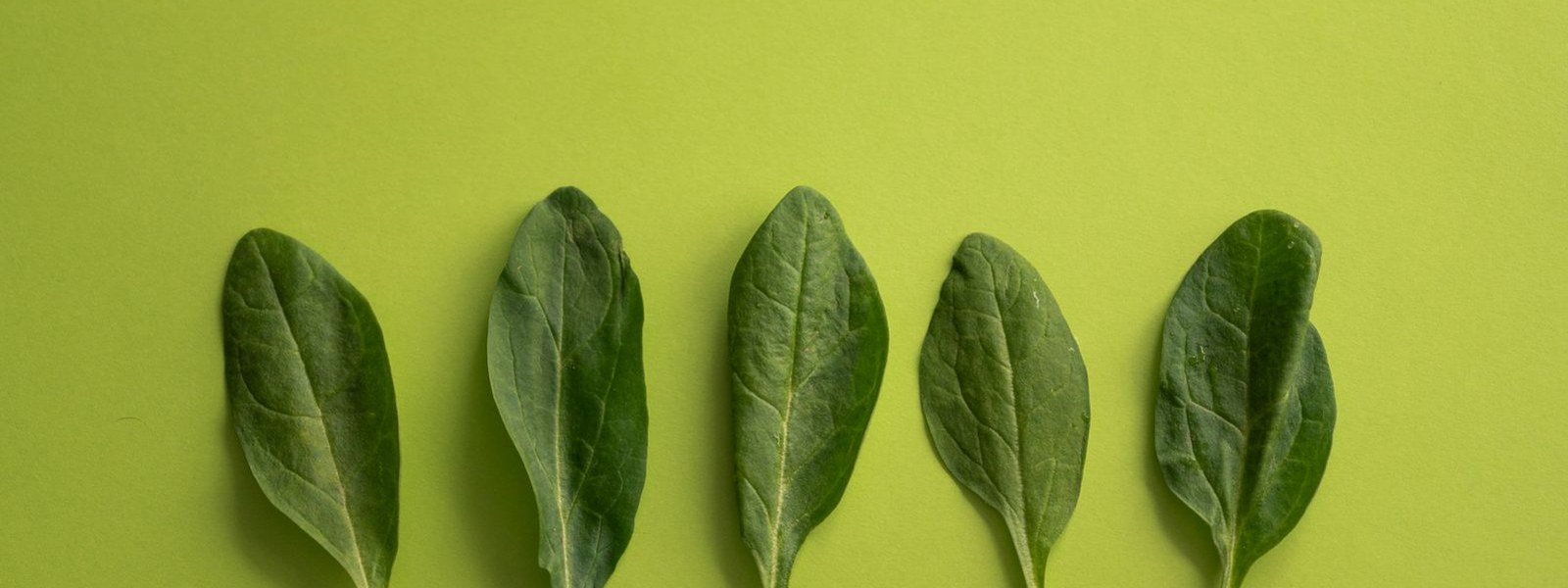
<figcaption>Green leaves carry K1. The forms sold as K2 come mostly from animal and fermented foods, and they are what a supplement label is usually selling.</figcaption>
</figure>
<div class="ac-pf-band">
<div class="inner"><div class="big">3</div><h3>The warfarin rule is the one that matters</h3></div>
<p class="b">This is the part to read twice. Vitamin K can have a serious interaction with the blood thinner warfarin. ODS is precise about the rule: if you take warfarin, keep the amount of vitamin K you get from food and supplements about the same every day. A sudden change can cause dangerous bleeding if you take in less, or blood clots if you take in more.</p>
<p class="b">Note what that rule is not. It is not "avoid greens." It is "do not swing." Other drugs pull in the same direction quietly: antibiotics taken for more than a few weeks, bile acid binders used for cholesterol, and the weight loss drug orlistat all reduce how much vitamin K you end up with. <a href="https://www.nccih.nih.gov/health/know-science/how-medications-and-supplements-can-interact/introduction" target="_blank" rel="noopener">NCCIH's Know the Science module</a> exists for exactly this kind of overlap.</p>
</div>
<section class="ac-pf-faq">
<h2>Frequently Asked Questions</h2>
<details><summary>Is more vitamin K better?</summary><div class="a">ODS says vitamin K has not been shown to cause harm, which is reassuring but is not an argument for piling it on. The adult targets are modest and they are printed in the plan. The reason to be careful here is the drug interaction, not the vitamin itself.</div></details>
<details><summary>Should I buy K1 or K2?</summary><div class="a">Both are vitamin K. K1 is what most diets are built on. K2 is the form supplement labels lean on, and the bone and heart evidence for it is genuinely mixed. A bottle that carries K1 plus both K2 forms sidesteps a guess the research has not settled.</div></details>
<details><summary>I take warfarin. Can I take this?</summary><div class="a">Ask your prescriber before you start or stop anything. The rule is steadiness: about the same vitamin K every day, from food and pills together. Do not add a supplement, and do not drop one, without telling the person who manages your dose.</div></details>
<details><summary>Could I be low without knowing?</summary><div class="a">It is uncommon. The groups ODS names are people with conditions that block absorption, such as cystic fibrosis, celiac disease, ulcerative colitis or short bowel syndrome, people who have had weight loss surgery, and newborns who missed the vitamin K shot. That is a clinician conversation, not a shelf decision.</div></details>
</section>
<section class="ac-pf-src">
<h2>Sources</h2>
<p>
<a href="https://ods.od.nih.gov/factsheets/VitaminK-Consumer/" target="_blank" rel="noopener">NIH Office of Dietary Supplements · Vitamin K: daily targets, food sources, supplement forms, who is at risk, and the warfarin interaction</a><br>
<a href="https://ods.od.nih.gov/factsheets/WYNTK-Consumer/" target="_blank" rel="noopener">NIH Office of Dietary Supplements · Dietary Supplements: What You Need to Know: federal regulation, quality seals and talking with your providers</a><br>
<a href="https://www.nccih.nih.gov/health/know-science/how-medications-and-supplements-can-interact/introduction" target="_blank" rel="noopener">NCCIH Know the Science · How Medications and Supplements Can Interact</a>
</p>
</section>
<p class="ac-pf-meta">This article is education, not medical advice. Ageless Coach is an affiliate partner and may earn a commission on purchases made through links on this page.</p>
</main>
<div class="ac-pf-sticky">
<span class="t">The Vitamin K Dosing Plan · free, printable, one page</span>
<a href="#coachs-plan">Print My Plan ↑</a>
</div>