Hearing loss is one of the most common and most overlooked conditions of later life, and research now links untreated hearing loss to faster memory decline and higher dementia risk. The reassuring part is that, unlike your genes or your age, hearing is something you can measure and treat, and treating it appears to slow cognitive decline in people at higher risk.
1Very common · hearing loss affects about one in three people aged 65 to 74, and nearly one in two after 75
2A real risk · Johns Hopkins found mild loss doubled dementia risk, and severe loss raised it fivefold
3Faster decline · memory and concentration slip faster in people with untreated hearing loss
4Why it happens · a straining brain, faster brain shrinkage and social isolation all play a part
5It is treatable · in a trial, hearing aids cut cognitive decline by about half in higher-risk adults
Most people treat hearing loss as a nuisance. You turn the television up, you nod along in noisy restaurants, you ask people to say it again. What almost no one is told is that the same fading hearing may be quietly working against your memory.
Over the last decade, researchers have found a consistent link between untreated hearing loss and cognitive decline. The good news sits right next to the warning: hearing is one of the few dementia risk factors you can actually do something about, and early treatment may help protect the brain.
1
How common it is
Hearing Loss Is Far More Common Than People Admit
Hearing loss quietly becomes the norm with age. The National Institute on Aging reports it affects roughly one in three people aged 65 to 74, and nearly one in two after 75. Yet Johns Hopkins notes that of the many older Americans with hearing loss, only about one in seven uses a hearing aid, and most wait around ten years before getting help.
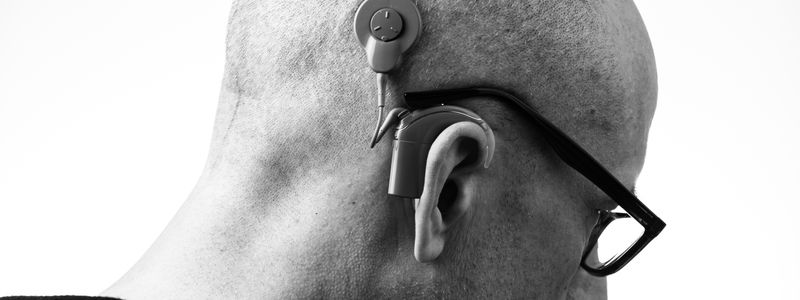
Modern hearing aids are small and discreet, yet most people who could benefit wait about a decade before trying one.
2
The link
The Data Ties Poor Hearing to Higher Dementia Risk
The clearest numbers come from Johns Hopkins. In a study that tracked 639 adults for nearly 12 years, mild hearing loss doubled the risk of dementia, moderate loss tripled it, and severe hearing loss was tied to a fivefold higher risk. The worse the hearing, the steeper the climb.
Mild hearing loss doubled the risk of dementia. Severe loss raised it fivefold.
The team followed 639 adults for nearly 12 years, and the worse the hearing, the higher the risk climbed.
Johns Hopkins Medicine
3
What the brain does
A Straining Brain Has Less Left for Memory
Why would the ears affect the mind? Johns Hopkins points to a brain forced to work harder just to decode muffled sound, leaving fewer resources for memory and thinking. Brain scans also show faster shrinkage in people with hearing loss. The NIA adds that memory and concentration decline faster in older adults who do not hear well.
4
The social piece
Missed Conversations Quietly Pull You Away From People
There is a human cost, too. When conversation becomes exhausting, many people simply withdraw, skipping the dinners and phone calls that keep the mind engaged. Johns Hopkins flags this social isolation as one of the ways hearing loss may feed cognitive decline, because staying connected is part of what keeps a brain sharp.
Staying in the conversation matters. Withdrawing from social life is one way hearing loss appears to affect the brain.
5
The hopeful part
Treating Hearing Loss Appears to Protect the Brain
Here is the part worth acting on. In a clinical trial of older adults, hearing aids cut the rate of cognitive decline by about half among those at higher risk over three years. Johns Hopkins is blunt about the trade-off: there is no downside to trying hearing aids, and for many people they change everything.
Take the hearing and memory brief with you
Your free 2-page guide: the risk numbers, the warning signs to watch for, and the three steps that protect both your hearing and your memory.
One email. No spam. Unsubscribe anytime.
Free Lifestyle Assessment
How Healthy Is Your Current Lifestyle?
Answer honestly for five minutes and walk away with your personal scorecard: all six areas of your health rated, the one that needs your attention first, and a 30-day plan built from your answers. It shows up the second you finish.
Free. About 5 minutes. Your results appear instantly.
📋 Your Coach's Recommendations
1
Get a Baseline Hearing Test
If soft or high-pitched sounds are hard to catch, or you often ask people to repeat themselves, book a hearing check with an audiologist. Most people wait about ten years to act, and there is no reason to wait.
2
Treat Loss Early, Not Eventually
Today's hearing aids are small and effective, and Johns Hopkins says there is no downside to trying them. Treating loss early keeps you in conversations and, the evidence suggests, may help protect your memory.
3
Protect the Hearing You Still Have
Limit loud-noise exposure, wear ear protection around power tools and concerts, and ask your provider whether any medication you take can affect hearing. Ringing in the ears is worth mentioning too.
?
How it works. Just a quiet check-in, not an alert and not a recurring nag. The event lands as a 30-minute slot at 9am two weeks from today, with your plan in the notes and a link back to this article. Works with Apple Calendar, Google Calendar, and Outlook. Yours to move, snooze, or delete whenever.
Keep this plan
Get the 2-page guide: the risk numbers, the warning signs, and the three steps that protect your hearing and your memory.
One email. No spam. Unsubscribe anytime.
Where should we send it?
Your hearing and memory plan, straight to your inbox.
We send the plan plus one short evidence brief each week. Unsubscribe anytime.
✓
It is on the way
Check your inbox in the next minute. Your first Ageless Brief arrives this week: one study, translated, no hype.
Hearing loss is strongly linked to higher dementia risk, and treating it appears to help, but it is one of several contributing factors rather than a sole cause. Addressing it is one of the few risk factors you can control.
How much does hearing loss raise dementia risk?
In a Johns Hopkins study of 639 adults, mild hearing loss doubled the risk of dementia, moderate loss tripled it, and severe hearing loss was tied to a fivefold higher risk.
Can hearing aids lower the risk?
In a clinical trial, hearing aids cut the rate of cognitive decline by about half in adults at higher risk. Johns Hopkins says treating hearing loss appears to slow decline and that there is no downside to trying hearing aids.
What are the early signs of hearing loss?
Trouble catching soft or high-pitched sounds, asking people to repeat themselves, struggling in noisy places, and ringing in the ears, called tinnitus, are common early signals worth checking.
How common is hearing loss?
The National Institute on Aging reports hearing loss affects about one in three people aged 65 to 74, and nearly one in two people after age 75.
Is this medical advice?
No. This article is educational and is not a substitute for your clinician. See an audiologist for a hearing test and your doctor with any concerns about memory.
Curious where you stand? Take the free 5-minute lifestyle assessment and your personal scorecard appears the second you finish.
By the Ageless Coach Editorial Team · Published August 10, 2026 · Last updated August 10, 2026
<style>
:root{--dark-base:#0D1B2A;--dark-mid:#1B3A4B;--teal:#0EA5A0;--teal-dark:#0C8C88;--teal-bright:#14D4CD;--fog:#D8E8E8;--deep-fog:#C8DCDC;--fog-border:#A8C4C4;--ink:#313743;--ink-soft:#49505f;--muted:#6b7280;--warm:#9A6841;--warm-light:#be7b4c;--serif:"Source Serif 4",Georgia,serif;--sans:Inter,-apple-system,BlinkMacSystemFont,"Segoe UI",sans-serif}
.w-richtext p,.w-richtext li,.w-richtext td{font-size:20.5px;line-height:1.7;color:var(--ink-soft)}
.w-richtext ul{list-style-type:disc;padding-left:24px;margin:12px 0}
.w-richtext ul li{margin-bottom:8px}
.ac-answer{background:#fff;border:1px solid #D4E4E4;border-top:5px solid var(--teal);border-radius:16px;padding:22px 24px 18px;margin:16px 0 28px;box-shadow:0 6px 22px rgba(13,27,42,.07)}
.ac-answer .aa-eyebrow{font:800 12px/1 var(--sans);letter-spacing:2.5px;text-transform:uppercase;color:var(--teal-dark);margin-bottom:8px}
.ac-answer .aa-head{font-family:var(--serif);font-size:24px;line-height:1.2;font-weight:800;color:var(--dark-base);margin:0 0 16px}
.ac-answer .aa-list{list-style:none;margin:0;padding:0}
.ac-answer .aa-list li{display:flex;gap:12px;align-items:baseline;padding:11px 0;border-bottom:1px solid #EDF3F3;font:700 16.5px/1.4 var(--sans);color:var(--ink)}
.ac-answer .aa-list li:last-child{border-bottom:none}
.ac-answer .aa-n{flex-shrink:0;width:24px;height:24px;border-radius:50%;background:var(--teal-dark);color:#fff;font:800 12px/24px var(--sans);text-align:center}
.ac-answer .aa-food{color:var(--teal-dark);font-weight:800}
.ac-answer .aa-cue{margin-top:18px;text-align:center}
.ac-answer .aa-cta{display:inline-flex;align-items:center;gap:10px;background:var(--teal-dark);color:#fff;font:800 14px/1 var(--sans);letter-spacing:.2px;padding:14px 26px;border-radius:50px;text-decoration:none;box-shadow:0 6px 16px rgba(12,140,136,.30)}
.ac-answer .aa-cta:hover{background:#0A7A76}
.ac-answer .aa-arw{display:inline-block;animation:aa-nudge 1.4s ease-in-out infinite}
@keyframes aa-nudge{0%,100%{transform:translateY(0)}50%{transform:translateY(4px)}}
@media(max-width:560px){.ac-answer{padding:20px 18px 16px}.ac-answer .aa-head{font-size:21px}.ac-answer .aa-list li{font-size:15px}}
.ac-band{margin:56px 0 24px;padding:26px 24px 12px;background:linear-gradient(180deg,#F0F7F7,#fff);border-radius:16px}
.ac-band.hype{background:linear-gradient(180deg,#FAF3EB,#fff)}
.ac-band .inner{display:flex;gap:20px;align-items:center}
.ac-band .big{font:900 72px/1 var(--sans);color:var(--deep-fog);flex-shrink:0}
.ac-band.hype .big{color:#EAD9C6}
.ac-band .q{font:700 13px/1.4 var(--sans);letter-spacing:2px;text-transform:uppercase;color:var(--teal-dark)}
.ac-band.hype .q{color:var(--warm)}
.ac-band h3{font-family:var(--serif);font-size:30px;line-height:1.2;font-weight:800;color:var(--ink);margin:0}
.ac-callout{border-left:4px solid var(--teal);background:#F4FAFA;border-radius:0 12px 12px 0;padding:18px 22px;margin:28px 0}
.ac-callout .n{font:800 20px/1.35 var(--sans);color:var(--dark-mid);margin-bottom:6px}
.ac-callout .d{font:500 15px/1.55 var(--sans);color:var(--ink-soft)}
.ac-callout .c{font:600 11.5px/1 var(--sans);letter-spacing:1.5px;text-transform:uppercase;color:var(--muted);margin-top:10px}
.ac-plan{background:linear-gradient(135deg,#F4FAFA 0%,#fff 100%);border-left:5px solid var(--teal-dark);border-radius:14px;padding:30px 26px;margin:40px 0 0;box-shadow:0 2px 12px rgba(0,0,0,.06);scroll-margin-top:100px}
.ac-plan .ptitle{font-family:var(--serif);font-size:24px;font-weight:800;color:var(--ink);margin-bottom:22px}
.ac-plan .step{display:flex;gap:16px;margin-bottom:18px;align-items:flex-start}
.ac-plan .step .n{min-width:38px;width:38px;height:38px;background:var(--teal-dark);border-radius:50%;color:#fff;font:800 17px/38px var(--sans);text-align:center;flex-shrink:0}
.ac-plan .sh{font:800 16.5px/1.4 var(--sans);color:var(--ink);margin-bottom:3px}
.ac-plan .sd{font:400 15px/1.6 var(--sans);color:var(--muted)}
.ac-plan .actions{border-top:1px solid #D8E8E8;margin-top:16px;padding-top:20px}
.ac-primary-row{display:flex;align-items:center;gap:10px;padding:0 4px}
.ac-btn-primary-wide{flex:1;background:var(--teal);color:#fff;border:1.5px solid var(--teal);border-radius:14px;padding:12px 22px;box-shadow:0 4px 14px rgba(14,165,160,.22);font-family:var(--sans);cursor:pointer;display:grid;grid-template-columns:auto 1fr;gap:14px;align-items:center;transition:all .18s ease}
.ac-btn-primary-wide:hover{background:var(--teal-dark);border-color:var(--teal-dark)}
.ac-btn-primary-wide .icon svg{width:22px;height:22px;color:#fff;display:block}
.ac-btn-primary-wide .label{text-align:left;line-height:1.25}
.ac-btn-primary-wide .label .top{display:block;font-weight:700;font-size:15.5px;color:#fff}
.ac-btn-primary-wide .label .top em{font-style:italic;font-weight:700}
.ac-cal-help{position:relative;flex-shrink:0}
.ac-cal-help summary{list-style:none;width:24px;height:24px;border-radius:50%;background:#E4F1F1;border:1px solid var(--fog-border);color:var(--dark-mid);font:700 13px/22px var(--sans);text-align:center;cursor:pointer;display:block}
.ac-cal-help summary::-webkit-details-marker{display:none}
.ac-cal-help .tip{position:absolute;right:0;top:32px;z-index:50;width:290px;background:var(--dark-base);color:var(--fog);border-radius:12px;padding:14px 16px;font:500 12.5px/1.55 var(--sans);box-shadow:0 10px 30px rgba(13,27,42,.35)}
.ac-cal-help .tip strong{color:#fff}
.ac-btn-share-wide{display:flex;width:100%;align-items:center;justify-content:center;gap:10px;background:#fff;color:var(--teal-dark);border:1.5px solid var(--teal-dark);border-radius:14px;padding:12px 22px;margin-top:10px;font:800 15px/1 var(--sans);cursor:pointer}
.ac-btn-share-wide svg{width:18px;height:18px}
.ac-midcap{background:linear-gradient(180deg,#F0F7F7,#fff);border:1.5px solid var(--fog-border);border-radius:16px;padding:24px 22px;margin:34px 0;text-align:center}
.ac-midcap h4{font-family:var(--serif);font-size:22px;font-weight:800;color:var(--ink);margin:0 0 6px}
.ac-midcap .sub{font:500 14px/1.55 var(--sans);color:var(--ink-soft);margin:0 auto 14px;max-width:400px}
.ac-midcap .mcform{display:flex;gap:8px;max-width:400px;margin:0 auto}
.ac-midcap .mcform input{flex:1;border:1.5px solid var(--fog-border);border-radius:50px;padding:12px 18px;font:500 14px/1 var(--sans);min-width:0}
.ac-midcap .mcform button{background:var(--teal-dark);color:#fff;border:none;border-radius:50px;padding:12px 20px;font:800 13.5px/1 var(--sans);cursor:pointer;white-space:nowrap}
.ac-midcap .fine{font:500 11.5px/1.5 var(--sans);color:var(--muted);margin-top:10px}
@media (max-width:520px){.ac-midcap .mcform{flex-direction:column}}
.ac-assess-promo{background:linear-gradient(135deg,#D8E8E8,#C8DCDC);border:1px solid var(--fog-border);border-radius:16px;padding:34px 30px;margin:44px 0;text-align:center}
.ac-assess-promo .eyebrow{color:var(--teal-dark);font:800 12px/1 var(--sans);letter-spacing:2.5px;text-transform:uppercase;margin:0 0 10px}
.ac-assess-promo h4{font-family:var(--serif);color:var(--dark-base);font-size:26px;font-weight:800;margin:0 0 12px}
.w-embed .ac-assess-promo p.ap-body,.ac-assess-promo p.ap-body{font-family:Georgia,serif;color:#3A5555;font-size:15.5px;font-weight:500;line-height:1.65;max-width:540px;margin:0 auto 22px}
.ac-assess-promo .ap-cta{display:inline-block;background:var(--teal-bright);color:var(--dark-base);font:800 15px/1 var(--sans);padding:15px 30px;border-radius:50px;text-decoration:none}
.ac-assess-promo .ap-fine{color:#4E6B6B;font:500 13px/1.5 var(--sans);margin:14px 0 0}
.ac-assess-line{border-top:1px solid #E2ECEC;margin-top:30px;padding:22px 10px 0;text-align:center;font:500 15.5px/1.6 var(--sans);color:#3A5555}
.w-embed .ac-assess-line a,.ac-assess-line a{color:var(--teal-dark);font-weight:700;text-decoration:underline;text-underline-offset:3px}
.ac-articlemeta{font:500 12.5px/1.6 var(--sans);color:#98a0a6;text-align:center;margin:24px 0 0}
.ac-capture{background:linear-gradient(180deg,#F0F7F7,#fff);border:1.5px solid var(--fog-border);border-radius:16px;padding:30px 28px;margin:26px 0 44px;text-align:center}
.ac-capture .cap-state{display:none}
.ac-capture[data-state="trigger"] .st-trigger{display:block}
.ac-capture[data-state="form"] .st-form{display:block}
.ac-capture[data-state="sent"] .st-sent{display:block}
.ac-capture h4{font-family:var(--serif);font-size:24px;font-weight:800;color:var(--ink);margin:0 0 8px}
.ac-capture .sub{font:500 15px/1.55 var(--sans);color:var(--ink-soft);margin:0 auto 18px;max-width:430px}
.ac-capture .bigbtn{display:inline-flex;align-items:center;gap:10px;background:var(--teal-dark);color:#fff;border:none;border-radius:50px;padding:16px 30px;font:800 16px/1 var(--sans);cursor:pointer;box-shadow:0 6px 18px rgba(12,140,136,.28)}
.ac-capture .capform{display:flex;gap:10px;max-width:430px;margin:0 auto}
.ac-capture .capform input{flex:1;border:1.5px solid var(--fog-border);border-radius:50px;padding:14px 20px;font:500 15px/1 var(--sans)}
.ac-capture .capform button{background:var(--teal-dark);color:#fff;border:none;border-radius:50px;padding:14px 24px;font:800 14px/1 var(--sans);cursor:pointer}
.ac-capture .sent-check{width:52px;height:52px;border-radius:50%;background:var(--teal);color:#fff;font:800 26px/52px var(--sans);margin:0 auto 12px}
.ac-capture .dl{display:inline-block;margin-top:6px;color:var(--teal-dark);font:700 15px/1 var(--sans);text-decoration:underline;cursor:pointer}
.ac-capture .fine{font:500 12px/1.5 var(--sans);color:var(--muted);margin-top:12px}
.ac-sig{margin-top:36px}
.ac-sig .rule{width:60px;height:2px;background:linear-gradient(90deg,var(--teal-dark),var(--teal-bright));margin-bottom:18px;border-radius:2px}
.ac-sig .toyour{font-family:var(--serif);font-size:16px;font-style:italic;color:#777;margin:0 0 10px;padding-left:2px}
.ac-faq{margin-top:40px;border-top:1px solid #e5e7eb;padding-top:30px;margin-bottom:40px}
.ac-faq h2{font-family:var(--serif);font-size:23px;font-weight:800;color:var(--ink);margin:0 0 18px}
.ac-faq details{border:1px solid #e5e7eb;border-radius:10px;margin-bottom:10px}
.ac-faq summary{padding:15px 18px;font:700 16px/1.4 var(--sans);color:var(--ink);cursor:pointer;display:flex;justify-content:space-between;align-items:center;list-style:none}
.ac-faq summary:after{content:"\25BE";color:var(--warm)}
.ac-faq .a{padding:0 18px 16px;font-size:17px;line-height:1.65;color:#555}
.article-header-section .article-container{max-width:1080px !important;margin:0 auto !important;padding:0 20px !important}
.article-header-section .article-hero-image{display:block;width:100%;max-width:660px;margin:0}
.article-header-section .article-title{display:block !important;font-family:var(--serif);font-size:32px;line-height:1.25;font-weight:700;color:#313743;margin:20px 0 12px 0;text-align:left;max-width:660px}
@media (max-width:767px){.article-header-section .article-title{font-size:26px}.article-header-section .article-hero-image{max-width:100%}}
@media (max-width:640px){.ac-band .big{font-size:52px}}
@media (max-width:520px){.ac-capture .capform{flex-direction:column}}
.ac-figure{margin:30px 0}.ac-figure img{display:block;width:100%;border-radius:14px;height:auto;aspect-ratio:800/300}.ac-figure figcaption{font:500 13px/1.5 var(--sans);color:var(--muted);margin-top:9px}</style>
<div class="ac-answer"><div class="aa-eyebrow">What the evidence actually says</div><h2 class="aa-head">Hearing loss is one of the most common and most overlooked conditions of later life, and research now links untreated hearing loss to faster memory decline and higher dementia risk. The reassuring part is that, unlike your genes or your age, hearing is something you can measure and treat, and treating it appears to slow cognitive decline in people at higher risk.</h2><ol class="aa-list"><li><span class="aa-n">1</span><span><span class="aa-food">Very common</span> · hearing loss affects about one in three people aged 65 to 74, and nearly one in two after 75</span></li><li><span class="aa-n">2</span><span><span class="aa-food">A real risk</span> · Johns Hopkins found mild loss doubled dementia risk, and severe loss raised it fivefold</span></li><li><span class="aa-n">3</span><span><span class="aa-food">Faster decline</span> · memory and concentration slip faster in people with untreated hearing loss</span></li><li><span class="aa-n">4</span><span><span class="aa-food">Why it happens</span> · a straining brain, faster brain shrinkage and social isolation all play a part</span></li><li><span class="aa-n">5</span><span><span class="aa-food">It is treatable</span> · in a trial, hearing aids cut cognitive decline by about half in higher-risk adults</span></li></ol><div class="aa-cue"><a class="aa-cta" href="#coach-recommendations">Get Your Coach's 3-Step Plan <span class="aa-arw">↓</span></a></div></div>
<p>Most people treat hearing loss as a nuisance. You turn the television up, you nod along in noisy restaurants, you ask people to say it again. What almost no one is told is that the same fading hearing may be quietly working against your memory.</p>
<p>Over the last decade, researchers have found a consistent link between untreated hearing loss and cognitive decline. The good news sits right next to the warning: hearing is one of the few dementia risk factors you can actually do something about, and early treatment may help protect the brain.</p>
<div class="ac-band"><div class="inner"><div class="big">1</div><div><div class="q">How common it is</div><h3>Hearing Loss Is Far More Common Than People Admit</h3></div></div></div>
<p>Hearing loss quietly becomes the norm with age. The <a href="https://www.nia.nih.gov/news/whats-connection-between-hearing-and-cognitive-health" target="_blank" rel="noopener">National Institute on Aging</a> reports it affects roughly one in three people aged 65 to 74, and nearly one in two after 75. Yet Johns Hopkins notes that of the many older Americans with hearing loss, only about one in seven uses a hearing aid, and most wait around ten years before getting help.</p>
<figure class="ac-figure"><img src="https://images.pexels.com/photos/14682242/pexels-photo-14682242.jpeg?auto=compress&cs=tinysrgb&w=800&h=300&fit=crop" alt="Close-up of a behind-the-ear hearing aid worn by an older adult" width="800" height="300" loading="lazy" decoding="async"><figcaption>Modern hearing aids are small and discreet, yet most people who could benefit wait about a decade before trying one.</figcaption></figure>
<div class="ac-band"><div class="inner"><div class="big">2</div><div><div class="q">The link</div><h3>The Data Ties Poor Hearing to Higher Dementia Risk</h3></div></div></div>
<p>The clearest numbers come from Johns Hopkins. In a study that <a href="https://www.hopkinsmedicine.org/health/wellness-and-prevention/the-hidden-risks-of-hearing-loss" target="_blank" rel="noopener">tracked 639 adults for nearly 12 years</a>, mild hearing loss doubled the risk of dementia, moderate loss tripled it, and severe hearing loss was tied to a fivefold higher risk. The worse the hearing, the steeper the climb.</p>
<div class="ac-callout"><div class="n">Mild hearing loss doubled the risk of dementia. Severe loss raised it fivefold.</div><div class="d">The team followed 639 adults for nearly 12 years, and the worse the hearing, the higher the risk climbed.</div><div class="c">Johns Hopkins Medicine</div></div>
<div class="ac-band"><div class="inner"><div class="big">3</div><div><div class="q">What the brain does</div><h3>A Straining Brain Has Less Left for Memory</h3></div></div></div>
<p>Why would the ears affect the mind? Johns Hopkins points to a brain forced to work harder just to decode muffled sound, leaving fewer resources for memory and thinking. Brain scans also show faster shrinkage in people with hearing loss. The NIA adds that memory and concentration decline faster in older adults who do not hear well.</p>
<div class="ac-band"><div class="inner"><div class="big">4</div><div><div class="q">The social piece</div><h3>Missed Conversations Quietly Pull You Away From People</h3></div></div></div>
<p>There is a human cost, too. When conversation becomes exhausting, many people simply withdraw, skipping the dinners and phone calls that keep the mind engaged. Johns Hopkins flags this social isolation as one of the ways hearing loss may feed cognitive decline, because staying connected is part of what keeps a brain sharp.</p>
<figure class="ac-figure"><img src="https://images.pexels.com/photos/8154003/pexels-photo-8154003.jpeg?auto=compress&cs=tinysrgb&w=800&h=300&fit=crop" alt="Three older adults talking together at a social gathering" width="800" height="300" loading="lazy" decoding="async"><figcaption>Staying in the conversation matters. Withdrawing from social life is one way hearing loss appears to affect the brain.</figcaption></figure>
<div class="ac-band"><div class="inner"><div class="big">5</div><div><div class="q">The hopeful part</div><h3>Treating Hearing Loss Appears to Protect the Brain</h3></div></div></div>
<p>Here is the part worth acting on. In a clinical trial of older adults, hearing aids cut the rate of cognitive decline by about half among those at higher risk over three years. Johns Hopkins is blunt about the trade-off: there is no downside to trying hearing aids, and for many people they change everything.</p>
<div class="ac-midcap"><h4>Take the hearing and memory brief with you</h4><p class="sub">Your free 2-page guide: the risk numbers, the warning signs to watch for, and the three steps that protect both your hearing and your memory.</p><div class="mcform"><input type="email" placeholder="Your email address" aria-label="Email address"><button type="button">Send My Plan (Free)</button></div><div class="fine">One email. No spam. Unsubscribe anytime.</div></div>
<div class="ac-assess-promo"><p class="eyebrow">Free Lifestyle Assessment</p><h4>How Healthy Is Your Current Lifestyle?</h4><p class="ap-body">Answer honestly for five minutes and walk away with your personal scorecard: all six areas of your health rated, the one that needs your attention first, and a 30-day plan built from your answers. It shows up the second you finish.</p><a class="ap-cta" href="/#assessment">See How the Assessment Works →</a><p class="ap-fine">Free. About 5 minutes. Your results appear instantly.</p></div>
<div class="ac-plan" id="coach-recommendations"><div class="ptitle">📋 Your Coach's Recommendations</div><div class="step"><div class="n">1</div><div><div class="sh">Get a Baseline Hearing Test</div><div class="sd">If soft or high-pitched sounds are hard to catch, or you often ask people to repeat themselves, book a hearing check with an audiologist. Most people wait about ten years to act, and there is no reason to wait.</div></div></div><div class="step"><div class="n">2</div><div><div class="sh">Treat Loss Early, Not Eventually</div><div class="sd">Today's hearing aids are small and effective, and Johns Hopkins says there is no downside to trying them. Treating loss early keeps you in conversations and, the evidence suggests, may help protect your memory.</div></div></div><div class="step"><div class="n">3</div><div><div class="sh">Protect the Hearing You Still Have</div><div class="sd">Limit loud-noise exposure, wear ear protection around power tools and concerts, and ask your provider whether any medication you take can affect hearing. Ringing in the ears is worth mentioning too.</div></div></div><div class="actions">
<div class="ac-primary-row">
<button type="button" class="ac-btn-primary-wide" data-ac-cal>
<span class="icon"><svg viewBox="0 0 24 24" fill="none" stroke="currentColor" stroke-width="2" stroke-linecap="round" stroke-linejoin="round"><rect x="3" y="4" width="18" height="18" rx="2"></rect><path d="M16 2v4M8 2v4M3 10h18"></path></svg></span>
<span class="label"><span class="top">Add <em>Your Coach's Recommendations to Your Calendar</em></span></span>
</button>
<details class="ac-cal-help"><summary aria-label="What does this do?">?</summary><div class="tip"><strong>How it works.</strong> Just a quiet check-in, not an alert and not a recurring nag. The event lands as a 30-minute slot at 9am two weeks from today, with your plan in the notes and a link back to this article. Works with Apple Calendar, Google Calendar, and Outlook. Yours to move, snooze, or delete whenever.</div></details>
</div>
<button type="button" class="ac-btn-share-wide" data-ac-share><svg viewBox="0 0 24 24" fill="none" stroke="currentColor" stroke-width="2" stroke-linecap="round" stroke-linejoin="round"><path d="M4 12v8a2 2 0 002 2h12a2 2 0 002-2v-8"></path><polyline points="16 6 12 2 8 6"></polyline><line x1="12" y1="2" x2="12" y2="15"></line></svg> Share this article</button>
</div>
</div>
<div class="ac-capture" data-state="trigger" data-article-slug="your-hearing-loss-may-be-feeding-memory-decline" data-pdf-url="https://cdn.prod.website-files.com/69be1026a027224999b7936b/6a79963838cbd2fc3d67753c_ac-hearing-memory-plan.pdf" data-plan-title="The Hearing and Memory Plan" data-plan-desc="Your free 2-page guide: the risk numbers, the warning signs, and the three steps that protect both your hearing and your memory."><div class="st-trigger cap-state"><h4>Keep this plan</h4><p class="sub">Get the 2-page guide: the risk numbers, the warning signs, and the three steps that protect your hearing and your memory.</p><button class="bigbtn" type="button" data-cap="form">📩 Email Me This Plan (Free PDF)</button><div class="fine">One email. No spam. Unsubscribe anytime.</div></div><div class="st-form cap-state"><h4>Where should we send it?</h4><p class="sub">Your hearing and memory plan, straight to your inbox.</p><form class="capform"><input type="email" name="email" required placeholder="Your email address" aria-label="Email address"><button type="submit">Send My Plan</button></form><div class="fine">We send the plan plus one short evidence brief each week. Unsubscribe anytime.</div></div><div class="st-sent cap-state"><div class="sent-check">✓</div><h4>It is on the way</h4><p class="sub">Check your inbox in the next minute. Your first Ageless Brief arrives this week: one study, translated, no hype.</p><a class="dl" href="https://cdn.prod.website-files.com/69be1026a027224999b7936b/6a79963838cbd2fc3d67753c_ac-hearing-memory-plan.pdf" download>⬇ Download your plan (PDF)</a></div></div>
<div class="ac-sig"><div class="rule"></div><p class="toyour">To your health,</p><svg width="320" height="72" viewBox="0 0 320 72" role="img" aria-label="Ageless Coach. Age Strong. Live Long." xmlns="http://www.w3.org/2000/svg" xmlns:xlink="http://www.w3.org/1999/xlink"><defs><clipPath id="acSigIconClip"><rect x="0" y="6" width="60" height="60" rx="12" ry="12"/></clipPath></defs><image x="0" y="6" width="60" height="60" clip-path="url(#acSigIconClip)" preserveAspectRatio="xMidYMid slice" href="https://cdn.prod.website-files.com/69be1026a027224999b7936b/6a0b22c6afd5d6fd115b9c1a_ac-closing-brand-icon.webp" xlink:href="https://cdn.prod.website-files.com/69be1026a027224999b7936b/6a0b22c6afd5d6fd115b9c1a_ac-closing-brand-icon.webp"/><text x="76" y="42" style="font-family:Inter,system-ui,-apple-system,'Helvetica Neue',Arial,sans-serif;font-size:27px;letter-spacing:-0.3px"><tspan style="font-weight:800;fill:#0D1B2A">Ageless</tspan><tspan style="font-weight:300;fill:rgba(13,27,42,0.6)">Coach</tspan><tspan dy="-12" style="font-size:16px;font-weight:600;fill:rgba(13,27,42,0.6)">™</tspan></text><text x="76" y="60" style="font-family:Inter,system-ui,-apple-system,'Helvetica Neue',Arial,sans-serif;font-size:10.5px;letter-spacing:2.5px;font-weight:500;fill:#0C8C88;text-transform:uppercase">AGE STRONG. LIVE LONG.</text></svg></div>
<div class="ac-faq"><h2>Frequently Asked Questions</h2><details><summary>Does hearing loss cause dementia?</summary><div class="a">Hearing loss is strongly linked to higher dementia risk, and treating it appears to help, but it is one of several contributing factors rather than a sole cause. Addressing it is one of the few risk factors you can control.</div></details><details><summary>How much does hearing loss raise dementia risk?</summary><div class="a">In a Johns Hopkins study of 639 adults, mild hearing loss doubled the risk of dementia, moderate loss tripled it, and severe hearing loss was tied to a fivefold higher risk.</div></details><details><summary>Can hearing aids lower the risk?</summary><div class="a">In a clinical trial, hearing aids cut the rate of cognitive decline by about half in adults at higher risk. Johns Hopkins says treating hearing loss appears to slow decline and that there is no downside to trying hearing aids.</div></details><details><summary>What are the early signs of hearing loss?</summary><div class="a">Trouble catching soft or high-pitched sounds, asking people to repeat themselves, struggling in noisy places, and ringing in the ears, called tinnitus, are common early signals worth checking.</div></details><details><summary>How common is hearing loss?</summary><div class="a">The National Institute on Aging reports hearing loss affects about one in three people aged 65 to 74, and nearly one in two people after age 75.</div></details><details><summary>Is this medical advice?</summary><div class="a">No. This article is educational and is not a substitute for your clinician. See an audiologist for a hearing test and your doctor with any concerns about memory.</div></details></div>
<div class="ac-assess-line">Curious where you stand? Take the free <a href="/#assessment">5-minute lifestyle assessment</a> and your personal scorecard appears the second you finish.</div>
<p class="ac-articlemeta">By the Ageless Coach Editorial Team · Published August 10, 2026 · Last updated August 10, 2026</p>
Subscribe to the Free Newsletter
One article a week. Trusted research made simple. Start making smarter health decisions today.