<style>
.ac-int-r{--dark-base:#0D1B2A;--dark-mid:#1B3A4B;--teal:#0EA5A0;--teal-dark:#0C8C88;--teal-bright:#14D4CD;--fog:#D8E8E8;--deep-fog:#C8DCDC;--fog-border:#A8C4C4;--ink:#313743;--ink-soft:#49505f;--muted:#6b7280;--warm:#9A6841;--serif:"Source Serif 4",Georgia,serif;--sans:Inter,-apple-system,"Segoe UI",sans-serif}
.ac-int-r *{box-sizing:border-box}
.ac-int-r .wrap{max-width:760px;margin:0 auto;padding:26px 20px 60px}
.ac-int-r p{font-size:19.5px;line-height:1.7;color:var(--ink-soft);margin:0 0 22px}
.ac-int-r p strong{color:var(--ink)}
.ac-int-r p a{color:var(--teal-dark);font-weight:700;text-decoration:underline;text-decoration-color:rgba(14,165,160,.4);text-underline-offset:3px}
.ac-int-r .ac-answer{background:#fff;border:1px solid #D4E4E4;border-top:5px solid var(--teal);border-radius:16px;padding:22px 24px 18px;margin:20px 0 30px;box-shadow:0 6px 22px rgba(13,27,42,.07)}
.ac-int-r .ac-answer .eb{font:800 12px/1 var(--sans);letter-spacing:2.5px;text-transform:uppercase;color:var(--teal-dark);margin-bottom:8px}
.ac-int-r .ac-answer h2{font-family:var(--serif);font-size:24px;line-height:1.2;font-weight:800;color:var(--dark-base);margin:0 0 14px}
.ac-int-r .ac-answer ol{list-style:none;margin:0;padding:0}
.ac-int-r .ac-answer li{display:flex;gap:12px;align-items:baseline;padding:11px 0;border-bottom:1px solid #EDF3F3;font:600 16px/1.45 var(--sans);color:var(--ink)}
.ac-int-r .ac-answer li:last-child{border-bottom:none}
.ac-int-r .ac-answer .n{flex-shrink:0;width:24px;height:24px;border-radius:50%;background:var(--teal-dark);color:#fff;font:800 12px/24px var(--sans);text-align:center}
.ac-int-r .ac-answer .k{color:var(--teal-dark);font-weight:800}
.ac-int-r .ac-answer .cue{margin-top:16px;text-align:center}
.ac-int-r .ac-answer .cta{display:inline-flex;align-items:center;gap:9px;background:var(--teal-dark);color:#fff;font:800 14px/1 var(--sans);padding:13px 24px;border-radius:50px;text-decoration:none;box-shadow:0 6px 16px rgba(12,140,136,.28)}
.ac-int-r .ac-answer .arw{animation:acnudge 1.4s ease-in-out infinite}
@keyframes acnudge{0%,100%{transform:translateY(0)}50%{transform:translateY(3px)}}
.ac-int-r .band{margin:48px 0 20px;padding:22px 24px 10px;background:linear-gradient(180deg,#F0F7F7,#fff);border-radius:16px}
.ac-int-r .band .inner{display:flex;gap:18px;align-items:center}
.ac-int-r .band .big{font:900 60px/1 var(--sans);color:#C8DCDC;flex-shrink:0}
.ac-int-r .band .q{font:700 12.5px/1.4 var(--sans);letter-spacing:2px;text-transform:uppercase;color:var(--teal-dark)}
.ac-int-r .band h3{font-family:var(--serif);font-size:27px;line-height:1.2;font-weight:800;color:var(--ink);margin:0}
.ac-int-r .callout{border-left:4px solid var(--teal);background:#F4FAFA;border-radius:0 12px 12px 0;padding:18px 22px;margin:26px 0}
.ac-int-r .callout .n{font:800 18px/1.35 var(--sans);color:var(--dark-mid);margin-bottom:6px}
.ac-int-r .callout .d{font:500 15px/1.55 var(--sans);color:var(--ink-soft)}
.ac-int-r .callout .c{font:600 11px/1 var(--sans);letter-spacing:1.5px;text-transform:uppercase;color:var(--muted);margin-top:10px}
.ac-int-r .ac-midcap{background:linear-gradient(180deg,#F0F7F7,#fff);border:1.5px solid var(--fog-border);border-radius:16px;padding:22px;margin:30px 0;text-align:center}
.ac-int-r .ac-midcap h4{font-family:var(--serif);font-size:20px;font-weight:800;color:var(--ink);margin:0 0 5px}
.ac-int-r .ac-midcap .sub{font:500 14px/1.55 var(--sans);color:var(--ink-soft);max-width:420px;margin:0 auto 14px}
.ac-int-r .ac-midcap .mcform{display:flex;gap:8px;max-width:400px;margin:0 auto}
.ac-int-r .ac-midcap .mcform input{flex:1;border:1.5px solid var(--fog-border);border-radius:50px;padding:12px 16px;font:500 14px/1 var(--sans);min-width:0}
.ac-int-r .ac-midcap .mcform button{background:var(--teal-dark);color:#fff;border:none;border-radius:50px;padding:12px 18px;font:800 13px/1 var(--sans);cursor:pointer;white-space:nowrap}
.ac-int-r .ac-midcap .fine{font:500 11.5px/1.5 var(--sans);color:var(--muted);margin-top:10px}
@media(max-width:520px){.ac-int-r .ac-midcap .mcform{flex-direction:column}}
.ac-int-r .ac-capture{background:linear-gradient(180deg,#F0F7F7,#fff);border:1.5px solid var(--fog-border);border-radius:16px;padding:30px 28px;margin:26px 0 44px;text-align:center}
.ac-int-r .ac-capture .cap-state{display:none}
.ac-int-r .ac-capture[data-state="trigger"] .st-trigger{display:block}
.ac-int-r .ac-capture[data-state="form"] .st-form{display:block}
.ac-int-r .ac-capture[data-state="sent"] .st-sent{display:block}
.ac-int-r .ac-capture h4{font-family:var(--serif);font-size:24px;font-weight:800;color:var(--ink);margin:0 0 8px}
.ac-int-r .ac-capture .sub{font:500 15px/1.55 var(--sans);color:var(--ink-soft);margin:0 auto 18px;max-width:430px}
.ac-int-r .ac-capture .bigbtn{display:inline-flex;align-items:center;gap:10px;background:var(--teal-dark);color:#fff;border:none;border-radius:50px;padding:16px 30px;font:800 16px/1 var(--sans);cursor:pointer;box-shadow:0 6px 18px rgba(12,140,136,.28)}
.ac-int-r .ac-capture .capform{display:flex;gap:10px;max-width:430px;margin:0 auto}
.ac-int-r .ac-capture .capform input{flex:1;border:1.5px solid var(--fog-border);border-radius:50px;padding:14px 20px;font:500 15px/1 var(--sans)}
.ac-int-r .ac-capture .capform button{background:var(--teal-dark);color:#fff;border:none;border-radius:50px;padding:14px 24px;font:800 14px/1 var(--sans);cursor:pointer}
.ac-int-r .ac-capture .sent-check{width:52px;height:52px;border-radius:50%;background:var(--teal);color:#fff;font:800 26px/52px var(--sans);margin:0 auto 12px}
.ac-int-r .ac-capture .dl{display:inline-block;margin-top:6px;color:var(--teal-dark);font:700 15px/1 var(--sans);text-decoration:underline;cursor:pointer}
.ac-int-r .ac-capture .fine{font:500 12px/1.5 var(--sans);color:var(--muted);margin-top:12px}
@media(max-width:520px){.ac-int-r .ac-capture .capform{flex-direction:column}}
.ac-int-r .forms{border:1.5px solid var(--fog-border);border-radius:16px;overflow:hidden;margin:26px 0 10px}
.ac-int-r .forms .h{background:var(--dark-base);color:#fff;padding:14px 20px;font:800 13px/1.3 var(--sans);letter-spacing:1.4px;text-transform:uppercase}
.ac-int-r .forms table{width:100%;border-collapse:collapse}
.ac-int-r .forms th,.ac-int-r .forms td{padding:12px 13px;font:500 13.5px/1.45 var(--sans);color:var(--ink-soft);border-bottom:1px solid #E9F1F1;text-align:left;vertical-align:top}
.ac-int-r .forms th{font-weight:800;color:var(--dark-mid);background:#F4FAFA;font-size:12.5px}
.ac-int-r .forms td.win{background:#E9F7F6;font-weight:700;color:var(--dark-mid)}
.ac-int-r .forms td.pick{font-weight:800;color:var(--dark-mid);background:#E9F7F6;padding:12px 13px}
.ac-int-r .forms .pick:before{content:"OUR PICK";display:block;width:max-content;background:var(--teal-bright);color:var(--dark-base);font:800 10px/1 var(--sans);letter-spacing:1.2px;padding:4px 9px;border-radius:20px;margin-bottom:7px}
.ac-int-r .forms tr.rec td{background:#E9F7F6}
.ac-int-r .forms tr:last-child td{border-bottom:none}
.ac-int-r .legend{font:500 12.5px/1.5 var(--sans);color:var(--muted);margin:8px 2px 0}
@media(max-width:600px){
.ac-int-r .forms table,.ac-int-r .forms tbody,.ac-int-r .forms tr,.ac-int-r .forms td{display:block;width:100%;box-sizing:border-box}
.ac-int-r .forms tr:first-child{display:none}
.ac-int-r .forms tr{padding:10px 0 13px;border-bottom:6px solid #F4FAFA}
.ac-int-r .forms tr:last-child{border-bottom:none}
.ac-int-r .forms td{border-bottom:none;padding:5px 18px;font-size:14.5px;line-height:1.5}
.ac-int-r .forms td:first-child{padding-top:13px;padding-bottom:6px}
.ac-int-r .forms td[data-l]:before{content:attr(data-l);display:block;font:800 10.5px/1.4 var(--sans);letter-spacing:.8px;text-transform:uppercase;color:var(--muted);margin-bottom:1px}
.ac-int-r .forms tr.rec{background:#E9F7F6;border-left:4px solid var(--teal-dark)}
.ac-int-r .forms td.pick{padding:13px 18px 6px}
.ac-int-r .forms td.win{background:transparent}
}
.ac-int-r .pick{position:relative;background:linear-gradient(170deg,var(--dark-base),var(--dark-mid));border-radius:20px;padding:30px 28px 24px;margin:16px 0 14px;color:#E8F0F0;box-shadow:0 16px 44px rgba(13,27,42,.30);scroll-margin-top:90px}
.ac-int-r .pick .rib{position:absolute;top:-13px;left:26px;background:var(--teal-bright);color:var(--dark-base);font:800 11.5px/1 var(--sans);letter-spacing:2px;text-transform:uppercase;padding:8px 15px;border-radius:20px}
.ac-int-r .pick .se{font:800 12px/1 var(--sans);letter-spacing:2.5px;text-transform:uppercase;color:var(--teal-bright);margin:6px 0 10px}
.ac-int-r .pick h2{font-family:var(--serif);font-size:27px;line-height:1.18;font-weight:800;color:#fff;margin:0 0 6px}
.ac-int-r .pick .why{font:600 15.5px/1.55 var(--sans);color:#CFE4E3;margin:0 0 16px}
.ac-int-r .pick ul{margin:0 0 18px;padding:0;list-style:none}
.ac-int-r .pick li{font:600 15px/1.5 var(--sans);color:#DCEBEA;padding:0 0 10px 26px;position:relative}
.ac-int-r .pick li:before{content:"\2713";position:absolute;left:0;color:var(--teal-bright);font-weight:900}
.ac-int-r .buy{display:inline-flex;align-items:center;justify-content:center;gap:9px;background:var(--teal-bright);color:var(--dark-base);font:800 16px/1 var(--sans);padding:15px 30px;border-radius:50px;text-decoration:none;box-shadow:0 8px 22px rgba(20,212,205,.32)}
.ac-int-r .buy.lite{background:var(--teal-dark);color:#fff}
.ac-int-r .pending{display:block;color:rgba(216,232,232,.55);font:500 11.5px/1.5 var(--sans);margin:8px 0 0;letter-spacing:.01em}
.ac-int-r .pending.dk{color:#4E6B6B}
.ac-int-r .pick .ftc{font:500 12px/1.6 var(--sans);color:rgba(216,232,232,.62);margin:14px 0 0}
.ac-int-r .pick .ftc a{color:rgba(216,232,232,.82)}
.ac-int-r .screen{display:grid;grid-template-columns:repeat(2,1fr);gap:12px;margin:20px 0}
.ac-int-r .screen .cell{background:linear-gradient(180deg,#F0F7F7,#fff);border:1px solid var(--fog-border);border-radius:12px;padding:15px 16px}
.ac-int-r .screen .cell .t{font:800 11px/1 var(--sans);letter-spacing:1.2px;text-transform:uppercase;color:var(--teal-dark);margin-bottom:7px;display:flex;align-items:center;gap:7px}
.ac-int-r .screen .cell .t svg{width:14px;height:14px}
.ac-int-r .screen .cell .d{font:500 13.5px/1.5 var(--sans);color:var(--ink-soft)}
.ac-int-r .rate{display:flex;align-items:center;gap:12px;background:#F4FAFA;border:1px solid var(--fog-border);border-radius:12px;padding:13px 18px;margin:14px 0 0}
.ac-int-r .rate .st{font:800 15px/1 var(--sans);color:var(--warm);letter-spacing:1px}
.ac-int-r .rate .tx{font:600 13.5px/1.45 var(--sans);color:var(--ink-soft)}
.ac-int-r .rate .tx b{color:var(--ink)}
.ac-int-r .objs{margin:14px 0 0}
.ac-int-r .objs details{border:1px solid #e5e7eb;border-radius:10px;margin-bottom:10px}
.ac-int-r .objs summary{padding:15px 18px;font:700 16px/1.4 var(--sans);color:var(--ink);cursor:pointer;display:flex;justify-content:space-between;gap:12px;list-style:none}
.ac-int-r .objs summary::-webkit-details-marker{display:none}
.ac-int-r .objs summary:after{content:"\25BE";color:var(--teal-dark)}
.ac-int-r .objs .a{padding:0 18px 16px;font-size:16px;line-height:1.62;color:#555}
.ac-int-r .plan{background:linear-gradient(135deg,#F4FAFA,#fff);border-left:5px solid var(--teal-dark);border-radius:14px;padding:28px 26px;margin:40px 0 0;box-shadow:0 2px 12px rgba(0,0,0,.06);scroll-margin-top:90px}
.ac-int-r .plan .pt{font-family:var(--serif);font-size:23px;font-weight:800;color:var(--ink);margin-bottom:20px}
.ac-int-r .plan .step{display:flex;gap:15px;margin-bottom:16px;align-items:flex-start}
.ac-int-r .plan .step .n{min-width:36px;width:36px;height:36px;background:var(--teal-dark);border-radius:50%;color:#fff;font:800 16px/36px var(--sans);text-align:center;flex-shrink:0}
.ac-int-r .plan .sh{font:800 16px/1.4 var(--sans);color:var(--ink);margin-bottom:3px}
.ac-int-r .plan .sd{font:400 15px/1.6 var(--sans);color:var(--muted)}
.ac-int-r .plan .rr{border-top:1px solid #D8E8E8;margin-top:14px;padding-top:16px;font:500 13.5px/1.6 var(--sans);color:var(--ink-soft);text-align:center}
.ac-int-r .plan .rr b{color:var(--dark-mid)}
.ac-int-r .plan .midcta{margin-top:16px;text-align:center}
.ac-int-r .capline{border-top:1px solid #E2ECEC;margin-top:40px;padding:22px 10px 0;text-align:center;font:500 15px/1.6 var(--sans);color:#3A5555}
.ac-int-r .faq{margin-top:38px;border-top:1px solid #e5e7eb;padding-top:28px}
.ac-int-r .faq h2{font-family:var(--serif);font-size:23px;font-weight:800;color:var(--ink);margin:0 0 16px}
.ac-int-r .faq details{border:1px solid #e5e7eb;border-radius:10px;margin-bottom:10px}
.ac-int-r .faq summary{padding:15px 18px;font:700 16px/1.4 var(--sans);color:var(--ink);cursor:pointer;display:flex;justify-content:space-between;gap:12px;list-style:none}
.ac-int-r .faq summary::-webkit-details-marker{display:none}
.ac-int-r .faq summary:after{content:"\25BE";color:var(--teal-dark)}
.ac-int-r .faq .a{padding:0 18px 16px;font-size:16px;line-height:1.62;color:#555}
.ac-int-r .ac-sig{margin-top:36px}
.ac-int-r .ac-sig .rule{width:60px;height:2px;background:linear-gradient(90deg,var(--teal-dark),var(--teal-bright));margin-bottom:18px;border-radius:2px}
.ac-int-r .ac-sig .toyour{font-family:var(--serif);font-size:16px;font-style:italic;color:#777;margin:0 0 10px;padding-left:2px}
.ac-int-r .meta{font:500 12.5px/1.6 var(--sans);color:#98a0a6;text-align:center;margin:22px 0 0}
.ac-int-r .sticky{position:fixed;left:0;right:0;bottom:0;z-index:950;background:rgba(13,27,42,.97);padding:11px 16px;display:flex;gap:14px;align-items:center;justify-content:center}
.ac-int-r .sticky .t{font:700 14px/1.3 var(--sans);color:#D8E8E8}
.ac-int-r .sticky .buy{padding:11px 22px;font-size:14px}
@media(max-width:560px){.ac-int-r .sticky .t{display:none}.ac-int-r .screen{grid-template-columns:1fr}.ac-int-r .band .big{font-size:46px}}
.ac-int-r .disc{max-width:760px;margin:0 auto;padding:20px 20px 30px;text-align:center;font:500 12.5px/1.6 var(--sans);color:#8a9298}
</style><div class="ac-int-r">
<div class="wrap">
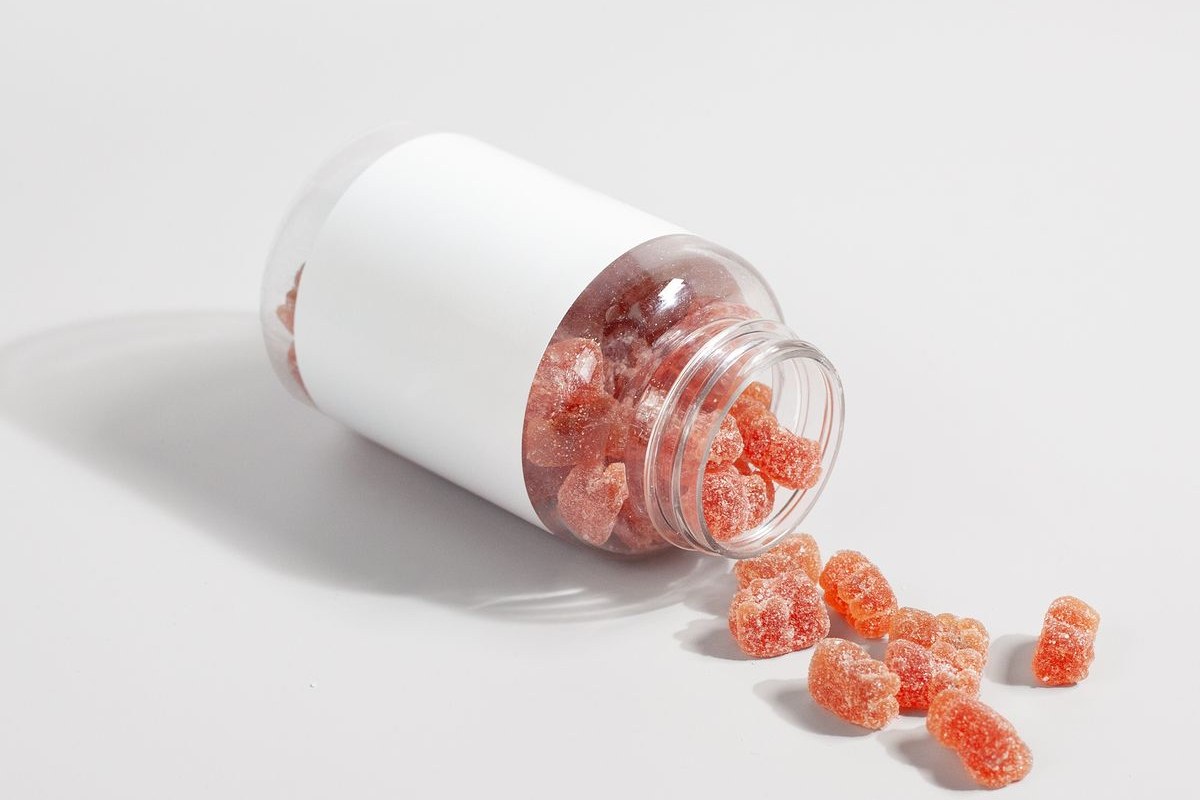
<p><strong>The gummies on the store shelf are 10 milligrams. The dose sleep experts start people at is 1.</strong> That gap is not a rounding error, it is the reason so many people wake up foggy from the thing they took to sleep better.</p>
<p>Here is what melatonin actually does, the dose the experts actually use, what taking ten times that buys you, and what to reach for instead when the real problem is a mind that will not switch off.</p>
<div class="ac-answer">
<div class="eb">The Short Answer</div>
<h2>Melatonin is a timing signal. Most gummies dose it like the sedative it is not.</h2>
<ol>
<li><span class="n">1</span><span><span class="k">Start at 1 milligram, if you use it at all</span> · Cleveland Clinic's experts start there, and the Johns Hopkins rule is 1 to 3, taken early</span></li>
<li><span class="n">2</span><span><span class="k">More is not deeper sleep</span> · higher doses buy grogginess, vivid dreams and daytime sluggishness, not better nights</span></li>
<li><span class="n">3</span><span><span class="k">It is the wrong tool for wind-down trouble</span> · melatonin shifts your clock; it does not quiet a racing mind. That is a different pathway</span></li>
</ol>
<div class="cue"><a class="cta" href="#coach-recommendations">Get Your Coach's Right-Dose Plan <span class="arw">↓</span></a></div>
</div>
<div class="band"><div class="inner"><div class="big">1</div><div><div class="q">Part 1 · The 10x Gap</div><h3>The Dose Shelves Sell vs the Dose Experts Use</h3></div></div></div>
<p>Walk the sleep aisle and you will find melatonin sold from 1 milligram up to 10 and beyond, as <a href="https://health.clevelandclinic.org/melatonin-how-much-should-i-take-for-a-good-nights-rest" target="_blank" rel="noopener">Cleveland Clinic</a> notes. Its sleep physician starts people at 1 milligram, moving up by 1 only if needed and never past 10. The rule from <a href="https://www.hopkinsmedicine.org/health/wellness-and-prevention/melatonin-for-sleep-does-it-work" target="_blank" rel="noopener">Johns Hopkins</a> sleep expert Luis Buenaver is blunter: less is more, 1 to 3 milligrams, taken about two hours before bed.</p>
<p>The reason more does not work is what melatonin is. It is not a sedative, and <a href="https://health.clevelandclinic.org/melatonin-how-much-should-i-take-for-a-good-nights-rest" target="_blank" rel="noopener">Cleveland Clinic</a> says plainly it is not going to knock you out. It is a little dose of nighttime, a signal that tells your body the day is over. A louder signal does not make the night deeper.</p>
<div class="callout"><div class="n">What too much actually buys you.</div><div class="d">Drowsy, sluggish, delayed reaction times the next day, plus vivid dreams, headaches and dizziness on the side-effect list. Cleveland Clinic also notes insomnia can gradually worsen on higher doses, the exact opposite of the purchase.</div><div class="c">Source: Cleveland Clinic</div></div>
<div class="band"><div class="inner"><div class="big">2</div><div><div class="q">Part 2 · Start Here, It Is Free</div><h3>The Light Routine That Outranks Any Bottle</h3></div></div></div>
<p>Your own melatonin rises about two hours before bedtime, per <a href="https://www.hopkinsmedicine.org/health/wellness-and-prevention/melatonin-for-sleep-does-it-work" target="_blank" rel="noopener">Johns Hopkins</a>, and bright screens can neutralize it. Keep the lights low in that window, put the phone down or filter its blue light, and give the signal room to work.</p>
<p>Anchor the other end too. Morning daylight and a fixed wake time program the whole cycle, which <a href="https://health.clevelandclinic.org/melatonin-how-much-should-i-take-for-a-good-nights-rest" target="_blank" rel="noopener">Cleveland Clinic</a> lists ahead of any supplement. If you do take melatonin, take it when you start feeling tired, and let yourself rest rather than scrolling straight through its effect.</p>
<div class="callout"><div class="n">Run two weeks of light discipline before you buy anything.</div><div class="d">Johns Hopkins' own stopping rule applies to the supplement: if melatonin is not helping after a week or two, stop using it. The light routine has no stopping rule, because it is how the system is built to run.</div><div class="c">Source: Johns Hopkins Medicine</div></div>
<div class="ac-midcap"><h4>Take the right-dose plan with you</h4><p class="sub">Your free plan (PDF): the 1-milligram rule, the two-hour light routine, and the test that separates a timing problem from a wind-down problem.</p><div class="mcform"><input type="email" placeholder="Your email address" aria-label="Email address"><button type="button">Send My Plan (Free)</button></div><div class="fine">One email. No spam. Unsubscribe anytime.</div></div>
<div class="band"><div class="inner"><div class="big">3</div><div><div class="q">Part 3 · Match the Tool</div><h3>Timing Problem or Wind-Down Problem?</h3></div></div></div>
<p>Melatonin's real jobs, per <a href="https://www.hopkinsmedicine.org/health/wellness-and-prevention/melatonin-for-sleep-does-it-work" target="_blank" rel="noopener">Johns Hopkins</a>, are occasional sleeplessness, jet lag, and the night owl who must get to bed earlier. Those are timing problems, and a low dose taken early fits them. Hopkins adds that most people's bodies already make enough melatonin on their own.</p>
<p>A racing mind at bedtime is not a timing problem. For wind-down trouble, the calming-pathway route is different: magnesium L-Threonate, apigenin and L-theanine support relaxation rather than shifting the clock. The evidence for the second two is modest and this page says so, but each is dosed at studied levels rather than guessed at, and none of them is melatonin.</p>
<div class="forms">
<div class="h">The Nighttime Options, Honestly Compared</div>
<table>
<tr><th>Option</th><th>What it does</th><th>Dose vs the guidance</th><th>The morning after</th></tr>
<tr><td>Melatonin, 1 to 3 mg</td><td data-l="What it does">Shifts sleep timing</td><td data-l="Dose vs the guidance">Matches the expert range</td><td data-l="The morning after">Usually clear</td></tr>
<tr><td>Melatonin gummies, 10 mg</td><td data-l="What it does">The same signal, oversized</td><td data-l="Dose vs the guidance">Ten times the starting dose</td><td data-l="The morning after">Grogginess and vivid dreams more likely</td></tr>
<tr class="rec"><td class="pick">Nightly Sleep Stack</td><td data-l="What it does" class="win">Supports wind-down pathways, no melatonin</td><td data-l="Dose vs the guidance" class="win">Three ingredients at label-stated studied doses</td><td data-l="The morning after" class="win">Designed for morning clarity</td></tr>
</table>
</div>
<p class="legend">Comparison verified against Cleveland Clinic and Johns Hopkins dosing guidance and the manufacturer's published label. Low-dose melatonin is a legitimate tool for timing problems; the stack is the pick for wind-down trouble, and the free light routine outranks both.</p>
<p>One low-key caution list, straight from <a href="https://www.hopkinsmedicine.org/health/wellness-and-prevention/melatonin-for-sleep-does-it-work" target="_blank" rel="noopener">Johns Hopkins</a>: skip melatonin if you are pregnant or breastfeeding or have an autoimmune disorder, a seizure disorder or depression, and talk to your doctor first if you have diabetes or high blood pressure.</p>
<div class="pick">
<div class="rib">★ Coach's Pick</div>
<div class="se">The wind-down we would buy</div>
<h2>Momentous Nightly Sleep Stack</h2>
<div class="why">For the nights when the problem is switching off, not the clock. Three calming-pathway ingredients at honest doses, with no melatonin to overshoot.</div>
<ul>
<li>Magnesium L-Threonate, apigenin and L-theanine in one evening dose, each at the label-stated studied amount</li>
<li>No melatonin, so there is no ten-times overshoot to drag into your morning</li>
<li>NSF Certified for Sport, with third-party test results published per batch</li>
<li>Take it about 30 minutes before bed, alongside the light routine, and judge it over a fair 4-week trial</li>
</ul>
<a class="buy" href="https://www.livemomentous.com/products/nightly-sleep-stack?dc=AgelessCoach&mct=pwqwZOO1&utm_source=agelesscoach&utm_medium=intent-article&utm_content=tmpl-R" data-affiliate="momentous" data-template="R" data-code="AgelessCoach" rel="noopener sponsored">Check Current Price at Momentous →</a><span class="pending">Partner link · discount applied automatically at checkout</span>
<p class="ftc">Ageless Coach may earn a commission if you buy through this link, at no extra cost to you. We only recommend products that pass our published screen, and this recommendation was set before any partnership. <a href="/partners">How we choose partners</a>.</p>
</div>
<div class="screen">
<div class="cell"><div class="t"><svg viewBox="0 0 24 24" fill="none" stroke="currentColor" stroke-width="2.4" stroke-linecap="round" stroke-linejoin="round"><path d="M20 6L9 17l-5-5"/></svg>Right tool</div><div class="d">Built for wind-down trouble, the problem melatonin was never designed to solve.</div></div>
<div class="cell"><div class="t"><svg viewBox="0 0 24 24" fill="none" stroke="currentColor" stroke-width="2.4" stroke-linecap="round" stroke-linejoin="round"><path d="M20 6L9 17l-5-5"/></svg>Honest doses</div><div class="d">Each ingredient at the amount the research actually used, printed on the label, not a proprietary blend.</div></div>
<div class="cell"><div class="t"><svg viewBox="0 0 24 24" fill="none" stroke="currentColor" stroke-width="2.4" stroke-linecap="round" stroke-linejoin="round"><path d="M20 6L9 17l-5-5"/></svg>Verified label</div><div class="d">NSF Certified for Sport, so an independent lab confirms what is in the jar, batch by batch.</div></div>
<div class="cell"><div class="t"><svg viewBox="0 0 24 24" fill="none" stroke="currentColor" stroke-width="2.4" stroke-linecap="round" stroke-linejoin="round"><path d="M20 6L9 17l-5-5"/></svg>Honest evidence</div><div class="d">Structure and function support for relaxation and sleep quality. Not a knockout pill, and we would not sell it as one.</div></div>
</div>
<div class="rate"><div class="st">★★★★★</div><div class="tx"><b>4.5 out of 5</b> across 500+ verified Momentous reviews, with per-batch test results published alongside them on the product page.</div></div>
<div class="band"><div class="inner"><div class="big">4</div><div><div class="q">Before You Buy</div><h3>The Questions Worth Asking</h3></div></div></div>
<div class="objs">
<details><summary>Is 10 milligrams of melatonin dangerous?</summary><div class="a">This page makes no safety scare claim, and <a href="https://health.clevelandclinic.org/melatonin-how-much-should-i-take-for-a-good-nights-rest" target="_blank" rel="noopener">Cleveland Clinic</a>'s guidance allows up to 10 milligrams under its step-up approach. The honest problem is different: past the low starting doses you mostly add side effects, grogginess, vivid dreams, daytime sluggishness, without adding better sleep.</div></details>
<details><summary>Should I quit melatonin entirely?</summary><div class="a">Not necessarily. If a low dose taken early fixes a timing problem, <a href="https://www.hopkinsmedicine.org/health/wellness-and-prevention/melatonin-for-sleep-does-it-work" target="_blank" rel="noopener">Johns Hopkins</a> calls nightly use for one to two months safe for most people, then stop and see how your sleep is. If it has not helped after a week or two, stop sooner. It is a tool, not a nightly requirement.</div></details>
<details><summary>Will the Sleep Stack knock me out?</summary><div class="a">No, and be suspicious of anything that promises to. It supports your own calming pathways while you wind down. Expect gradual change over a fair 4-week trial, mostly in how easily you settle, not a sedative thump.</div></details>
<details><summary>Why not just take magnesium by itself?</summary><div class="a">A certified magnesium on its own is a fine, cheaper starting point. The stack's case is convenience and honest dosing: the brain-uptake form of magnesium plus two studied calming ingredients in one dose, instead of three separate bottles bought on three separate guesses.</div></details>
<details><summary>Who should skip these?</summary><div class="a">Per Johns Hopkins, skip melatonin if pregnant or breastfeeding, or with an autoimmune disorder, a seizure disorder or depression. For the stack, anyone with kidney disease or on interacting medications should clear magnesium with their doctor, and pregnant or nursing readers should check with a clinician first.</div></details>
</div>
<div class="plan" id="coach-recommendations"><div class="pt">📋 Your Coach's Recommendations</div>
<div class="step"><div class="n">1</div><div><div class="sh">Fix the light schedule first.</div><div class="sd">Lights low for the two hours before bed, screens filtered or away, morning daylight, and a fixed wake time. This is the machinery melatonin gummies try to imitate, and it is free.</div></div></div>
<div class="step"><div class="n">2</div><div><div class="sh">If you use melatonin, right-size it.</div><div class="sd">Start at 1 milligram, stay inside the 1 to 3 range, take it about two hours before bed for timing problems, and stop if nothing improves after two weeks.</div></div></div>
<div class="step"><div class="n">3</div><div><div class="sh">If the problem is winding down, switch pathways.</div><div class="sd">A racing mind is not a clock problem. Take the stack about 30 minutes before bed alongside the light routine, and judge a fair 4-week trial on how easily you settle.</div></div></div>
<div class="midcta"><a class="buy lite" href="https://www.livemomentous.com/products/nightly-sleep-stack?dc=AgelessCoach&mct=pwqwZOO1&utm_source=agelesscoach&utm_medium=intent-article&utm_content=tmpl-R" data-affiliate="momentous" data-template="R" data-code="AgelessCoach" rel="noopener sponsored">Check Current Price at Momentous →</a><span class="pending dk">Partner link · discount applied automatically at checkout</span></div>
<div class="rr"><b>Low-risk way to test it:</b> Momentous ships from the maker with subscribe-and-save and cancel-anytime, so a 4-week trial is not a commitment. Rather run the light routine alone first? That is the right call, and the plan below is free.</div>
</div>
<div class="capline">Not ready to change anything tonight? Fair. Get the free Right-Dose Sleep Plan, the 1-milligram rule plus the two-hour light routine, sent to your inbox using the box below.</div>
<div class="ac-capture" data-state="trigger" data-article-slug="your-melatonin-dose-is-ten-times-too-high" data-pdf-url="https://cdn.prod.website-files.com/69be1026a027224999b7936b/6a65c5baacc85197c13deda4_right-dose-sleep-plan-2026-07-26.pdf" data-plan-title="The Right-Dose Sleep Plan" data-plan-desc="The 1-milligram rule, the two-hour light routine, and the timing-versus-wind-down test."><div class="st-trigger cap-state"><h4>The Right-Dose Sleep Plan</h4><p class="sub">Your free plan turns this into action: the 1-milligram rule, the two-hour light routine, and the timing-versus-wind-down test.</p><button class="bigbtn" type="button" data-cap="form">📩 Send Me the Plan (Free)</button><div class="fine">One email. No spam. Unsubscribe anytime.</div></div><div class="st-form cap-state"><h4>Where should we send it?</h4><p class="sub">Your free plan, straight to your inbox.</p><form class="capform"><input type="email" name="email" required placeholder="Your email address" aria-label="Email address"><button type="submit">Send My Plan</button></form><div class="fine">We send the plan plus one short evidence brief each week. Unsubscribe anytime.</div></div><div class="st-sent cap-state"><div class="sent-check">✓</div><h4>It's on the way</h4><p class="sub">Check your inbox in the next minute. Want it right now?</p><a class="dl" href="https://cdn.prod.website-files.com/69be1026a027224999b7936b/6a65c5baacc85197c13deda4_right-dose-sleep-plan-2026-07-26.pdf" download>⬇ Download your plan (PDF)</a><div class="fine">Your first Ageless Brief arrives this week: one study, translated, no hype.</div></div></div>
<div class="faq"><h2>Frequently Asked Questions</h2>
<details><summary>What melatonin dose should I actually take?</summary><div class="a">Cleveland Clinic's sleep physician starts people at 1 milligram, increasing by 1 only if needed and never past 10. Johns Hopkins' rule is 1 to 3 milligrams taken about two hours before bedtime. Less is more.</div></details>
<details><summary>Why do I feel groggy the morning after melatonin?</summary><div class="a">Usually the dose is too high or taken too late. Cleveland Clinic lists next-day drowsiness, sluggishness and delayed reaction times among the results of taking too much or taking it late in the evening.</div></details>
<details><summary>Can I take melatonin every night?</summary><div class="a">Johns Hopkins calls nightly use safe for most people for one to two months, then recommends stopping to see how your sleep runs without it. If it never helped in the first week or two, stop sooner.</div></details>
<details><summary>What is actually in the Nightly Sleep Stack?</summary><div class="a">Three ingredients: Magnesium L-Threonate, apigenin and L-theanine, each at its label-stated dose, and no melatonin. It is designed to support relaxation into sleep rather than to shift your body clock.</div></details>
<details><summary>How long before the stack does anything?</summary><div class="a">Expect gradual change, often within one to two weeks of consistent evening use, judged over a fair 4-week trial. Consistency matters more than dose, and the light routine stays in place alongside it.</div></details>
</div>
<div class="sources"><h2 style="font-family:var(--serif);font-size:20px;font-weight:800;color:var(--ink);margin:24px 0 10px">Sources</h2>
<p class="legend" style="line-height:1.7">
<a href="https://health.clevelandclinic.org/melatonin-how-much-should-i-take-for-a-good-nights-rest" target="_blank" rel="noopener">Cleveland Clinic, Melatonin: How Much Should You Take?</a><br>
<a href="https://www.hopkinsmedicine.org/health/wellness-and-prevention/melatonin-for-sleep-does-it-work" target="_blank" rel="noopener">Johns Hopkins Medicine, Melatonin for Sleep: Does It Work?</a>
</p></div>
<div class="ac-sig"><div class="rule"></div><p class="toyour">To your health,</p><svg width="320" height="72" viewBox="0 0 320 72" role="img" aria-label="Ageless Coach. Age Strong. Live Long." xmlns="http://www.w3.org/2000/svg" xmlns:xlink="http://www.w3.org/1999/xlink"><defs><clipPath id="acSigIconClip"><rect x="0" y="6" width="60" height="60" rx="12" ry="12"/></clipPath></defs><image x="0" y="6" width="60" height="60" clip-path="url(#acSigIconClip)" preserveAspectRatio="xMidYMid slice" href="https://cdn.prod.website-files.com/69be1026a027224999b7936b/6a0b22c6afd5d6fd115b9c1a_ac-closing-brand-icon.webp" xlink:href="https://cdn.prod.website-files.com/69be1026a027224999b7936b/6a0b22c6afd5d6fd115b9c1a_ac-closing-brand-icon.webp"/><text x="76" y="42" style="font-family:Inter,system-ui,-apple-system,'Helvetica Neue',Arial,sans-serif;font-size:27px;letter-spacing:-0.3px"><tspan style="font-weight:800;fill:#0D1B2A">Ageless</tspan><tspan style="font-weight:300;fill:rgba(13,27,42,0.6)">Coach</tspan><tspan dy="-12" style="font-size:16px;font-weight:600;fill:rgba(13,27,42,0.6)">™</tspan></text><text x="76" y="60" style="font-family:Inter,system-ui,-apple-system,'Helvetica Neue',Arial,sans-serif;font-size:10.5px;letter-spacing:2.5px;font-weight:500;fill:#0C8C88;text-transform:uppercase">AGE STRONG. LIVE LONG.</text></svg></div>
<p class="meta">By the Ageless Coach Editorial Team · July 26, 2026 · Sources listed above</p><p class="meta" style="margin-top:8px">Affiliate disclosure: this article contains an affiliate link. Ageless Coach may earn a commission if you buy through it, at no extra cost to you. Our recommendation was set before any partnership and reflects our published screen.</p>
</div>
<div class="sticky"><span class="t">The wind-down we would buy: Momentous Nightly Sleep Stack</span><a class="buy" href="https://www.livemomentous.com/products/nightly-sleep-stack?dc=AgelessCoach&mct=pwqwZOO1&utm_source=agelesscoach&utm_medium=intent-article&utm_content=tmpl-R" data-affiliate="momentous" data-template="R" data-code="AgelessCoach" rel="noopener sponsored">Check Price →</a></div>
<div class="disc">This content is educational and is not a substitute for professional medical advice, diagnosis, or treatment. These statements have not been evaluated by the Food and Drug Administration. This product is not intended to diagnose, treat, cure, or prevent any disease. Always consult your physician before making changes to your health routine.</div>
</div>