<style>
:root{--dark-base:#0D1B2A;--dark-mid:#1B3A4B;--teal:#0EA5A0;--teal-dark:#0C8C88;--teal-bright:#14D4CD;--fog:#D8E8E8;--deep-fog:#C8DCDC;--fog-border:#A8C4C4;--ink:#313743;--ink-soft:#49505f;--muted:#6b7280;--serif:"Source Serif 4",Georgia,serif;--sans:Inter,-apple-system,"Segoe UI",sans-serif}
*{box-sizing:border-box}
body{margin:0;background:#fff;font-family:var(--sans);color:var(--ink)}
/* mockup banner */
.ac-pf-mock{background:var(--dark-base);color:#8FB8B6;font:600 11.5px/1.4 var(--sans);letter-spacing:1.5px;text-transform:uppercase;text-align:center;padding:9px 16px}
.ac-pf-mock b{color:var(--teal-bright)}
/* nav (simplified representation) */
.ac-pf-nav{border-bottom:1px solid #E5EEEE;background:#fff;position:sticky;top:0;z-index:900}
.ac-pf-nav .in{max-width:1100px;margin:0 auto;padding:14px 20px;display:flex;align-items:center;justify-content:space-between;gap:16px}
.ac-pf-nav .lg{font:800 21px/1 var(--sans);color:var(--dark-base);text-decoration:none}
.ac-pf-nav .lg span{font-weight:300;color:rgba(13,27,42,.6)}
.ac-pf-nav .lg .tg{display:block;font:500 8.5px/1 var(--sans);letter-spacing:2.2px;color:var(--teal-dark);margin-top:4px}
.ac-pf-nav .lks{display:flex;gap:22px;align-items:center}
.ac-pf-nav .lks a{font:600 14px/1 var(--sans);color:var(--ink-soft);text-decoration:none}
.ac-pf-nav .lks .cta{background:var(--teal-dark);color:#fff;font-weight:800;padding:12px 20px;border-radius:50px}
@media(max-width:768px){.ac-pf-nav .lks a:not(.cta){display:none}}
/* article head */
.ac-pf-wrap{max-width:760px;margin:0 auto;padding:30px 20px 60px}
.ac-pf-cat{display:inline-block;background:#EAF5F5;color:var(--teal-dark);font:800 11.5px/1 var(--sans);letter-spacing:2px;text-transform:uppercase;padding:8px 15px;border-radius:20px;margin-bottom:16px}
h1.ac-pf-h1{font-family:var(--serif);font-size:42px;line-height:1.12;font-weight:800;color:var(--dark-base);margin:0 0 14px;letter-spacing:-.5px}
.ac-pf-by{font:500 13.5px/1 var(--sans);color:var(--muted);margin-bottom:22px}
.ac-pf-hero{margin:0 0 26px}
.ac-pf-hero img{width:100%;height:auto;aspect-ratio:16/7;object-fit:cover;border-radius:14px;display:block}
@media(max-width:768px){h1.ac-pf-h1{font-size:32px}}
/* THE PAYOFF: answers the pin immediately */
.ac-pf-payoff{font-family:var(--serif);font-size:22.5px;line-height:1.5;color:var(--ink);margin:0 0 26px}
.ac-pf-payoff a{color:var(--teal-dark);text-decoration:underline;text-decoration-color:rgba(14,165,160,.4);text-underline-offset:3px}
@media(max-width:768px){.ac-pf-payoff{font-size:19px}}
/* THE PLAN CARD: the star of the page */
.ac-pf-plan{position:relative;background:linear-gradient(170deg,var(--dark-base),var(--dark-mid));border-radius:20px;padding:34px 30px 28px;margin:0 0 18px;color:#E8F0F0;box-shadow:0 18px 48px rgba(13,27,42,.32)}
.ac-pf-plan .rib{position:absolute;top:-13px;left:26px;background:var(--teal-bright);color:var(--dark-base);font:800 11.5px/1 var(--sans);letter-spacing:2px;text-transform:uppercase;padding:8px 15px;border-radius:20px}
.ac-pf-plan h2{font-family:var(--serif);font-size:29px;line-height:1.15;font-weight:800;color:#fff;margin:6px 0 6px}
.ac-pf-plan .sub{font:600 15px/1.55 var(--sans);color:#9FC5C3;margin:0 0 22px}
.ac-pf-step{display:flex;gap:16px;align-items:flex-start;padding:15px 0;border-bottom:1px solid rgba(216,232,232,.12)}
.ac-pf-step .n{flex-shrink:0;width:34px;height:34px;border-radius:50%;background:var(--teal-dark);color:#fff;font:800 15px/34px var(--sans);text-align:center}
.ac-pf-step .sh{font:800 16.5px/1.35 var(--sans);color:#fff;margin-bottom:4px}
.ac-pf-step .sd{font:500 14.5px/1.55 var(--sans);color:#B9D4D2}
.ac-pf-step.prod .n{background:var(--teal-bright);color:var(--dark-base)}
.ac-pf-step.prod .sd a{color:var(--teal-bright);font-weight:700;text-decoration:underline;text-underline-offset:3px}
.ac-pf-step.prod .sd .pd{color:#8FB8B6;font-size:13px}
/* the sell zone, Design B: show the sheet */
.ac-pf-sellb{margin:18px 0 0;display:flex;gap:20px;align-items:center;background:rgba(13,27,42,.5);border:1px solid rgba(20,212,205,.35);border-radius:14px;padding:20px 22px}
.ac-pf-sellb .sheet{flex-shrink:0;width:130px;background:#fff;border-radius:6px;padding:12px 11px;transform:rotate(-3deg);box-shadow:0 10px 26px rgba(0,0,0,.45)}
.ac-pf-sellb .sheet .st{font-family:var(--serif);font-size:10.5px;font-weight:800;color:var(--dark-base);line-height:1.25;margin-bottom:8px}
.ac-pf-sellb .sheet .row{height:6px;border-radius:3px;background:#CFE0E0;margin-bottom:5px;filter:blur(2.5px)}
.ac-pf-sellb .sheet .row.hot{background:#9ED4D2}
.ac-pf-sellb .sheet .w70{width:70%}.ac-pf-sellb .sheet .w85{width:85%}.ac-pf-sellb .sheet .w55{width:55%}
.ac-pf-sellb .tx .bigline{font-family:var(--serif);font-size:19px;line-height:1.3;font-weight:800;color:#fff;margin:0 0 8px}
.ac-pf-sellb .tx .small{font:500 13.5px/1.55 var(--sans);color:#B9D4D2}
.ac-pf-sellb .tx .small b{color:var(--teal-bright)}
@media(max-width:560px){.ac-pf-sellb{flex-direction:column;text-align:center}}
/* the capture form inside the plan */
.ac-pf-cap{margin-top:20px;text-align:center}
.ac-pf-capform{display:flex;gap:10px;max-width:460px;margin:0 auto}
.ac-pf-capform input{flex:1;border:none;border-radius:50px;padding:16px 22px;font:500 15px/1 var(--sans);min-width:0}
.ac-pf-capform button{background:var(--teal-bright);color:var(--dark-base);border:none;border-radius:50px;padding:16px 26px;font:800 15px/1 var(--sans);cursor:pointer;white-space:nowrap;box-shadow:0 8px 22px rgba(20,212,205,.32)}
.ac-pf-cap .fine{font:500 12px/1.5 var(--sans);color:#8FB8B6;margin-top:12px}
.ac-pf-sent{display:none;padding:8px 0 2px}
.ac-pf-sent .ck{width:52px;height:52px;border-radius:50%;background:var(--teal);color:#fff;font:800 26px/52px var(--sans);margin:0 auto 12px}
.ac-pf-sent h4{font-family:var(--serif);font-size:22px;font-weight:800;color:#fff;margin:0 0 6px}
.ac-pf-sent p{font:500 14.5px/1.55 var(--sans);color:#B9D4D2;margin:0 0 12px}
.ac-pf-sent .dl{color:var(--teal-bright);font:700 15px/1 var(--sans);text-decoration:underline;cursor:pointer}
@media(max-width:560px){.ac-pf-capform{flex-direction:column}.ac-pf-capform button{width:100%}}
/* keep-reading bridge */
.ac-pf-bridge{text-align:center;margin:0 0 8px;padding:34px 10px 6px}
.ac-pf-bridge .kick{font:800 11.5px/1 var(--sans);letter-spacing:2.5px;text-transform:uppercase;color:var(--teal-dark);margin-bottom:12px}
.ac-pf-bridge h2{font-family:var(--serif);font-size:30px;line-height:1.18;font-weight:800;color:var(--dark-base);margin:0 0 12px}
.ac-pf-bridge .sub{font:500 16px/1.65 var(--sans);color:var(--ink-soft);max-width:560px;margin:0 auto}
.ac-pf-bridge .sub b{color:var(--dark-mid)}
.ac-pf-bridge .arrow{color:var(--teal-dark);font-size:20px;margin-top:14px;animation:acnudge 1.4s ease-in-out infinite}
@keyframes acnudge{0%,100%{transform:translateY(0)}50%{transform:translateY(4px)}}
@media(max-width:768px){.ac-pf-bridge h2{font-size:25px}}
/* proof strip */
.ac-pf-proof{display:flex;flex-wrap:wrap;gap:10px;margin:0 0 40px;justify-content:center}
.ac-pf-proof .pf{display:inline-flex;align-items:center;gap:7px;background:#F4FAFA;border:1px solid var(--fog-border);border-radius:30px;padding:9px 16px;font:700 12.5px/1 var(--sans);color:var(--dark-mid)}
.ac-pf-proof .pf:before{content:"✓";color:var(--teal-dark);font-weight:900}
/* magazine body */
.ac-pf-wrap p.b{font-size:19px;line-height:1.7;color:var(--ink-soft);margin:0 0 22px}
.ac-pf-wrap p.b a{color:var(--teal-dark);font-weight:700;text-decoration:underline;text-decoration-color:rgba(14,165,160,.4);text-underline-offset:3px}
.ac-pf-band{margin:46px 0 18px;padding:22px 24px 8px;background:linear-gradient(180deg,#F0F7F7,#fff);border-radius:16px}
.ac-pf-band .inner{display:flex;gap:18px;align-items:center;margin-bottom:14px}
.ac-pf-band .big{font:900 56px/1 var(--sans);color:#C8DCDC;flex-shrink:0}
.ac-pf-band h3{font-family:var(--serif);font-size:26px;line-height:1.2;font-weight:800;color:var(--ink);margin:0}
.ac-pf-callout{border-left:4px solid var(--teal);background:#F4FAFA;border-radius:0 12px 12px 0;padding:18px 22px;margin:26px 0}
.ac-pf-callout .n{font:800 17px/1.35 var(--sans);color:var(--dark-mid);margin-bottom:6px}
.ac-pf-callout .d{font:500 15px/1.55 var(--sans);color:var(--ink-soft)}
.ac-pf-fig{margin:26px 0}
.ac-pf-fig img{width:100%;height:auto;aspect-ratio:8/3;object-fit:cover;border-radius:12px;display:block}
.ac-pf-fig figcaption{font:500 12px/1.5 var(--sans);color:var(--muted);margin-top:8px}
@media(max-width:560px){.ac-pf-band .big{font-size:44px}}
/* mid-article reminder ribbon */
.ac-pf-remind{background:linear-gradient(180deg,#F0F7F7,#fff);border:1.5px solid var(--fog-border);border-radius:16px;padding:22px;margin:36px 0;text-align:center}
.ac-pf-remind h4{font-family:var(--serif);font-size:20px;font-weight:800;color:var(--ink);margin:0 0 6px}
.ac-pf-remind p{font:500 14px/1.55 var(--sans);color:var(--ink-soft);max-width:430px;margin:0 auto 14px}
.ac-pf-remind a{display:inline-block;background:var(--teal-dark);color:#fff;font:800 14px/1 var(--sans);padding:14px 26px;border-radius:50px;text-decoration:none}
/* FAQ */
.ac-pf-faq{margin-top:42px;border-top:1px solid #e5e7eb;padding-top:28px}
.ac-pf-faq h2{font-family:var(--serif);font-size:23px;font-weight:800;color:var(--ink);margin:0 0 16px}
.ac-pf-faq details{border:1px solid #e5e7eb;border-radius:10px;margin-bottom:10px}
.ac-pf-faq summary{padding:15px 18px;font:700 15.5px/1.4 var(--sans);color:var(--ink);cursor:pointer;display:flex;justify-content:space-between;gap:12px;list-style:none}
.ac-pf-faq summary::-webkit-details-marker{display:none}
.ac-pf-faq summary:after{content:"▾";color:var(--teal-dark)}
.ac-pf-faq .a{padding:0 18px 16px;font-size:15.5px;line-height:1.62;color:#555}
.ac-pf-faq .a a{color:var(--teal-dark)}
/* sources + meta */
.ac-pf-src{margin-top:36px}
.ac-pf-src h2{font-family:var(--serif);font-size:20px;font-weight:800;color:var(--ink);margin:24px 0 10px}
.ac-pf-src p{font:500 13px/1.8 var(--sans);color:var(--muted)}
.ac-pf-src a{color:var(--teal-dark)}
.ac-pf-meta{font:500 12.5px/1.6 var(--sans);color:#98a0a6;text-align:center;margin:26px 0 0}
/* sticky bottom: drives to the plan, not the product */
.ac-pf-sticky{position:fixed;left:0;right:0;bottom:0;z-index:950;background:rgba(13,27,42,.97);padding:11px 16px;display:flex;gap:14px;align-items:center;justify-content:center}
.ac-pf-sticky .t{font:700 14px/1.3 var(--sans);color:#D8E8E8}
.ac-pf-sticky a{background:var(--teal-bright);color:var(--dark-base);font:800 14px/1 var(--sans);padding:12px 24px;border-radius:50px;text-decoration:none}
@media(max-width:560px){.ac-pf-sticky .t{display:none}}
/* print popup simulation */
.ac-pf-modal{display:none;position:fixed;inset:0;z-index:1000;background:rgba(13,27,42,.72);align-items:center;justify-content:center;padding:20px}
.ac-pf-modal.open{display:flex}
.ac-pf-sheet{background:#fff;border-radius:14px;max-width:430px;width:100%;padding:28px;text-align:center;box-shadow:0 30px 80px rgba(0,0,0,.4)}
.ac-pf-sheet h3{font-family:var(--serif);font-size:22px;font-weight:800;color:var(--dark-base);margin:0 0 4px}
.ac-pf-sheet .ps{font:500 13px/1.5 var(--sans);color:var(--muted);margin:0 0 18px}
.ac-pf-page{border:1px solid #D8E8E8;border-radius:8px;padding:18px 16px;text-align:left;background:linear-gradient(180deg,#fff,#F7FBFB);margin-bottom:18px}
.ac-pf-page .pt{font-family:var(--serif);font-size:15px;font-weight:800;color:var(--dark-base);margin-bottom:10px}
.ac-pf-page .row{height:9px;border-radius:5px;background:#DCE9E9;margin-bottom:8px}
.ac-pf-page .row.w70{width:70%}.ac-pf-page .row.w85{width:85%}.ac-pf-page .row.w60{width:60%}
.ac-pf-sheet .pr{display:inline-block;background:var(--teal-dark);color:#fff;font:800 14px/1 var(--sans);padding:14px 28px;border-radius:50px;text-decoration:none;cursor:pointer}
.ac-pf-sheet .cl{display:block;margin-top:12px;font:600 13px/1 var(--sans);color:var(--muted);cursor:pointer;background:none;border:none}
/* production overrides: the template shell's global anchor color (clay #9A6841)
outranks the body classes; measured live 2026-08-05. Pin every designed link color. */
.ac-pf-wrap .ac-pf-remind a{color:#fff !important;text-decoration:none !important}
.ac-pf-sticky a{color:var(--dark-base) !important;text-decoration:none !important}
.ac-pf-wrap .ac-pf-step.prod .sd a{color:var(--teal-bright) !important}
.ac-pf-wrap .ac-pf-sent .dl{color:var(--teal-bright) !important}
.ac-pf-wrap p.b a,.ac-pf-wrap .ac-pf-payoff a,.ac-pf-wrap .ac-pf-faq .a a,.ac-pf-wrap .ac-pf-src a{color:var(--teal-dark) !important}
/* production capture states (page script drives data-state) */
.ac-pf-cap .cap-state{display:none}
.ac-pf-cap[data-state="form"] .st-form{display:block}
.ac-pf-cap[data-state="sent"] .st-sent{display:block}
/* CAPTURE PANEL (locked 2026-08-05, Gary's ruling: make it work and look good).
Root cause of the whole saga: the Beehiiv subscribe form is a cross-origin iframe
we cannot restyle, and its interior is white, so it can never sit cleanly on the
navy plan card. Answer: change the surface, not the form. Both live states render
on ONE light Ocean Fog panel, the same surface the 219 live articles already use.
No trigger step: the field is visible on load per the v7.0 lock. Article-side
only, zero Beehiiv dependence. Every state shares one look.
DO NOT re-add border-radius or overflow:hidden to .capform: a rounded clip slices
the embed's own pill outline and leaves a visible break at the left end. On a light
panel the clip buys nothing, because there is no artifact left to hide. */
.ac-pf-cap .st-form,.ac-pf-cap .st-sent{background:linear-gradient(180deg,#F0F7F7,#fff);border:1.5px solid var(--fog-border);border-radius:16px;padding:26px 24px 22px;max-width:520px;margin:0 auto}
.ac-pf-cap .st-form h4,.ac-pf-cap .st-sent h4{font-family:var(--serif);font-size:22px;font-weight:800;color:var(--dark-base) !important;margin:0 0 6px}
.ac-pf-cap .st-form .capsub,.ac-pf-cap .st-sent p{font:500 14.5px/1.55 var(--sans);color:#3A5555 !important;margin:0 auto 16px;max-width:400px}
.ac-pf-cap .st-form .capfine{font:500 12.5px/1.5 var(--sans);color:#4E6B6B !important;margin-top:14px}
.ac-pf-cap .st-sent .ck{width:52px;height:52px;border-radius:50%;background:var(--teal);color:#fff !important;font:800 26px/52px var(--sans);margin:0 auto 12px}
.ac-pf-cap .st-sent .dl{color:var(--teal-dark) !important;font:700 15px/1 var(--sans);text-decoration:underline;text-underline-offset:3px}
.ac-pf-cap .capform{max-width:430px;margin:0 auto;background:transparent}
.ac-pf-cap .capform input{border:none !important;outline:none !important}
.ac-pf-cap .capform *{box-shadow:none}
</style>
<main class="ac-pf-wrap">
<p class="ac-pf-payoff">After menopause, a woman needs less than half the iron she used to. Yet many women's multivitamins still carry the old amount. Here is the four step check.</p>
<section class="ac-pf-plan" id="coachs-plan" aria-label="The Coach's Plan">
<div class="rib">★ The Coach's Plan</div>
<h2>The Multivitamin Checklist</h2>
<p class="sub">Four checks. One label. About five minutes.</p>
<div class="ac-pf-step">
<div class="n">1</div>
<div>
<div class="sh">Check the iron line on your label</div>
<div class="sd">The plan shows you where to look. And what that percentage really means.</div>
</div>
</div>
<div class="ac-pf-step">
<div class="n">2</div>
<div>
<div class="sh">Know your number after menopause</div>
<div class="sd">The plan prints both figures side by side, plus the age the rule changes.</div>
</div>
</div>
<div class="ac-pf-step">
<div class="n">3</div>
<div>
<div class="sh">Keep what your body still needs more of</div>
<div class="sd">The plan lists what to protect once the iron comes out.</div>
</div>
</div>
<div class="ac-pf-step prod">
<div class="n">4</div>
<div>
<div class="sh">Use a 55+ formula built without iron</div>
<div class="sd">Ours: <a href="https://www.awin1.com/cread.php?awinmid=68074&awinaffid=2985931&ued=https%3A%2F%2Fmegafood.com%2Fproducts%2Fmulti-for-women-55" rel="noopener sponsored">MegaFood Women's 55+ Advanced Multivitamin</a> · <span class="pd">about 90 cents a day</span></div>
</div>
</div>
<div class="ac-pf-sellb">
<div class="sheet" aria-hidden="true">
<div class="st">THE MULTIVITAMIN CHECKLIST</div>
<div class="row hot w85"></div><div class="row w70"></div><div class="row"></div>
<div class="row hot w55"></div><div class="row w85"></div><div class="row w70"></div><div class="row w55"></div>
</div>
<div class="tx">
<p class="bigline">This is the page.</p>
<p class="small">Both iron figures, the age they change, and what a 55+ formula should still carry, filled in. One page you can hold next to the bottle <b>in the shop</b>. Free, printing in 60 seconds.</p>
</div>
</div>
<div class="ac-pf-cap ac-capture" id="capzone" data-state="form" data-article-slug="your-multivitamin-may-hold-twice-the-iron-you-need" data-pdf-url="https://cdn.prod.website-files.com/69be1026a027224999b7936b/6a79be00179b8ac19b142558_your-multivitamin-may-hold-twice-the-iron-you-need-plan.pdf" data-plan-title="The Multivitamin Checklist" data-plan-desc="Both iron figures, the age they change, and what a 55+ formula should still carry, on one printable page.">
<div class="st-form cap-state">
<h4>Unlock the printable checklist</h4>
<p class="capsub">It opens right here on screen, ready to print.</p>
<form class="ac-pf-capform capform">
<input type="email" name="email" required placeholder="Your email address" aria-label="Email address">
<button type="submit">Print My Plan (Free)</button>
</form>
<div class="capfine">One email. No spam. Unsubscribe anytime.</div>
</div>
<div class="st-sent cap-state ac-pf-sent">
<div class="ck">✓</div>
<h4>It's printing</h4>
<p>The full Multivitamin Checklist just opened as a printable page.</p>
<a class="dl" href="https://cdn.prod.website-files.com/69be1026a027224999b7936b/6a79be00179b8ac19b142558_your-multivitamin-may-hold-twice-the-iron-you-need-plan.pdf" download>⬇ Download your plan (PDF)</a>
</div>
</div>
</section>
<div class="ac-pf-proof">
<span class="pf">NIH Office of Dietary Supplements guidance</span>
<span class="pf">National Institute on Aging reviewed</span>
<span class="pf">Every claim linked to its source</span>
</div>
<div class="ac-pf-bridge">
<div class="kick">Before you buy another bottle</div>
<h2>Three things the multivitamin aisle will not flag</h2>
<p class="sub">Where the iron percentage on your label actually comes from. What changes in the year your periods stop. And the mineral this kind of formula leaves out on purpose, <b>all of it below</b>.</p>
<div class="arrow">↓</div>
</div>
<div class="ac-pf-band">
<div class="inner"><div class="big">1</div><h3>Where the number on your label comes from</h3></div>
<p class="b">A label does not measure itself against you. That percentage beside iron points at the Daily Value. It is one fixed figure. The FDA set it so shoppers can compare products. The <a href="https://ods.od.nih.gov/factsheets/Iron-HealthProfessional/" target="_blank" rel="noopener">NIH Office of Dietary Supplements</a> is clear on its reach. One figure covers adults and children from age four up.</p>
<p class="b">So a women's multi showing the full Daily Value hands you a one size figure. It is not tuned to your age. It is not tuned to your stage.</p>
<div class="ac-pf-callout"><div class="n">The tell</div><div class="d">A label reading 100% does not mean 100% of what you need. It means 100% of one figure. That figure is printed for everybody, from school age up.</div></div>
</div>
<div class="ac-pf-band">
<div class="inner"><div class="big">2</div><h3>What changes in the year your periods stop</h3></div>
<p class="b">Iron needs for women are built around monthly blood loss. When periods end, the need drops. It does not drop gently. ODS sets a much lower target for women from the start of their fifties. The fall is more than half.</p>
<p class="b">The timing is closer than most people think. The <a href="https://www.nia.nih.gov/health/menopause/what-menopause" target="_blank" rel="noopener">National Institute on Aging</a> puts the average age of menopause in the US at 52. It adds one more rule. You only know you are there after a full year with no period and no spotting. So the guideline steps down just as the body does.</p>
<p class="b">Here is the part that stings. On the same page, ODS says women's multis usually carry the higher amount. It says products built for men or for seniors often carry less iron, or none. The trade already knows. The label just stays quiet.</p>
<div class="ac-pf-callout"><div class="n">Where the figures live</div><div class="d">The before and after figures sit on the checklist, with the adult upper limit. One page, both numbers, side by side.</div></div>
</div>
<figure class="ac-pf-fig">
<img src="https://cdn.prod.website-files.com/69be1026a027224999b7936b/6a79bdff7b3367caa657f613_ac-mf1-women55-fig.jpg" alt="A bowl of dried chickpeas on a wooden board beside a cloth and a spoon of red spice" loading="lazy">
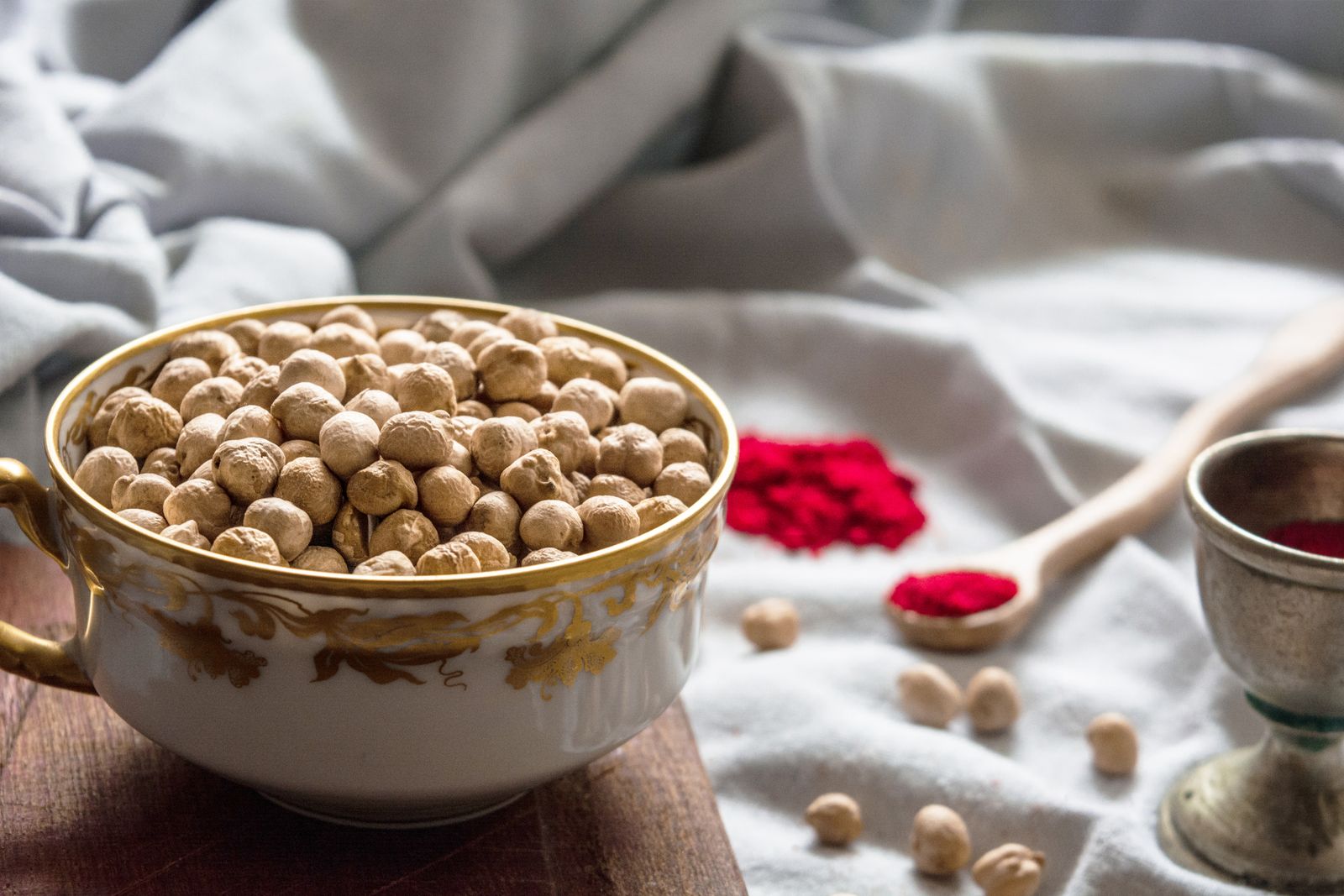
<figcaption>Food iron does not stop mattering after menopause. The amount you need from a bottle on top of it is what changes.</figcaption>
</figure>
<div class="ac-pf-band">
<div class="inner"><div class="big">3</div><h3>What a 55+ formula should still carry</h3></div>
<p class="b">Taking the iron out is only half the job. The <a href="https://womenshealth.gov/menopause/menopause-and-your-health" target="_blank" rel="noopener">Office on Women's Health</a> is blunt about what matters next. Less estrogen means you lose bone mass much faster than before. That raises the risk of osteoporosis. So calcium and vitamin D move up the list. OWH prints a daily target for each, from age 51.</p>
<p class="b">So why do many 55+ formulas skip calcium? Because it is bulky. It crowds the smaller minerals in a multi. And it works better taken hours apart. That is a design choice, not a hole in the formula. It does mean calcium stays your job, not the bottle's.</p>
<p class="b">Keep the expectation honest too. ODS reviewed <a href="https://ods.od.nih.gov/factsheets/MVMS-HealthProfessional/" target="_blank" rel="noopener">multivitamin and mineral pills</a>. It found they might not lower overall chronic disease risk. A multi is gap insurance for what your plate keeps missing. It is not disease insurance. No bottle should be sold that way.</p>
<div class="ac-pf-callout"><div class="n">Free first</div><div class="d">Before you spend a cent, write one list of every supplement and medicine you take. Hand it to your clinician. It costs nothing. It catches things no capsule can fix.</div></div>
</div>
<section class="ac-pf-faq">
<h2>Frequently Asked Questions</h2>
<details><summary>Does this mean iron is bad for me now?</summary><div class="a">No. Iron stays vital for life. Low iron is common. The point is the amount, not the mineral. Do you have heavy bleeding, low iron, or anaemia? Then your iron is a call for your clinician, not a shelf label. ODS also sets an adult upper limit. It is on the checklist.</div></details>
<details><summary>How do I know I have actually reached menopause?</summary><div class="a">The National Institute on Aging draws a clear line. You have reached menopause after a full year with no period and no spotting. Until that year is up, you are still in the change. Do not assume the lower iron figure fits you yet.</div></details>
<details><summary>If the multi has no calcium, do I need a separate one?</summary><div class="a">Possibly. It is worth asking. The Office on Women's Health prints a daily calcium target for women 51 and up. It is higher than the one for younger women. It is more than most multis could fit in a tablet. Food counts toward it first. Ask your clinician if you need more, and take calcium hours apart from your multi.</div></details>
<details><summary>Will switching multivitamins actually make me healthier?</summary><div class="a">On its own, probably not the way the ads imply. ODS reports that multivitamin use might not lower overall chronic disease risk. A better matched multi does less. It stops you topping up a nutrient you no longer need much of. And it keeps the ones that matter more after menopause. That is a promise the evidence supports.</div></details>
</section>
<section class="ac-pf-src">
<h2>Sources</h2>
<p>
<a href="https://ods.od.nih.gov/factsheets/Iron-HealthProfessional/" target="_blank" rel="noopener">NIH Office of Dietary Supplements · Iron: recommended intakes by age and sex, the Daily Value used on labels, the adult upper limit, and iron content of women's versus seniors' multivitamins</a><br>
<a href="https://www.nia.nih.gov/health/menopause/what-menopause" target="_blank" rel="noopener">National Institute on Aging · What Is Menopause: average age, the full year without a period, and health risks after menopause</a><br>
<a href="https://womenshealth.gov/menopause/menopause-and-your-health" target="_blank" rel="noopener">Office on Women's Health · Menopause and your health: bone loss after menopause, and calcium and vitamin D targets from age 51</a><br>
<a href="https://ods.od.nih.gov/factsheets/MVMS-HealthProfessional/" target="_blank" rel="noopener">NIH Office of Dietary Supplements · Multivitamin/mineral supplements: what the evidence shows on chronic disease risk</a>
</p>
</section>
<p class="ac-pf-meta">This article is education, not medical advice. Ageless Coach is an affiliate partner and may earn a commission on purchases made through links on this page.</p>
</main>
<div class="ac-pf-sticky">
<span class="t">The Multivitamin Checklist · free, printable, one page</span>
<a href="#coachs-plan">Print My Plan ↑</a>
</div>