Snoring by itself is common and usually harmless. The warning sign is the gap between the snores: the sound stops, breathing stops with it, and then comes a snort or a gasp. That pattern is how obstructive sleep apnea sounds, and left untreated it is tied to high blood pressure, atrial fibrillation, stroke and heart failure.
1Most snoring is ordinary · Cleveland Clinic calls occasional primary snoring common and usually nothing to worry about
2The pause is the signal · snoring that stops suddenly, then restarts with a snort or gasp, is the classic apnea pattern
3You wake to breathe · falling oxygen triggers a survival reflex that wakes you just enough to restart airflow
4The damage is cardiac · untreated apnea is linked to hypertension, atrial fibrillation, stroke and heart failure
5The test can be done at home · home sleep apnea testing skips the lab and happens in your own bed
Snoring gets handled as a joke or a marriage complaint. One of you laughs about it, the other one moves to the couch, and nobody calls a doctor. That is usually fine, because most snoring really is harmless noise.
The trouble is that the dangerous version sounds almost the same. What separates them is not volume. It is what happens in the quiet gaps, and the person making the noise is the one person in the house who cannot hear them.
1
The part that is normal
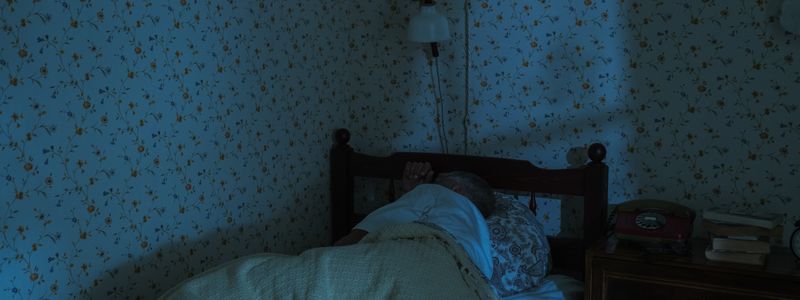
Nearly Everyone Snores at Some Point
Snoring happens when a partial blockage makes the tissues of your nose and throat vibrate as air pushes past. Occasional or primary snoring is common and can be normal, according to Cleveland Clinic, and nearly everyone does it at some point, including babies. Age, alcohol, congestion, back sleeping and family history all make it more likely.
The sound is not the problem. The silence in the middle of the sound is what a clinician wants to hear about.
2
The pattern that is not
Listen for the Pause, Then the Gasp
Cleveland Clinic describes what obstructive sleep apnea actually sounds like: loud snoring that begins soon after falling asleep, then snoring that stops suddenly while breathing stops, then a snort or gasp for breath before the snoring starts again. Pauses in breathing, waking up feeling like you are choking, night sweats and restless sleep sit alongside it.
Snoring on its own does not mean apnea. Cleveland Clinic is explicit that it is the most common symptom but that there are many other reasons people snore. The pause is the part that changes the conversation.
3
What your body does about it
You Wake Up Just Enough to Breathe
When the airway closes, blood oxygen falls. That drop trips a survival reflex in the brain that wakes you just enough to breathe again. It works. It also shreds the night into fragments, which is why the daytime symptoms are exhaustion, mood changes, trouble concentrating, morning headaches and memory complaints rather than anything that feels like a breathing problem.
If someone tells you that you snore or gasp for air during sleep, you may want to talk to your healthcare provider.
The person who notices is almost never the person with the condition. That is the whole diagnostic problem in one sentence.
Daytime exhaustion, fog and morning headaches are how a nighttime breathing problem usually announces itself.
Daytime drowsiness carries its own risk. It is dangerous behind the wheel and in any job that needs your full attention, which is why this is worth raising with a clinician rather than managing with a stronger coffee.
5
Getting a real answer
The Test Can Happen in Your Own Bed
Diagnosis starts with history and a physical exam of the mouth, neck and throat. Two tests settle it: an overnight sleep study in a facility, or home sleep apnea testing, which skips the brain wave sensors and lets you stay home. Cleveland Clinic also suggests something free: with permission, record the person sleeping. That audio can speed the whole process up.
Take the snoring checklist to bed with you
Your free one-page printable: what ordinary snoring sounds like, the pause-and-gasp pattern to listen for, and exactly what to ask your provider.
One email. No spam. Unsubscribe anytime.
Free Lifestyle Assessment
How Healthy Is Your Current Lifestyle?
Answer honestly for five minutes and walk away with your personal scorecard: all six areas of your health rated, the one that needs your attention first, and a 30-day plan built from your answers. It shows up the second you finish.
Free. About 5 minutes. Your results appear instantly.
📋 Your Coach's Recommendations
1
Find Out Which Kind of Snoring You Have
Occasional, quiet snoring is common and usually harmless. What you are screening for is different: loud snoring that begins soon after you fall asleep, stops suddenly, and restarts with a snort or a gasp. Volume alone decides nothing. The pause decides everything.
2
Record One Night and Listen for the Pause
Cleveland Clinic suggests recording audio or video of the person sleeping, with their permission, because it gives a provider real evidence instead of a secondhand description. One night on a phone is enough to hear whether the sound stops and restarts, or simply rumbles along.
3
Ask for a Sleep Test, Not a Gadget
If the pause is there, or if you wake unrested with morning headaches and daytime sleepiness, ask your provider about a sleep study. Home sleep apnea testing happens in your own bed. Bring the recording and bring your partner, who can answer the questions you slept through.
?
How it works. Just a quiet check-in, not an alert and not a recurring nag. The event lands as a 30-minute slot at 9am two weeks from today, with your plan in the notes and a link back to this article. Works with Apple Calendar, Google Calendar, and Outlook. Yours to move, snooze, or delete whenever.
Keep this plan
Get the one-page checklist: the pattern to listen for, what to record, and the exact question to bring to your provider.
One email. No spam. Unsubscribe anytime.
Where should we send it?
Your snoring checklist, straight to your inbox.
We send the plan plus one short evidence brief each week. Unsubscribe anytime.
✓
It is on the way
Check your inbox in the next minute. Your first Ageless Brief arrives this week: one study, translated, no hype.
No. Cleveland Clinic says that snoring does not necessarily mean sleep apnea. It is the most common symptom, but there are many other reasons people snore.
What does sleep apnea actually sound like?
Loud snoring that starts soon after falling asleep, then stops suddenly while breathing stops, then a snort or gasp for breath before the snoring resumes.
Why do I feel exhausted if I slept eight hours?
Each time oxygen drops, a reflex wakes you just enough to breathe. You may not remember any of it, but the night is fragmented, so you wake unrested with fatigue, fog or a morning headache.
What happens if sleep apnea is left untreated?
Cleveland Clinic lists heart damage and heart failure, high blood pressure, type 2 diabetes, atrial fibrillation, stroke and sudden cardiac death among possible complications, along with dangerous daytime drowsiness.
Do I have to spend a night in a hospital to get tested?
Not always. Alongside the in-facility overnight sleep study, home sleep apnea testing lets you do the test in your own bed without brain wave monitoring.
Is this medical advice?
No. This article is educational and is not a substitute for your clinician. If you or a partner notice snoring with pauses, gasping or daytime sleepiness, talk to a healthcare provider.
Curious where you stand? Take the free 5-minute lifestyle assessment and your personal scorecard appears the second you finish.
By the Ageless Coach Editorial Team · Published August 12, 2026 · Last updated August 12, 2026
<style>
:root{--dark-base:#0D1B2A;--dark-mid:#1B3A4B;--teal:#0EA5A0;--teal-dark:#0C8C88;--teal-bright:#14D4CD;--fog:#D8E8E8;--deep-fog:#C8DCDC;--fog-border:#A8C4C4;--ink:#313743;--ink-soft:#49505f;--muted:#6b7280;--warm:#9A6841;--warm-light:#be7b4c;--serif:"Source Serif 4",Georgia,serif;--sans:Inter,-apple-system,BlinkMacSystemFont,"Segoe UI",sans-serif}
.w-richtext p,.w-richtext li,.w-richtext td{font-size:20.5px;line-height:1.7;color:var(--ink-soft)}
.w-richtext ul{list-style-type:disc;padding-left:24px;margin:12px 0}
.w-richtext ul li{margin-bottom:8px}
.ac-answer{background:#fff;border:1px solid #D4E4E4;border-top:5px solid var(--teal);border-radius:16px;padding:22px 24px 18px;margin:16px 0 28px;box-shadow:0 6px 22px rgba(13,27,42,.07)}
.ac-answer .aa-eyebrow{font:800 12px/1 var(--sans);letter-spacing:2.5px;text-transform:uppercase;color:var(--teal-dark);margin-bottom:8px}
.ac-answer .aa-head{font-family:var(--serif);font-size:24px;line-height:1.2;font-weight:800;color:var(--dark-base);margin:0 0 16px}
.ac-answer .aa-list{list-style:none;margin:0;padding:0}
.ac-answer .aa-list li{display:flex;gap:12px;align-items:baseline;padding:11px 0;border-bottom:1px solid #EDF3F3;font:700 16.5px/1.4 var(--sans);color:var(--ink)}
.ac-answer .aa-list li:last-child{border-bottom:none}
.ac-answer .aa-n{flex-shrink:0;width:24px;height:24px;border-radius:50%;background:var(--teal-dark);color:#fff;font:800 12px/24px var(--sans);text-align:center}
.ac-answer .aa-food{color:var(--teal-dark);font-weight:800}
.ac-answer .aa-cue{margin-top:18px;text-align:center}
.ac-answer .aa-cta{display:inline-flex;align-items:center;gap:10px;background:var(--teal-dark);color:#fff;font:800 14px/1 var(--sans);letter-spacing:.2px;padding:14px 26px;border-radius:50px;text-decoration:none;box-shadow:0 6px 16px rgba(12,140,136,.30)}
.ac-answer .aa-cta:hover{background:#0A7A76}
.ac-answer .aa-arw{display:inline-block;animation:aa-nudge 1.4s ease-in-out infinite}
@keyframes aa-nudge{0%,100%{transform:translateY(0)}50%{transform:translateY(4px)}}
@media(max-width:560px){.ac-answer{padding:20px 18px 16px}.ac-answer .aa-head{font-size:21px}.ac-answer .aa-list li{font-size:15px}}
.ac-band{margin:56px 0 24px;padding:26px 24px 12px;background:linear-gradient(180deg,#F0F7F7,#fff);border-radius:16px}
.ac-band.hype{background:linear-gradient(180deg,#FAF3EB,#fff)}
.ac-band .inner{display:flex;gap:20px;align-items:center}
.ac-band .big{font:900 72px/1 var(--sans);color:var(--deep-fog);flex-shrink:0}
.ac-band.hype .big{color:#EAD9C6}
.ac-band .q{font:700 13px/1.4 var(--sans);letter-spacing:2px;text-transform:uppercase;color:var(--teal-dark)}
.ac-band.hype .q{color:var(--warm)}
.ac-band h3{font-family:var(--serif);font-size:30px;line-height:1.2;font-weight:800;color:var(--ink);margin:0}
.ac-callout{border-left:4px solid var(--teal);background:#F4FAFA;border-radius:0 12px 12px 0;padding:18px 22px;margin:28px 0}
.ac-callout .n{font:800 20px/1.35 var(--sans);color:var(--dark-mid);margin-bottom:6px}
.ac-callout .d{font:500 15px/1.55 var(--sans);color:var(--ink-soft)}
.ac-callout .c{font:600 11.5px/1 var(--sans);letter-spacing:1.5px;text-transform:uppercase;color:var(--muted);margin-top:10px}
.ac-plan{background:linear-gradient(135deg,#F4FAFA 0%,#fff 100%);border-left:5px solid var(--teal-dark);border-radius:14px;padding:30px 26px;margin:40px 0 0;box-shadow:0 2px 12px rgba(0,0,0,.06);scroll-margin-top:100px}
.ac-plan .ptitle{font-family:var(--serif);font-size:24px;font-weight:800;color:var(--ink);margin-bottom:22px}
.ac-plan .step{display:flex;gap:16px;margin-bottom:18px;align-items:flex-start}
.ac-plan .step .n{min-width:38px;width:38px;height:38px;background:var(--teal-dark);border-radius:50%;color:#fff;font:800 17px/38px var(--sans);text-align:center;flex-shrink:0}
.ac-plan .sh{font:800 16.5px/1.4 var(--sans);color:var(--ink);margin-bottom:3px}
.ac-plan .sd{font:400 15px/1.6 var(--sans);color:var(--muted)}
.ac-plan .actions{border-top:1px solid #D8E8E8;margin-top:16px;padding-top:20px}
.ac-primary-row{display:flex;align-items:center;gap:10px;padding:0 4px}
.ac-btn-primary-wide{flex:1;background:var(--teal);color:#fff;border:1.5px solid var(--teal);border-radius:14px;padding:12px 22px;box-shadow:0 4px 14px rgba(14,165,160,.22);font-family:var(--sans);cursor:pointer;display:grid;grid-template-columns:auto 1fr;gap:14px;align-items:center;transition:all .18s ease}
.ac-btn-primary-wide:hover{background:var(--teal-dark);border-color:var(--teal-dark)}
.ac-btn-primary-wide .icon svg{width:22px;height:22px;color:#fff;display:block}
.ac-btn-primary-wide .label{text-align:left;line-height:1.25}
.ac-btn-primary-wide .label .top{display:block;font-weight:700;font-size:15.5px;color:#fff}
.ac-btn-primary-wide .label .top em{font-style:italic;font-weight:700}
.ac-cal-help{position:relative;flex-shrink:0}
.ac-cal-help summary{list-style:none;width:24px;height:24px;border-radius:50%;background:#E4F1F1;border:1px solid var(--fog-border);color:var(--dark-mid);font:700 13px/22px var(--sans);text-align:center;cursor:pointer;display:block}
.ac-cal-help summary::-webkit-details-marker{display:none}
.ac-cal-help .tip{position:absolute;right:0;top:32px;z-index:50;width:290px;background:var(--dark-base);color:var(--fog);border-radius:12px;padding:14px 16px;font:500 12.5px/1.55 var(--sans);box-shadow:0 10px 30px rgba(13,27,42,.35)}
.ac-cal-help .tip strong{color:#fff}
.ac-btn-share-wide{display:flex;width:100%;align-items:center;justify-content:center;gap:10px;background:#fff;color:var(--teal-dark);border:1.5px solid var(--teal-dark);border-radius:14px;padding:12px 22px;margin-top:10px;font:800 15px/1 var(--sans);cursor:pointer}
.ac-btn-share-wide svg{width:18px;height:18px}
.ac-midcap{background:linear-gradient(180deg,#F0F7F7,#fff);border:1.5px solid var(--fog-border);border-radius:16px;padding:24px 22px;margin:34px 0;text-align:center}
.ac-midcap h4{font-family:var(--serif);font-size:22px;font-weight:800;color:var(--ink);margin:0 0 6px}
.ac-midcap .sub{font:500 14px/1.55 var(--sans);color:var(--ink-soft);margin:0 auto 14px;max-width:400px}
.ac-midcap .mcform{display:flex;gap:8px;max-width:400px;margin:0 auto}
.ac-midcap .mcform input{flex:1;border:1.5px solid var(--fog-border);border-radius:50px;padding:12px 18px;font:500 14px/1 var(--sans);min-width:0}
.ac-midcap .mcform button{background:var(--teal-dark);color:#fff;border:none;border-radius:50px;padding:12px 20px;font:800 13.5px/1 var(--sans);cursor:pointer;white-space:nowrap}
.ac-midcap .fine{font:500 11.5px/1.5 var(--sans);color:var(--muted);margin-top:10px}
@media (max-width:520px){.ac-midcap .mcform{flex-direction:column}}
.ac-assess-promo{background:linear-gradient(135deg,#D8E8E8,#C8DCDC);border:1px solid var(--fog-border);border-radius:16px;padding:34px 30px;margin:44px 0;text-align:center}
.ac-assess-promo .eyebrow{color:var(--teal-dark);font:800 12px/1 var(--sans);letter-spacing:2.5px;text-transform:uppercase;margin:0 0 10px}
.ac-assess-promo h4{font-family:var(--serif);color:var(--dark-base);font-size:26px;font-weight:800;margin:0 0 12px}
.w-embed .ac-assess-promo p.ap-body,.ac-assess-promo p.ap-body{font-family:Georgia,serif;color:#3A5555;font-size:15.5px;font-weight:500;line-height:1.65;max-width:540px;margin:0 auto 22px}
.ac-assess-promo .ap-cta{display:inline-block;background:var(--teal-bright);color:var(--dark-base);font:800 15px/1 var(--sans);padding:15px 30px;border-radius:50px;text-decoration:none}
.ac-assess-promo .ap-fine{color:#4E6B6B;font:500 13px/1.5 var(--sans);margin:14px 0 0}
.ac-assess-line{border-top:1px solid #E2ECEC;margin-top:30px;padding:22px 10px 0;text-align:center;font:500 15.5px/1.6 var(--sans);color:#3A5555}
.w-embed .ac-assess-line a,.ac-assess-line a{color:var(--teal-dark);font-weight:700;text-decoration:underline;text-underline-offset:3px}
.ac-articlemeta{font:500 12.5px/1.6 var(--sans);color:#98a0a6;text-align:center;margin:24px 0 0}
.ac-capture{background:linear-gradient(180deg,#F0F7F7,#fff);border:1.5px solid var(--fog-border);border-radius:16px;padding:30px 28px;margin:26px 0 44px;text-align:center}
.ac-capture .cap-state{display:none}
.ac-capture[data-state="trigger"] .st-trigger{display:block}
.ac-capture[data-state="form"] .st-form{display:block}
.ac-capture[data-state="sent"] .st-sent{display:block}
.ac-capture h4{font-family:var(--serif);font-size:24px;font-weight:800;color:var(--ink);margin:0 0 8px}
.ac-capture .sub{font:500 15px/1.55 var(--sans);color:var(--ink-soft);margin:0 auto 18px;max-width:430px}
.ac-capture .bigbtn{display:inline-flex;align-items:center;gap:10px;background:var(--teal-dark);color:#fff;border:none;border-radius:50px;padding:16px 30px;font:800 16px/1 var(--sans);cursor:pointer;box-shadow:0 6px 18px rgba(12,140,136,.28)}
.ac-capture .capform{display:flex;gap:10px;max-width:430px;margin:0 auto}
.ac-capture .capform input{flex:1;border:1.5px solid var(--fog-border);border-radius:50px;padding:14px 20px;font:500 15px/1 var(--sans)}
.ac-capture .capform button{background:var(--teal-dark);color:#fff;border:none;border-radius:50px;padding:14px 24px;font:800 14px/1 var(--sans);cursor:pointer}
.ac-capture .sent-check{width:52px;height:52px;border-radius:50%;background:var(--teal);color:#fff;font:800 26px/52px var(--sans);margin:0 auto 12px}
.ac-capture .dl{display:inline-block;margin-top:6px;color:var(--teal-dark);font:700 15px/1 var(--sans);text-decoration:underline;cursor:pointer}
.ac-capture .fine{font:500 12px/1.5 var(--sans);color:var(--muted);margin-top:12px}
.ac-sig{margin-top:36px}
.ac-sig .rule{width:60px;height:2px;background:linear-gradient(90deg,var(--teal-dark),var(--teal-bright));margin-bottom:18px;border-radius:2px}
.ac-sig .toyour{font-family:var(--serif);font-size:16px;font-style:italic;color:#777;margin:0 0 10px;padding-left:2px}
.ac-faq{margin-top:40px;border-top:1px solid #e5e7eb;padding-top:30px;margin-bottom:40px}
.ac-faq h2{font-family:var(--serif);font-size:23px;font-weight:800;color:var(--ink);margin:0 0 18px}
.ac-faq details{border:1px solid #e5e7eb;border-radius:10px;margin-bottom:10px}
.ac-faq summary{padding:15px 18px;font:700 16px/1.4 var(--sans);color:var(--ink);cursor:pointer;display:flex;justify-content:space-between;align-items:center;list-style:none}
.ac-faq summary:after{content:"\25BE";color:var(--warm)}
.ac-faq .a{padding:0 18px 16px;font-size:17px;line-height:1.65;color:#555}
.article-header-section .article-container{max-width:1080px !important;margin:0 auto !important;padding:0 20px !important}
.article-header-section .article-hero-image{display:block;width:100%;max-width:660px;margin:0}
.article-header-section .article-title{display:block !important;font-family:var(--serif);font-size:32px;line-height:1.25;font-weight:700;color:#313743;margin:20px 0 12px 0;text-align:left;max-width:660px}
@media (max-width:767px){.article-header-section .article-title{font-size:26px}.article-header-section .article-hero-image{max-width:100%}}
@media (max-width:640px){.ac-band .big{font-size:52px}}
@media (max-width:520px){.ac-capture .capform{flex-direction:column}}
.ac-figure{margin:30px 0}.ac-figure img{display:block;width:100%;border-radius:14px;height:auto;aspect-ratio:800/300}.ac-figure figcaption{font:500 13px/1.5 var(--sans);color:var(--muted);margin-top:9px}</style>
<div class="ac-answer"><div class="aa-eyebrow">What the evidence actually says</div><h2 class="aa-head">Snoring by itself is common and usually harmless. The warning sign is the gap between the snores: the sound stops, breathing stops with it, and then comes a snort or a gasp. That pattern is how obstructive sleep apnea sounds, and left untreated it is tied to high blood pressure, atrial fibrillation, stroke and heart failure.</h2><ol class="aa-list"><li><span class="aa-n">1</span><span><span class="aa-food">Most snoring is ordinary</span> · Cleveland Clinic calls occasional primary snoring common and usually nothing to worry about</span></li><li><span class="aa-n">2</span><span><span class="aa-food">The pause is the signal</span> · snoring that stops suddenly, then restarts with a snort or gasp, is the classic apnea pattern</span></li><li><span class="aa-n">3</span><span><span class="aa-food">You wake to breathe</span> · falling oxygen triggers a survival reflex that wakes you just enough to restart airflow</span></li><li><span class="aa-n">4</span><span><span class="aa-food">The damage is cardiac</span> · untreated apnea is linked to hypertension, atrial fibrillation, stroke and heart failure</span></li><li><span class="aa-n">5</span><span><span class="aa-food">The test can be done at home</span> · home sleep apnea testing skips the lab and happens in your own bed</span></li></ol><div class="aa-cue"><a class="aa-cta" href="#coach-recommendations">Get Your Coach's 3-Step Plan <span class="aa-arw">↓</span></a></div></div>
<p>Snoring gets handled as a joke or a marriage complaint. One of you laughs about it, the other one moves to the couch, and nobody calls a doctor. That is usually fine, because most snoring really is harmless noise.</p>
<p>The trouble is that the dangerous version sounds almost the same. What separates them is not volume. It is what happens in the quiet gaps, and the person making the noise is the one person in the house who cannot hear them.</p>
<div class="ac-band"><div class="inner"><div class="big">1</div><div><div class="q">The part that is normal</div><h3>Nearly Everyone Snores at Some Point</h3></div></div></div>
<p>Snoring happens when a partial blockage makes the tissues of your nose and throat vibrate as air pushes past. Occasional or primary snoring is common and can be normal, according to <a href="https://my.clevelandclinic.org/health/diseases/15580-snoring" target="_blank" rel="noopener">Cleveland Clinic</a>, and nearly everyone does it at some point, including babies. Age, alcohol, congestion, back sleeping and family history all make it more likely.</p>
<figure class="ac-figure"><img src="https://images.pexels.com/photos/10387717/pexels-photo-10387717.jpeg?auto=compress&cs=tinysrgb&w=800&h=300&fit=crop" alt="A person asleep in bed in a dimly lit bedroom at night" width="800" height="300" loading="lazy" decoding="async"><figcaption>The sound is not the problem. The silence in the middle of the sound is what a clinician wants to hear about.</figcaption></figure>
<div class="ac-band"><div class="inner"><div class="big">2</div><div><div class="q">The pattern that is not</div><h3>Listen for the Pause, Then the Gasp</h3></div></div></div>
<p>Cleveland Clinic describes what obstructive sleep apnea actually sounds like: <a href="https://my.clevelandclinic.org/health/diseases/24443-obstructive-sleep-apnea-osa" target="_blank" rel="noopener">loud snoring that begins soon after falling asleep</a>, then snoring that stops suddenly while breathing stops, then a snort or gasp for breath before the snoring starts again. Pauses in breathing, waking up feeling like you are choking, night sweats and restless sleep sit alongside it.</p>
<p>Snoring on its own does not mean apnea. Cleveland Clinic is explicit that it is the most common symptom but that there are many other reasons people snore. The pause is the part that changes the conversation.</p>
<div class="ac-band"><div class="inner"><div class="big">3</div><div><div class="q">What your body does about it</div><h3>You Wake Up Just Enough to Breathe</h3></div></div></div>
<p>When the airway closes, blood oxygen falls. That drop trips a survival reflex in the brain that <a href="https://my.clevelandclinic.org/health/diseases/24443-obstructive-sleep-apnea-osa" target="_blank" rel="noopener">wakes you just enough to breathe again</a>. It works. It also shreds the night into fragments, which is why the daytime symptoms are exhaustion, mood changes, trouble concentrating, morning headaches and memory complaints rather than anything that feels like a breathing problem.</p>
<div class="ac-callout"><div class="n">If someone tells you that you snore or gasp for air during sleep, you may want to talk to your healthcare provider.</div><div class="d">The person who notices is almost never the person with the condition. That is the whole diagnostic problem in one sentence.</div><div class="c">National Heart, Lung, and Blood Institute, NIH</div></div>
<div class="ac-band"><div class="inner"><div class="big">4</div><div><div class="q">Why it matters beyond tiredness</div><h3>The Risks Are Cardiac, Not Just Sleepy</h3></div></div></div>
<p>Untreated obstructive sleep apnea is listed by Cleveland Clinic among conditions that can lead to <a href="https://my.clevelandclinic.org/health/diseases/24443-obstructive-sleep-apnea-osa" target="_blank" rel="noopener">dangerous and sometimes life-threatening complications</a>, including heart damage and heart failure, high blood pressure, type 2 diabetes, atrial fibrillation, stroke and sudden cardiac death. The NHLBI adds that <a href="https://www.nhlbi.nih.gov/health/sleep-apnea" target="_blank" rel="noopener">untreated sleep apnea raises the risk of stroke and heart attack</a>.</p>
<figure class="ac-figure"><img src="https://images.pexels.com/photos/5712122/pexels-photo-5712122.jpeg?auto=compress&cs=tinysrgb&w=800&h=300&fit=crop" alt="A man yawning at a desk beside an open laptop during the day" width="800" height="300" loading="lazy" decoding="async"><figcaption>Daytime exhaustion, fog and morning headaches are how a nighttime breathing problem usually announces itself.</figcaption></figure>
<p>Daytime drowsiness carries its own risk. It is dangerous behind the wheel and in any job that needs your full attention, which is why this is worth raising with a clinician rather than managing with a stronger coffee.</p>
<div class="ac-band"><div class="inner"><div class="big">5</div><div><div class="q">Getting a real answer</div><h3>The Test Can Happen in Your Own Bed</h3></div></div></div>
<p>Diagnosis starts with history and a physical exam of the mouth, neck and throat. Two tests settle it: an overnight sleep study in a facility, or <a href="https://my.clevelandclinic.org/health/diseases/24443-obstructive-sleep-apnea-osa" target="_blank" rel="noopener">home sleep apnea testing</a>, which skips the brain wave sensors and lets you stay home. Cleveland Clinic also suggests something free: with permission, record the person sleeping. That audio can speed the whole process up.</p>
<div class="ac-midcap"><h4>Take the snoring checklist to bed with you</h4><p class="sub">Your free one-page printable: what ordinary snoring sounds like, the pause-and-gasp pattern to listen for, and exactly what to ask your provider.</p><div class="mcform"><input type="email" placeholder="Your email address" aria-label="Email address"><button type="button">Send My Plan (Free)</button></div><div class="fine">One email. No spam. Unsubscribe anytime.</div></div>
<div class="ac-assess-promo"><p class="eyebrow">Free Lifestyle Assessment</p><h4>How Healthy Is Your Current Lifestyle?</h4><p class="ap-body">Answer honestly for five minutes and walk away with your personal scorecard: all six areas of your health rated, the one that needs your attention first, and a 30-day plan built from your answers. It shows up the second you finish.</p><a class="ap-cta" href="/#assessment">See How the Assessment Works →</a><p class="ap-fine">Free. About 5 minutes. Your results appear instantly.</p></div>
<div class="ac-plan" id="coach-recommendations"><div class="ptitle">📋 Your Coach's Recommendations</div><div class="step"><div class="n">1</div><div><div class="sh">Find Out Which Kind of Snoring You Have</div><div class="sd">Occasional, quiet snoring is common and usually harmless. What you are screening for is different: loud snoring that begins soon after you fall asleep, stops suddenly, and restarts with a snort or a gasp. Volume alone decides nothing. The pause decides everything.</div></div></div><div class="step"><div class="n">2</div><div><div class="sh">Record One Night and Listen for the Pause</div><div class="sd">Cleveland Clinic suggests recording audio or video of the person sleeping, with their permission, because it gives a provider real evidence instead of a secondhand description. One night on a phone is enough to hear whether the sound stops and restarts, or simply rumbles along.</div></div></div><div class="step"><div class="n">3</div><div><div class="sh">Ask for a Sleep Test, Not a Gadget</div><div class="sd">If the pause is there, or if you wake unrested with morning headaches and daytime sleepiness, ask your provider about a sleep study. Home sleep apnea testing happens in your own bed. Bring the recording and bring your partner, who can answer the questions you slept through.</div></div></div><div class="actions">
<div class="ac-primary-row">
<button type="button" class="ac-btn-primary-wide" data-ac-cal>
<span class="icon"><svg viewBox="0 0 24 24" fill="none" stroke="currentColor" stroke-width="2" stroke-linecap="round" stroke-linejoin="round"><rect x="3" y="4" width="18" height="18" rx="2"></rect><path d="M16 2v4M8 2v4M3 10h18"></path></svg></span>
<span class="label"><span class="top">Add <em>Your Coach's Recommendations to Your Calendar</em></span></span>
</button>
<details class="ac-cal-help"><summary aria-label="What does this do?">?</summary><div class="tip"><strong>How it works.</strong> Just a quiet check-in, not an alert and not a recurring nag. The event lands as a 30-minute slot at 9am two weeks from today, with your plan in the notes and a link back to this article. Works with Apple Calendar, Google Calendar, and Outlook. Yours to move, snooze, or delete whenever.</div></details>
</div>
<button type="button" class="ac-btn-share-wide" data-ac-share><svg viewBox="0 0 24 24" fill="none" stroke="currentColor" stroke-width="2" stroke-linecap="round" stroke-linejoin="round"><path d="M4 12v8a2 2 0 002 2h12a2 2 0 002-2v-8"></path><polyline points="16 6 12 2 8 6"></polyline><line x1="12" y1="2" x2="12" y2="15"></line></svg> Share this article</button>
</div>
</div>
<div class="ac-capture" data-state="trigger" data-article-slug="your-snoring-is-not-the-problem-the-silence-is" data-pdf-url="https://cdn.prod.website-files.com/69be1026a027224999b7936b/6a7c3925fe8b0fd898a21fae_ac-snoring-checklist.pdf" data-plan-title="The Snoring and Sleep Apnea Checklist" data-plan-desc="Your free one-page printable: what ordinary snoring sounds like, the pause-and-gasp pattern to listen for, and what to ask your provider."><div class="st-trigger cap-state"><h4>Keep this plan</h4><p class="sub">Get the one-page checklist: the pattern to listen for, what to record, and the exact question to bring to your provider.</p><button class="bigbtn" type="button" data-cap="form">📩 Email Me This Plan (Free PDF)</button><div class="fine">One email. No spam. Unsubscribe anytime.</div></div><div class="st-form cap-state"><h4>Where should we send it?</h4><p class="sub">Your snoring checklist, straight to your inbox.</p><form class="capform"><input type="email" name="email" required placeholder="Your email address" aria-label="Email address"><button type="submit">Send My Plan</button></form><div class="fine">We send the plan plus one short evidence brief each week. Unsubscribe anytime.</div></div><div class="st-sent cap-state"><div class="sent-check">✓</div><h4>It is on the way</h4><p class="sub">Check your inbox in the next minute. Your first Ageless Brief arrives this week: one study, translated, no hype.</p><a class="dl" href="https://cdn.prod.website-files.com/69be1026a027224999b7936b/6a7c3925fe8b0fd898a21fae_ac-snoring-checklist.pdf" download>⬇ Download your plan (PDF)</a></div></div>
<div class="ac-sig"><div class="rule"></div><p class="toyour">To your health,</p><svg width="320" height="72" viewBox="0 0 320 72" role="img" aria-label="Ageless Coach. Age Strong. Live Long." xmlns="http://www.w3.org/2000/svg" xmlns:xlink="http://www.w3.org/1999/xlink"><defs><clipPath id="acSigIconClip"><rect x="0" y="6" width="60" height="60" rx="12" ry="12"/></clipPath></defs><image x="0" y="6" width="60" height="60" clip-path="url(#acSigIconClip)" preserveAspectRatio="xMidYMid slice" href="https://cdn.prod.website-files.com/69be1026a027224999b7936b/6a0b22c6afd5d6fd115b9c1a_ac-closing-brand-icon.webp" xlink:href="https://cdn.prod.website-files.com/69be1026a027224999b7936b/6a0b22c6afd5d6fd115b9c1a_ac-closing-brand-icon.webp"/><text x="76" y="42" style="font-family:Inter,system-ui,-apple-system,'Helvetica Neue',Arial,sans-serif;font-size:27px;letter-spacing:-0.3px"><tspan style="font-weight:800;fill:#0D1B2A">Ageless</tspan><tspan style="font-weight:300;fill:rgba(13,27,42,0.6)">Coach</tspan><tspan dy="-12" style="font-size:16px;font-weight:600;fill:rgba(13,27,42,0.6)">™</tspan></text><text x="76" y="60" style="font-family:Inter,system-ui,-apple-system,'Helvetica Neue',Arial,sans-serif;font-size:10.5px;letter-spacing:2.5px;font-weight:500;fill:#0C8C88;text-transform:uppercase">AGE STRONG. LIVE LONG.</text></svg></div>
<div class="ac-faq"><h2>Frequently Asked Questions</h2><details><summary>Does snoring mean I have sleep apnea?</summary><div class="a">No. <a href="https://my.clevelandclinic.org/health/diseases/15580-snoring" target="_blank" rel="noopener">Cleveland Clinic says</a> that snoring does not necessarily mean sleep apnea. It is the most common symptom, but there are many other reasons people snore.</div></details><details><summary>What does sleep apnea actually sound like?</summary><div class="a">Loud snoring that starts soon after falling asleep, then stops suddenly while breathing stops, then a snort or gasp for breath before the snoring resumes.</div></details><details><summary>Why do I feel exhausted if I slept eight hours?</summary><div class="a">Each time oxygen drops, a reflex wakes you just enough to breathe. You may not remember any of it, but the night is fragmented, so you wake unrested with fatigue, fog or a morning headache.</div></details><details><summary>What happens if sleep apnea is left untreated?</summary><div class="a">Cleveland Clinic lists heart damage and heart failure, high blood pressure, type 2 diabetes, atrial fibrillation, stroke and sudden cardiac death among possible complications, along with dangerous daytime drowsiness.</div></details><details><summary>Do I have to spend a night in a hospital to get tested?</summary><div class="a">Not always. Alongside the in-facility overnight sleep study, <a href="https://my.clevelandclinic.org/health/diseases/24443-obstructive-sleep-apnea-osa" target="_blank" rel="noopener">home sleep apnea testing</a> lets you do the test in your own bed without brain wave monitoring.</div></details><details><summary>Is this medical advice?</summary><div class="a">No. This article is educational and is not a substitute for your clinician. If you or a partner notice snoring with pauses, gasping or daytime sleepiness, talk to a healthcare provider.</div></details></div>
<div class="ac-assess-line">Curious where you stand? Take the free <a href="/#assessment">5-minute lifestyle assessment</a> and your personal scorecard appears the second you finish.</div>
<p class="ac-articlemeta">By the Ageless Coach Editorial Team · Published August 12, 2026 · Last updated August 12, 2026</p>
Subscribe to the Free Newsletter
One article a week. Trusted research made simple. Start making smarter health decisions today.